Play is a fundamental pathway for early childhood learning. Through simple games, children build foundational cognitive skills.
Memory matching games are classics in early classrooms. They are highly engaging and developmentally beneficial.
Our Number Memory Game for Kids pack makes math interactive. It goes beyond standard picture to picture matching.
This resource offers several creative variations of numerical play. Let’s look at how to use these templates effectively.
Cognitive Benefits of Numerical Matching Games
Memory games challenge a child’s executive functioning. They must focus their attention to find matches.
They must remember where specific cards are located. This active recall strengthens their working memory.
Visual discrimination is also practiced during play. Kids must observe tiny details on each card.
They notice differences in shapes, digits, and quantities. This attention to detail helps with early reading readiness. It prepares their eyes to recognize letters and numbers.
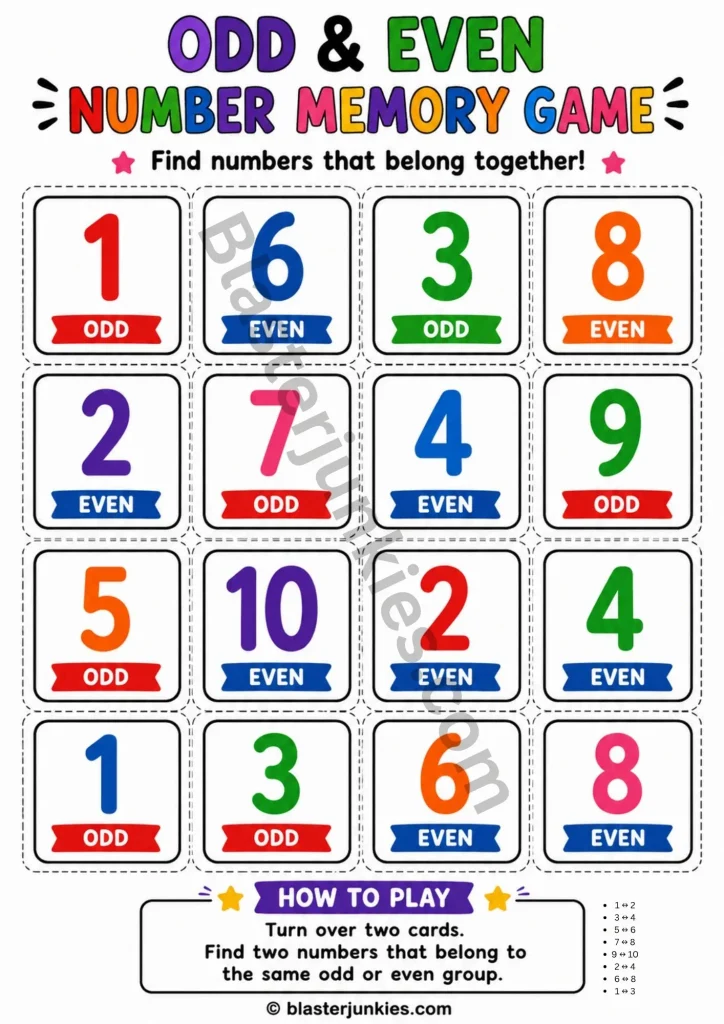
Sorting is another core cognitive skill used here. It teaches kids to compare and group objects. They must group odd numbers together.
They must group even numbers together. This builds strong logical reasoning skills. It prepares them for complex mathematical operations. It also teaches them to notice patterns in numbers.
Incorporating Educational Games into Daily Routines
Structured schedules help children feel safe and focused. You can easily add a daily game hour. List quiet table play on your Morning Routine Chart for Kids. This establishes a consistent habit of interactive learning.
Tracking daily progress keeps kids motivated during school breaks. A Summer Habit Tracker for Kids helps log daily tasks. It encourages kids to complete learning goals consistently.
For children learning to read, focus on early literacy. Use our letter a worksheets for preschool to practice letter formation. This supports spelling and writing alongside your math games.
To expand their numerical learning, use fun insect themes. Pair this pack with our count and color bugs worksheets.
You can also build fine motor control with art. Use our bug do a dot pages preschool with ink dabbers.
Matching games teach children visual discrimination and sorting. Try our tops and bottoms sorting activity printable to practice classifying objects logically. This strengthens spatial reasoning and categorization skills.
If your child enjoys this game style, explore more themes. Use our Emotions Memory Game to explore social emotional learning together.
You can also teach animal biology with our farm animal memory game. This keeps daily lessons fresh and highly engaging.
Key Concepts in the Number Memory Game Pack
This printable pack uses diverse visual layouts to teach. It does not rely on simple duplicates. Instead, it challenges children to connect related mathematical concepts. The worksheets cover several core educational categories:
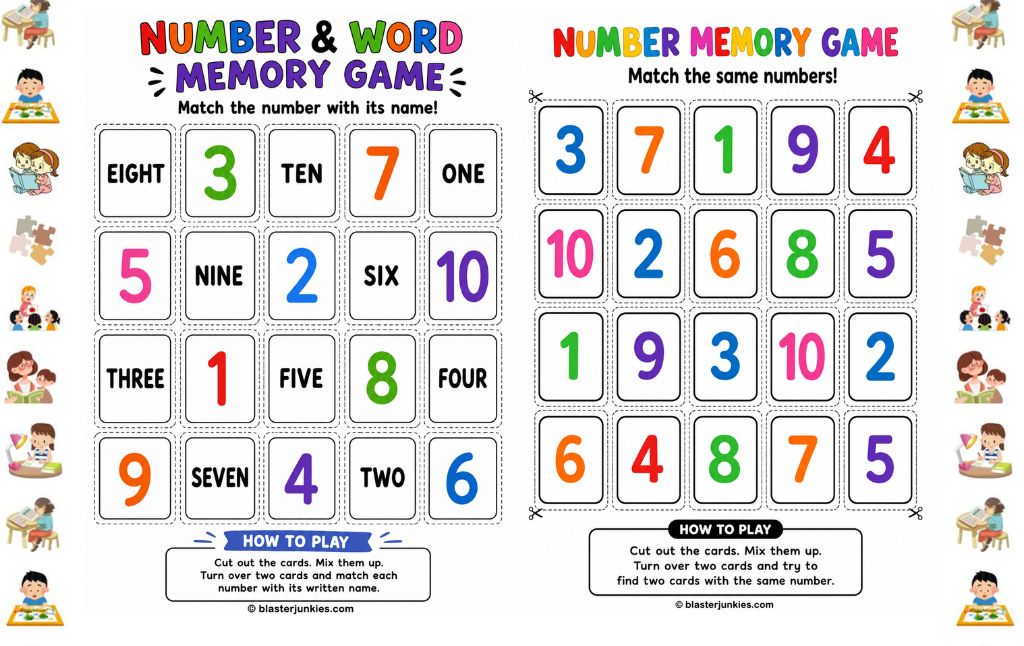
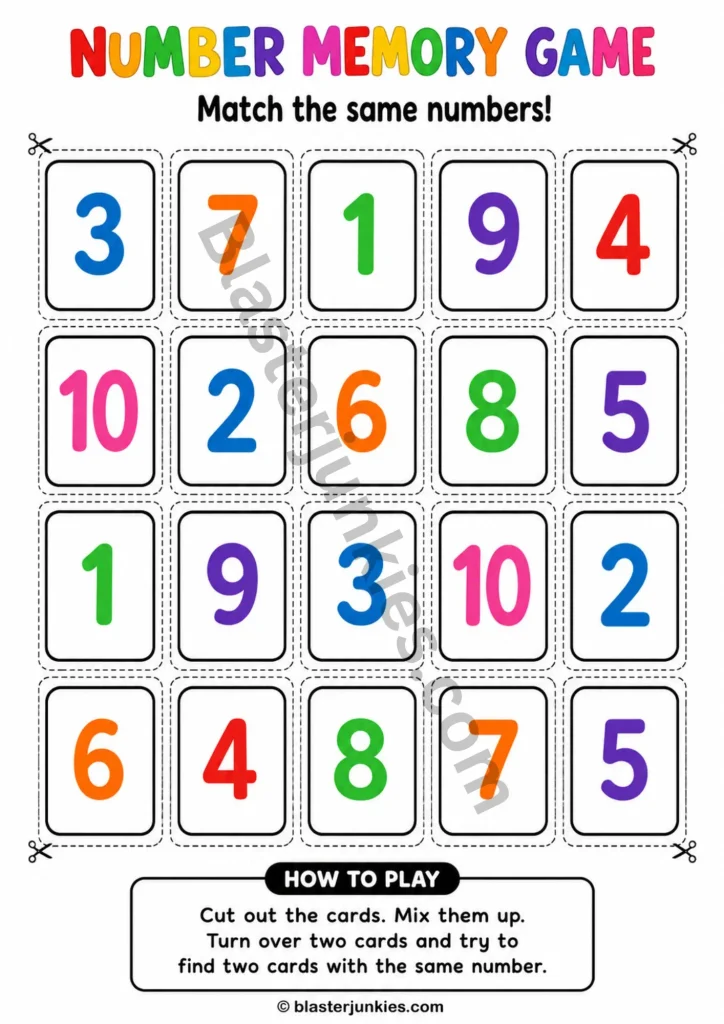
Direct Matching: Finding duplicate illustrations of digits 1 through 10.
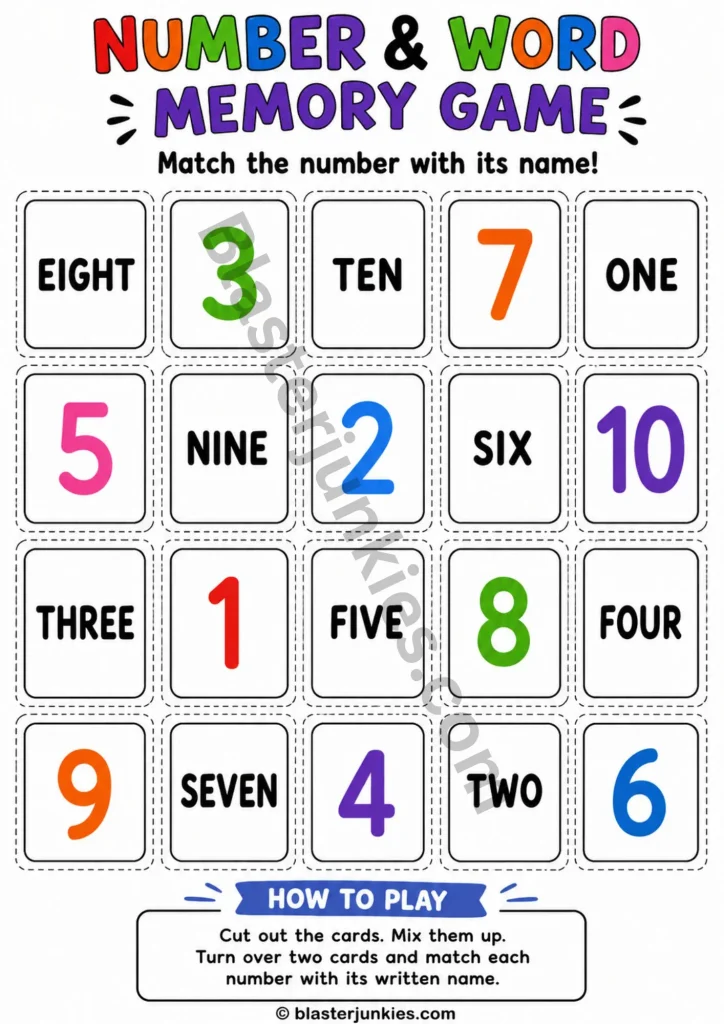
Number and Word Matching: Pairing printed digits with their written names (like 3 to “three”).
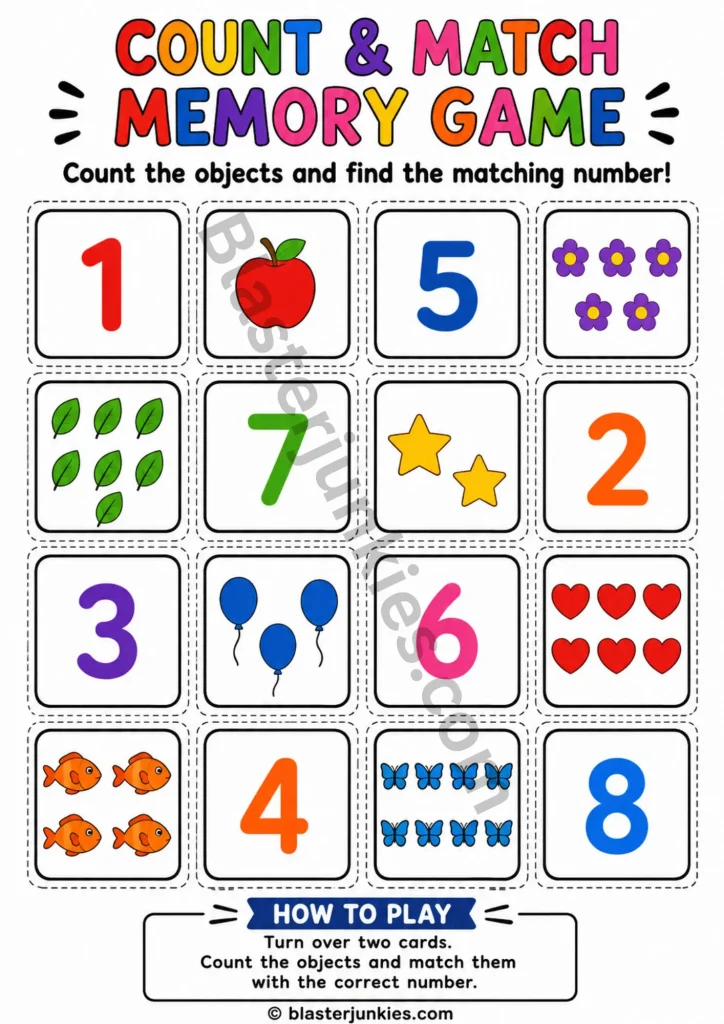
Count and Match: Connecting numbers with physical items, like balloons or stars.
Odd and Even: Grouping numbers into odd and even categories.
Fractions and Shapes: Matching digits to circular sections representing portions.
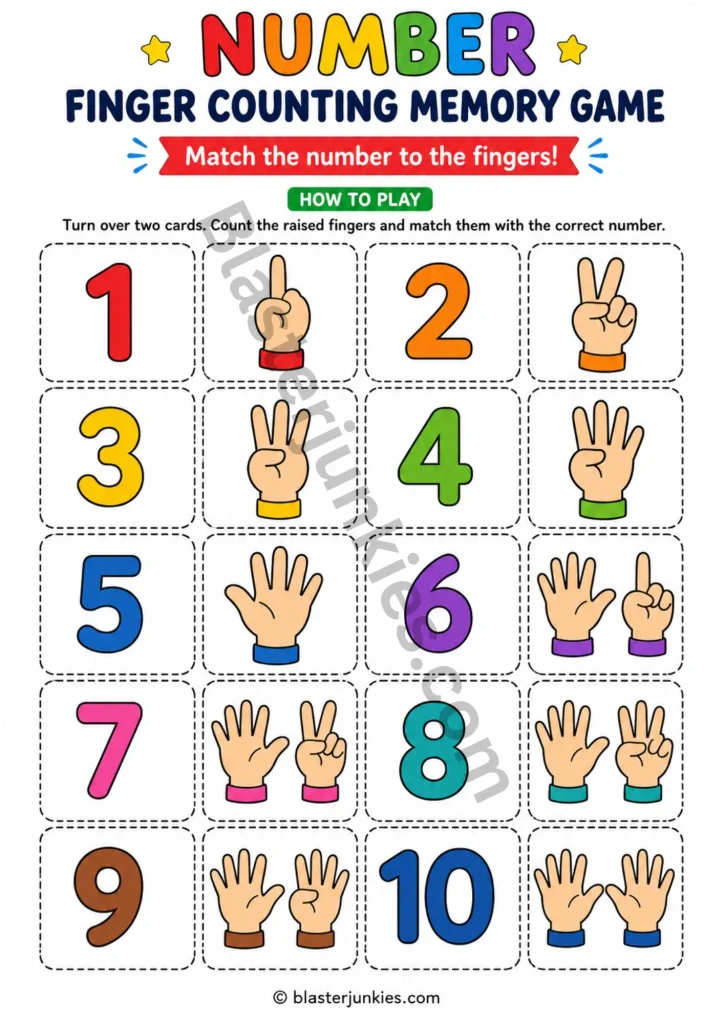
Finger Counting: Pairing digits with hand illustrations representing the same value.
Before and After: Matching numbers with the digits that follow them sequentially.
These activities develop strong cognitive matching skills. They teach children to think beyond simple visual likeness. They must use logic to find conceptual pairs.
Creative Sensory Extensions
You can easily expand these paper based lessons. Combine the memory cards with other sensory toys.
Hide the printed cards in a sensory bin. Fill a container with dry rice or water beads. Hide plastic number blocks or figures inside the bin.
Have your child dig to find the matching pair. This tactile search keeps indoor play exciting.
You can also play active movement games. Have your children act out the matched number. Can they jump five times?
Can they clap eight times? Can they blink three times? This lets children burn off extra energy indoors. It also reinforces the numerical concepts they learned.
Step by Step Guide: How to Assemble and Play
Using these worksheets is straightforward and fun. Here is a practical guide to get started.
First, print the selected game pages. Always print these cards on heavy cardstock. Thick cardstock prevents children from seeing through the paper. It also stands up much better to repeated handling.
Next, cut out the cards along the dashed lines. You can laminate the cards for durability. Laminated cards are easy to wipe clean.
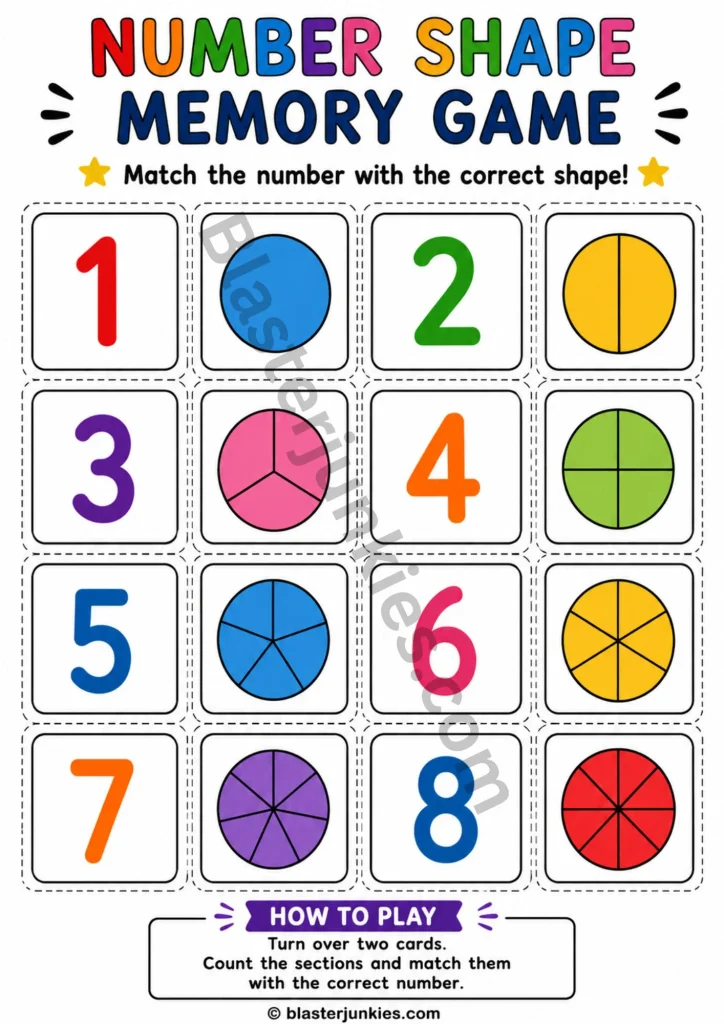
To play, start with a small selection of cards. For younger kids, use only four pairs. Lay them face up to practice simple matching first.
As their confidence grows, turn the cards face down. Arrange them in a neat grid pattern.
Have players take turns flipping two cards. If the cards match, the player keeps the pair. If they do not match, flip them back over.
The game continues until all pairs are found. The player with the most pairs wins the game.
Supporting Social Emotional and Fine Motor Growth
Board games build crucial social emotional skills. They teach children how to take turns. They learn to listen to others. They also practice patience while waiting for their turn.
Most importantly, children learn to handle disappointment. Losing a match is a gentle lesson in resilience. Playing games together builds a supportive family bond.
Fine motor skills are also practiced during setup. Letting children help cut out the cards develops hand strength.
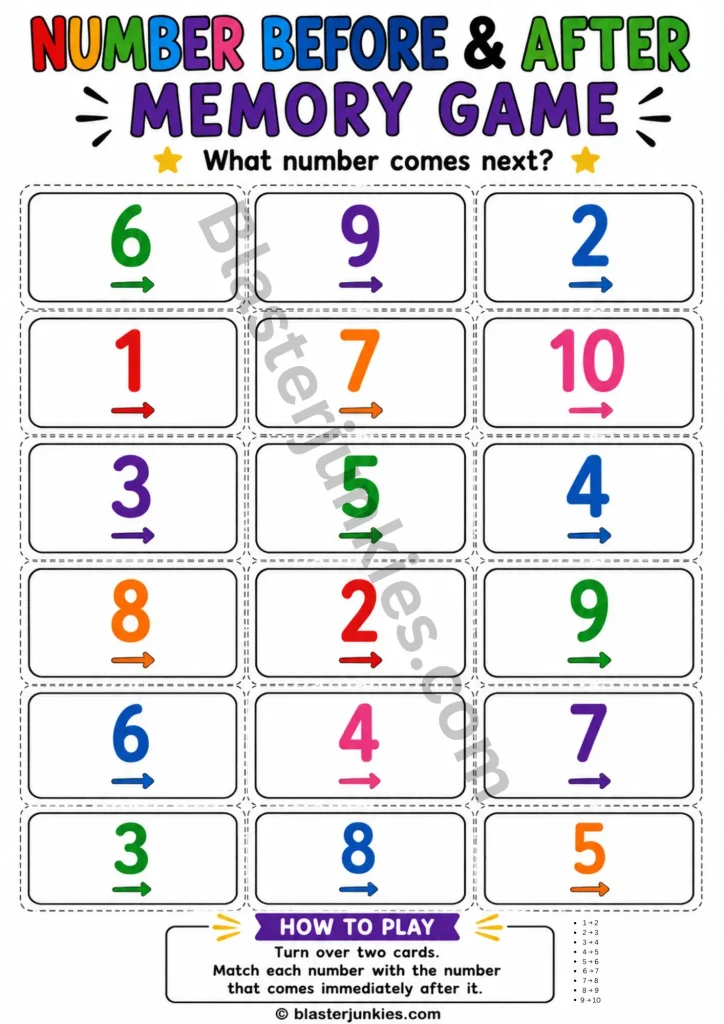
They must hold the paper steady with one hand. They use safety scissors with the other hand. This bilateral coordination is essential for physical growth.
The sound and word matching cards are great for verbal practice. They teach children basic pronunciation and vocabulary.
Say the written number names clearly together. Emphasize the hard “T” in “three.” Emphasize the soft “S” in “six.”
These verbal exercises build strong early reading skills. They also help with focus and articulation. This makes the game highly supportive for speech development.
Customizing for Different Age Groups
These printable pages are highly adaptable. They suit children of varying developmental levels.
For toddlers (ages 2-3), focus on simple recognition. Do the cutting work for them beforehand. Keep the cards face up on the table. Ask them to find matching numbers or shapes.
For preschoolers (ages 3-4), focus on count and match templates. Let them make their own conceptual choices. Encourage them to count the fingers aloud as they play.
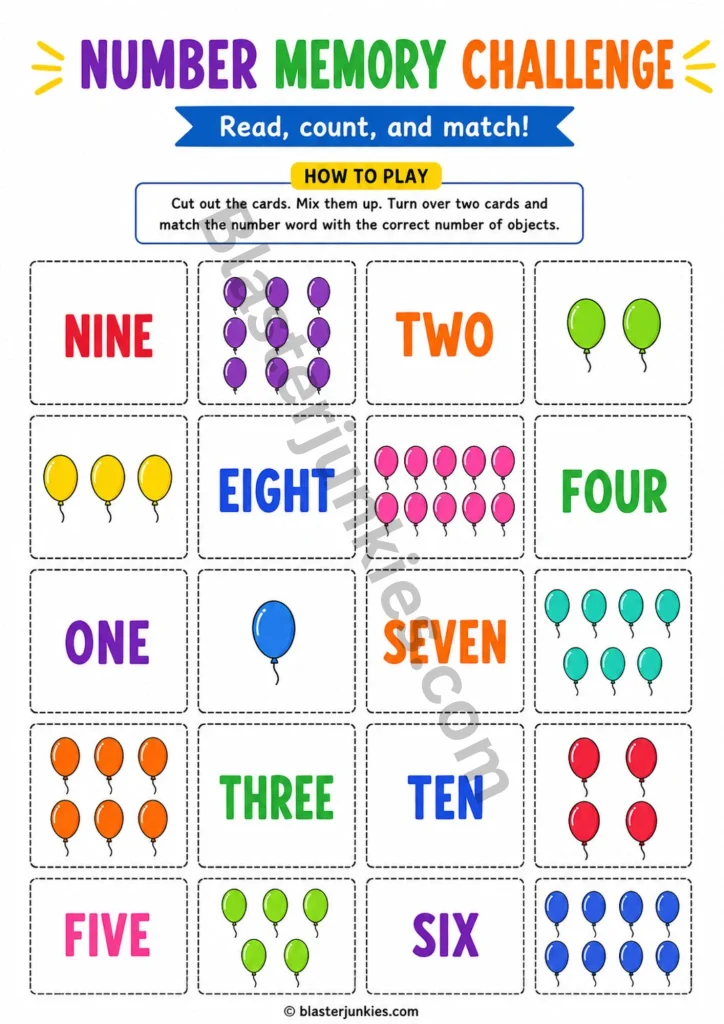
For kindergarteners (ages 5-6), encourage independent word matching. Let them pair the numbers with their printed names. They can also play the odd and even game alone.
Encourage older children to try hosting their own game. Let them explain the rules to a younger sibling.
This leadership opportunity builds strong speech skills. It also boosts their social confidence and pride. They feel proud to guide others in learning.
This flexibility makes the pack great for families. Siblings of different ages can play together easily.
Conclusion
Learning through play is a wonderful journey. These printable number memory games combine math with daily fun.
They help children practice essential childhood skills. Fine motor, math, and literacy are all supported.
You can easily download the complete pack today. It is ready to print and use immediately.
Enjoy watching your child discover math science. Have fun playing these matching games together today!
To expand their numerical learning, use fun insect themes. Pair this pack with our count and color bugs worksheets.
You can also build fine motor control with art. Use our bug do a dot pages preschool with ink dabbers.
Matching games teach children visual discrimination and sorting. Try our tops and bottoms sorting activity printable to practice classifying objects logically. This strengthens spatial reasoning and categorization skills.
If your child enjoys this game style, explore more themes. Use our Emotions Memory Game to explore social emotional learning together.
You can also teach animal biology with our farm animal memory game. This keeps daily lessons fresh and highly engaging.