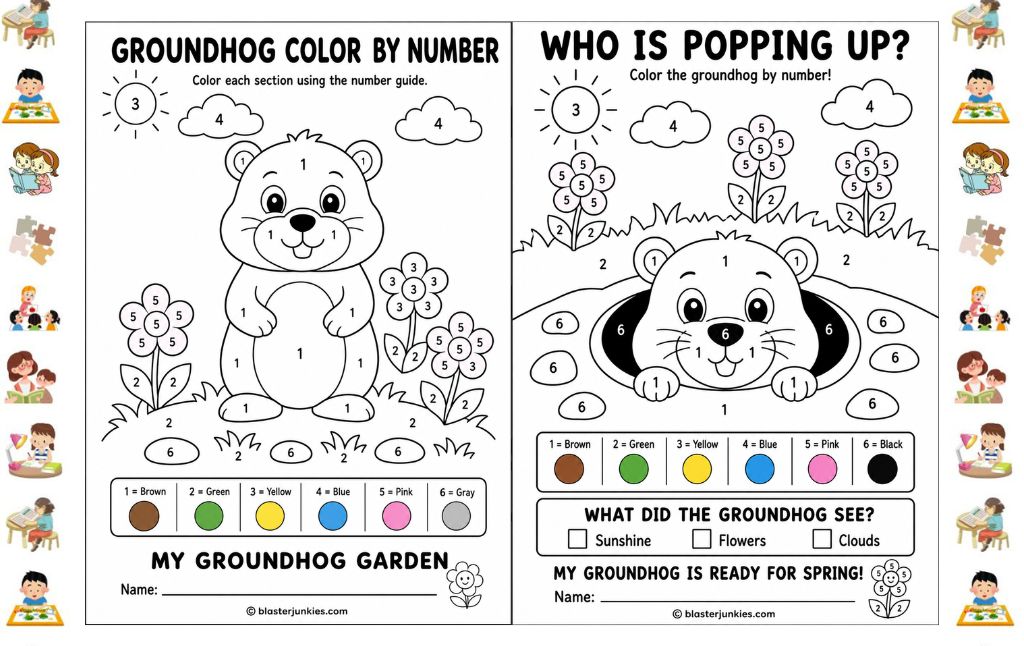
Looking for a low prep activity that keeps kids learning? This Groundhog Color By Number printable pack is a helpful option.
It combines simple number matching with creative seasonal coloring. It is great for classrooms, homeschools, or quiet afternoons at home.
This printable pack is well suited for preschool, kindergarten, and early elementary students. It helps kids build focus, number recognition, and fine motor skills.
Groundhog Day and Early Learning
Groundhog Day is a unique, playful holiday. It is the perfect time to explore shadows, seasons, and weather. Children love predicting whether spring will arrive early.
This printable packet channels that curiosity into structured learning. Kids use a color key to reveal cute groundhog scenes.
They do not just color passively on the page. They also practice counting, identification, and observation.
Coloring also teaches children about shadows. Discuss how shadows are created by light. Ask them: “Why does the groundhog see his shadow?” Explain that a bright sun creates a dark shadow.
This visual cue makes meteorological terms easy to understand. It is a simple way to combine art with real physics.
Incorporating Seasonal Crafts into Your Routine
Structured routines help young children feel secure and focused. You can easily schedule a dedicated morning craft hour.
Add daily table activities to your Morning Routine Chart for Kids. This establishes a consistent habit of creative work.
During school breaks, keep childhood learning active and fun. A Summer Habit Tracker for Kids helps log daily study tasks. It encourages kids to complete academic goals consistently.
Groundhog Day revolves entirely around weather prediction. This creates an excellent bridge to daily earth science.
Observe the morning sky with our weather observation worksheet.
You can also explore seasonal patterns using our Weather Worksheets for Kindergarten. This connects atmospheric changes with the groundhog’s forecast.
What’s Included in the Groundhog Color By Number Pack
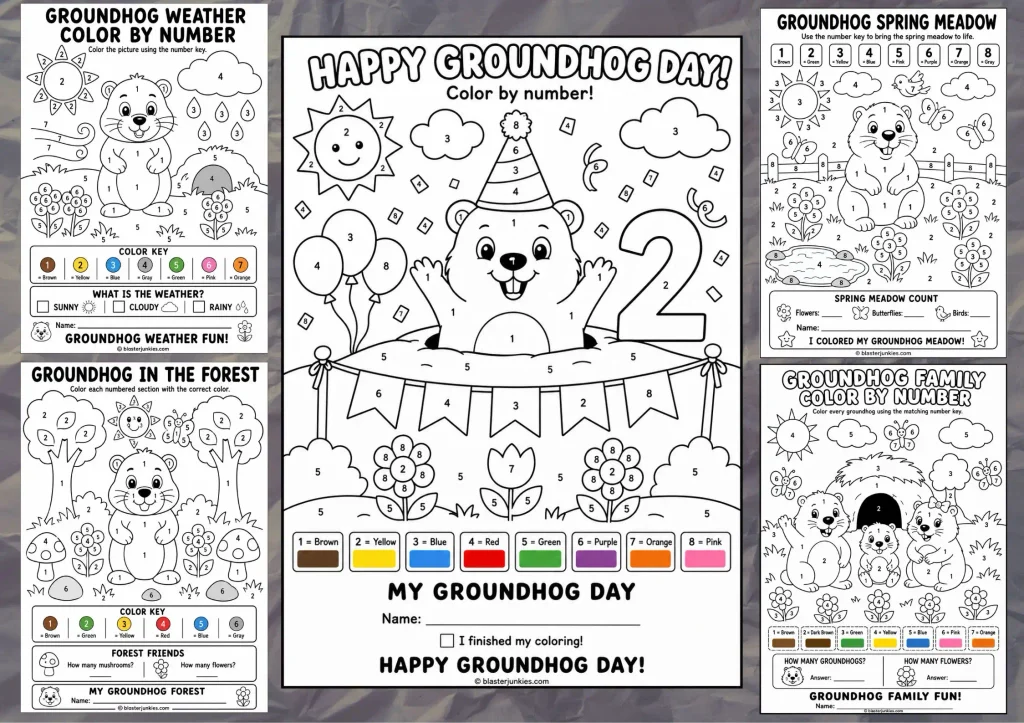
This printable pack uses diverse, kid-friendly layouts to teach. It does not rely on complicated reading instructions. The worksheets cover several core developmental categories:
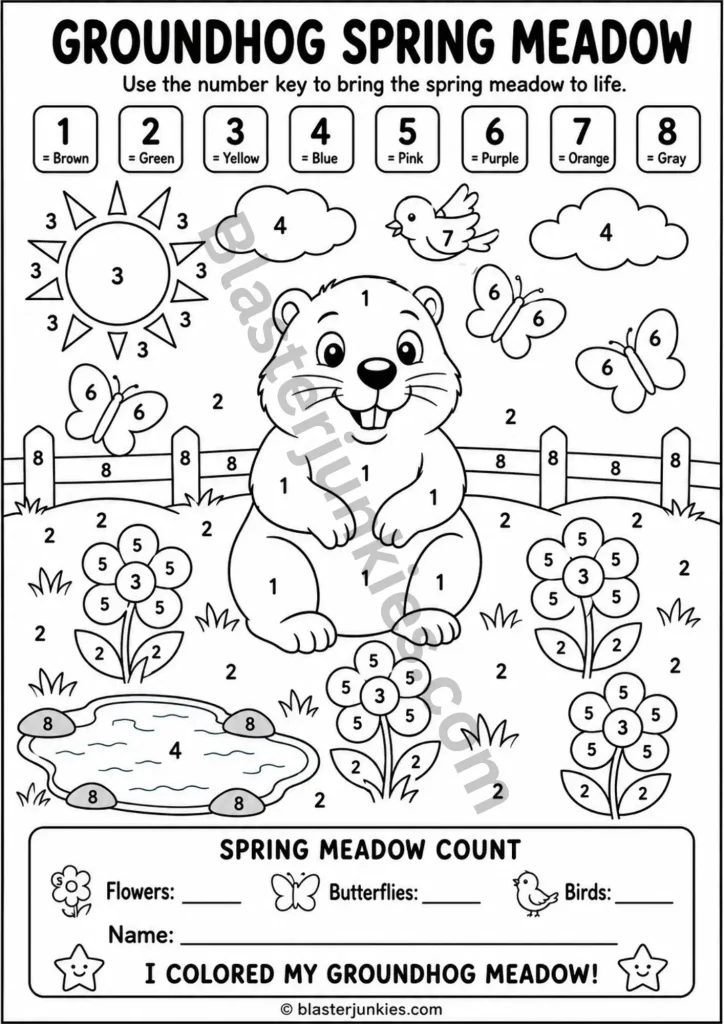
Scenic Meadows: Friendly groundhogs surrounded by butterflies, flowers, and little ponds.
Shadow Exploration: Groundhogs standing next to their grey shadows on the ground.
Interactive Burrows: Illustrating the groundhog popping up to inspect the sky.
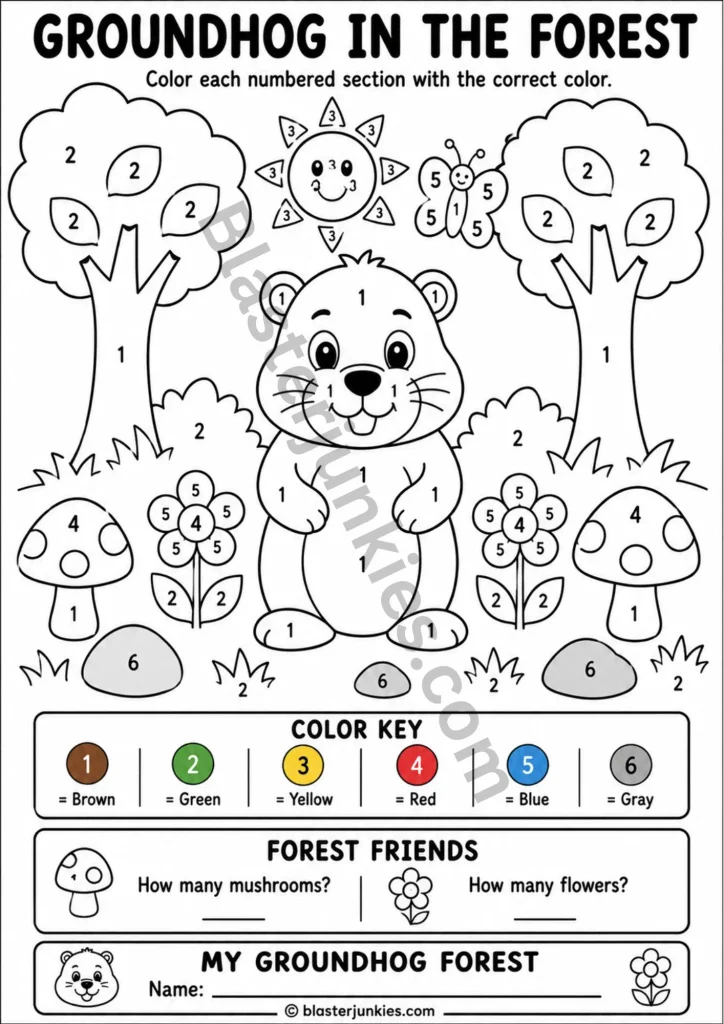
Integrated Math Checklists: Counting boxes to tally flowers, butterflies, birds, or mushrooms.
Observational Questions: Yes or No checkbox questions asking if they see a shadow.
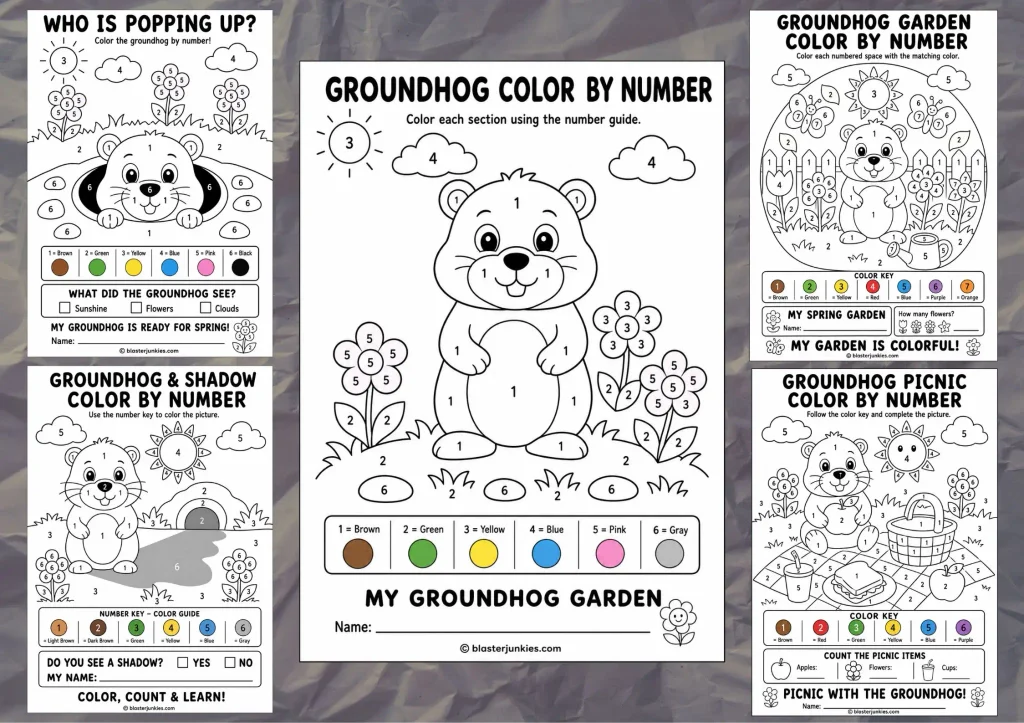
Each template features large, bold sections to color. A clear, numbered color key sits at the bottom.
Supplies Needed
You only need a few basic materials to get started:
Printed Groundhog worksheets: Snag the PDF file at the bottom of this page.
Heavy Cardstock: We recommend printing worksheets on sturdy cardstock.
Coloring Tools: Crayons, colored pencils, or washable markers work wonderfully.
Pencil: Optional, for filling out the integrated counting sections.
How to Use These Worksheets
Using these worksheets is straightforward and fun. Here is a practical guide to get started:
Print the pages: Download and print on cardstock.
Review the key: Read the colors listed at the bottom.
Color the sections: Match the numbers in the picture to the color key.
Count the items: Fill out the tally boxes at the bottom.
Answer the questions: Check the box if the groundhog saw his shadow.
This systematic approach keeps children focused. It turns simple coloring into a goal-based science lesson.
Worksheets involving markers can occasionally get messy. You can keep the workspace clean with easy steps.
Use a silicone baking mat on your table. This prevents stray marker ink or colored pencil wax from damaging wood.
Have a small trash bowl nearby for pencil shavings. Teach children to place their pencil scraps immediately into the bowl.
This builds good habits and simplifies final cleanup. A tidy space keeps the focus entirely on learning.
You can also use these pages to build literacy. Each page features a bold title at the top. Point to words like “GARDEN” or “SHADOW” together.
Have your child spell out the letters as they color. This connects visual spelling with their physical coloring actions. It makes letter learning highly interactive.
You can also discuss the sounds each letter makes. “What sound does G make in groundhog?” This simple conversation builds early phonics skills naturally.
Important Learning Benefits
This Groundhog Color By Number activity supports many developmental skills:
Number Recognition: Learning to identify and match digits 1 through 8.
Fine Motor Strength: Developing finger muscles by coloring inside specific borders.
Visual Discrimination: Distinguishing different sections of the picture to find matching numbers.
Integrated Tallying: Practicing basic math by counting flowers, clouds, and animals.
Earth Science: Exploring seasonal transitions from winter to spring.
To get long term use from this pack, try lamination. Laminated pages make excellent, reusable learning mats.
Kids can place colorful glass gems on the numbers. They can use plastic tweezers to lift and sort gems.
This adds a fantastic fine motor challenge. You can also wipe the plastic pages clean easily. This makes them highly suitable for busy classroom environments.
Customizing for Different Age Groups
These printable templates are highly adaptable. They suit children of varying developmental levels.
For toddlers (ages 2-3), focus on simple coloring. Do not worry about the numbers or keys yet. Let them scribble over the cute shapes happily.
For preschoolers (ages 3-4), focus on color matching. Point to the number key together. Help them locate and color the matching numbers.
For kindergarteners (ages 5-6), encourage independent work. Let them complete the entire page alone.
They can count the flowers and check the shadow boxes. Let older siblings guide younger siblings through the steps.
This leadership opportunity builds strong communication skills. It also boosts their social confidence and pride. They feel like real teachers as they help others.
This flexibility makes the pack great for families. Siblings of different ages can work together successfully.
Conclusion
Observing the groundhog is a wonderful winter tradition. These printable worksheets combine math with seasonal fun.
They help children practice essential childhood skills. Fine motor, counting, and science are all supported.
You can easily download the complete pack today. It is ready to print and use immediately.
Enjoy watching your child discover earth science. Have fun exploring the weather together today!
If you want more numerical challenges, explore other games. Reinforce digit identification with our Number Memory Game to Build Early Skills.
For more counting practice, try our count and color bugs worksheets.
You can also introduce basic logical classification. Explore early sorting with our tops and bottoms sorting activity printable.
Combine these lessons with other outdoor spring themes. Add garden themed spelling practice with our watering can name craft.
If your groundhog sees his shadow, discuss light science. Explore transparency and reflections with our Easy Suncatcher Crafts.
You can also make a beautiful sunflower suncatcher craft for your window. These activities keep daily lessons fresh and highly engaging.