Crafting is a vital part of early childhood development. It encourages self-expression and builds physical coordination.
Mosaics are particularly beneficial for young children. They learn to fill empty spaces with geometric shapes.
Our Mosaic Snail Craft offers a structured way to practice. It turns simple paper shapes into an adorable garden character.
Let’s explore how to use this template successfully at home.
Fine Motor and Cognitive Milestones
Mosaic crafts offer excellent fine motor practice for children. They require young learners to coordinate several physical skills:
Geometric Coloring: Filling in various shapes like circles, squares, and semi-circles.
Scissor Control: Cutting out individual mosaic tiles along dotted guidelines.
Bilateral Integration: Using one hand to hold paper while pasting elements.
Pincer Grasp Development: Picking up and arranging small, thin paper pieces.
These actions develop hand muscles needed for future writing tasks. Tactile exploration also helps children understand varying shapes.
They learn to distinguish between straight edges and curves.
Incorporating Nature Crafts into Your Home Routine
Structured schedules help children feel secure and focused. You can easily schedule a dedicated quiet hour.
List daily craft sessions on your child’s Morning Routine Chart for Kids. This establishes a consistent habit of creative learning.
Tracking daily progress keeps kids motivated over holiday breaks. Use our Summer Habit Tracker for Kids to monitor daily crafting goals.
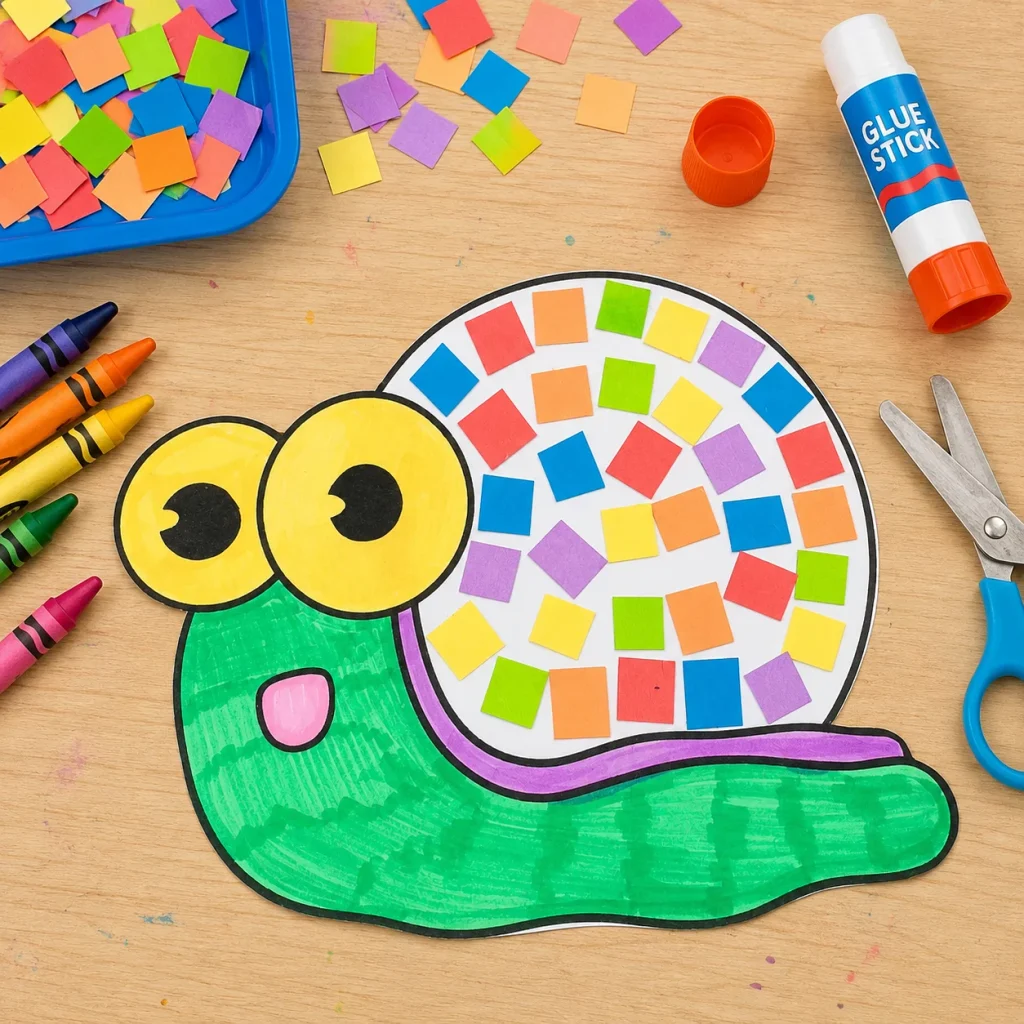
Garden snails are classic late summer and early fall animals. They love damp, cool environments after it rains.
Connect this garden creature to daily weather science. Observe the rain and humidity with our weather observation worksheet.
You can also explore seasonal patterns using our Weather Worksheets for Kindergarten. This connects atmospheric changes to animal habits.
Key Features of the Snail Template
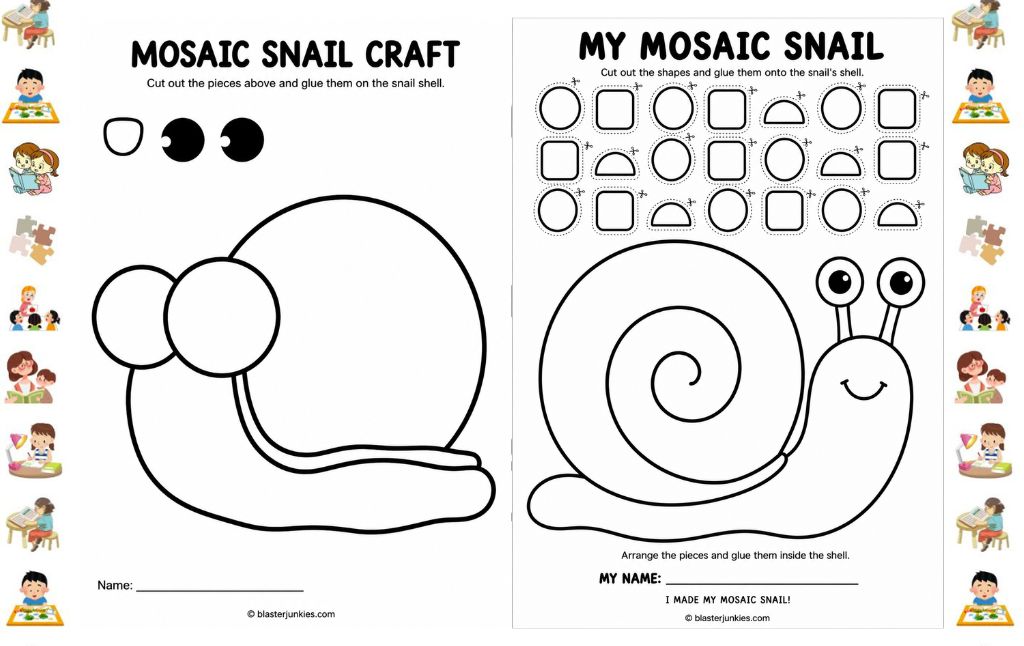
This printable template uses a clear, logical layout to teach. It does not rely on heavy reading blocks. The design features a large snail body with a blank shell.
Another page contains multiple geometric shapes for cutting. It includes circles, squares, and semi circles of various sizes.
The page has simple, visual instructions at the top. They help pre readers understand the steps independently.
Step by Step Assembly Guide
Assembling this mosaic snail is highly rewarding. Follow these simple steps for a beautiful result:
Coloring: Color the snail body and the geometric shapes.
Cutting: Carefully cut out the snail body and the individual shapes.
Arranging: Lay the shapes inside the snail’s shell boundary first.
Pasting: Apply glue and press the shapes onto the shell.
Adding Eyes: Cut out the googly eyes and glue them on.
Display: Hang your colorful snail on the wall!
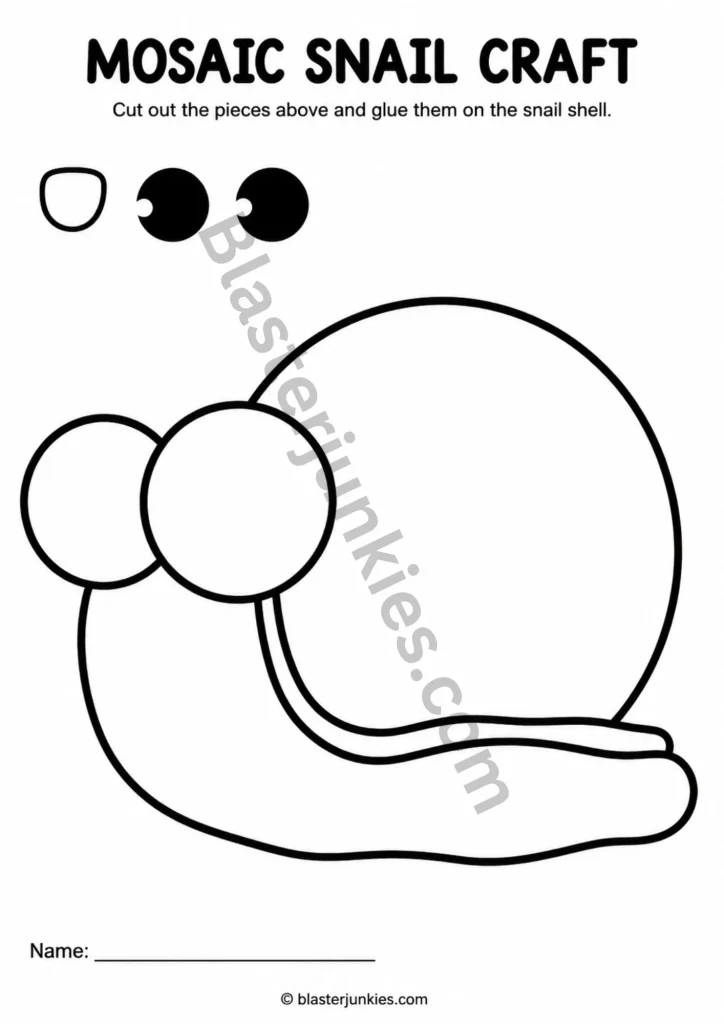
If you do not have colored paper, try recycled magazines. You can cut colorful pictures into small mosaic tiles.
Let your child paste these paper pieces onto the shell. This is an excellent alternative method. It yields a textured, colorful, and unique design.
Always ensure the glue dries completely before hanging.
If you do not have liquid glue, try glue sticks. You can rub glue onto the empty shell outline. Let your child press paper shapes onto the sticky surface.
Once dry, display the colorful snail on the fridge. This is an excellent, low mess method. It yields a flat, clean, and durable design. Always ensure the glue dries completely before hanging.
Exploring Geometry and Math
Mosaic crafts are excellent tools for early math lessons. They teach children about shapes and patterns.
Kids identify different geometric forms on the page. They compare circles, squares, and semi circles.
You can also teach basic pattern making. Have your child alternate different shapes along the shell.
What happens when we place circles and squares sequentially? They see an alternating pattern appear on the snail.
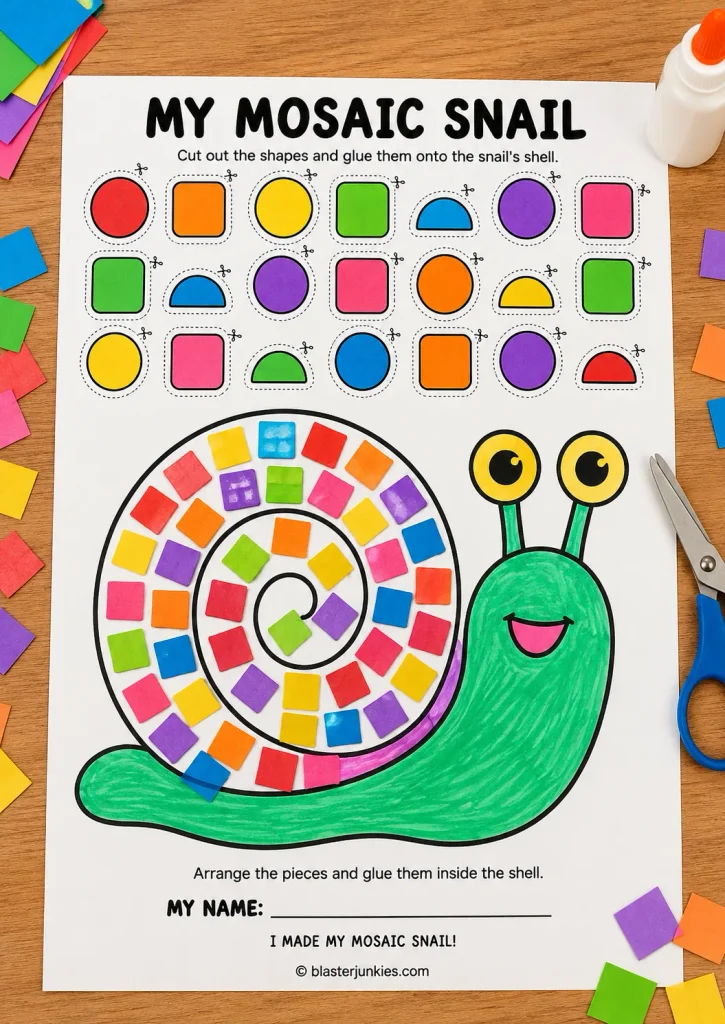
This visual result makes early geometry memorable. It encourages kids to experiment with different layouts.
You can also discuss the anatomy of a snail. Point out the spiral shell where the snail retracts.
The geometric shapes represent the mosaic tiles of the shell. The bright colors make the snail easy to spot.
This visual cue makes mathematical terms easy to understand. It is a simple way to combine art with real biology.
Customizing for Different Age Groups
These printable templates are highly adaptable. They suit children of varying developmental levels.
For toddlers (ages 2-3), focus on sensory play. Prepare the frame and shape tiles beforehand. Let them simply press pre torn paper onto the glue. This keeps the task simple and highly satisfying.
For preschoolers (ages 3-4), encourage scissor practice. Let them practice cutting the straight lines of the squares. They can also arrange the shapes themselves.
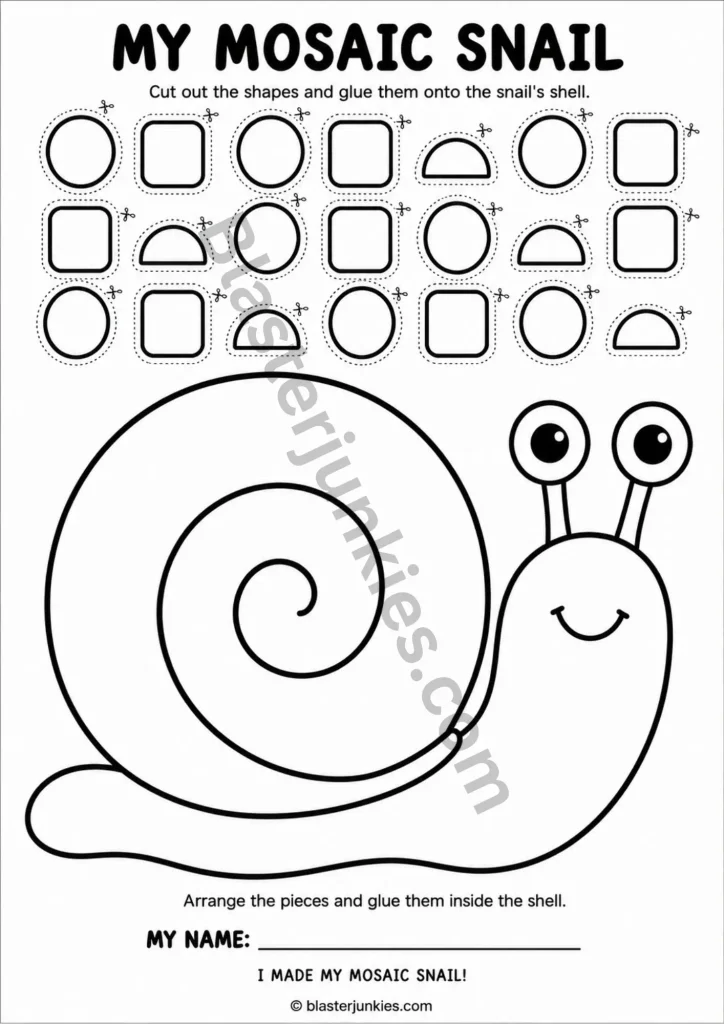
For older kids (ages 5-6), encourage independent work. They can cut out detailed curves and plan complex patterns.
They can choose specific color themes for their designs. Encourage older children to try advanced color shading. They can place darker paper shapes around the outer edge.
They can place lighter paper shapes in the center. This introduces basic art concepts like gradient patterns. It makes the final product look visually sophisticated.
This flexibility makes the pack great for families. Siblings of different ages can craft together successfully.
Easy Tips for a Tidy Craft Session
Crafting with glue can occasionally get messy. You can keep the workspace clean with easy steps.
Use a silicone baking mat on your table. This prevents stray glue or sticky tape from damaging wood. Have a small trash bowl nearby for paper scraps.
Teach children to place backing sheets immediately into the bowl. This builds good habits and simplifies final cleanup. A tidy space keeps the focus entirely on creativity.
Conclusion
Crafting with shapes is a wonderful experience. These printable snail designs combine art with sensory play.
They help children build essential fine motor skills. Patience, coordination, and creativity are all supported.
You can easily download the complete pack today. It is ready to print and use immediately.
Enjoy watching your child discover shapes through play. Have fun decorating your home together today!
Learning is most effective when it connects to daily life. When children build a snail craft, they look forward to garden walks.
This makes them more eager to observe nature. You can discuss how snails carry their homes. This shell protects them from predators and weather.
Sharing simple science facts builds an early love for biology. It encourages kids to ask deeper questions about animals.
Add more garden themed literacy projects to your lessons. Try our spelling based watering can name craft.
For more insect themed learning, try our bug do a dot pages preschool. If your child enjoys sea dwelling snails, explore our Fun Ocean Animal Worksheets.
For children practicing detailed hand coordination, explore mosaics. Try our mosaic tooth craft to practice arranging colorful paper squares.
You can also introduce sorting skills. Group garden items with our tops and bottoms sorting activity printable.
For sensory paint play, try our Fingerprint Seahorse Crafts for Early Learning. Cleaning up glue and scraps from table projects is simple.
Use our Deep Cleaning Hacks For Busy Moms to tidy up quickly.