Young children are natural explorers. They constantly touch, taste, hear, smell, and see their surroundings.
This physical interaction is called sensory learning. It is vital for early cognitive development.
Our 5 Senses Crafts Preschool Free Printable pack offers a supportive framework. It turns biology lessons into an interactive crafting experience.
Let’s explore how to use these templates successfully at home.
Fine Motor and Cognitive Growth
Sensory crafts offer excellent physical practice. They require young learners to coordinate several skills:
Scissor Control: Cutting along dotted lines to extract sensory organs.
Bilateral Integration: Stabilizing paper with one hand while applying glue.
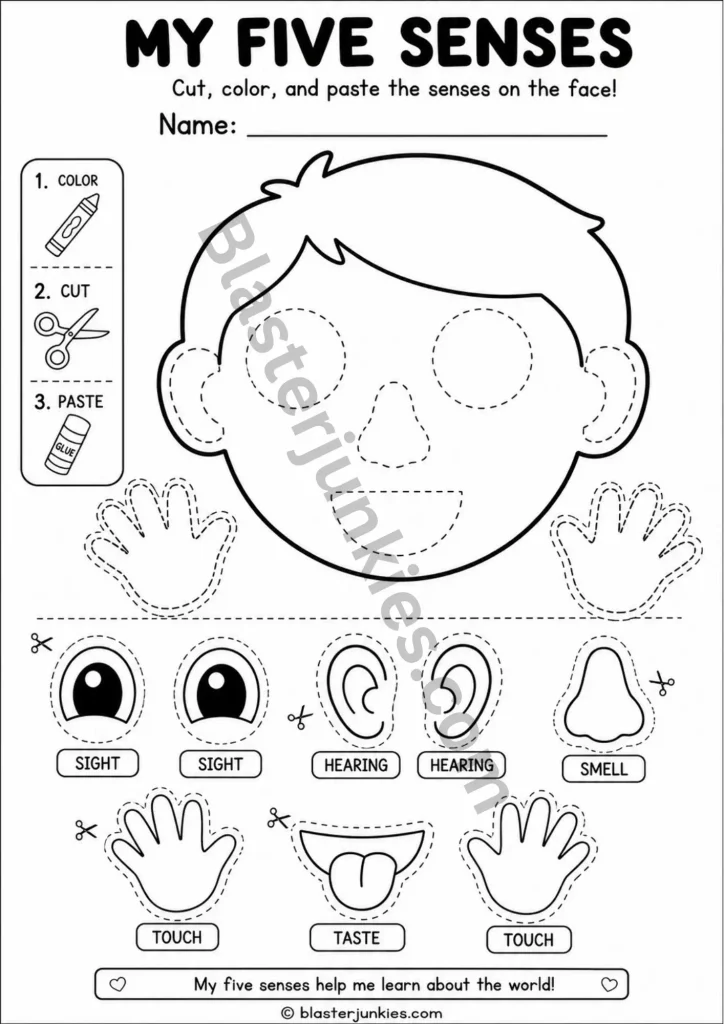
Spatial Placement: Aligning eyes, ears, and mouths correctly on a face template.
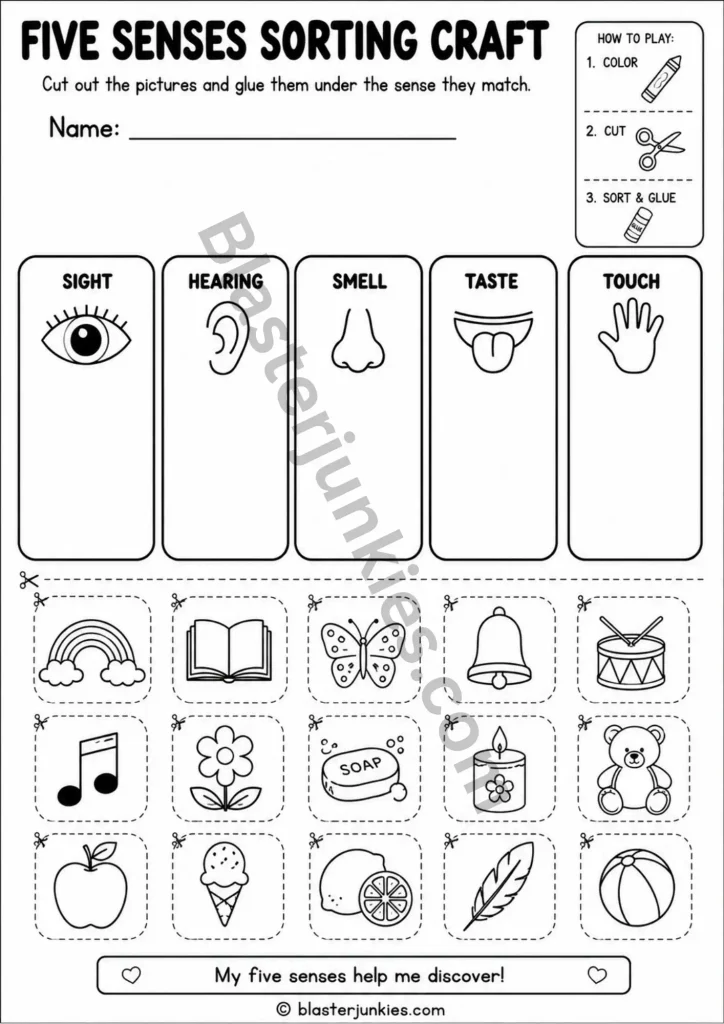
Classification Reasoning: Sorting objects based on the sense used to perceive them.
These actions develop hand muscles needed for future writing tasks. Kids also build critical observation habits.
They learn to identify which body parts correspond to each sense.
Incorporating Sensory Crafts into Daily Routines
Structured schedules help children stay focused. You can easily schedule a dedicated quiet hour.
List daily craft sessions on your child’s Morning Routine Chart for Kids. This establishes a consistent habit of creative learning.
Tracking daily progress keeps kids motivated over breaks. Use our Summer Habit Tracker for Kids to monitor daily crafting goals.
These sheets teach children how to classify environmental stimuli. You can easily introduce more sorting milestones.
Key Features of the 5 Senses Craft Pack
This printable pack uses diverse, kid friendly layouts to teach. It does not rely on heavy reading blocks. The worksheets cover several core developmental categories:
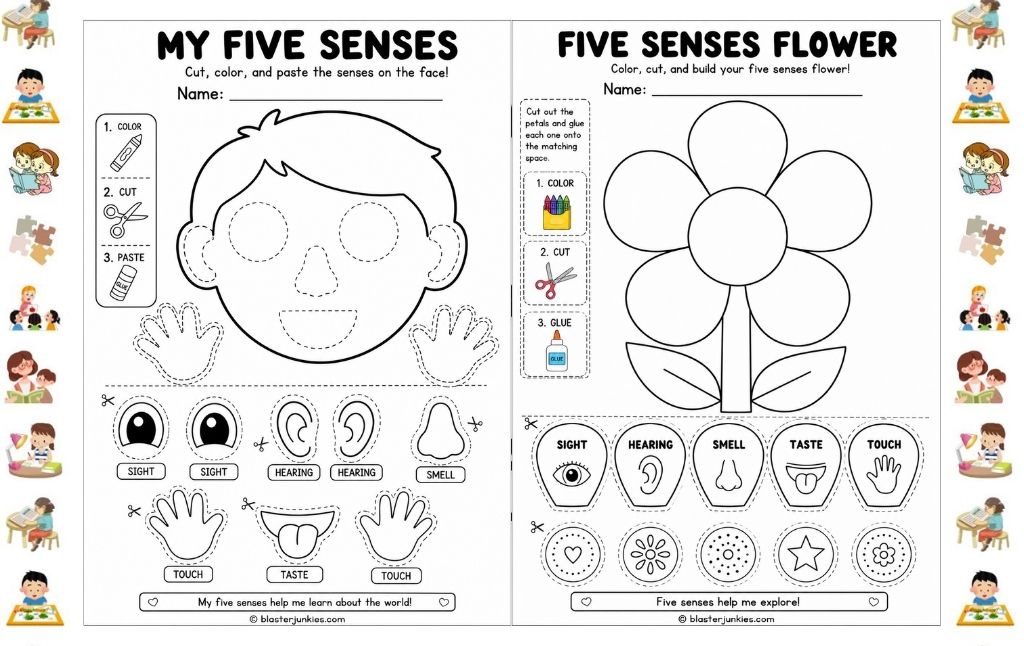
Facial Construction: Pasting cut out eyes, ears, and mouths onto a blank face outline.
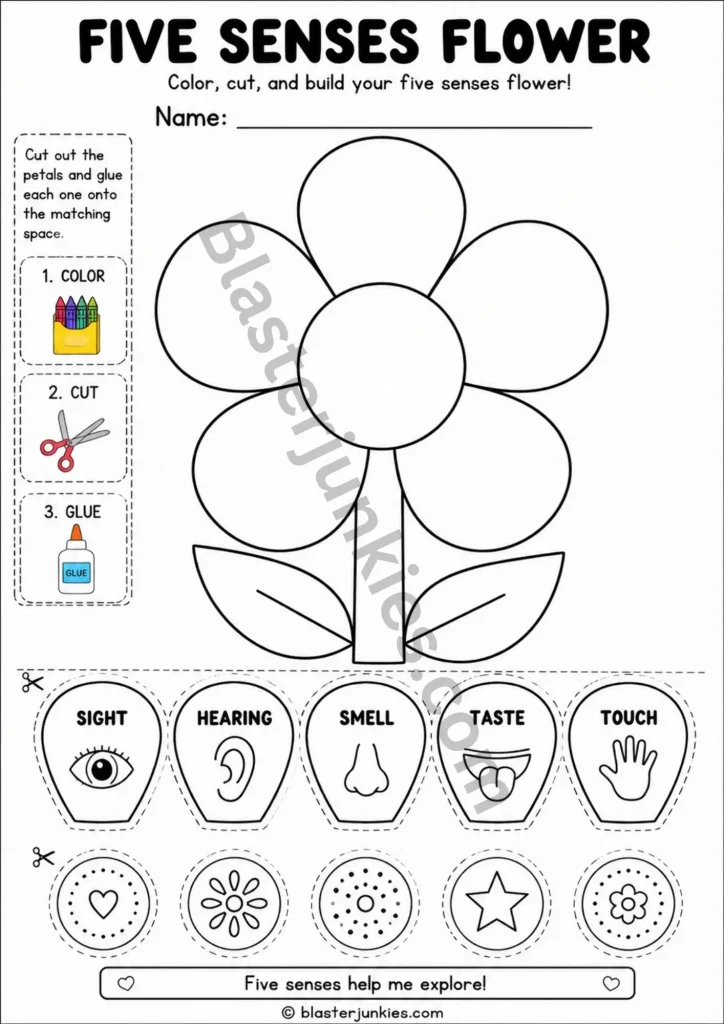
Thematic Flowers: Building a five petaled flower representing each sense.
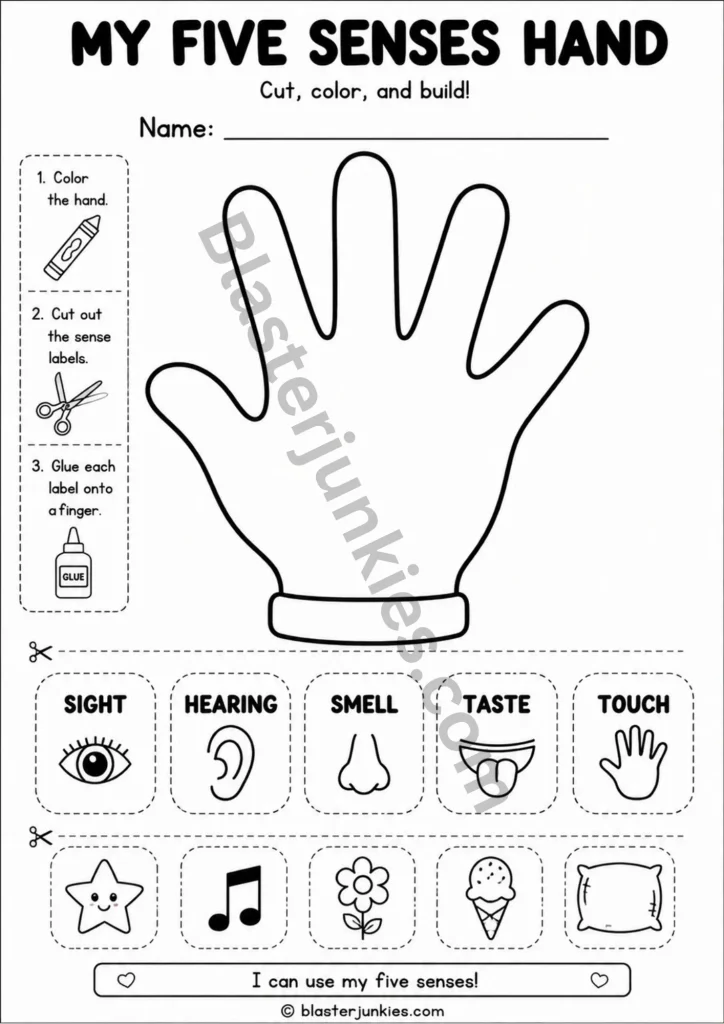
Anatomical Hands: Identifying sensory labels for five individual fingers.
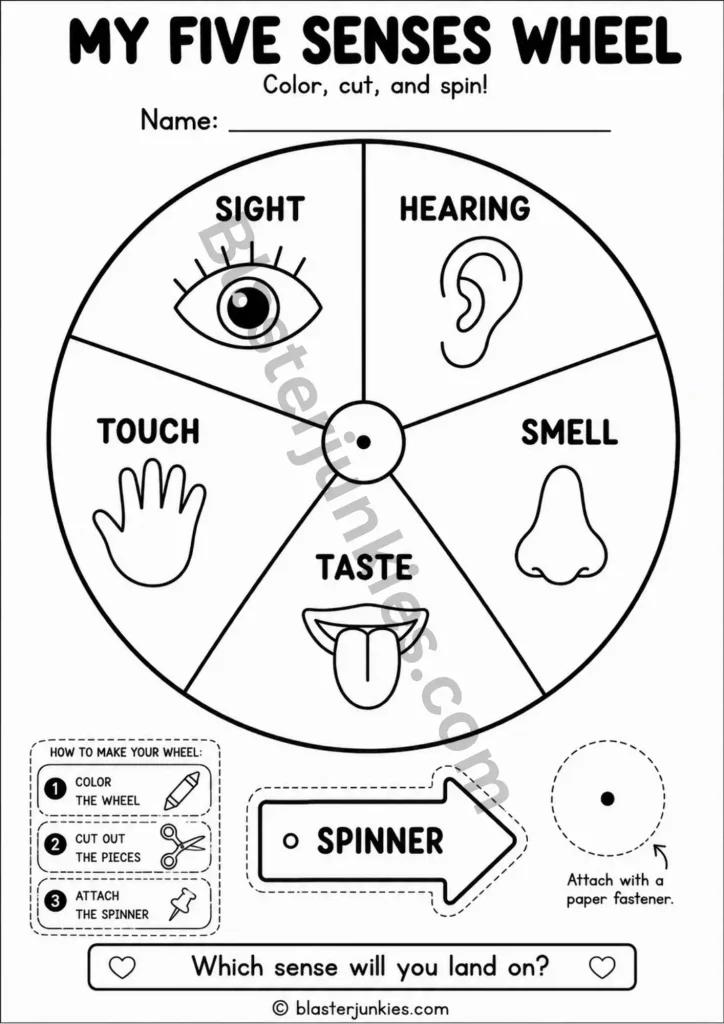
Interactive Wheels: Creating a spinning matching wheel using brass fasteners.
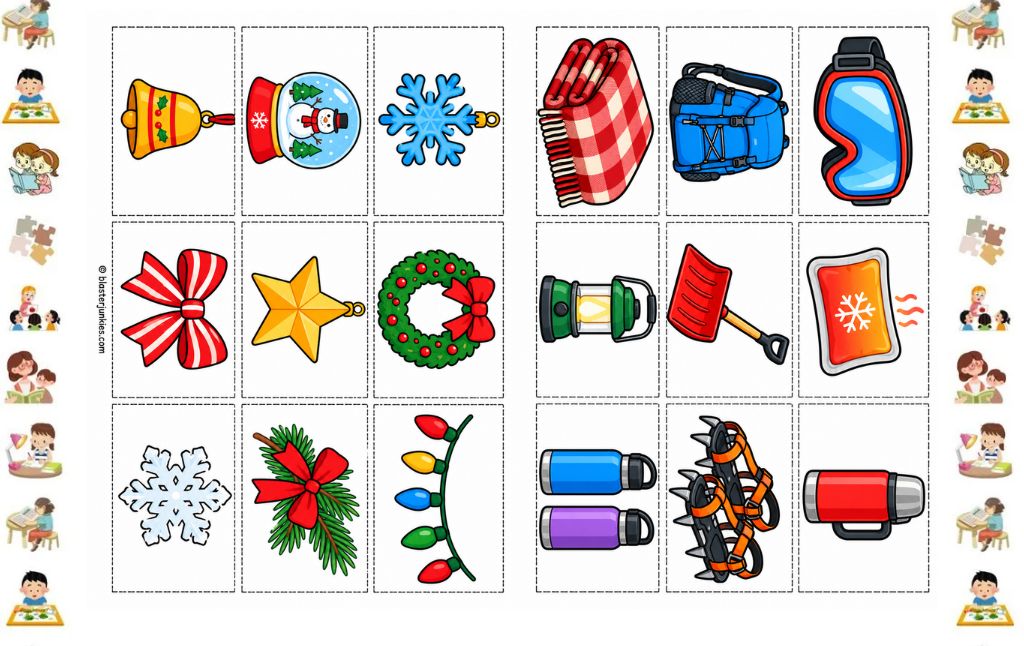
Sorting Grids: Classifying everyday items like bells and apples under correct sensory headers.
Each template features large, bold outlines to guide crayons. Every page also includes a dedicated space for the child’s name.
Step by Step Assembly Guide
Assembling these crafts is straightforward and rewarding. First, print the selected activity pages.
We recommend printing on heavy cardstock paper. Thick cardstock prevents the pages from ripping during cutting. It also holds up much better to school glue.
Have your child color the images first. Encourage them to stay inside the lines. Next, let them cut out the accessory pieces. Help younger children with the intricate curves.
Now, apply glue to the back of the cut outs. Let your child paste them into the designated boxes. To assemble the weather wheel, use a brass fastener.
Punch a hole in the center and attach the spinner arrow. Your child can spin the wheel to select a random sense to explore.
Crafting with glue can occasionally get messy. You can keep the workspace clean with easy steps. Use a silicone baking mat on your table.
This prevents stray glue or marker ink from damaging wood. Have a small trash bowl nearby for paper scraps.
Teach children to place backing sheets immediately into the bowl. This builds good habits and simplifies final cleanup. A tidy space keeps the focus entirely on creativity.
Promoting Scientific Language
Using these worksheets is an excellent way to expand vocabulary. Encourage your child to use descriptive words. Do not just say something is “good.”
Ask: “Does it taste sweet, sour, or salty?” Ask: “Is the sound loud, quiet, high, or low?”
These conversations teach kids to specify their observations. They learn to connect physical sensations to precise language. This language practice is vital for early literacy success.
Active Learning Beyond the Page
Do not let the learning stop on paper. Combine these worksheets with real world sensory games.
Try a blindfolded taste test with different fruits. Have them touch household objects to feel varied textures.
They can feel soft cotton balls, rough sandpaper, or smooth ice. Ask them to describe what they perceive.
This physical exploration makes abstract science concepts concrete. It helps children appreciate the amazing abilities of their bodies.
This appreciation fosters lifelong habits of self care and gratitude.
Conclusion
Exploring the senses is a wonderful developmental journey. These printable craft pages combine science with daily fun.
They help children practice essential childhood skills. Fine motor, logic, and self awareness are all supported.
You can easily download the complete pack today. It is ready to print and use immediately.
Enjoy watching your child discover how their body works. Every small discovery builds their analytical confidence.
These visual tools make healthy bodily awareness easy to grasp. They set your child up for future academic success.
Have fun exploring the senses together today!
Try our tops and bottoms sorting activity printable to practice classifying foods and animals.
Touch is a core part of the five senses. Explore tactile sensory play with our Fingerprint Seahorse Crafts for Early Learning.
Physical senses are closely tied to internal sensations. Compare physical observations (like sight and sound) to emotional feelings.
Pair your science lessons with our Emotions Memory Game. This helps children connect external sensations to internal emotions.