Autumn is a beautiful season for family crafting. The changing leaves and crisp air inspire creativity. Pumpkins are classic symbols of the harvest season.
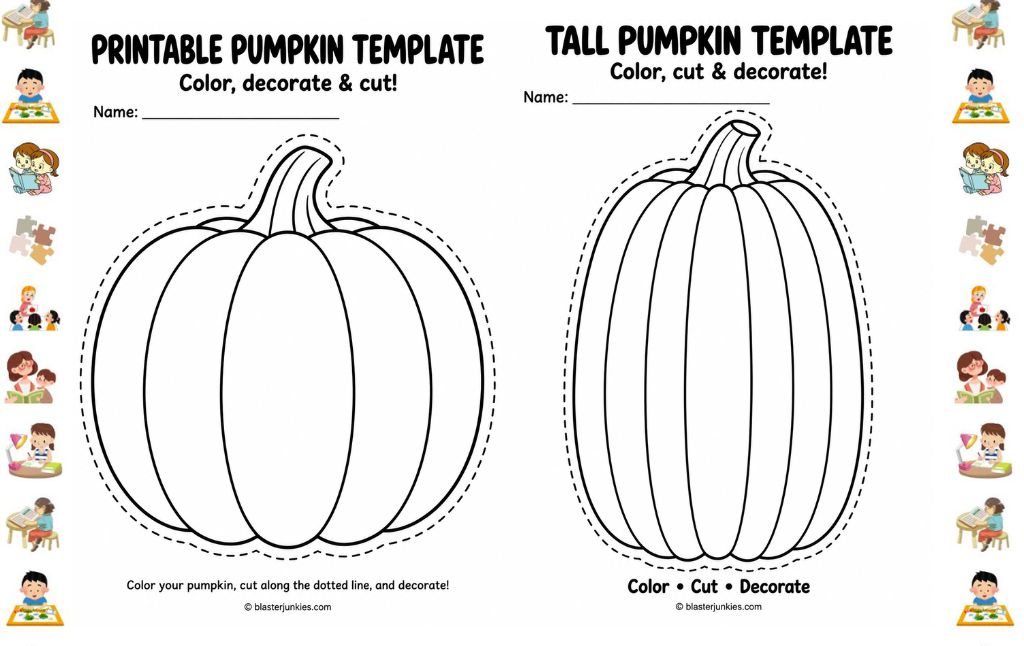
Our Easy Pumpkin Template Printable pack simplifies seasonal art. It provides a structured, kid friendly way to create festive decorations.
Let’s explore how to use these templates successfully at home.
The Multi Sensory and Cognitive Value of Pumpkin Crafts
Pumpkin crafts offer excellent fine motor practice for children. They require young learners to coordinate several physical skills:
Precision Coloring: Keeping wax crayons inside the narrow lines of patterned pumpkins.
Scissor Control: Cutting out the pumpkin body, stems, and tiny face shapes.
Bilateral Integration: Using one hand to hold paper steady while pasting elements.
Pincer Grasp Development: Picking up and arranging small, thin paper features.
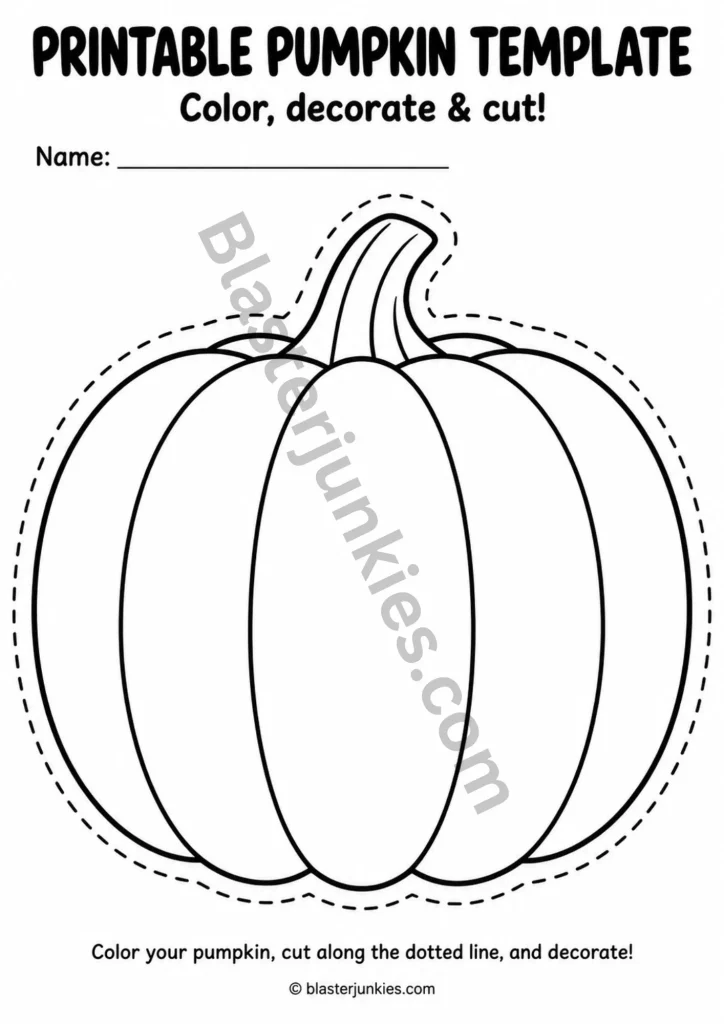
These actions develop hand muscles needed for future writing tasks. Tactile exploration also helps children understand varying shapes.
They feel the difference between straight lines and curves.
Sorting is another core cognitive skill used here. It teaches kids to compare and group objects.
They must group facial features together. They must match the stems to correct bases. This builds strong logical reasoning skills.
It prepares them for complex mathematical operations. It also teaches them to notice patterns in geometry.
Incorporating Autumn Crafts into Your Routine
Structured schedules help children feel secure and focused. You can easily schedule a dedicated quiet hour.
List daily craft sessions on your child’s Morning Routine Chart for Kids. This establishes a consistent habit of creative learning.
Pumpkins are synonymous with the fall harvest. Add this fun craft to your family’s Autumn Bucket List Printable.
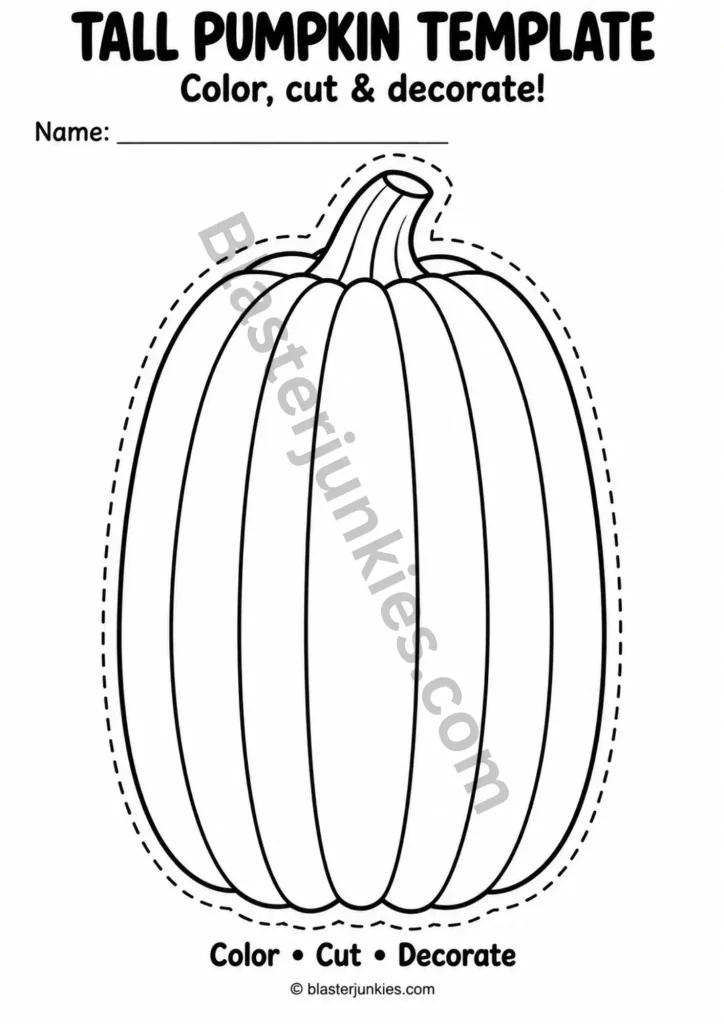
Once completed, these window hangings serve as festive holiday decorations. Put them on display using our Autumn Home Decor Checklist.
If you love autumn apple themes, try our Apple Suncatcher Template or our Apple Lacing Craft for Kids.
Key Features of the Easy Pumpkin Template Pack
This printable template pack uses a clear, logical layout to teach. It does not rely on heavy reading blocks. The worksheets cover several core developmental categories:
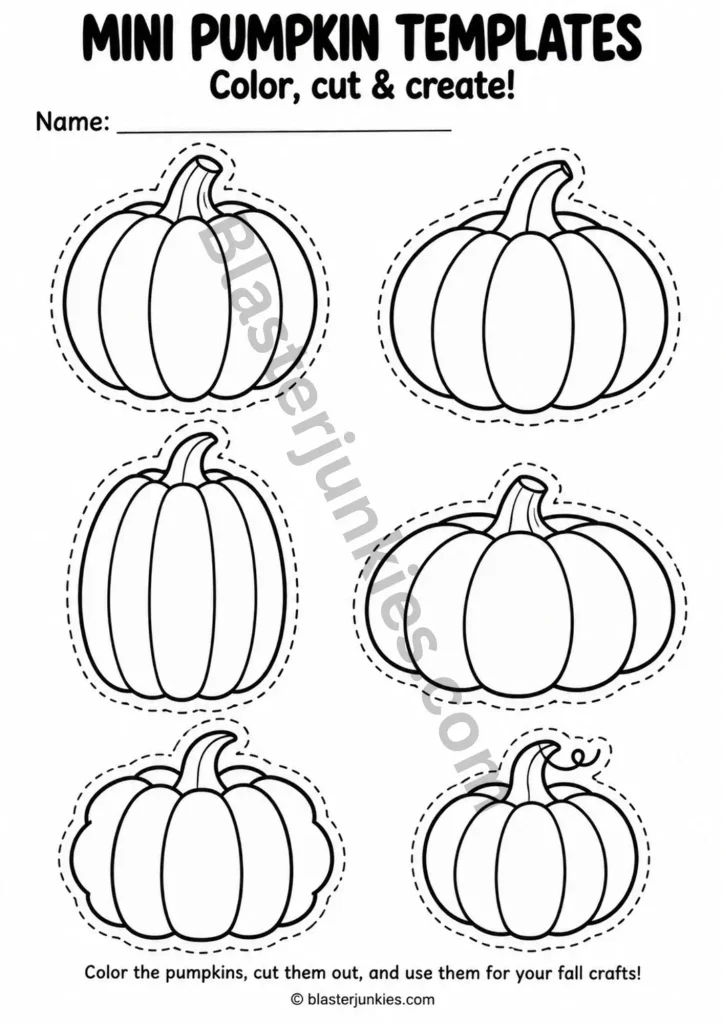
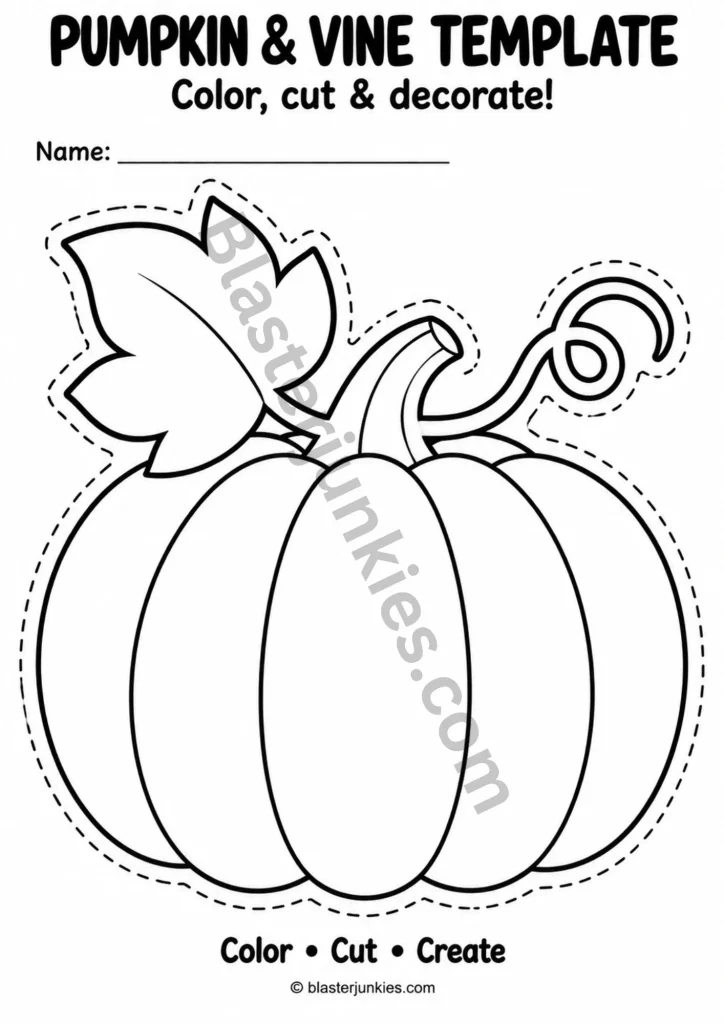
- Various Shapes and Sizes: Wide pumpkins, tall pumpkins, mini pumpkins, and vine designs.
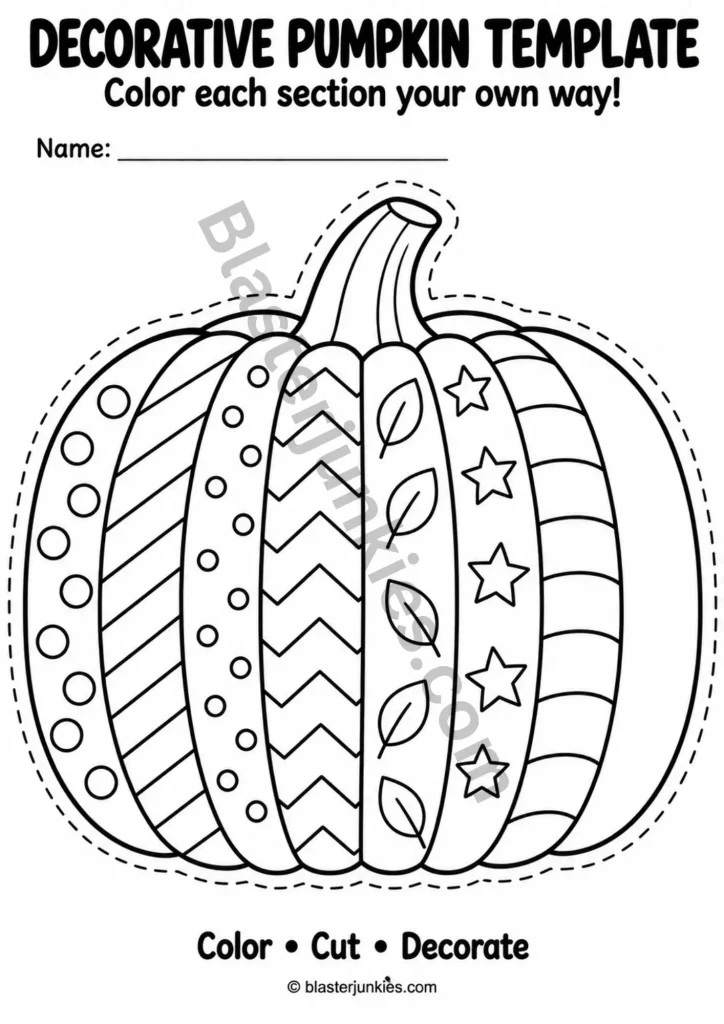
- Decorative Layouts: Patterns like stripes, stars, waves, and leaves for section shading.
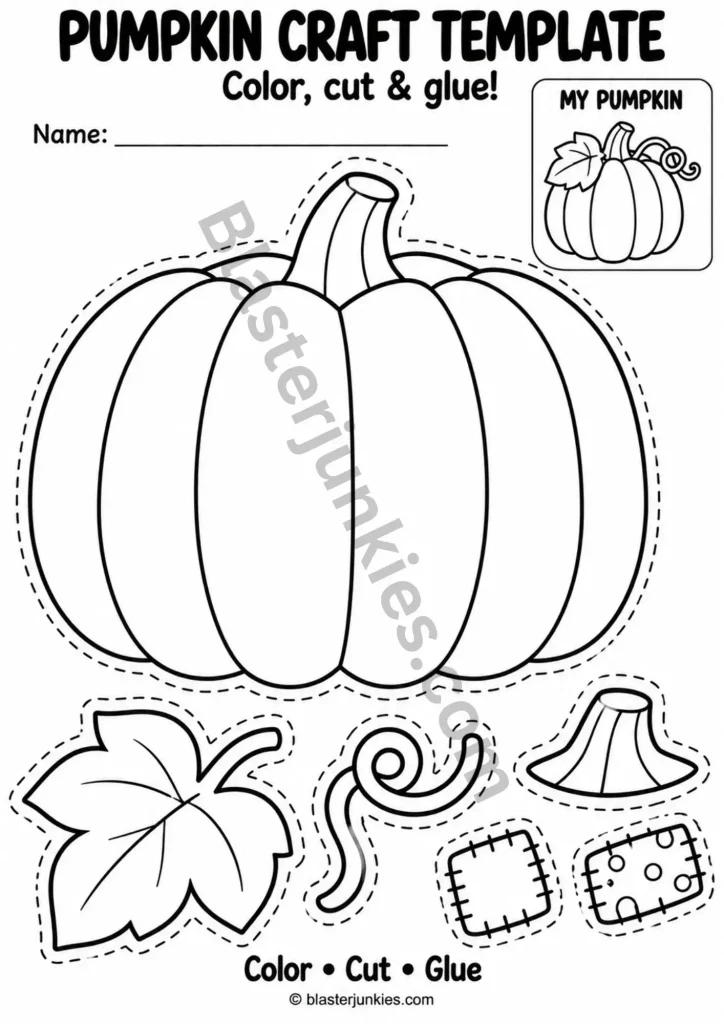
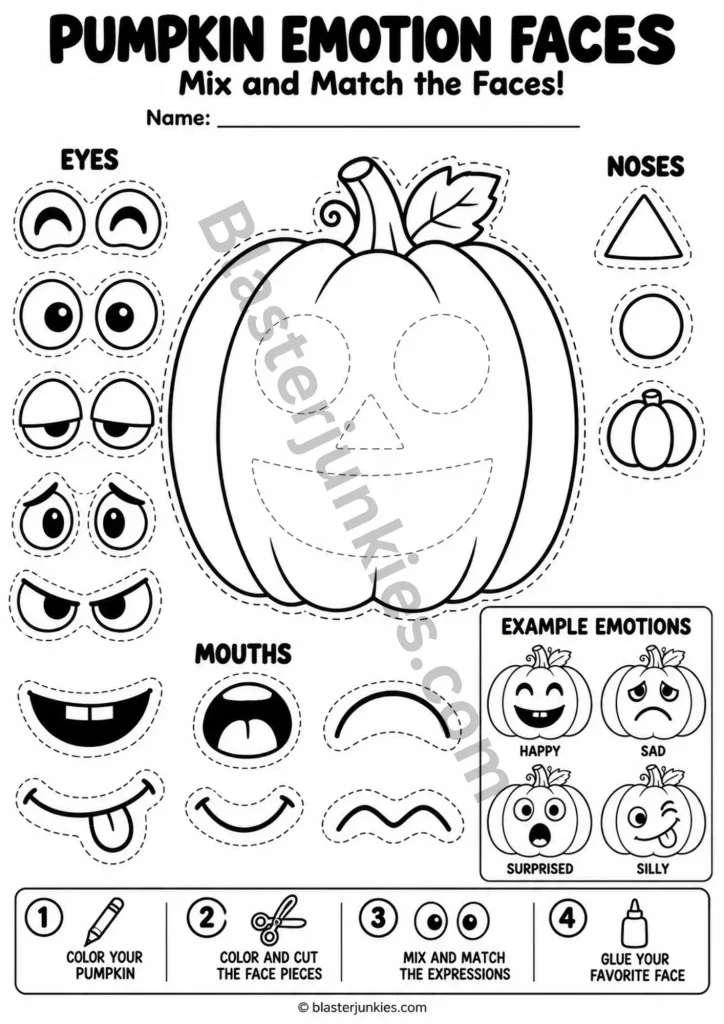
- Cut and Paste Assemblies: Pumpkin bases with separate stems, leaves, patches, and curly vines.
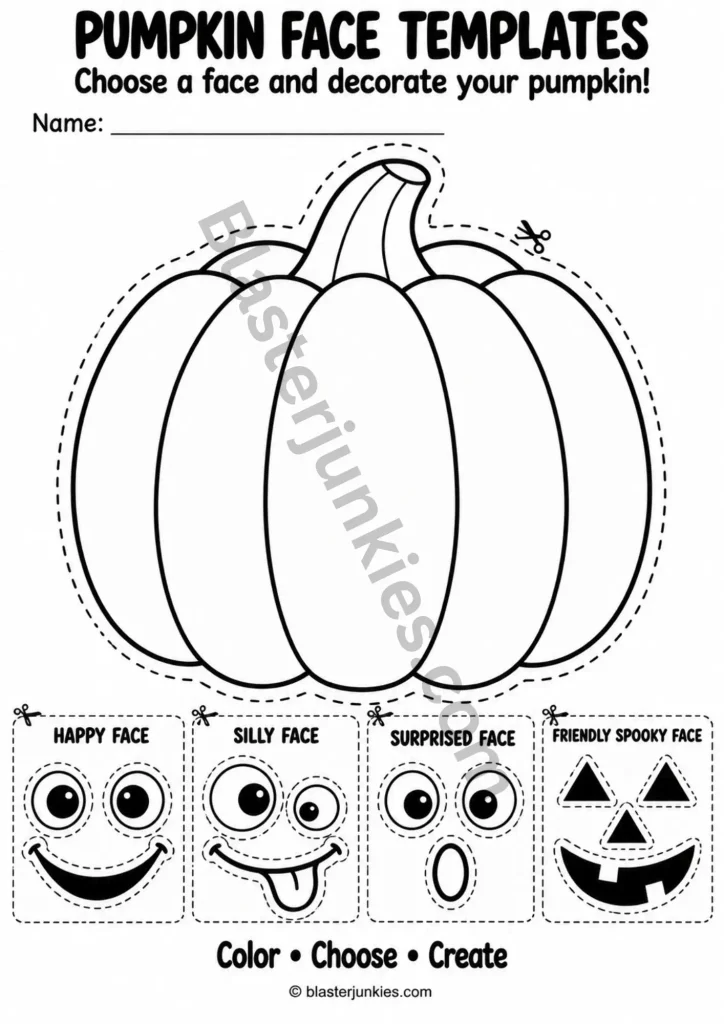
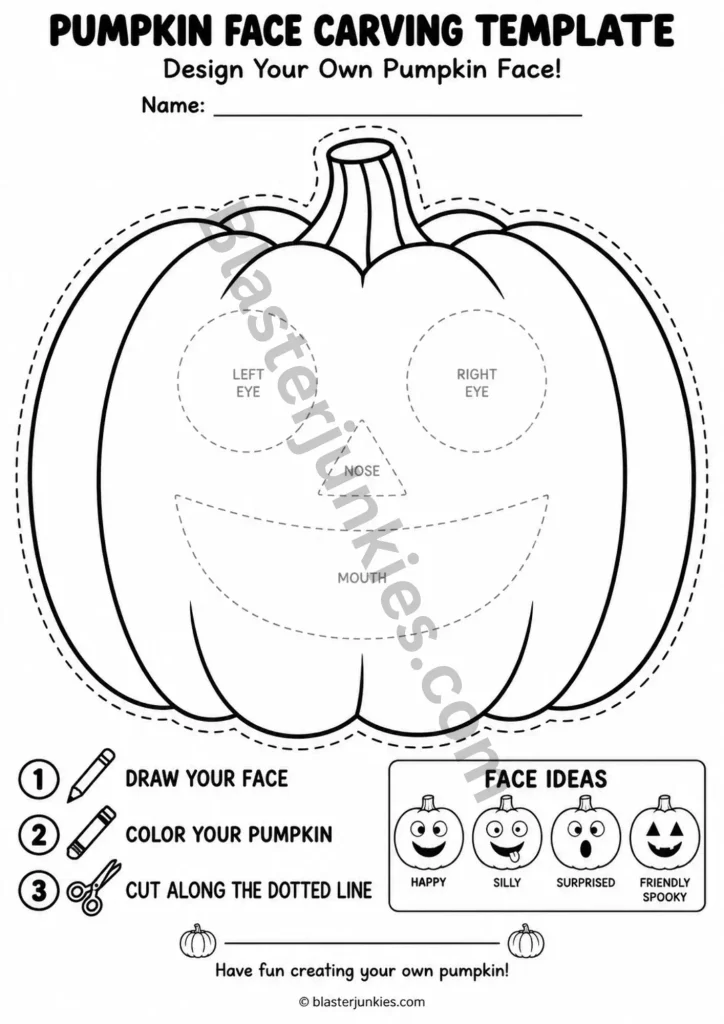
- Facial Features & Emotional Learning: Choosing between happy, silly, surprised, and friendly spooky face pieces.
- Mix and Match Expression: Swapping eyes, noses, and mouths to represent different feelings.
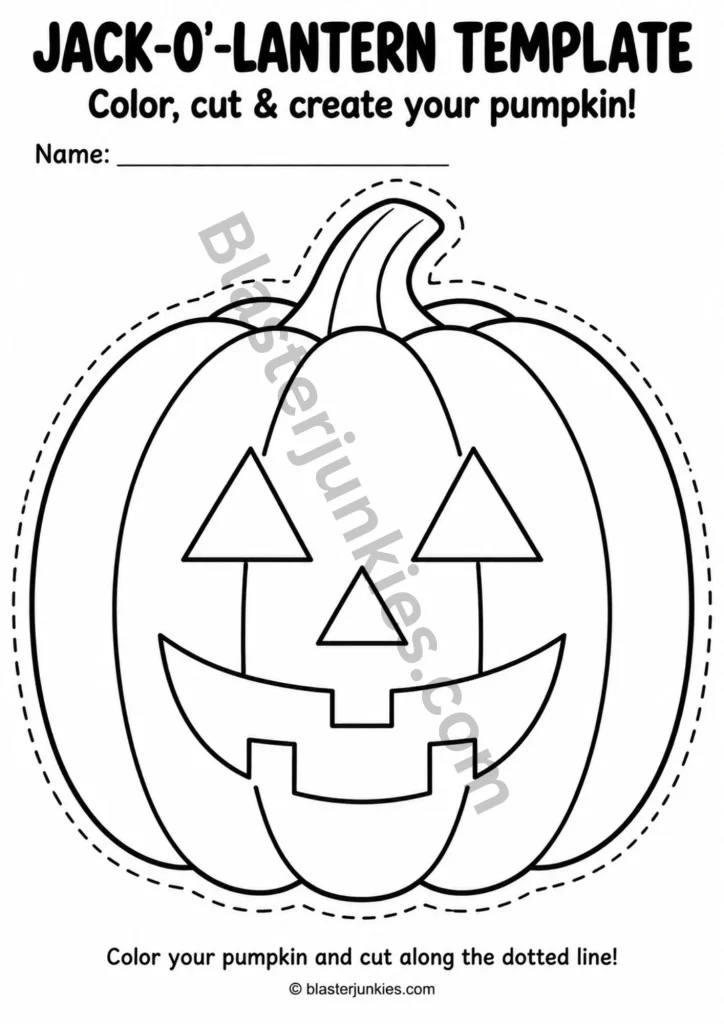
These activities build strong cognitive skills in young children. They teach kids to observe and construct facial expressions.
Creative Sensory Extensions
You can easily expand these paper based lessons. Combine the pumpkin worksheets with other sensory toys.
Glue real pumpkin seeds inside the blank templates. This tactile search keeps indoor play exciting.
You can also play active movement games. Have your children act out different pumpkin expressions.
Can they smile wide like a happy jack o’ lantern? Can they stick out their tongue like a silly pumpkin?
This lets children burn off extra energy indoors. It also reinforces the emotional concepts they learned.
Step by Step Assembly Guide
Assembling these crafts is highly rewarding. Follow these simple steps for a beautiful result:
Coloring: Color the pumpkin body, stem, leaves, and accessories.
Cutting: Carefully cut out the individual pieces along the dotted lines.
Arranging: Lay the clothing or facial features on the pumpkin first.
Pasting: Apply a glue stick and press the pieces into place.
Thick cardstock stands up best to wet school glue. Always ensure the glue dries completely before displaying the craft.
This prevents the pieces from slipping or sliding.
Supporting Cognitive and Fine Motor Growth
Our worksheets do more than teach crafts. They build essential fine motor coordination.
Using safety scissors to cut out stems and leaves develops hand strength. Pasting them onto the pumpkin frame develops bilateral integration.
The pack also encourages independent problem solving. Children must plan where to paste each accessory piece. This focus builds patience and attention spans.
Completing a project gives kids a clear sense of achievement. They feel proud to show you their finished pumpkins.
This simple pride boosts their self esteem. It motivates them to tackle more complex learning tasks.
You can also use these crafts to teach phonics. Ask your child: “What sound does the word ‘pumpkin’ start with?”
This simple prompt turns art into an active reading lesson. Phonics training is vital for early reading success.
The emotional matching sheets are great for speech practice. They teach children basic pronunciation and vocabulary.
Say the written words clearly together. Emphasize the hard “P” in “pumpkin.” Emphasize the soft “S” in “surprise.”
These verbal exercises build strong early reading skills. They also help with focus and articulation.
This makes the game highly supportive for speech development.
Fun Classroom and Home Display Ideas
Do not let the learning stop on paper. Display their completed crafts around your home or classroom.
Create a “Pumpkin Patch” bulletin board. Hang their custom colored pumpkins and vines together.
You can add green crepe paper for vine accents. This collaborative art project keeps spirits high. It helps children feel like part of a learning community.
They love finding their own work on the wall. This reinforces their visual-spatial skills in a fun way.
At home, tape their best pumpkin crafts to the window. This marks their learning progress with pride.
Customizing for Different Age Groups
These printable pages are highly adaptable. They suit children of varying developmental levels.
For toddlers (ages 2–3), focus on simple coloring. Do the cutting work for them beforehand. Let them paste the facial features with your guidance.
For preschoolers (ages 3–4), focus on visual design. Help them locate the eyes and mouths on the page. Let them practice cutting the straight lines themselves.
For kindergarteners (ages 5–6), encourage independent work. Let them find, cut, and paste their pieces alone.
They can write a sentence about their pumpkin on the back. This flexibility makes the pack great for families.
Siblings of different ages can craft together successfully.
Conclusion
Learning about the seasons is a wonderful journey. These printable autumn crafts combine seasonal fun with education.
They help children practice essential childhood skills. Fine motor, math, and literacy are all supported.
You can easily download the complete pack today. It is ready to print and use immediately.
Enjoy watching your child discover autumn through play. Have fun exploring the harvest together today!
For more harvest themed learning, try Autumn Classroom Fun: The Scarecrow Craft.
For some spooky October fun, pair it with our companion guide. Explore Spooky Spelling: How to Use the Haunted House Name Craft with Kids.
On clear, dry days, try an Autumn Scavenger Hunt Printable outside. If things get messy with scissors and paper scraps, don’t worry.
Wipe down your creative tables using our Deep Cleaning Hacks For Busy Moms.
Several templates focus on emotional expressions. You can pair these matching faces with our Emotions Memory Game.
This helps children connect facial features with internal feelings.