This collection of Alphabet Letter Sound Activity Cards is a vibrant and interactive educational resource designed to help toddlers, preschoolers, and kindergarteners master initial letter sounds. Sized perfectly for A4 printing, these cards bridge the gap between recognizing a picture and identifying the phonetic sound that starts its name.
Below is a detailed explanation of the worksheets and a guide on how to use them to create a fun learning experience for your kids.
Detailed Breakdown of the Activity Cards
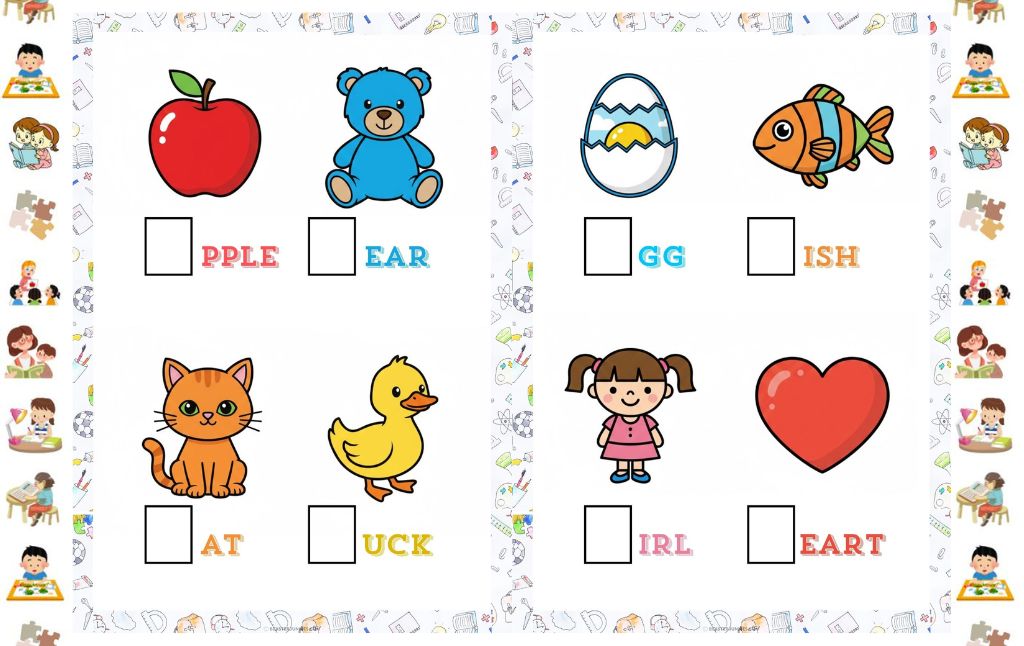
Each page consists of four large, easy-to-read cards (with the final page containing two). Every card features:
A Colorful Illustration: A clear, engaging graphic representing a common object or animal.
A Blank Box: A space designated for the child to provide the missing initial letter.
The Word Ending: The remainder of the word is written in a fun, textured, and colorful font to help with word recognition.
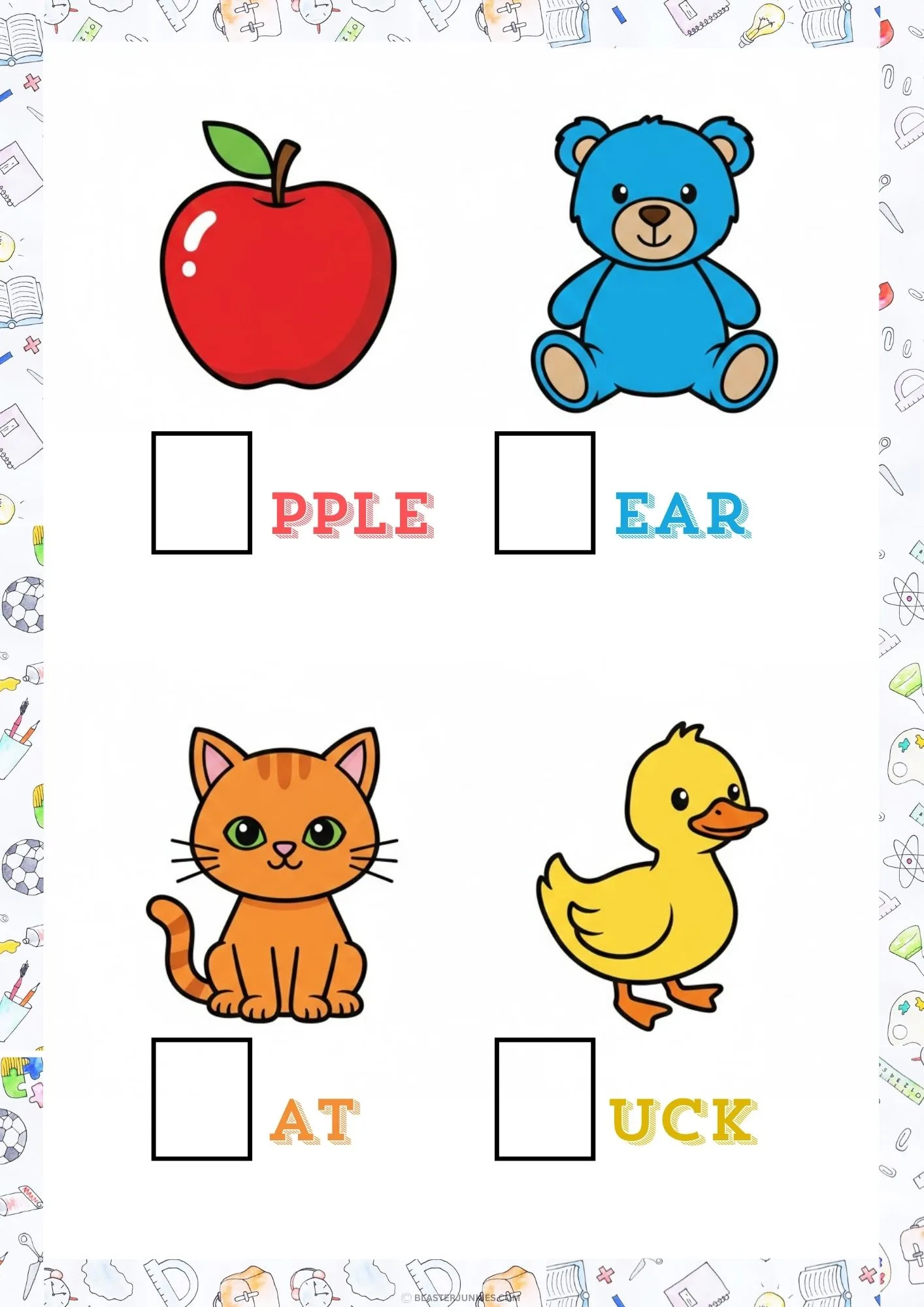
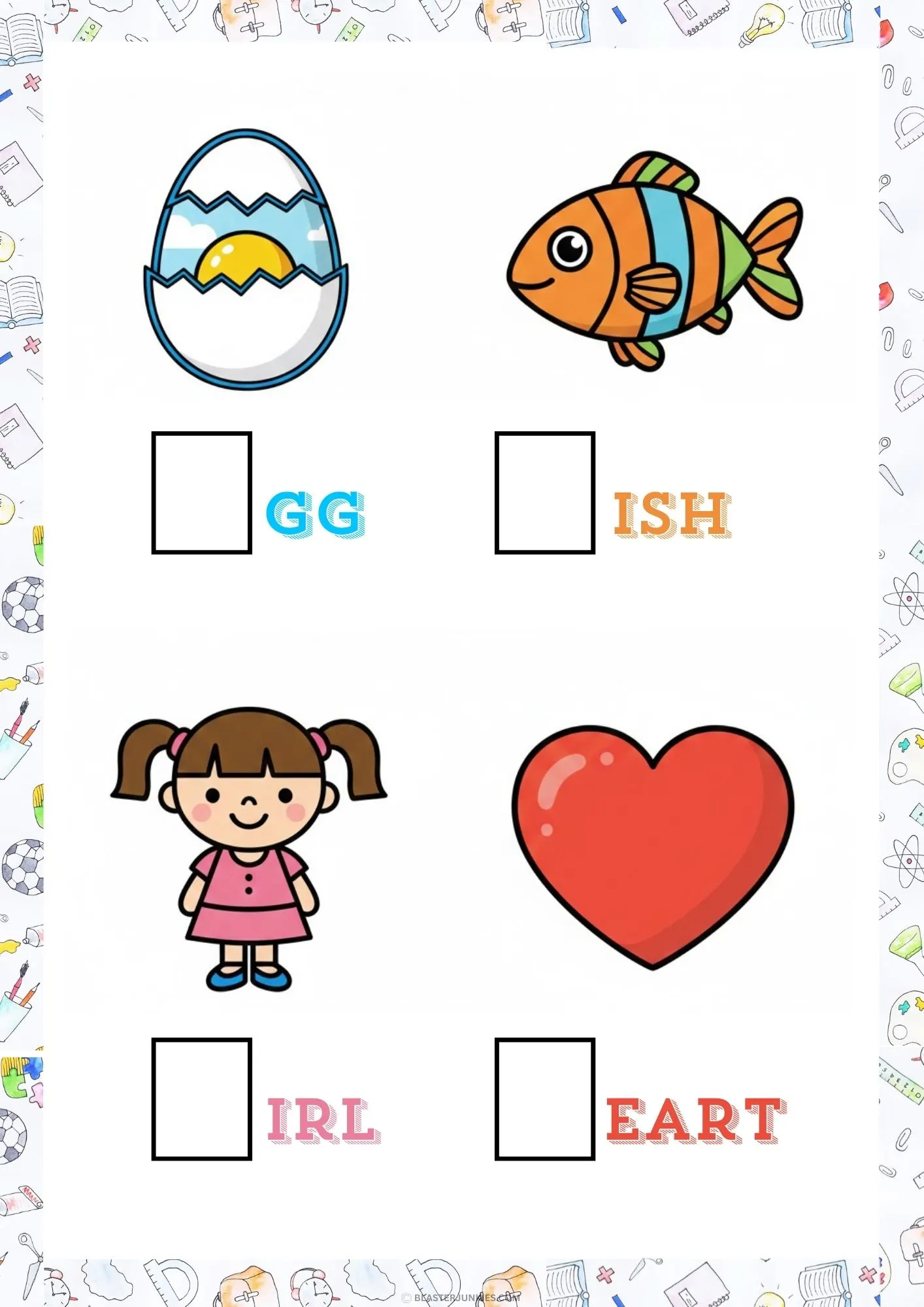
Letters & Vocabulary Included:
- A-D: Apple, Bear, Cat, Duck
- E-H: Egg, Fish, Girl, Heart
- I-L: Igloo, Jelly, Kite, Lion
- M-P: Moon, Nose, Owl, Pig
- Q-T: Queen, Robot, Sock, Tree
- U-X: Umbrella, Volcano, Whale, X-ray
- Y-Z: Yarn, Zebra
How to Use These Worksheets for Kids
These cards are highly versatile. Here are five different ways to use them in a home or classroom setting:
1. The Write and Wipe Method (Best for Reusability)
Setup: Print the A4 sheets and laminate them. Cut the cards along the borders.
Activity: Give your child a dry-erase marker. Ask them to look at the picture (e.g., the Apple), say the name out loud, identify the starting sound (“/a/”), and write the letter ‘A’ in the blank box.
Benefit: Allows for endless practice and builds pencil control.
2. Letter Tile Matching (Kinesthetic Learning)
Setup: Cut out the individual cards. Gather a set of plastic alphabet magnets or wooden letter tiles.
Activity: Place a few cards in front of the child and a pile of letters. Have the child find the physical letter that “matches” the sound of the picture and place the tile inside the blank box.
Benefit: Great for children who are still developing the fine motor skills needed to write but can recognize letters.
3. Initial Sound Clip Cards
Setup: Laminate and cut the cards.
Activity: Write individual letters on clothespins. Have the child “clip” the correct letter onto the side of the card near the blank box.
Benefit: This adds an extra layer of fine motor work by strengthening the “pincer grasp” muscles in the fingers.
4. “What’s My Sound?” Scavenger Hunt
Setup: Tape the cards around the room at the child’s eye level.
Activity: Give the child a clipboard. Have them walk around the room like a “Sound Detective.” When they find a card, they have to shout out the sound and write the letter.
Benefit: Incorporates physical movement, which helps keep high-energy children engaged with learning.
5. Interactive Phonics Binder
Setup: Keep the pages whole (do not cut). Place them in clear plastic sheet protectors inside a three-ring binder.
Activity: Use this as a “morning work” binder where the child completes one or two pages each day using a dry-erase marker.
Benefit: Keeps all the letters organized and creates a portable learning tool for car rides or waiting rooms.
Educational Benefits
Phonemic Awareness: Helps children understand that spoken words are made up of individual sounds.
Alphabetic Principle: Reinforces the relationship between written letters and spoken sounds.
Vocabulary Development: Introduces new words and reinforces familiar ones through visual association.
Visual Discrimination: The colorful borders and distinct fonts help children focus on the specific structural differences between words.
Download this high resolution A4 PDF pack today and turn phonics practice into your child’s favorite part of the day!
Free A to Z Alphabet Hat Crafts: Printable Letter Learning Activities.
Zoo Animal Scavenger Hunt Worksheets
The Ultimate Shapes Bundle: Free Printables for Circle, Triangle, Square, and Rectangle.
Neighborhood Water Cycle Worksheet Pack
Educational Easter Activities Neighborhood Scavenger Hunt for Kindergarten & Elementary.
Easter Create A Word Spelling Activity Pack for Kids.
9 FREE Easter Tracing Worksheets