Every summer, parents face the same quiet worry: will my kid pick up a book at all this break, or will the whole season disappear into a screen?
The good news is that reading doesn’t need to feel like an assignment to work. With the right structure one that feels like a game rather than homework kids naturally gravitate toward books,
And a well designed Summer Reading Challenge printable set is exactly the kind of structure that makes it happen.
If you’ve downloaded the Summer Reading Challenges pack, here’s a complete breakdown of what it’s for and, more importantly,
How to actually use it with your kids so reading becomes something they look forward to rather than something they’re told to do.
Why Reading Habits Slip in Summer and Why a Challenge Fixes It
During the school year, reading has built in structure: assigned books, class discussions, library visits scheduled by a teacher.
Once summer hits, all of that scaffolding disappears overnight.
Research on the “summer slide” has shown for years that kids who don’t read regularly over break can lose meaningful ground in reading skills by the time school starts again.
The problem usually isn’t that kids dislike reading it’s that without any structure or motivation, it simply falls to the bottom of the list next to video games, YouTube, and hanging out with friends.
A reading challenge solves this by turning an open ended, easy to skip activity into something with a clear goal, a visible finish line, and a bit of friendly competition whether that competition is against siblings, friends, or just their own personal best from last summer.
Reading challenges work best when they’re one thread in a bigger, more active summer plan rather than the only activity on the calendar.
Pair quiet reading afternoons with active outdoor days like a Beach Scavenger Hunt For Kids or a family outing guided by a USA National Park Checklist Printable.
A rainy day is often the perfect excuse to dig deeper into a chapter book, while a sunny one is better spent outside balance keeps both reading and play feeling fresh rather than forced.
Long car rides are also prime reading time, but they don’t have to be reading only.
Break things up with a Road Trip Games Printable or the ever popular License Plate Game Printable to keep energy up before settling back into a book.
What Makes a Good Reading Challenge System
A strong reading challenge isn’t just “read more books.” It works because it gives kids multiple ways to engage:
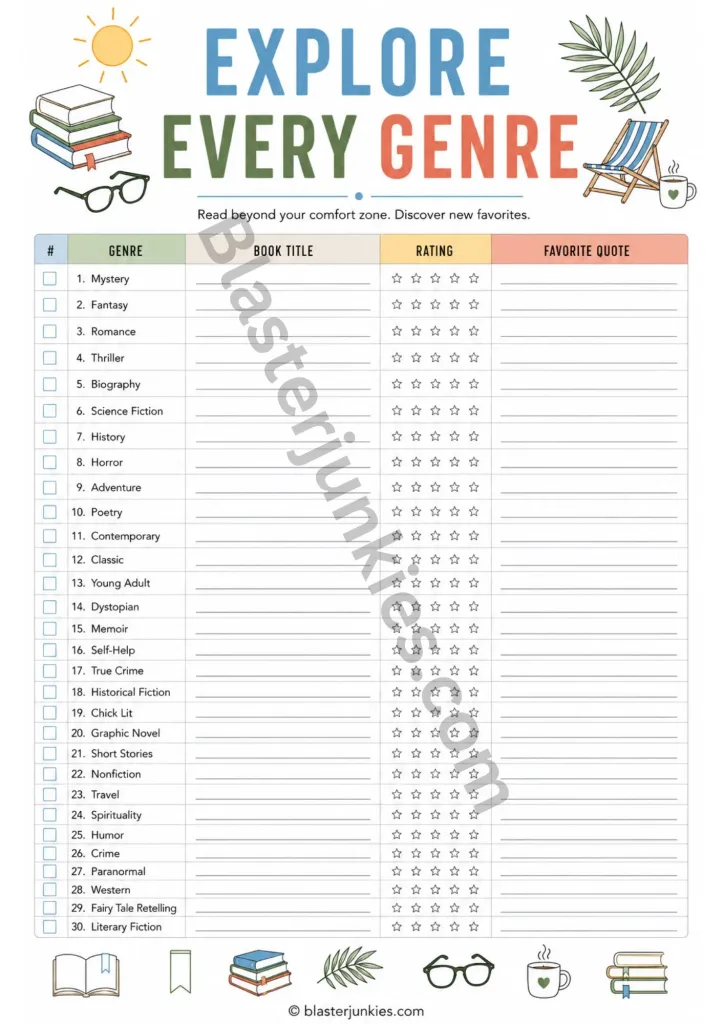
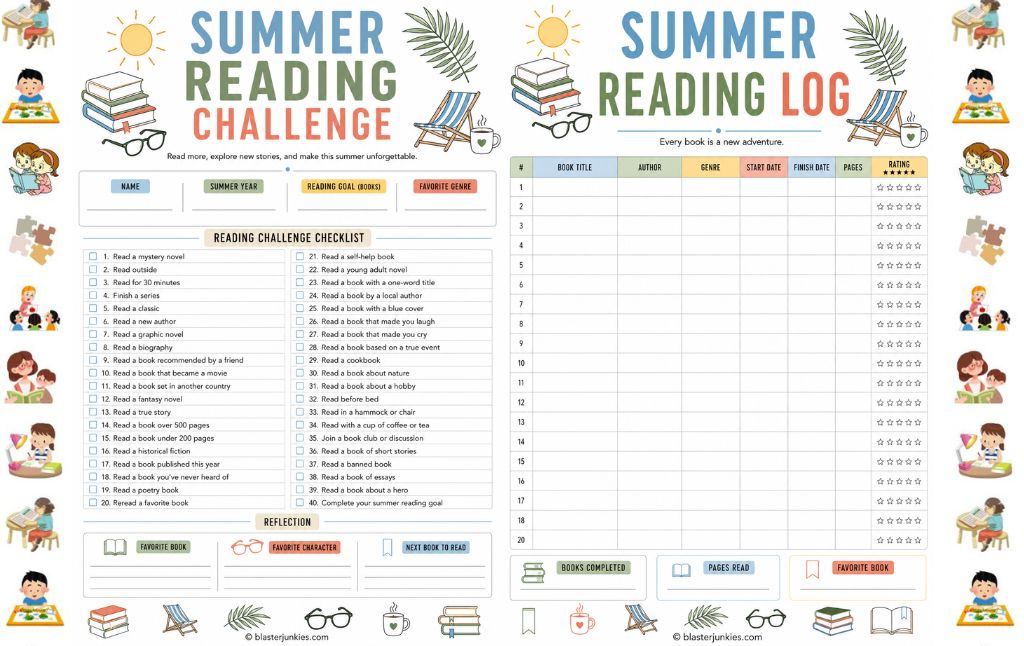
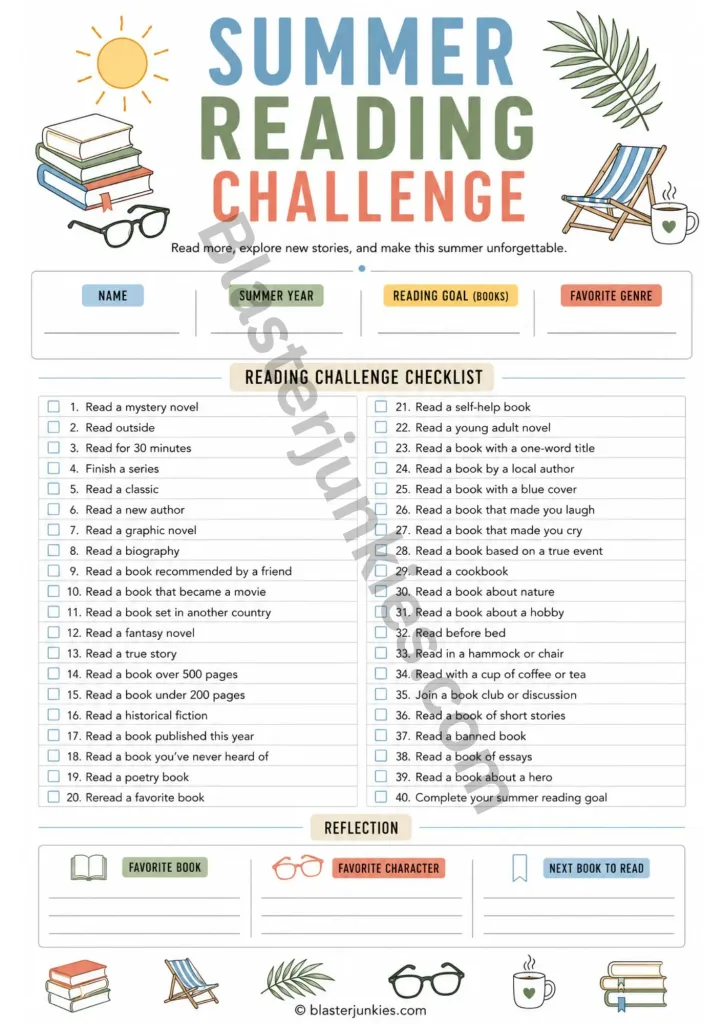
A checklist of varied reading prompts pushing kids to try new genres, formats, and types of books instead of rereading the same comfortable favorites over and over.
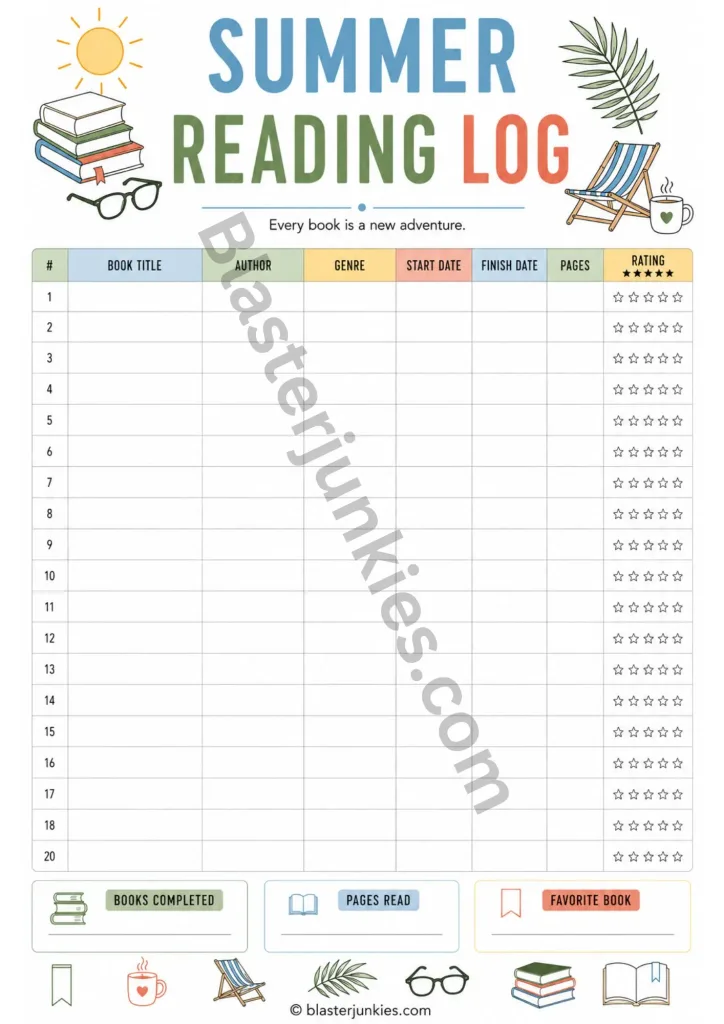
A simple log to track what’s actually been read because kids (like adults) forget titles and authors within days, and a log turns scattered reading into a real, trackable accomplishment.
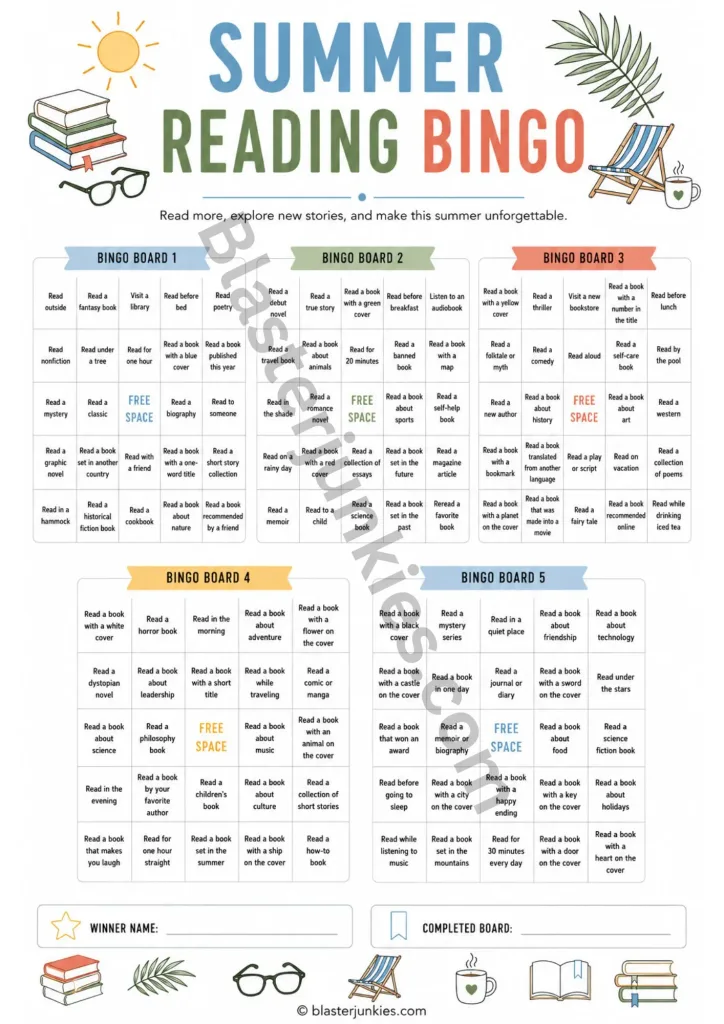
A game like format, like bingo boards which reframes reading goals as a fun puzzle to complete rather than a chore to finish.
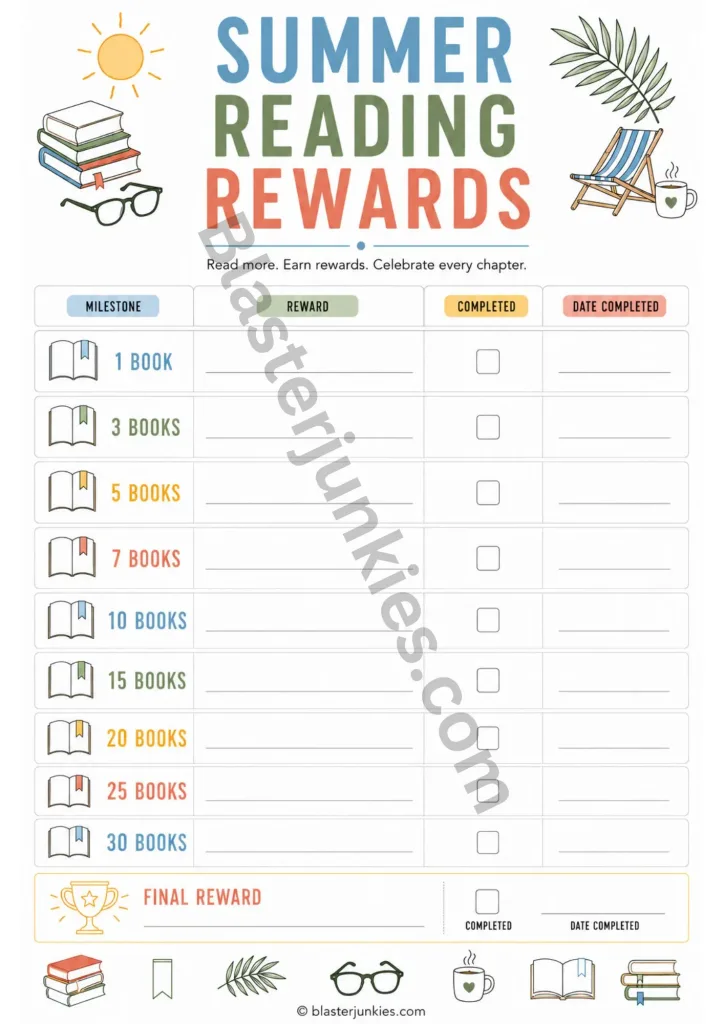
A rewards structure tied to milestones small, motivating markers for reaching 5, 10, or 20 books instead of one big far off goal that feels impossible to reach.
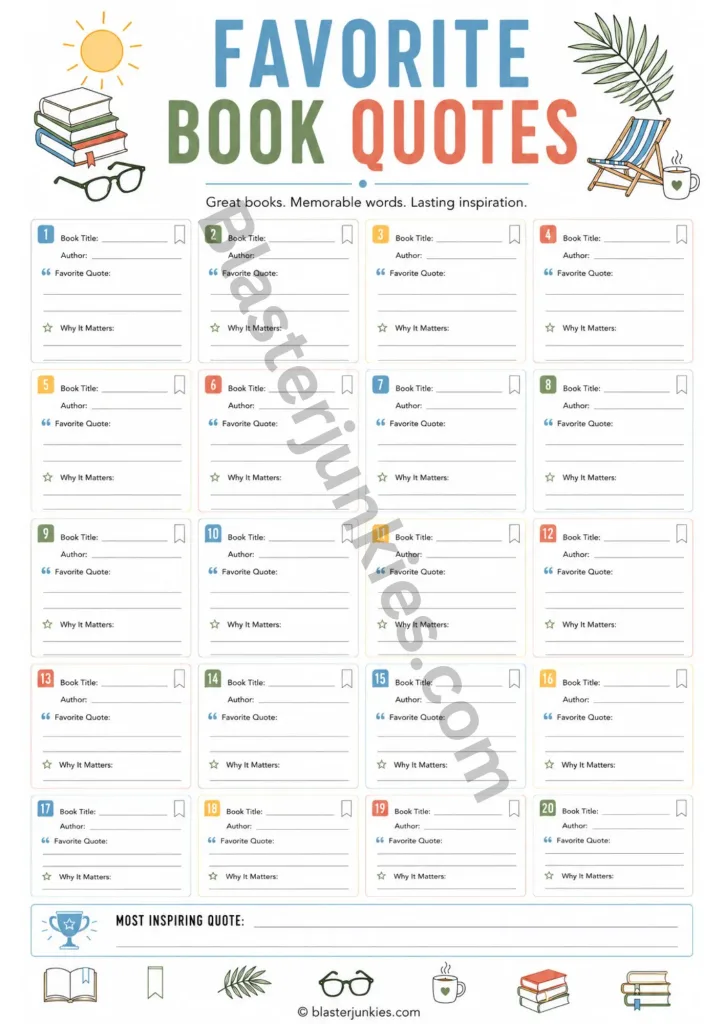
Reflection space a place for kids to note favorite characters, quotes, and books, which builds real engagement with what they’re reading instead of just racing through pages.
When these elements work together, reading stops being a single, vague goal and becomes a series of small, achievable wins spread across the whole summer.
How to Use It With Kids: Step by Step
1. Set a realistic goal together. Before diving into any checklist, sit down with your child and pick a number that feels achievable five books for a reluctant reader, twenty or more for a bookworm.
The goal should stretch them a little, not overwhelm them. Kids who help set their own target are far more likely to stick with it.
2. Use the checklist to break out of reading ruts. Kids often default to the same genre or series again and again.
A checklist filled with varied prompts a mystery, a biography, a book set in another country, a graphic novel gently nudges them toward books they’d never have picked up on their own, often leading to a surprise new favorite.
3. Turn it into a game with bingo boards. For kids who respond better to games than checklists, bingo style boards work wonders.
Instead of “finish the whole list,” the goal becomes “get five in a row.”
It’s the same underlying habit, just wrapped in a format that feels more like play and less like an obligation.
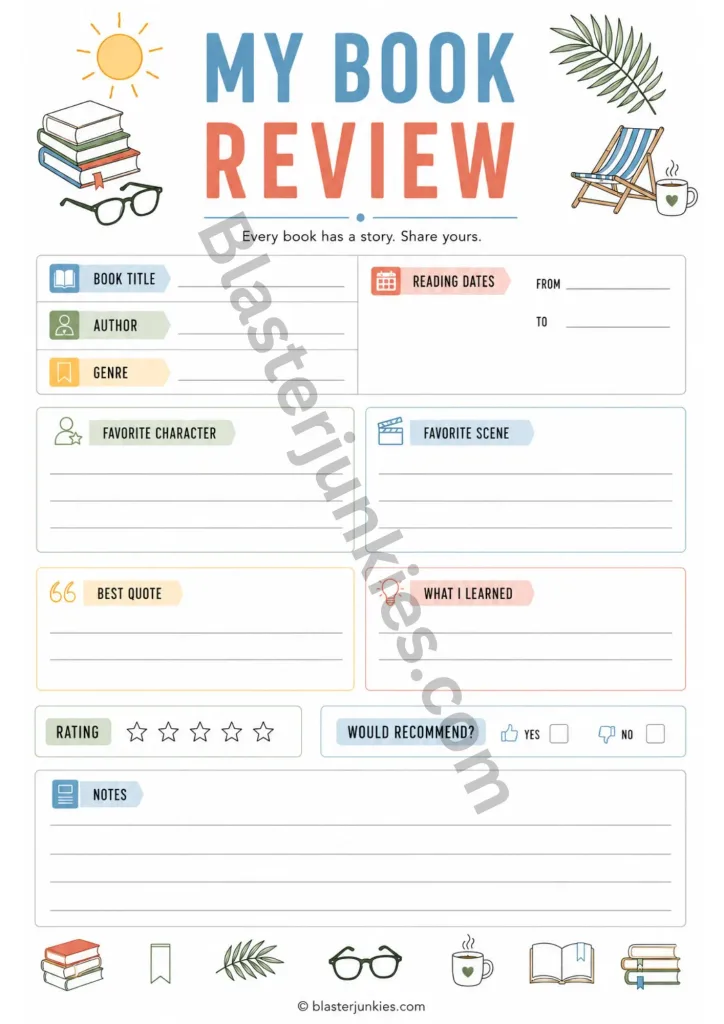
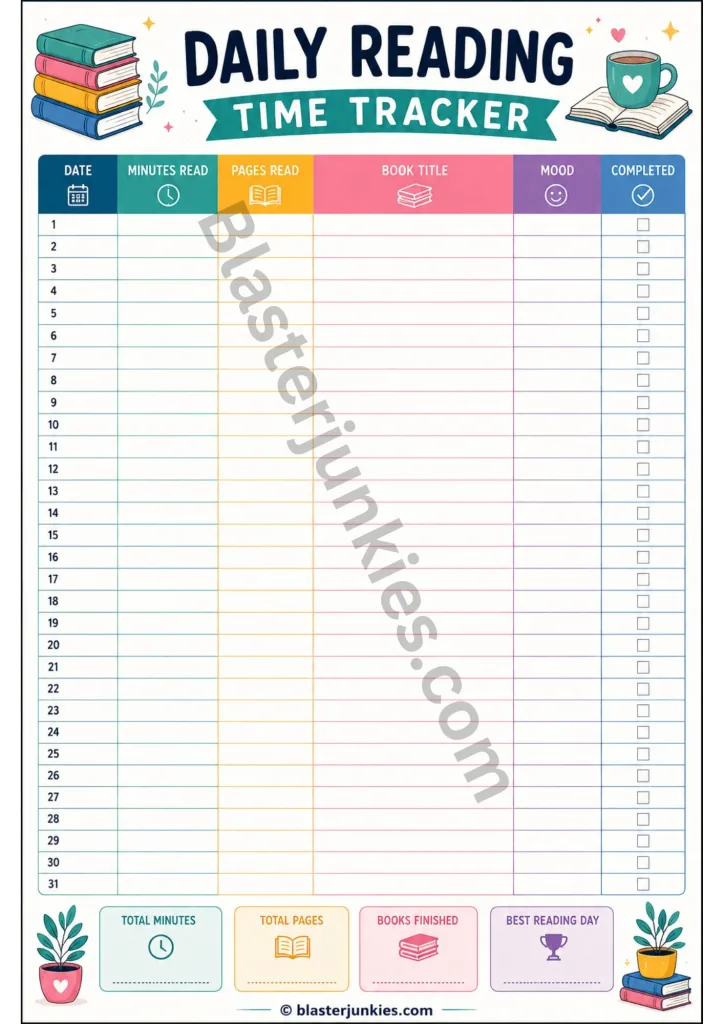
4. Log every book, even the short ones. Encourage your child to jot down each title, start and finish date, and a quick star rating as they go.
Seeing a growing list of completed books is deeply satisfying for kids, and it becomes a fun record they can look back on “remember when I read that whole series in one week?”
5. Tie in real rewards at real milestones. Small rewards tied to book counts a trip for ice cream after five books, a new book of their choice after ten keep momentum going, especially in the slower middle weeks of summer when initial excitement has worn off.
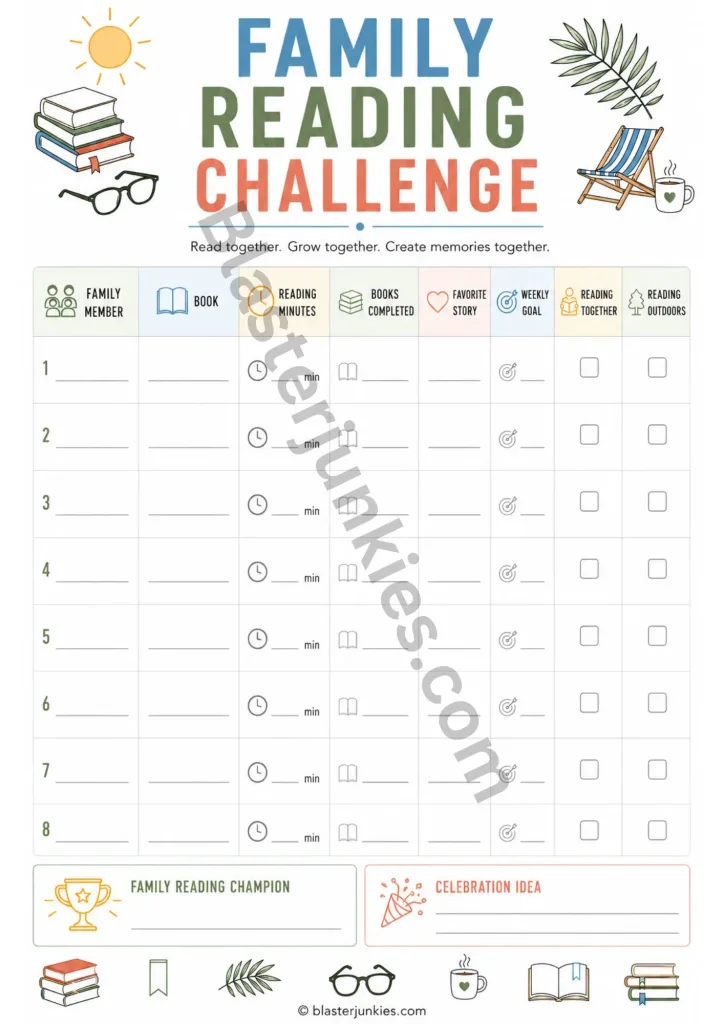
6. Make reading a shared, social activity. Reading doesn’t have to be a solo activity locked away in a bedroom.
Read the same book as your child and talk about it.
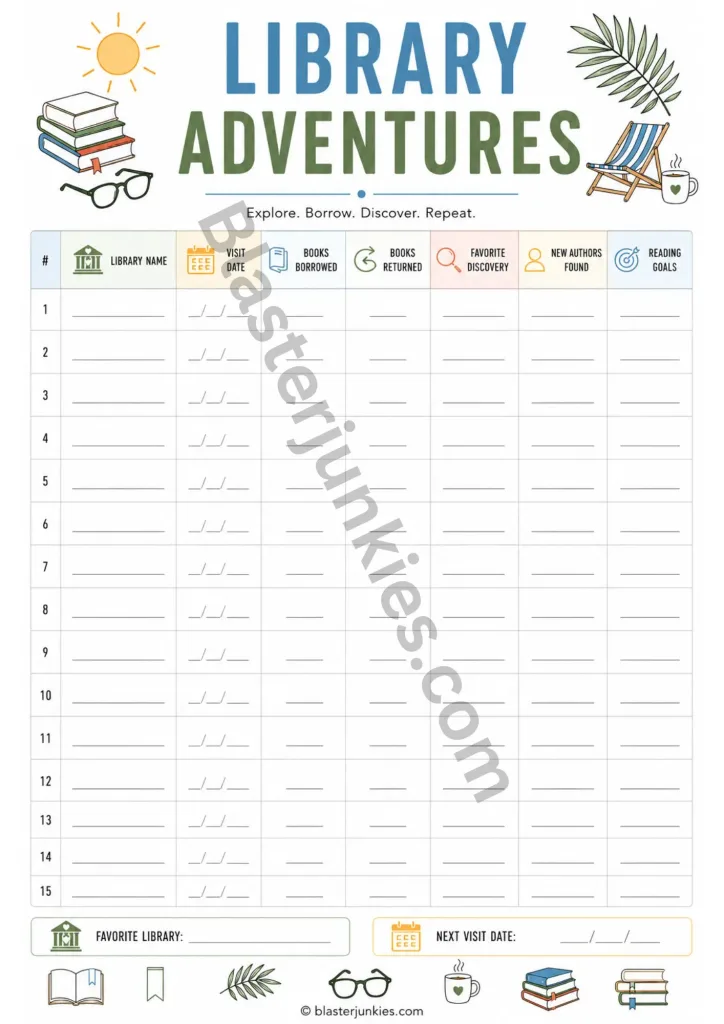
Turn a Saturday afternoon into a library trip. Let siblings compete on the same challenge and compare notes.
The social element often matters just as much as the content of the books themselves.
Building It Into a Fuller Summer Routine
If you’re heading out on a bigger trip, a Vacation Packing List Checklist or Camping Packing Checklist Printable makes sure a few favorite books actually make it into the bag.
Reading milestones also pair nicely with other summer traditions celebrate finishing a reading goal with Ice Cream Party Printables, or fold it into a broader list of family goals with an End of Summer Bucket List Printables.
And if daily routines are something you’re already working on, a reading challenge slots in beautifully alongside a Summer Habit Tracker for Kids, giving reading its own dedicated line right next to water intake, outdoor time, and sleep.
Carrying It Into the New School Year
The habits built over a summer of reading don’t have to end when the backpacks come back out.
The same structure small goals, visible tracking, and steady celebration of progress can transition directly into the classroom using a Morning Routine Chart for Kids or The Student Assignment Tracker Template once school starts again.
Final Thoughts
A Summer Reading Challenge isn’t about forcing kids through a stack of books it’s about giving them a fun, structured way to discover that reading can be genuinely enjoyable when it’s their choice, their pace, and their goal.
Keep the target realistic, mix in variety and a little competition, celebrate every milestone, and let reading sit comfortably alongside the rest of your family’s summer adventures.
By the time September rolls around, you won’t just have a completed checklist you’ll have a kid who associates books with fun instead of homework, which is a habit worth far more than any single summer.