One of the most important skills a child can develop right alongside reading and maths is the ability to manage their own responsibilities.
Knowing what’s due, when it’s due, and how to plan backwards from a deadline doesn’t come naturally to most kids.
It’s a learned skill, and like any skill, it needs the right tools to practise with.
That’s exactly what the Student Assignment Tracker Template
This beautifully designed, A4 sized printable pack gives students a complete, structured system for tracking every assignment, project, grade, and exam across daily, weekly, monthly, and semester timelines.
It’s not just a homework list. It’s a genuine planning toolkit that grows with a child from primary school right through to secondary and beyond, building habits that will serve them for life.
What This Printable Pack Contains
The pack spans ten functional tracking sheets, each designed with a specific purpose and time horizon in mind.
Together they form a layered system where every level of school life is covered from what’s due today all the way to a bird’s eye view of the entire semester.
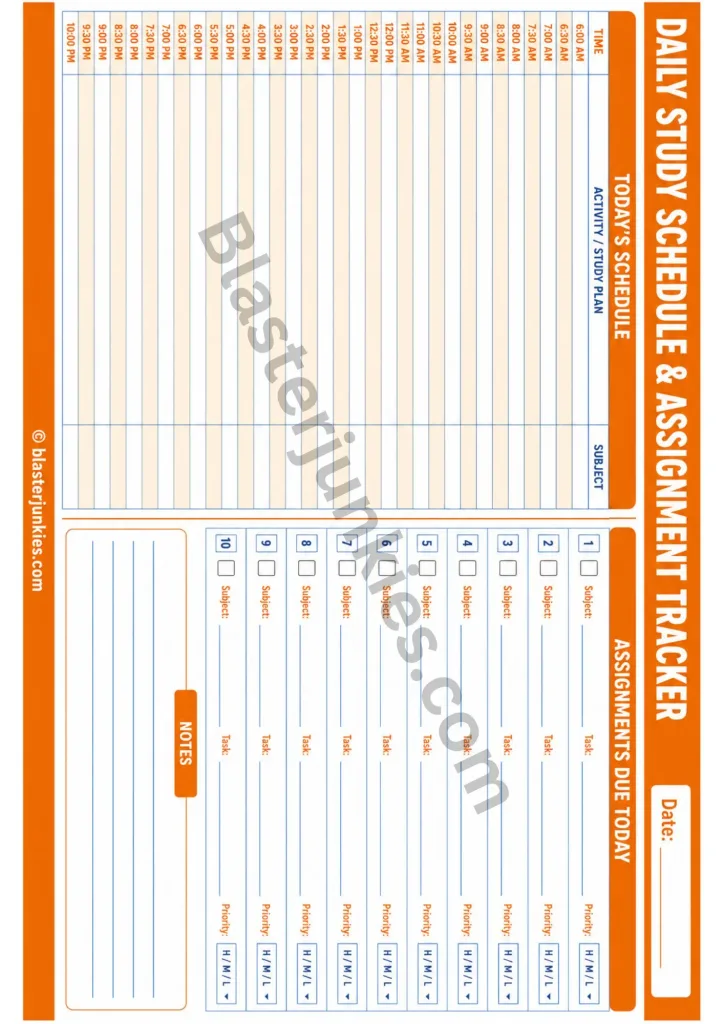
At the daily level, students get a Daily Study Schedule & Assignment Tracker that maps every half hour from 6:00 AM to 10:00 PM alongside a list of up to ten assignments due that day, each with subject, task, and a High/Medium/Low priority rating.
There’s also a Daily Study Schedule that pairs today’s timetable with a list of assignments due, giving children a complete picture of their entire day on one sheet.
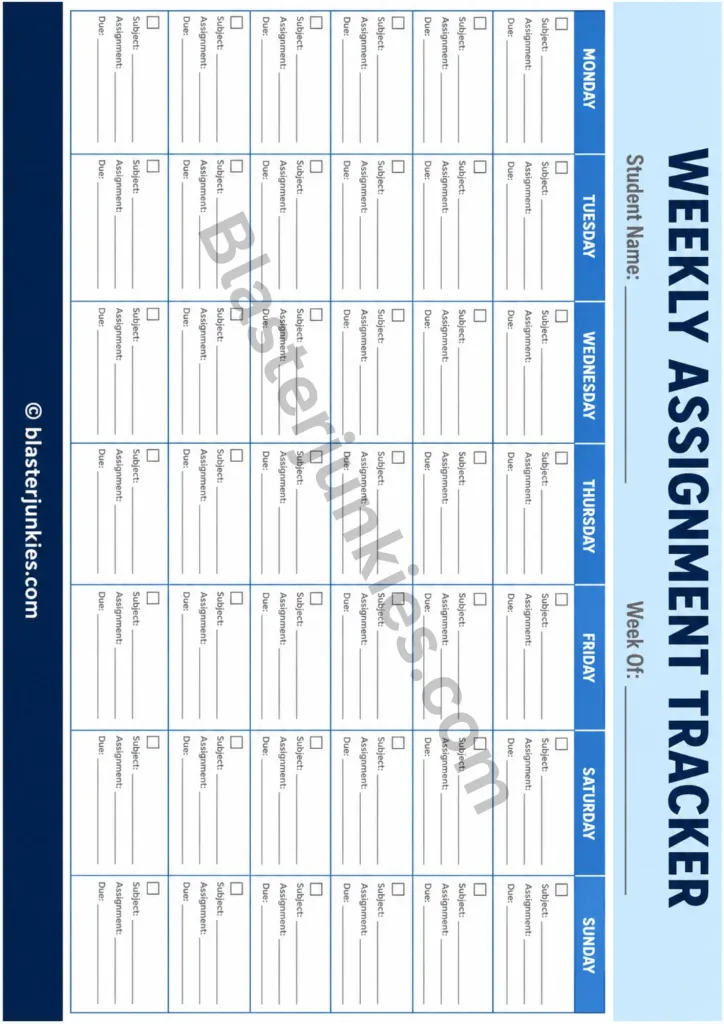
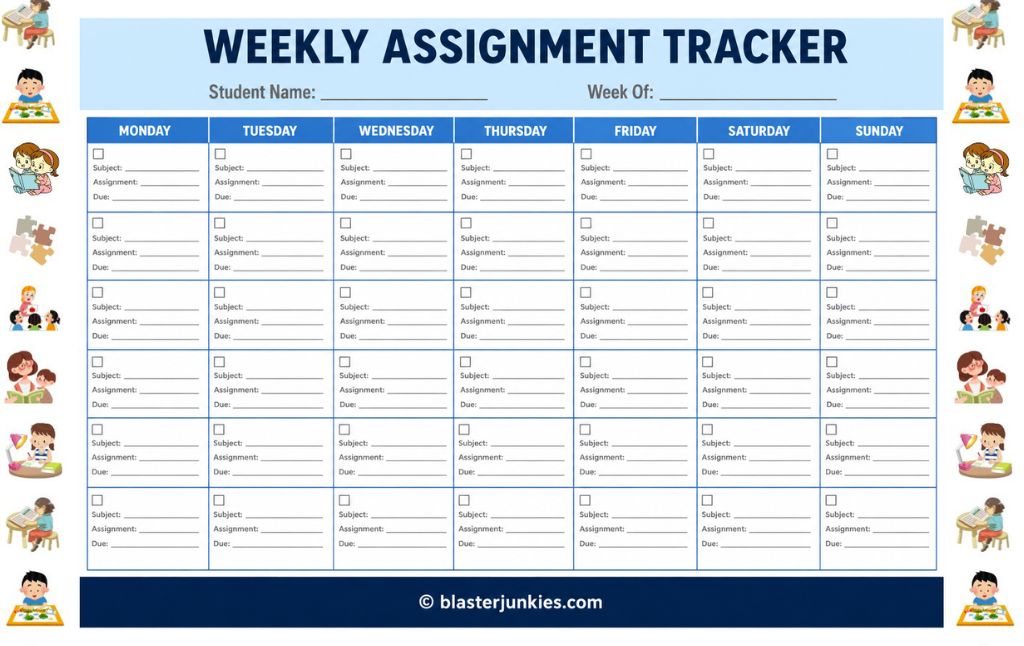
Moving to the weekly view, the Weekly Assignment Tracker is a full seven day grid (Monday through Sunday) with space for up to five assignments per day, each recording subject, assignment name, and due date with a completion checkbox.
This is the sheet that becomes a natural weekly habit filled in at the start of each week and checked off as work gets done.
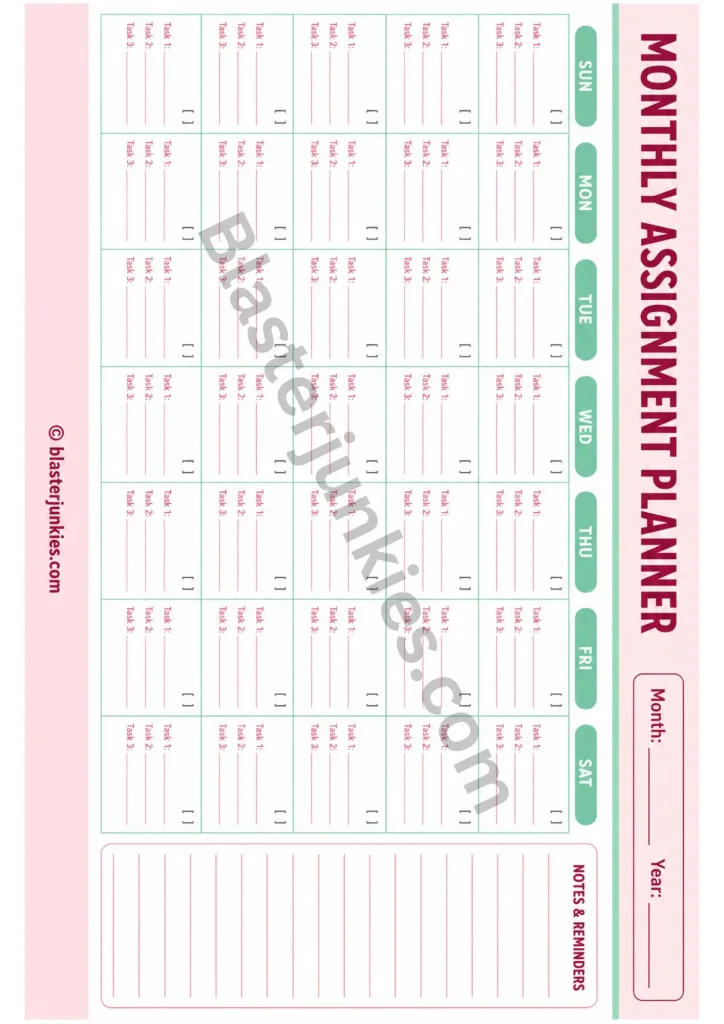
At the monthly level, the Monthly Assignment Planner gives a full calendar grid across all seven days of the week,
With three task slots per cell and a notes and reminders section at the bottom perfect for mapping out bigger deadlines, test dates, and project milestones across a whole month.
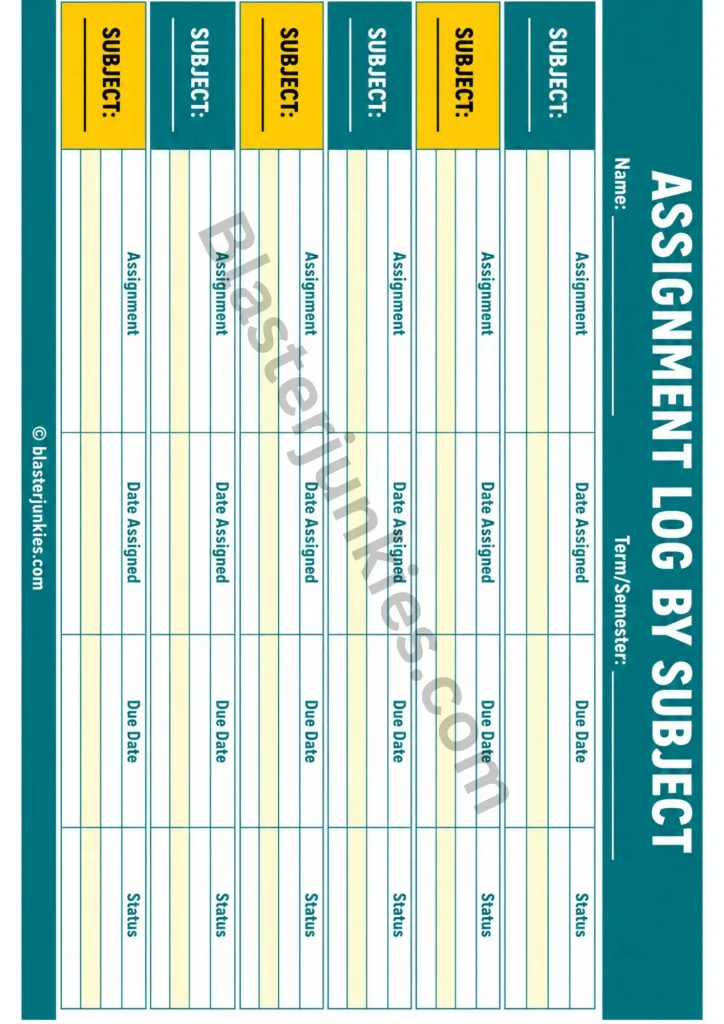
For subject by subject organisation, the Assignment Log by Subject tracks up to six subjects in columns, recording assignment name, date assigned, due date, and status
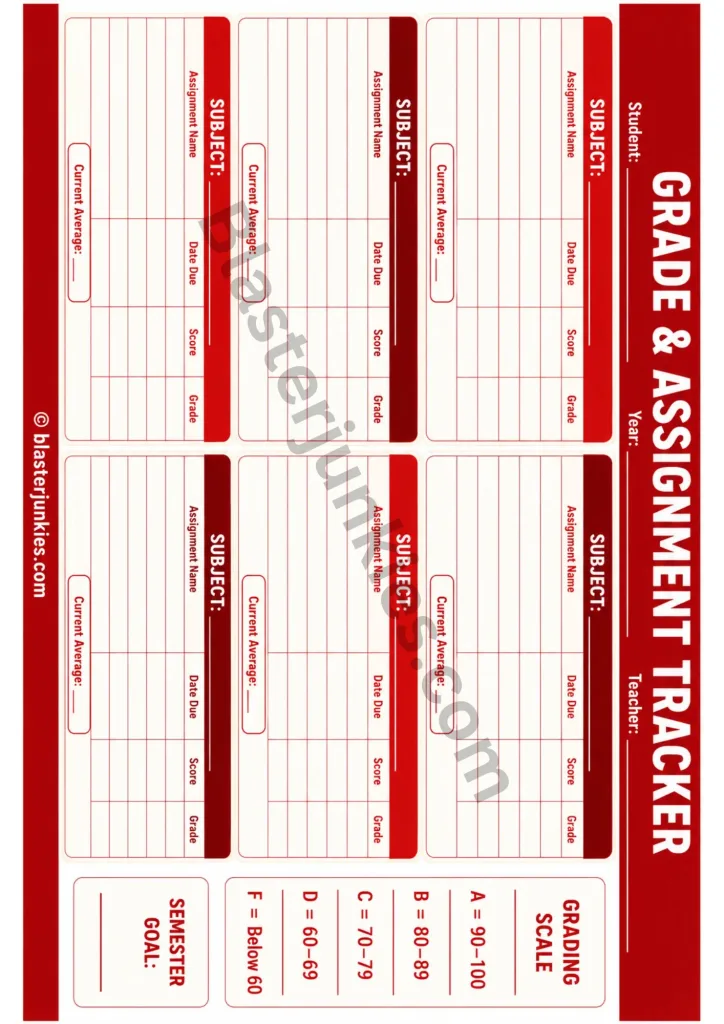
All in one place, all on one page. Meanwhile the Grade & Assignment Tracker goes one step further and adds score, grade, and current average tracking for up to six subjects at once, with a grading scale reference and a semester goal box at the bottom.
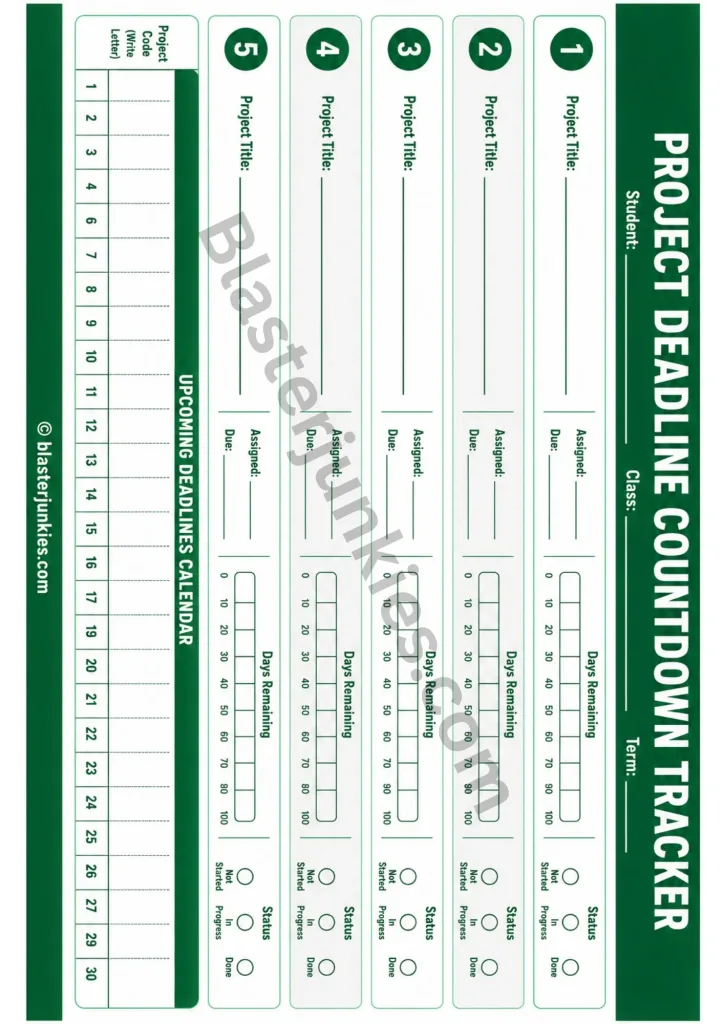
For bigger projects, the Project Deadline Countdown Tracker is a standout tool:
It tracks up to five simultaneous projects, each with its own title, assigned date, due date, a visual “days remaining” scale from 0 to 100, and a three stage status indicator (Not Started / In Progress / Done).
There’s also an accompanying upcoming deadlines calendar for the month.
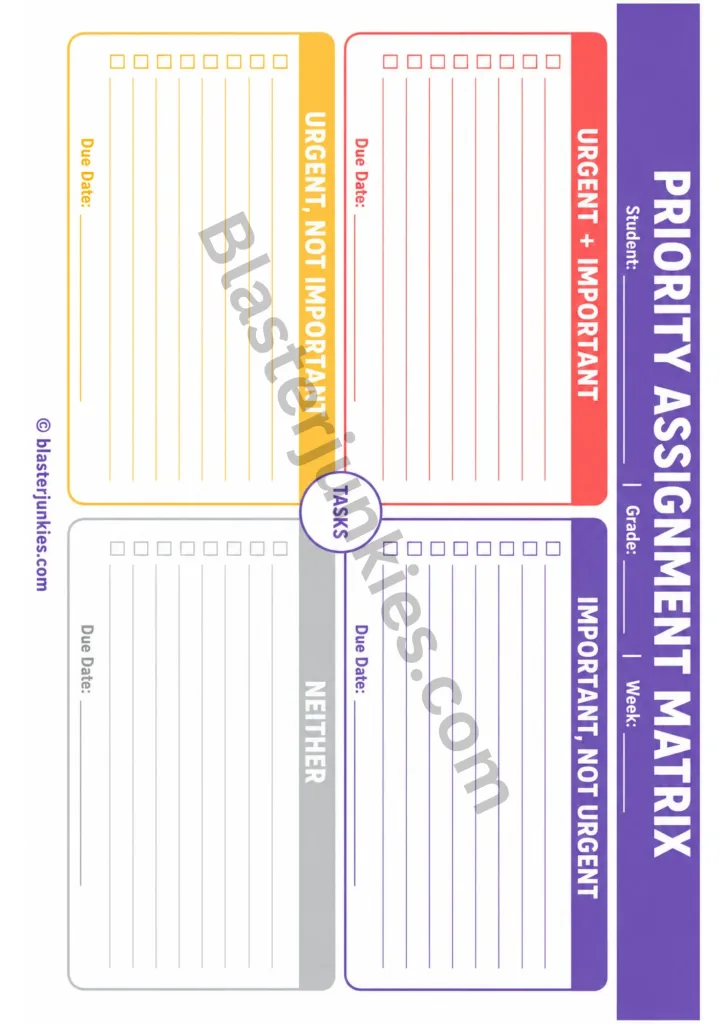
Sitting alongside this is the Priority Assignment Matrix a four quadrant framework that teaches children to sort their tasks by urgency and importance, a genuinely powerful thinking skill that most adults only learn much later.
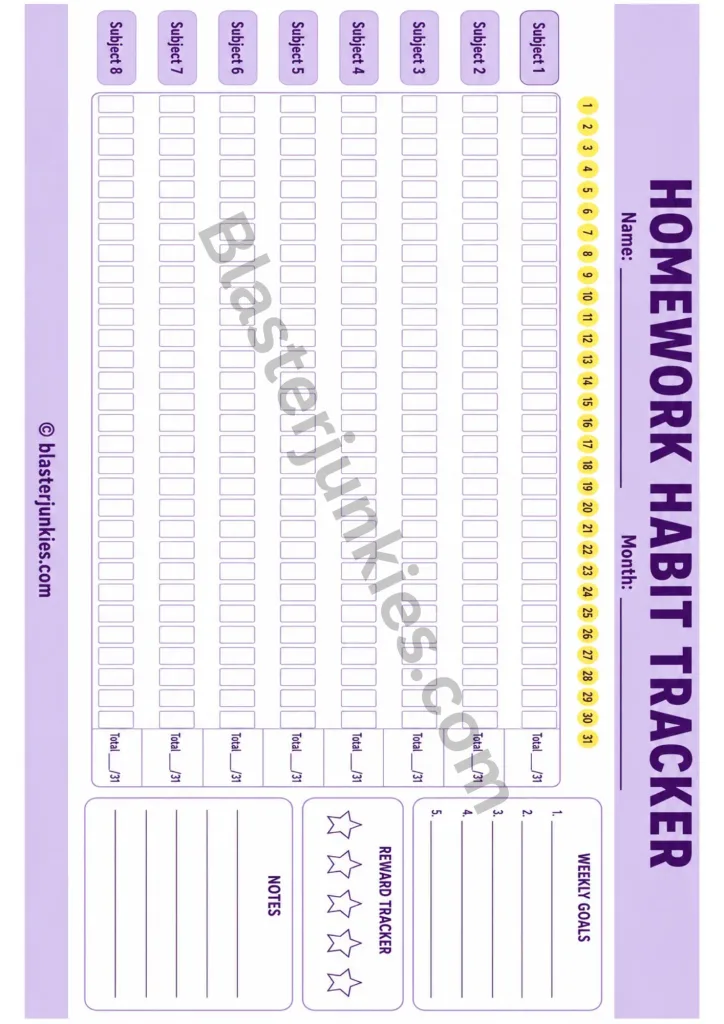
For building consistent homework habits, the Homework Habit Tracker covers eight subjects across a full month (days 1–31) in a grid format, with a monthly total per subject, a reward tracker, weekly goals, and a notes section making it easy to spot patterns and celebrate consistency.
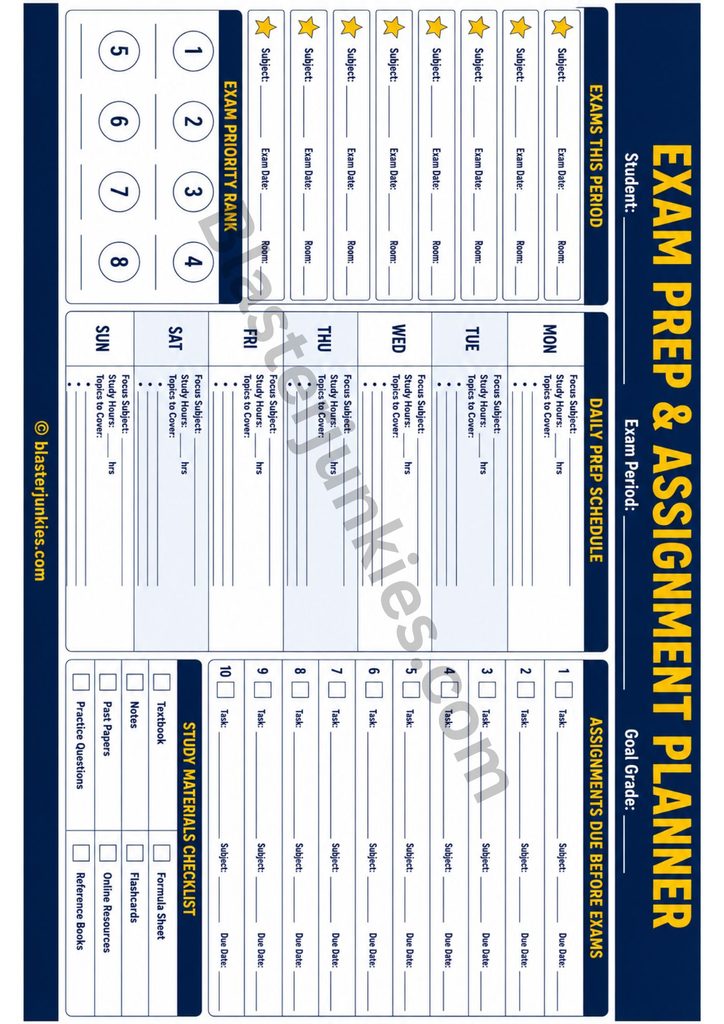
When exams approach, the Exam Prep & Assignment Planner brings everything together:
A list of all exams this period with dates and rooms, an exam priority ranking system, a daily prep schedule for the whole week, an assignments due before exams list, a study materials checklist, and a goal grade field.
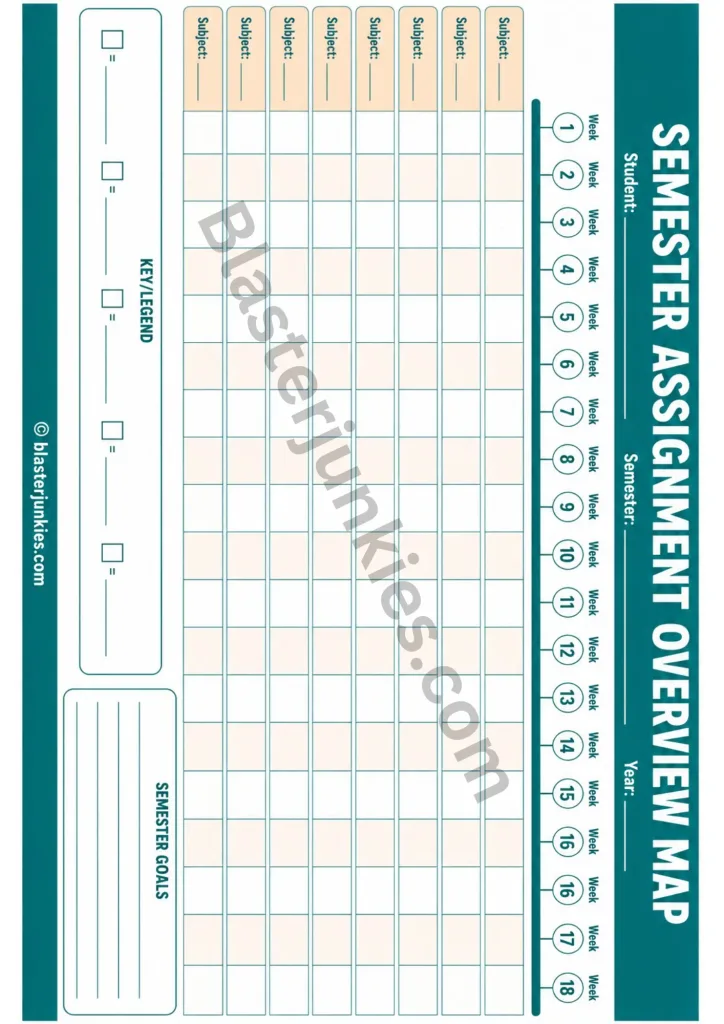
Finally, the Semester Assignment Overview Map provides the highest level view in the pack an 18 week grid tracking up to eight subjects,
With a customisable key/legend, semester goals, and a student name field. This is the master map that shows the whole term at a glance.
How to Use This System with Kids
The secret to making this printable work is starting small and building up.
Don’t hand a child all ten sheets at once. Begin with just one or two that match where they are right now.
For younger children (ages 6–10), start with the Weekly Assignment Tracker only.
Sit down with them on Sunday evening and help them fill in everything they know is coming up that week.
Let them be the one holding the pencil ownership is everything. Each evening before bed, check off what’s done together.
This one habit alone will reduce the “I forgot I had homework” moments dramatically.
If you’re also using a Back to School Countdown Printable to build excitement for the new school year, the transition into using the weekly tracker at the start of term feels like a natural and exciting next step.
For upper primary and early secondary students (ages 10–14), layer in the Monthly Assignment Planner and the Assignment Log by Subject.
At the start of each month, transfer all known deadlines onto the monthly planner so there are no nasty surprises.
The subject log is especially useful for students juggling five or more different classes, because it separates everything clearly by subject rather than by day.
Parents who use Weekly Planner Printables for family scheduling will find that sitting down together to fill in both the family planner and the student’s monthly planner at the same time becomes a productive Sunday habit that benefits the whole household.
For older secondary students (ages 14+), introduce the Priority Assignment Matrix, the Project Deadline Countdown Tracker, and the Exam Prep Planner.
The matrix is particularly worth spending time on walk through it together the first time, explaining what makes something urgent versus important.
A child who genuinely understands the difference between those two things has a major advantage in managing their workload.
The exam prep planner is best started at least two weeks before exam season, giving enough runway to plan study sessions, list required materials, and set a clear goal grade for each subject.
For homeschooling families, this tracker pairs naturally with Homeschool Planner Printables to create a seamlessly organised learning environment at home.
For all ages, the Homework Habit Tracker works as a motivational tool rather than just a recording tool.
The monthly grid lets children colour in or tick each day they complete their homework for each subject, and watching those rows fill up is genuinely satisfying.
Pair it with a simple reward system five consecutive days of completed homework earns a small treat and you’ve built a positive feedback loop that makes consistency feel achievable rather than burdensome.
A few practical tips to make the system stick: laminate the sheets you’ll reuse (the weekly tracker especially) so they can be written on with dry erase markers and used again each week without reprinting.
Keep everything in a single dedicated folder or binder the Grade Tracker and Semester Overview Map live permanently in the back as reference documents, while the daily and weekly sheets sit at the front for everyday use.
For families also using Budget Binder Printables to manage household finances, a matching student binder alongside the family binder creates a home where organisation is a shared, visible value.
Why This Builds More Than Organisation
What makes this printable pack genuinely valuable isn’t just the reduction in missed deadlines though that alone makes it worth printing.
It’s the thinking habits it quietly installs.
A child who learns to look at a project deadline and count backwards to plan their steps is developing executive function.
A child who rates their assignments by priority is developing judgment.
A child who tracks their grades across a semester is developing self awareness about where they’re strong and where they need more support.
Teachers who want to introduce this system class wide will find it works alongside the The Teacher Survival Kit Printable together
They create a complete classroom organisation ecosystem where both the teacher and students are working from structured, printed systems that complement each other.
And for first day of school moments, pairing the tracker with Editable First Day of School Signs makes the beginning of a new academic year feel official, intentional, and exciting.
It’s also worth keeping a Printed Emergency Contact Form in the same binder as the tracker everything a school might need, all in one organised place.
The Student Assignment Tracker Template isn’t just a printable.
It’s a system that turns overwhelmed students into organised ones one checkbox at a time.
How to Use Kindergarten Readiness Worksheets With Kids
Printable Kids Daily Routine Chart: A Blank Canvas for Building Real Habits
Chores for Tweens and Middle Schoolers: A Printable System That Actually Builds Independence
Chore Ideas for Preschoolers (4-6 Years): A Parent’s Guide to This Printable Chart Pack