Building solid financial habits can sometimes feel like an overwhelming task.
When faced with abstract budgeting rules, it is easy to lose motivation.
The most sustainable way to improve your financial health is by taking an incremental, day by day approach that turns saving money into a series of achievable goals.
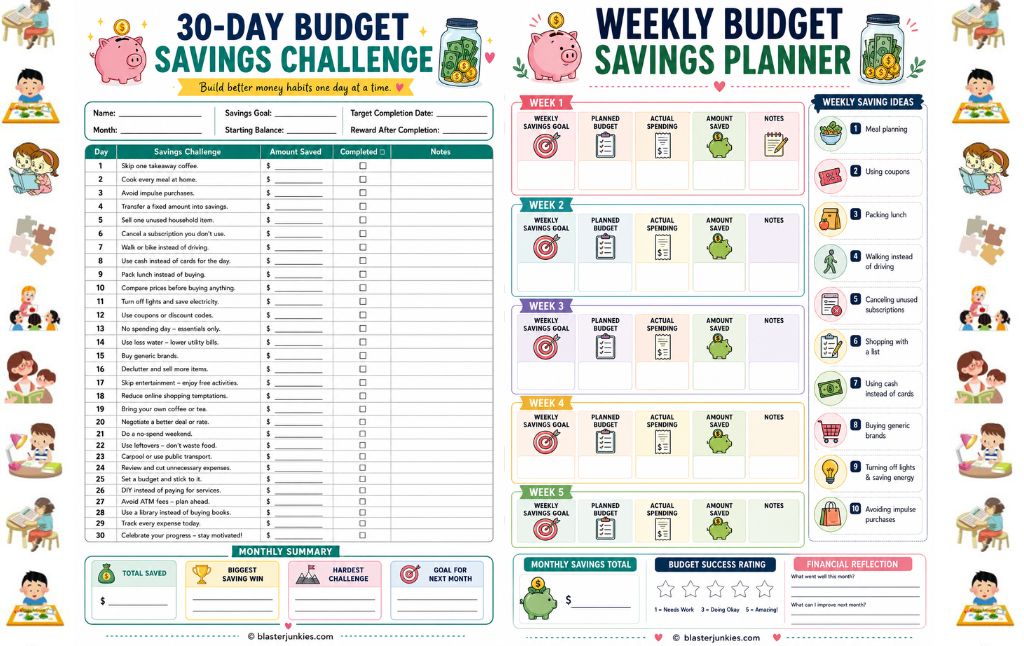
The Budget Savings Challenge printable pack offers a structured, visual framework to help individuals and families track their savings, curb impulsive spending, and establish practical financial habits.
By breaking budgeting down into daily actions and weekly reflections, this resource makes the process approachable and manageable.
Aligning Savings with Lifestyle Habits
Financial wellness is deeply connected to how we manage our homes and daily routines.
Often, saving money is simply a byproduct of better organization and intentional planning.
Consider grocery shopping and dining out, which represent some of the most common areas of budget leaks.
Before you can successfully cut back on food spending, it helps to know exactly what is already sitting in your kitchen.
Pairing your savings challenge with a Pantry Inventory Printable and a Freezer Inventory Sheet prevents food waste and makes meal planning a core strategy highlighted in the weekly planner pages incredibly simple.
Another practical daily challenge in this pack is to “declutter and sell unused items.” Clearing out physical space is an excellent way to uncover hidden value in things you no longer use.
You can easily coordinate this savings milestone with a structured Declutter Challenge Printable to help systematically organize your home while generating extra cash to deposit straight into your savings goal tracker.
Because managing your finances is ultimately about behavior modification, it works best when treated as part of a broader lifestyle change.
Budgeting is a daily habit, much like exercising or drinking water, and fits perfectly alongside a holistic Healthy Habit Challenge.
Finally, cutting back on spending doesn’t mean sacrificing family fun.
When the challenge prompts you to “skip paid entertainment and enjoy free activities,” you can make staying in feel like a special occasion rather than a restriction.
Creating a relaxing evening at home using a Cozy Night Checklist Printable or planning a dedicated game evening with Family Movie Night Cards keeps everyone entertained without spending a dime.
How to Get the Most Out of This Printable Pack
This printable bundle is organized into distinct phases to take you from short term habit shifts to long term financial planning:
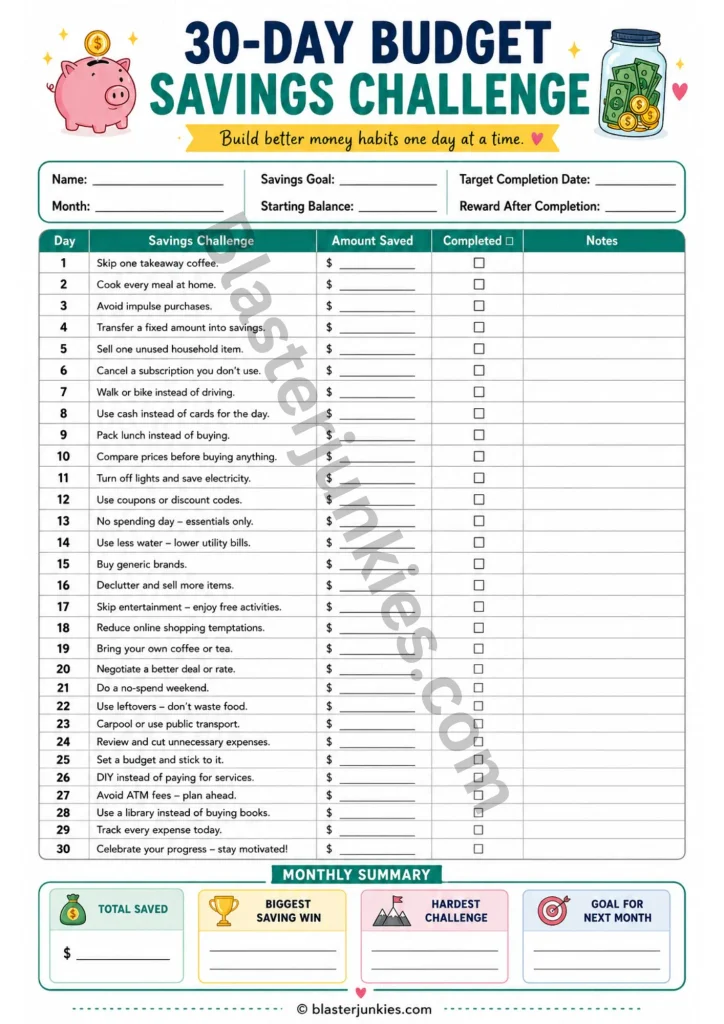
1. Start with the 30 Day Savings Challenge
Begin with the daily micro challenges. These small, action oriented prompts like bringing your own coffee to work, turning off lights to save on utility bills, and avoiding impulse purchases are designed to build momentum.
Write down the exact amount you saved by making each small sacrifice to visualize your progress.
2. Implement the “No Spend” Tracker
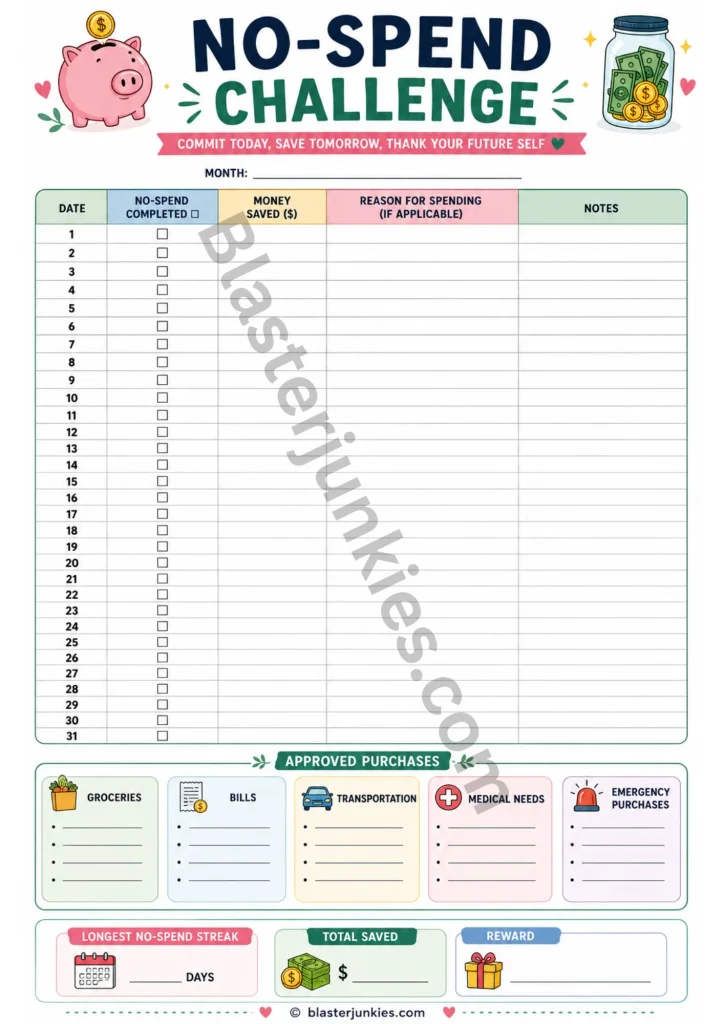
For a deeper dive into habit breaking, use the No Spend Challenge page.
Define your “Approved Purchases” (such as bills, basic groceries, and medical needs) ahead of time.
Use the daily check boxes to track your longest “no spend” streak. This visual layout gamifies saving, making it satisfying to see a growing chain of successful days.
3. Move to Weekly and Long Term Goal Tracking
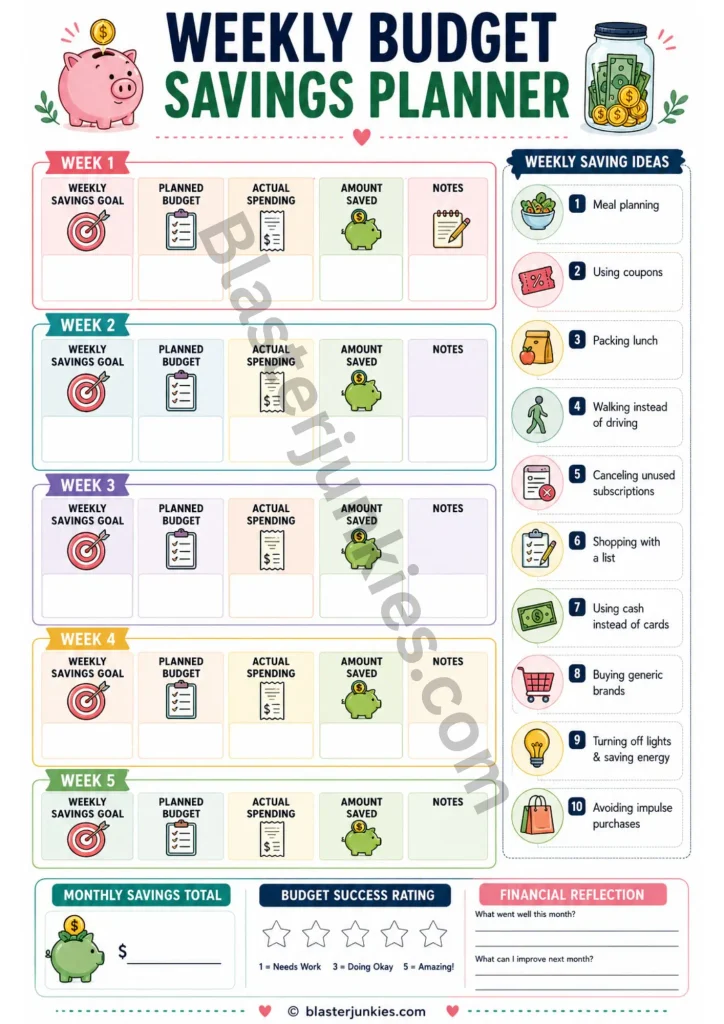
Transition your daily successes into broader planning with the Weekly Budget Planner.
At the end of each week, compare your planned budget to your actual spending and note your wins.
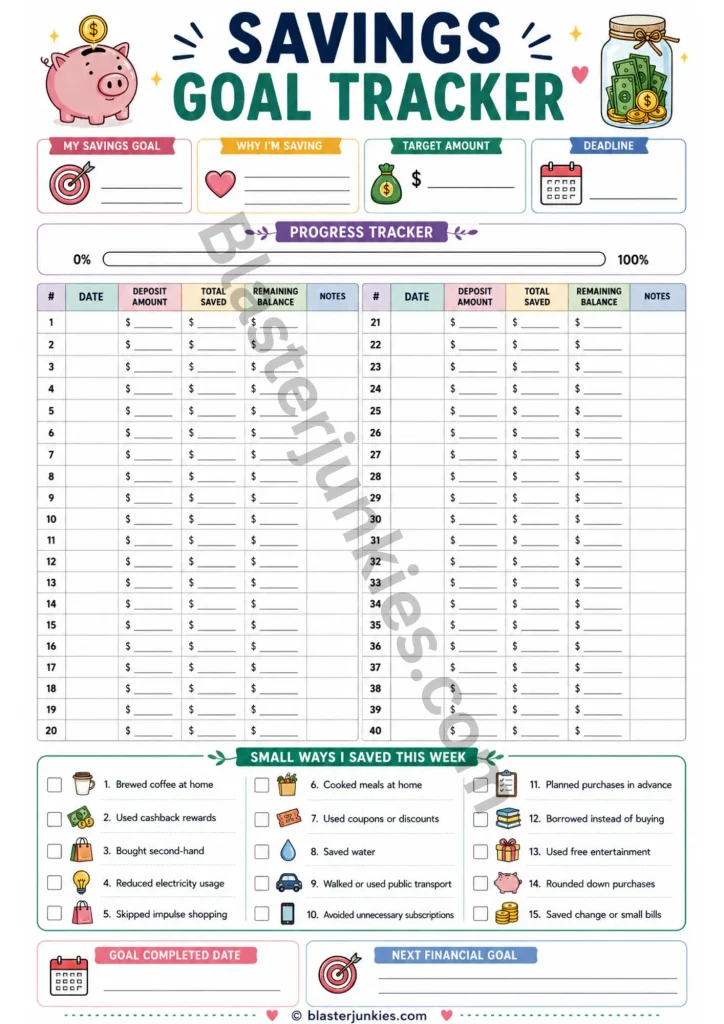
Use the progress bar on the Savings Goal Tracker to log larger deposits, mapping out exactly how close you are to your ultimate savings target.
4. Engage the Whole Family
Financial literacy is a critical lesson for children. Use the Family Budget Savings Challenge page to get kids involved.
Assign them kid friendly activities, such as turning off empty room lights, packing their own school lunches, or collecting loose change in a family jar.
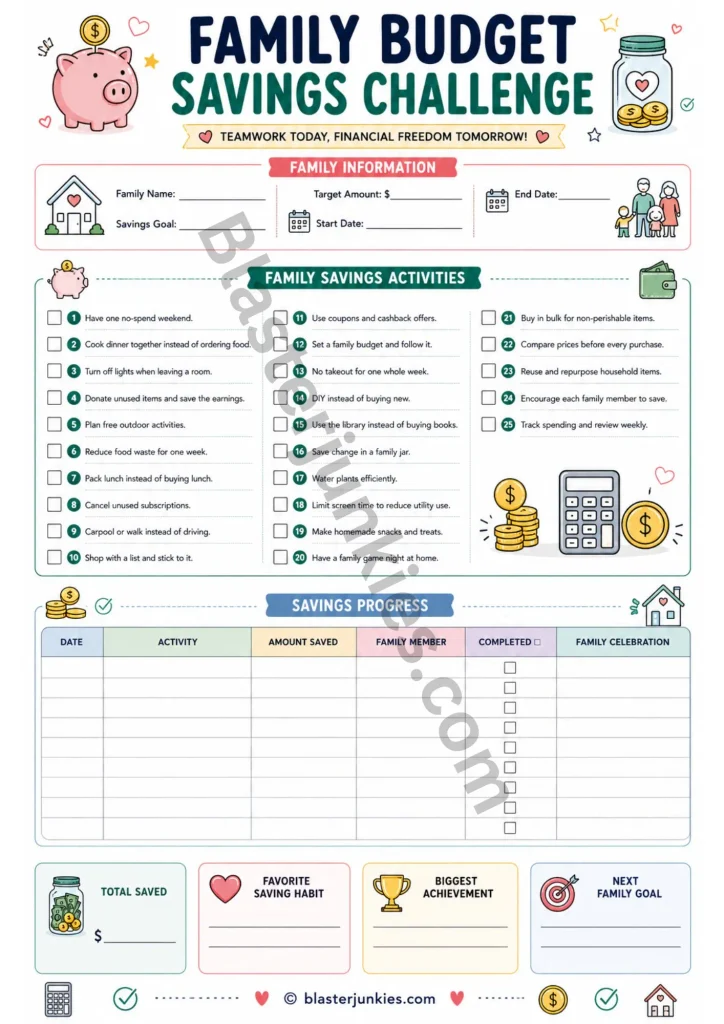
Letting children participate in tracking your family’s progress toward a group reward such as a cheap weekend camping trip helps teach them the value of teamwork and delayed gratification.
By focusing on small, daily habits and keeping your tracking visual, you can steadily build a more secure financial future for your household.