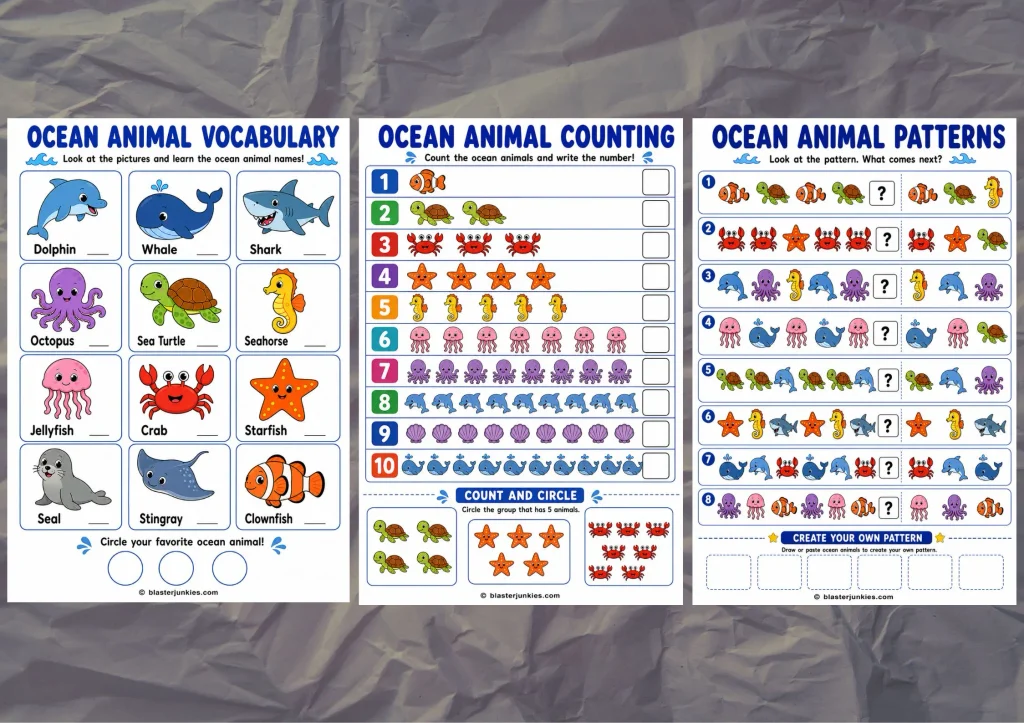
Ocean animals fascinate young children. The deep sea is full of mystery. Kids love learning about sharks, whales, and crabs. Our printable worksheets tap into this natural curiosity.
They offer a structured, screen free learning experience. This bundle is great for preschool and kindergarten. It helps develop foundational fine motor skills. Let’s explore how to use these pages effectively.
The Importance of Screen Free Early Learning Activities
Children spend a lot of time on screens today. Physical paper activities offer a healthy break. Tactile learning helps build brain connections.
Holding a pencil is a complex physical task. It requires hand strength and coordination.
Paper worksheets require kids to use both hands. One hand holds the paper steady. The other hand writes or cuts.
This is called bilateral coordination. It is vital for writing, buttoning, and tying shoes. Our ocean animal pack supports this development.
Organizing Your Child’s Learning Routine
Routines give children a sense of safety. A consistent schedule helps kids thrive. You can easily schedule structured table activities.
Use a Morning Routine Chart for Kids to set apart study time. Establishing this routine early makes transitions easier.
Consistency is especially helpful during summer break. Track your child’s progress each day. Use a Summer Habit Tracker for Kids to stay organized. It helps kids see their achievements visually.
Make sure children stay hydrated during lessons. A Monthly Water Tracker Printable for Kids keeps hydration fun. Water breaks help keep focus high.
You can also take the learning outdoors. Are you planning a trip to the beach? Bring along a Beach Scavenger Hunt For Kids to find real sea life. This connects paper lessons with real world experiences.
If you have older children, keep their schedules orderly. Try The Student Assignment Tracker Template to organize tasks. It teaches older kids basic time management skills.
For young readers, focus on vocabulary. Pair spelling tasks with Summer Reading Challenges to build confidence. This combination reinforces early literacy.
Fine Motor and Scissor Skills Development
Fine motor skills are essential for early learners. These skills involve the small muscles in the hands. Kids use them to write, draw, and cut.
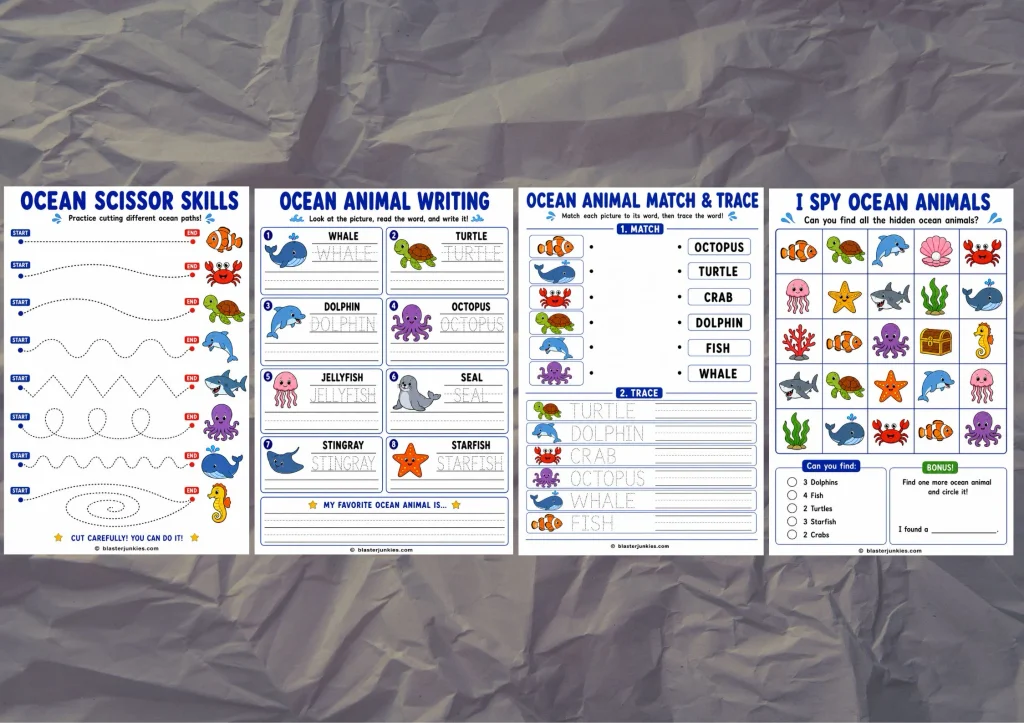
The ocean bundle features diverse cutting paths. Some paths are straight lines. Others are curved, wavy, or zig zagged. Straight lines are easiest for beginners.
Wavy lines challenge hand eye coordination. Zig zags require kids to stop and turn the paper. This encourages controlled hand movements.
Cutting also builds hand strength. Kids must squeeze the scissors repeatedly. This action develops the muscles used for writing.
Our worksheets offer a gentle progression. Children start with simple paths. They slowly advance to complex curves. This builds confidence alongside physical skill.
Math and Problem Solving Skills
Early math is about more than numbers. It involves patterns, sorting, and critical thinking. Our ocean animal pack includes several math activities.
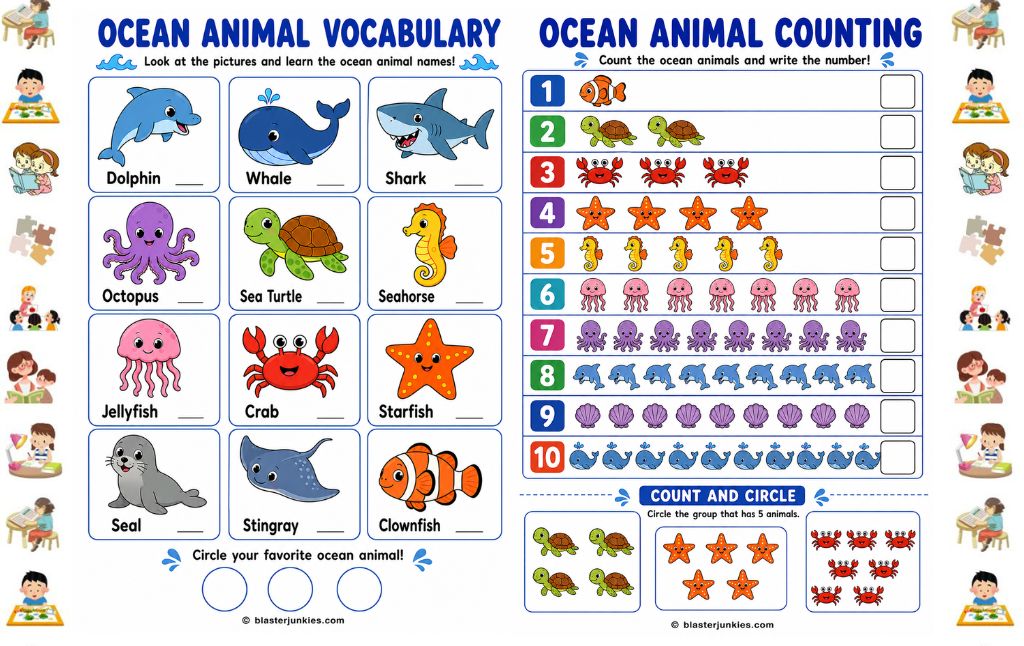
Counting activities help children associate objects with numbers. They learn to count groups of sea creatures. They write the correct numerals in boxes. This builds number formation skills.
Visual discrimination is also practiced. Kids compare different groups of animals. They decide which group has more items. This teaches early concepts of greater than and less than.
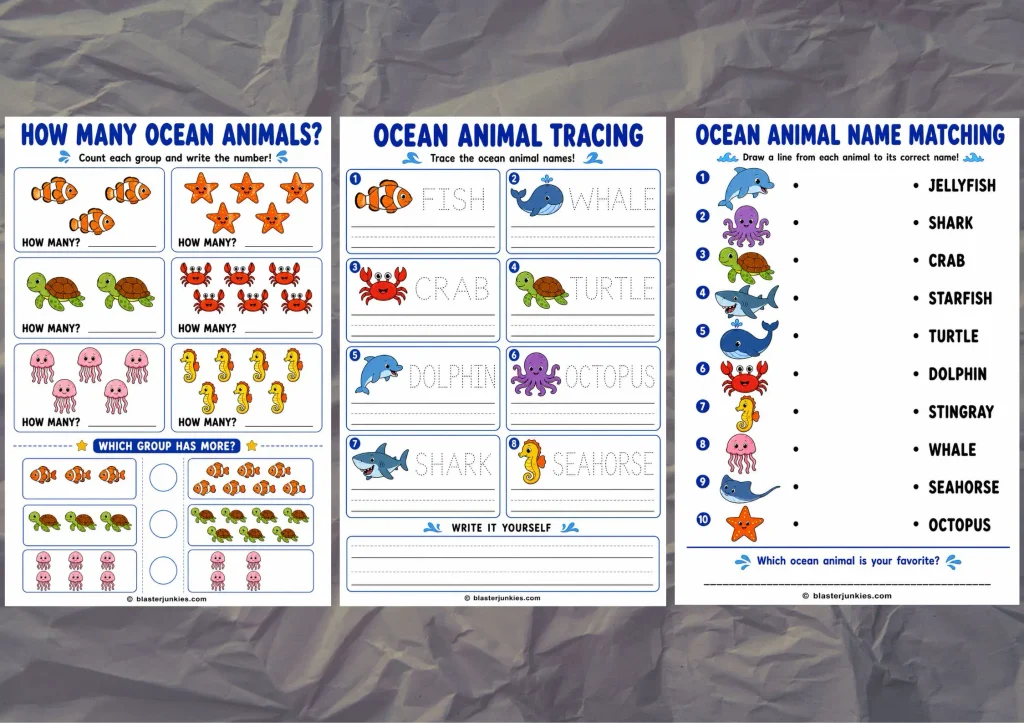
Pattern recognition is another key math skill. Pattern tasks encourage logical thinking. Kids predict what animal comes next in a sequence. They can even design their own patterns.
Finally, searching games improve focus and scanning. “I Spy” worksheets require children to search for hidden animals.
They track and record what they find. This improves attention span and visual scanning.
Early Literacy and Handwriting
Literacy skills are woven throughout this bundle. Vocabulary worksheets introduce children to sea creature names. They see the letters that form each word.
Tracing activities help kids learn correct letter shapes. Tracing guides the pencil along dotted paths. This provides helpful muscle memory for handwriting.
Matching words to pictures reinforces reading comprehension. Kids connect the animal image with the written term. This strengthens sight word recognition.
Writing sections allow kids to practice spelling independently. They copy words from a word bank. This builds spelling confidence and pencil control.
How to Set Up and Use These Worksheets
Setting up these activities is very simple. You only need a few basic supplies. Grab crayons, child safe scissors, and a glue stick.
Print the sheets on high quality paper. Thicker cardstock is excellent for cutting practice. It does not tear as easily as copy paper. It also stands up better to wet glue.
To make activities reusable, try lamination. Laminate the tracing and matching pages. Use dry erase markers for these laminated sheets.
Kids can write, erase, and practice again. This is great for classroom learning centers. It is also perfect for quiet time bins at home.
Engaging Play Based Ideas
You can easily expand these paper lessons. Combine worksheets with hands on play. Create a sensory bin filled with blue water beads.
Hide plastic ocean animals inside the bin. Have your child find an animal. Then, match it to the vocabulary sheet. This adds a fun, physical element to study.
You can also play a movement game. Have kids mimic the animals they see on paper. Can they waddle like a seal?
Can they pinch like a crab? Movement keeps learning fun and memorable.
Benefits of Screen Free Activities
Excessive screen time is a common concern today. Many parents look for physical alternatives.
Our worksheets offer a practical, engaging solution. They keep children occupied in a constructive way.
Paper tasks encourage real, focused concentration. They do not have flashing lights or loud sounds.
This helps kids develop a longer attention span. They learn to work quietly and finish tasks.
Completing a page gives children a sense of success. They feel proud to show you their work. You can display completed pages on the fridge. This boosts their self esteem and motivation.
Customizing for Different Age Groups
These ocean worksheets are highly adaptable. They suit children of varying developmental levels.
Toddlers can participate with your direct support. Focus on pointing and naming the colorful animals. Toddlers love matching plastic toys to the images.
Preschoolers can practice coloring and simple tracing. You can guide their hand during scissor work.
Kindergarteners can complete the pages independently. Encourage them to write the words clearly. Let them practice cutting along curved lines alone.
They can also count and complete patterns by themselves. This flexibility makes the pack great for families. Siblings of different ages can study together.
Conclusion
Learning about the ocean is a wonderful journey. These printable worksheets combine fun themes with education.
They help children practice essential childhood skills. Fine motor and cognitive growth are both supported.
You can easily download the complete 10 page pack. It is ready to print and use immediately. Enjoy watching your child learn and discover. Have fun exploring the sea together today!