Children are natural scientists. They look at the world with curiosity. They notice the bright sun. They listen to the loud thunder. They watch the falling rain.
Weather is the easiest science topic to explore. It changes every single day. This constant change provides a great teaching tool.
The Weather Observation Worksheet pack offers a supportive framework. It guides young children through simple scientific exploration. Let’s explore how to use these pages effectively.
The Power of Daily Observations in Early Childhood
Introducing structured routines is highly beneficial for early learners. A daily routine gives children a sense of order. You can easily add a morning weather check.
Include this task in your daily Morning Routine Chart for Kids. Checking the sky daily builds strong observational habits. These tracking habits are valuable year-round.
During vacation breaks, keep children mentally active. Use a Summer Habit Tracker for Kids to monitor daily table time. This maintains a helpful balance of play and study.
Weather directly impacts the natural world around us. Changes in temperature alter the environment. You can see this clearly in the autumn.
Explore changing autumn leaves with our Leaf Identification Printable. This connects atmospheric changes with plant life.
Encourage your children to explore the outdoors actively. Go outside for a fun Autumn Scavenger Hunt Printable on clear days.
You can plan more seasonal tasks with an Autumn Bucket List Printable. Outdoor play makes science lessons memorable.
Water is a key part of weather science. Rainfall introduces children to the water cycle. Connect rain observations to personal health habits.
Use our Monthly Water Tracker Printable for Kids to encourage daily hydration.
Weather also has a strong impact on human emotions. Gray, cloudy days can make us feel cozy or sleepy. Bright, sunny days often boost our energy.
Help kids connect their feelings to the atmosphere. Track these patterns using a Mood Tracker Printable alongside your weather logs.
Inside the Weather Observation Pack
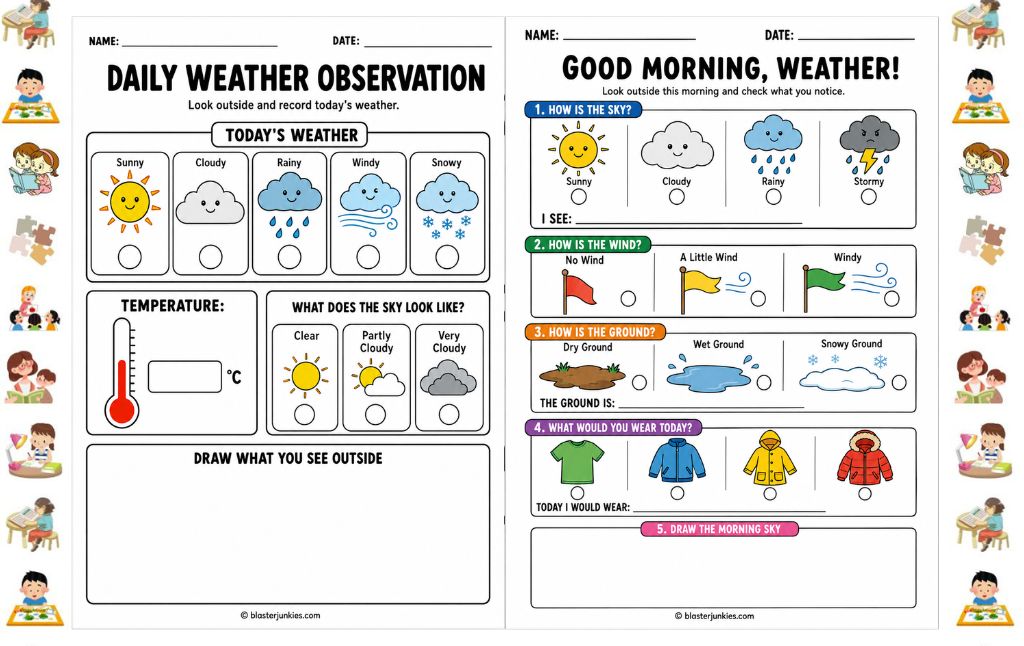
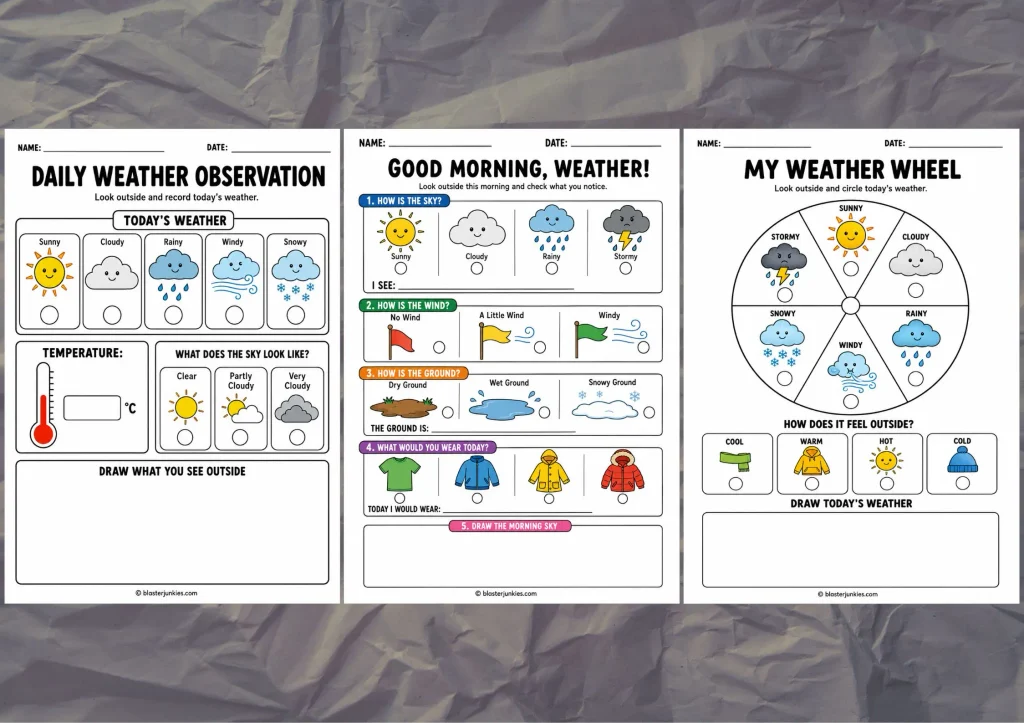
This printable pack uses diverse visual layouts to teach. It does not rely on heavy reading. Instead, it uses colorful icons and simple checkboxes.
The worksheets cover several core observational skills:
Atmospheric Conditions: Identifying sunny, cloudy, rainy, windy, snowy, and stormy skies.
Temperature Exploration: Reading simple thermometers and labeling hot, warm, cool, or cold feelings.
Ground and Air Indicators: Checking if the ground is dry, wet, or snowy.
Interactive Wind Gauges: Observing flags to identify calm, breezy, or windy air.
Decision Making Skills: Choosing the correct clothing for the day’s conditions (like jackets or t shirts).
Comparison Tracking: Comparing morning sky conditions to afternoon sky conditions to notice changes.
Children also get to draw what they see. Drawing encourages kids to slow down and look closely. They notice the shape of clouds.
They observe the color of the sky. This builds deep artistic and scientific skills.
The Role of Math and Graphing in Weather Observation
Weather tracking is not just a science activity. It is also an early math lesson. When kids count sunny days, they practice basic math.
You can easily create a simple weather bar graph. At the end of the week, count your completed pages. How many days were sunny? How many days were rainy?
Graphing this data visually teaches children data analysis. They learn to compare quantities in a real world way. This builds early critical thinking skills.
How to Use the Weather Worksheets Effectively
Using these worksheets is straightforward and fun. Here is a practical guide to get started.
First, choose a dedicated time each day. The morning is the most logical choice. Have your child look out the window. Or, take a brief step outside.
Ask open ended questions about what they notice. Is the air cold on their skin? Are the trees moving in the wind? These questions prompt kids to use all their senses.
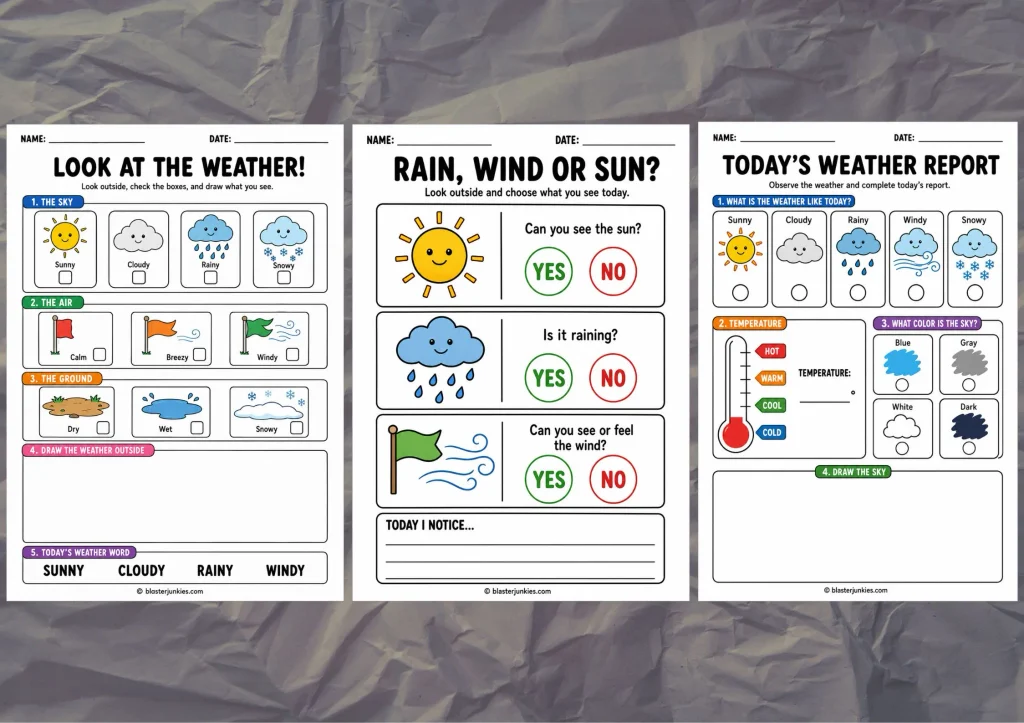
Next, guide them to complete their daily sheet. They can check the matching weather icon. For kids practicing numbers, look at a real outdoor thermometer.
Help them read the temperature number together. Then, they can write it on their page.
To save paper, try laminating the sheets. Laminated pages work wonderfully with dry erase markers. Your child can complete their logs daily. Then, wipe the page clean for the next day.
This is perfect for classroom learning centers. It is also great for morning basket routines at home.
Enhancing Scientific Thinking in Kids
Weather observation teaches children the basics of scientific inquiry. It encourages them to make hypotheses.
For example, they might see dark clouds. You can ask: “What do you think will happen next?”
They learn that dark clouds often bring rain. This builds an understanding of cause and effect.
Kids also learn about seasonal changes. They notice that winter brings colder temperatures. They see that summer brings hot sun. These observations make abstract earth science concrete.
The sheets also build critical vocabulary. Children learn specific words to describe their world. They use words like “breezy,” “stormy,” and “partly cloudy.” This expands their language skills naturally.
Creative Extension Activities
You can easily expand these paper based lessons. Combine weather tracking with sensory crafts. On rainy days, create sensory play setups inside.
Let children make cotton ball clouds. They can paint paper plate suns. This hands on art keeps spirits high on indoor days.
You can also play active games. Have your kids act out different weather types. Can they spin like a tornado?
Can they flutter like a falling snowflake? Can they stand stiff like a frozen ice sculpture?
Movement helps release extra energy on rainy days. It also reinforces the concepts they learn on paper.
Customizing for Different Age Groups
These printable pages are highly adaptable. They suit children of varying developmental levels.
For toddlers (ages 2–3), focus on simple recognition. Point to the sun icon on the page. Ask them to find the sun in the sky. You can fill in the checkboxes together.
For preschoolers (ages 3–4), focus on drawing and tracing. Let them draw the morning sky in the boxes. They can practice tracing simple weather words. Guide their hands as they learn to color.
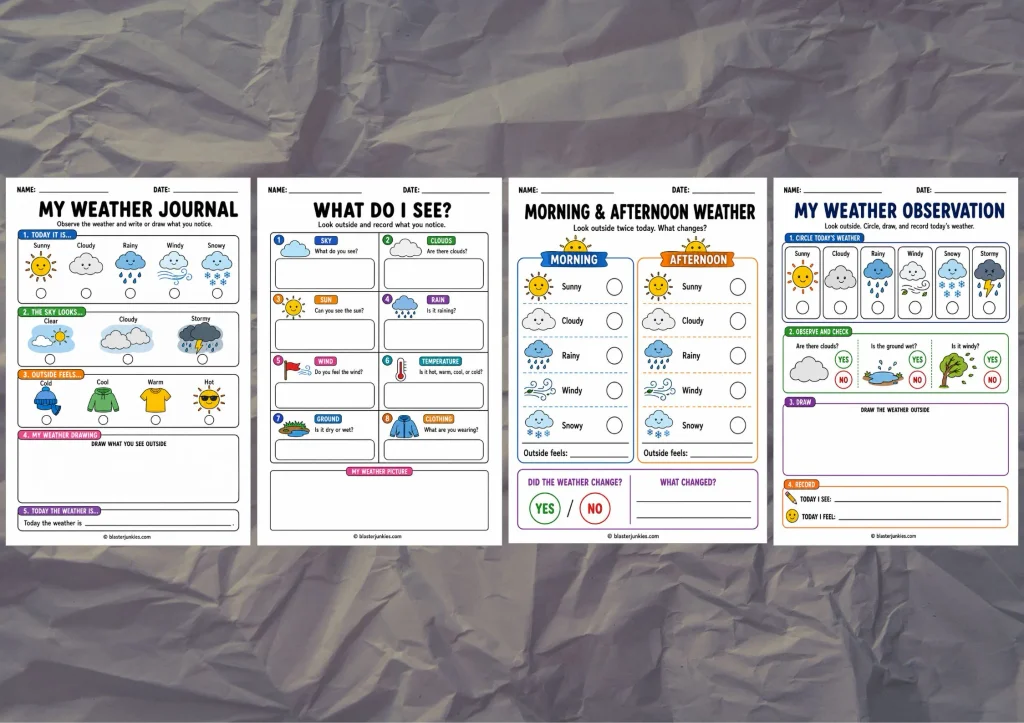
For kindergarteners (ages 5–6), encourage independent work. Let them read the clothing prompts alone. They can decide what is appropriate to wear.
They can write down their daily observations. They can also compare morning and afternoon changes.
This flexibility makes the pack great for families. Siblings can track the sky together at their own pace.
Conclusion
Observing the sky is a wonderful way to learn. These printable worksheets combine science with daily fun.
They help children practice essential observation skills. Both cognitive and physical development are supported.
You can easily download the complete 12 page pack. It is ready to print and use immediately.
Enjoy watching your child discover the weather. Have fun exploring the skies together today!