Introducing math concepts to young children can be simple. Using themes they naturally love, like insects, keeps them interested.
The Count and Color Bugs Worksheets pack provides a structured framework. It helps develop early counting and fine motor skills.
Let’s explore how to use these pages effectively at home.
Early math is about more than memorizing numbers. Children must understand that numbers represent actual quantities. This is called one to one correspondence.
Our bug sheets encourage kids to touch each insect. They count them aloud as they point to them. This physical action builds strong brain connections.
Building Math Skills into Daily Routines
Adding focused learning to your daily routine is helpful. Include brief table activities on your Morning Routine Chart for Kids. This establishes a consistent habit of quiet learning.
To expand your insect study, try another interactive option. Introduce our bug do a dot pages preschool to practice fine motor hand control.
Children can also practice other math milestones. Use our tops and bottoms sorting activity printable to help kids categorize objects logically.
Connecting paper worksheets to real world spaces is excellent. If you study garden insects, try a themed craft. Use a creative watering can name craft to practice spelling and motor control.
You can also study how seasons affect garden life. Check out our Weather Worksheets for Kindergarten to observe daily patterns.
Take the learning outside into your backyard. Organize an Autumn Scavenger Hunt Printable to find real backyard bugs together.
This hands on play makes scientific concepts memorable.
Key Concepts in the Count & Color Pack
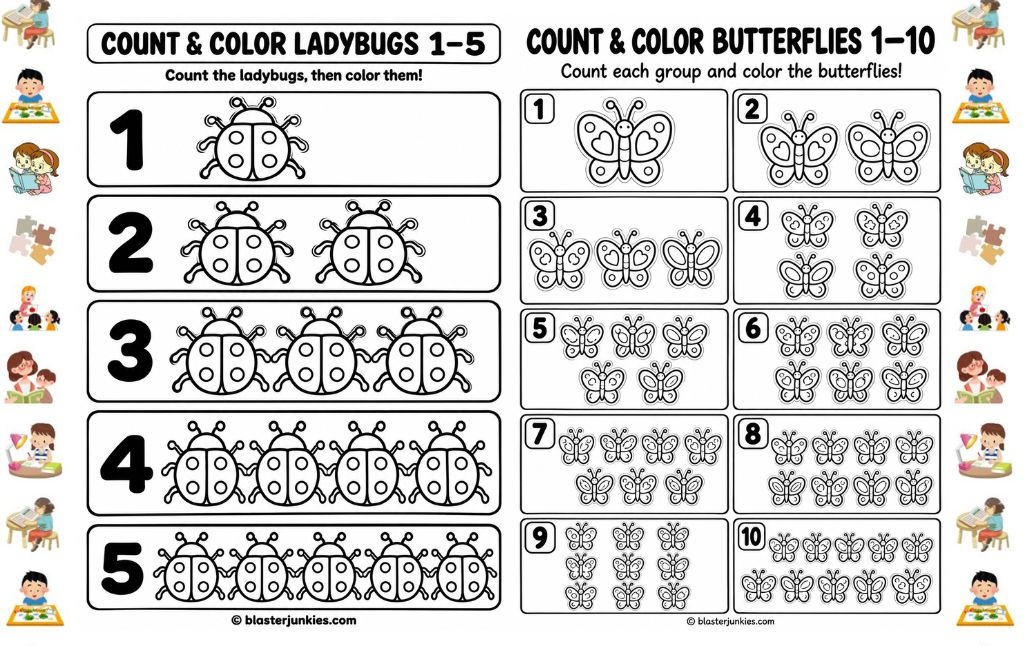
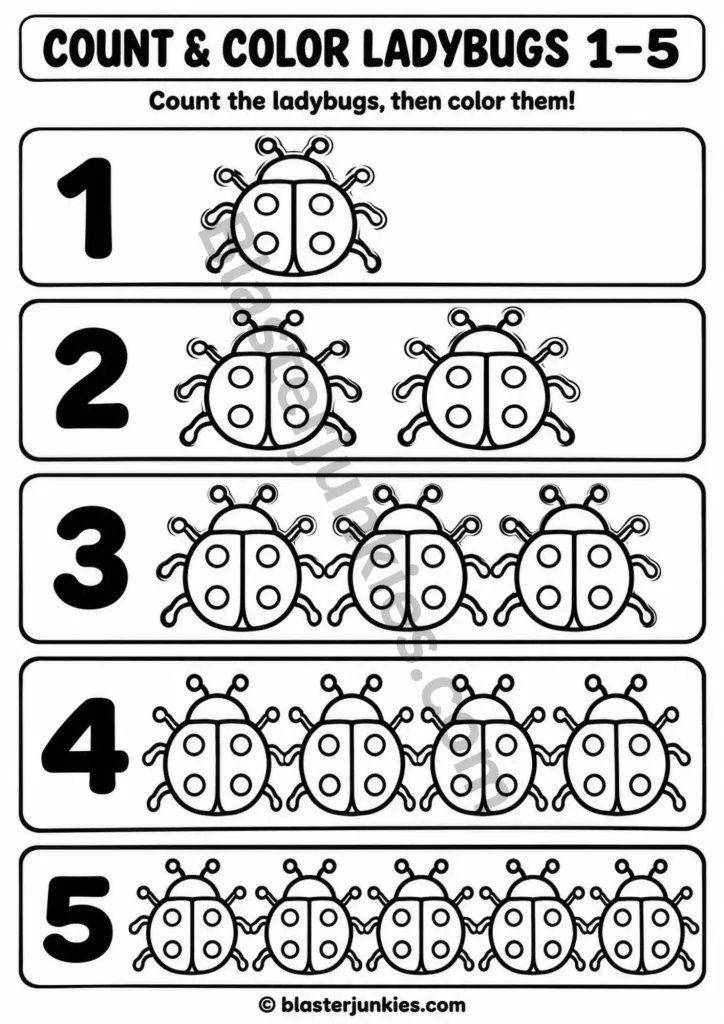
This printable pack uses clean, repetitive layouts to teach. The worksheets cover progressive number ranges (1-5 to 1-10).
This slow progression is gentle on early learners. It allows them to master small numbers first. Then, they can move to larger quantities confidently.
Each page focuses on a single type of insect. This design choice prevents children from becoming visually overwhelmed.
They can focus entirely on the quantity of ladybugs. On the next page, they can study the butterflies.
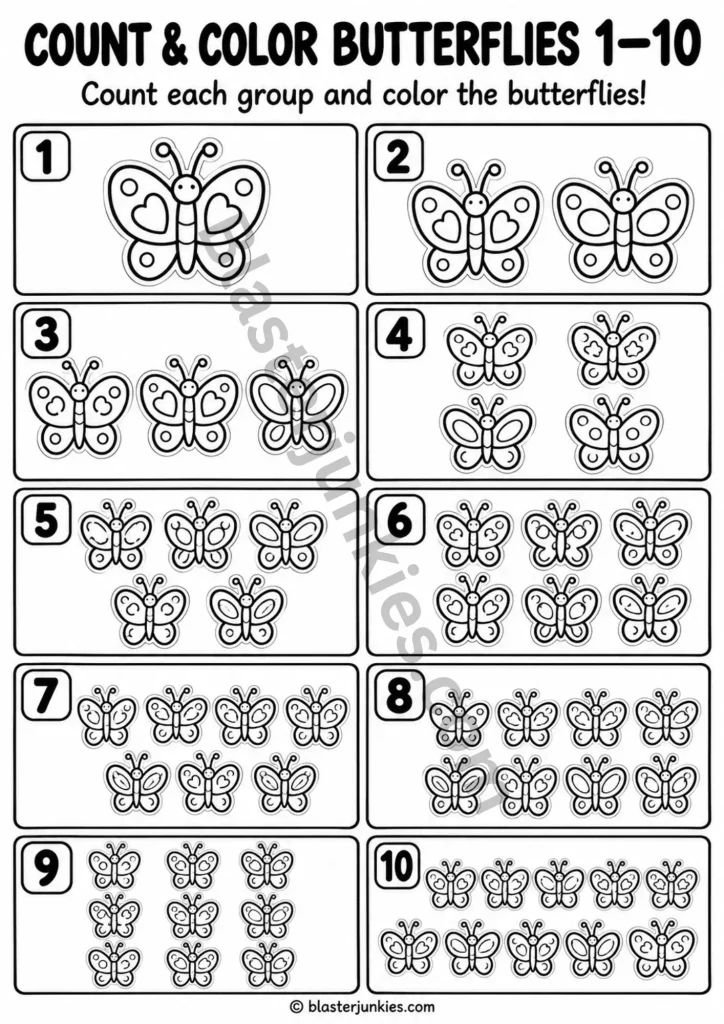
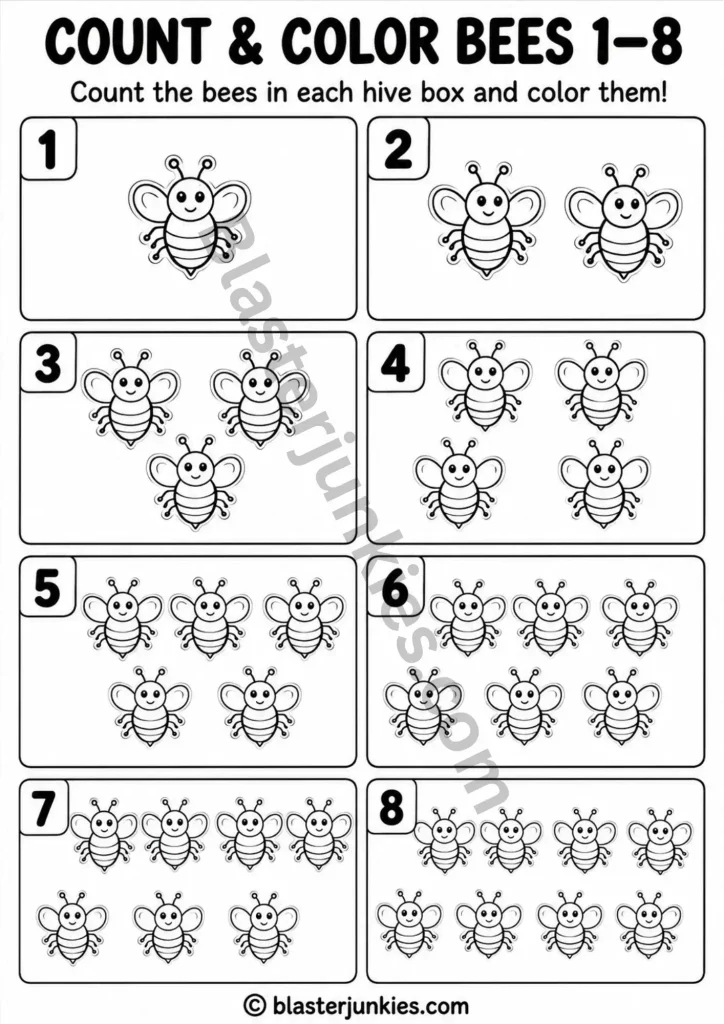
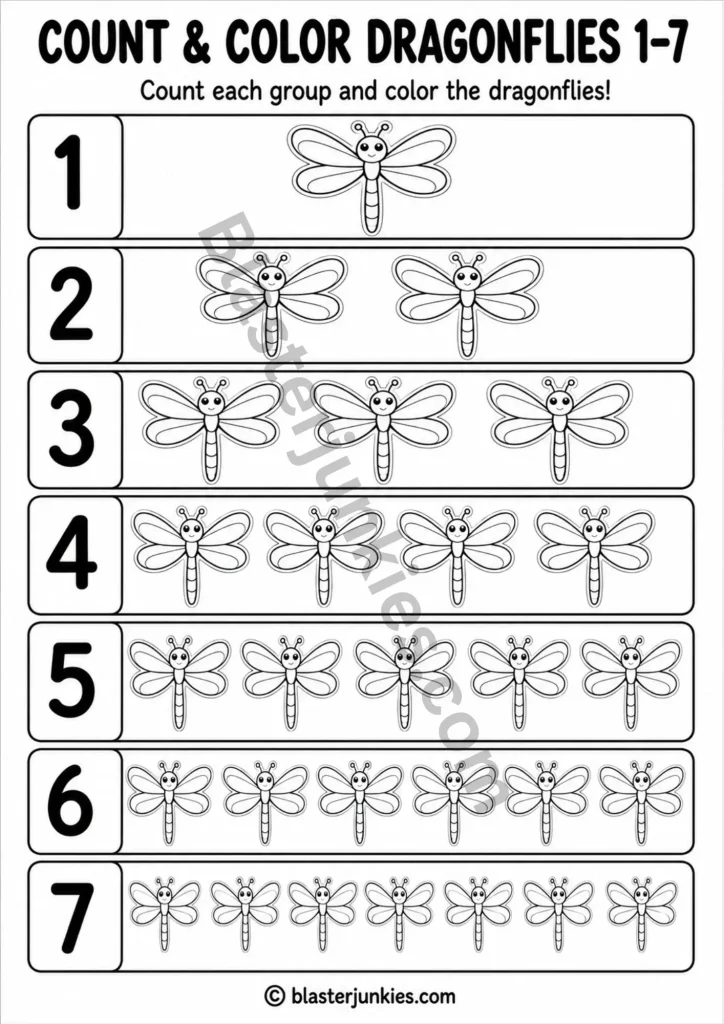
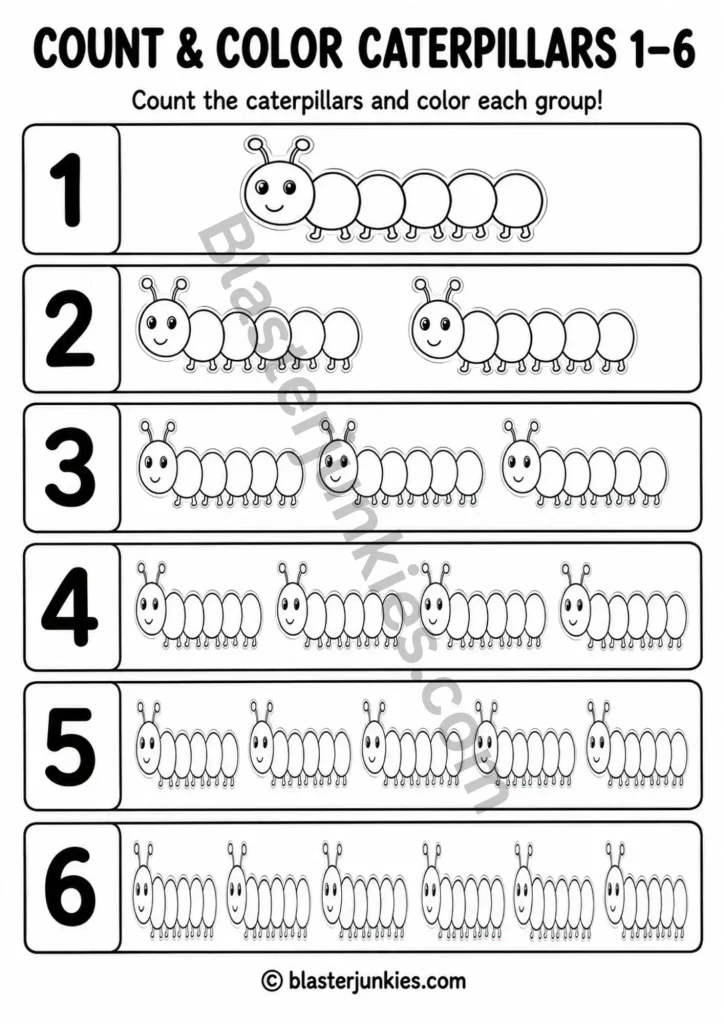
The illustrations are bold with thick black borders. This helps kids stay inside the lines while coloring. Kids can color ladybugs, bees, dragonflies, and caterpillars.
Coloring also plays an important educational role here. It encourages kids to slow down while counting. They must color each bug one by one. This prevents them from rushing through the numbers.
Holding crayons also builds crucial finger muscles. These muscles are needed for future writing tasks.
Practical Ways to Use These Worksheets
You can use these worksheets in several practical ways. First, print the sheets on standard printer paper. Let your child use their favorite crayons or markers.
To save paper, place the sheets in plastic protectors. Kids can circle the bugs using dry-erase markers. This is ideal for classroom learning centers.
To add a tactile element, use physical counters. You can use plastic bugs, buttons, or pom poms. Have your child place one counter on each printed bug.
Then, they can count the objects as they remove them. This adds a valuable sensory layer to math lessons.
Use these worksheets to practice descriptive language. Ask your child about the colors they choose. “Can you color three bees yellow and two orange?”
This turns a simple math sheet into a lesson in listening. It encourages children to follow multi-step directions carefully. This auditory practice is vital for early school success.
Customizing for Different Age Groups
These worksheets are highly adaptable for different age groups. Toddlers can count with your direct physical guidance.
Preschoolers can practice coloring and pointing independently. Kindergarteners can write the final numbers on the pages.
These sheets are excellent for classroom morning work. They require very little preparation from teachers. Simply print the pages and distribute them with crayons.
At home, they work well as quiet time activities. They can keep children engaged during travel or wait times. This flexibility makes it a great resource for families.
Mastering numbers 1 through 10 builds strong academic confidence. Children feel proud when they complete each row. They enjoy seeing their finished, colorful pages.
Display their completed worksheets on the refrigerator. This simple act of pride motivates them to keep learning. It shows them that their hard work is valued.
Conclusion
A positive attitude toward math starts early. Visual, play based activities build a great learning foundation. Early learning can be a wonderful, connected journey.
Enjoy watching your child learn, count, and grow. Download the printable and start your math adventure today!