
Winter days often keep little ones indoors, and parents need simple activities that feel calm and useful.
Winter lacing cards give children a quiet task that builds hand strength, focus, and patience all at once.
This free printable pack includes ten pages with twenty cute winter pictures ready to cut and lace.
Each card has a bold outline with round holes, so tiny fingers know exactly where the string goes.
You only need a printer, scissors, and some yarn to start playing in minutes.
Below you will find everything you need to print, prepare, and enjoy these cards with your kids.
Why Lacing Cards Are Great For Kids
Lacing is a classic fine motor activity that teachers and parents have trusted for many years.
Threading a string through a small hole strengthens the muscles in the fingers and the wrist.
Those same muscles help children hold a pencil, button a coat, and tie their own shoes.
Lacing also teaches hand eye coordination because the child must watch the hole while moving the string.
Children learn to use both hands together, one holding the card and one pulling the lace.
Patience grows too, since each stitch needs a slow and careful pull before the next one.
Finishing a whole card gives kids a proud feeling that boosts their confidence in new tasks.
What Is Inside The Winter Lacing Cards Pack
The pack opens with a cover page and a short terms page for personal and classroom use.
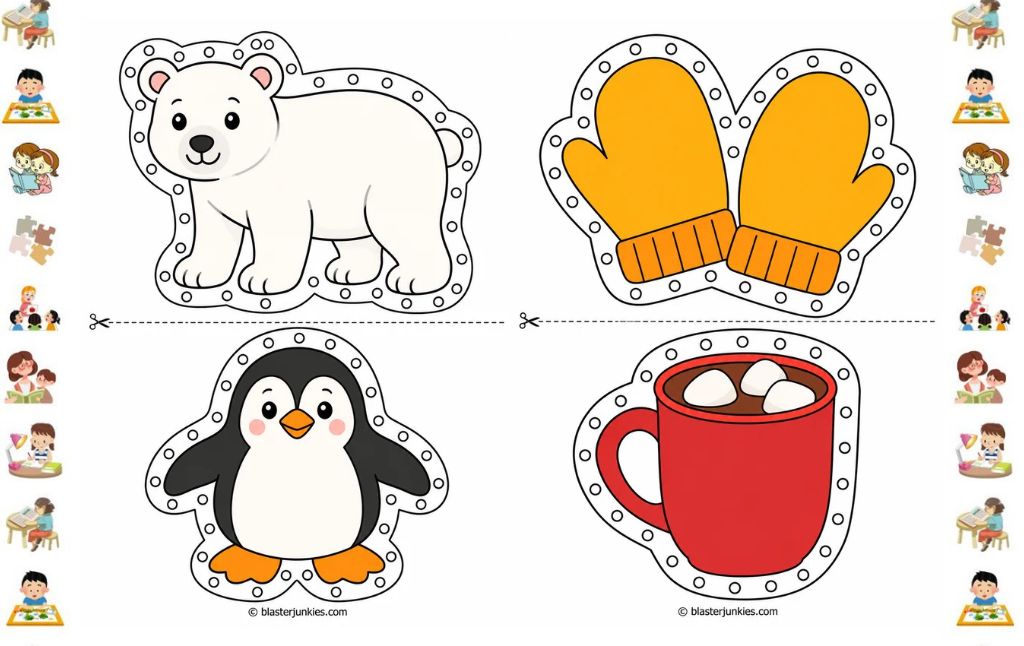
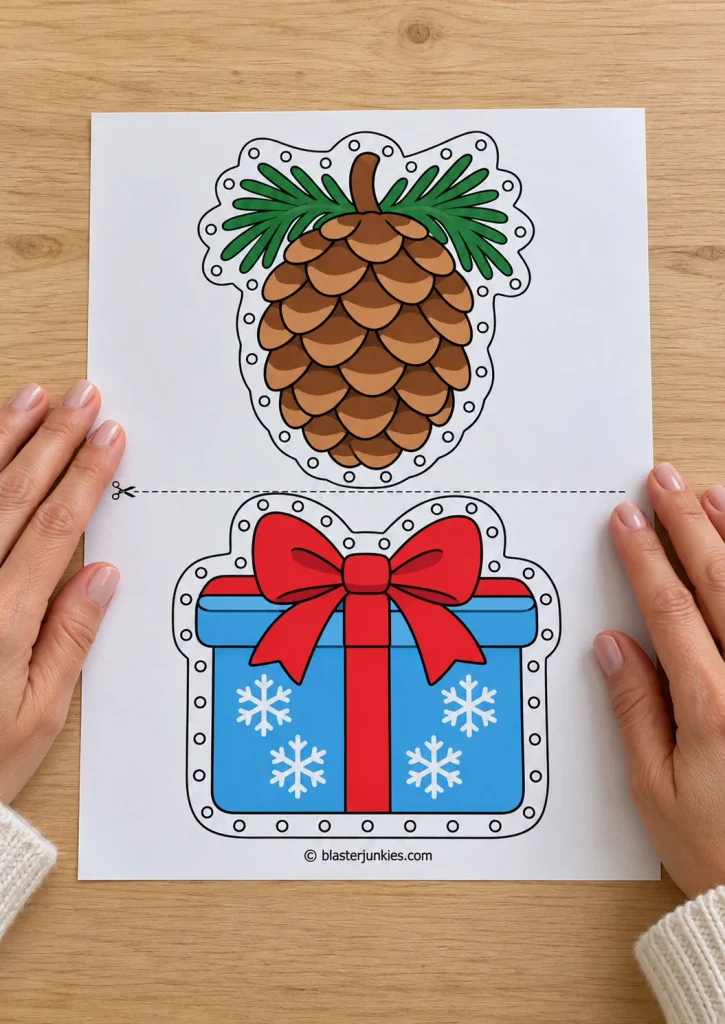
After that, you get ten printable pages, and each page holds two cards divided by a dotted line.
A small scissors symbol shows where to cut the page in half before you start lacing.
Every picture is full of color, so children can lace without needing any crayons or markers.
The winter theme covers animals, clothing, cozy treats, and festive items that kids already love.
What You Need Before You Start
Gather a few basic supplies before you print so the activity runs smoothly from the first card.
Use white cardstock if you can, because thick paper keeps the holes strong during lacing.
Regular printer paper works too, but it may tear if the child pulls the string too hard.
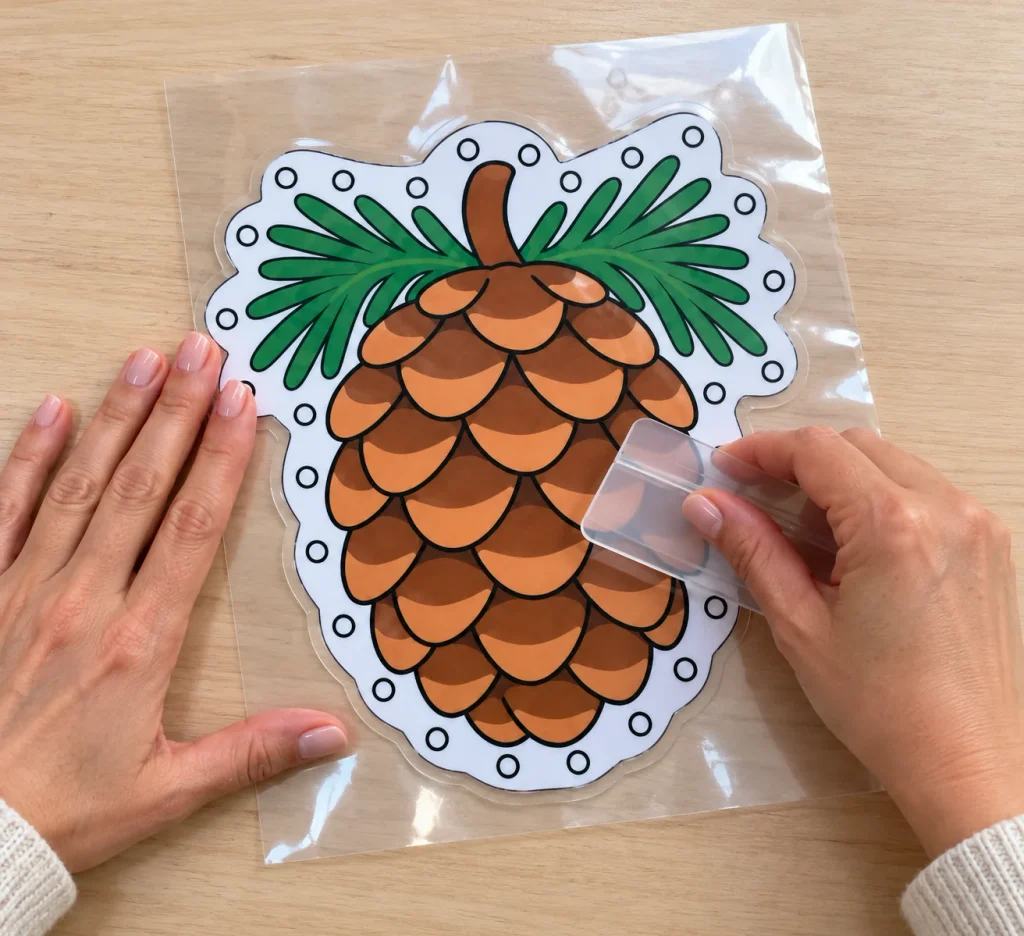
Laminating the cards is optional, but it makes them last through many weeks of winter play.
Grab a sturdy pair of scissors, and let an adult cut the cards for younger children.
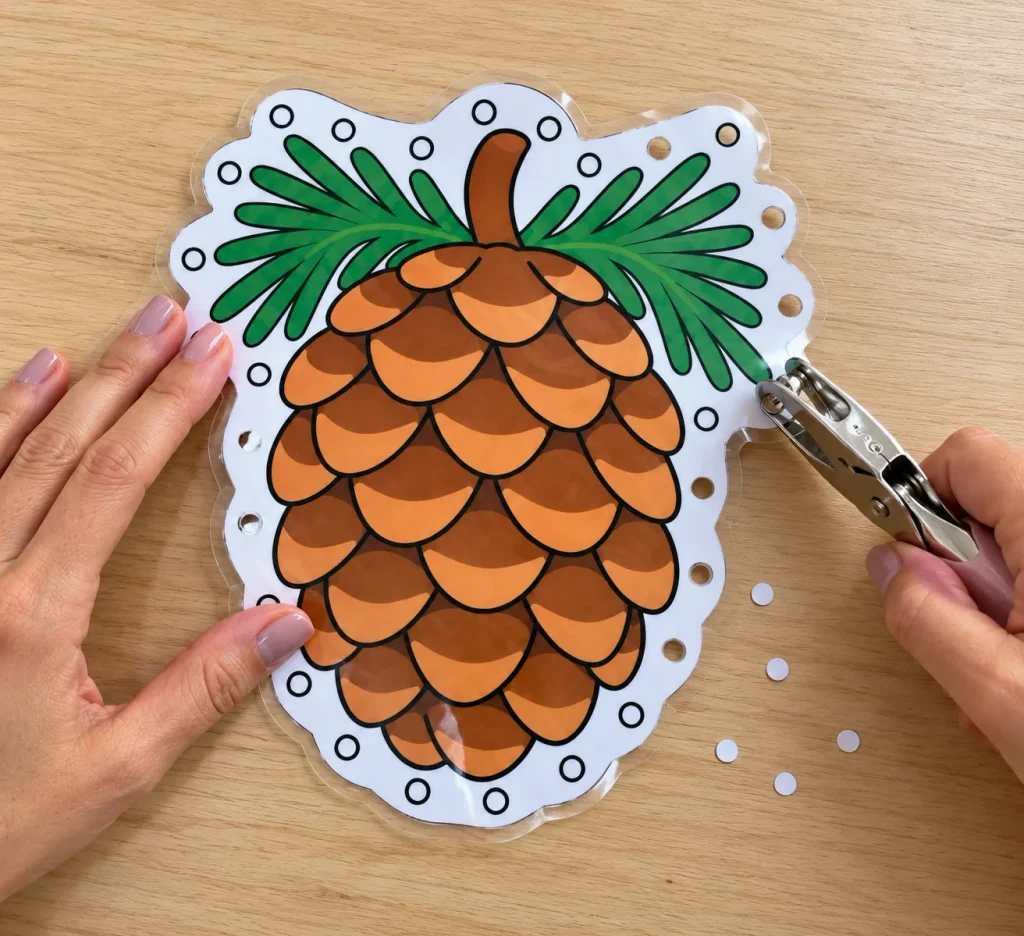
A hole punch helps you open each circle neatly, and a pencil tip works for tiny holes.
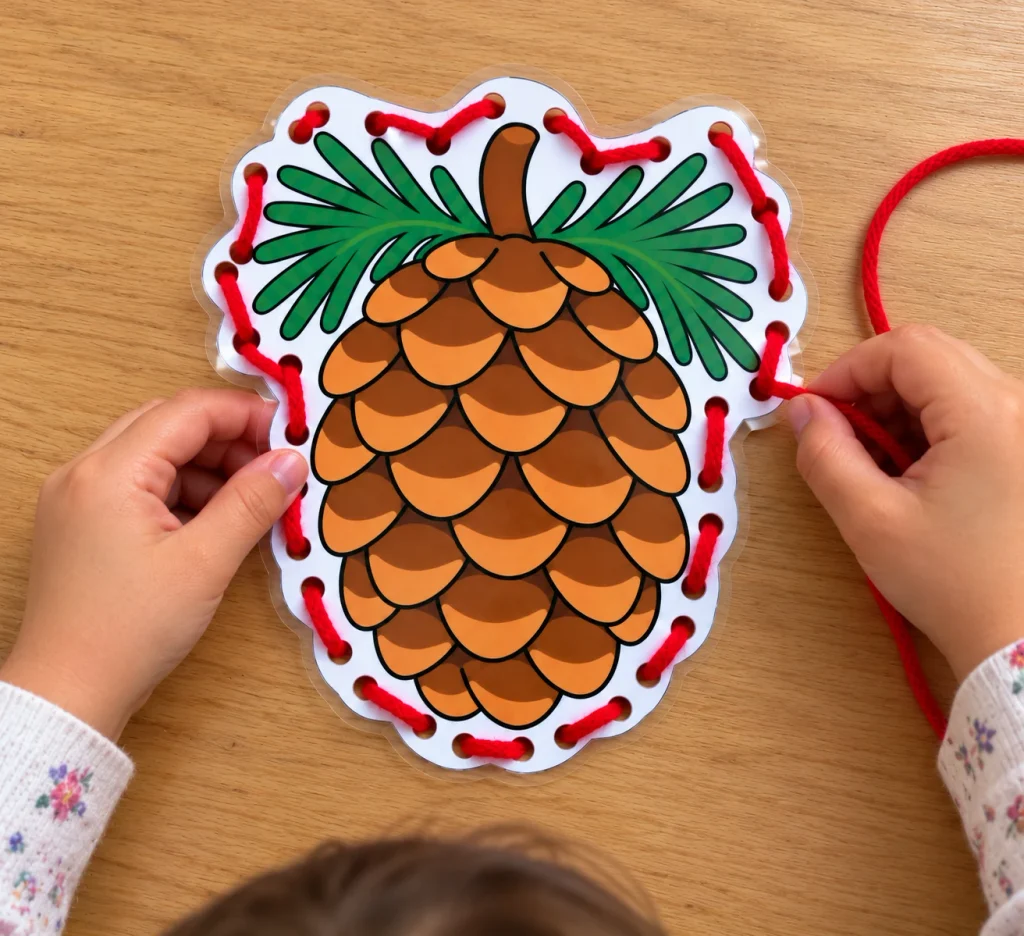
Choose yarn, shoelaces, or thick string, and wrap one end with tape to make a stiff tip.
How To Use The Printables
Follow these simple steps to prepare the cards and help your child lace with confidence.
First, print the pages on cardstock and cut along the dotted line to separate each card.
Next, trim around the outer border and punch out every circle with a hole punch.
Then, tie a knot at one end of the lace and tape the other end flat. Show your child how to push the lace up through the first hole from the back.
Let them pull it through, then move to the next hole and repeat around the whole card.
When the card is finished, tie the ends together or add a loop and hang it up.
Younger toddlers can start with large holes and a thick shoelace for easy success.
Older preschoolers can try the running stitch, going up and down through each hole in order.
Kindergarten children can try the whipstitch, wrapping the lace around the edge of the card.
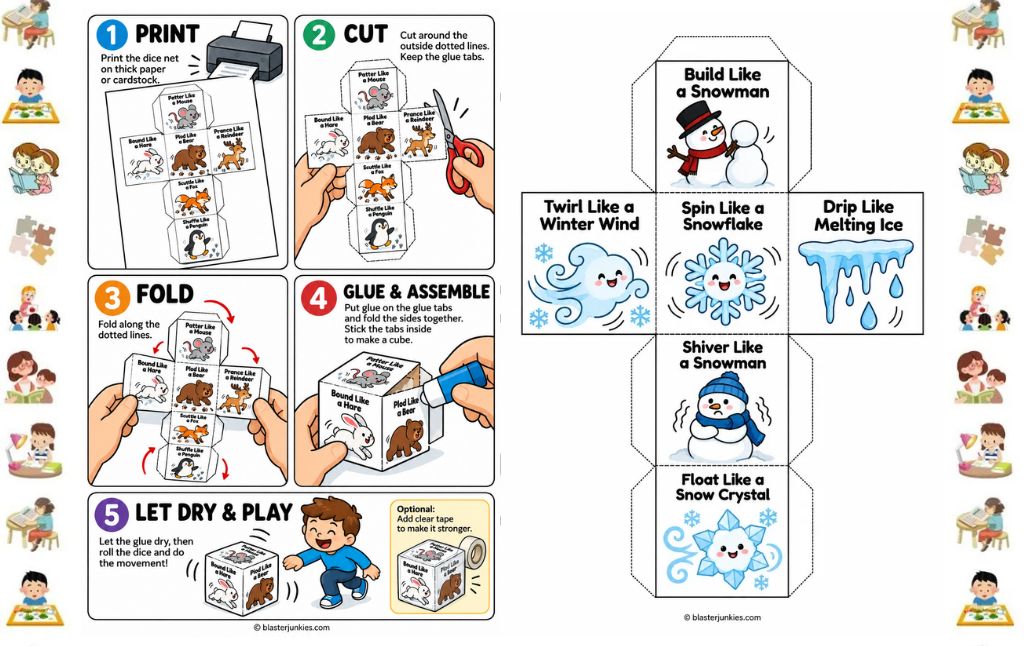
Pair lacing time with these free winter movement dice for a quick burst of indoor energy.
Page By Page Guide To The Winter Lacing Cards
Every card is drawn with a bold black outline and a ring of round holes around the shape.
Here is how each page looks and which colors it uses.
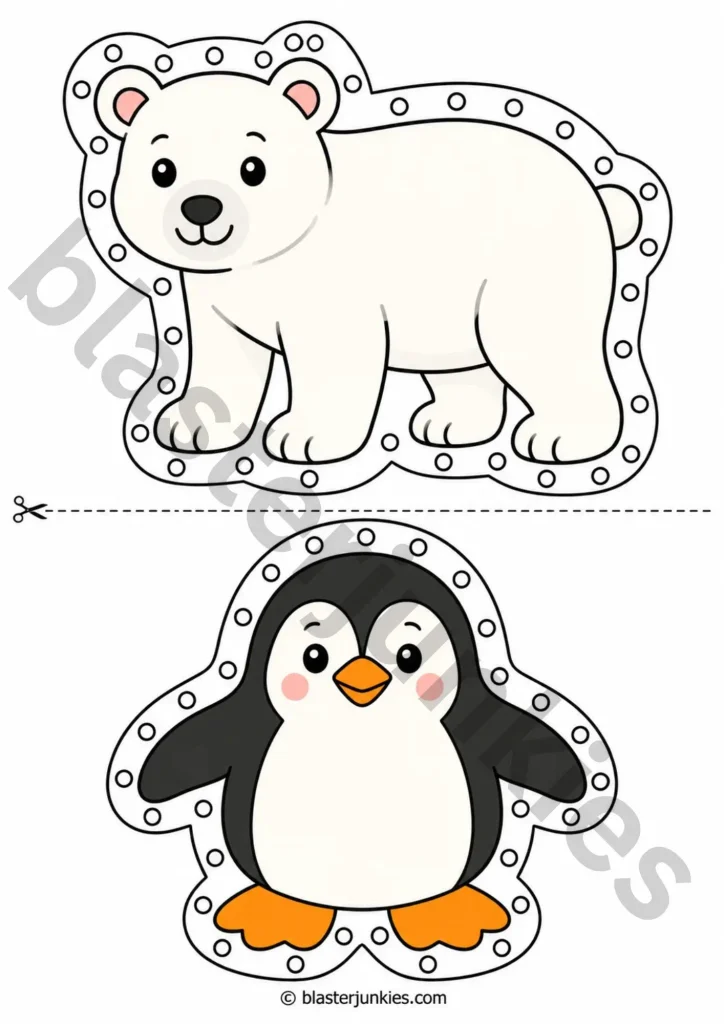
Page 1: Polar Bear and Penguin. The bear is drawn round and white with pink ears, and the penguin is black and white with orange feet.
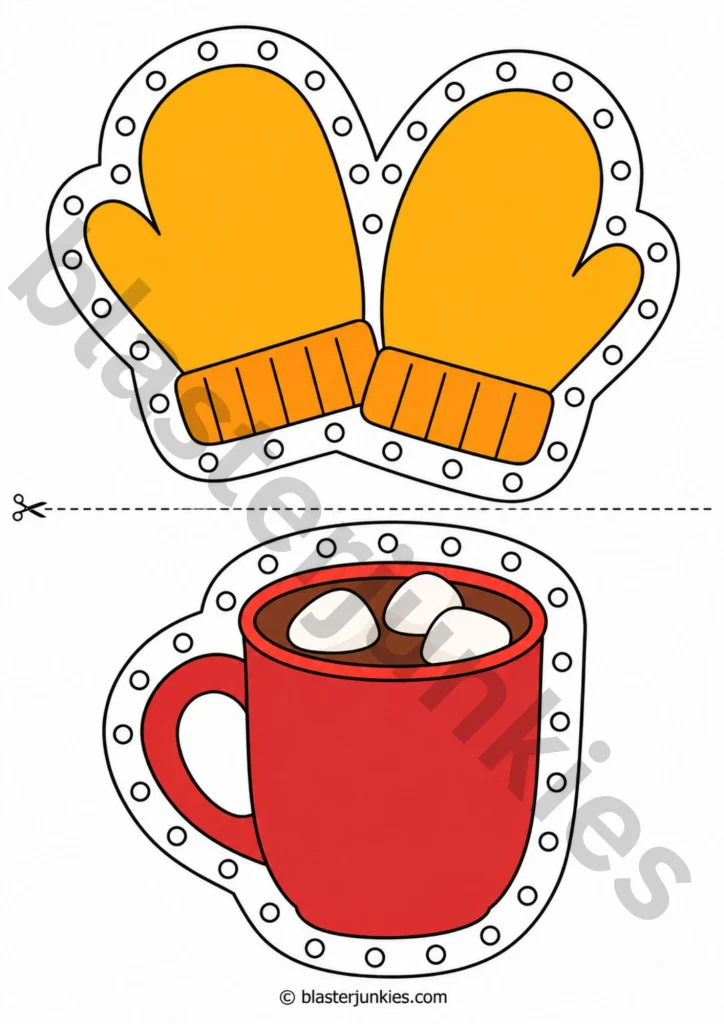
Page 2: Mittens and Hot Cocoa. The mittens use golden yellow with orange cuffs, and the red mug holds brown cocoa with white marshmallows.
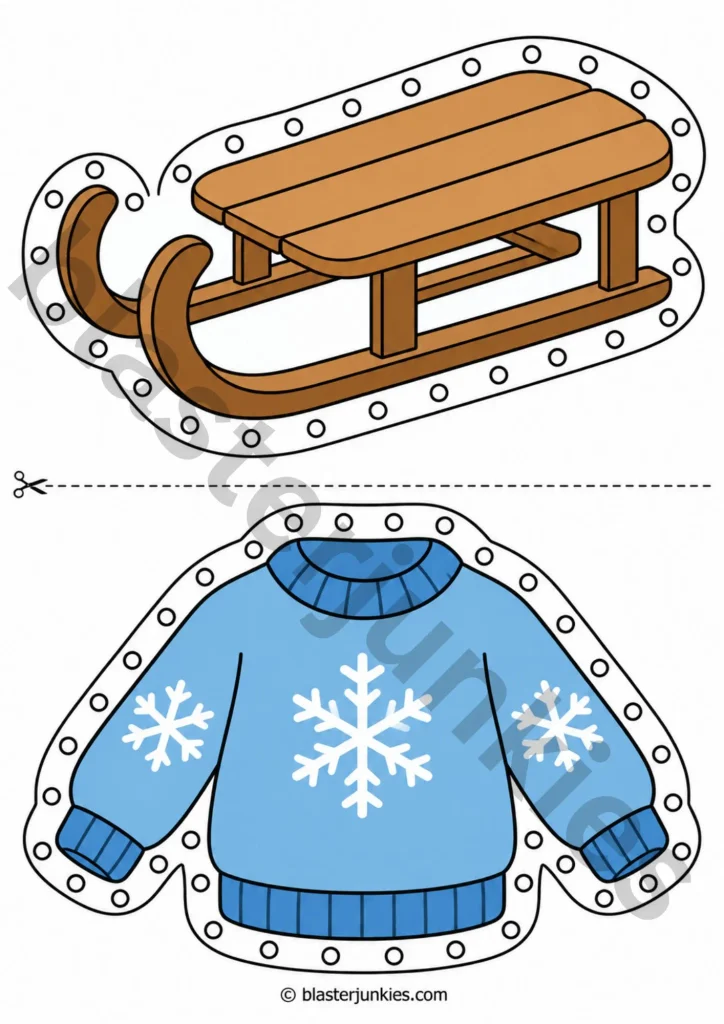
Page 3: Sled and Sweater. The sled has curved brown runners and wooden slats, while the sweater is light blue with white snowflakes.
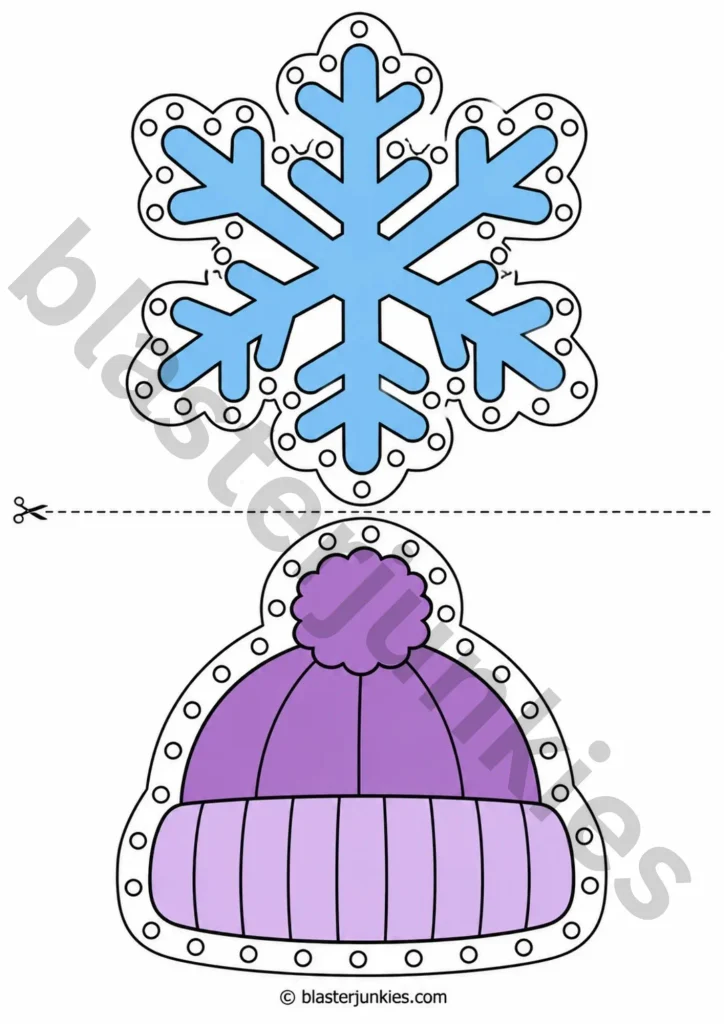
Page 4: Snowflake and Winter Hat. The snowflake has six sky blue arms, and the hat is purple with a lighter purple ribbed brim.
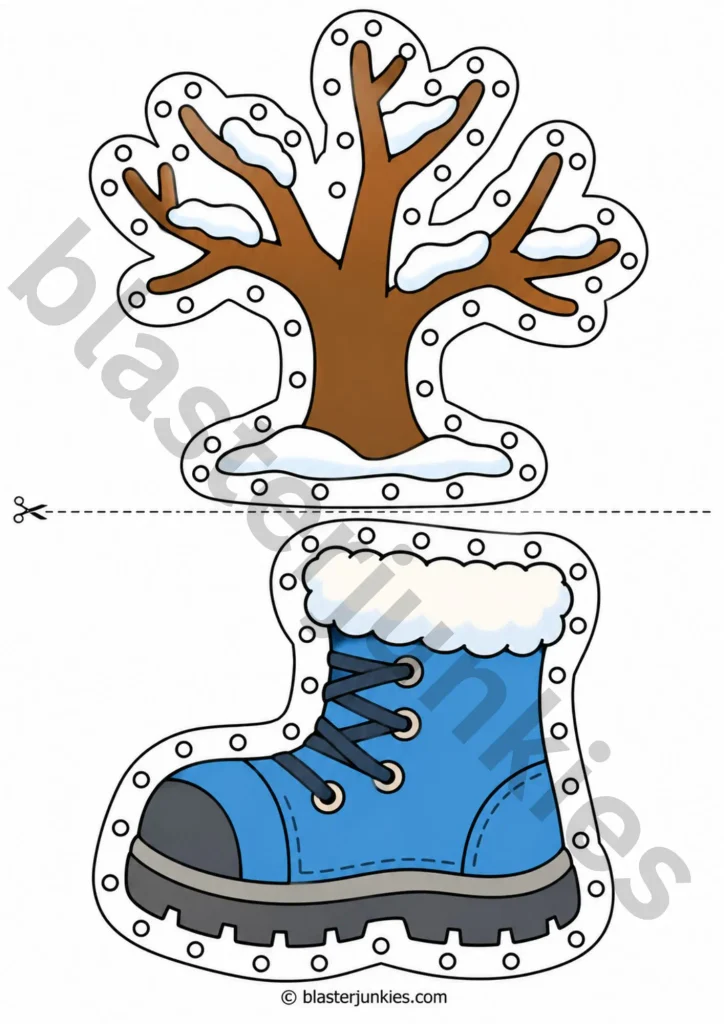
Page 5: Snowy Tree and Boot. The bare tree has brown branches with snowy caps, and the boot is bright blue with white fur trim.
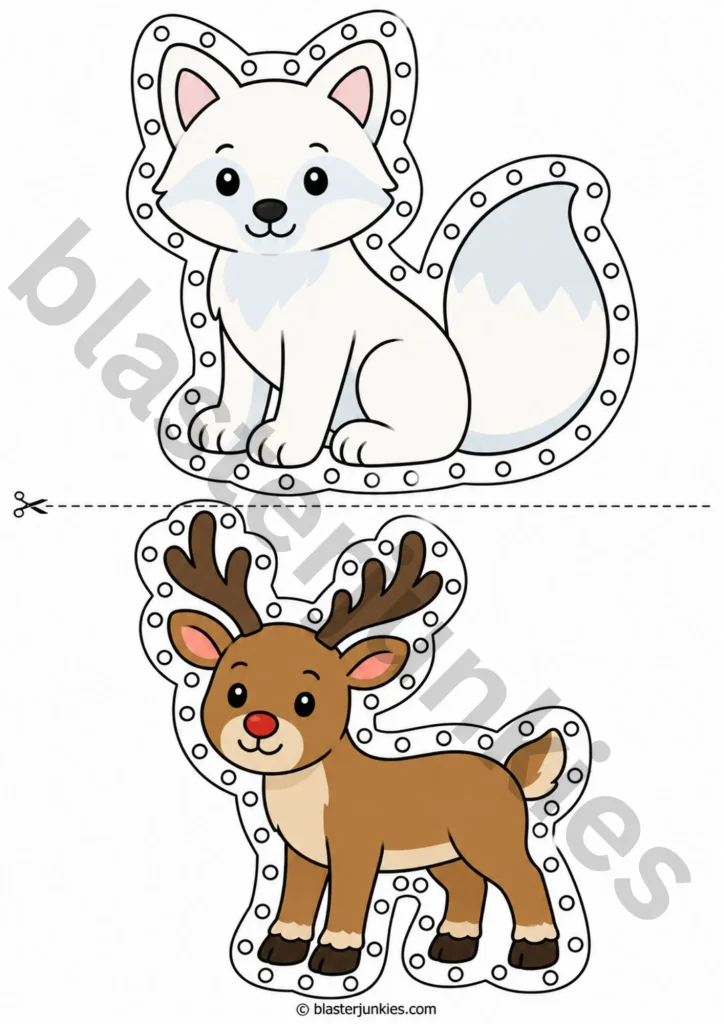
Page 6: Arctic Fox and Reindeer. The fox is white with pale blue fur, and the reindeer is warm brown with a shiny red nose.
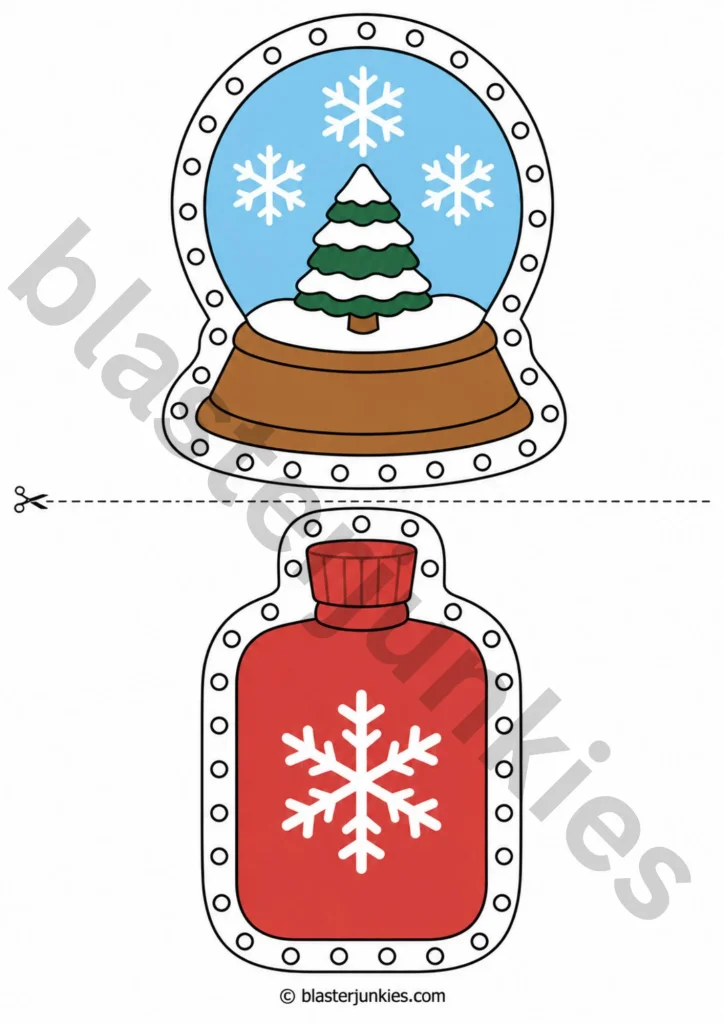
Page 7: Snow Globe and Hot Water Bottle. The globe shows a green pine tree in a blue sky, and the red bottle has one white snowflake.
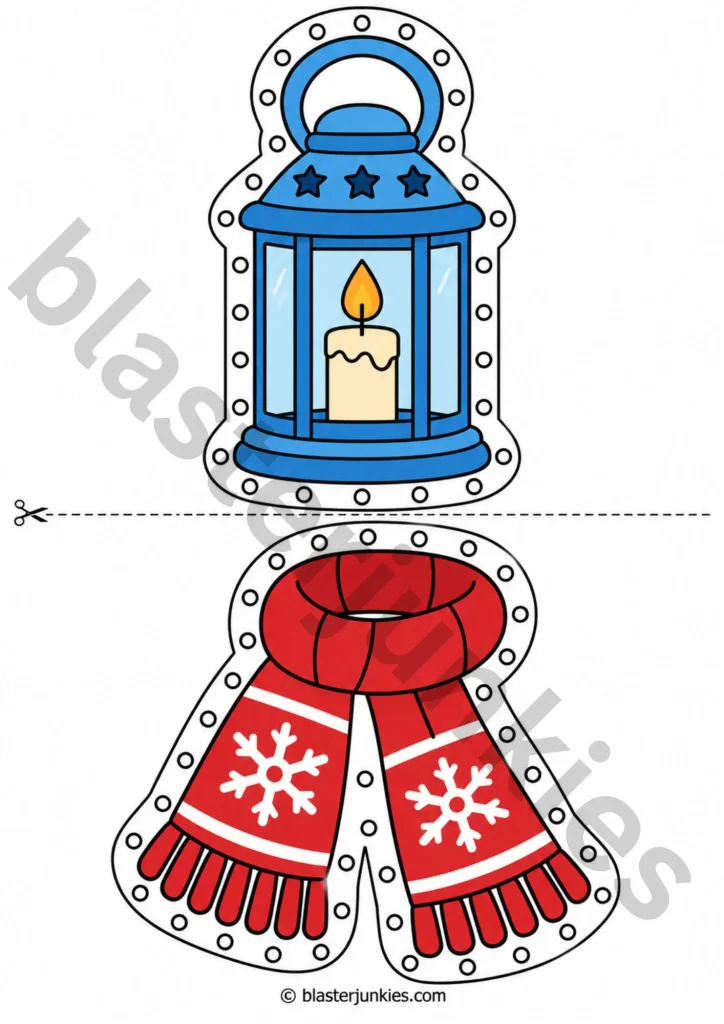
Page 8: Lantern and Scarf. The lantern is blue with a glowing candle flame, and the red scarf has white snowflakes and fringe.
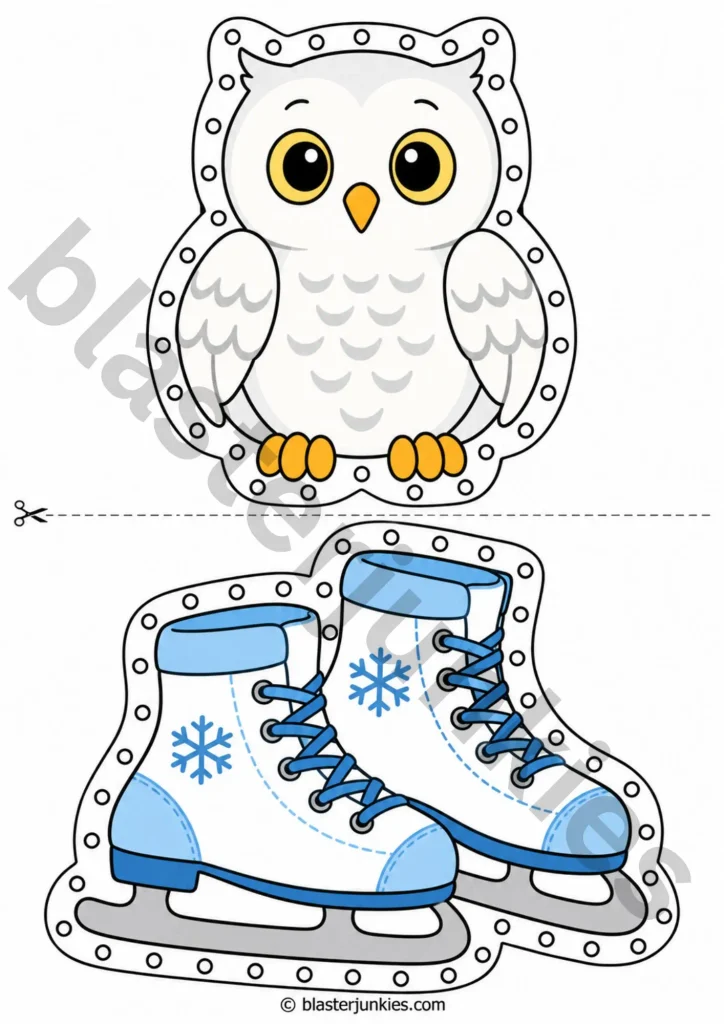
Page 9: Snowy Owl and Ice Skates. The snowy owl is white with big yellow eyes, and the ice skates are pale blue with snowflakes.
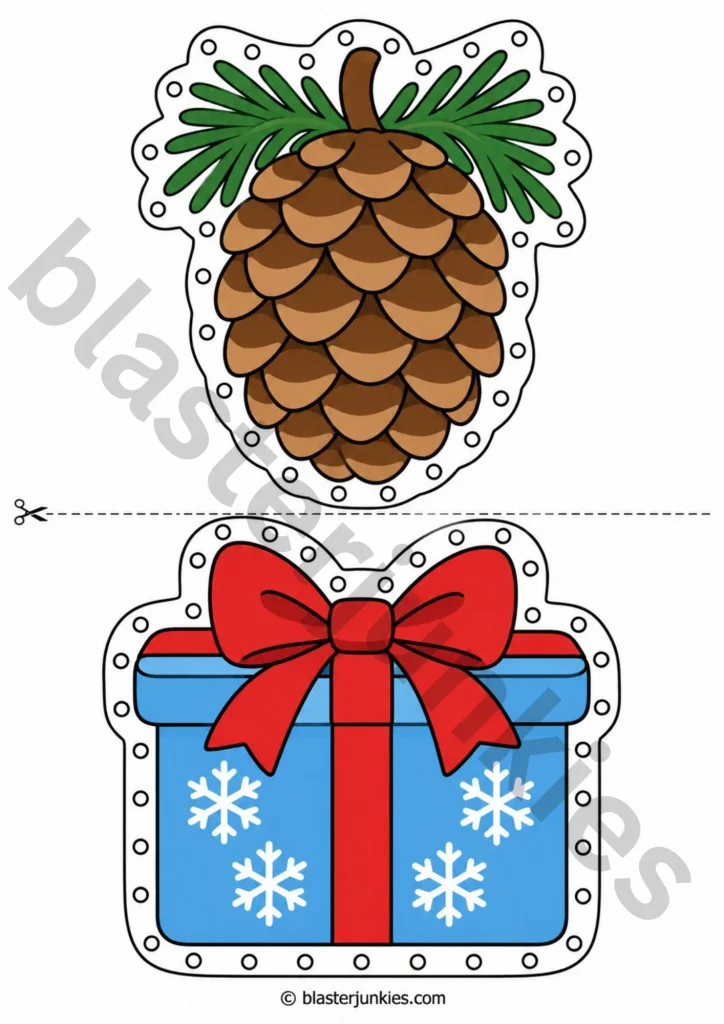
Page 10: Pinecone and Gift. The pinecone is layered in two browns with green needles, and the gift is blue with a red bow.
Skills Your Child Builds With Winter Lacing
Fine motor control. Pinching the lace and pushing it through holes trains the small muscles needed for writing.
Regular practice makes the grip steadier, and the child tires less during drawing and cutting.
Visual focus. Children must find the next hole, track the lace, and keep their eyes on the task.
This steady focus supports early reading skills, since the eyes learn to follow a path in order.
Language growth. Talk about each picture while lacing, and name the colors, shapes, and winter words together.
You can ask questions like where the polar bear lives or why mittens keep hands warm.
Counting and patterns. Kids can count the holes on a card or lace in a color pattern with two strings.
Calm and mindfulness. The slow rhythm of lacing settles busy minds, which makes it perfect before naps or bedtime.
Why A Winter Theme Keeps Kids Interested
Children love familiar objects, and mittens, boots, and cocoa mugs feel close to their daily lives.
Animals like the owl, fox, and reindeer spark curiosity and invite questions about nature in winter.
Seasonal themes also make learning feel special, like a small celebration of the cold months.
The designs stay cozy and seasonal, so families from every background can enjoy them freely.
Your child can learn more about the polar bear and fox with these fun arctic animal activities too.
Use the snowflake and tree cards to talk about how winter looks outside your own window.
Try a snowflake suncatcher craft to turn the snowflake card idea into a window decoration.
A snow globe photo craft pairs nicely with the snow globe lacing card for a keepsake.
Fun Ways To Play With The Cards
Turn the cards into a quiet time bin by storing them with laces in a small basket.
Host a winter lacing party where each child chooses a card and a colorful string.
Hang finished cards on a string across the window to make a cheerful winter garland.
Use the animal cards for story time and let your child act out a snowy adventure.
Pack a few cards in a zip bag for car rides, waiting rooms, and long flights.
Challenge older kids to race a timer, but remind them that neat stitches matter more than speed.
Children who enjoy this pack will also love the Christmas stocking lacing craft for more threading practice.
The apple lacing craft for kids is another easy way to keep those little fingers busy.
Add Christmas pattern block mats for a shape matching game after lacing time is over.
Simple Conversation Starters While Lacing
Ask your child which card is their favorite and why they chose it for today.
Wonder aloud what the penguin eats and where the snowy owl sleeps during the cold nights.
Ask what they would pack on a snowy trip using the boot, scarf, hat, and mitten cards.
Count how many snowflakes appear on the sweater, scarf, gift, and snow globe pages together.
These small chats turn a simple craft into a rich language lesson without any extra prep.
Easy Step By Step Lacing Lesson For Beginners
Begin with a demonstration, and let your child watch you lace two or three holes slowly.
Say each action out loud, such as push, pull, and move to the next hole. Then hand over the card and let your child try while you sit close for support.
If frustration appears, switch to a simpler card like the mittens or the hot water bottle.
Celebrate the finished card with a high five, and hang it somewhere everyone can see.
Tips For Parents And Teachers
Teachers can set up a lacing station in the center rotation, with ten cards ready for each group.
Therapists and homeschool parents can use the cards as part of daily fine motor warm ups.
Keep sessions short at first, around ten minutes, so children stay happy and do not feel pressured.
Praise the effort instead of the result, because every careful stitch is a small win.
Always supervise young children with strings, and avoid long laces that could wrap around hands or necks.
Store finished cards in a folder or envelope so the set stays neat for next winter.
Printing Tips For The Best Results
Print at actual size and turn off any fit to page setting in your printer menu.
Choose a high quality color option so the bright winter shades look rich and clear.
Cardstock around 65 pound weight works well for most home printers and holds up to lacing.
If holes tear, cover the back of each card with clear tape for extra strength.
Remember that the pack is for personal and classroom use, so please link to the blog to share.
Frequently Asked Questions
What age is best for these cards? Most children from age three to six enjoy lacing, though younger toddlers can try with help.
Do I need to color the cards? No coloring is needed because each card already comes in full color and ready to cut.
How many cards are in the pack? You get twenty cards across ten pages, with two different winter pictures on every single page.
Can I reuse the cards? Yes, laminate the cards, and children can lace them again and again all season long.
Final Thoughts
Start the new year with the January acts of kindness calendar to bring gentle habits into your home.
Read a few new year affirmation cards together while your child laces to keep the mood positive.
I hope your children enjoy every card and build strong little hands along the way.

Leave a Reply