Kindergarteners learn best when things are visual. They love to explore the natural world around them.
Weather is an excellent topic for early science. It is something children experience every single day.
They can see the bright sun. They can feel the cool breeze. They can hear the pouring rain.
Our Weather Worksheets for Kindergarten pack is structured beautifully. It provides a hands on way to teach basic meteorological concepts.
Let’s explore how to use these pages effectively.
Why Weather Science Matters for Young Learners
Teaching weather concepts helps children build critical thinking skills. They learn to observe their surroundings. They begin to notice patterns in nature.
These activities support developmental milestones:
Classification: Grouping objects based on common traits.
Logical Reasoning: Deciding what clothes to wear based on the sky.
Pattern Recognition: Predicting what comes next in a visual sequence.
Language Skills: Learning specific words to describe wind, rain, and temperature.
These worksheets encourage screen free, active learning. They are highly suitable for classrooms and homes.
Building Weather Science into Daily Routines
Routines help children feel safe and organized. You can easily add a daily weather check. Include this task on your daily Morning Routine Chart for Kids. Checking the sky each morning builds observation skills.
To deepen their study, use a daily weather observation worksheet. This encourages children to act like real meteorologists. They can record temperature, clouds, and wind speed daily.
You can easily expand on these simple observations. Introduce children to broader water science. Explore our interactive Neighborhood Water Cycle Worksheet Pack. It explains how rain clouds actually form.
Weather is closely tied to seasonal shifts. When autumn arrives, take your lessons outdoors. Explore the changing trees together. Use our Leaf Identification Printable to study falling leaves.
On clear, dry days, try an Autumn Scavenger Hunt Printable outside. This brings hands on play into your lessons.
To keep study habits consistent during summer, use a tracker. A Summer Habit Tracker for Kids helps log daily work. It encourages kids to complete tasks consistently.
You can also plan themed science weeks. Combine weather study with our Fun Ocean Animal Worksheets. This keeps early learning fresh and exciting.
Key Concepts in the Kindergarten Weather Pack
This printable pack uses diverse visual layouts to teach. It does not rely on heavy reading blocks. Instead, it uses colorful icons and simple checkboxes.
The worksheets cover several core developmental categories:
Sorting and Classification
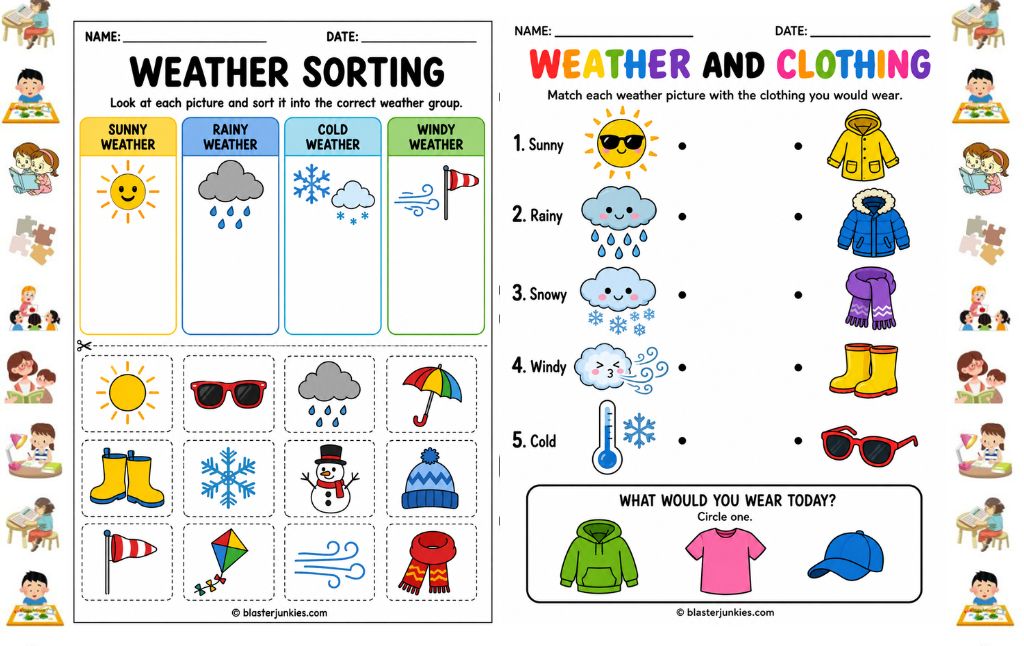
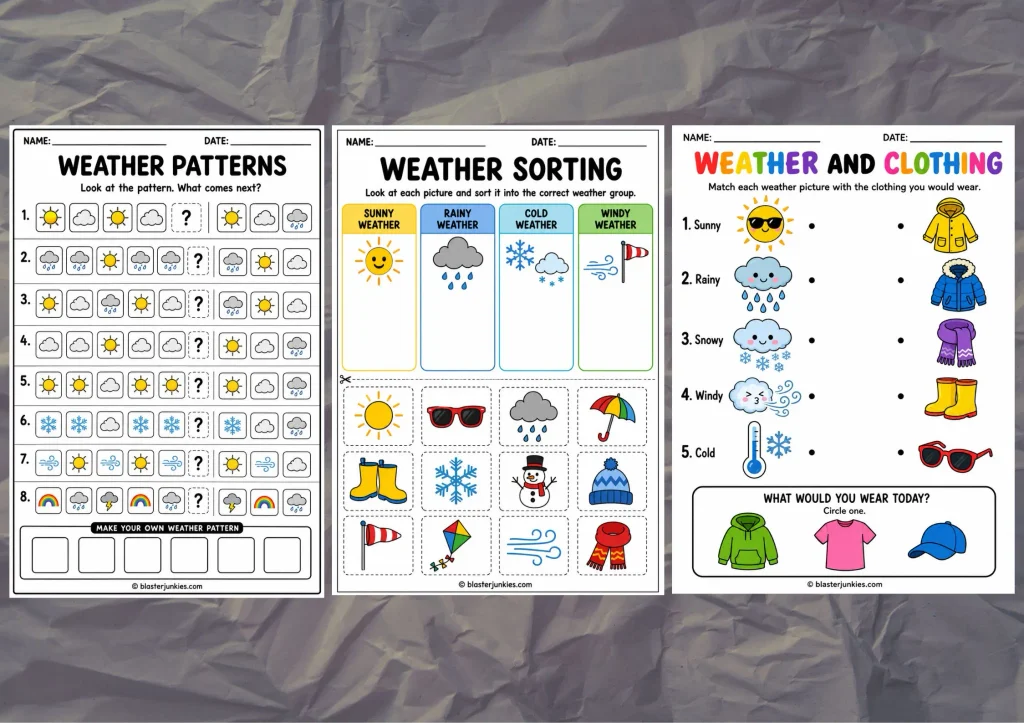
Sorting is a foundational math skill. It teaches kids to compare and group objects. In this pack, kids sort items into weather categories.
They match umbrellas to rainy weather. They match sunglasses to sunny days. This builds strong logical reasoning skills.
Daily Decision Making
One activity focuses on weather and clothing. Children must decide what to wear in different conditions. What do we wear when it is snowy?
What do we wear when it is sunny? This connects theoretical science to practical daily decisions. It teaches children independence and self care.
Pattern Recognition
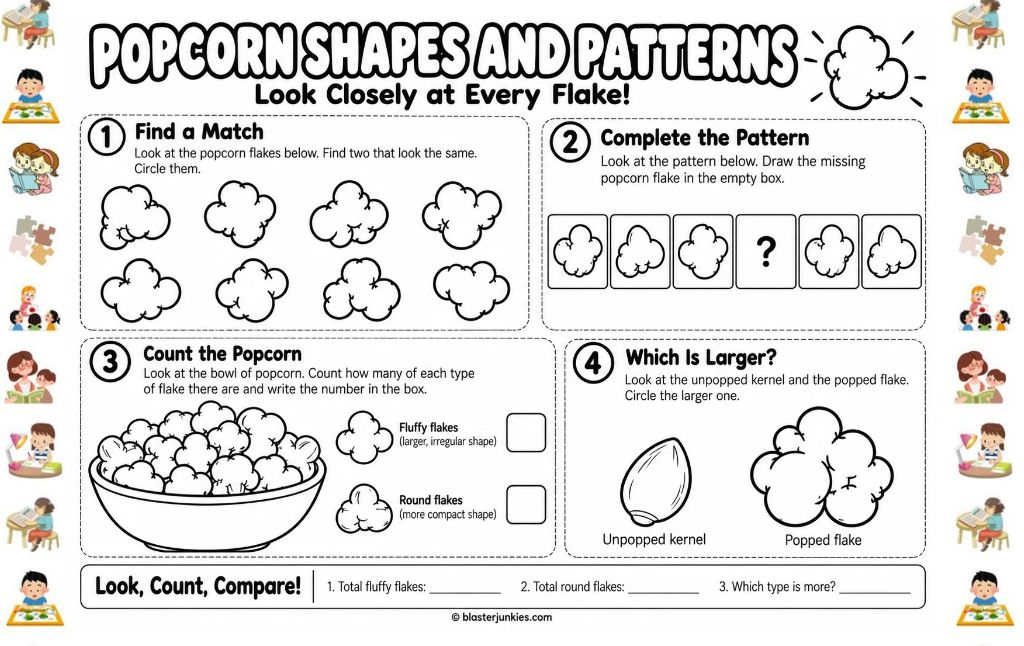
Pattern tasks encourage logical thinking. Our pattern worksheet features rows of weather symbols.
Kids predict which symbol completes the pattern. They can also create their own patterns. This prepares them for early algebra and sequencing.
Early Literacy and Handwriting
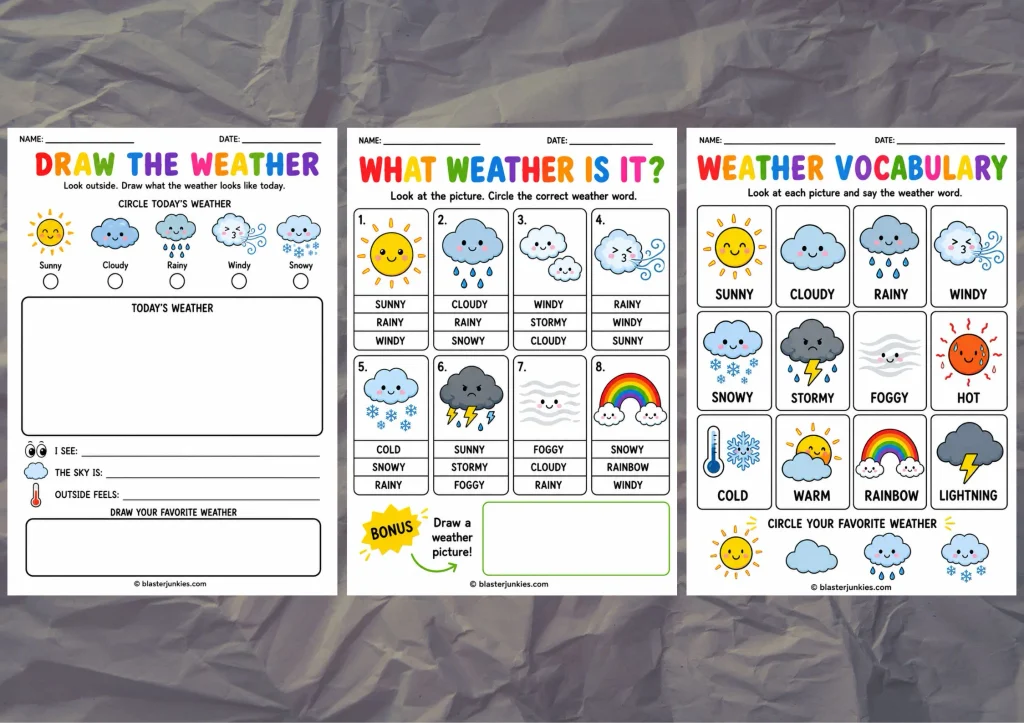
Literacy skills are built into several pages. Vocabulary worksheets introduce common meteorological terms. Kids learn words like “foggy,” “stormy,” and “windy.”
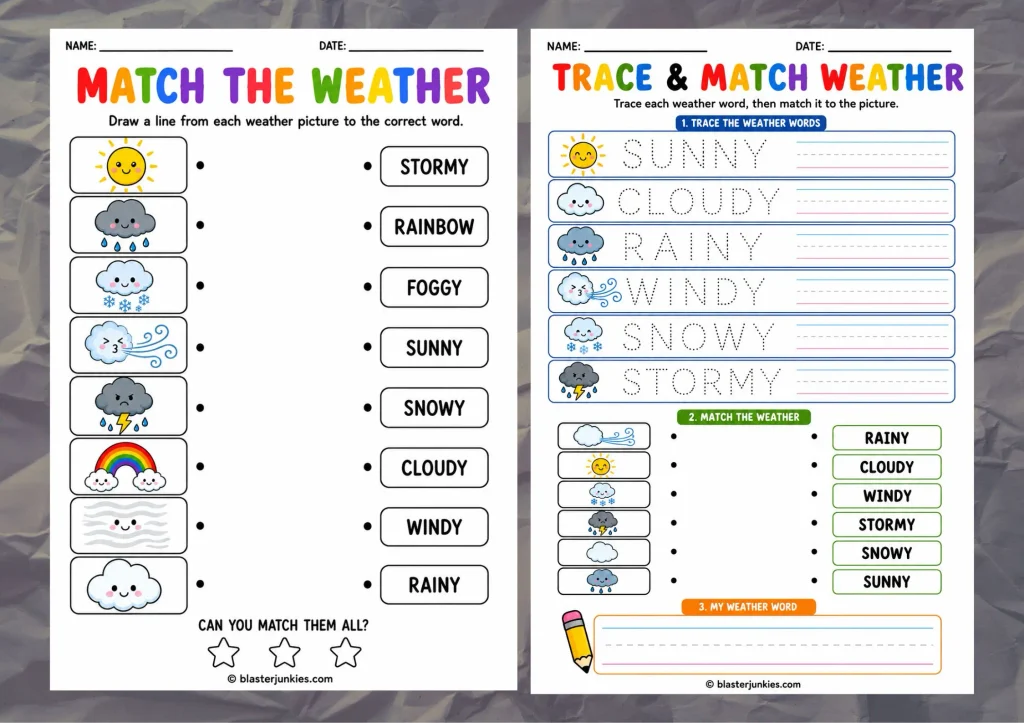
Tracing worksheets help children practice letter formation. They trace weather words along dotted guidelines. This builds essential pencil grip and writing confidence.
Matching pages reinforce reading comprehension. Kids draw lines to connect pictures with correct words. This strengthens sight word recognition skills.
The Role of Math and Graphing in Weather Observation
Weather tracking is not just a science activity. It is also an early math lesson. When kids count sunny days, they practice basic math.
You can easily create a simple weather bar graph. At the end of the week, count your completed pages. How many days were sunny? How many days were rainy?
Graphing this data visually teaches children data analysis. They learn to compare quantities in a real world way. This builds early critical thinking skills.
Practical Ways to Use These Worksheets
Setting up these science activities is very simple. You likely have all the supplies at home. Grab crayons, scissors, a glue stick, and pencils.
For durability, print the pages on heavy paper. Thick cardstock is excellent for cut-and-paste sorting pages. It stands up well to wet school glue. It is also easier for little hands to handle.
For the cutting activities, choose high quality safety scissors. Ensure they fit your child’s hands comfortably. Show them how to hold the scissors safely.
Always supervise young children during cutting tasks. This ensures a safe and productive crafting experience.
To save paper, try laminating the sheets. Laminated pages work wonderfully with dry erase markers.
Kids can trace, match, erase, and practice again. This is great for classroom morning work. It is also ideal for home learning bins.
Active Learning and Sensory Extensions
Do not let the learning stop on paper. Combine these worksheets with hands-on sensory play.
On rainy days, make a sensory cloud bin. Fill a container with shaving cream. Let children play with the “clouds” using spoons. This tactile art keeps indoor days exciting.
You can also play active movement games. Have your children act out different weather types. Can they spin around like a tornado?
Can they drift slowly like falling snow? Can they stomp their feet like thunder?
This lets children burn off extra energy indoors. It also reinforces the concepts they learned on paper.
Supporting Creative Expression
The pack includes opportunities for creative drawing. Children are invited to draw today’s weather. They can also draw their favorite weather.
Drawing encourages kids to observe details closely. What does a cloud actually look like? What color is the sky on a stormy day? These prompts build deep artistic and observation skills.
Display their completed drawings on the refrigerator. This simple act boosts their confidence and pride.
Customizing for Different Learning Styles
Every child has a unique learning style. These printable pages accommodate diverse needs:
Visual Learners: Benefit from the bright, clear weather illustrations.
Tactile Learners: Enjoy the cutting, pasting, and sorting exercises.
Verbal Learners: Thrive during the vocabulary and tracing tasks.
Kinesthetic Learners: Enjoy the drawing prompts and matching games.
This versatility makes the worksheets highly effective. They keep different types of learners fully engaged.
You can adapt each sheet to your child’s pace. If they are tired, focus on the matching games.
If they are energetic, focus on cut and paste sorting. This flexibility reduces academic pressure and frustration.
Conclusion
Learning about the sky is a wonderful journey. These kindergarten worksheets combine science with daily fun.
They help children build essential childhood skills. Fine motor, math, and literacy are all supported.
You can easily download the complete 8 page pack. It is ready to print and use immediately.
Enjoy watching your child discover earth science. Have fun exploring the weather together today!