
Little hands need lots of practice before they can write. Pom poms make that practice feel like play.
These winter mats turn tiny circles into snowmen, penguins, mittens, and cozy cabins.
This pack has 20 bright mats. Each mat shows a winter picture made of circles. Your child places a pom pom on every circle.
Then they count each colour and write the number on the line.
It is simple, quiet, and very satisfying. Let’s see how it works.
Why Fine Motor Play Matters
Fine motor skills use the small muscles in the fingers and hands. Children need these muscles for writing, cutting, buttoning, and zipping.
Strong hands make school tasks easier.
Pom poms are soft and easy to grab. Children use a pinch grip to pick each one up.
This is the same grip they need for holding a pencil.
Placing a pom pom inside a circle needs careful eyes and steady hands. This builds hand eye coordination.
It also builds patience and focus.
What You Need Before You Start
Print the mats on white paper or card stock. Card stock stays flat and holds up to busy fingers.
Laminating the mats lets you reuse them again and again.
Gather pom poms in white, red, grey, orange, blue, green, brown, pink, purple, yellow, and teal.
You do not need every colour. Use what you have.
Keep a small bowl for the pom poms. Sort them by colour first if your child is young.
Tweezers or kid safe tongs make a fun challenge for older children.
Have a pencil ready for the counting lines.
Choose a quiet table with good light. Sit beside your child for the first mat.
How to Use These Printables
Start with a simple mat such as the snowflake or the winter hat. Show your child how to match each pom pom to the circle colour.
Colour matching is a great early skill.
Let your child place one pom pom on each circle. Encourage slow, careful movements. There is no rush.
When the picture is full, ask the big question. How many of each colour? Touch each pom pom and count aloud together.
Write each number on the line beside the matching colour dot. Young children can say the number while you write.
Older children can write it themselves.
Praise effort and careful work. Say, “I love how you matched every colour.” Children feel proud and want to try the next mat.
Try one or two mats a day.
Stop when your child feels tired. Short, happy sessions work best.
The 20 Printable Mats Explained
1. Snowman
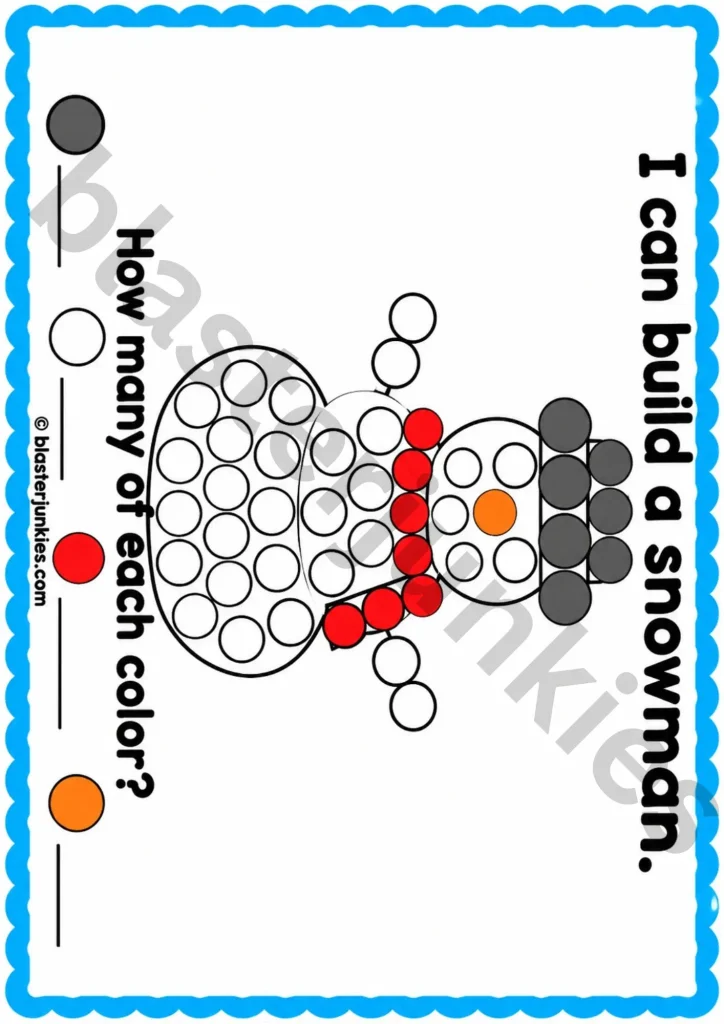
Place white pom poms on the body, red on the scarf, grey on the hat, orange for the nose.
2. Pine Tree
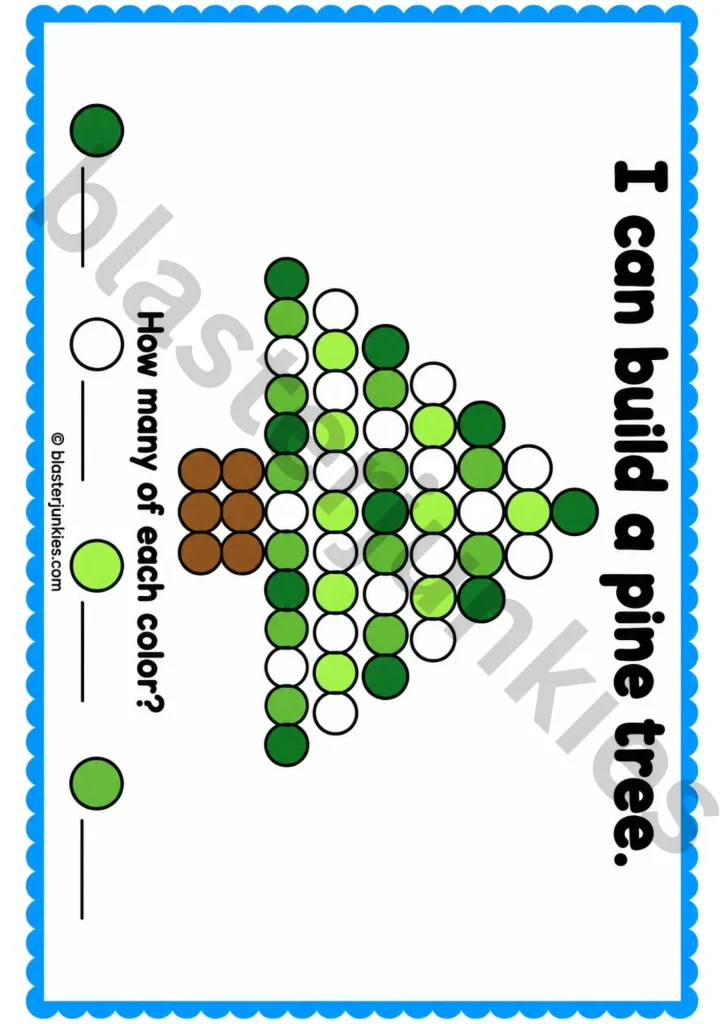
Fill the trunk with brown pom poms, then mix dark, medium, and light green with white for snowy branches.
3. Snowflake
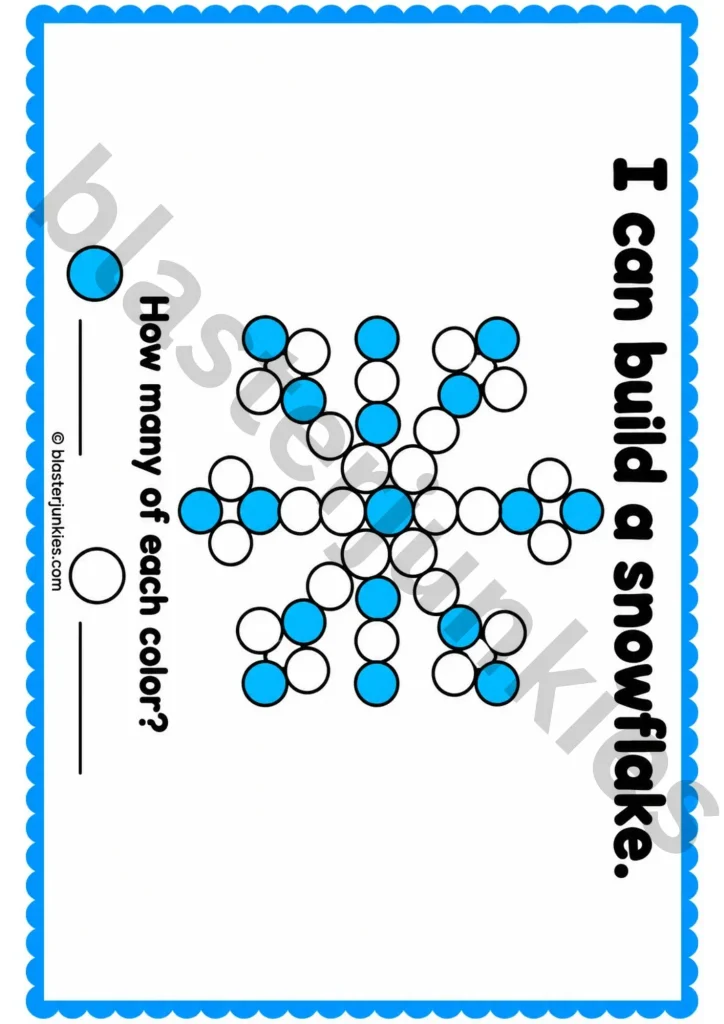
Use bright blue pom poms on the tips and centre, then fill the remaining circles with white ones.
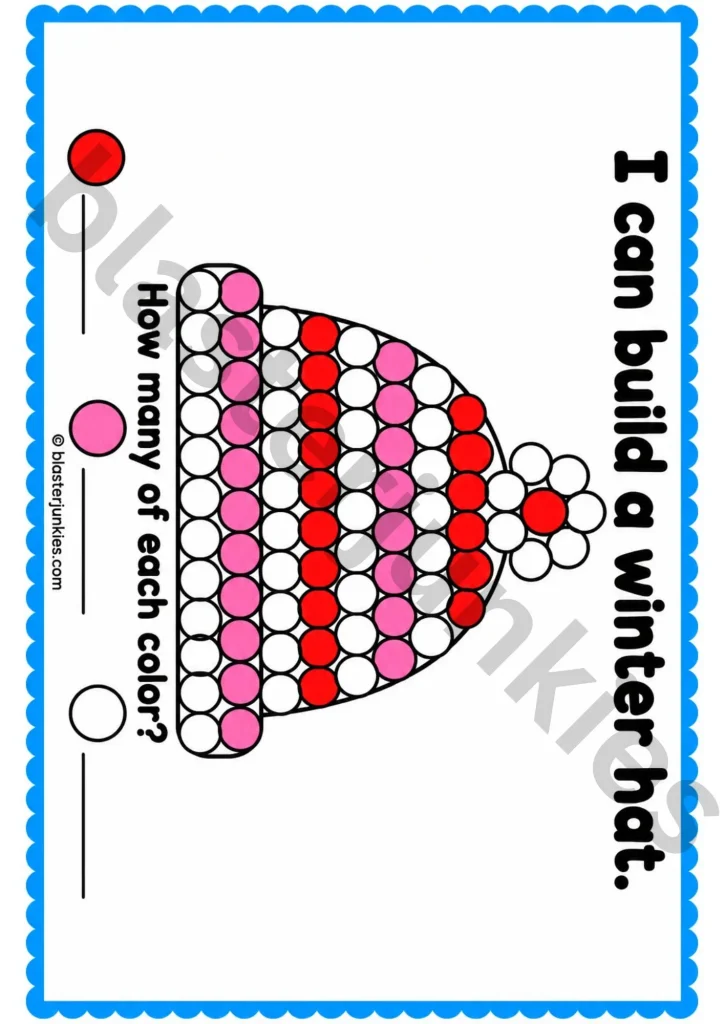
4. Winter Hat
Place pink pom poms down the brim, red on the hat stripes, and white on the remaining circles.
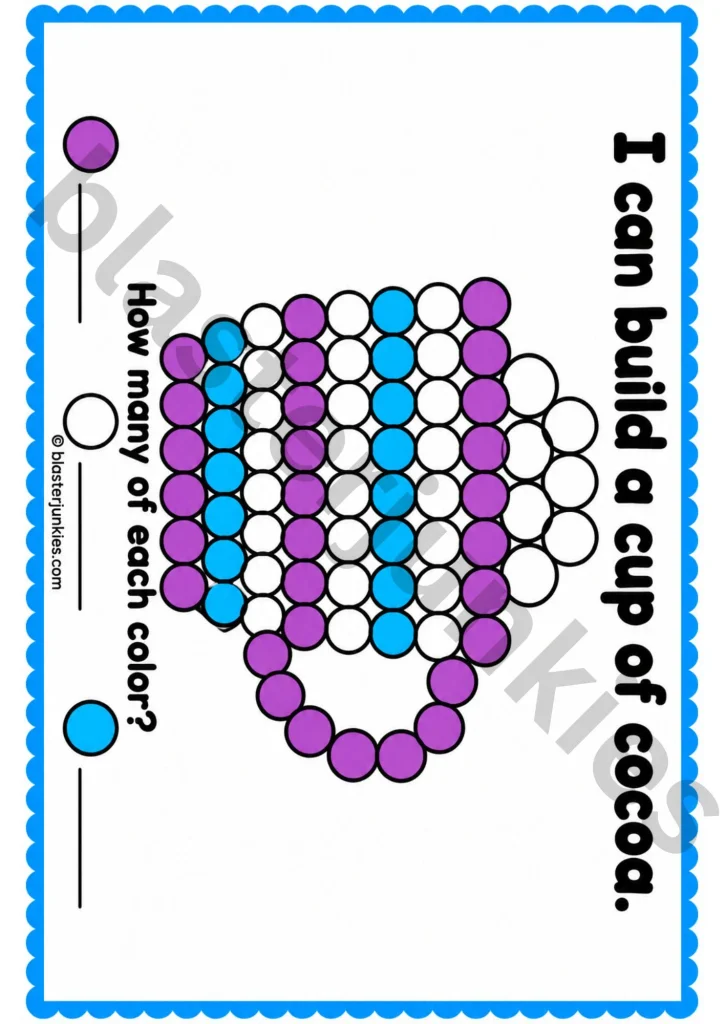
5. Cup of Cocoa
Add purple pom poms to the cup edge and handle, blue to the stripe, and white to the rest.
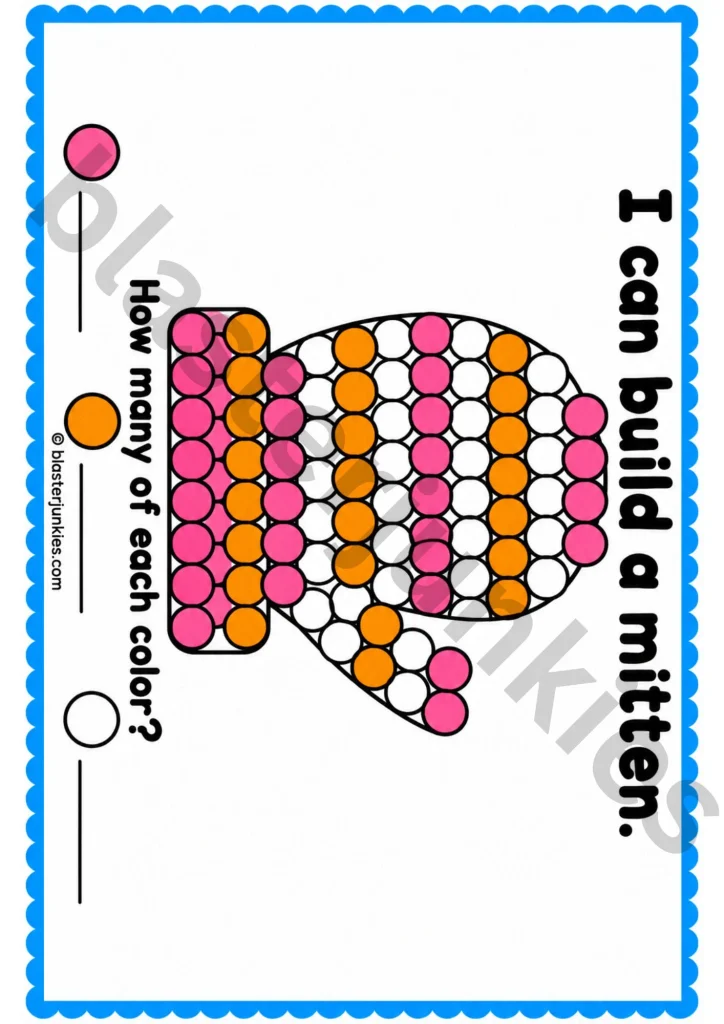
6. Mitten
Alternate pink and orange pom poms along the cuff and stripes, then fill all remaining circles with white.
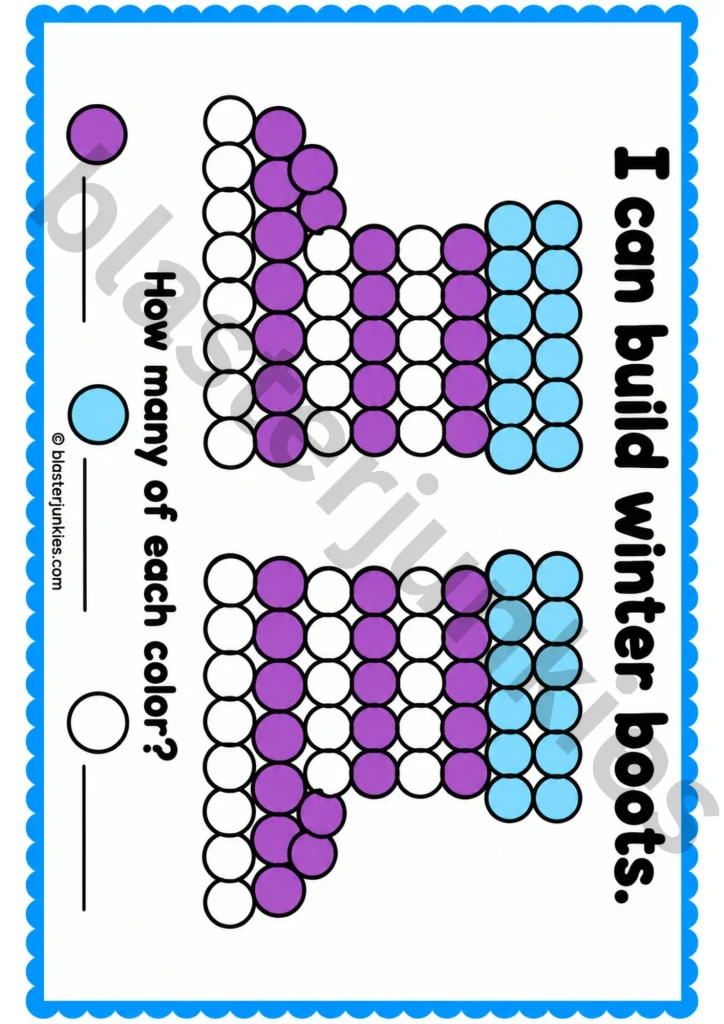
7. Winter Boots
Use light blue pom poms for the cuffs, purple for the stripes, and white for every remaining circle.
8. Penguin
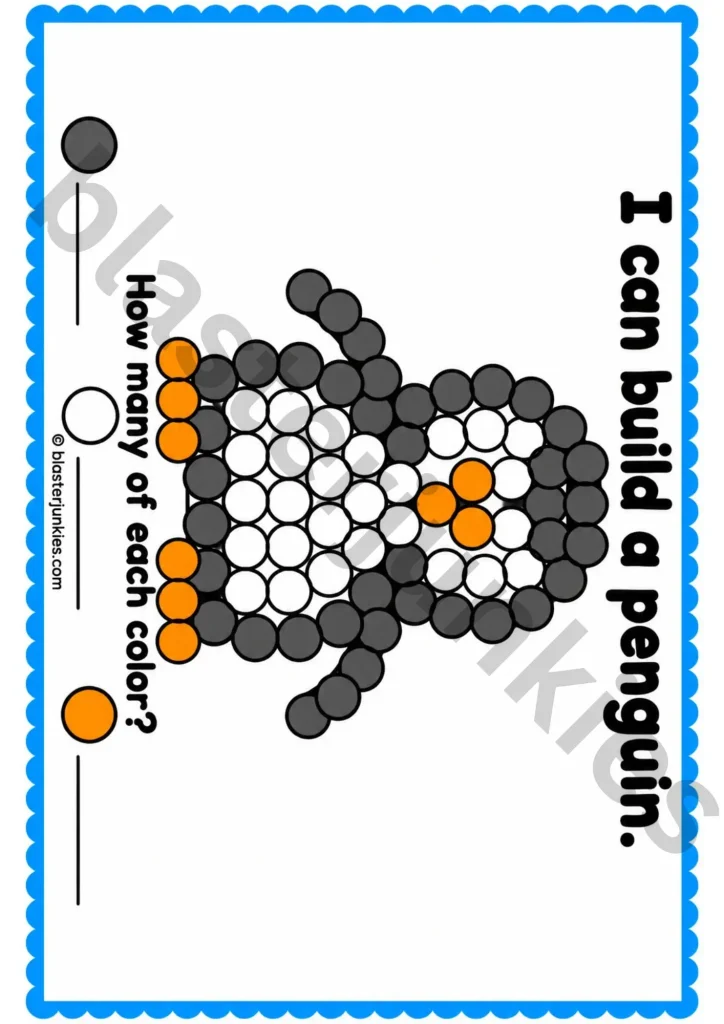
Place grey pom poms around the body and wings, white on the belly, and orange for the beak and feet.
9. Reindeer
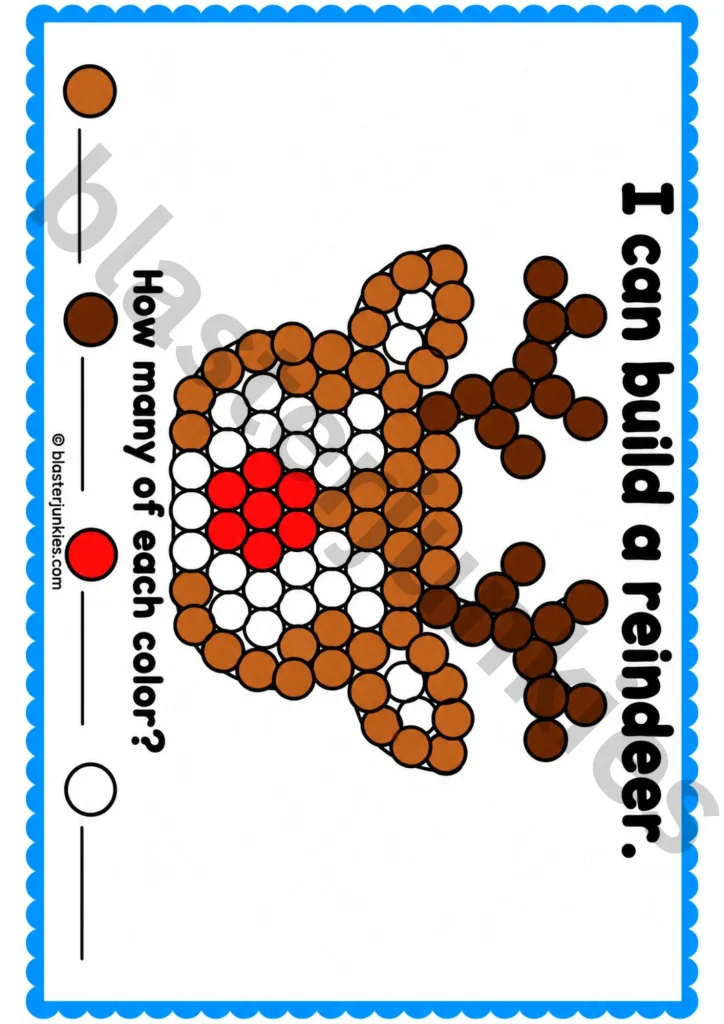
Use light brown for the face, dark brown for antlers, a red nose, and white for the remaining circles.
10. Christmas Stocking
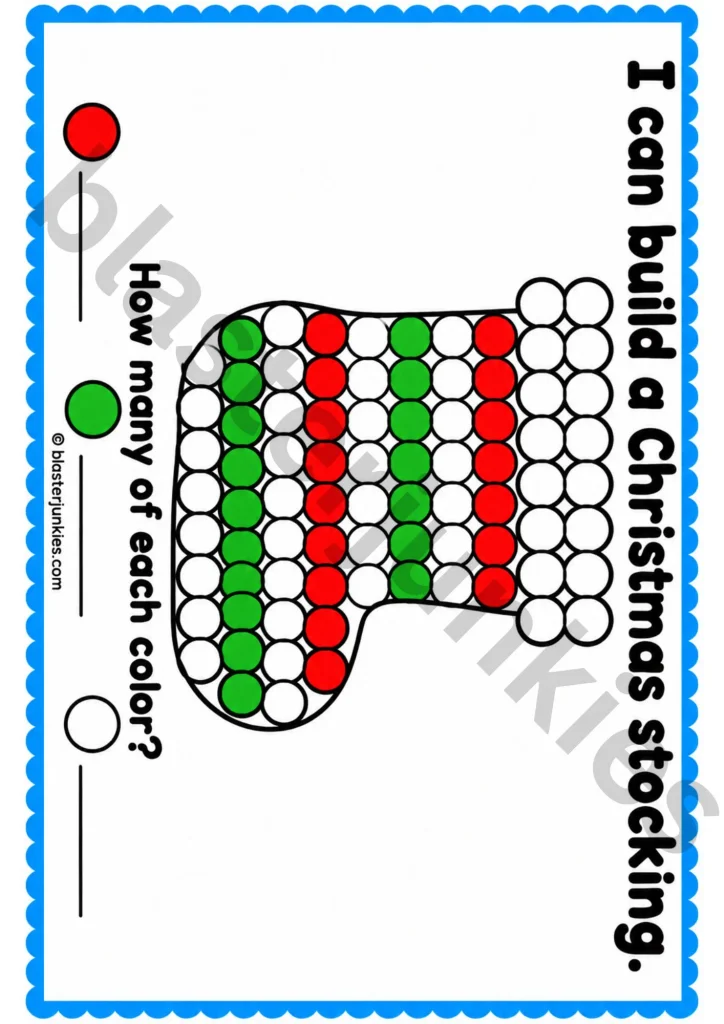
Make red and green stripes with pom poms, then fill the gaps and cuff with white ones.
11. Snow Globe
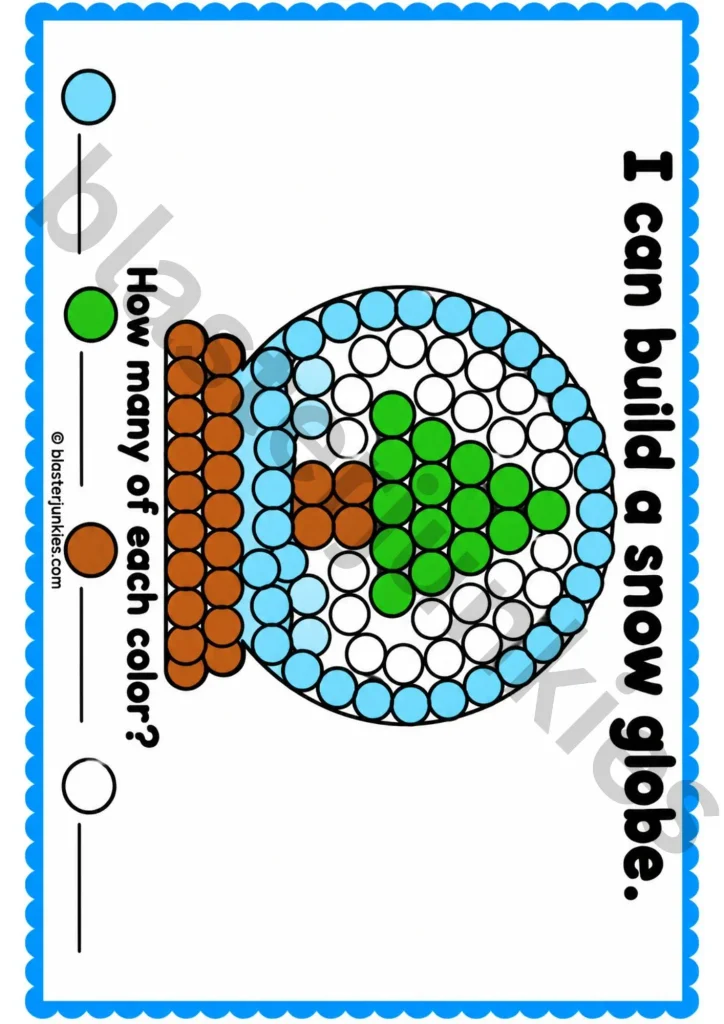
Use light blue around the glass, green for the tree, brown for the trunk and base, white elsewhere.
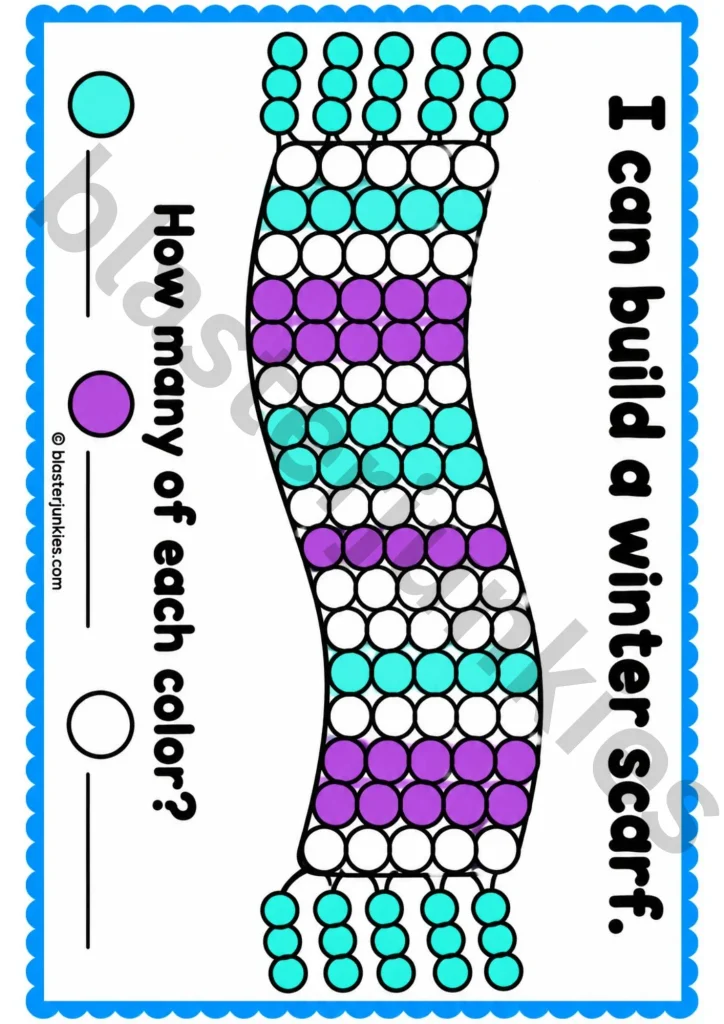
12. Winter Scarf
Place teal and purple pom poms in alternating stripes, use teal for the fringe, and white for gaps.
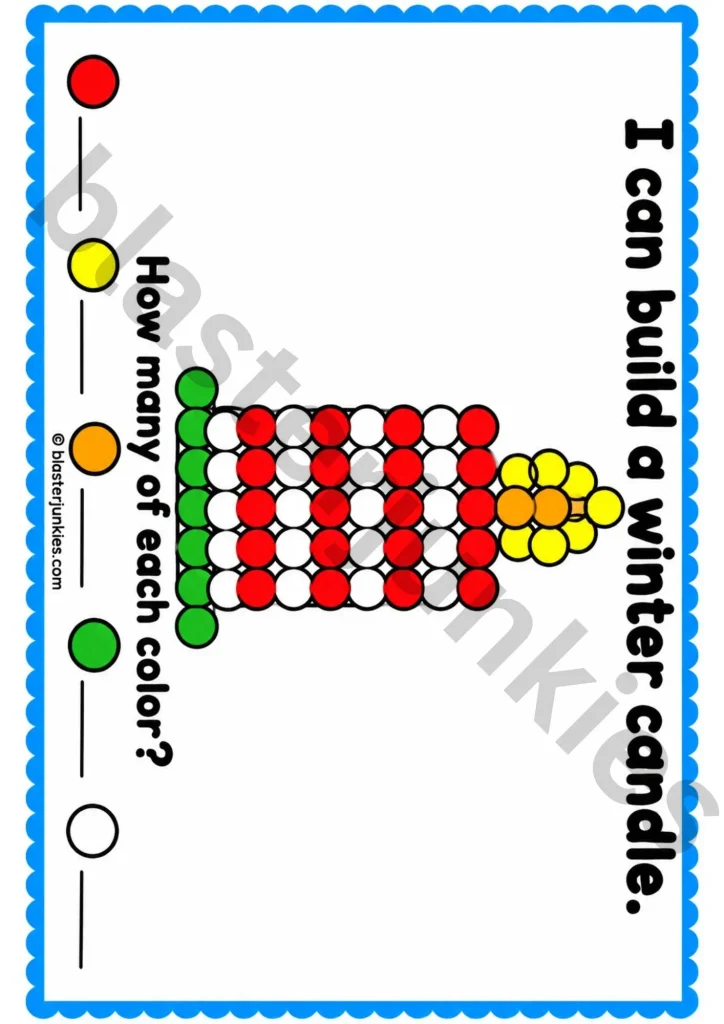
13. Winter Candle
Use red and white stripes for the candle, green for the holder, and yellow with orange for the flame.
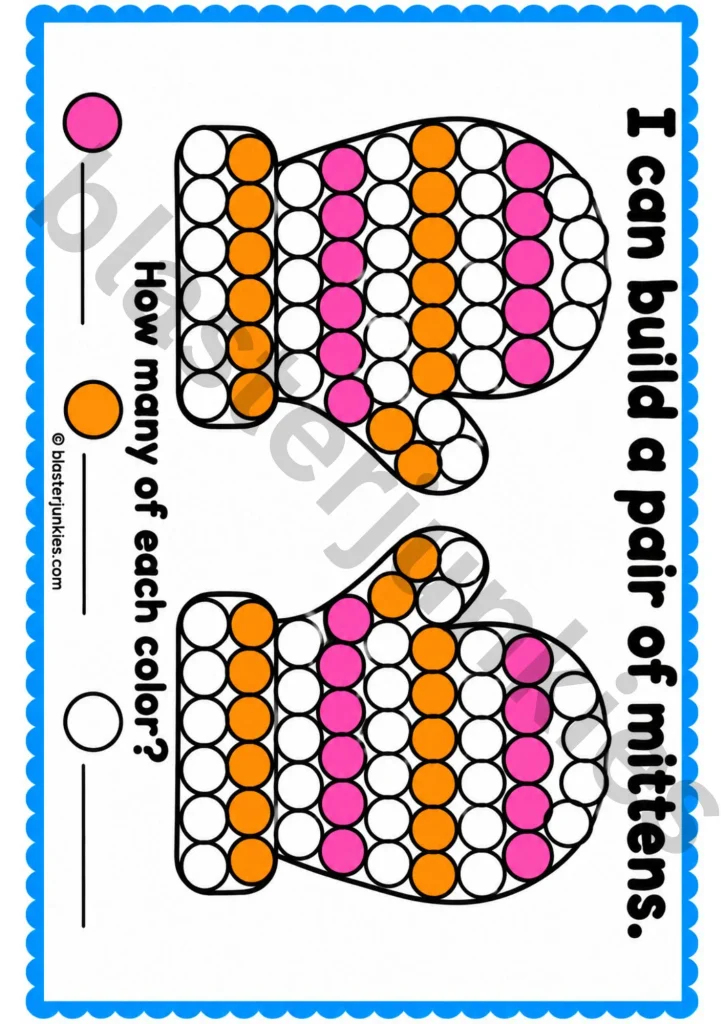
14. Pair of Mittens
Fill both mittens with pink and orange stripes, finish with white pom poms, then count each colour on both mittens.
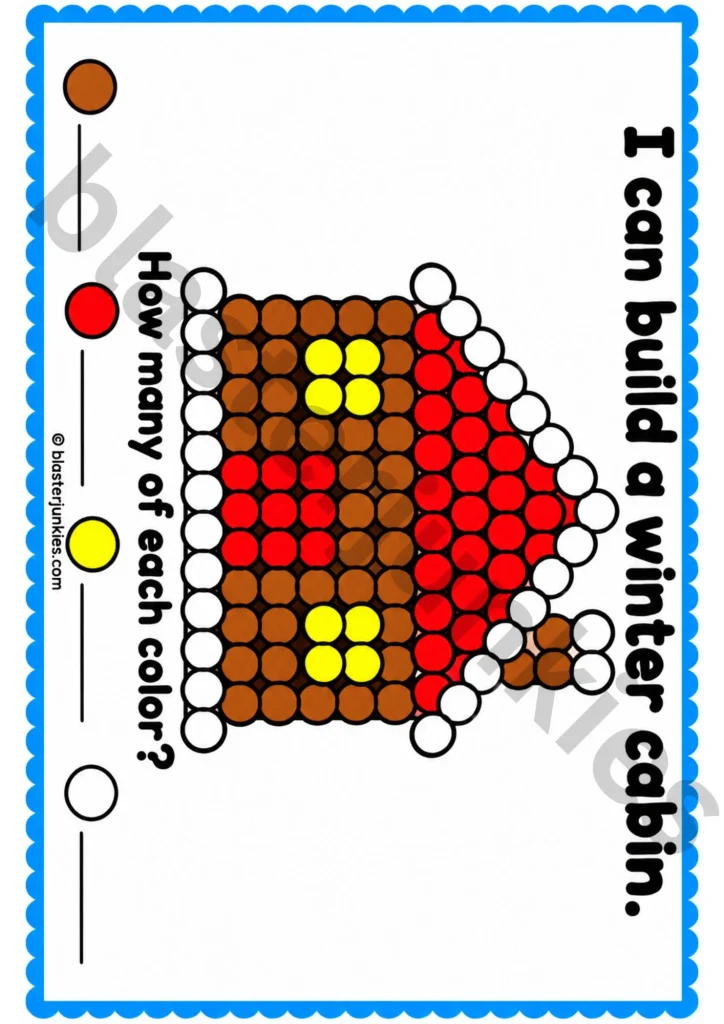
15. Winter Cabin
Use brown for the walls, red for the roof, yellow for windows, and white for the snowy roof edge.
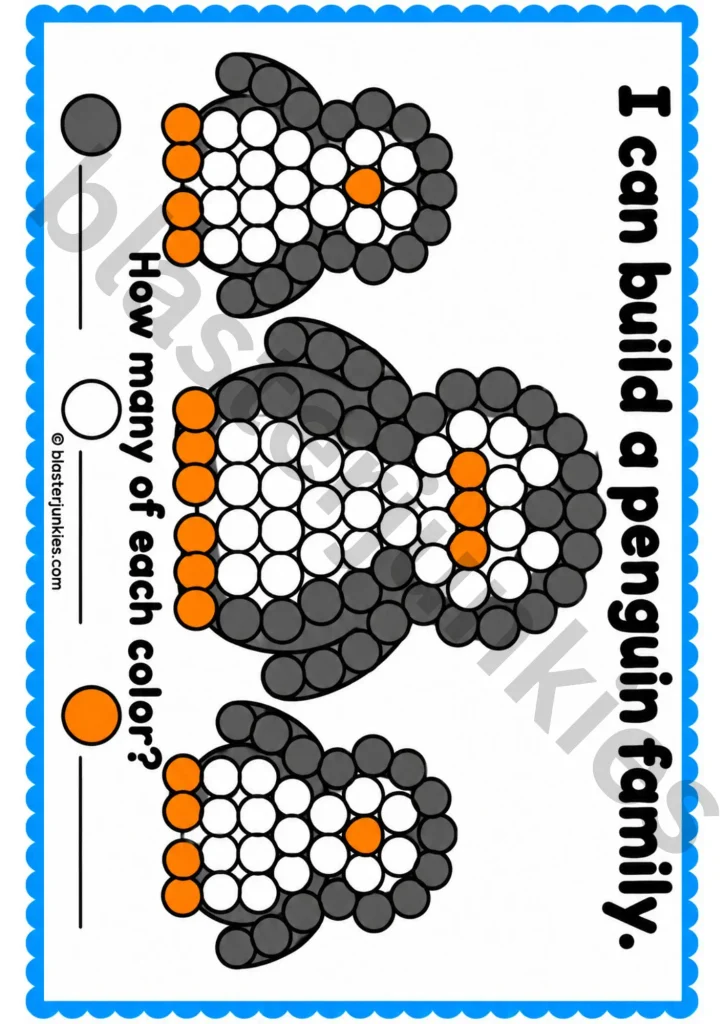
16. Penguin Family
Build three penguins using grey for bodies, white for bellies, and orange for beaks and feet, then count.
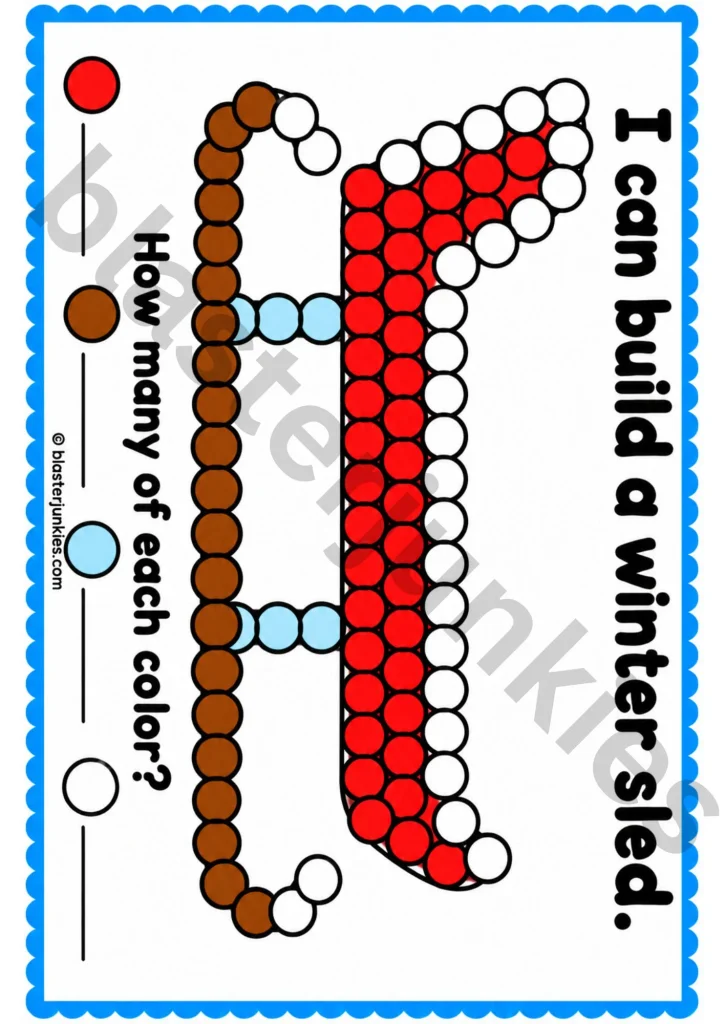
17. Winter Sled
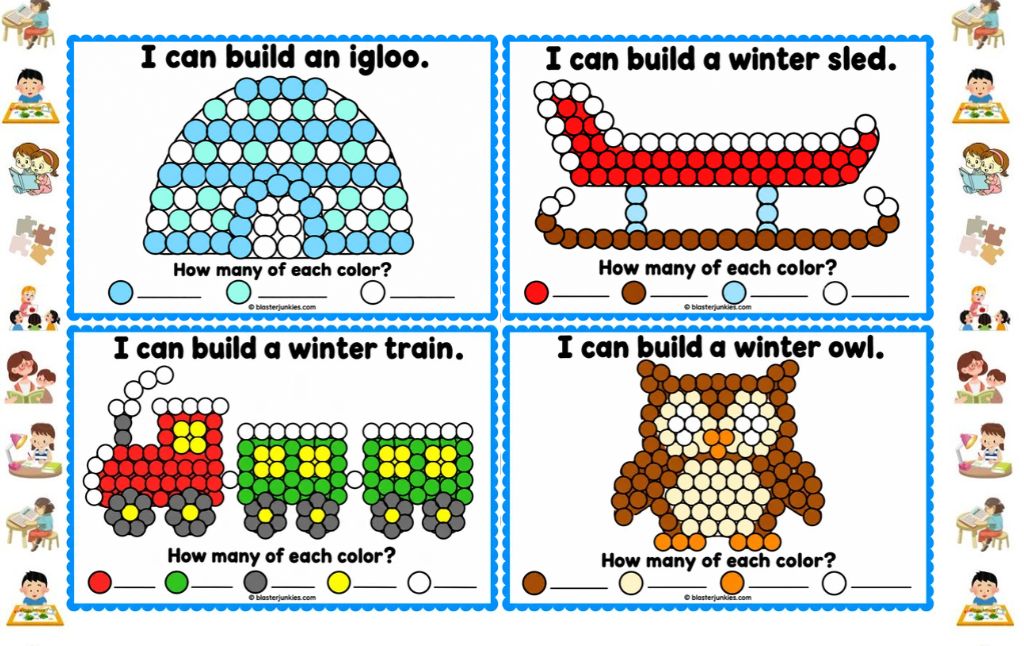
Place red pom poms on the sled seat, brown on the runners, light blue on the ties, white on edges.
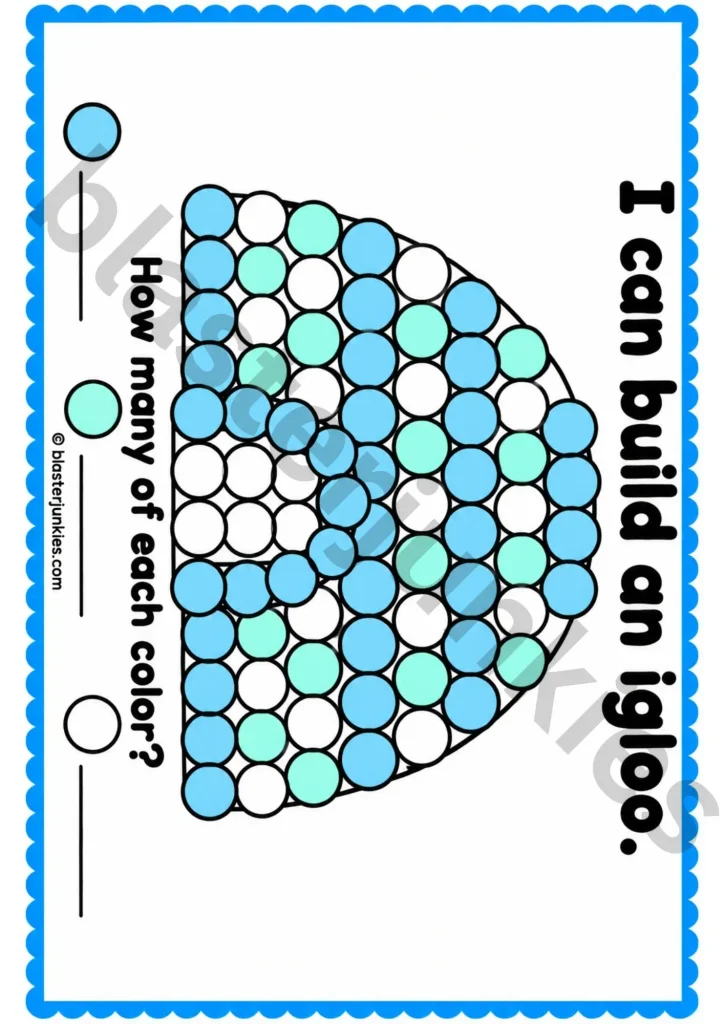
18. Igloo
Mix bright blue and soft mint pom poms for the ice blocks, then use white for the doorway and gaps.
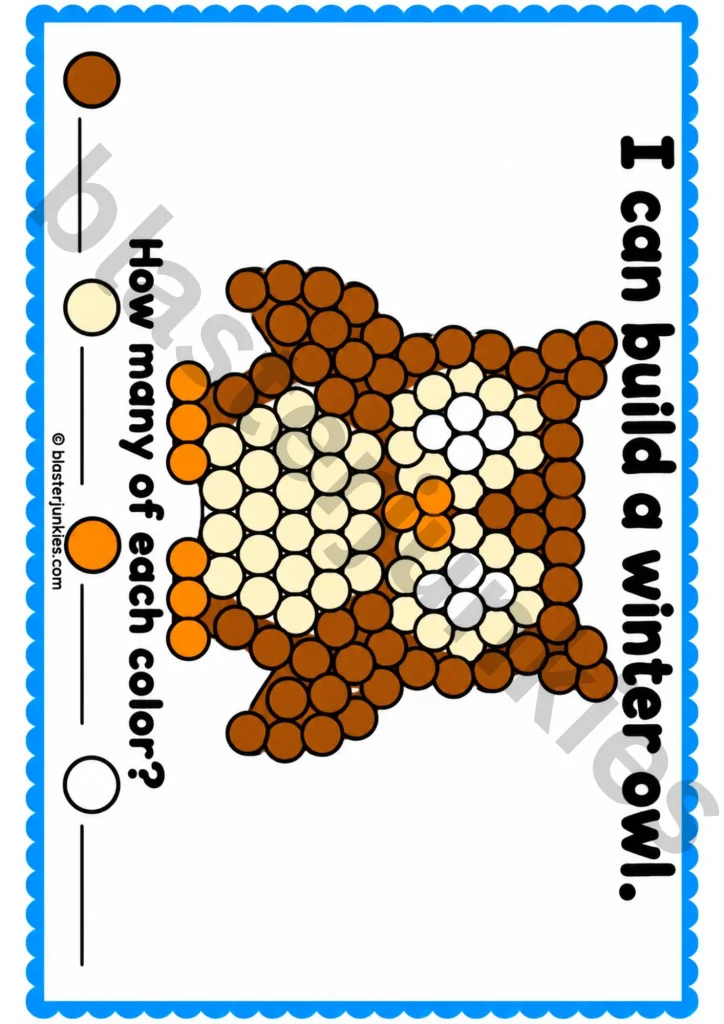
19. Winter Owl
Use brown for feathers, cream for the chest and face, white for eyes, and orange for the beak and feet.
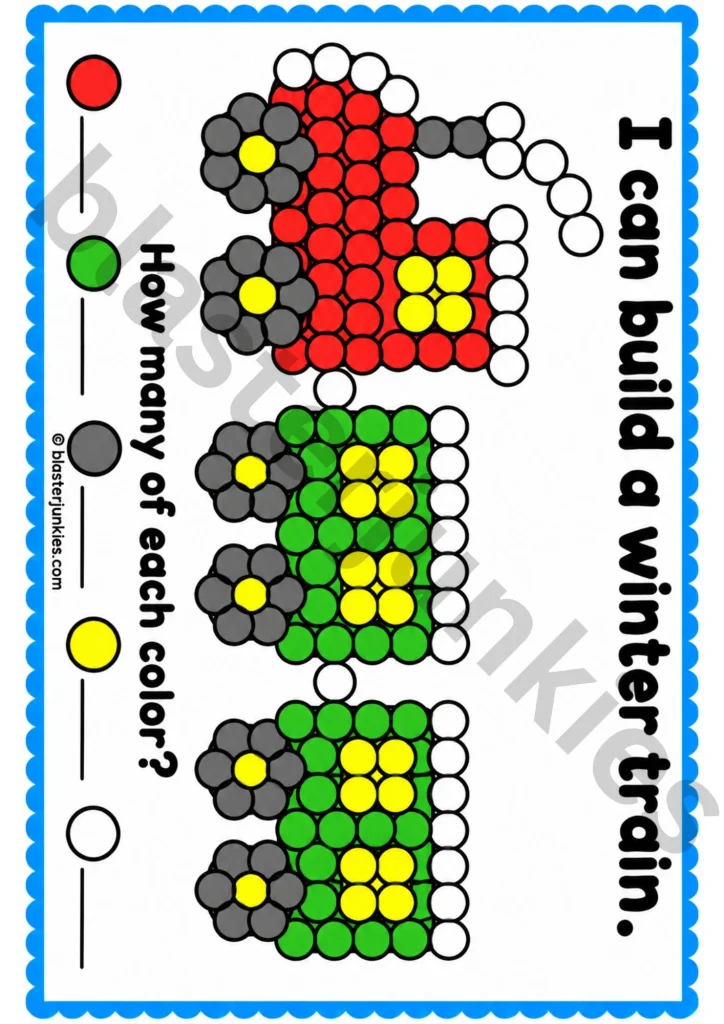
20. Winter Train
Use red for the engine, green for the carriages, grey for wheels, yellow for windows, and white for smoke.
A Quick Note on Drawing and Colours
These mats are not drawing pages. The pictures are already printed with circles. Your child fills the circles with pom poms instead of pencil lines.
No pom poms at home? Use crayons, markers, or dot markers to colour each circle.
Follow the colour dots shown on the mat. This works well for travel or classroom use.
You can also let your child choose their own colours. A purple snowman is perfectly fine.
Creative choices keep children interested.
Use pencil for the counting lines. Pencil is easy to fix. Children feel braver when mistakes can be erased.
Skills Your Child Will Build
Pinch grip gets stronger with every pom pom. This prepares fingers for writing and drawing. It also helps with cutting and zipping.
Counting becomes real. Children touch each pom pom as they count. This is called one to one counting.
Colour sorting grows too. Children notice which colour belongs on which circle. They also learn to compare, such as more white than red.
Writing practice happens on the counting lines. Each number needs a clear, careful shape. Short lines make the task feel small and easy.
Focus and patience improve over time. Filling a whole picture takes steady attention. Children feel great when they finish.
Keep the Winter Fun Going
One pack may not be enough. Some children want more of what they love. Here are a few ideas that fit nicely with these mats.
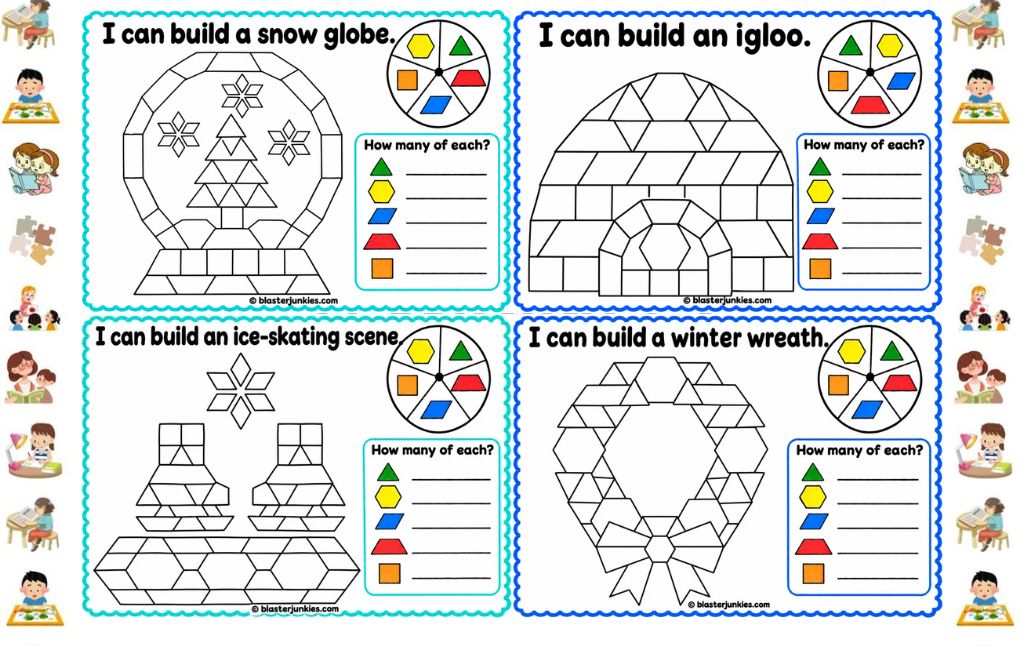
If your child enjoys building pictures, try the Printable Winter Pattern
Block Mats. Children fill cozy winter pictures with shapes. It is another lovely way to build hand skills.
For more fine motor practice, see the Winter Lacing Cards For Kids. Children thread laces through the holes. It builds finger strength and focus.
Counting still needs practice at times. The Winter Counting Mats for Preschool give easy number fun. They pair well with the counting lines on these mats.
Do your little ones adore penguins? Try the Penguin Math Puzzles for Preschoolers. They make early counting feel like a game. The penguin mat in this pack makes a cute starter.
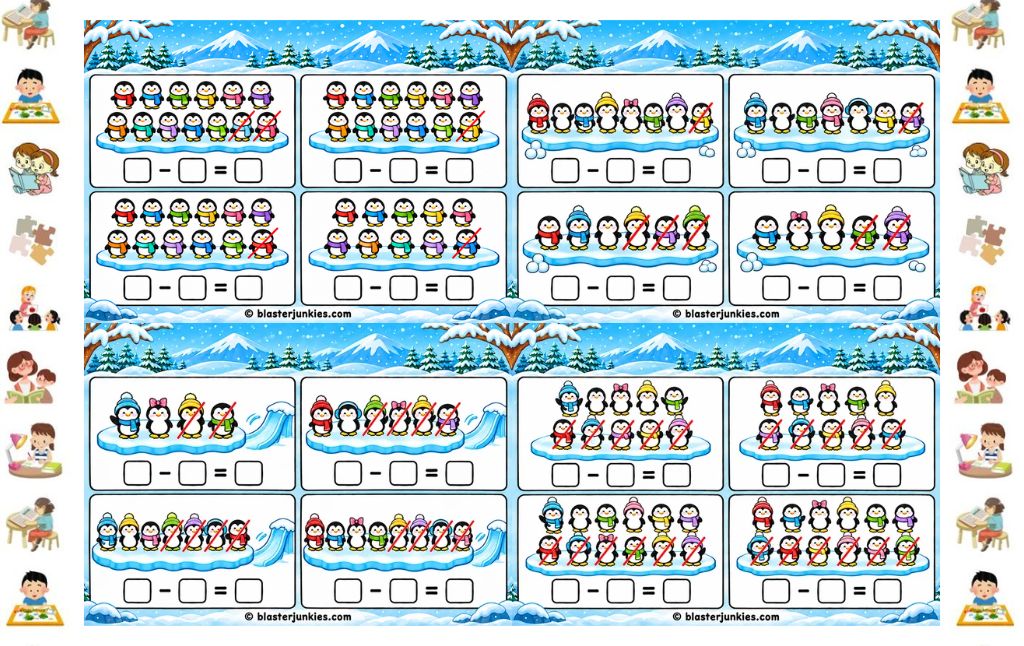
Ready for taking away? The Penguin Subtraction Worksheets use cheerful penguins on the ice. Children cross out and count what is left. It is a gentle step into subtraction.
Love building with cubes? The Snap Cubes Winter Patterns Printable has 40 cozy cards. Children copy each pattern with colourful cubes. It builds pattern skills and strong hands.
Need a wider winter pack? See the Winter Worksheets for Preschoolers & Kindergarten. It covers counting, letters, shapes, and mazes. It suits mixed learning days.
For quiet visual play, try the Winter Shadow Matching Worksheets. Children match each picture to its shadow. It sharpens careful looking.
Learning about snowy animals? The Fun Arctic Animal Activities connect play to real animals. Children love facts about penguins and polar bears.
For wiggly days, grab the Winter Movement Dice For Kids. Roll the dice and jump, spin, or stomp. Energy gets out, and learning continues.
Simple Tips for Parents and Teachers
Begin with the easiest mat. Mats with fewer circles feel less scary. Success on the first mat builds confidence.
Use tweezers for a bigger challenge. Squeezing tweezers works the tiny hand muscles hard. Offer them only when your child is ready.
Sort pom poms into a muffin tin first. Each cup holds one colour. This keeps the table tidy and makes finding colours easy.
Keep small pom poms away from toddlers who still mouth objects. Always watch young children during play. Choose larger pom poms for little ones.
Laminate the mats for reuse. Wipe them clean after each session. Remember these files are for personal or classroom use only.
Mix movement with learning.
Wiggle fingers, shake hands, and stretch before you begin. Warm hands work better.
Ways to Use the Mats at Home and School
At home, keep the mats in a folder near the table. Let your child pick one each day. Choice gives children a sense of control.
In a classroom, use the mats as morning work or centre tasks. They also suit quiet time after lunch. Early finishers can try another mat.
Occupational therapists and homeschool parents can use them too. The mats suit short therapy sessions and cozy winter lessons. Pair them with a winter story for extra fun.
Fun Extras to Try
Make a snowy sensory tray with white pom poms. Let your child scoop, pour, and sort them. This adds a soft, calming twist.
Play a colour game. Say, “Find three red pom poms.” Your child counts them onto the mat.
Talk about winter things. Ask, “What do you wear when it is cold?” Mittens, hats, and boots are right there on the mats.
Celebrate finished mats with a small sticker. A simple reward keeps motivation high. Children love showing their work.
Final Thoughts
Winter does not have to mean boredom. With these 20 free mats, cold days become creative days. Children place, count, sort, and smile.
Print a few mats, grab a bowl of pom poms, and settle in. Your child will build strong hands while having fun. You will both enjoy the cozy time together.
Happy winter pom pom play!

Leave a Reply