Every family vacation has a moment where someone quietly wonders, “wait, how much have we actually spent so far?”
Between flights, hotels, meals, souvenirs, and the inevitable ice cream stop, it’s incredibly easy to lose track of spending once a trip actually starts.
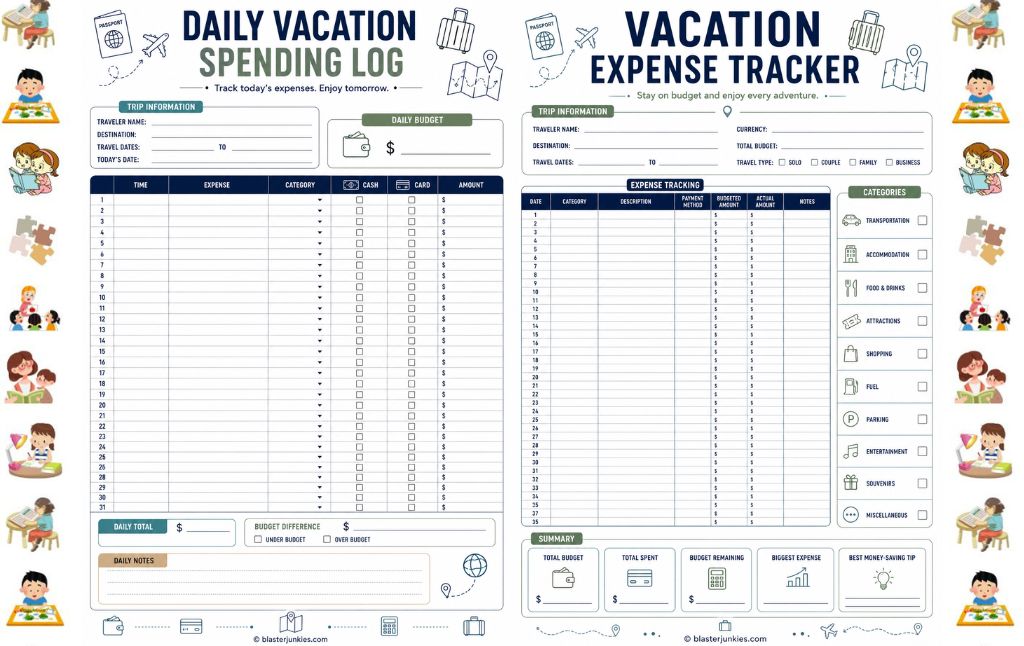
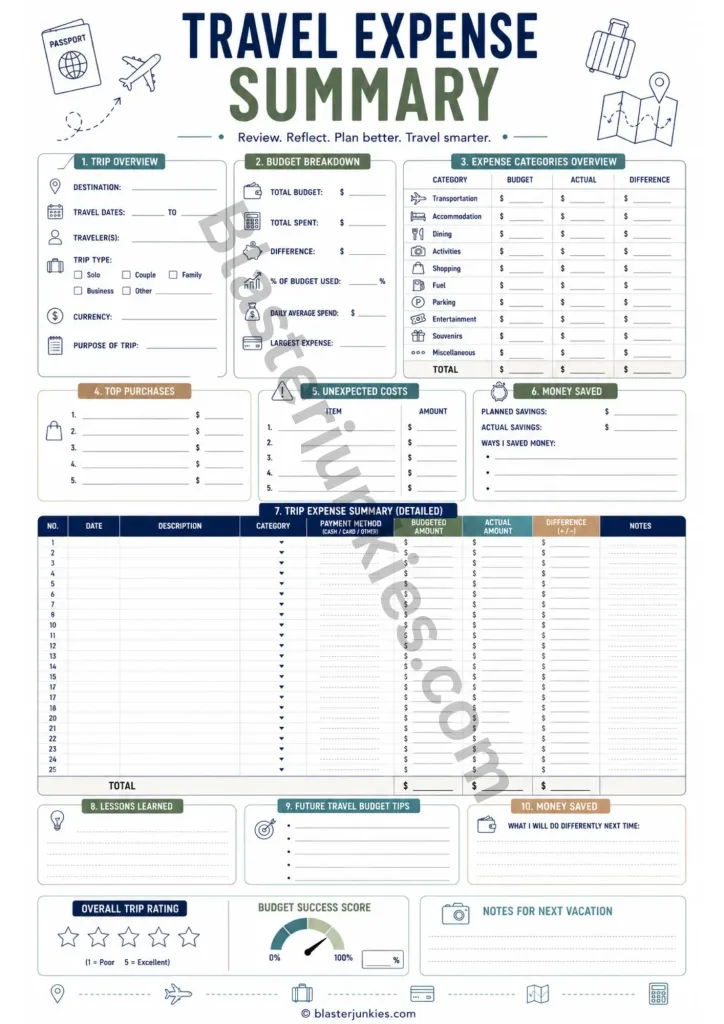
A Vacation Expense Tracker printable takes the guesswork out of it, giving your family a simple, visual way to plan a budget before the trip and stay on top of it once you’re actually there.
If you’ve downloaded a Vacation Expense Tracker pack, here’s a full breakdown of why tracking travel spending matters,
And exactly how to use it not just to protect your budget, but as a genuinely useful tool for involving kids in how the family manages money on the road.
Why Vacation Budgets Fall Apart So Easily
Vacation spending is different from everyday spending in a few important ways.
Purchases happen quickly and constantly a coffee here, a parking fee there, an attraction ticket, a souvenir and because you’re away from your normal routine, it’s easy to lose track of the running total.
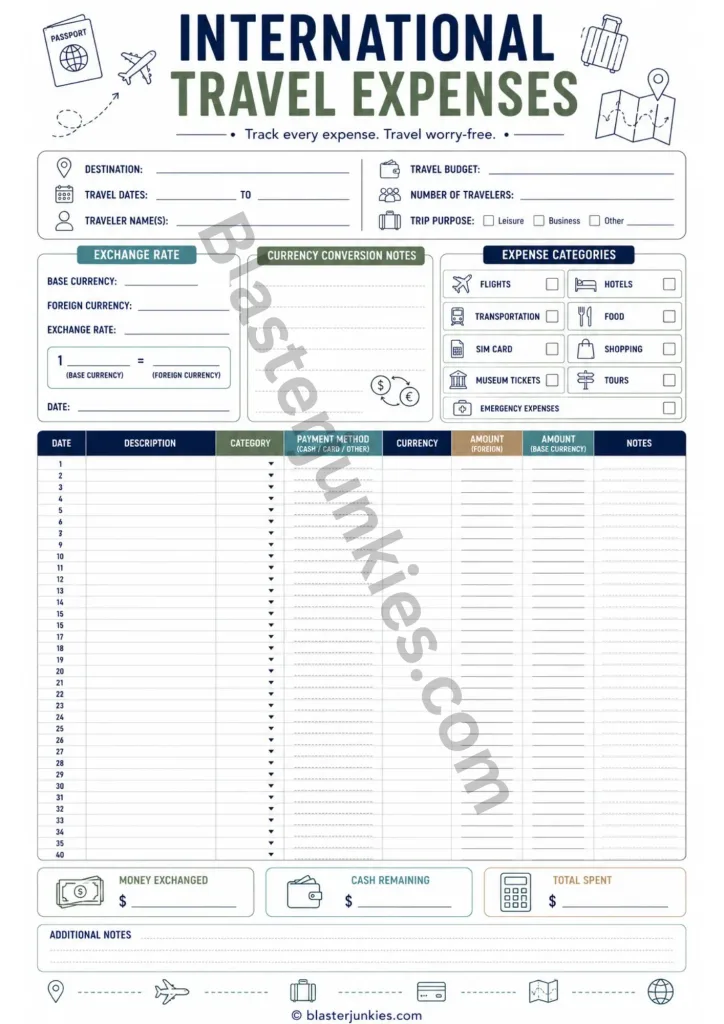
Currency conversion adds another layer of confusion on international trips, where a price that looks reasonable in a foreign currency can be a lot more once converted back.
And because vacations are meant to be relaxing, most people simply don’t want to stop and do math in the middle of a fun day, which means small expenses quietly pile up unnoticed.
A written tracker solves this by making the process fast and habitual rather than something that requires real effort.
Instead of trying to remember every purchase at the end of the trip, you jot each one down as it happens a habit that takes seconds and prevents the unpleasant surprise of checking your bank account once you’re home.
An expense tracker works best as one piece of a well organized trip. Pair it with a Vacation Packing List Checklist so nothing gets forgotten before you head out the door,
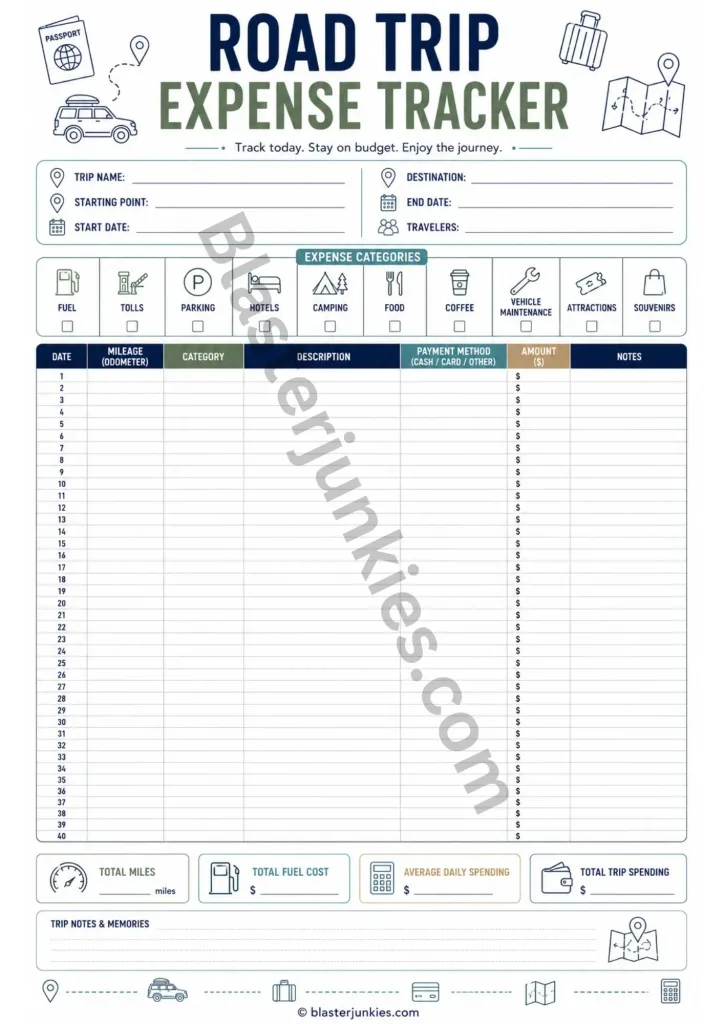
And if you’re hitting the road, the road trip version of the tracker pairs naturally with mileage stops and fuel fill ups alongside a Camping Packing Checklist Printable for outdoor trips.
Long driving days go faster with a round of the License Plate Game Printable or the broader Road Trip Games Printable collection between rest stops and gas station visits.
What Makes a Strong Vacation Expense Tracker
A good tracker set does more than just provide blank rows for numbers. The most useful versions include:
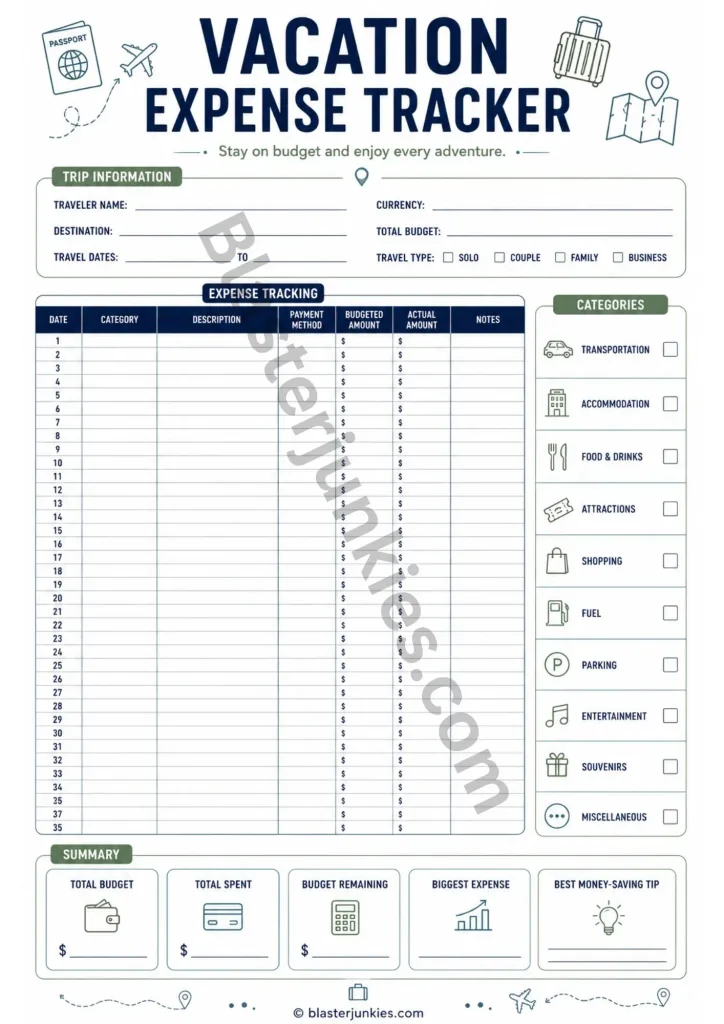
A clear pre trip budget section space to set a total budget and break it down by category before you ever leave home, which turns “try not to overspend” into an actual plan.
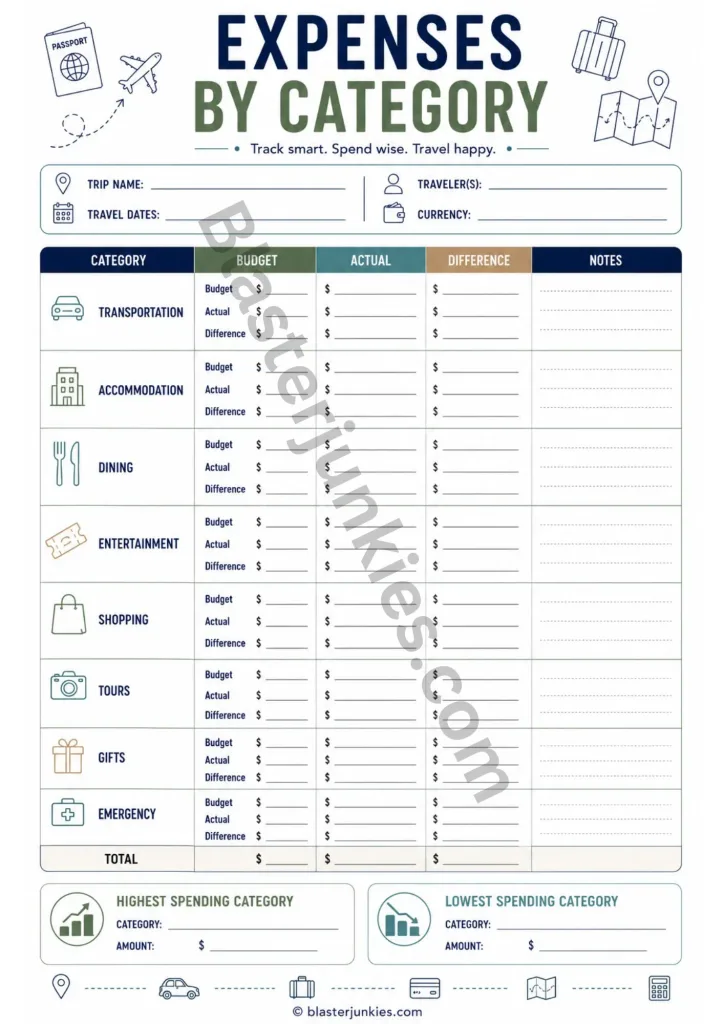
Expense categories transportation, accommodation, food, activities, shopping, and so on, which make it easy to see at a glance where the money is actually going, not just how much has been spent overall.
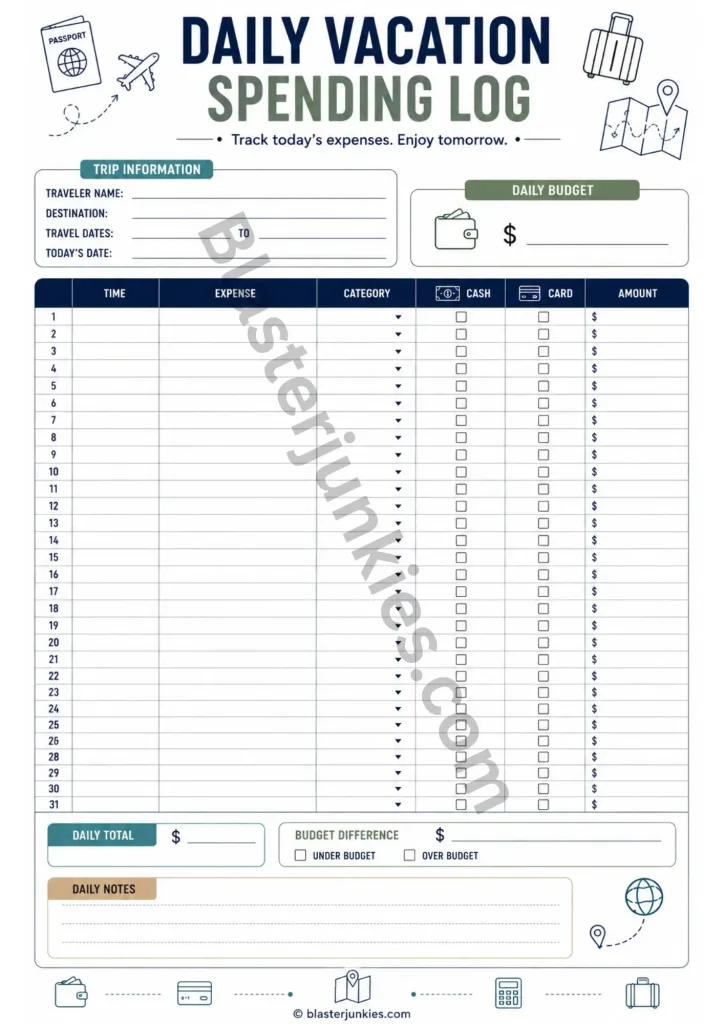
Daily and running totals a way to check in each evening on the day’s spending compared to the budget, so problems get caught early instead of at the very end of the trip.
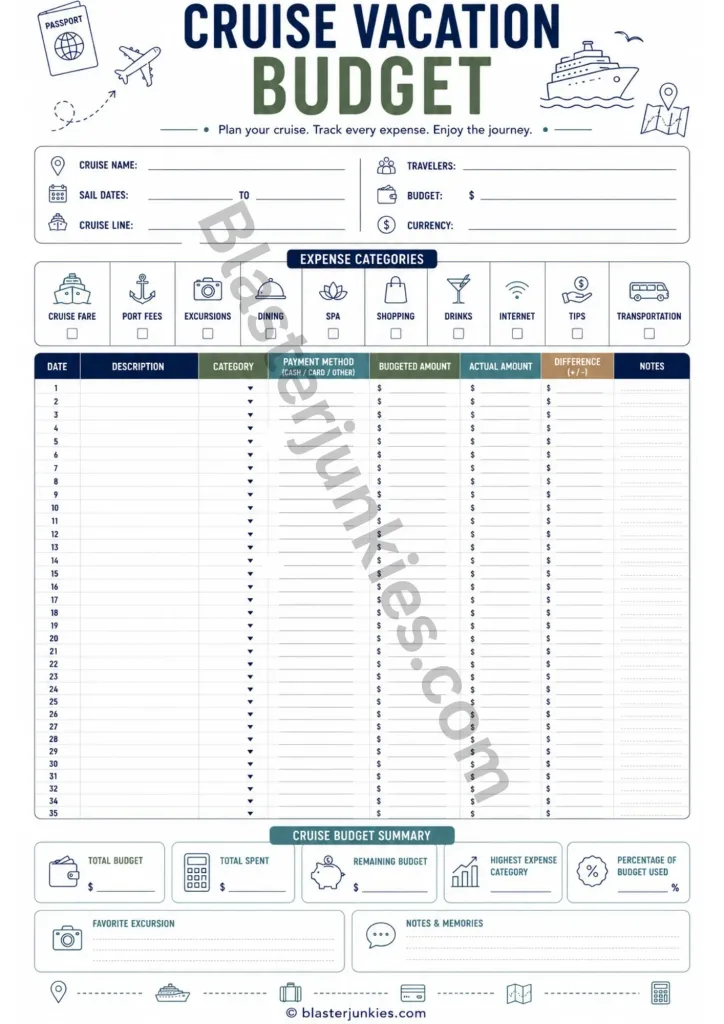
Specialized formats for specific trip types road trip versions with mileage and fuel tracking, international versions with currency conversion notes, and cruise specific categories for tips, excursions, and onboard extras.
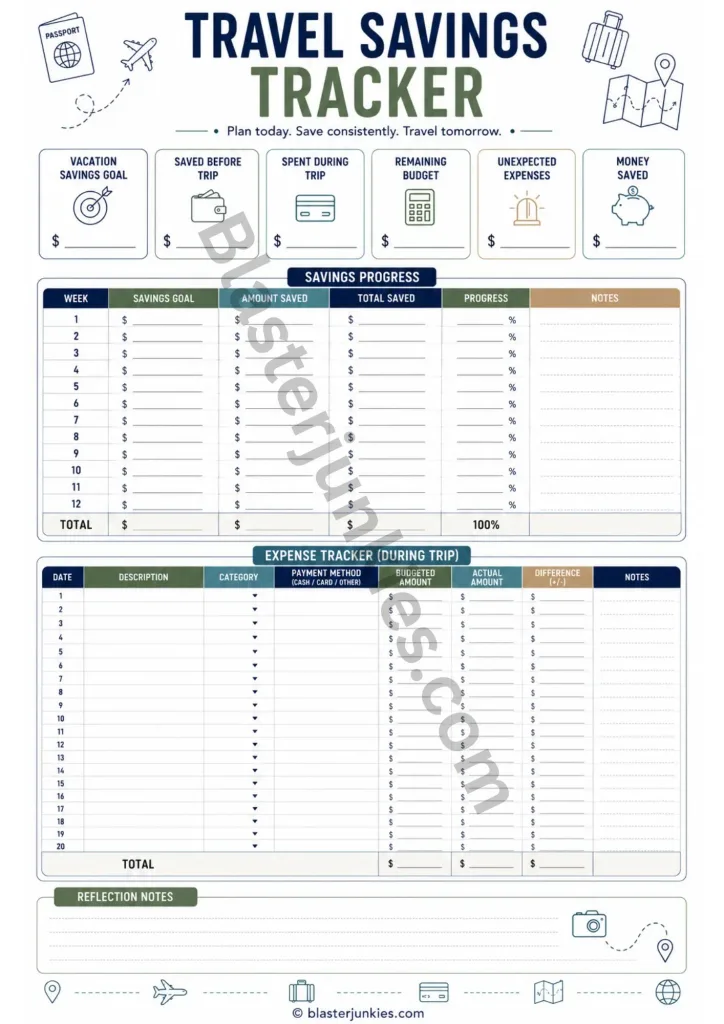
A reflection or summary section space to note the biggest expense, the best money saving tip, and what to do differently next time, which turns one trip’s tracker into a genuinely useful reference for planning the next one.
How to Use It With Your Family (and Involve the Kids)
1. Set the budget together before you leave. Before the trip starts, sit down as a family and fill in the budget section together.
Even young kids can understand simple categories like “food” and “fun stuff,” and involving them early helps everyone go in with realistic expectations instead of disappointment mid trip.
2. Give kids their own small budget line. For families traveling with kids, consider giving each child a small “spending money” allowance and letting them track it themselves on a simplified version of the sheet.
Watching their own number shrink with each souvenir purchase is one of the most effective, hands on money lessons a child can get.
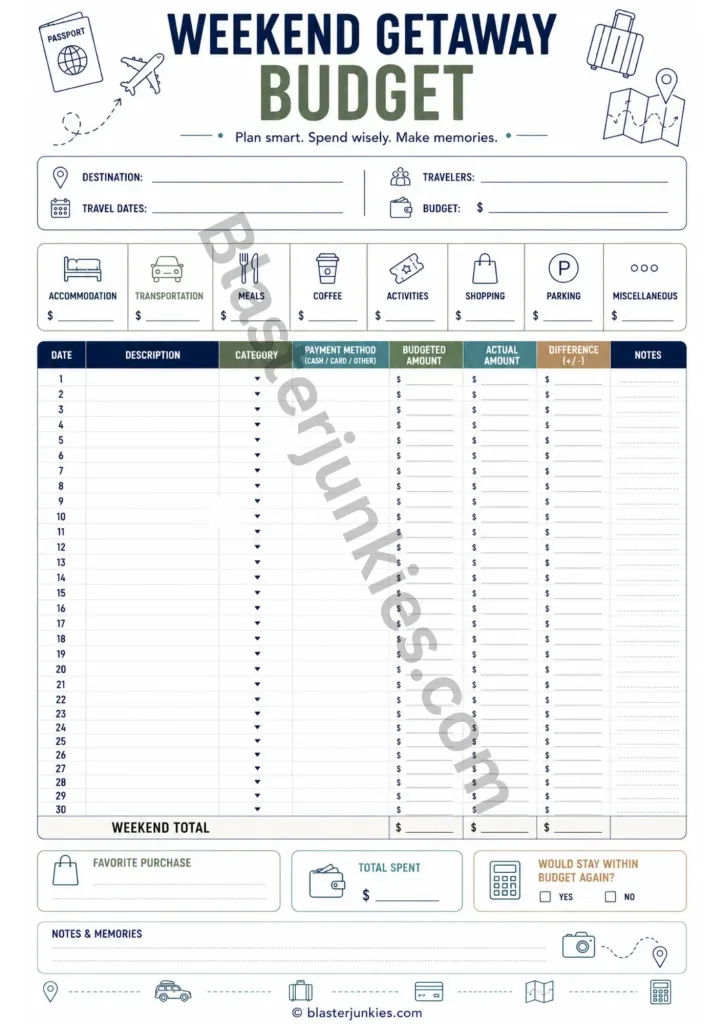
3. Log expenses daily, not from memory. Make it a quick end of day ritual while everyone’s relaxing after dinner, spend two minutes writing down the day’s expenses.
This is far more accurate than trying to reconstruct a week of spending from receipts and memory once you’re back home.
4. Use the category breakdown to spot patterns. Halfway through a trip, glance at which categories are running high.
If dining out is eating into the budget faster than expected, that’s useful information you can act on immediately maybe by grabbing groceries for a few breakfasts instead of eating out every meal.
5. Involve kids in the daily check in. Ask kids to help calculate the daily total or compare it to the budget.
For older kids, this is a simple, real world way to practice basic math and get comfortable with the idea of budgeting a skill that’s far more memorable learned on a real trip than from a worksheet at home.
6. Fill out the reflection section together at the end. Before you unpack, take a few minutes as a family to note the biggest expense, the best money saving discovery, and one thing to do differently next time.
This turns the tracker into a genuinely useful planning tool for future trips, not just a record of this one.
Making It Part of a Bigger Travel Routine
If your trip includes stops at national parks, a USA National Park Checklist Printable makes a great companion for tracking both the adventures and the entrance fees.
Evenings at the campsite or hotel are also a great time to pull out a set of Family Conversation Cards once the day’s expenses are logged a nice way to wind down and reflect on the day’s highlights, not just its receipts.
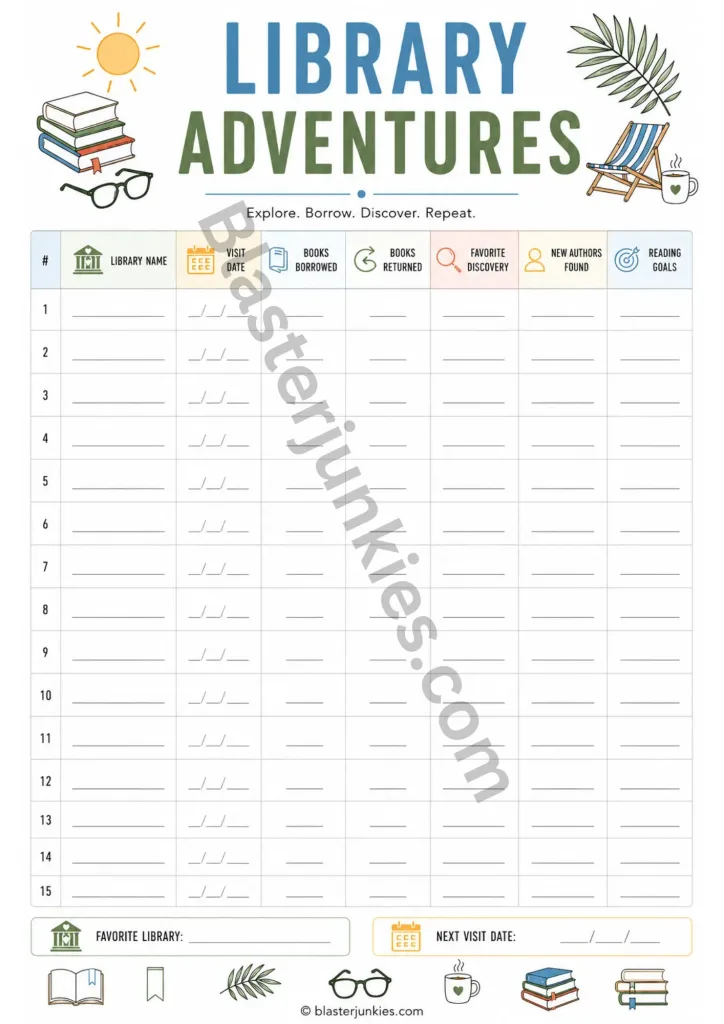
Keep kids entertained during the daily budget review with a quick Summer Maze Printable for Kids page, or squeeze in some quiet time with the Summer Reading Challenges checklist while the grown ups tally the day’s spending.
Carrying the Habit Home
The budgeting skills built on a family trip don’t have to stay in the suitcase. Once you’re back, the same simple categorize and track approach can carry into a broader Summer Habit Tracker for Kids routine, giving kids ongoing practice with tracking, goals, and follow through well beyond the vacation itself.