“Drink some water” might be one of the most repeated phrases in any household with kids and one of the least effective, no matter how many times it’s said.
Kids get busy, distracted, and caught up in play, and hydration quietly slips to the bottom of the priority list, especially during hot summer days when it matters most.
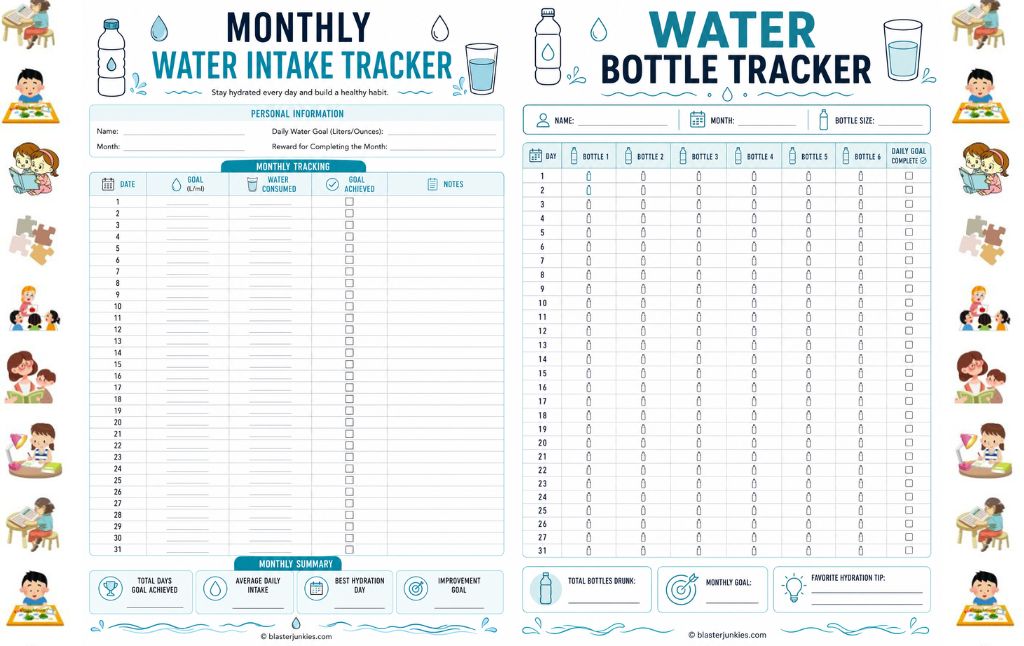
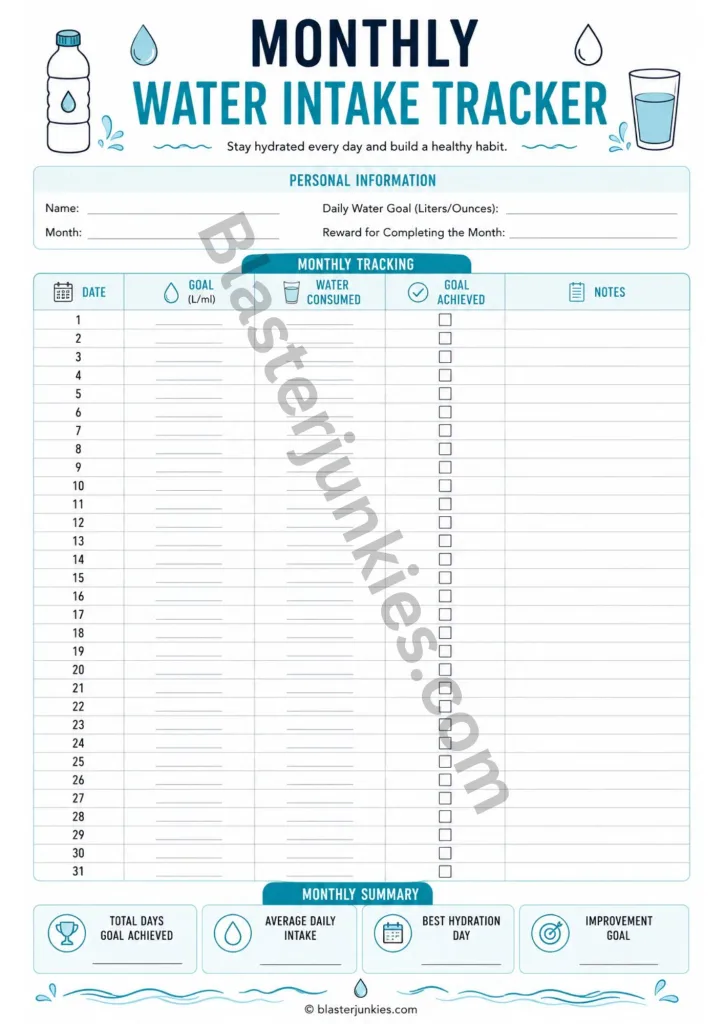
A Monthly Water Tracker Printable flips the script.
Instead of a parent nagging, the tracker turns hydration into something visual, trackable, and even a little fun for kids to manage themselves.
If you’ve downloaded a Monthly Water Tracker pack, here’s a complete look at why tracking hydration works so well for kids, and exactly how to put it to use so it actually sticks all month long.
Why Kids Need a Little Extra Help Staying Hydrated
Children are more vulnerable to dehydration than adults for a few real reasons.
Their bodies have a larger surface area to mass ratio, which means they lose fluid through sweat more quickly during hot weather or active play.
On top of that, kids are often too absorbed in what they’re doing to notice early thirst cues, and unlike adults, they rarely stop mid game to grab a glass of water on their own.
By the time a child says “I’m thirsty,” they may already be a fair way into mild dehydration, which can show up as low energy, crankiness, headaches, or trouble concentrating symptoms that are easy to mistake for something else entirely.
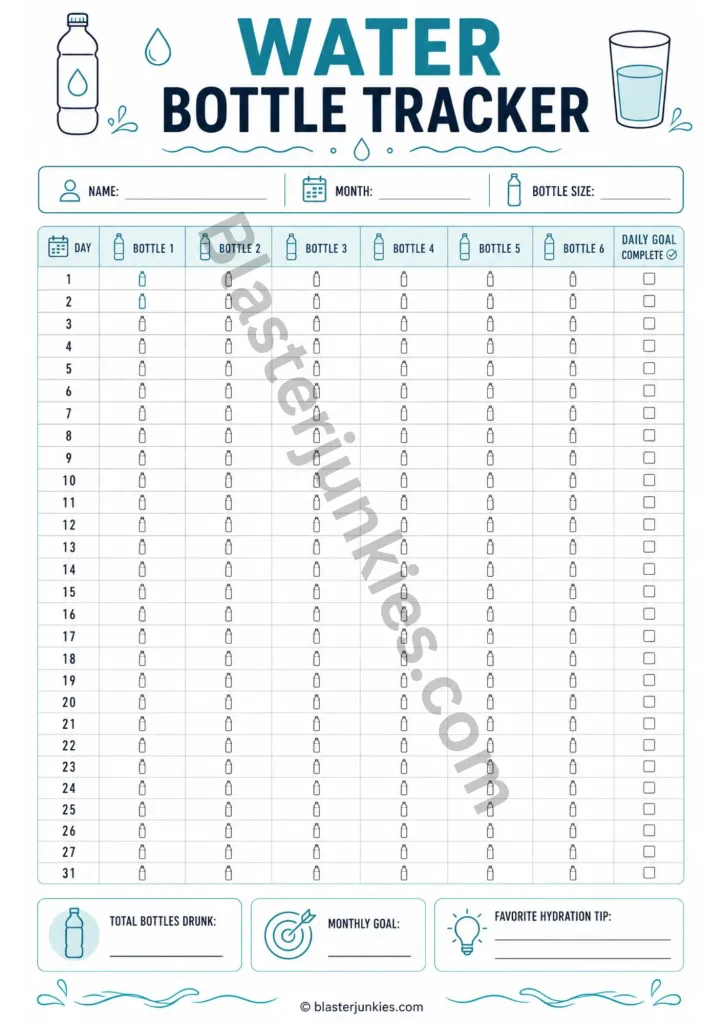
A visual tracker solves the “I forgot” problem by making hydration something a child checks off rather than something they have to remember from scratch.
It shifts the responsibility gently onto the child in an age appropriate way, while giving parents an easy way to glance at the week and see whether water intake has been consistent.
What Makes a Hydration Tracker Actually Work
Not all trackers are created equal, and the most effective ones share a few key features:
A clear daily goal a specific number of glasses or a bottle count that’s easy for a child to understand, rather than a vague “drink more water.”
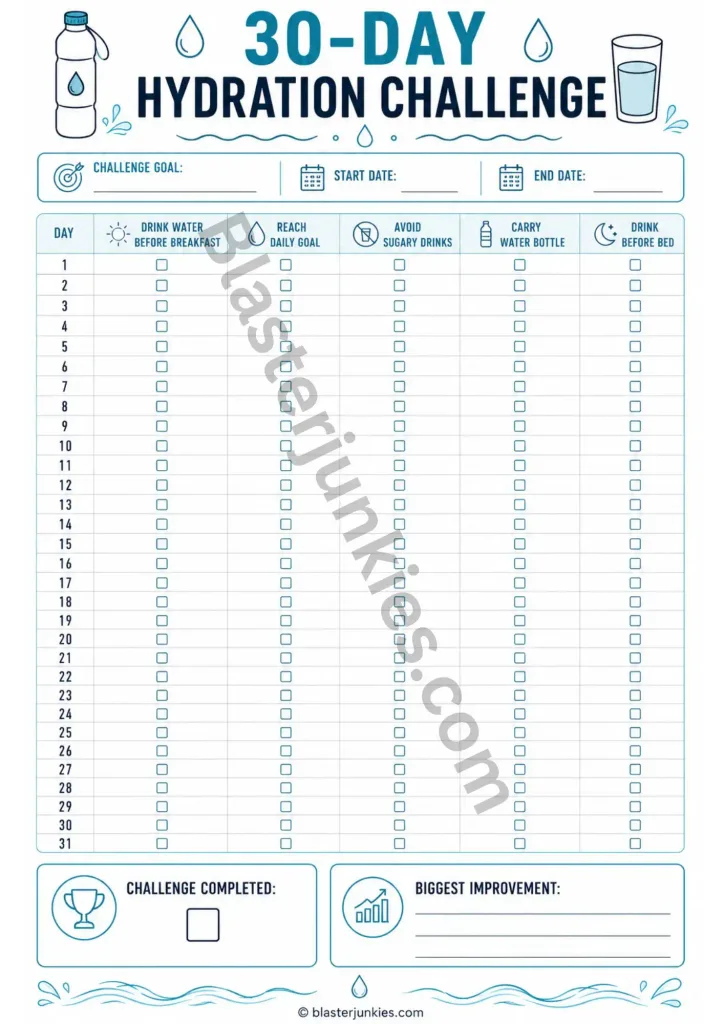
Simple, repeatable check off boxes or droplet icons something a child can mark quickly throughout the day without needing help or explanation.
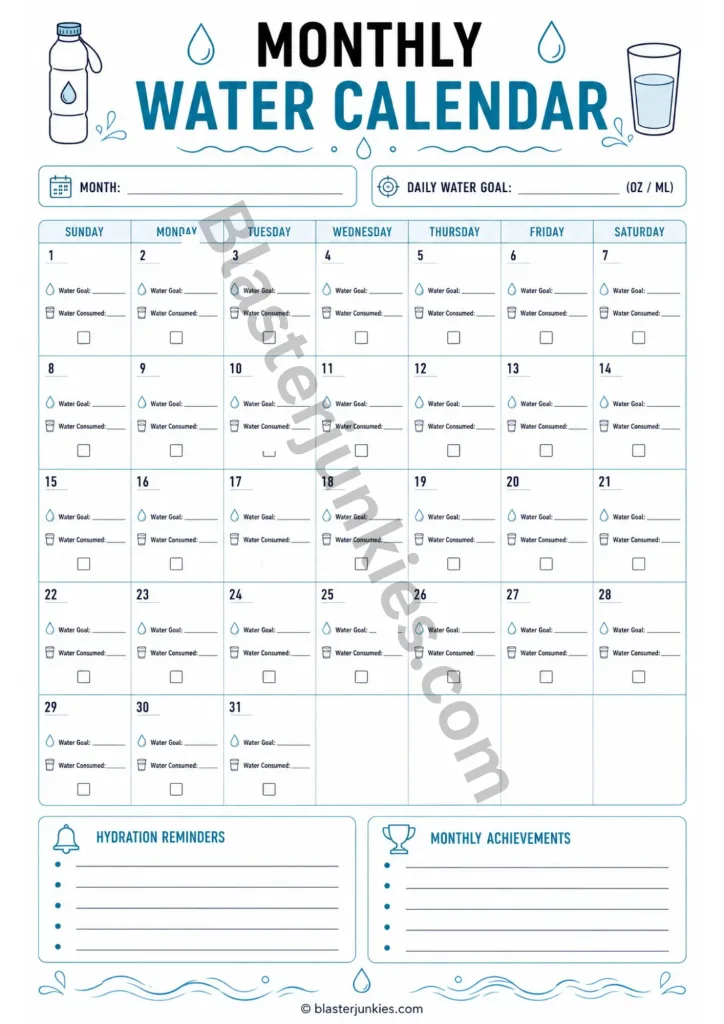
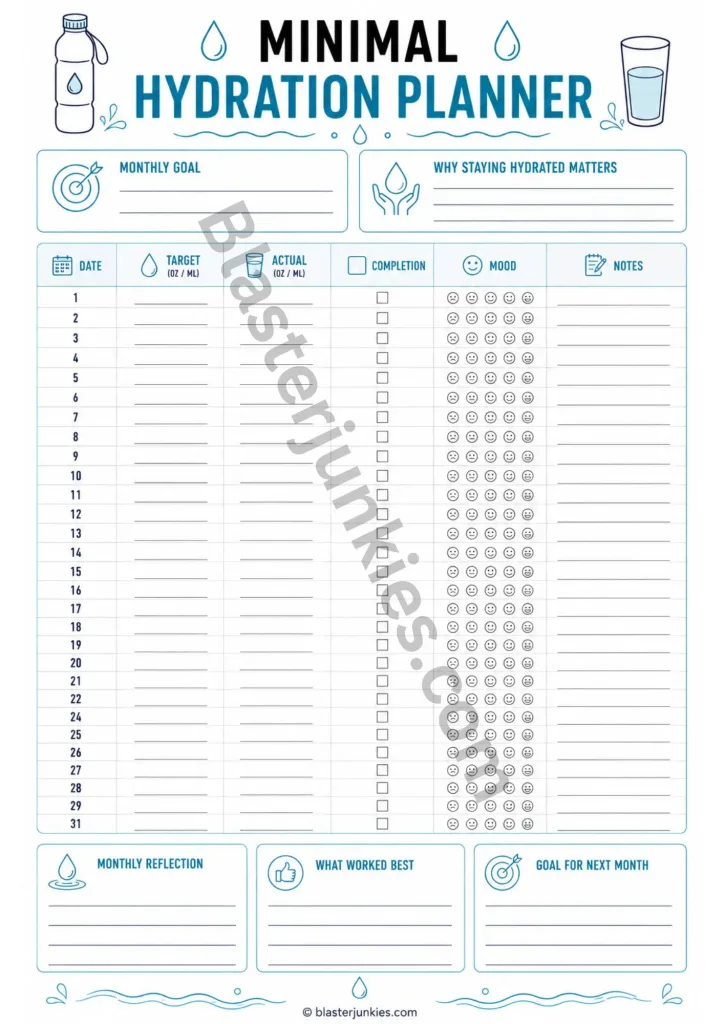
A monthly view, not just a daily one seeing an entire month laid out helps both kids and parents spot patterns, like a string of low hydration days during a heat wave or a busy week of activities.
A small reward tied to consistency a simple incentive for hitting the goal across the week or month keeps motivation up once the initial novelty wears off.
Optional family or wellness tie ins some trackers combine water intake with related habits like sleep, exercise, or mood, which helps kids start to notice how hydration connects to how they actually feel.
How to Use It With Kids: A Simple System
1.Set a kid appropriate daily goal. Skip generic adult hydration targets and set a number that’s realistic for your child’s age and activity level talk to your pediatrician if you’re unsure.
Write that number clearly at the top of the tracker so it’s the same target every single day, removing any guesswork.
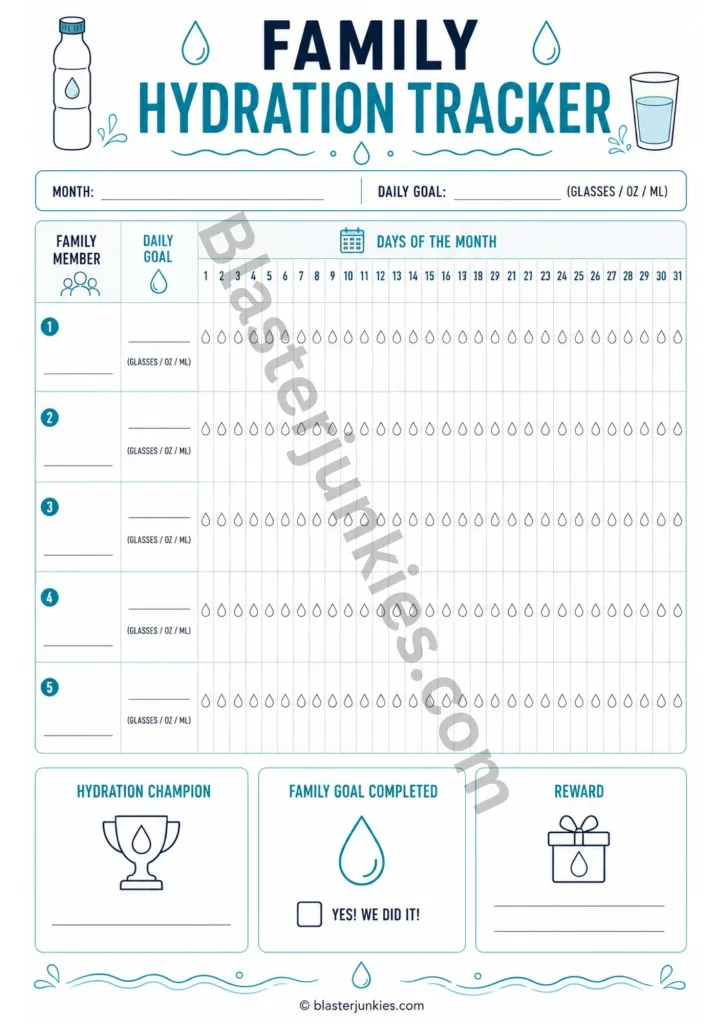
2. Use a bottle, not just a chart. Pair the printable with a reusable water bottle that has clear volume markings. Every time your child refills or finishes it, they mark a box on the tracker.
This turns an abstract number of “glasses” into something concrete and physical they can see and hold.
3. Put the tracker somewhere visible, not tucked in a drawer. Stick it on the fridge, a bedroom door, or a kitchen bulletin board.
Out of sight means out of mind a tracker that’s part of the daily scenery gets checked far more consistently than one buried in a folder.
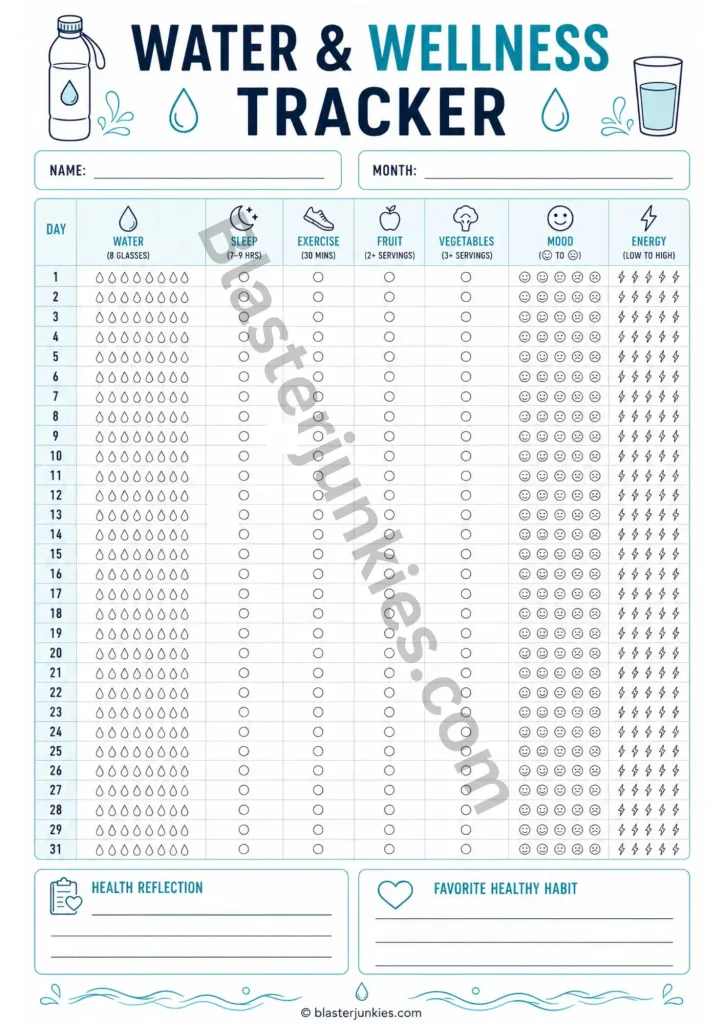
4. Let your child do the checking themselves. Handing over the marker (literally) gives kids a sense of ownership.
It turns hydration into their responsibility to track rather than something a parent monitors and enforces, which tends to build a more lasting habit.
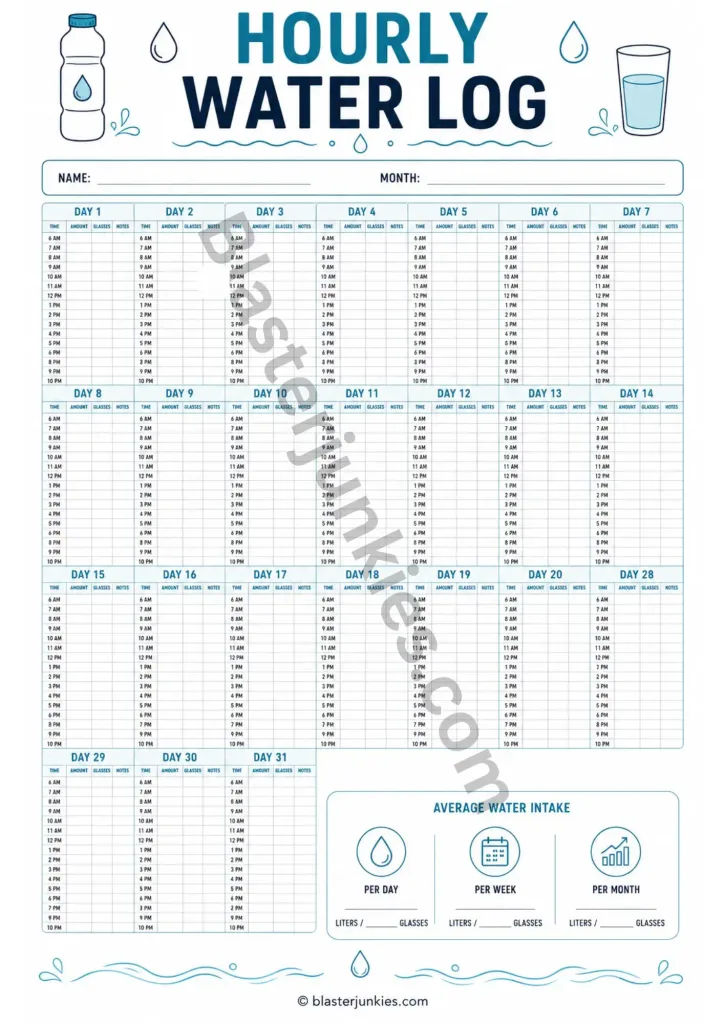
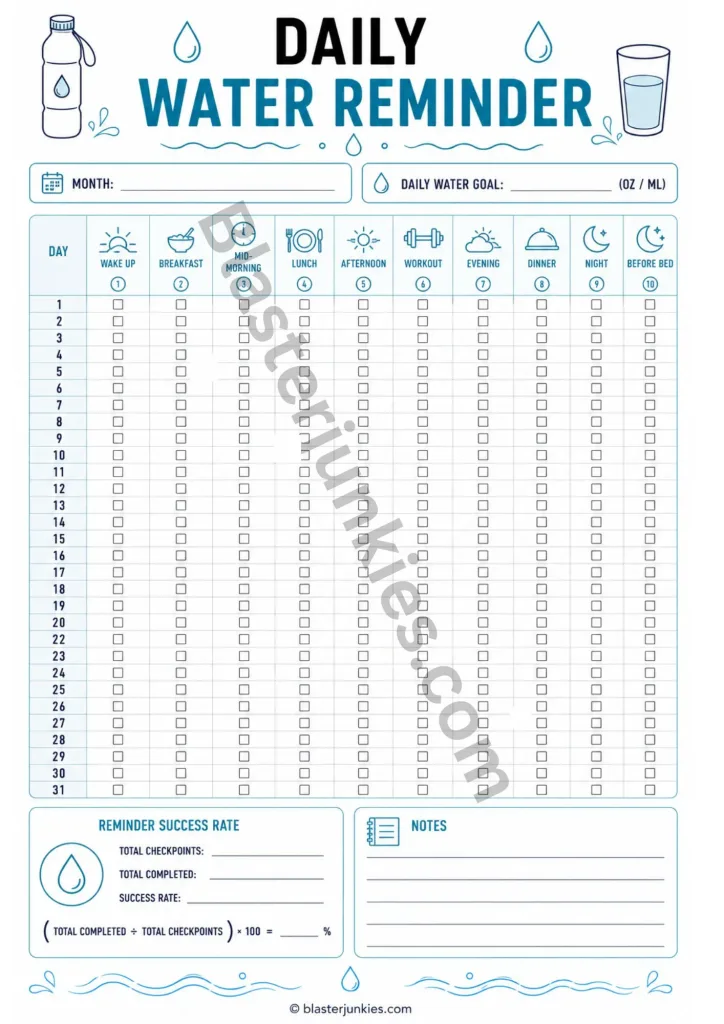
5. Tie it to natural moments in the day. Instead of relying on memory alone, anchor water breaks to things that already happen after waking up, before lunch, after outdoor play, before bed.
Trackers with time based checkpoints work especially well here, since they turn hydration into a series of small, specific moments rather than one big vague daily task.
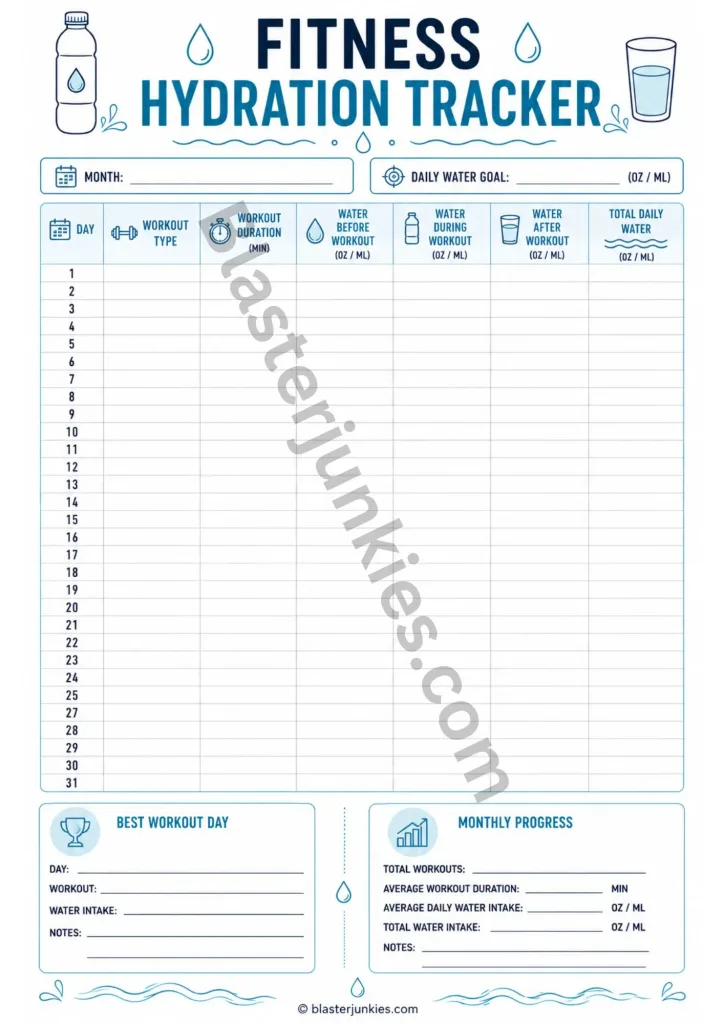
6. Review the month together, not just day by day. At the end of the month, sit down and look at the full chart together.
Point out streaks, celebrate consistency, and talk about which days were harder to keep up with and why maybe it was a busy travel day or an especially hot afternoon outside.
Making Hydration Part of a Bigger Summer Routine
A water tracker works best when it’s woven into the rest of a family’s summer activities rather than treated as a separate chore.
On outdoor adventure days, like exploring a USA National Park Checklist Printable destination or hunting for treasures with a Beach Scavenger Hunt For Kids, remind kids to check their water bottle right alongside their sunscreen.
Long car rides are another easy spot to build the habit pass around water bottles during a round of the License Plate Game Printable or a session of Road Trip Games Printable so drinking water becomes part of the fun rather than an interruption to it.
If you’re heading out on a family trip, add “refillable water bottle” near the top of your Vacation Packing List Checklist or Camping Packing Checklist Printable, since staying hydrated matters even more away from home.
And on the hottest days of summer, a hydration streak is the perfect excuse to celebrate with something cool pair a completed weekly goal with an afternoon built around Ice Cream Party Printables or a fun Lemonade Stand Kit Printable session, letting kids see healthy habits and fun rewards go hand in hand.
If your family already has a broader routine chart going, hydration slots in perfectly alongside a Summer Habit Tracker for Kids, and quiet post hydration break downtime pairs nicely with a Summer Reading Challenges session or a quick Summer Maze Printable for Kids page while everyone cools off indoors.
Carrying the Habit Into the School Year
Hydration habits shouldn’t disappear once summer ends kids need water in the classroom just as much as they do at the pool.
The same daily checkpoint approach translates easily into a Morning Routine Chart for Kids once school starts, keeping water bottle refills part of the daily rhythm right alongside packing a backpack and getting out the door on time.