Ask most kids “how was your day?” and you’ll get the same one word answer every time: “fine.”
It’s not that kids don’t have anything to say it’s that a broad, open ended question doesn’t give them much to grab onto.
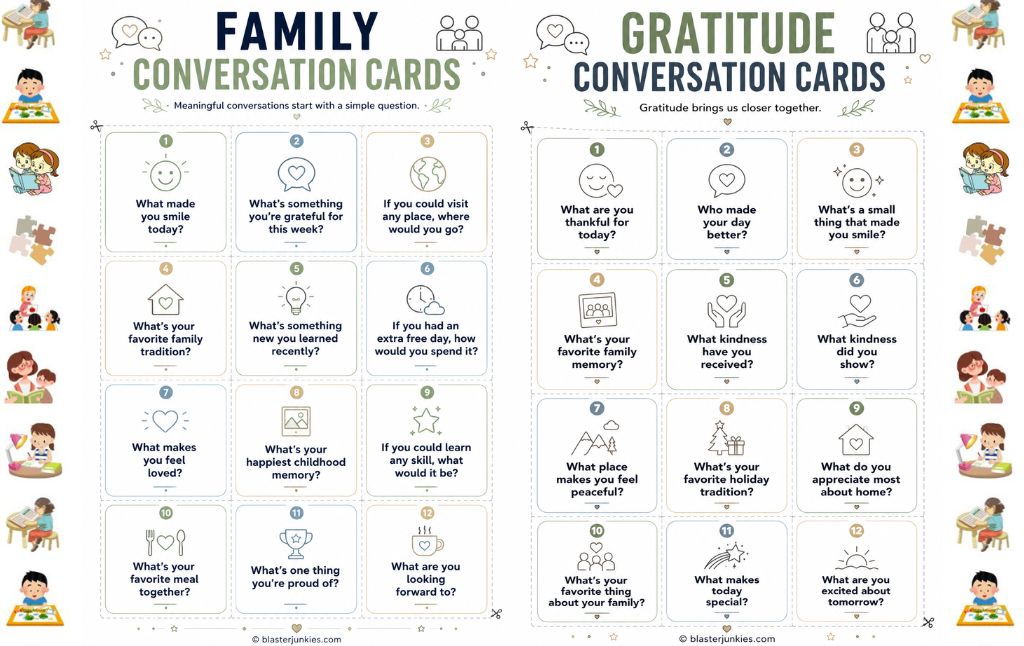
Family Conversation Cards solve that problem by replacing vague questions with specific, inviting prompts that make it easy for kids (and honestly, adults too) to open up.
If you’ve downloaded a set of Family Conversation Cards, here’s a full breakdown of why this kind of tool works so well for family connection, and exactly how to build it into your routine so it becomes something everyone actually looks forward to.
Why Kids Clam Up and Why Specific Questions Fix It
Open ended questions require a child to do two things at once: figure out what the asker actually wants to know, and then generate an answer from scratch.
That’s a lot of mental work, especially at the end of a long day, which is exactly why “fine,” “good,” and “nothing” are the default responses to “how was school?”
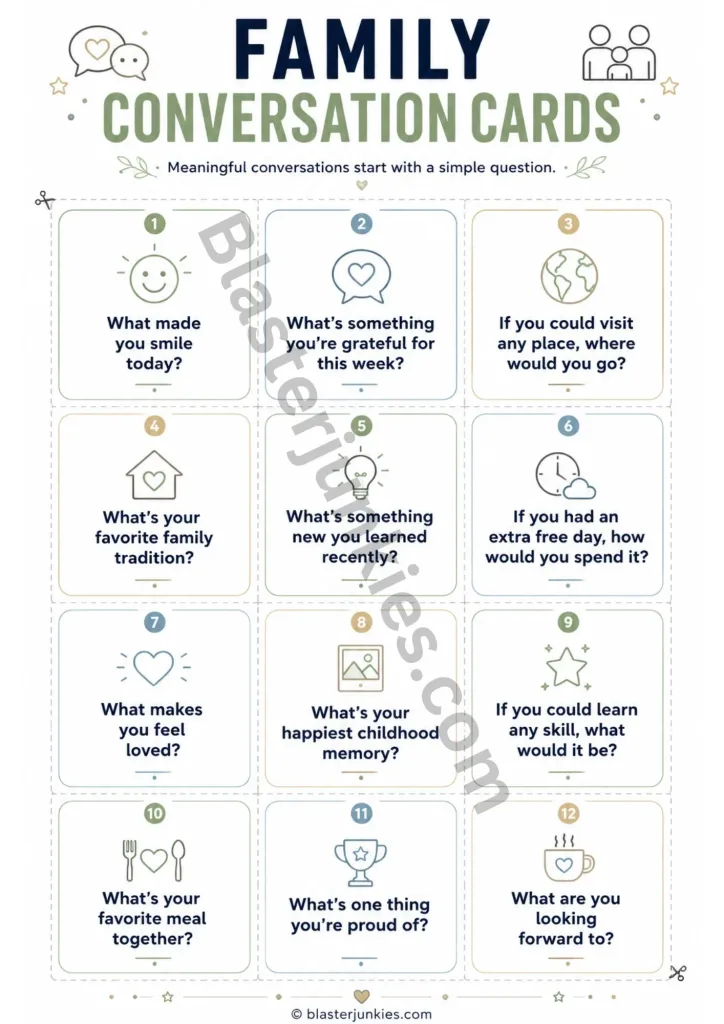
A good conversation card removes that friction entirely. Instead of “tell me about your day,” a card might ask “what made you laugh today?” or “what was the best part of today?”
These questions are narrow enough that a child immediately has something to picture and describe, which makes them dramatically easier to answer and far more likely to lead somewhere interesting.
There’s also a psychological reason these prompts work particularly well for kids: they lower the stakes.
A card that everyone in the family answers in turn feels like a game, not an interrogation.
Nobody is singled out, and the format itself signals that this is a safe, low pressure space to share something personal.
What Makes a Strong Conversation Card Set
Not every question is created equal, and a well designed card set usually mixes a few different categories to keep things fresh:
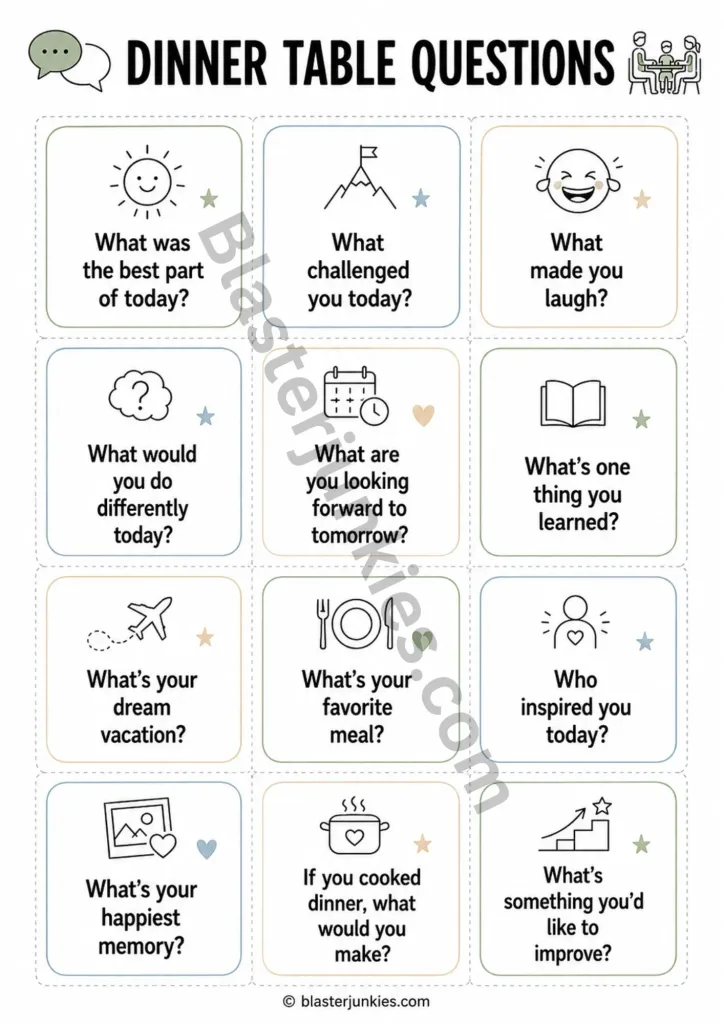
Everyday reflection prompts simple questions about the day’s highs, laughs, or challenges that work well as a regular check in.
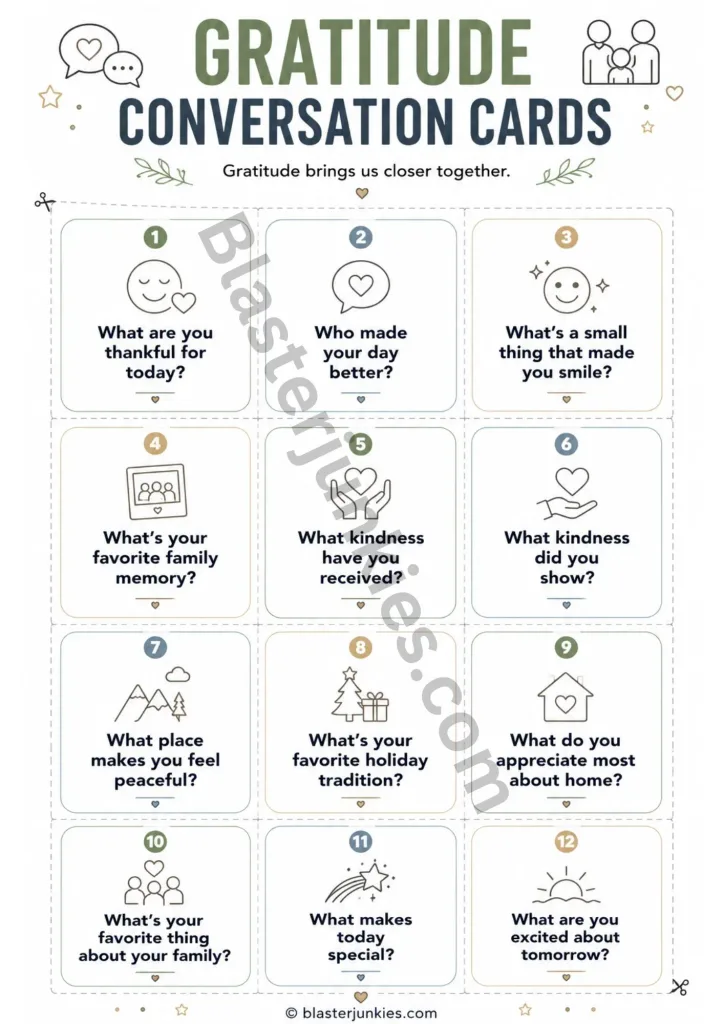
Gratitude and connection questions prompts that nudge kids toward noticing kindness, appreciation, and what makes them feel loved, which builds emotional vocabulary over time.
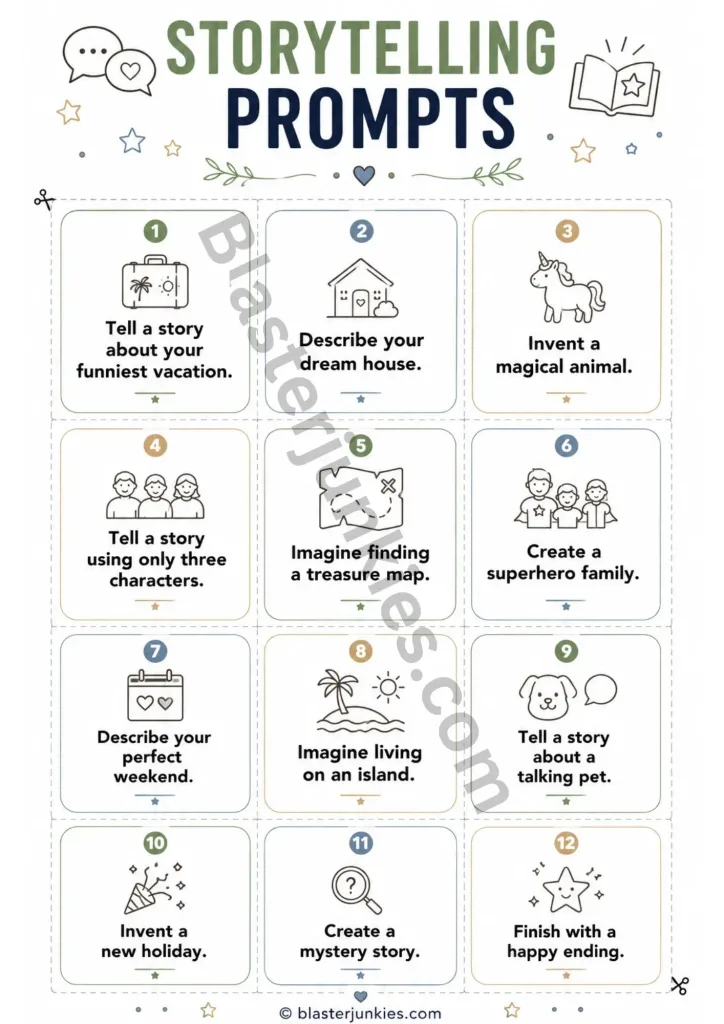
Imaginative and hypothetical questions “would you rather” style prompts and storytelling starters that invite creativity and often reveal a child’s personality in unexpected ways.
Memory sharing prompts questions about favorite memories, traditions, or firsts that naturally lead into storytelling and family history.
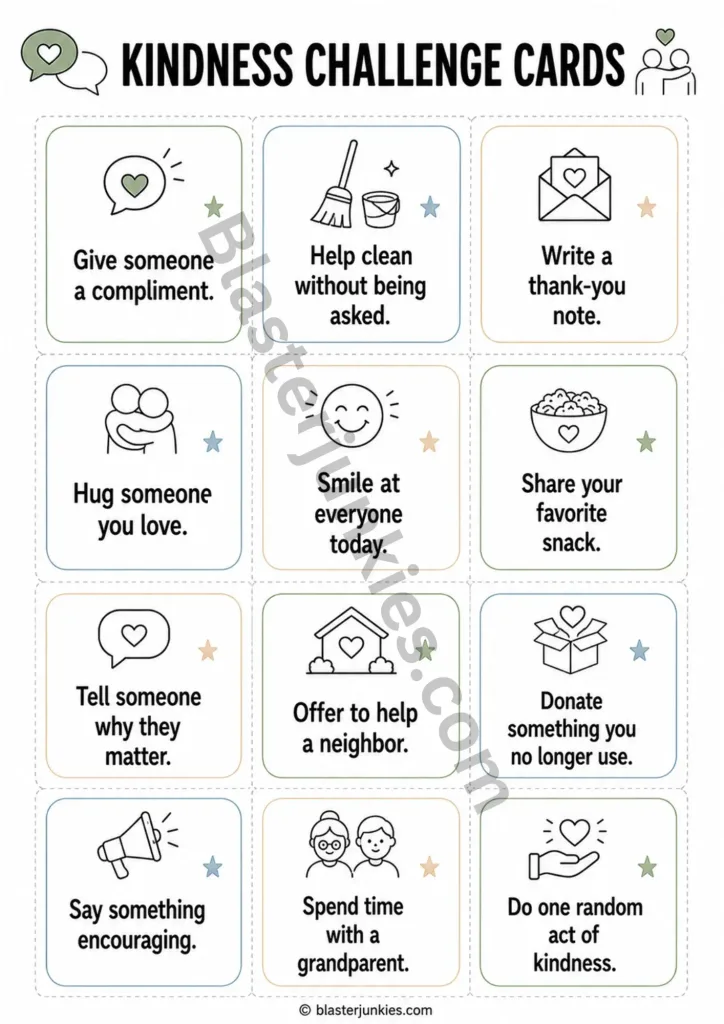
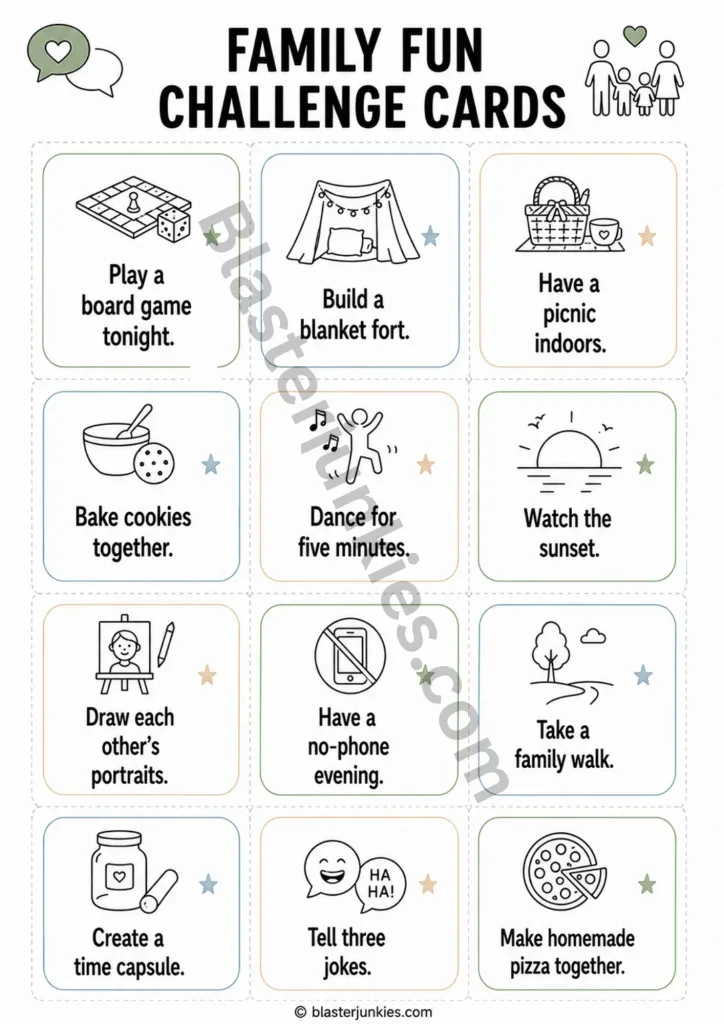
Action oriented cards small challenges like a kindness prompt or a “do this together” card that turn conversation into shared activity, not just talk.
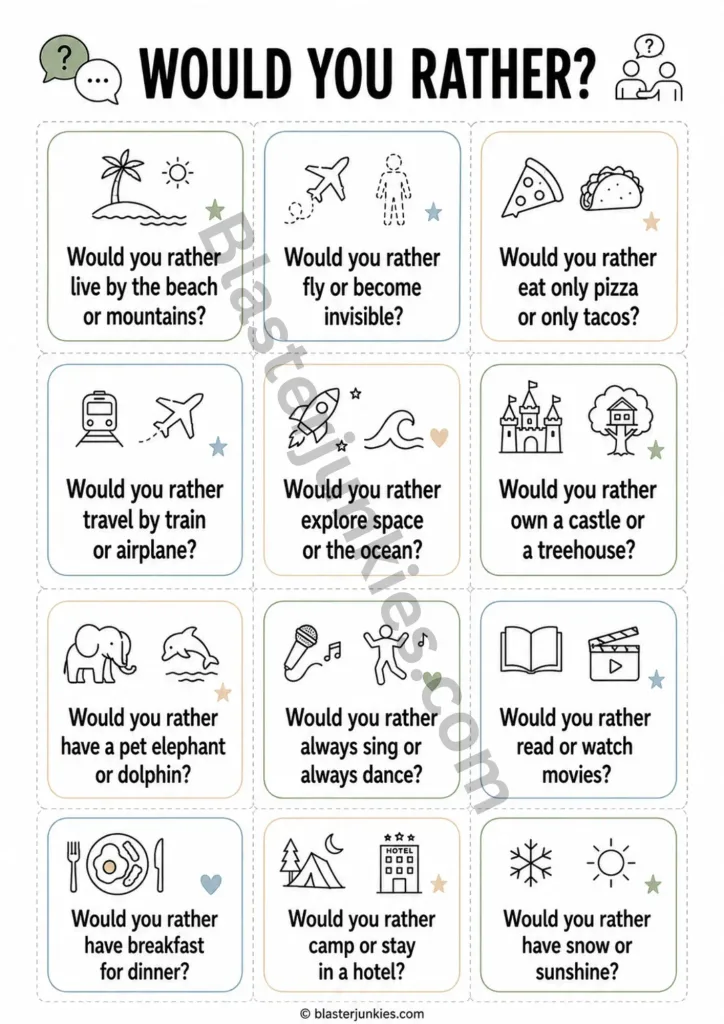
A set that draws from a mix of these categories keeps the routine from feeling repetitive, and gives every family member chatty or quiet, younger or older an entry point that suits them.
Conversation cards work especially well layered into the natural pauses of a busy summer.
Pull a few out during a long drive alongside a round of the License Plate Game Printable or the Road Trip Games Printable collection a quiet stretch of highway is often when the best answers come out.
On a family outing, like a day exploring a USA National Park Checklist Printable destination or hunting for shells with a Beach Scavenger Hunt For Kids, a few cards make a great wind down activity once everyone’s back at the car or the campsite.
How to Use These Cards With Kids: A Simple Routine
1. Cut the cards apart and keep them somewhere handy. A jar, a small box, or even a rubber band around a stack works fine.
The goal is to make pulling a card as easy and low effort as reaching for a napkin, so it becomes a natural part of a routine rather than something that needs setup.
2. Anchor it to a moment that already happens. The dinner table is the classic choice, but car rides, bedtime, or the first few minutes after school pickup work just as well.
Attaching the habit to an existing daily moment means you don’t have to remember to schedule it it just becomes part of what already happens then.
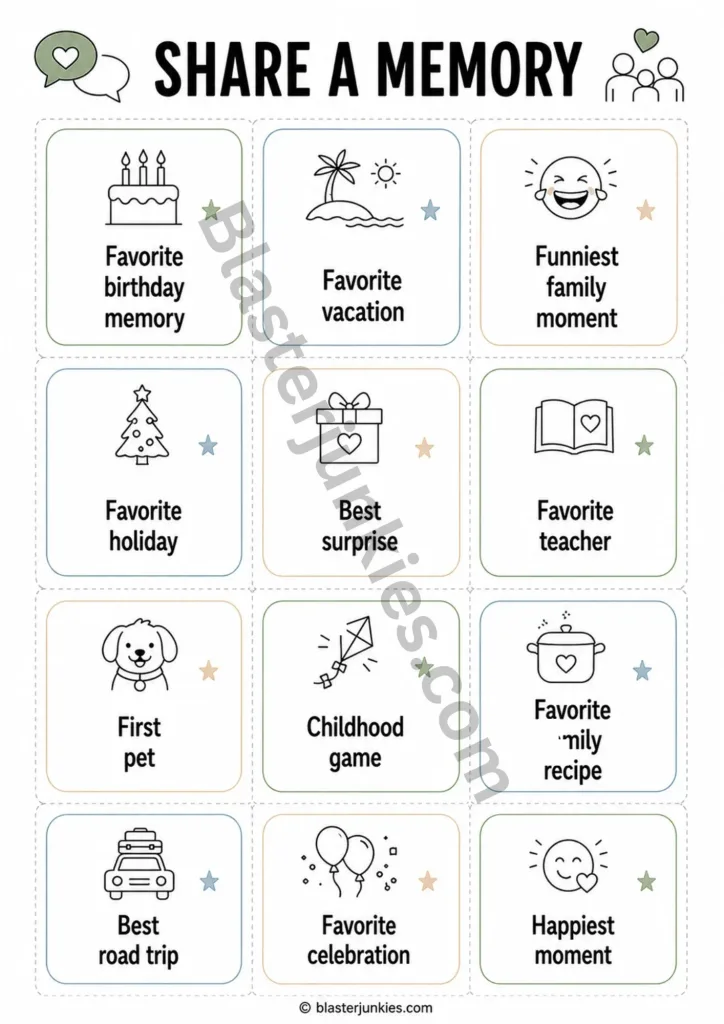
3. Let everyone answer, including the adults. Kids open up more when they see parents modeling vulnerability first.
If a card asks about a happiest memory or something you’re proud of, answer honestly before asking your child to.
It signals that this is a genuine exchange, not a quiz aimed only at them.
4. Don’t rush past a short answer. If a child gives a one word response, resist the urge to move straight to the next card.
A gentle, curious follow up “what made that the best part?” often unlocks a much longer answer than the original question did on its own.
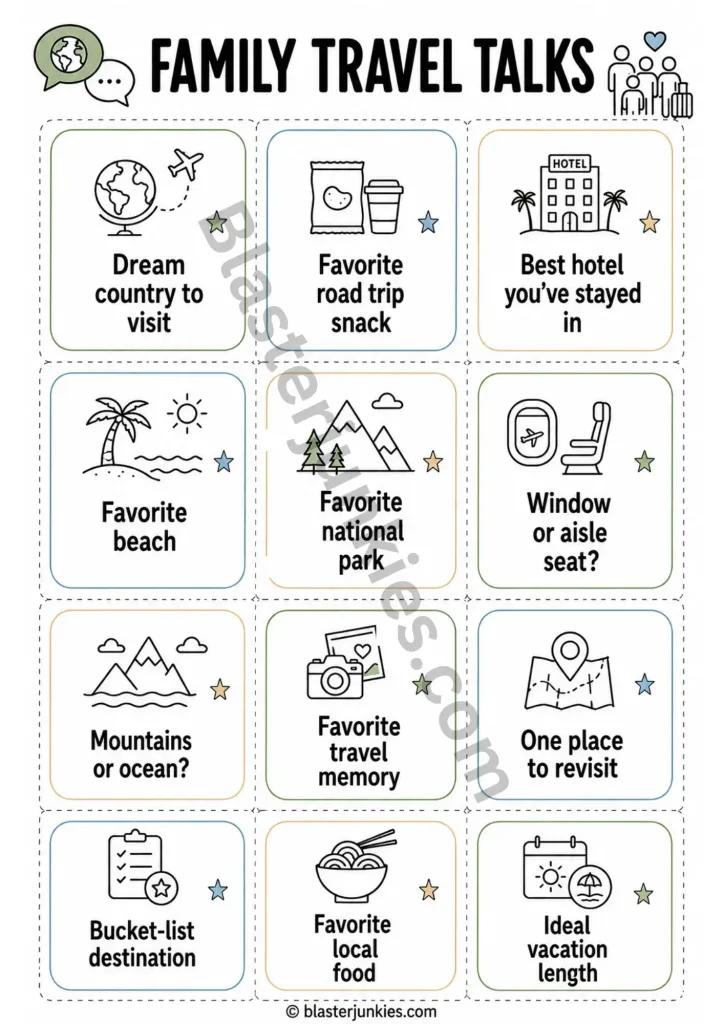
5. Mix card types depending on the mood. Save the deeper gratitude or memory-sharing cards for calmer, quieter moments, and pull out the “would you rather” or storytelling cards when energy is high or the mood is playful.
Matching the card type to the moment keeps the activity feeling natural instead of forced.
6. Let kids pick a card too. Handing the deck to a child and letting them choose which question to ask a parent flips the dynamic in a fun way.
Kids are often just as curious about their parents’ childhood memories or silly preferences as parents are about theirs.
7. Revisit favorite cards. Some questions are worth asking again months apart “what’s your happiest memory” or “what are you looking forward to” often gets a completely different answer as time passes, which makes for a nice, informal way to notice how a child is growing and changing.
Weaving Conversation Cards Into a Bigger Family Routine
They also pair beautifully with quieter evening routines. After a busy day built around a Summer Habit Tracker for Kids or a session with the Summer Reading Challenges checklist, a handful of conversation cards makes a natural bedtime wind down.
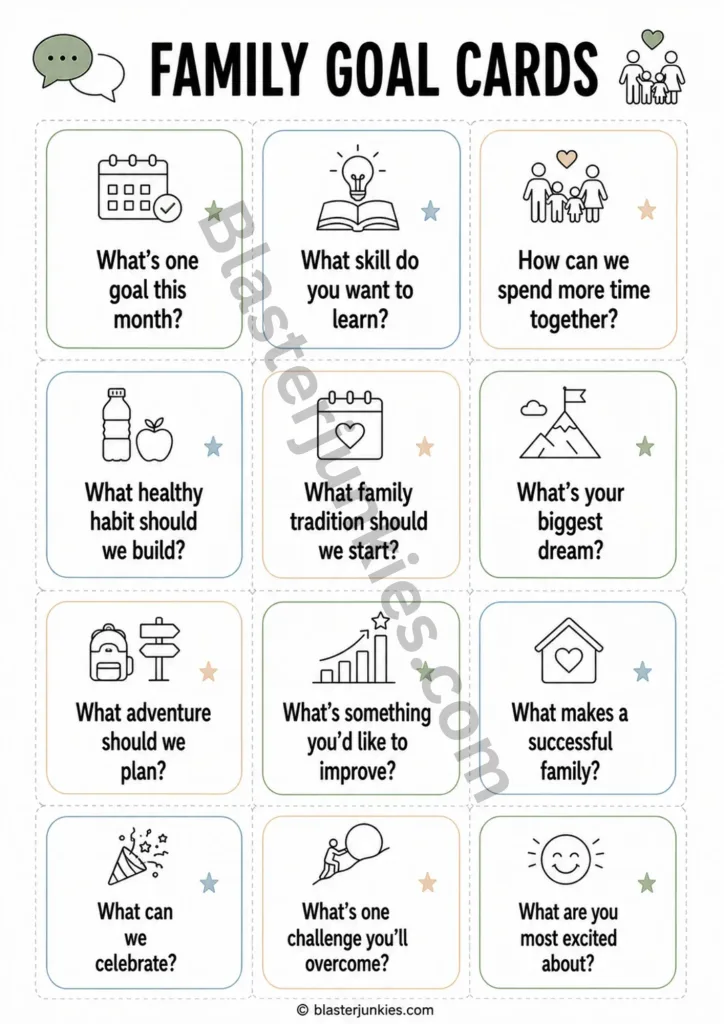
And if your family is planning a bigger trip, the family fun and travel talk style cards fit right alongside packing day bring them along with your Vacation Packing List Checklist or Camping Packing Checklist Printable for a fireside chat once you arrive.
Even simple rainy day fun benefits from the pairing combine a few kindness or family fun challenge cards with a quiet activity like a Summer Maze Printable for Kids page, or use the “goal” style cards to help plan out a family End of Summer Bucket List Printables together.
Carrying the Habit Into the School Year
There’s no reason this routine has to be a summer only thing. Once school starts back up, a quick conversation card at breakfast is a gentler alternative to rushing straight into a Morning Routine Chart for Kids checklist, giving kids a moment of connection before the day gets busy.