If your family has spent the spring and summer months digging in the dirt, planting seeds, and watching tiny sprouts turn into tomatoes, peppers, and sunflowers, then you already know that gardening is one of the best hands on learning experiences you can offer a child.
The Garden Harvest Tracker takes that experience one step further by giving kids (and parents) a simple, visual way to record everything they grow, pick, and enjoy throughout the growing season.
This printable pack isn’t just a single sheet it’s a full toolkit built around one idea: helping families slow down, pay attention, and celebrate the small wins that come with growing their own food and flowers.
Instead of letting harvest memories fade away, kids get to write them down, rate them, and look back on an entire season of effort.
Why a Harvest Tracker Matters for Kids
Gardening teaches patience, responsibility, and science all at once, but those lessons stick much better when they’re paired with a record keeping habit.
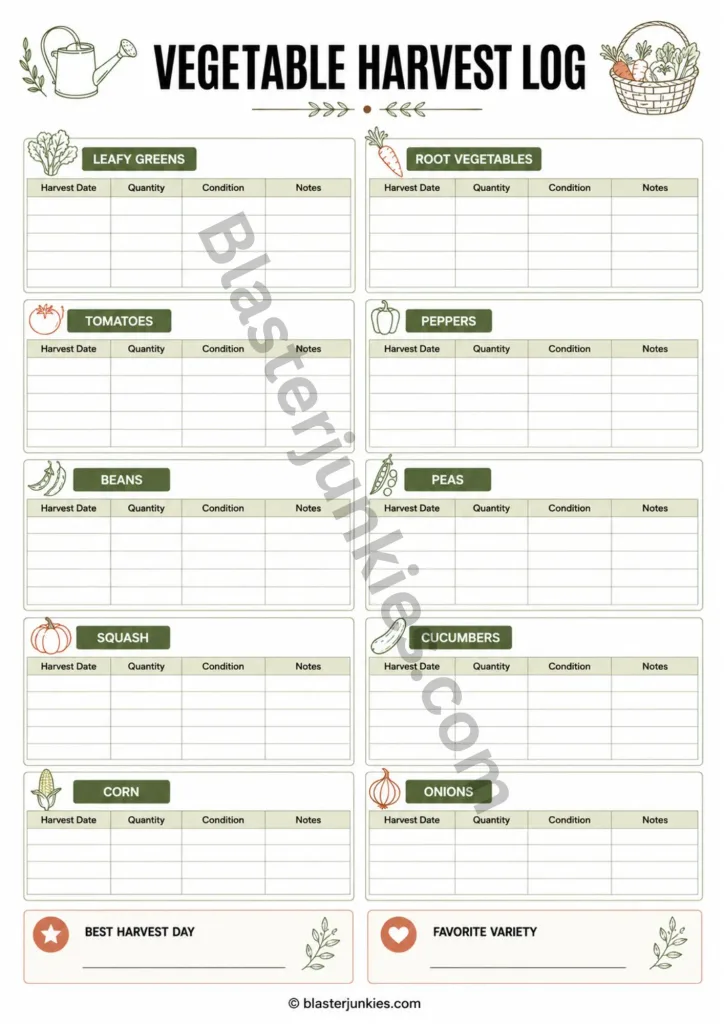
When a child picks the season’s first strawberry or notices that the tomato plant produced twice as much as the peppers, writing it down turns a fleeting moment into a lasting memory and a real data point.
Over weeks and months, that simple habit builds observation skills, basic math (counting, weighing, comparing), and a genuine sense of pride in watching a project through from seed to plate.
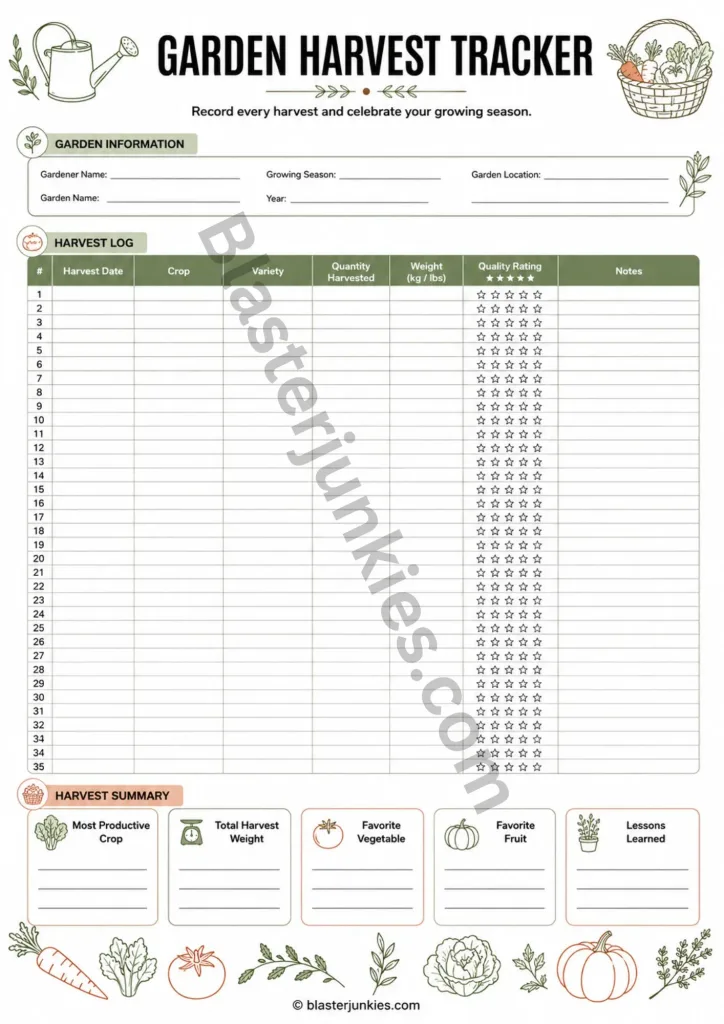
It also gives families a shared project. Instead of gardening happening quietly in the background, the tracker turns it into something everyone checks in on together a few minutes at the end of the day to jot down what was picked, how it tasted, and what the weather was like.
What’s Inside the Pack
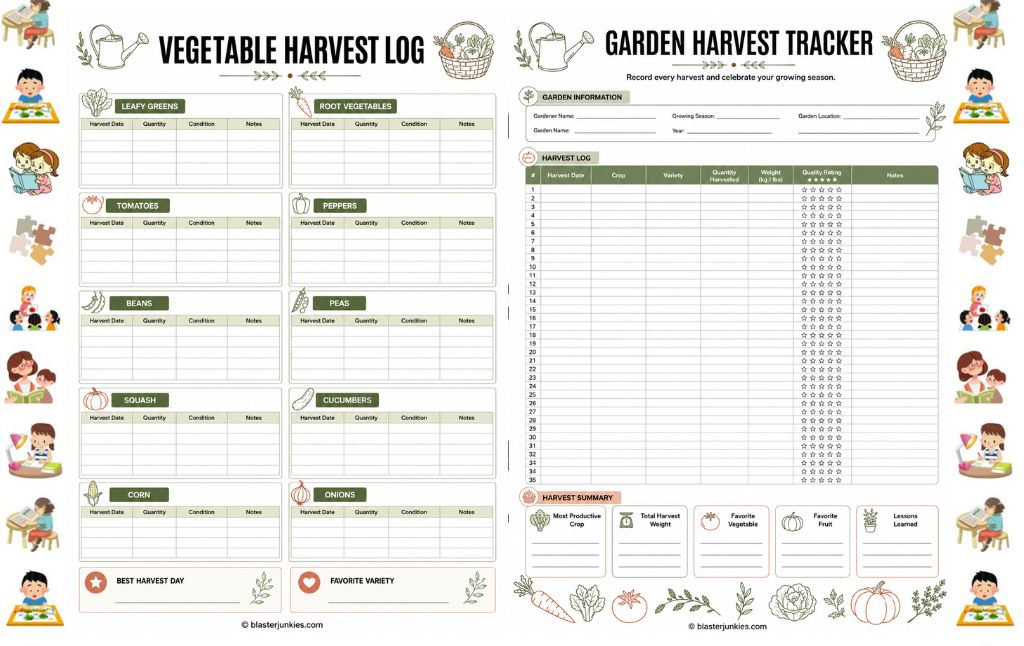
The tracker set covers every part of the growing season in a way that’s flexible enough for a backyard vegetable patch, a windowsill herb garden, or a full family farm plot.
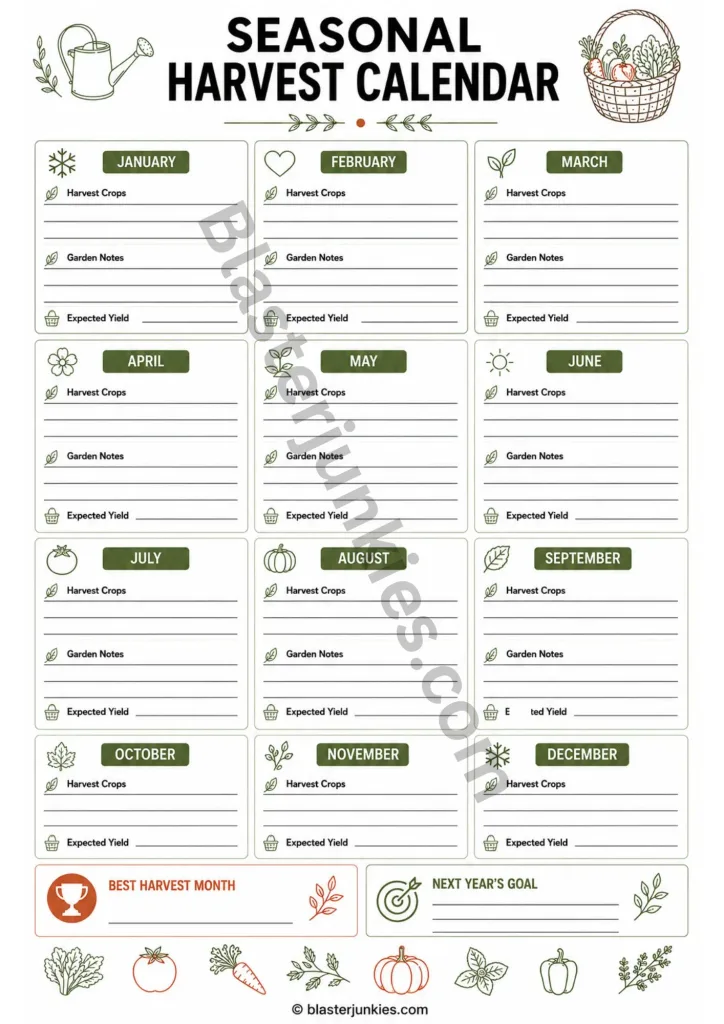
Rather than one rigid worksheet, it’s organized so kids can log daily harvests, compare crops side by side, plan out weekly garden chores, and reflect on the season as a whole.
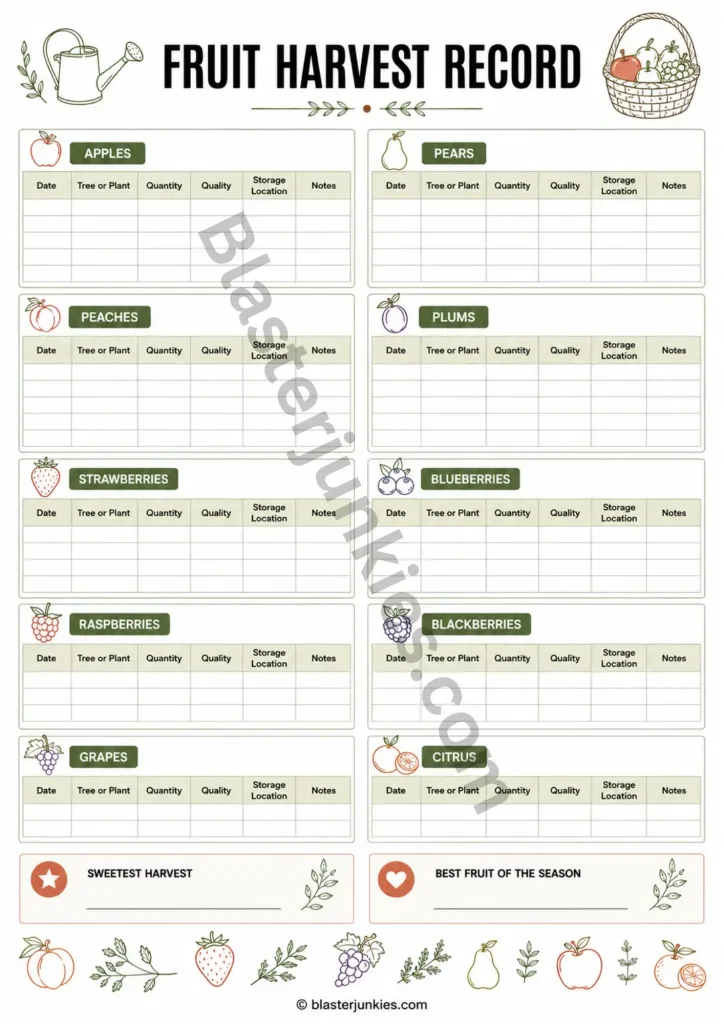
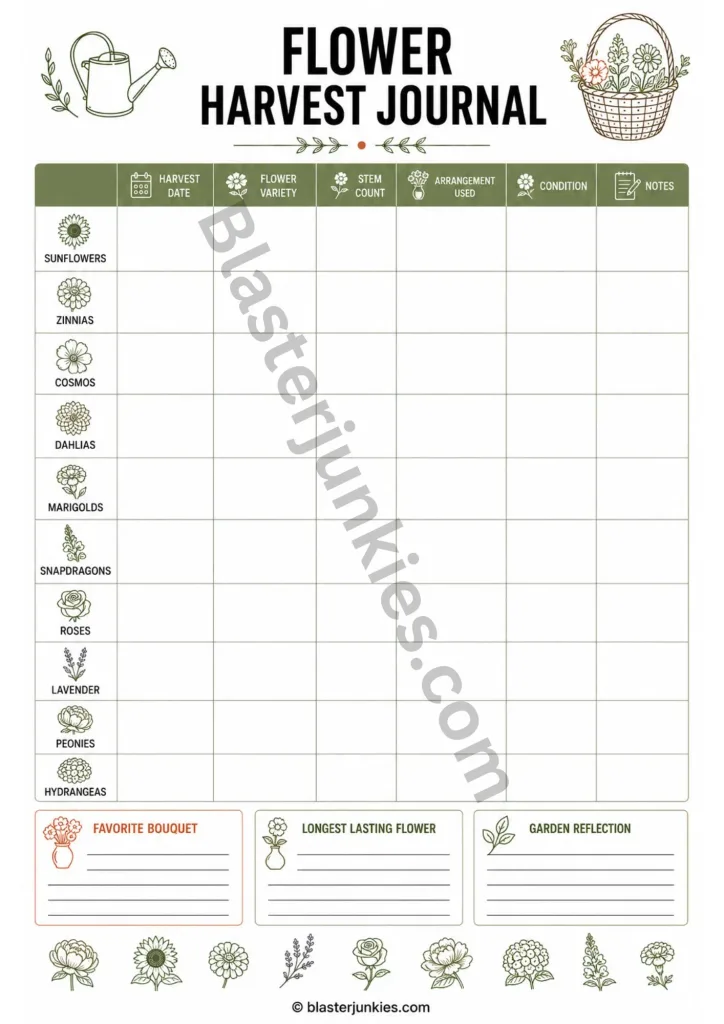
There’s room to track vegetables by type, note down fruit harvests separately, keep tabs on herbs, and even record flowers cut for bouquets.
Star ratings make it easy for younger kids to mark their favorites without needing to write long sentences, while summary sections at the end of each log encourage a bit of reflection like naming the most productive crop or the sweetest harvest of the year.
Because the pages are undated and open ended, the same tracker can be reused season after season, which makes it a nice long term project rather than something that gets used once and forgotten.
A garden tracker fits naturally into a broader run of summer and outdoor learning activities.
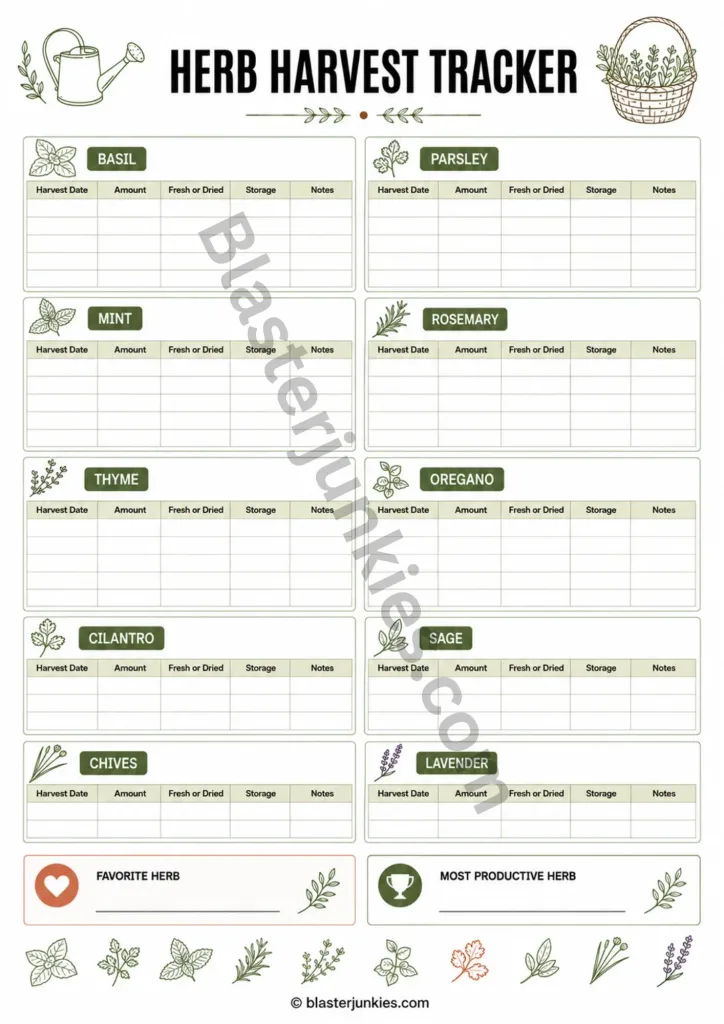
If your family is already building simple routines for kids, a Summer Habit Tracker for Kids works well alongside the harvest log to keep the whole season organized.
Once the vegetables start coming in, kids often want to turn their harvest into a little business a printable Lemonade Stand Kit Printable or a Farmers Market Shopping List can help them plan how to sell or share what they grew.
How to Use It With Kids
Start with the basics. Before diving into daily logging, have your child fill in the garden information at the top their name, the garden’s name, the season, and where it’s located.
This small step gives them ownership over the whole project right from the start.
Make logging part of the routine. Every time something gets picked, walk over to the tracker together and fill in a line: what was harvested, how much, and how it looked or tasted.
For younger children, this is a great way to practice writing and counting. For older kids, it’s an easy entry point into basic data tracking dates, quantities, and simple ratings.
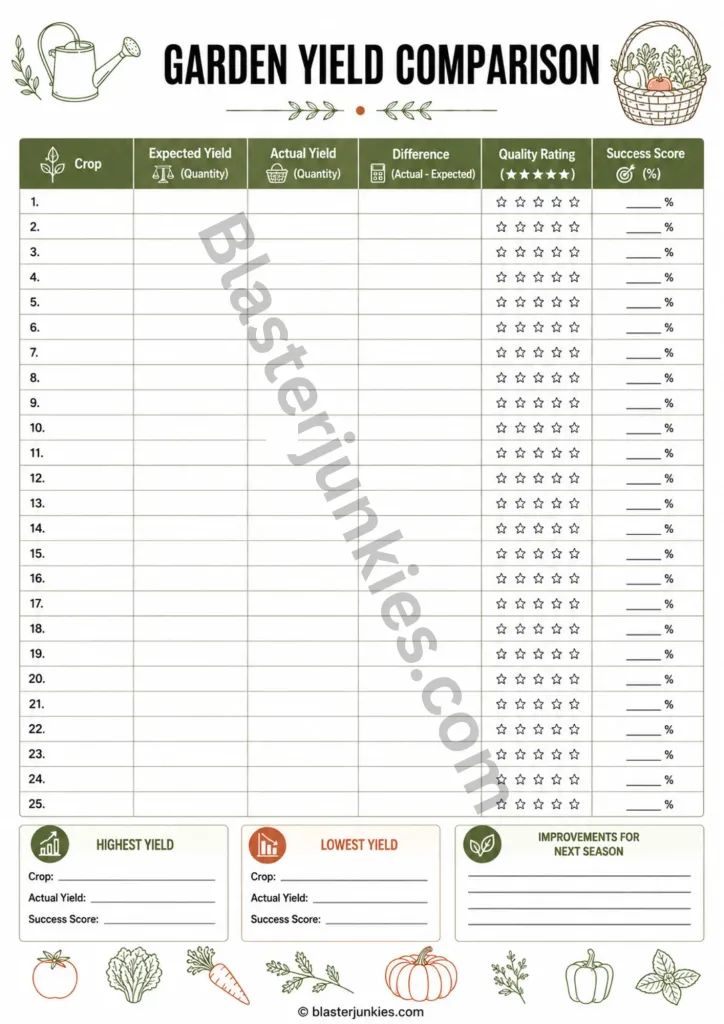
Let them rate and reflect. The star rating sections are especially fun for kids because there’s no wrong answer.
A five star tomato one week might drop to three stars the next if it wasn’t quite as sweet, and that’s a great excuse to talk about why was it the amount of sun, water, or time on the vine?
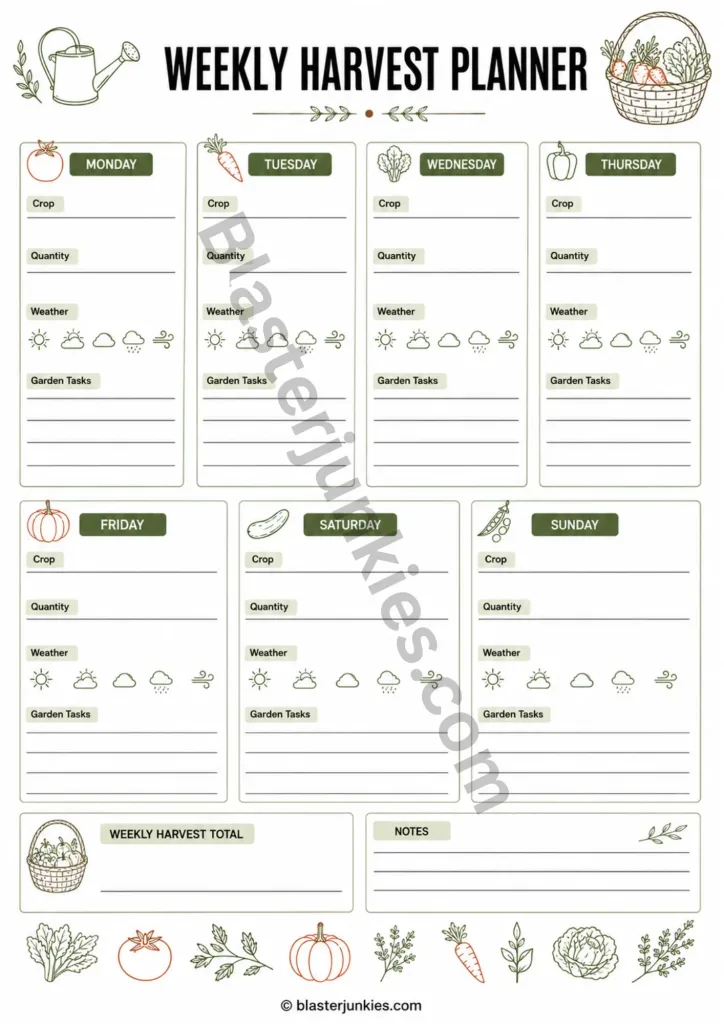
Use the weekly planner for chores. Pair the daily harvest log with the weekly planning pages so kids also get a sense of the work that goes into a harvest, not just the reward.
Watering, weeding, and checking on plants can all be noted alongside what’s expected to be ready that week.
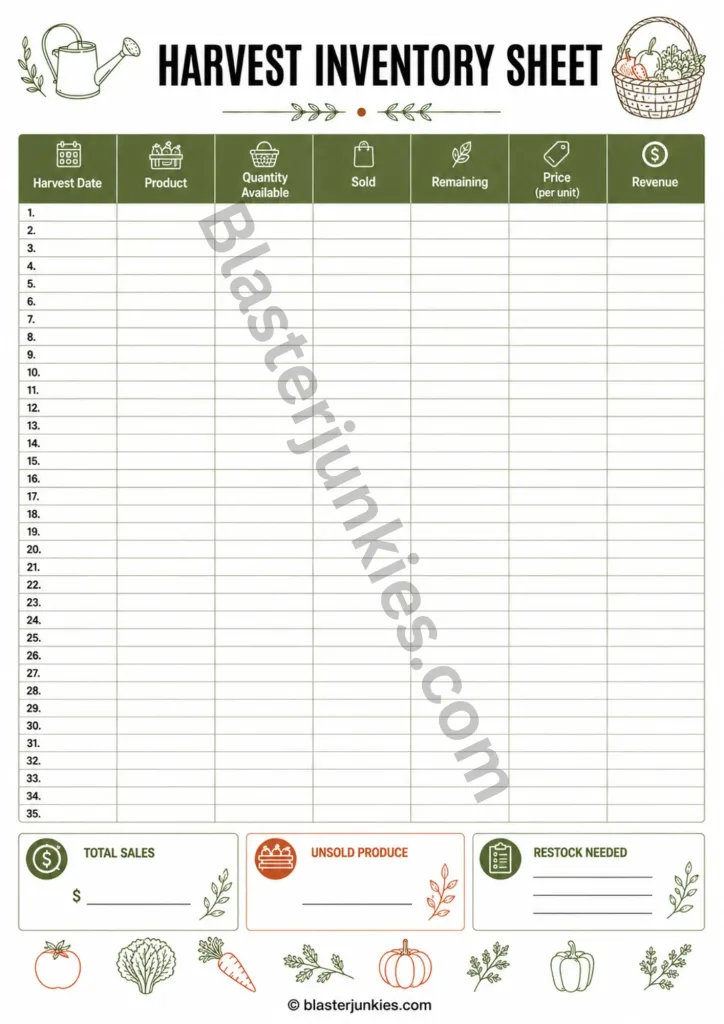
Wrap up with a season summary. At the end of the growing season, sit down together and fill out the summary boxes most productive crop, favorite variety, lessons learned.
This is often the most meaningful part for kids, since it turns weeks of small entries into one big story about their garden.
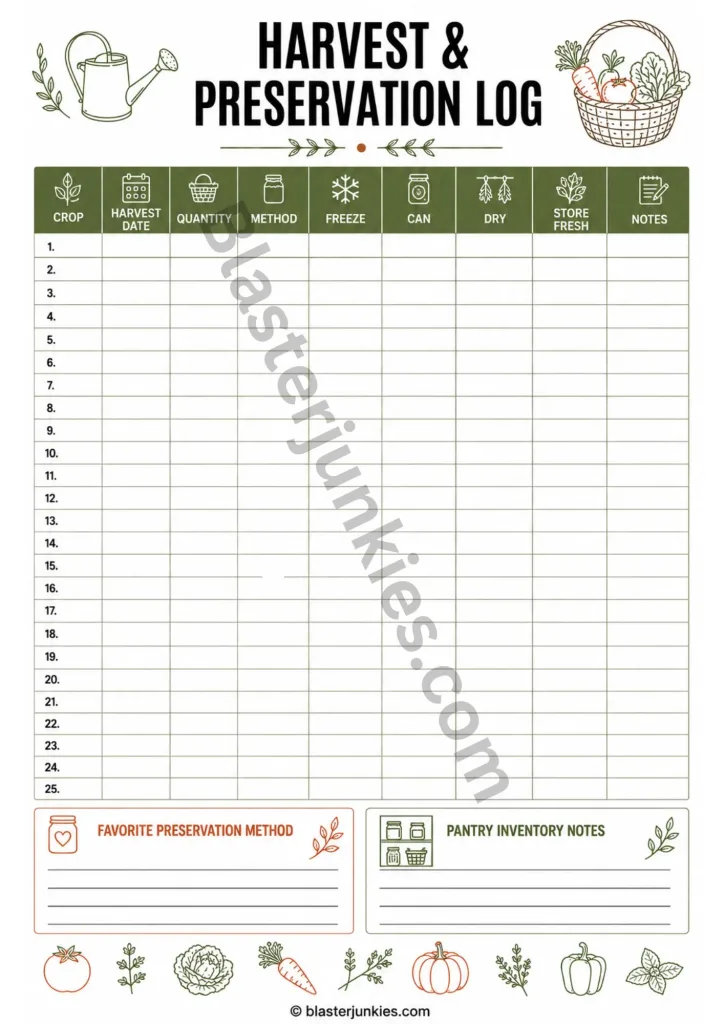
Pairing It With Other Seasonal Activities
Gardening also pairs nicely with other outdoor family projects during the warmer months.
A Beach Scavenger Hunt For Kids or a Summer Maze Printable for Kids can round out a day that started in the garden, while a Summer Bucket List Ideas For Adults helps parents make sure the whole family not just the kids is making time to enjoy the season.
And if garden time turns into a celebration once the harvest comes in, Ice Cream Party Printables make for a sweet way to mark the occasion.