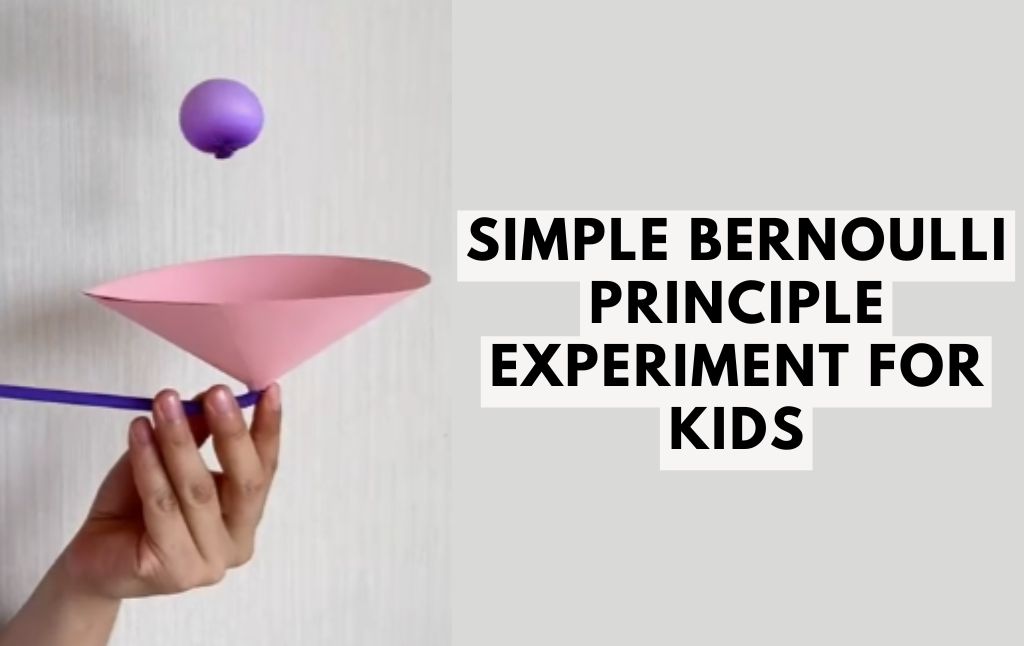
Science is all about discovery, and today we have an exciting experiment that demonstrates the Bernoulli Principle in action! This simple yet fascinating experiment involves making a floating ball using everyday materials. It’s a fun and interactive way to learn about air pressure and lift.
What is the Bernoulli Principle?
The Bernoulli Principle states that an increase in the speed of a fluid (such as air) results in a decrease in pressure. This principle helps explain how airplanes stay in the air and why some objects can seemingly float when placed in a moving airstream.
Materials Needed:
- Two paper plates
- A ruler
- Scissors
- A pin
- Tape or stapler
- Aluminum foil
- A bendy straw
- Different lightweight balls (pom-poms, ping pong ball, small Christmas ornament)
Steps to Create Your Floating Ball Experiment:
1.) Prepare the Funnel
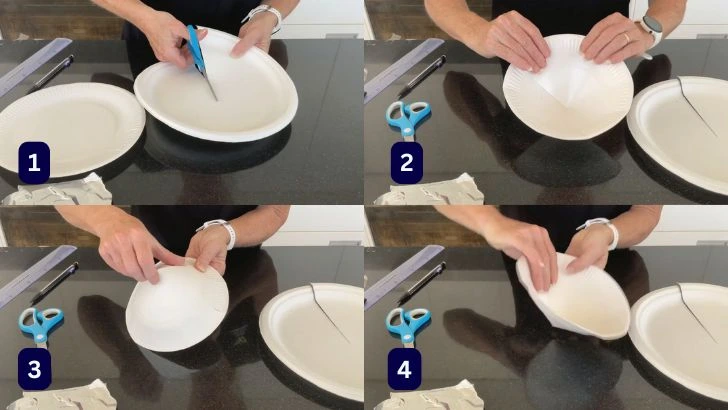
Take a paper plate and draw a straight line from the edge to the center.
Cut along the line and form the plate into a cone shape.
Secure the shape using tape or a stapler. If the material is too rigid, a stapler may work better.
Repeat the process with the second plate if desired.
2.) Create an Opening for the Straw
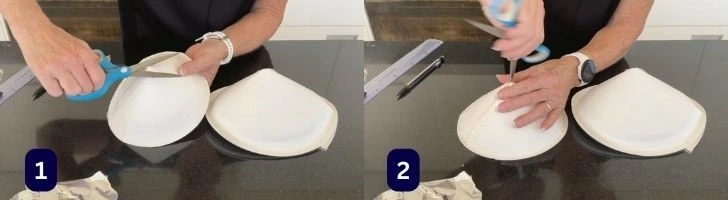
Use scissors to cut a small hole at the tip of the cone.
The hole should be just big enough for the bendy straw to fit snugly through it.
3.) Insert the Straw
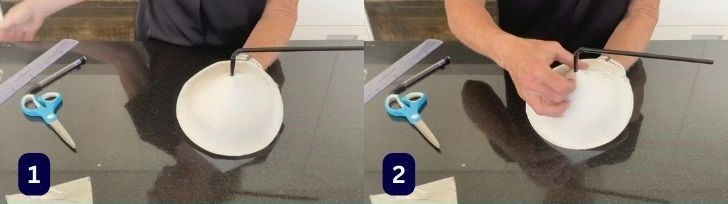
Push the shorter end of the bendy straw through the hole so that the longer end extends outside the cone.
Use tape to seal around the straw, ensuring that no air escapes.
4.) Test the Floating Ball
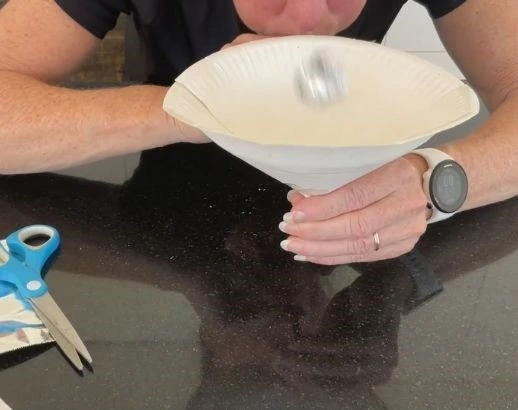
Place a lightweight ball (such as a pom-pom) at the top of the funnel.
Blow air through the straw and observe what happens!
Try different types of balls and see how their weight affects the floating effect.
What’s Happening?
As you blow air through the straw, it moves quickly through the narrow opening at the top of the funnel.
According to the Bernoulli Principle, the fast-moving air creates a low-pressure zone around the ball. The surrounding higher-pressure air helps keep the ball suspended in the air, making it appear as if it is floating!
Experiment Variations
Try using different materials for the funnel to see if it changes the results.
Wrap a pom-pom in aluminum foil and test if it still floats.
Experiment with different angles and blowing speeds to observe changes in floating behavior.
This experiment is a great way to introduce kids to fundamental physics concepts while having fun! Encourage them to ask questions, make predictions, and test their ideas. Happy experimenting!