Children experience a wide range of emotions every day. They feel happy, sad, excited, and angry.
However, labeling these feelings can be difficult for them. They often lack the vocabulary to express their internal state.
This is where play based learning becomes highly valuable. The Emotions Memory Game pack offers a supportive framework.
It turns social emotional learning into an interactive matching game. Let’s explore how to use these templates successfully.
The Critical Value of Emotional Literacy
Emotional literacy is the ability to recognize and name feelings. It is a foundational skill for early self regulation.
When children can name their feelings, their anxiety decreases. They can communicate their needs more clearly to adults.
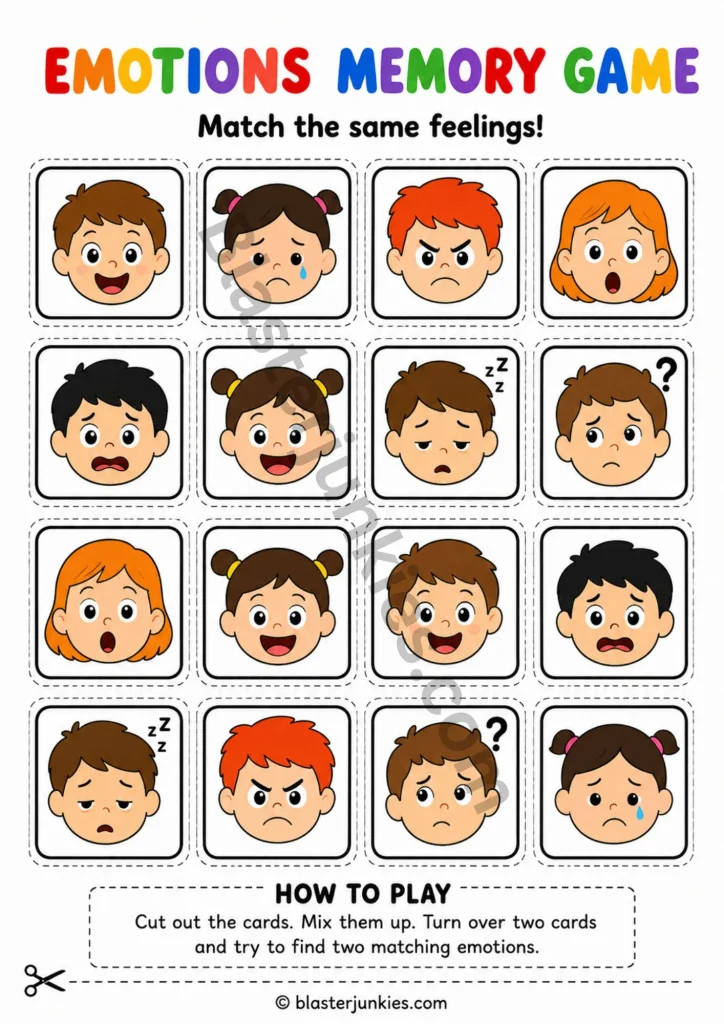
Matching games are an excellent tool to teach these concepts. They encourage children to observe facial expressions closely.
They notice the shape of eyebrows, mouths, and eyes. This builds strong visual discrimination and empathy. Kids learn to read social cues in others.
Incorporating Emotional Learning into Daily Routines
Consistent daily habits help children feel secure and grounded. You can easily schedule a dedicated quiet hour.
Add daily game time to your Morning Routine Chart for Kids. This establishes a consistent habit of interactive play.
During school breaks, keep childhood learning fun. A Summer Habit Tracker for Kids helps log daily tasks. It encourages kids to complete learning goals consistently.
Tracking daily feelings is a great habit for kids. Pair this matching game with our visual Mood Tracker Printable. It helps children track their emotional patterns over time.
Key Concepts inside the Emotions Memory Game Pack
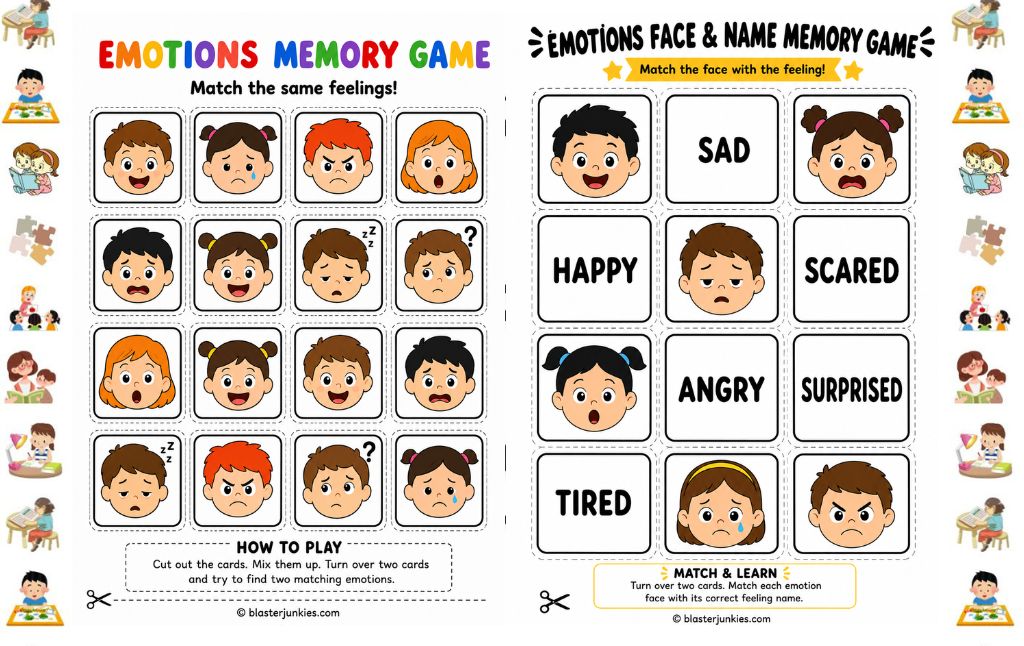
This printable pack uses diverse visual layouts to teach. It does not rely on simple picture duplicates. Instead, it challenges children to connect related concepts. The worksheets cover several core educational categories:
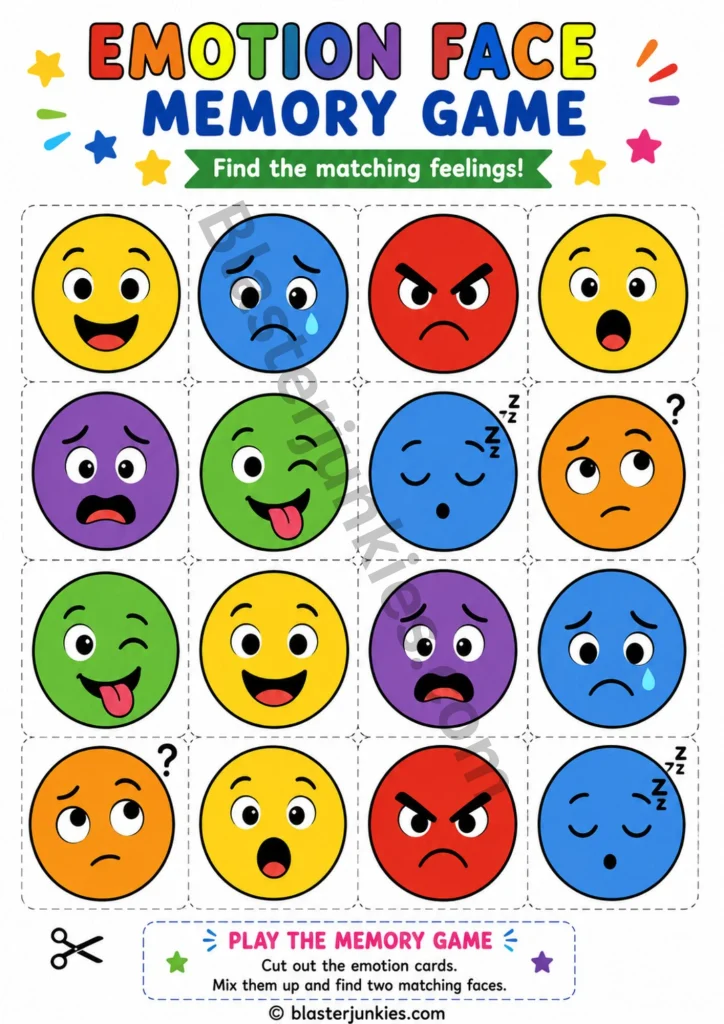
Direct Face Matching: Finding duplicate illustrations of human faces or colorful emojis.
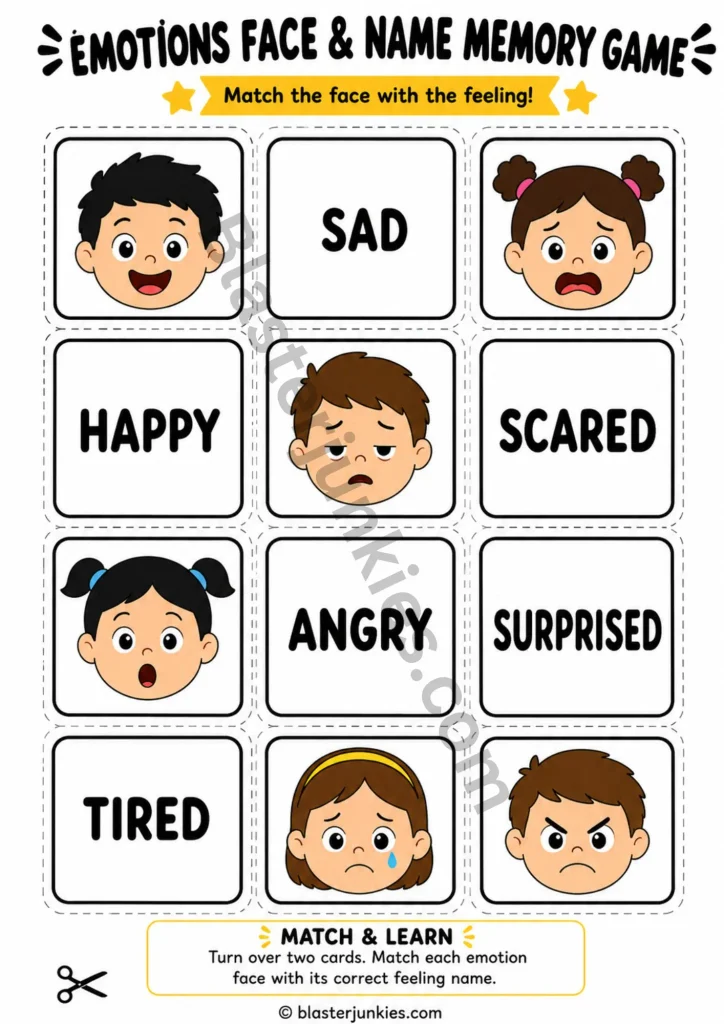
Vocabulary Association: Pairing emotional facial expressions with their printed names.
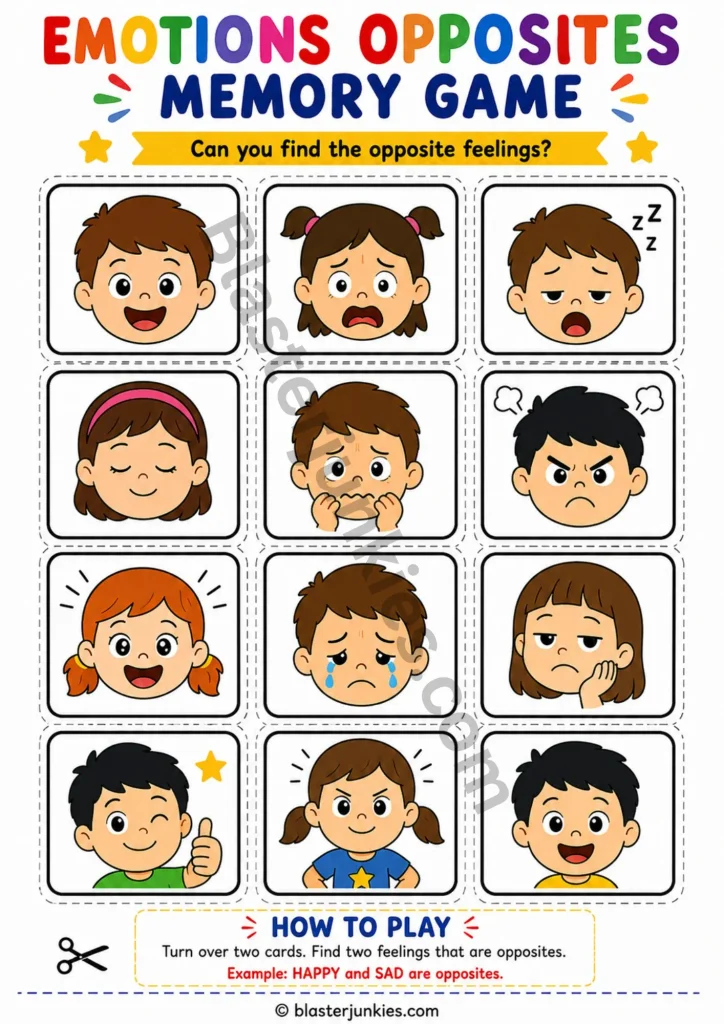
Opposites Exploration: Pairing contrasting feelings together, like happy and sad.
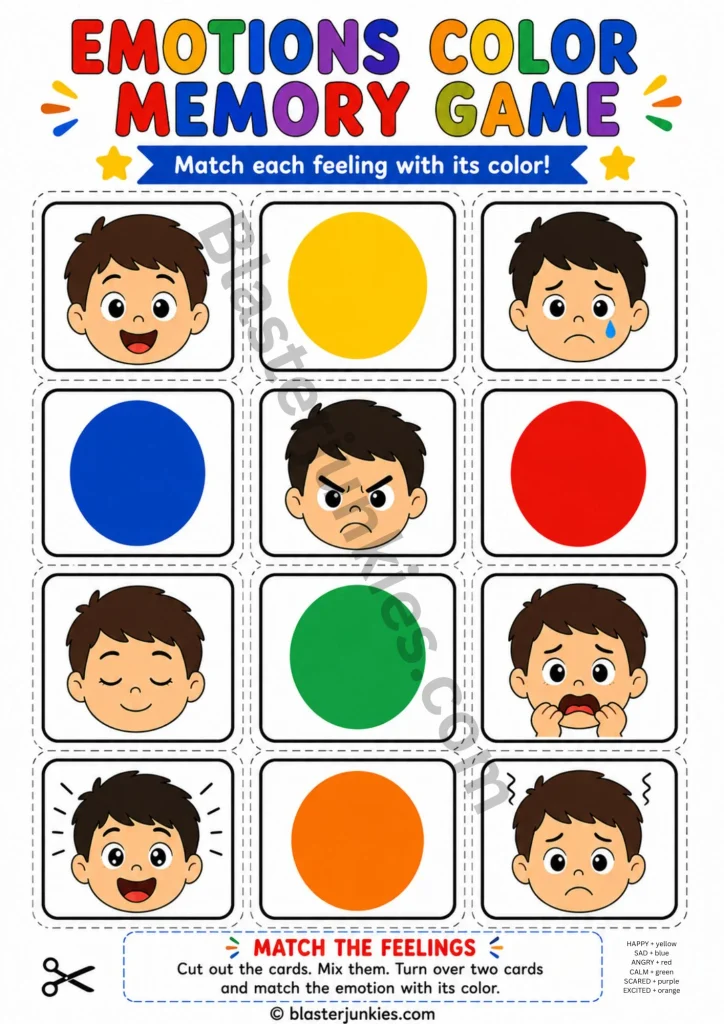
Color Association: Connecting specific feelings with symbolic colors, like anger with red.
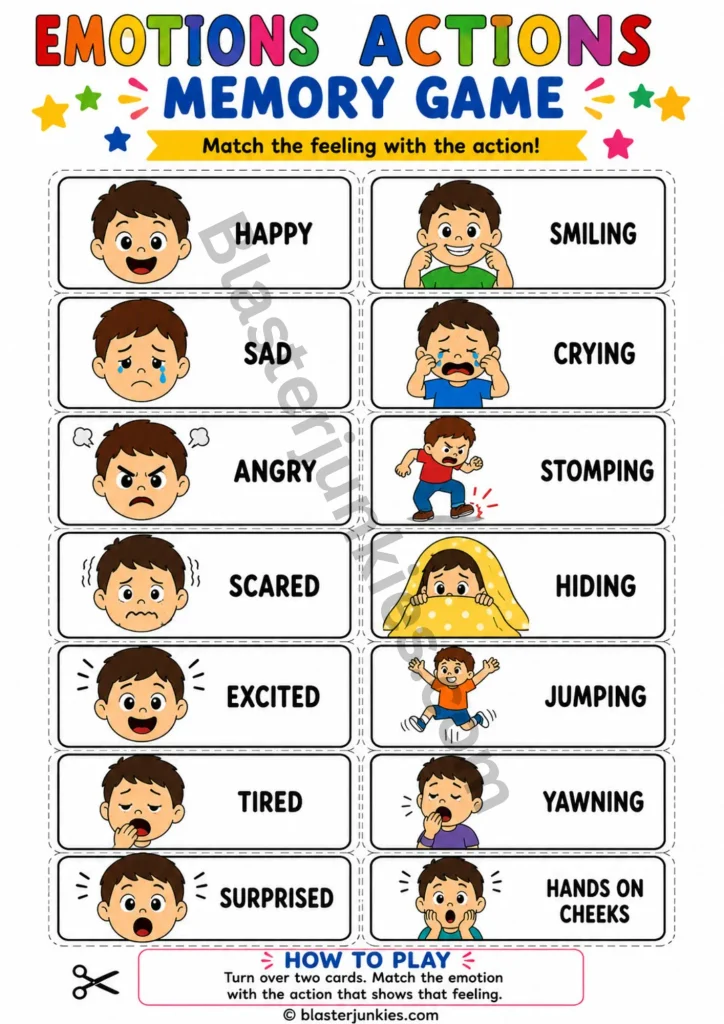
Behavioral Actions: Matching each internal feeling with its physical action, like stomping.
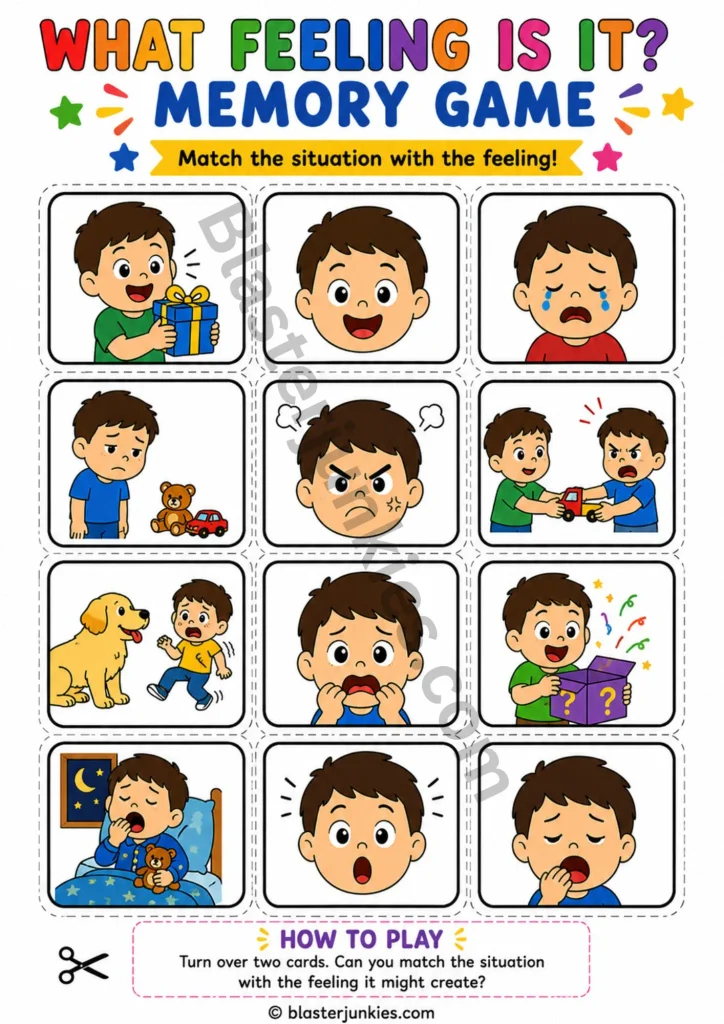
Situational Contexts: Exploring what feeling a child might experience in specific scenarios.
These activities develop strong cognitive matching skills. They teach children to think beyond simple visual likeness. They must use logic to find conceptual pairs.
Creative Sensory Extensions
You can easily expand these paper based lessons. Combine the memory cards with other sensory toys.
Hide the printed cards in a sensory bin. Fill a container with dry rice or water beads. Hide plastic emotion figures or emojis inside the bin.
Have your child dig to find the matching pair. This tactile search keeps indoor play exciting.
You can also play active movement games. Have your children act out the matched emotion. Can they jump like they are excited?
Can they hide under a blanket like they are scared? Can they stomp their feet like they are angry?
This lets children burn off extra energy indoors. It also reinforces the emotional concepts they learned.
Step by Step Guide: How to Assemble and Play
Using these worksheets is straightforward and fun. Here is a practical guide to get started.
First, print the selected game pages. Always print these cards on heavy cardstock. Thick cardstock prevents children from seeing through the paper. It also stands up much better to repeated handling.
Next, cut out the cards along the dashed lines. You can laminate the cards for durability. Laminated cards are easy to wipe clean.
To play, start with a small selection of cards. For younger kids, use only four pairs. Lay them face up to practice simple matching first.
As their confidence grows, turn the cards face down. Arrange them in a neat grid pattern.
Have players take turns flipping two cards. If the cards match, the player keeps the pair. If they do not match, flip them back over.
The game continues until all pairs are found. The player with the most pairs wins the game.
Supporting Social Emotional and Verbal Growth
Board games build crucial social emotional skills. They teach children how to take turns. They learn to listen to others. They also practice patience while waiting for their turn.
Most importantly, children learn to handle disappointment. Losing a match is a gentle lesson in resilience. Playing games together builds a supportive family bond.
Fine motor skills are also practiced during setup. Letting children help cut out the cards develops hand strength.
They must hold the paper steady with one hand. They use safety scissors with the other hand. This bilateral coordination is essential for physical growth.
The situational matching cards are great for verbal practice. They teach children basic empathy and social communication.
Discuss the written situations clearly together. Ask: “What makes you feel surprised?” Ask: “What do you do when you feel sad?”
These verbal exercises build strong early vocabulary skills. They also help with emotional expression and connection. This makes the game highly supportive for family communication.
Customizing for Different Age Groups
These printable pages are highly adaptable. They suit children of varying developmental levels.
For toddlers (ages 2-3), focus on simple recognition. Do the cutting work for them beforehand. Keep the cards face up on the table. Ask them to find the matching color or face.
For preschoolers (ages 3-4), focus on shadow and sound matching. Let them make their own conceptual choices. Encourage them to mimic the facial expressions as they play.
For kindergarteners (ages 5-6), encourage independent word matching. Let them pair the emotions with their printed names.
They can also play the situational matching game alone. Encourage older children to try hosting their own game.
Let them explain the rules to a younger sibling. This leadership opportunity builds strong speech skills. It also boosts their social confidence and pride. They feel proud to guide others in learning.
This flexibility makes the pack great for families. Siblings of different ages can play together easily.
Conclusion
Learning through play is a wonderful journey. These printable emotions memory games combine science with daily fun.
They help children practice essential childhood skills. Fine motor, math, and literacy are all supported.
You can easily download the complete pack today. It is ready to print and use immediately.
Enjoy watching your child discover emotional science. Have fun playing these matching games together today!
Self care is also a key component of self regulation. Encourage household wellness with our Self Care Checklist for Mental Health. It guides families to focus on physical and emotional needs.
You can also use this time to set personal goals. Pair emotional lessons with our visual Kids Vision Board to foster growth. It teaches kids to plan for future happiness and success.
Discussing feelings openly as a family builds strong bonds. Use our interactive Family Conversation Cards during dinner. These cards prompt deep talks about empathy and friendship.
If you enjoy cognitive matching games, explore more themes. Try our popular farm animal memory game next to practice visual grouping.