Young children learn best when they can use their hands. Tactile sensory play is highly beneficial for early development. It builds essential brain connections.
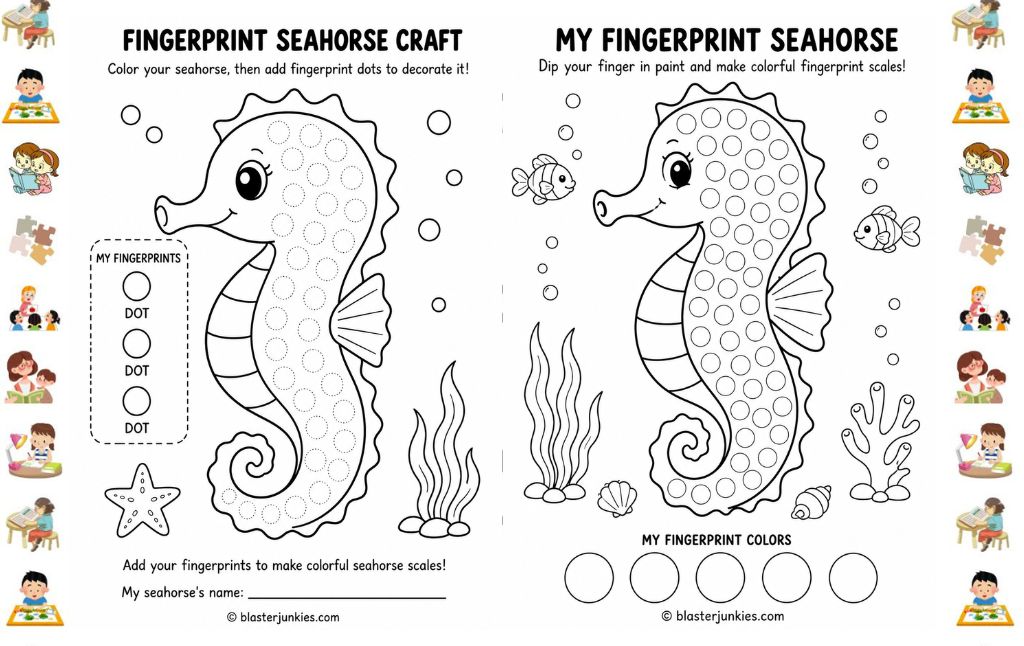
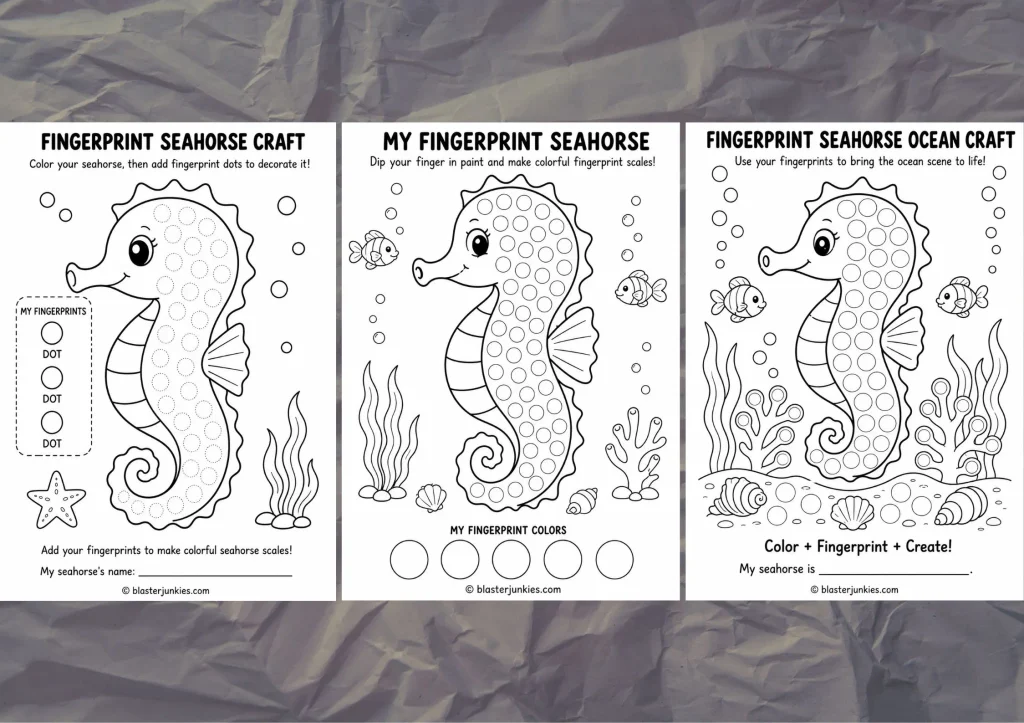
Fingerprint painting offers a simple, screen free way to explore art. The Fingerprint Seahorse Craft printable pack provides a structured framework for this creative play.
This guide explores the pedagogical benefits of fingerprint crafting. We will also share practical strategies to use these templates at home or in school.
The Developmental Benefits of Fingerprint Crafting
Pressing a paint covered finger onto paper seems simple. However, this action requires significant motor control.
Children must coordinate several physical skills:
Isolation of the Index Finger: Kids learn to fold other fingers away. They focus strength entirely on one finger.
Spatial Alignment: Children must target specific circles on the page. This builds hand-eye coordination.
Pressure Regulation: Pressing too hard creates big smudges. Pressing too softly leaves no print. Kids must learn to regulate their muscular force.
These physical skills directly prepare children for holding a pencil. They build the hand muscles needed for future writing tasks.
Sensory feedback is also vital. Feeling the wet paint teaches children about textures. It helps develop spatial awareness.
Designing a Thematic Learning Routine
Creative crafts work best when paired with broader learning goals. You can easily build a comprehensive ocean unit study.
Pair your painting sessions with our Fun Ocean Animal Worksheets. This combination reinforces science, vocabulary, and fine motor skills.
Craft activities fit most naturally into a predictable daily structure. You can organize table time hours using a Morning Routine Chart for Kids. Having a dedicated time for art reduces transition anxiety.
Maintaining these positive structures is helpful during holiday breaks. Keep your children engaged with a Summer Habit Tracker for Kids. Use it to track daily reading, writing, and crafting milestones.
Remember to incorporate physical wellness into your craft sessions. Painting requires steady focus, which can tire young children. Keep them hydrated to maintain their focus.
You can track their daily water intake using our Monthly Water Tracker Printable for Kids.
Finally, we can connect art with reading. Use your sea crafts to inspire storytime. Pair your lessons with our Summer Reading Challenges to motivate young readers.
Exploring the Seahorse Craft Collection
This printable pack uses diverse layouts to teach different skills. The worksheets are categorized into three main focus areas:
1. Fine Motor Precision
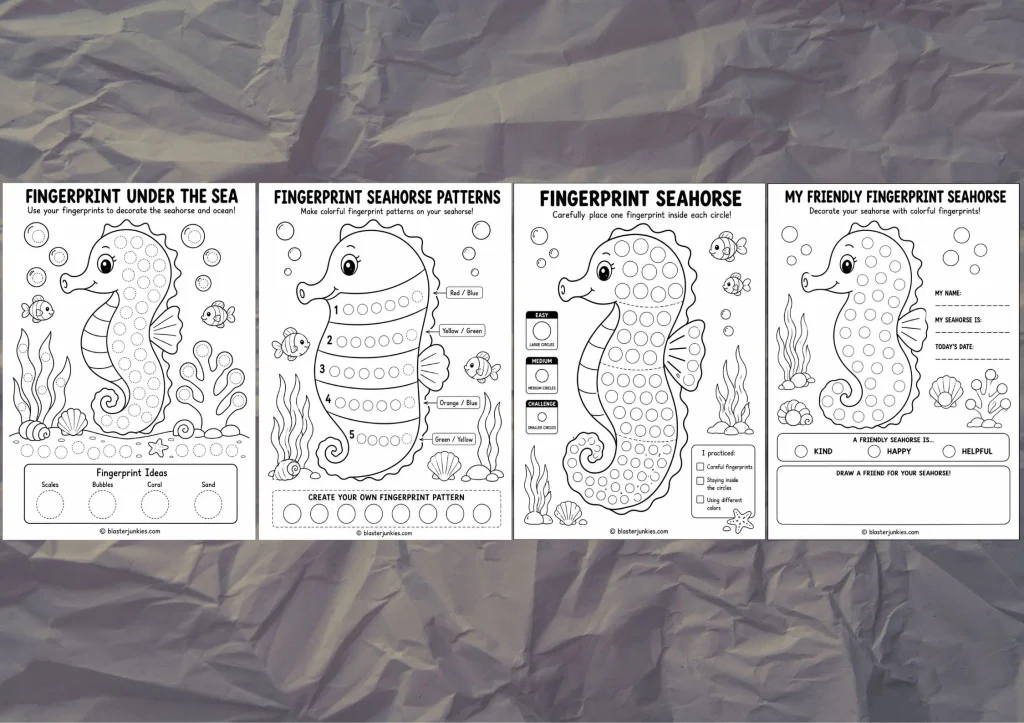
Several sheets focus purely on motor control. They feature circle guidelines of varying sizes.
Some pages offer large circles for beginners. Others offer tiny circles for an added motor challenge.
These activities help children practice precision. They learn to keep their prints inside the dotted lines.
2. Early Math Concepts
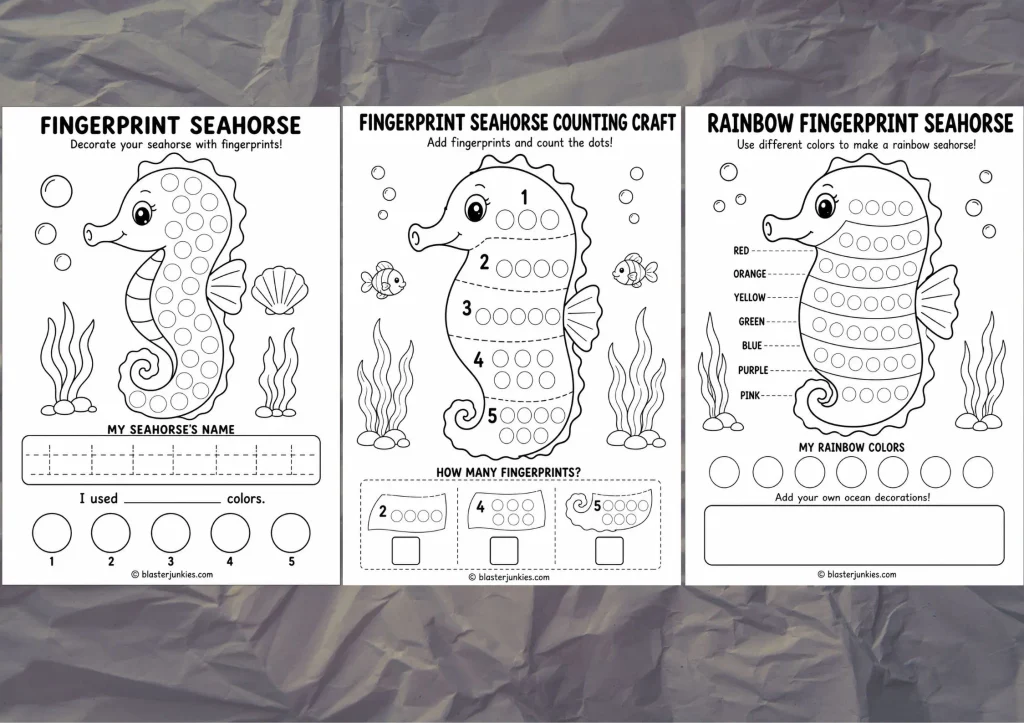
The pack seamlessly integrates math into art. Several pages focus on counting and patterns.
Children must place a specific number of prints in designated areas. This teaches them to count objects one by one.
Other pages introduce patterns. Kids must alternate colors (like red and blue) to decorate the seahorse. This builds logical reasoning and prediction skills.
3. Emotional and Creative Expression
Art is a powerful tool for emotional development. Some templates invite children to name their seahorse.
They can choose positive character traits for their creature. Options include being kind, happy, or helpful.
A dedicated drawing box allows kids to draw a friend for their seahorse. This encourages narrative storytelling and imagination.
How to Set Up a Low Mess Painting Session
Many parents avoid painting because of the cleanup. However, you can manage the mess with a few smart choices.
Use Washable Ink Pads
Instead of open paint bottles, use washable ink stamp pads. They provide vibrant color with very little mess.
Kids simply press their finger on the pad, then on the paper. The ink washes off easily with a damp wipe.
Print on Heavy Cardstock
Standard printer paper is thin. Wet paint or heavy ink can cause it to warp and curl.
Print these templates on thick cardstock instead. Cardstock stays flat and handles paint beautifully.
Keep Wet Wipes Nearby
Always place a pack of baby wipes on the table. Teach your child to wipe their finger before switching colors. This prevents muddy, mixed-up color prints.
Set Up a Drying Zone
Designate a flat surface as a drying zone. Moving wet paintings immediately prevents accidental smudges on your table.
Pacing the Craft Lessons
Do not rush through the entire packet in one day. Instead, introduce one page at a time.
Start with the simple coloring and printing pages to build confidence. As your child’s hand control improves, move to the pattern and counting sheets.
For older children, introduce the small circle challenges. This keeps the activities exciting and developmental.
Easy Ways to Extend the Lesson
You can easily expand these paper crafts into broader educational topics:
Learn Seahorse Science: Did you know male seahorses carry the babies? Share fun marine life facts while your child paints.
Practice Color Mixing: Let kids overlap yellow and blue fingerprints. Discuss how they created green.
Create a Sea Collage: Cut out the completed seahorses. Glue them onto a blue poster board to build a classroom ocean scene.
Focusing on steady, hands on play helps children develop critical skills while having fun. These simple acts of creative expression build a foundation for future academic success.