Teaching children about fire safety can be a delicate task. We want kids to understand the seriousness of emergencies and know exactly how to react, but we want to avoid causing them unnecessary fear.
The key to successful education in this area is structured, calm, and interactive preparation.
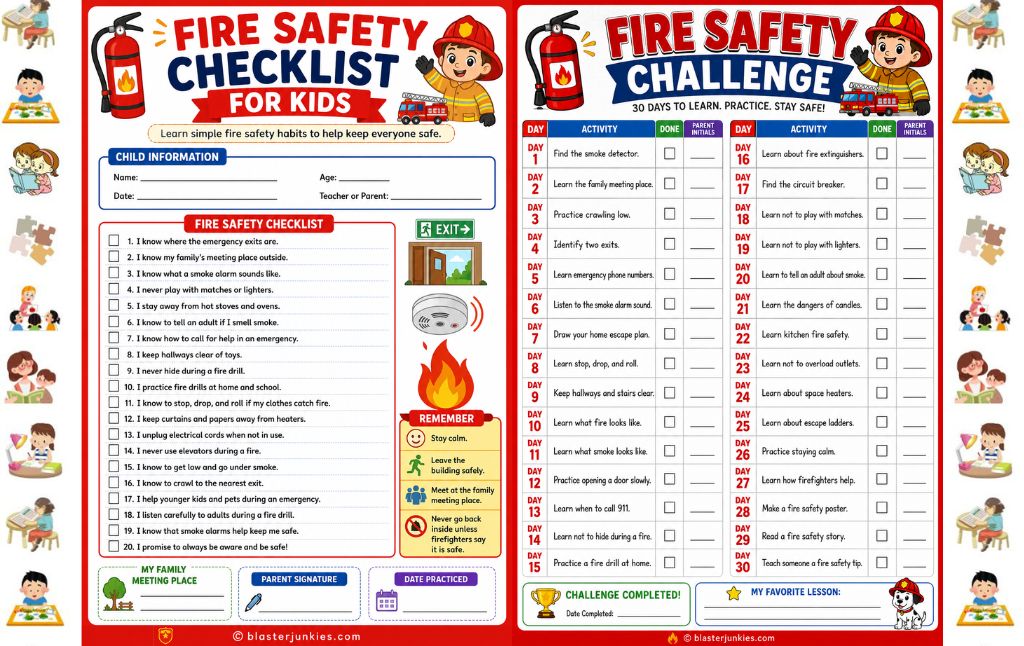
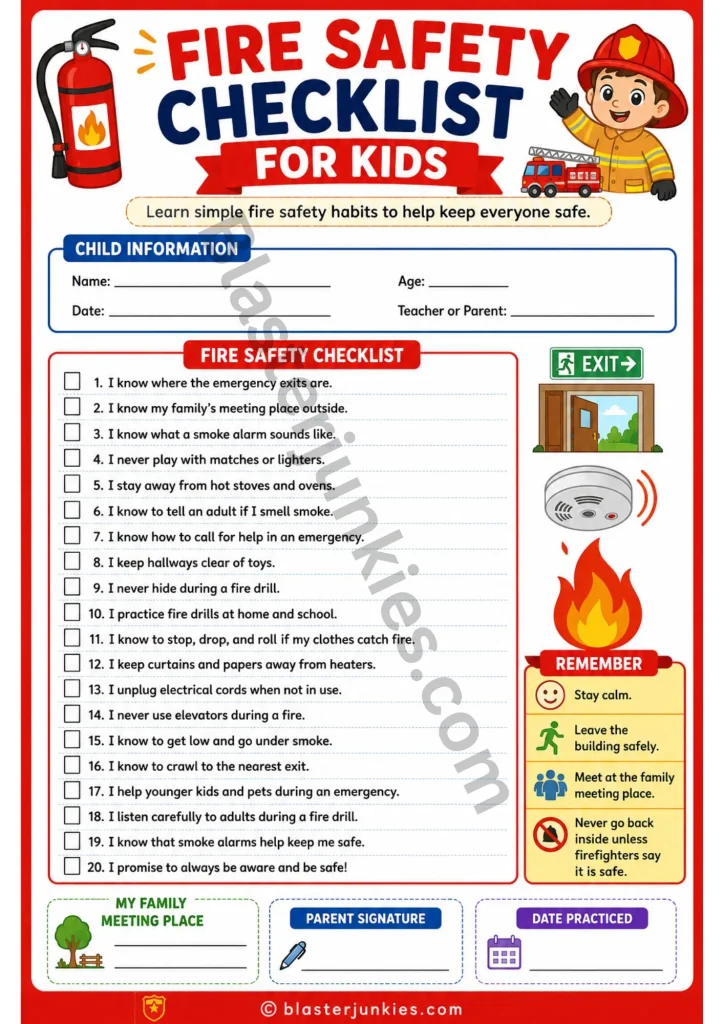
The Fire Safety Checklist for Kids printable pack provides parents and educators with a practical framework to teach, practice, and track life saving safety skills.
By transforming emergency guidelines into interactive challenges, home mapping activities, and family drills, this resource helps children build confidence and muscle memory.
Integrating Fire Safety into Your Home Maintenance Routine
Fire preparedness is not a one time conversation. It is an ongoing practice that works best when integrated into the overall maintenance of your household.
Before diving into safety rules with your children, ensure your home’s physical safeguards are in working order.
Testing smoke alarms monthly and checking extinguisher expiration dates can be seamlessly tracked using a seasonal Home Maintenance Checklist.
Equally important is keeping your evacuation routes physically accessible.
Corridors, stairs, and doorways must remain clear of toys, boxes, and miscellaneous clutter so that your family can exit quickly in low visibility conditions.
Utilizing structured home organization methods, such as those outlined in our Deep Cleaning Hacks For Busy Moms, helps establish daily habits that keep high traffic escape paths free of obstacles.
While organizing your escape routes, it is also a good idea to update your family’s basic survival gear.
You can audit your stash of flashlights, emergency blankets, and water using a comprehensive Home Emergency Supply List to ensure your grab and go bags are ready.
Additionally, don’t forget to account for your family pets in your evacuation plan.
Ensuring you have portable carriers, food, and medication ready and tracking their overall wellness needs on a Pet Health Checklist ensures your animals can be evacuated swiftly and safely alongside the rest of the household.
How to Use This Fire Safety Resource with Children
This printable pack uses a step by step approach to make safety concepts easy for children to digest.
Rather than presenting all the rules at once, here is a practical strategy for guiding children through the material:
1. Build Familiarity and Basic Rules
Begin by discussing fundamental guidelines, such as the danger of matches, staying away from hot stoves, and what a smoke alarm sounds like.
Introduce these rules as daily safety behaviors, similar to wearing a seatbelt.
You can even tie minor safety chores like keeping bedroom floors free of trippable clutter into a child’s Morning Routine Chart for Kids to foster continuous personal responsibility.
2. Map Your Home Escape Plan
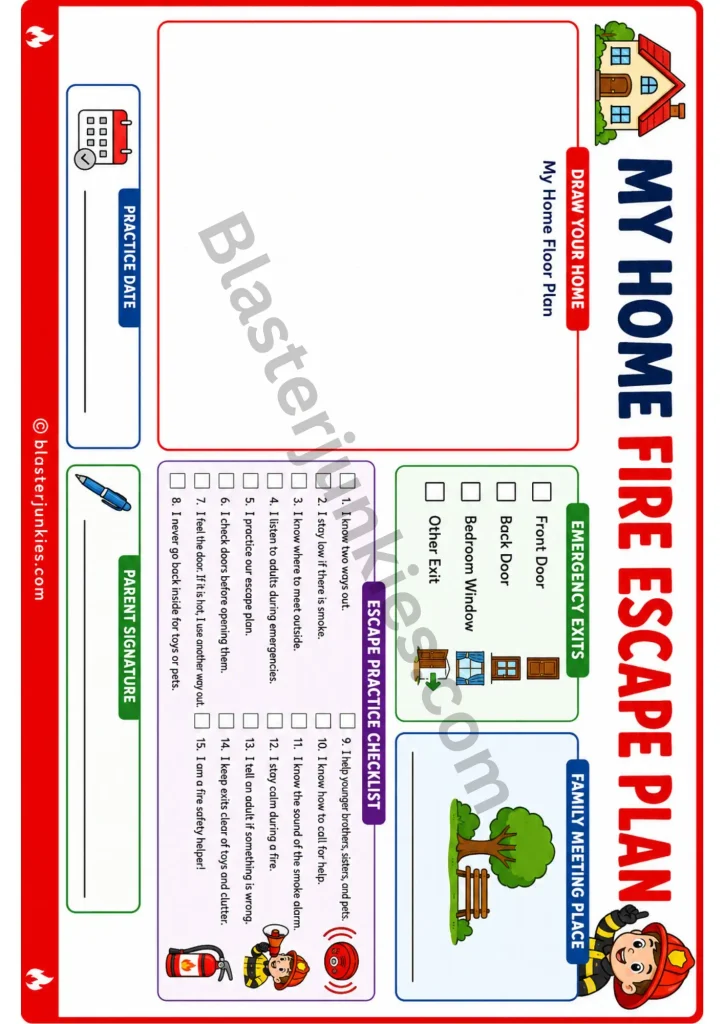
Work with your child to physically walk through your home and identify two exits out of every room.
Use the escape plan layout in the packet to draw a simple floor plan.
Mark the primary and secondary exits, and draw your family’s designated outdoor meeting place (such as a specific tree or mailbox).
This visual map helps kids mentally organize their escape route ahead of time.
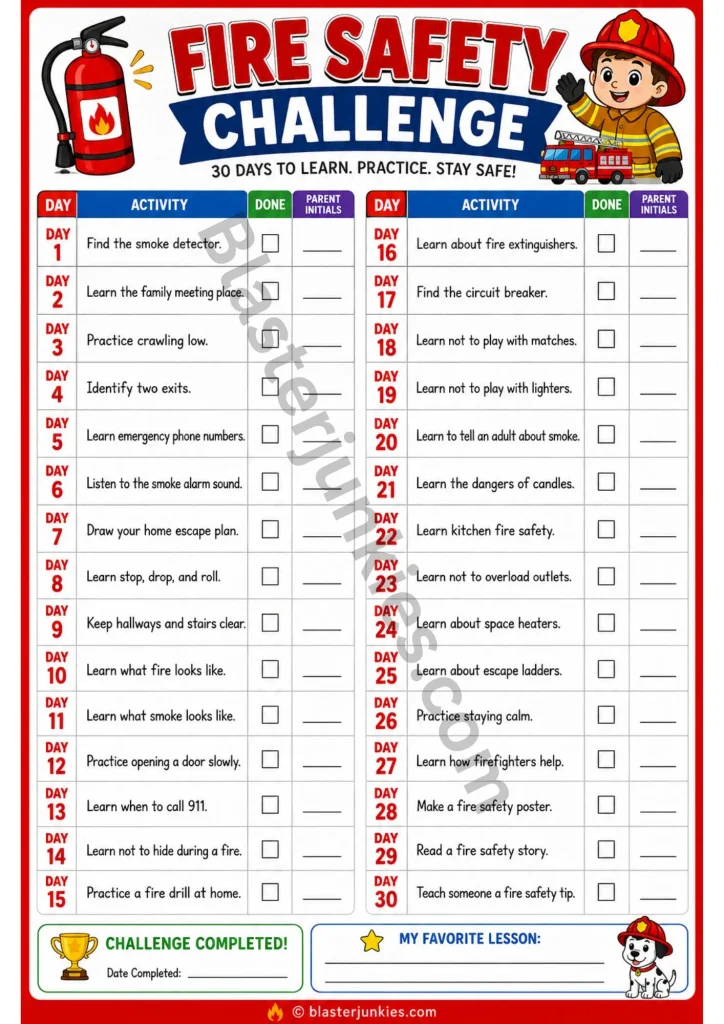
3. Take the 30 Day Fire Safety Challenge
Pacing the education over a month is highly effective for retention. The printable’s 30 day schedule breaks learning into single daily actions, such as:
Day 1: Locate the smoke detector.
Day 3: Practice crawling low under smoke.
Day 8: Practice “Stop, Drop, and Roll.”
Day 12: Practice testing a door handle with the back of the hand.
4. Conduct a Realistic Family Drill
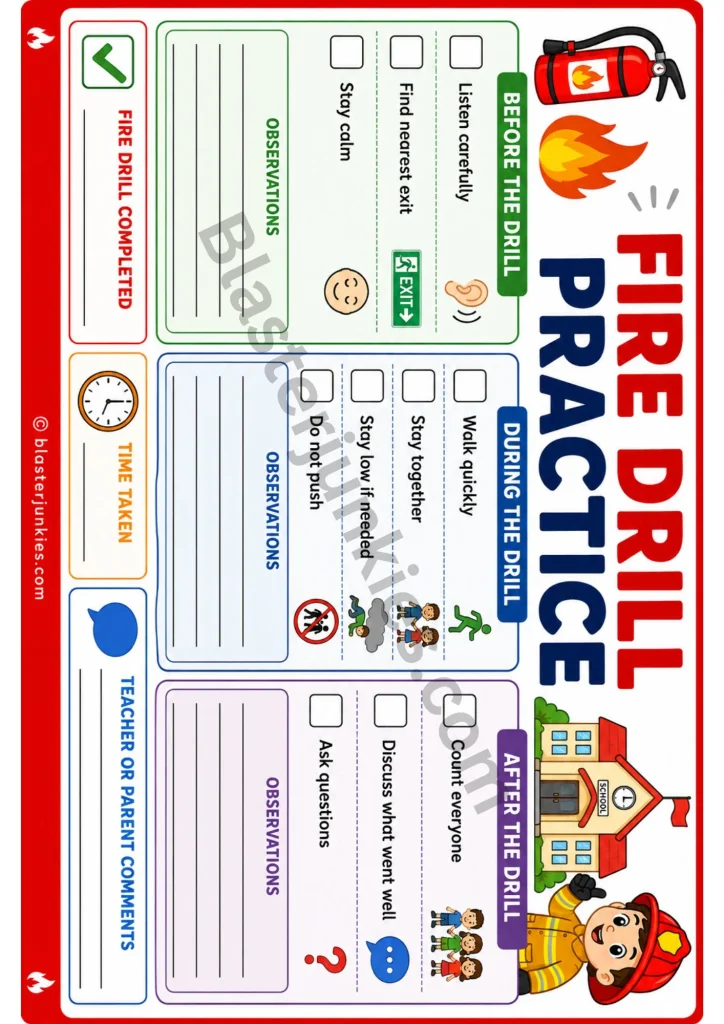
Once your child understands the routes, perform a practice run. Use the evaluation layout in the pack to log the drill.
Track your prep work beforehand, make observations during the exit run (such as whether everyone stayed calm and remembered to stay low), and measure the total time taken.
Discussing what went well and what can be improved afterward turns the practice into a constructive family goal.
Reinforcing Confidence Over Fear
At the end of your study and practice sessions, celebrate your child’s commitment to safety.
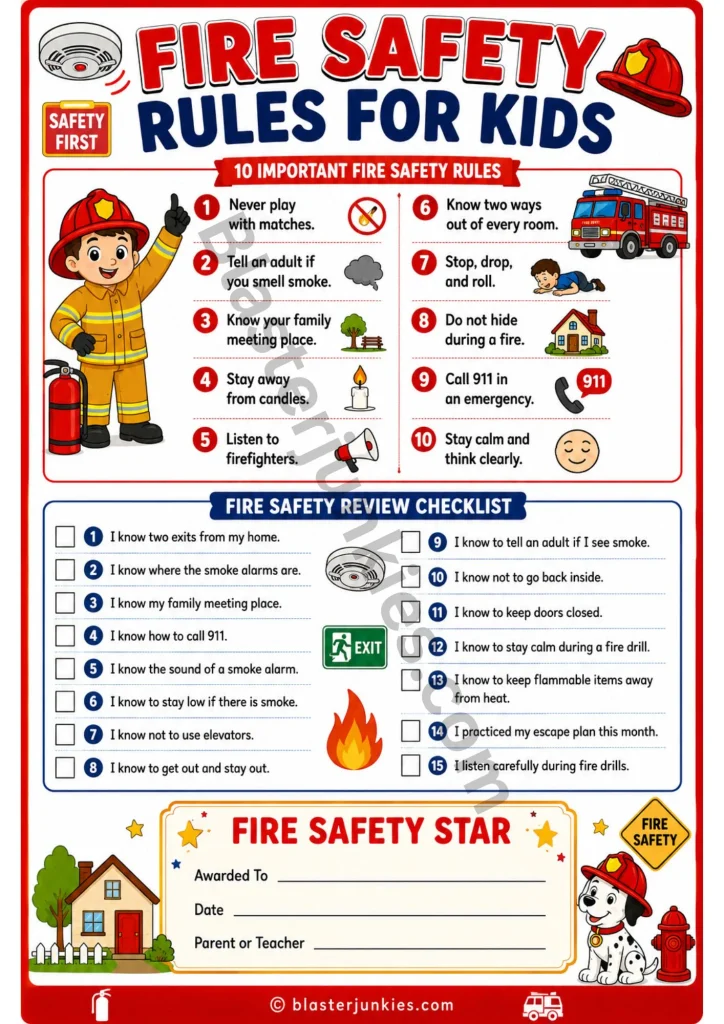
Presenting them with a signed “Fire Safety Star” certificate of completion reinforces the idea that preparing for emergencies is an empowering achievement.
By keeping the lessons structured, positive, and consistent, you can ensure that your household remains secure and prepared.