Vision boards are often viewed as tools reserved exclusively for adults seeking professional milestones or personal growth.
However, the core concept behind visualization the practice of identifying what you want to learn, achieve, experience, and practice is incredibly valuable for children.
For a child, a vision board is more than just a collection of pictures; it serves as a supportive space to explore their emerging identity, cultivate positive habits, express creativity, and build self esteem.
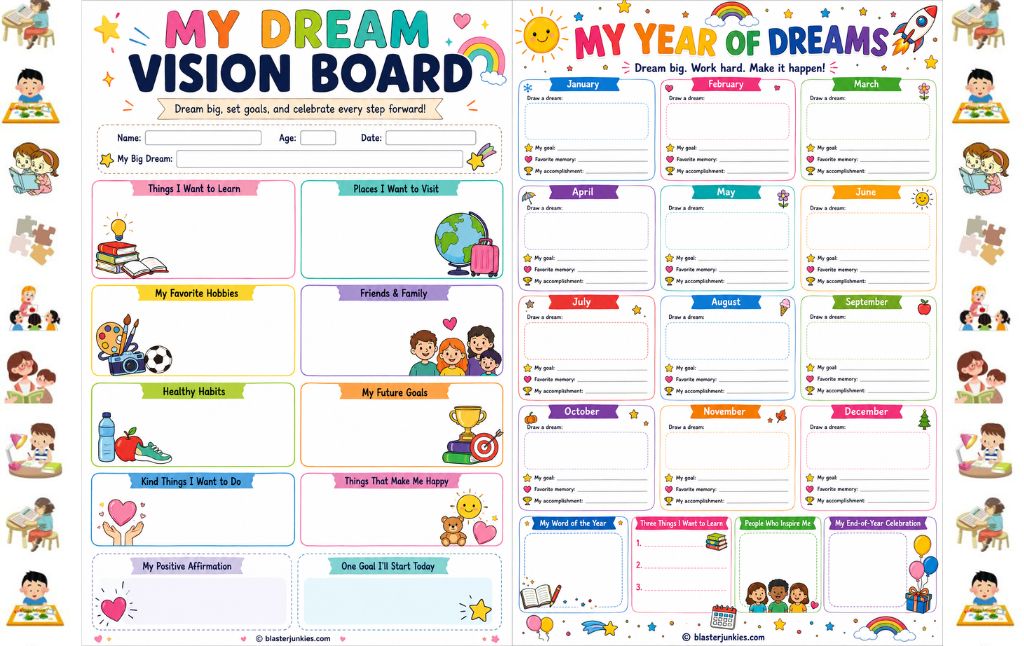
The Kids Vision Board Printable pack provides a highly visual, child friendly resource designed to guide young learners through this exact developmental process.
By using age appropriate categories and colorful layouts, this printable toolkit makes goal setting feel like a creative adventure rather than a rigid set of instructions.
Why Visual Goal Setting Matters for Kids
Traditional goal setting can feel abstract and dry to a young mind. Asking a child to “work harder in school” or “be healthier” lacks the concrete imagery they need to understand and apply these concepts to their daily life.
A visual vision board system changes this dynamic by:
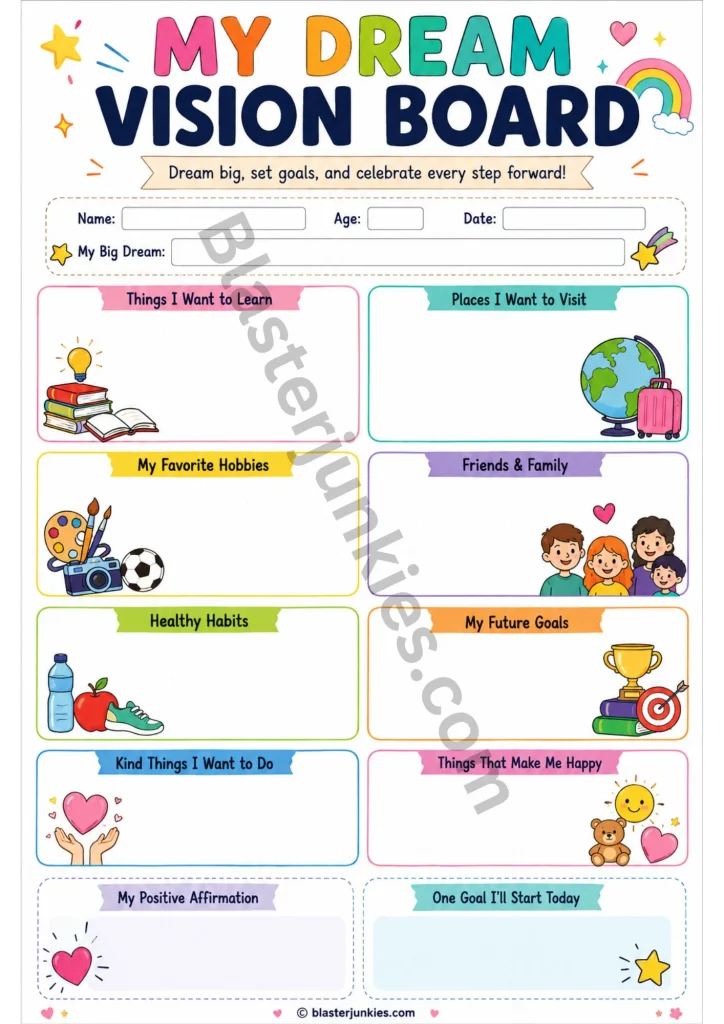
Promoting Ownership: When children choose what to write, draw, or paste into their goal boxes, they take personal ownership of their growth.
Encouraging Balanced Development: Rather than focusing solely on academics or behavior, a comprehensive vision board prompts kids to think about their friendships, creative endeavors, physical health, and emotional well being.
Building Resilience: Breaking down large ambitions into specific, visual steps helps kids understand that big goals are achieved through steady, incremental actions.
Integrating Vision Boards into Your Child’s Daily Routines
Setting a goal on paper is only the first step; keeping that goal alive requires incorporating it into the child’s daily structure.
This vision board system works most effectively when supported by everyday planning tools.
Academic & Personal Growth
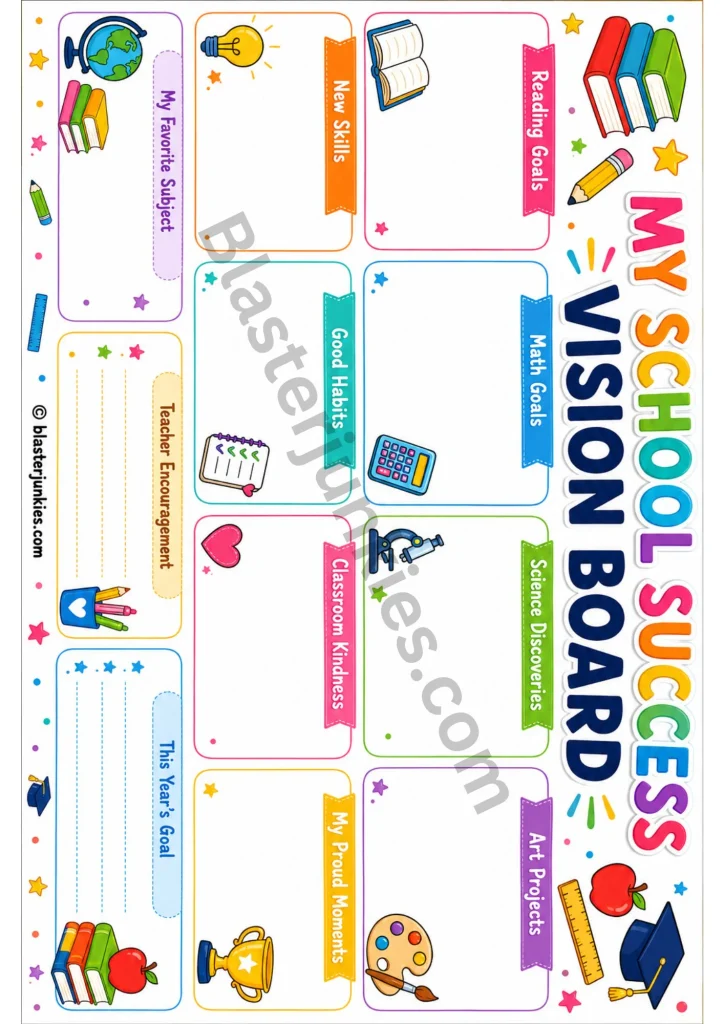
Consider the educational aspects of goal setting, such as reading, math, and science goals.
While a vision board helps kids name these academic targets, practical study tools help them manage the day to day workload.
For instance, school success goals can be managed alongside The Student Assignment Tracker Template, which helps them keep their weekly homework organized.
To keep their personal reading goals exciting, you can gamify their progress with interactive Summer Reading Challenges to build an active, lifelong reading habit.
Developing Healthier Lifestyles
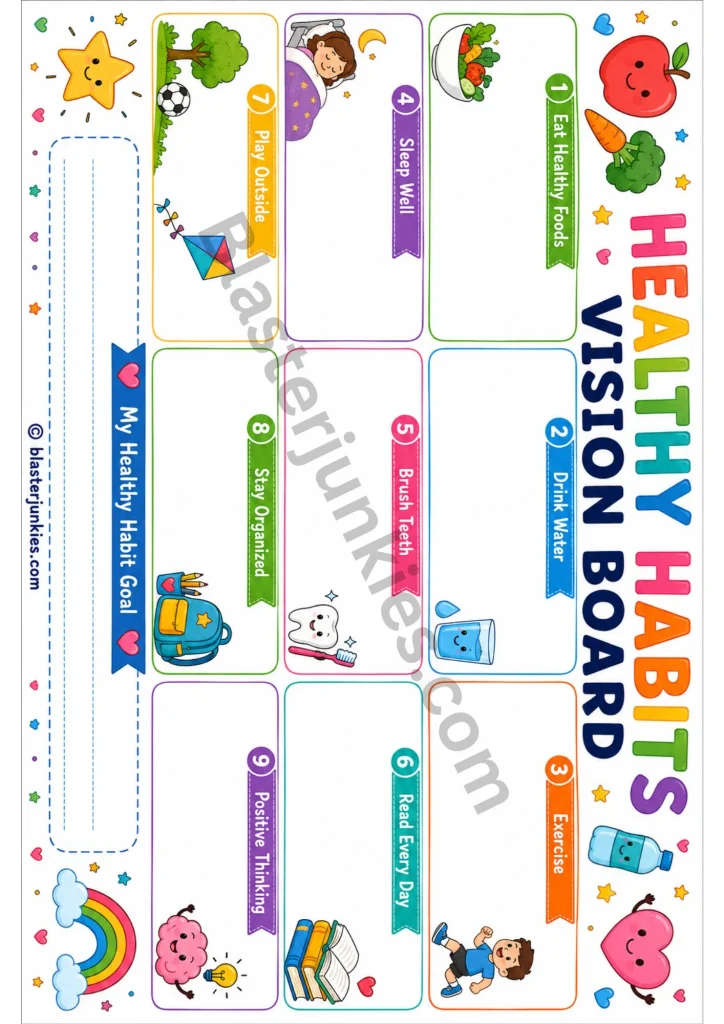
The printable pack contains a dedicated layout for healthy habits, covering categories like physical exercise, healthy foods, and keeping an organized space.
Because these lifestyle targets rely heavily on structure, you can easily pair them with daily visual reminders.
Linking their healthy goals to a Morning Routine Chart for Kids helps kids turn abstract milestones into automatic, independent daily habits.
If one of their specific targets is proper hydration, you can track daily progress using a fun, visual Monthly Water Tracker Printable for Kids to make the physical habit feel rewarding.
Social and Emotional Well Being
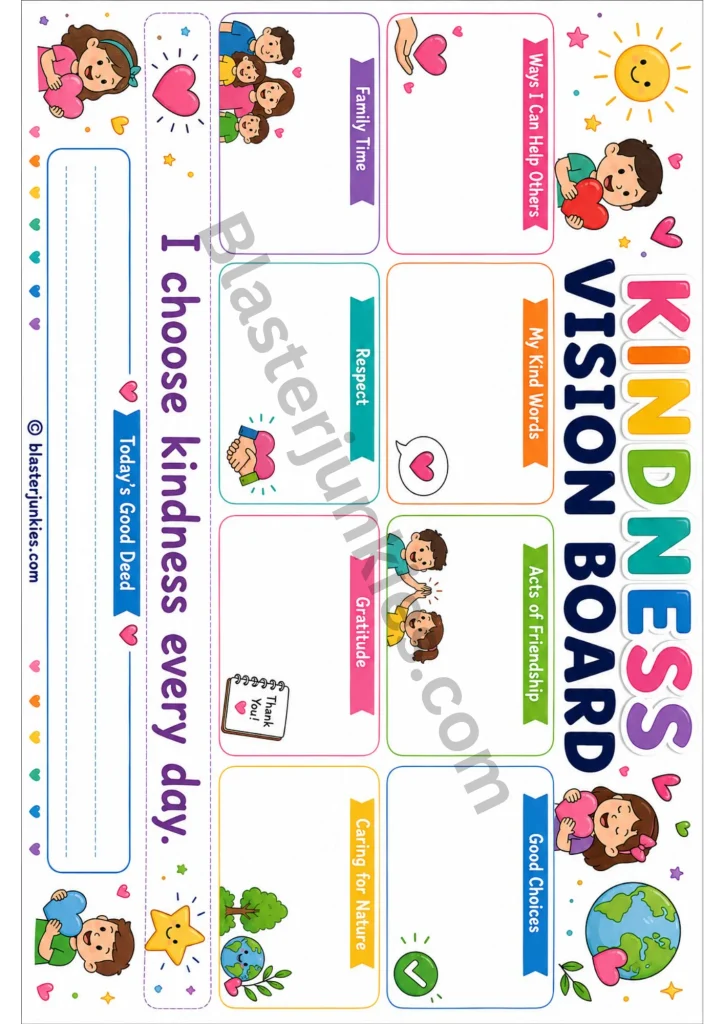
Kindness, gratitude, and emotional self regulation are critical components of a balanced lifestyle.
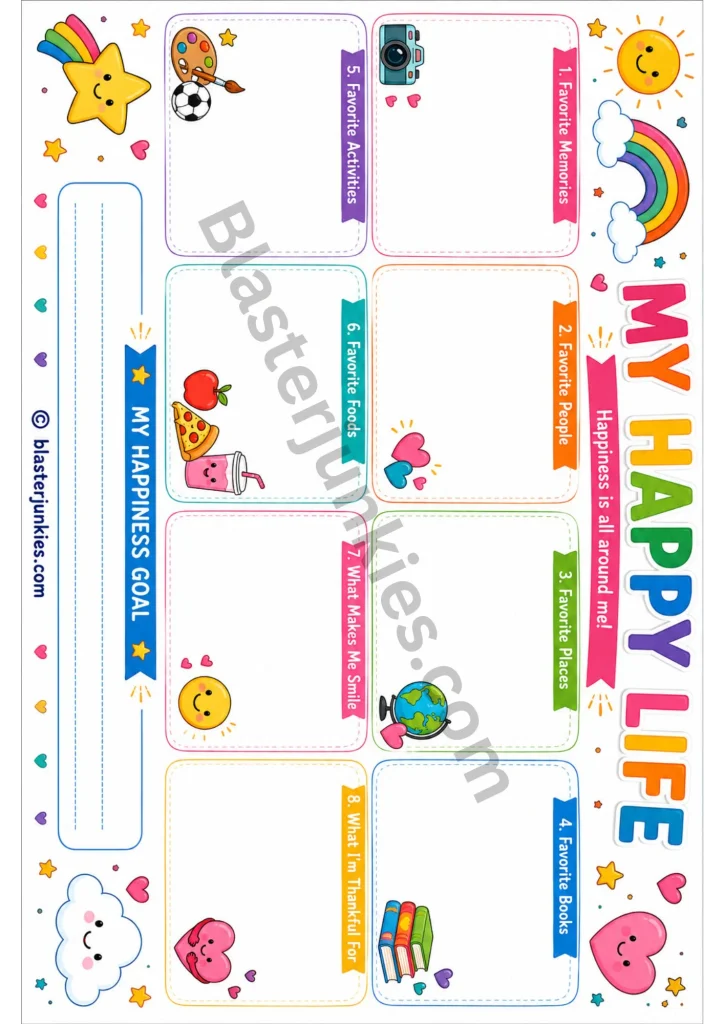
The printables dedicate significant space to tracking kindness goals, positive affirmations, and favorite memories.
You can deepen these social emotional concepts at home by using structured Family Conversation Cards during dinner to prompt conversations about empathy, friendship, and respect.
Furthermore, because emotional awareness is key to positive thinking, pairing happiness goals with a Mood Tracker Printable allows kids to connect their daily feelings with their long term growth.
How to Use the Kids Vision Board System in Your Home or Classroom
To get the most out of this printable pack, consider using these practical strategies to guide children through their goal setting journey:
Step 1: Set a Creative Environment
Gather a few basic supplies before starting: colored pencils, markers, safety scissors, glue sticks, and some child friendly magazines.
Create a relaxed, positive atmosphere where children feel comfortable sharing their thoughts.
Emphasize that there are no “wrong” answers on a vision board it is entirely about what makes them happy and excited.
Step 2: Begin with the General “Big Picture”
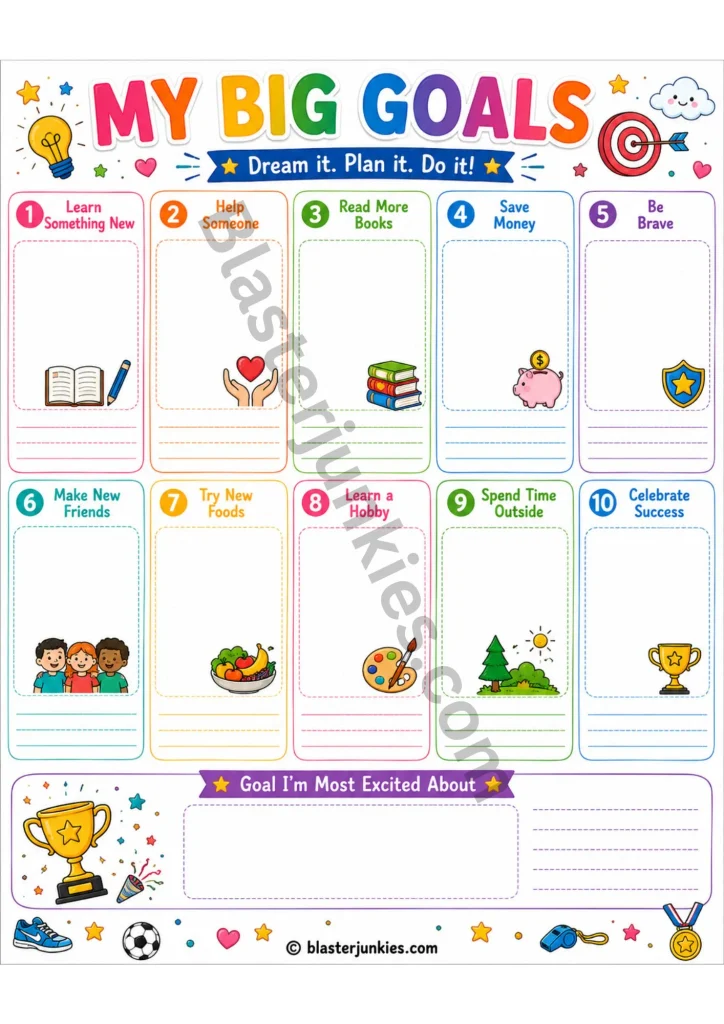
Start with the general dream board or the core goal planner. Ask open ended questions to get their ideas flowing:
- “What is one new skill you would love to learn this year?”
- “What makes you feel happiest when you are at home or school?”
- “What is a kind thing you can do for a classmate or sibling?”
Encourage them to draw their answers or write them in colorful letters inside the designated boxes.
Step 3: Rotate Through Specialized Boards Seasonal Style
To keep the momentum going throughout the year, avoid completing the entire packet in a single afternoon.
Instead, introduce different thematic boards at relevant times:
The School Success Board: Complete this at the start of the autumn school term or after a mid year break to set fresh academic intentions.
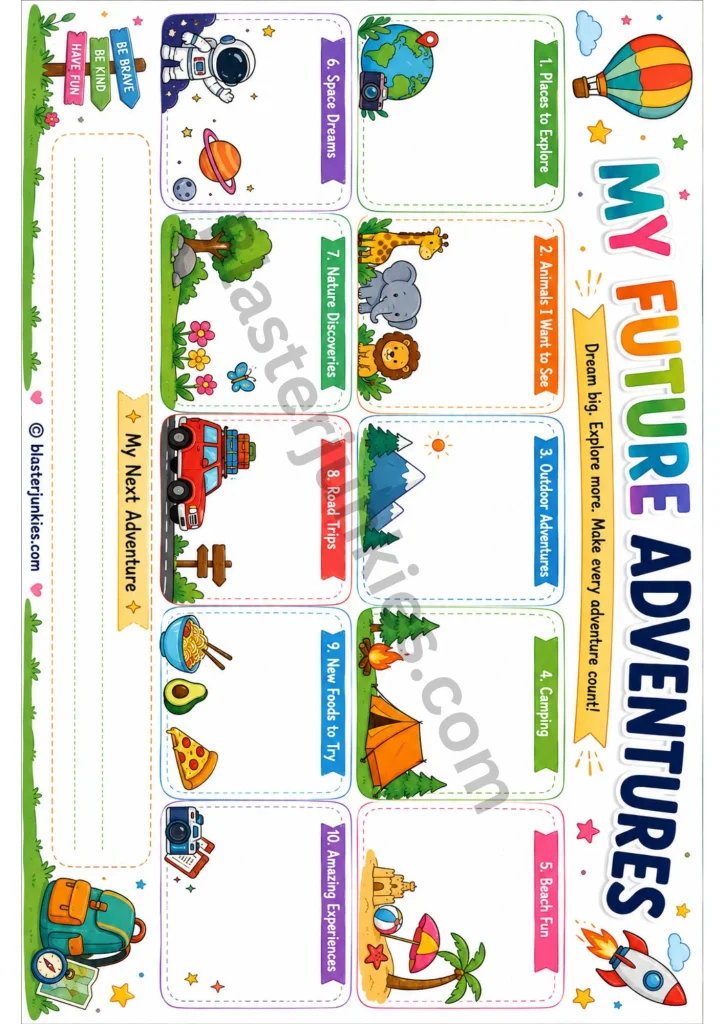
The Future Adventures Board: Use this before summer vacation to plan family camping trips, nature walks, and beach activities.
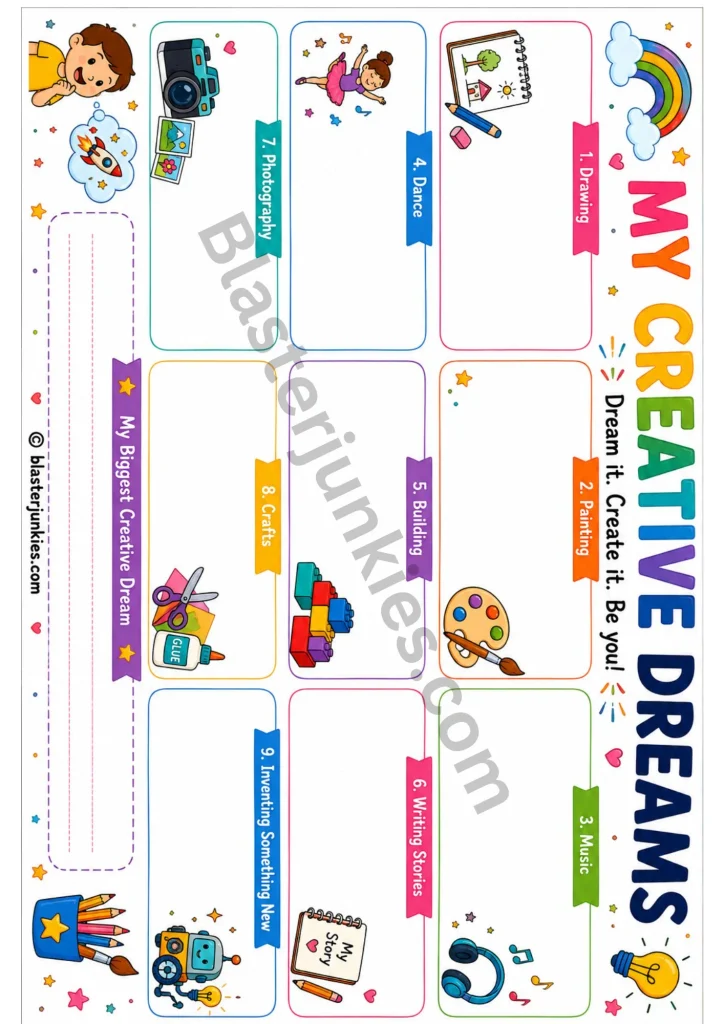
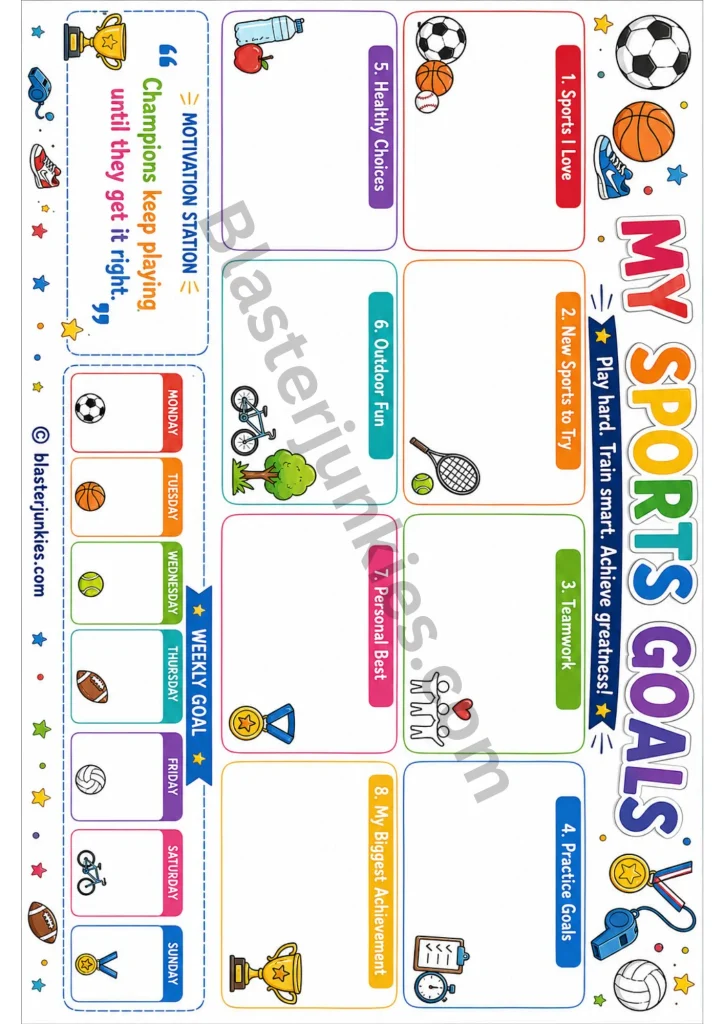
The Creative Dreams and Sports Boards: Fill these out when kids are enrolling in extracurricular art classes, music lessons, or sports teams.
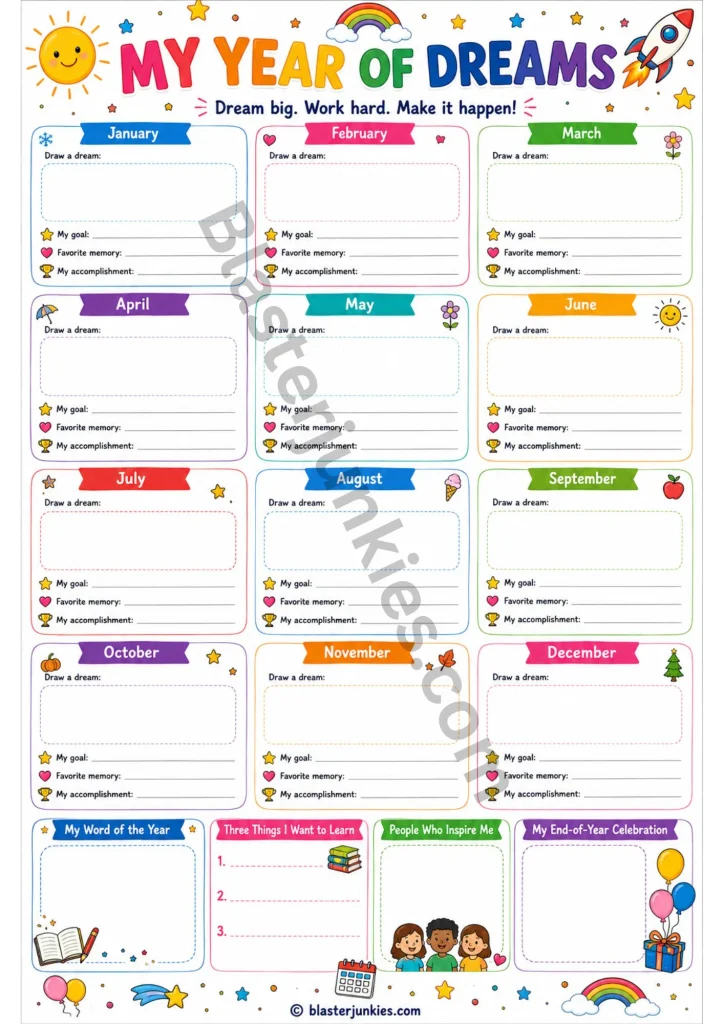
Step 4: Use the Month by Month Reflection Calendar
The month by month “Year of Dreams” page is a fantastic tool for encouraging ongoing reflection.
At the end of each month, sit down with your child to review what they accomplished.
Have them draw their favorite memory from that month and write down one major achievement.
This simple reflection process teaches children that progress is a continuous journey of celebrating small, incremental wins.
Step 5: Display the Boards with Pride
A vision board loses its impact if it is stored away in a drawer.
Hang the finished pages in a prominent location where your child will see them daily, such as on their bedroom wall, the family bulletin board, or the refrigerator.
These daily visual prompts serve as a continuous, quiet reminder of their capabilities and aspirations.
By introducing children to the habit of visual goal setting, you help them build self awareness, personal responsibility, and a positive outlook toward their own potential.