Have you ever wondered why ice melts at different speeds in different liquids? You might think that ice would melt faster in salt water because salt lowers the freezing point, but the actual science behind it is quite surprising!
In this fun and easy experiment, we’ll explore how salt affects the melting process of ice and why it behaves differently in fresh water compared to salt water. It’s a great way to learn about density, temperature, and ocean science—all while watching ice cubes melt!
Let’s dive in and see what happens!
What You’ll Need for This Experiment
- Two cups (at room temperature)
- Ice cubes (same size for fairness)
- Salt
- Tap water
- Blue food coloring (optional, but fun!)
- Paper towels (just in case of spills!)
Step-by-Step Instructions
Step 1: Fill both cups with the same amount of water at room temperature.
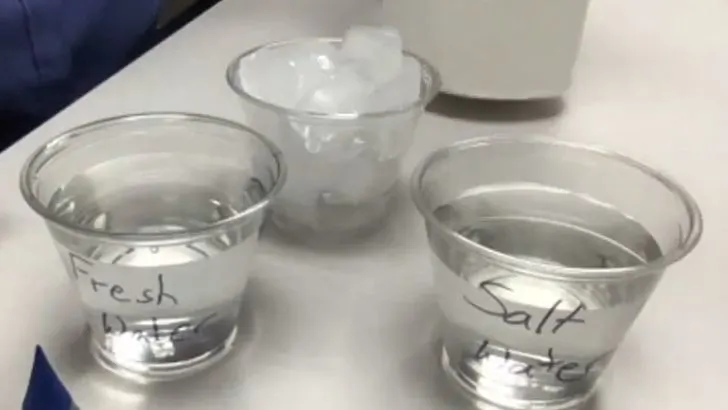
Step 2: Add a few tablespoons of salt to one cup and stir until dissolved.
Step 3: Carefully drop three ice cubes into each cup.
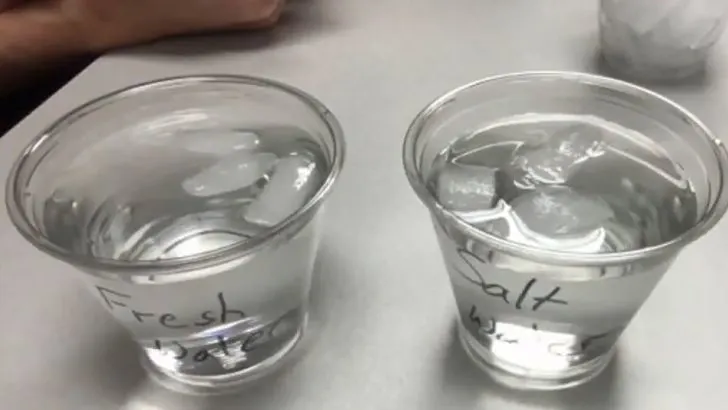
Step 4: Add a couple of drops of blue food coloring on top of each ice cube. (This helps visualize the melting process.)
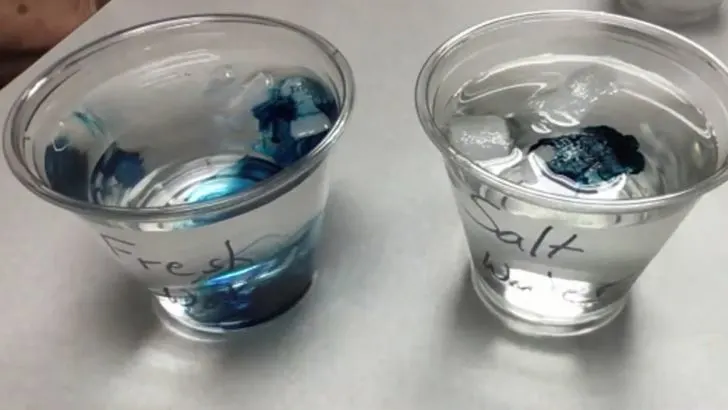
Step 5: Observe! Watch what happens over the next few minutes.
What’s Happening? The Science Behind the Experiment
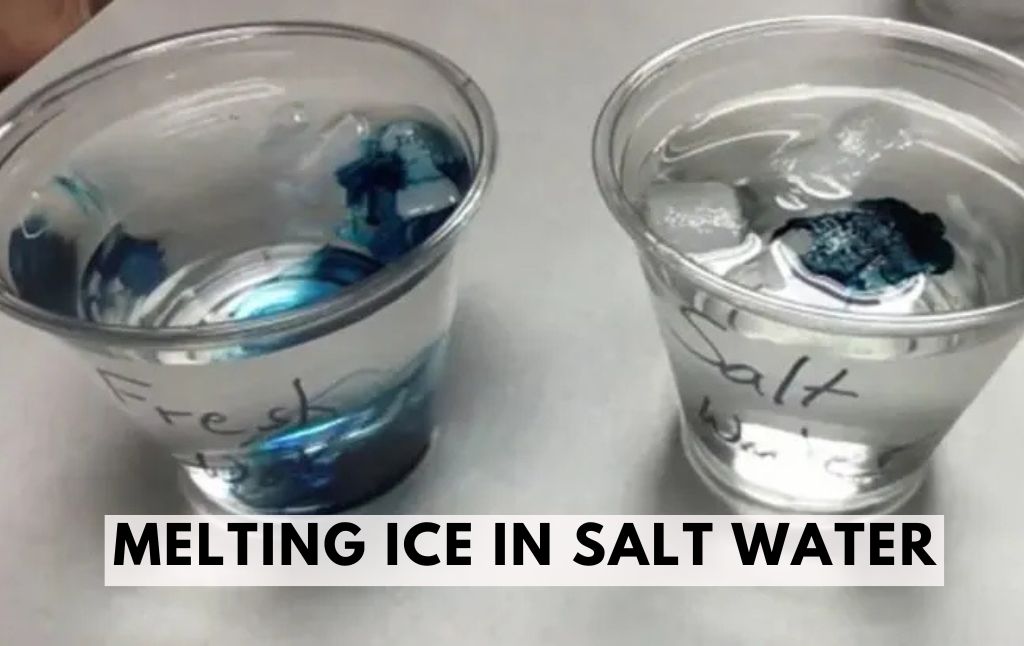
At first, you might think that the ice will melt faster in salt water because salt lowers the freezing point of water. However, something surprising happens:
In tap water: The cold, melted water sinks to the bottom, allowing warmer water to rise and speed up melting.
In salt water: The salty water is denser than fresh water, so the melted ice stays on top instead of mixing. This creates a cold layer that slows melting down!
Why Does This Happen?
Density Difference: Saltwater is heavier than freshwater, so it prevents the cold melted ice water from sinking.
Lack of Mixing: In the tap water cup, warmer water moves around, speeding up melting. In salt water, there’s less movement, so the ice melts slower.
Ocean Connection: This is why icebergs and sea ice melt differently in the ocean compared to lakes and rivers!
Fun Ways to Extend the Experiment!
Try Different Salts: Does table salt work the same as sea salt or rock salt?
Change the Water Temperature: Does warmer water make a bigger difference?
Use Different Liquids: Does juice or soda affect melting speed?
Time It! Use a stopwatch to compare how long the ice takes to melt in each cup.
Final Thoughts
This simple yet fascinating experiment is a great way to introduce kids to concepts like density, temperature, and ocean science. Try it at home and see what you discover!
What surprised you the most? Let us know in the comments!
Kids Activities
Looking for more fun kids activities and other ideas to keep kids engaged, learning, and having fun? Check out these:
Easy Sticky Ice Experiment for Kids – A Fun & Magical Science Activity!
Egg Drop Inertia Science Project: A Fun Physics Experiment for Kids!
Fireworks in a Jar: A Fun and Magical Science Experiment for Kids
Baking Soda and Balloon Experiment – Fun & Easy Science!
How to Make a Pellet Drum | Chinese Rattle Drum
How to Make a Rubber Band-Powered Flying Paper Cup Helicopter
Easy Steps: How to Make Toilet Roll Ninjas – A Fun DIY Craft for Kids!