Establishing financial discipline is rarely about finding a sudden windfall; instead, it is built on the foundation of consistent, daily choices.
However, without a structured way to visualize your progress, it is easy to lose momentum.
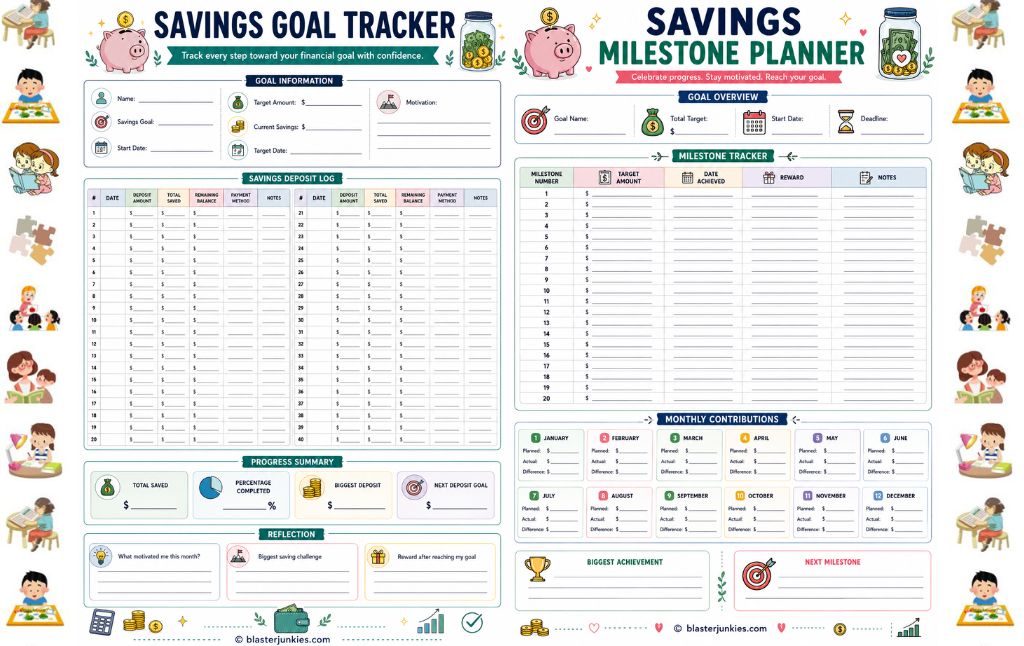
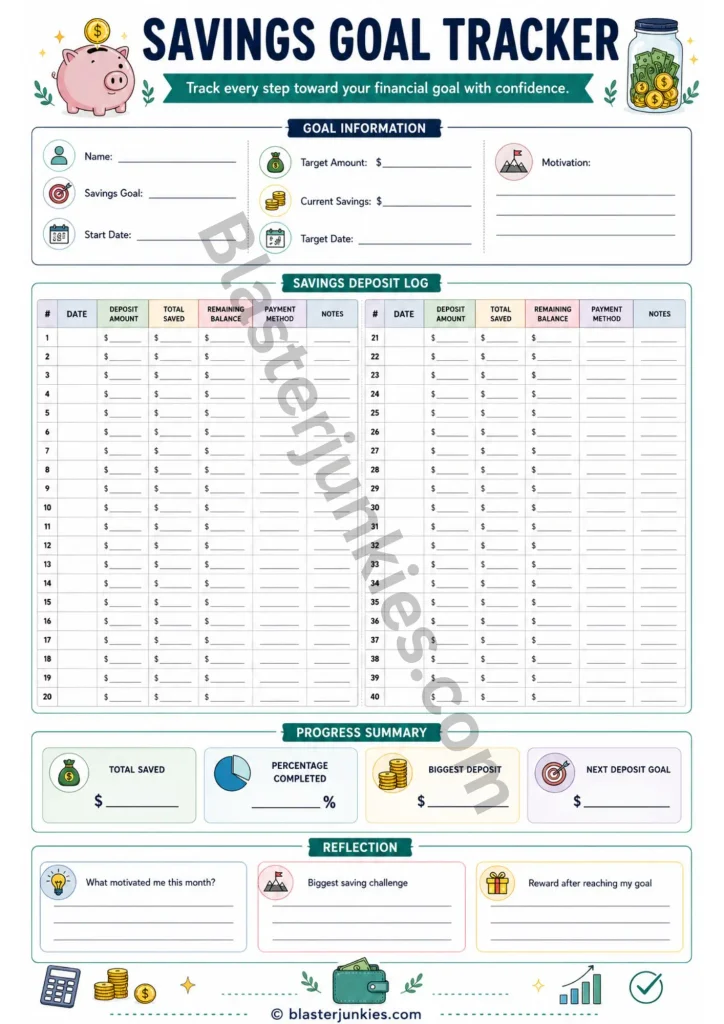
The Savings Goal Tracker printable pack provides a practical, visual system designed to help you map, track, and achieve your financial milestones with clarity.
By breaking down your financial goals into structured deposit logs, milestone sheets, and specialized category trackers, this toolkit simplifies money management.
Aligning Savings Trackers with Broader Household Goals
Saving money is most effective when it is integrated into your daily habits and lifestyle planning.
Rather than treating savings as an isolated chore, you can connect your financial goals to practical home organization and travel systems.
For instance, if you are actively looking for extra cash to deposit into your logs, decluttering is an excellent starting point. Selling unused household items is a classic trick to boost your savings.
Pairing your savings sheet with a Declutter Challenge Printable can help you identify high value clutter to flip for quick cash, which you can then immediately record in your contribution log.
If you need a framework for finding small, daily opportunities to cut back on spending, using a companion tool like the Budget Savings Challenge helps establish baseline habits (such as brewing coffee at home, packing lunches, or utilizing coupon codes) that directly fuel your deposit logs.
Different pages in the tracker pack target specific real-life needs, making it easy to coordinate with other planning resources:
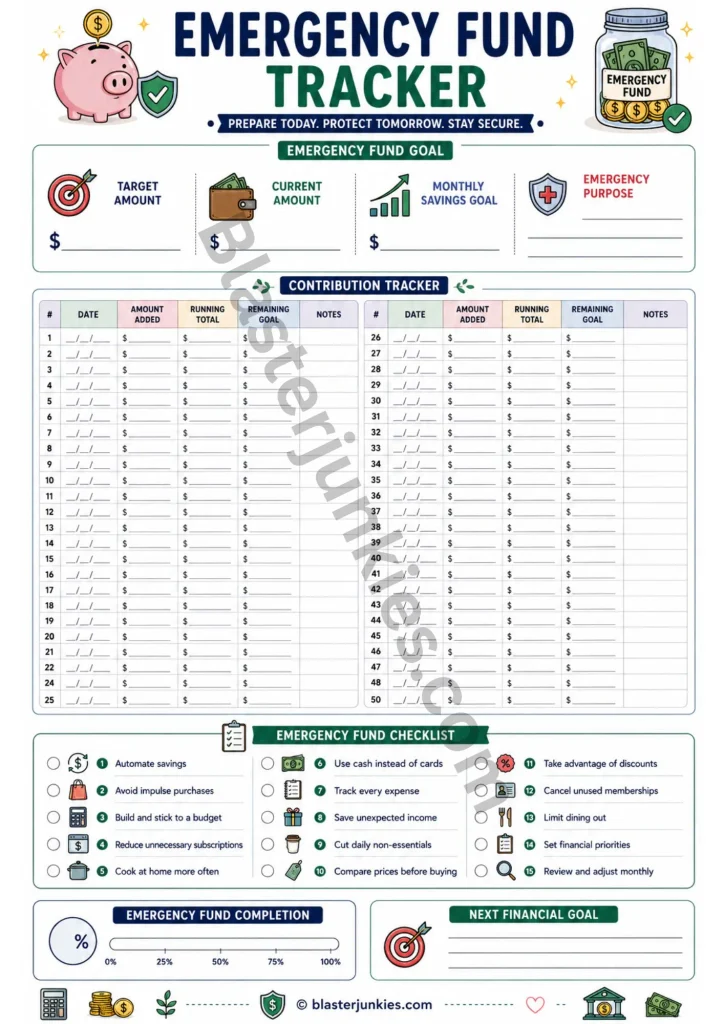
Emergency Reserves: If you are actively building your emergency fund, it is highly practical to coordinate your cash reserves with tangible emergency preparedness.
Keeping your financial safety net intact goes hand in hand with stocking essential physical survival resources, which you can easily manage using a Home Emergency Supply List.
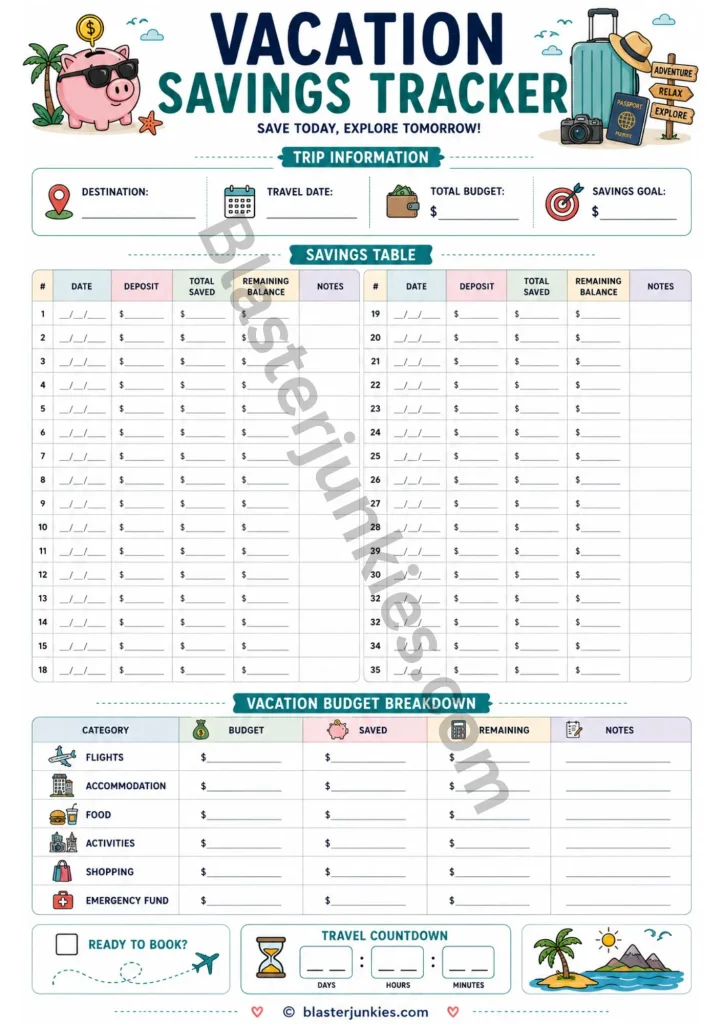
Travel Goals: For travel enthusiasts using the specialized vacation tracker, matching your financial budget with strategic planning makes the trip much more relaxing.
Before you book flights or build out your spending logs, map your actual itinerary requirements and coordinate your luggage using a Vacation Packing List Checklist alongside a comprehensive Vacation Expense Tracker.
How to Use the Savings Goal Tracker System Successfully
To make the most of this printable set, consider using a step by step approach to move from setting targets to completing challenges:
1. Establish Your Motivation and Targets
At the top of the general tracking sheets, define your “Why.” Writing down your specific motivation (such as “peace of mind,” “buying a home,” or “family trip”) serves as a mental anchor when you face the temptation to spend impulsively.
Clearly write down your target amount, current savings, and target completion date.
2. Map Out Milestone Progress
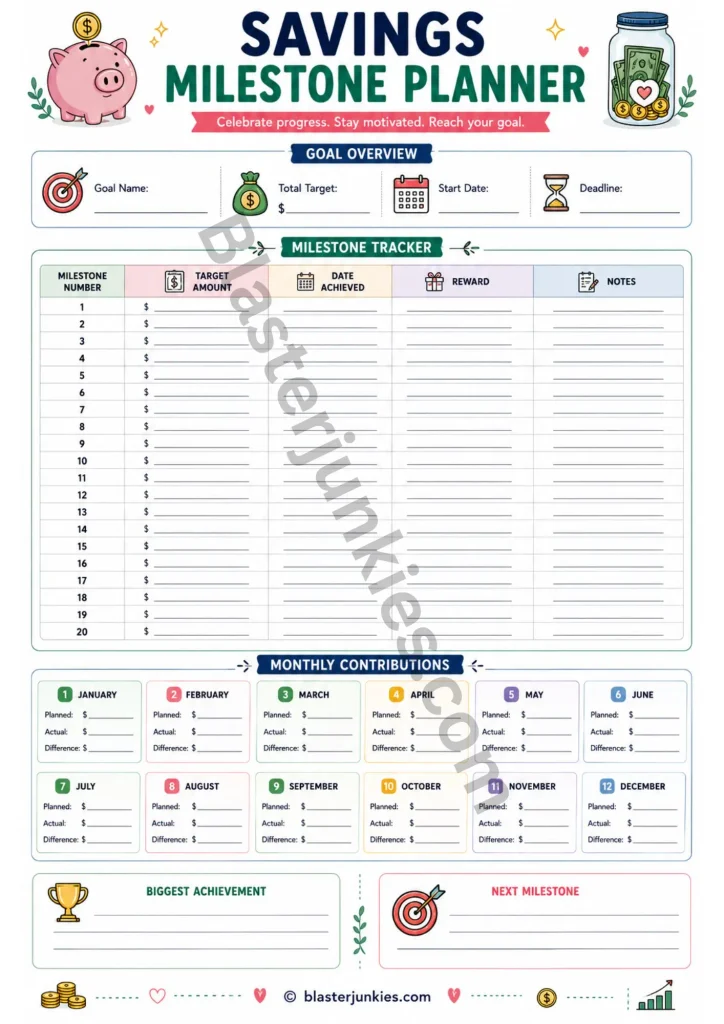
Big goals can feel intimidating. Use the milestone planner to break a larger sum into 20 manageable checkpoints.
Reaching small, bite sized milestones (e.g., saving your first $100 or $500) and checking them off builds psychological momentum and prevents you from feeling overwhelmed.
3. Log Every Contribution
Consistently recording every deposit no matter how small reinforces positive financial habits.
The detailed contribution tables allow you to track the date, deposit amount, payment method, and running balance.
4. Categorize Your Savings Pools
Rather than keeping all your savings in a single, undefined bucket, use the specialized pages to segment your funds:
The Emergency Fund Page: Focus on building a safety net equal to 3 to 6 months of living expenses, using the built-in emergency checklist to find extra areas to cut back.
The Vacation Savings Page: Allocate specific budgets for accommodation, flights, food, and activities while watching your travel countdown timer decrease.
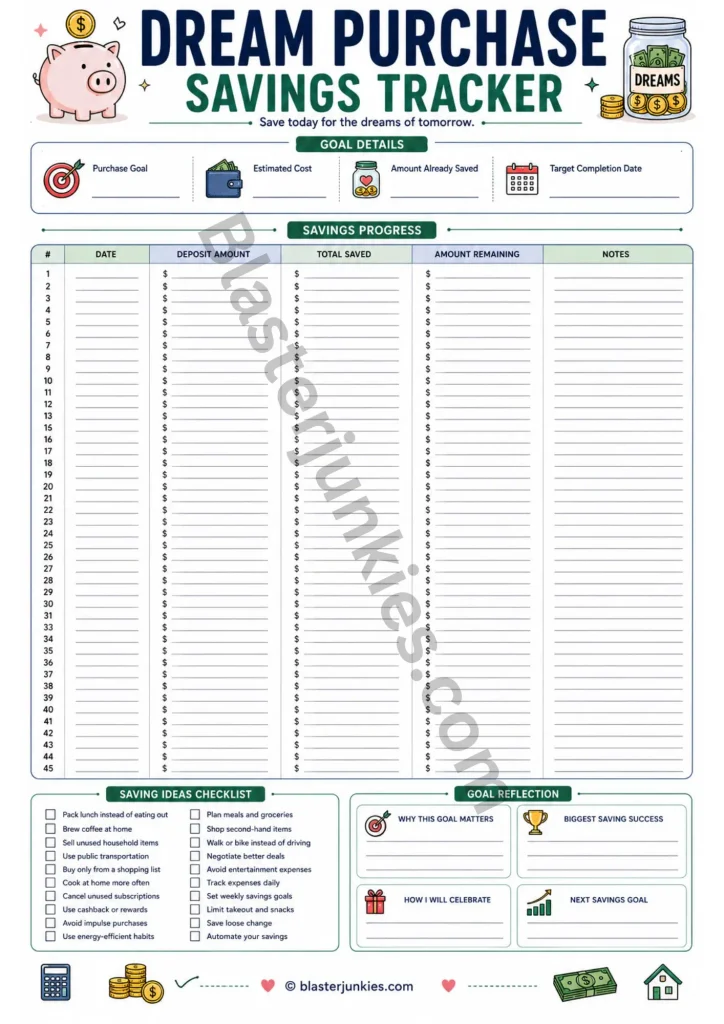
The Dream Purchase Page: Save deliberately for non essential luxury items to avoid taking on unnecessary high interest debt.
5. Reflect on Your Challenges and Wins
Each tracking page features reflection boxes asking you to evaluate what motivated you, identify your biggest saving challenge, and determine how you will celebrate.
Taking time to review your habits at the end of each month is crucial for staying consistent and adjusting your strategies moving forward.