Ever stood in the produce aisle wondering why strawberries taste incredible in June but bland in December?
That’s the magic of eating with the seasons and it’s a concept kids pick up surprisingly fast when you give them the right visual tools.
A Seasonal Produce Chart takes the guesswork out of “what’s actually in season right now” and turns it into an easy, colorful reference the whole family can use.
This printable pack is a full library of seasonal food charts, covering everything from a simple four seasons overview to month by month calendars, color coded guides, and storage tips.
Below, we’ll look at what the set includes as a whole, why it’s such a great learning tool for kids, and how to bring it into your home and kitchen routines.
What’s Inside the Printable
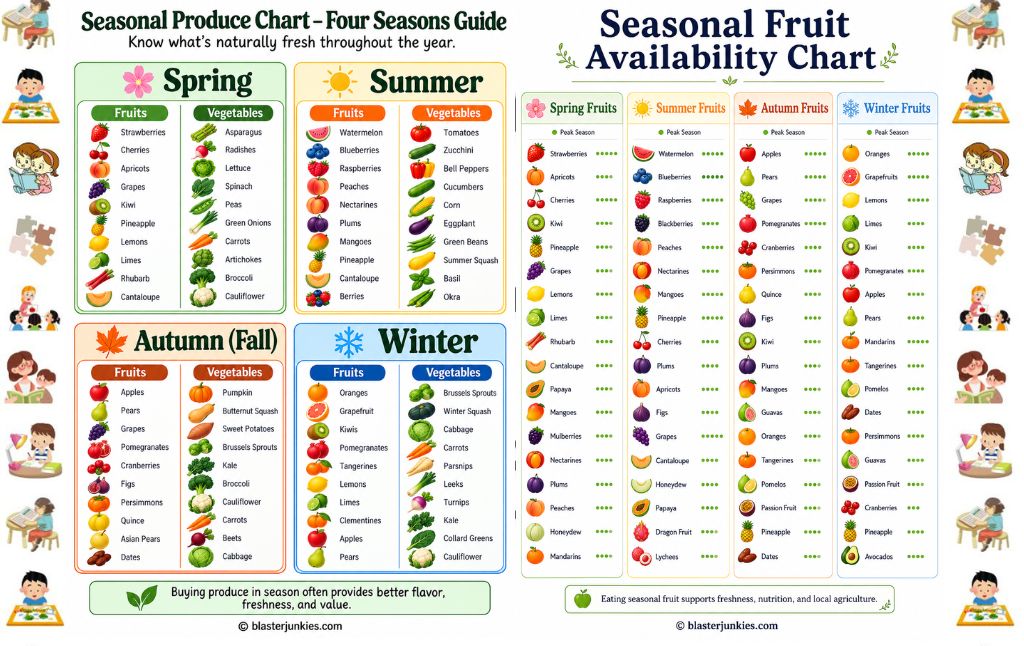
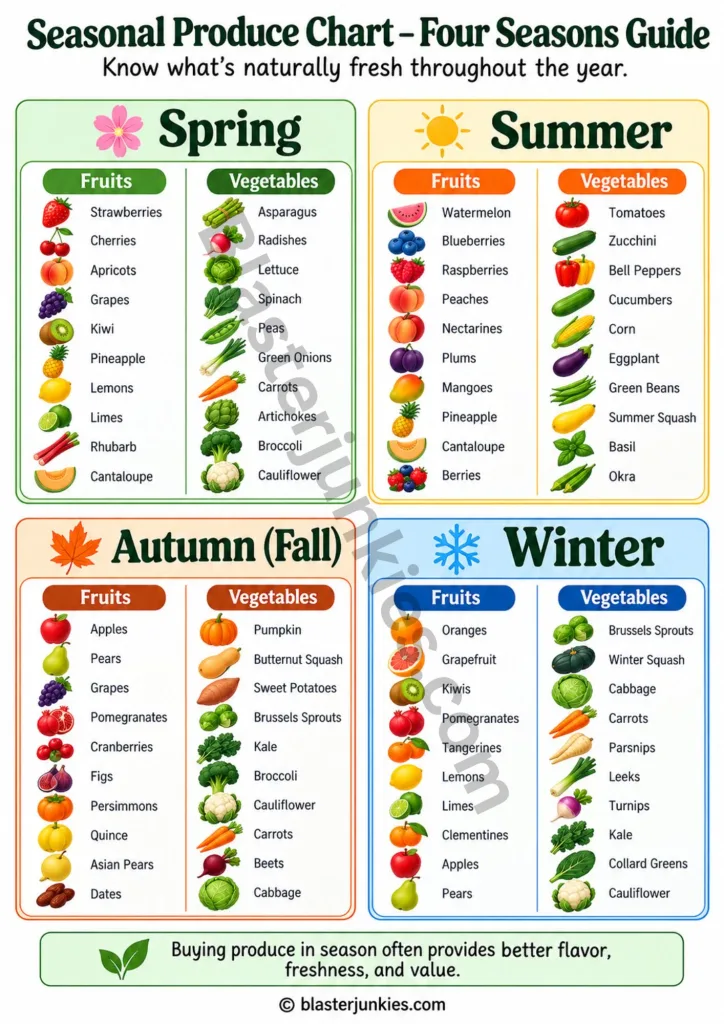
The collection starts with a Seasonal Produce Chart Four Seasons Guide, which lays out fruits and vegetables for Spring, Summer, Autumn, and Winter side by side, making it easy to see at a glance what’s naturally fresh at any point in the year.
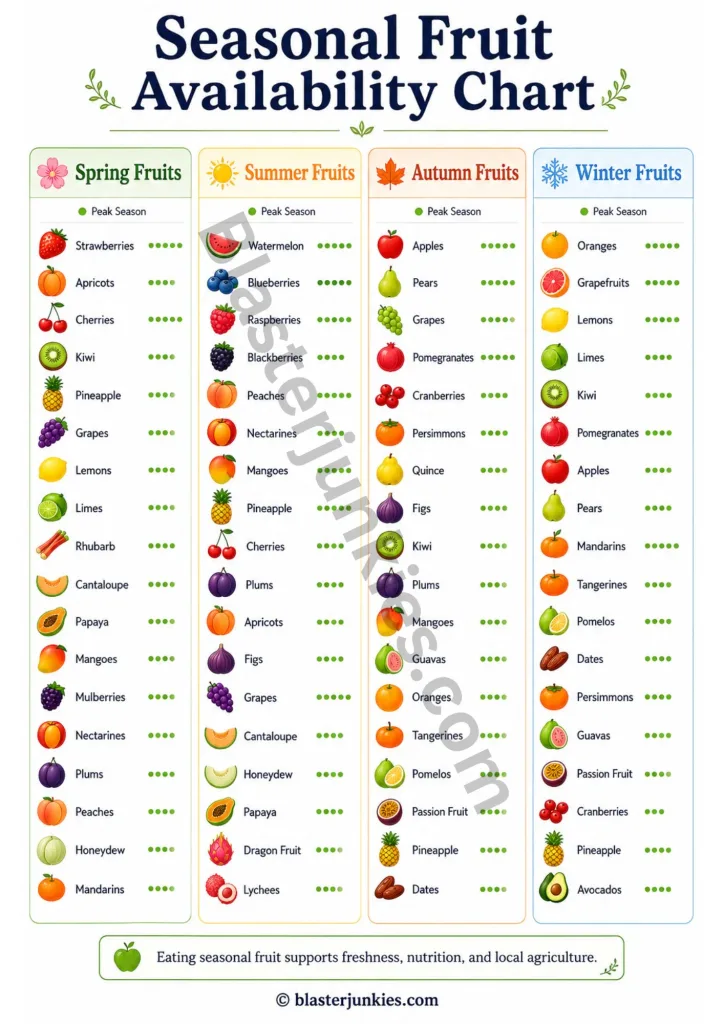
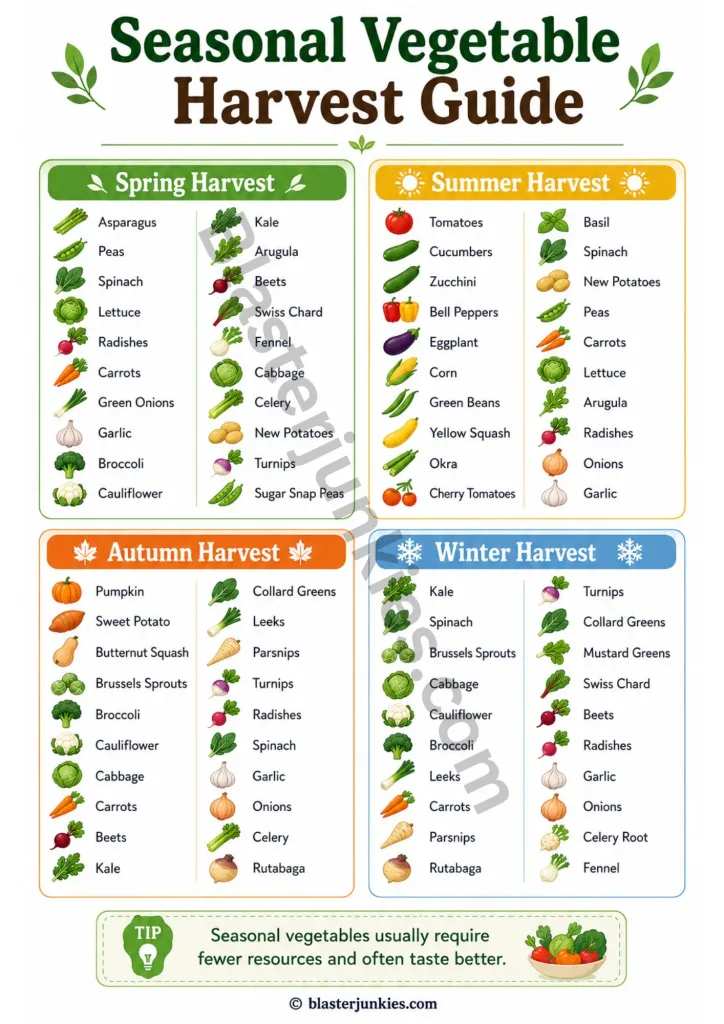
Building on that, the Seasonal Fruit Availability Chart goes deeper into fruit specifically, using a dot rating system to show peak season intensity for dozens of fruits, while the Seasonal Vegetable Harvest Guide does the same for vegetables, organized by harvest season.
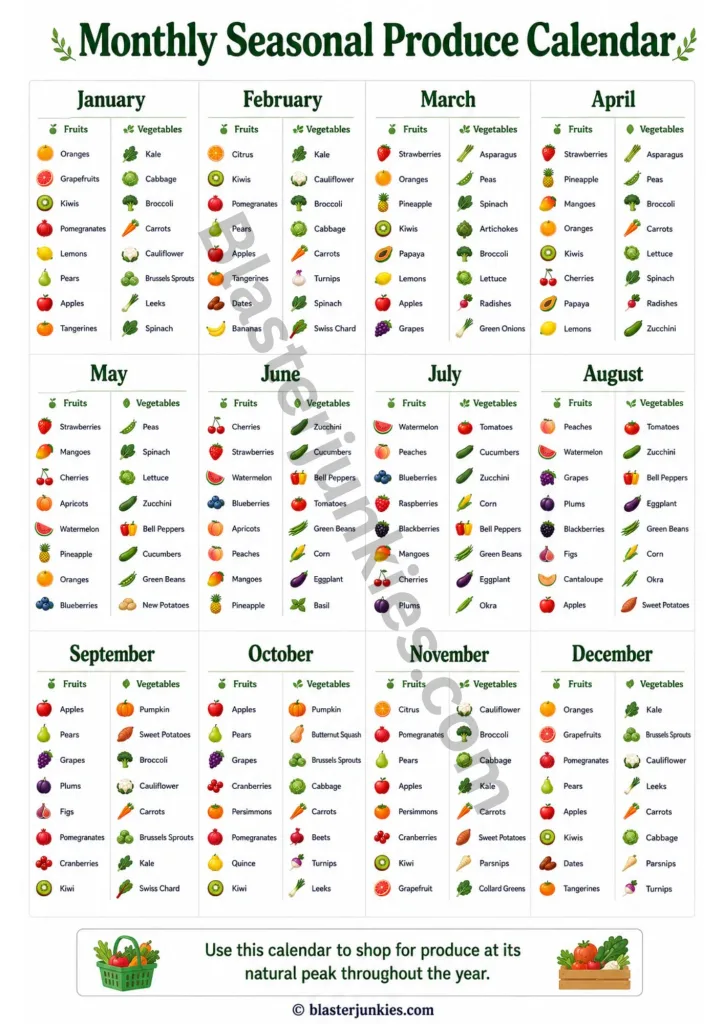
For households that like extra precision, the Monthly Seasonal Produce Calendar breaks the entire year down month by month January through December listing which fruits and vegetables are in season for each one.
There’s also a Farmer’s Market Seasonal Produce Guide, organized into fresh fruits, leafy greens, root vegetables, and garden vegetables with simple checkboxes, plus farmer’s market shopping tips like choosing vibrant colors and checking firmness.
The Color Coded Seasonal Produce Guide takes a completely different visual approach, sorting produce by color green, red, orange, yellow, purple, and white with season icons for each item, which makes it a fantastic tool for teaching kids about eating a “rainbow” of foods.
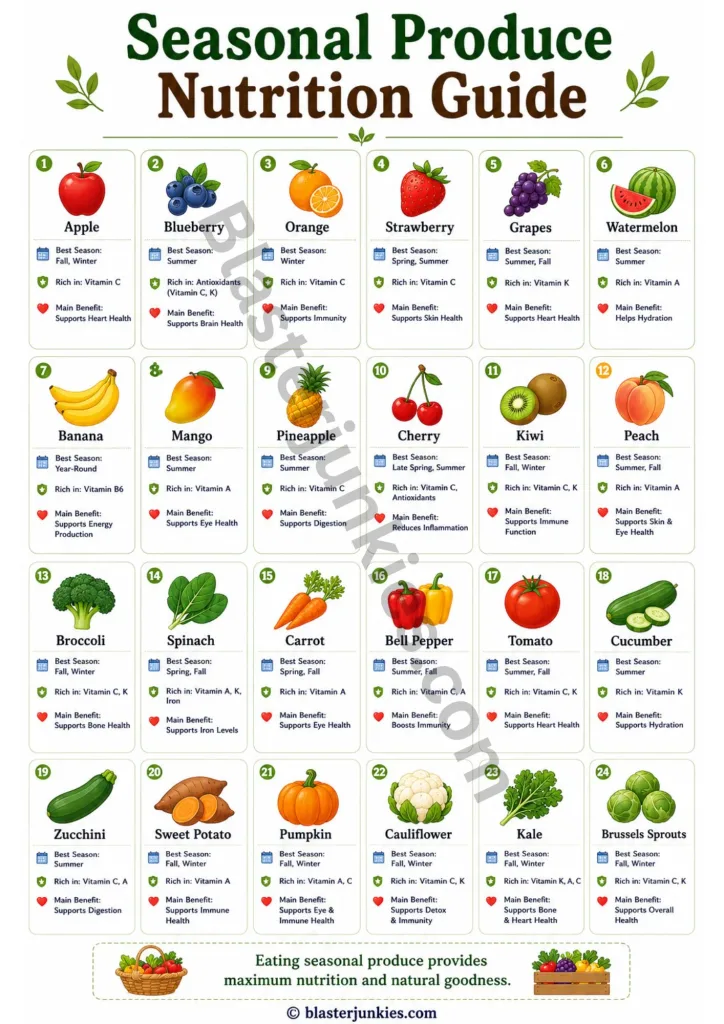
Rounding out the practical side, the Seasonal Produce Storage Chart tells you where to store each item, how long it lasts, and storage tips, while the Seasonal Produce Nutrition Guide pairs each fruit or vegetable with its best season, key nutrients, and main health benefit.
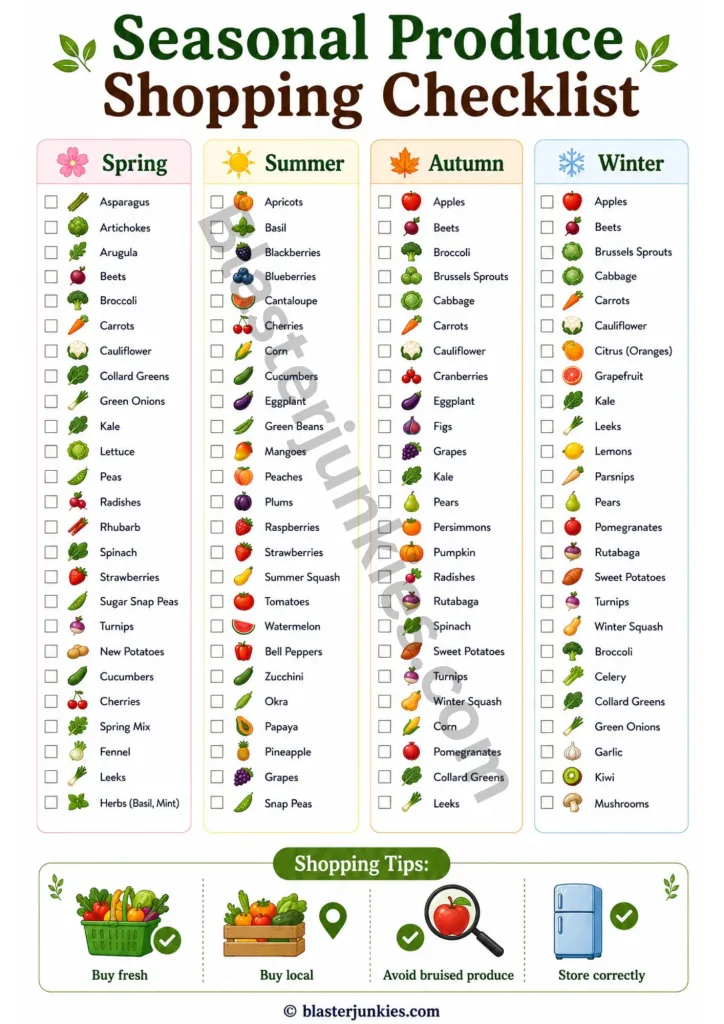
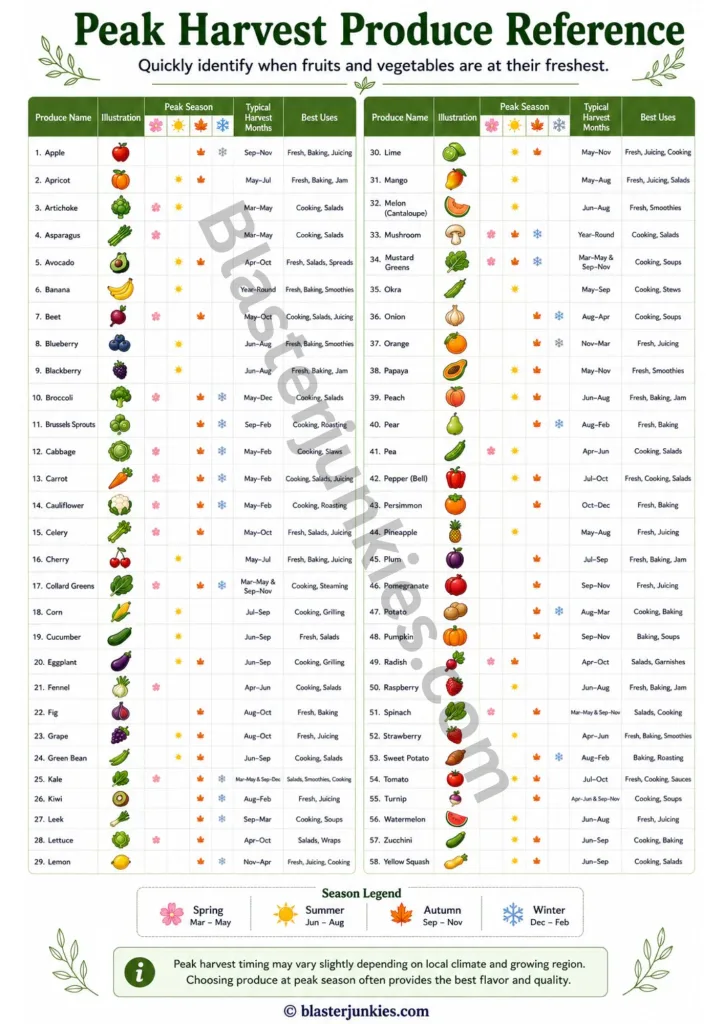
Finally, a Seasonal Produce Shopping Checklist and a Peak Harvest Produce Reference chart round things out with checkbox lists and a detailed peak season and best use reference table.
Together, these sheets give you everything from a quick glance at what’s fresh right now to a deep, functional reference for shopping, storing, and understanding seasonal food.
Why This Printable Is a Great Kids’ Activity
Seasonal eating might sound like a grown up nutrition topic, but this printable set is actually a wonderful, visual way to teach kids about food, science, and healthy habits without it ever feeling like a lecture.
It builds food literacy and vocabulary. With dozens of fruits and vegetables illustrated and labeled, kids naturally pick up new words persimmon, rutabaga, jicama while also learning to recognize produce they may not have tried yet.
It’s a natural complement to hands on food projects like a Farmers Market Shopping List, where kids can match what they see on the chart to what’s actually on the table.
It introduces basic science concepts. Explaining why strawberries are sweetest in spring and squash is best in fall touches on real botany and agriculture growing seasons, climate, and harvest cycles.
It’s an easy, screen free way to fold a little science into everyday life.
It teaches color and category recognition. The Color Coded Seasonal Produce Guide is especially good for younger kids, who can sort produce by color rather than by name.
This is a great low pressure activity for children still building reading skills, similar to how Summer Maze Printable for Kids activities keep young learners engaged through pattern and visual recognition rather than text alone.
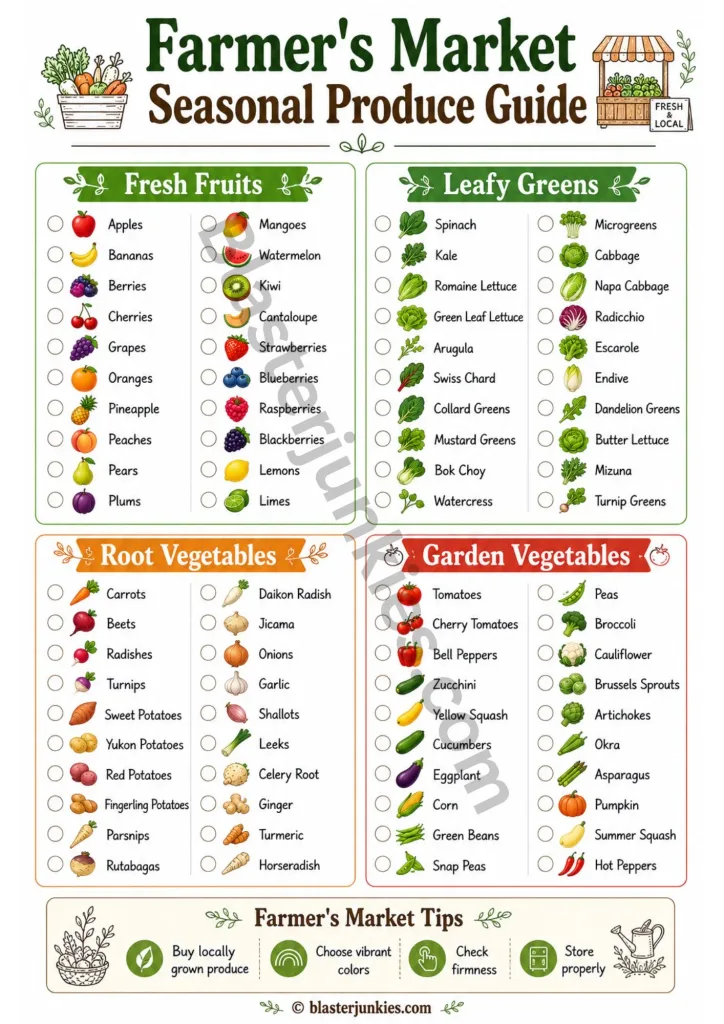
It connects to real kitchen and garden projects. If your family grows any of its own food, this chart pairs naturally with a Garden Harvest Tracker to compare what’s growing in your own backyard against what’s in season more broadly.
And once the harvest comes in, a Canning Labels Printable makes a great next step for preserving the extras.
Ways to Use the Printable With Kids
1. Play a seasonal sorting game. Print the Four Seasons Guide, cut apart a set of fruit and vegetable images (or draw your own), and have kids sort them into the correct season. It’s a simple, hands on way to reinforce the concept before a grocery trip.
2. Turn grocery shopping into a scavenger hunt. Bring the Monthly Seasonal Produce Calendar or the Shopping Checklist along to the store and let kids check off items as you find them.
It adds a game like element to an otherwise routine errand.
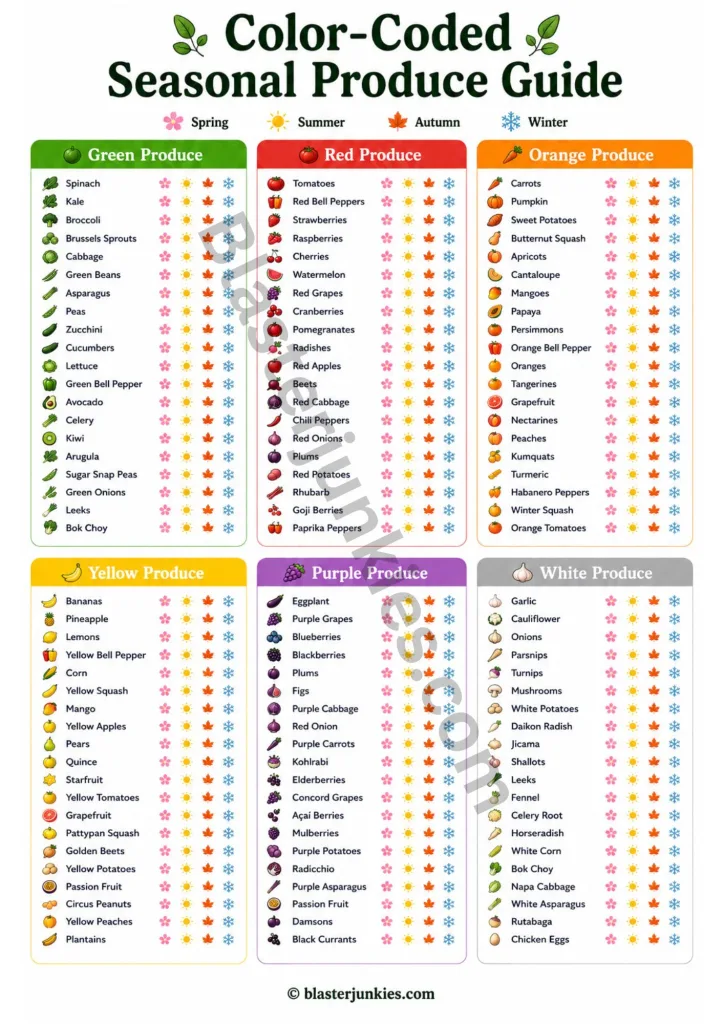
3. Build a “rainbow plate” challenge. Using the Color Coded Seasonal Produce Guide, challenge kids to help build a meal or snack plate that includes as many colors as possible.
It’s a fun, visual way to teach balanced eating without turning it into a lecture about nutrition.
4. Explore the nutrition guide together. Older kids can enjoy flipping through the Seasonal Produce Nutrition Guide to learn which foods support which parts of the body “this one’s good for your eyes,” “this one helps your immune system.”
It’s an easy, kid friendly entry point into basic health education.
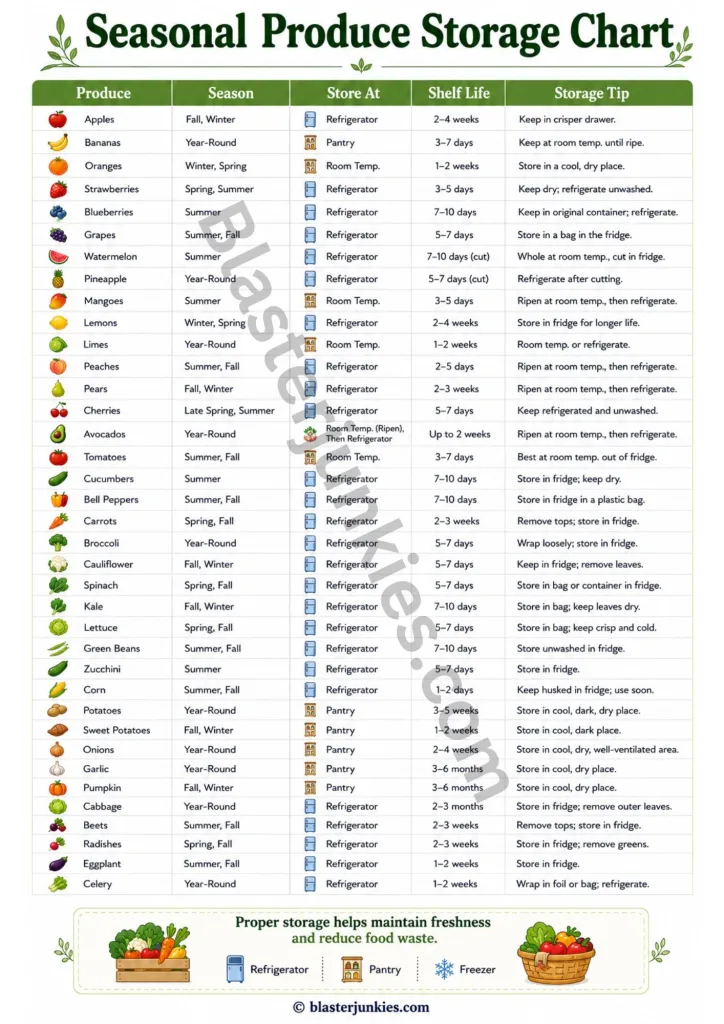
5. Practice storage skills. After a grocery trip, use the Seasonal Produce Storage Chart to decide together where each item belongs fridge, pantry, or freezer.
It’s a great life skill that also ties in nicely with a Pantry Inventory Printable or Freezer Inventory Sheet if your household already tracks food that way.
6. Plan a seasonal cooking day. Pick a season, choose a few in season fruits or vegetables from the chart, and cook or bake something together.
It’s a great excuse for a weekend kitchen project, and pairs nicely with festive activities like an Ice Cream Party Printables day using fresh summer fruit, or a cozy fall baking session using pumpkin and apples.
Tips for Getting the Most Out of the Printable
Print the Four Seasons Guide and the Monthly Calendar on cardstock and keep them taped inside a kitchen cabinet for quick reference.
Update your “in season” chart on the fridge each month using the Monthly Seasonal Produce Calendar, so kids get used to checking it as part of a routine.
Use the Peak Harvest Produce Reference chart for more advanced learners who are ready to explore harvest months and best culinary uses in more detail.
Combine several sheets for a themed unit for example, pair the Color Coded Guide with a rainbow-fruit taste test for a full sensory learning day.