If your pantry shelves have ever hidden three half used bags of flour, two expired boxes of pasta, and a mystery can with no label, you already know why a good inventory system matters.
A Pantry Inventory Printable takes the guesswork out of “what do we actually have” and turns it into a simple, visual system anyone in the family can follow including kids.
This printable pack isn’t just one sheet; it’s a full toolkit of trackers designed to cover every angle of pantry management, from a general checklist to expiry tracking, restocking budgets, shelf by shelf breakdowns, and rotation logs.
Below, we’ll look at what the set includes as a whole, why it’s a genuinely great tool to use with children, and how to bring it into your home in a way that builds real-life organizational skills.
What’s Inside the Printable
The set is built around a core idea: every pantry needs more than one kind of list.
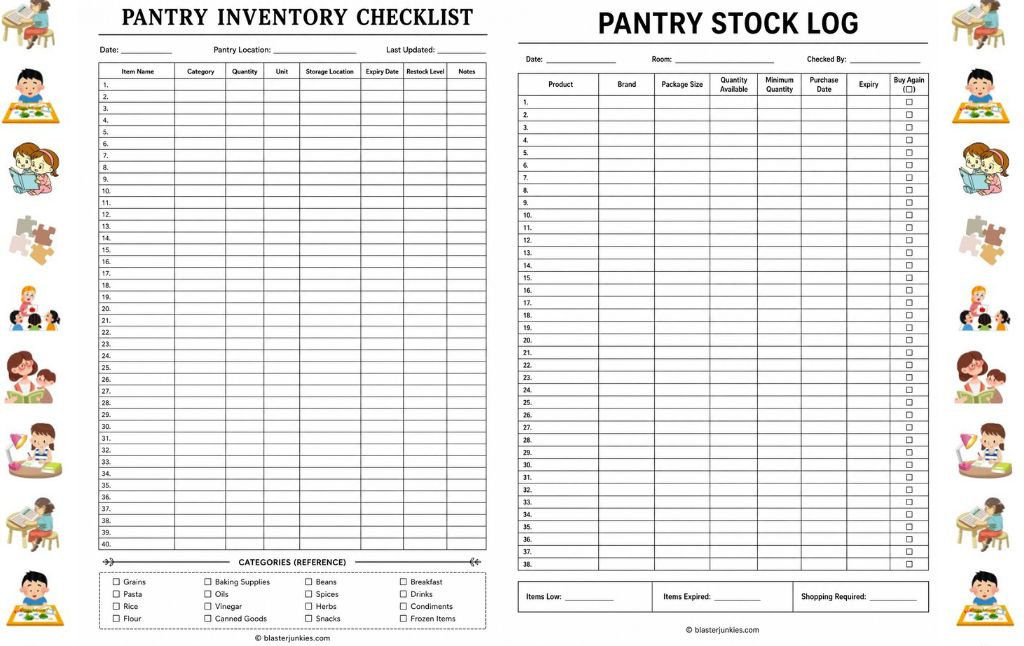
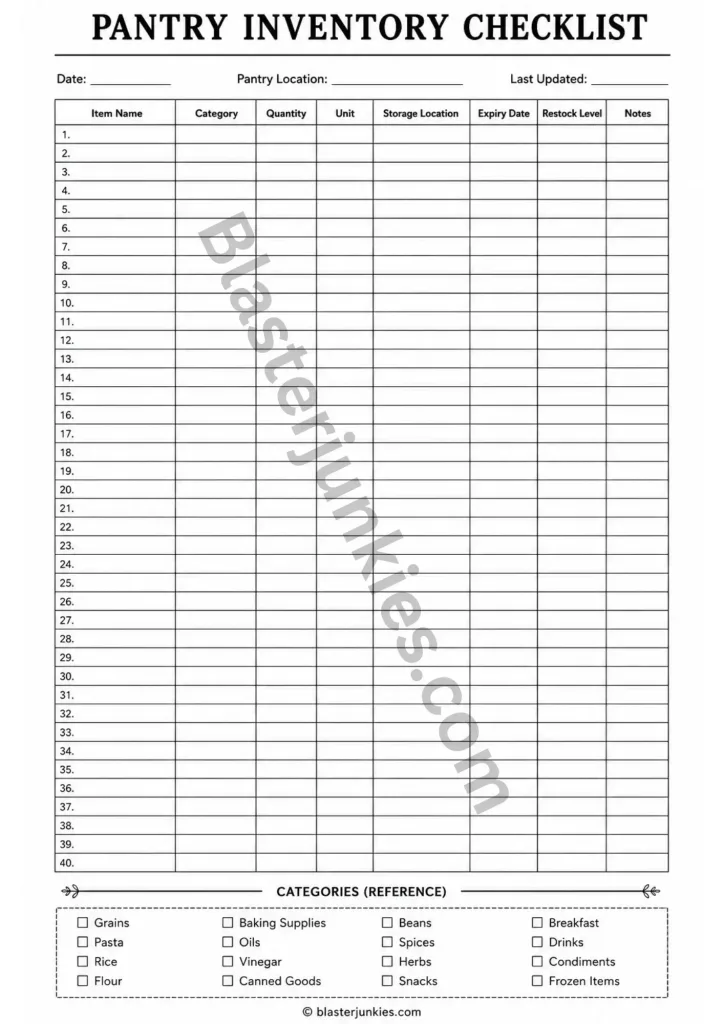
A general Pantry Inventory Checklist gives you rows for item name, category, quantity, unit, storage location, expiry date, and restock level, plus a handy reference box of common categories like grains, spices, canned goods, and snacks.
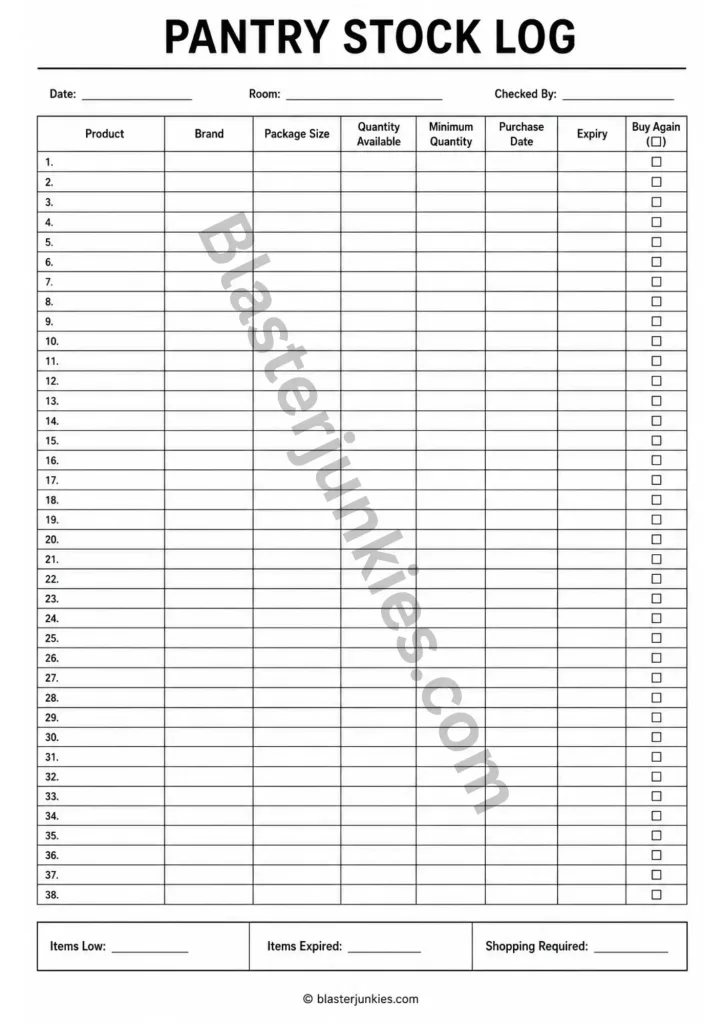
A Pantry Stock Log takes a slightly different angle, tracking brand, package size, minimum quantity, and a “buy again” checkbox perfect for households that like to compare products.
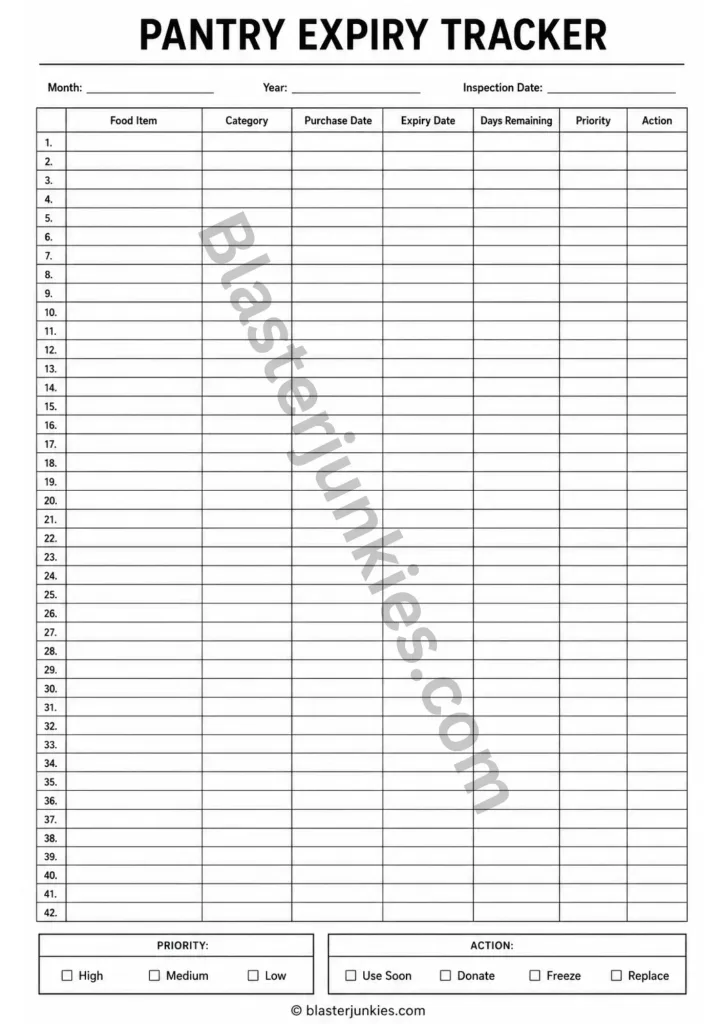
For food safety, the Pantry Expiry Tracker lets you log purchase and expiry dates alongside a priority level and a suggested action (use soon, donate, freeze, or replace),
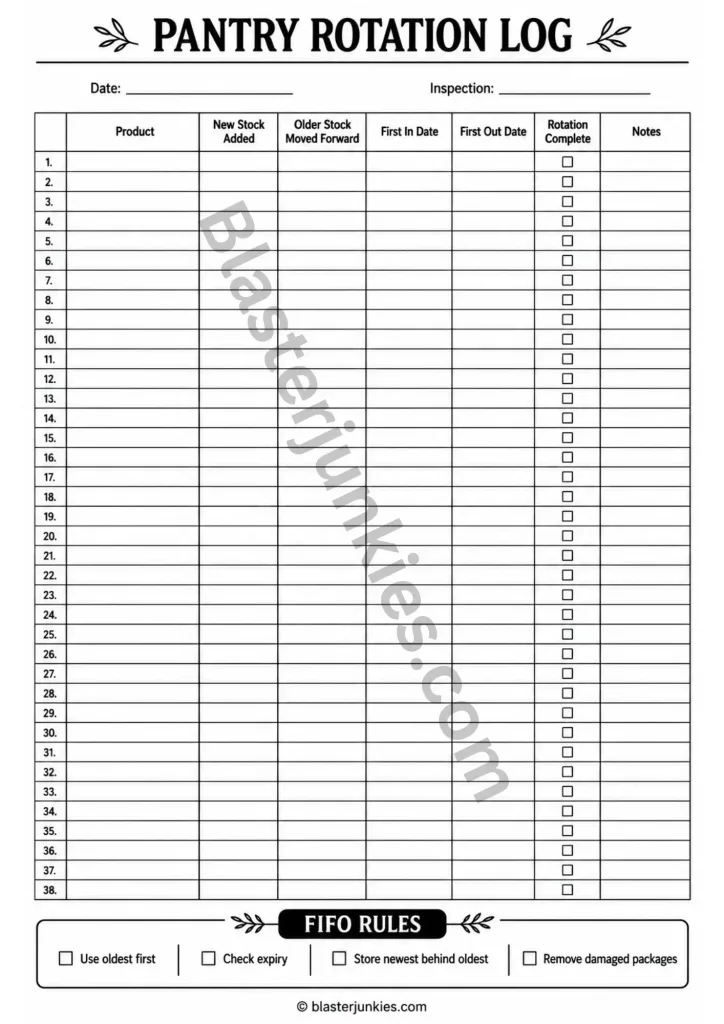
While the Pantry Rotation Log is built specifically around the FIFO principle first in, first out so nothing gets pushed to the back of a shelf and forgotten.
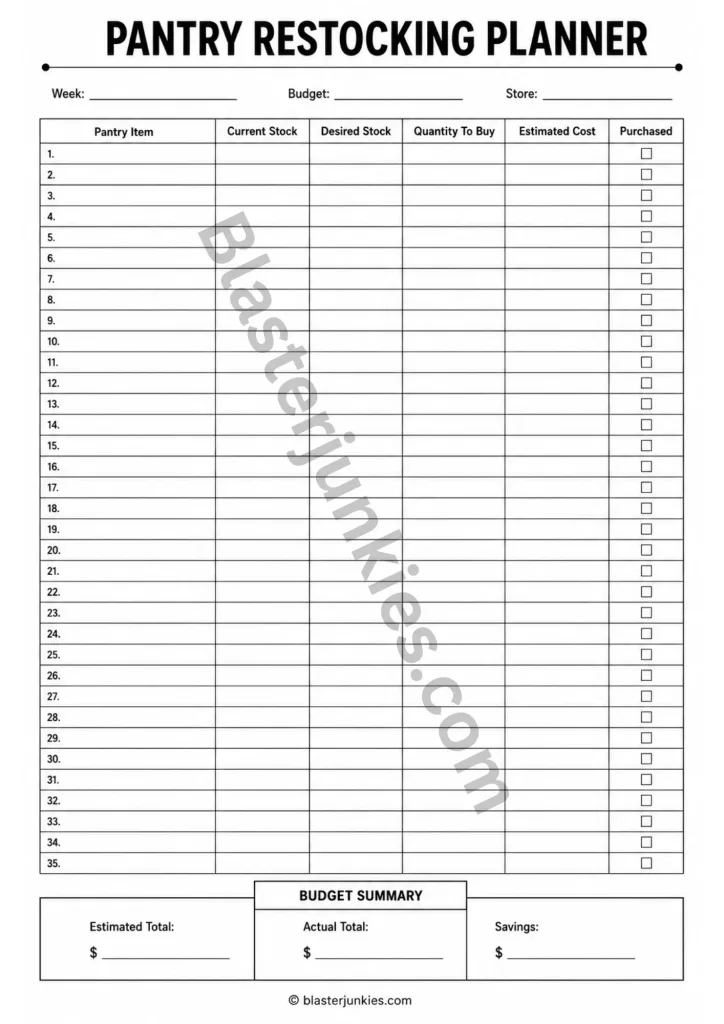
There’s also a Pantry Restocking Planner with a budget summary section for shopping trips,
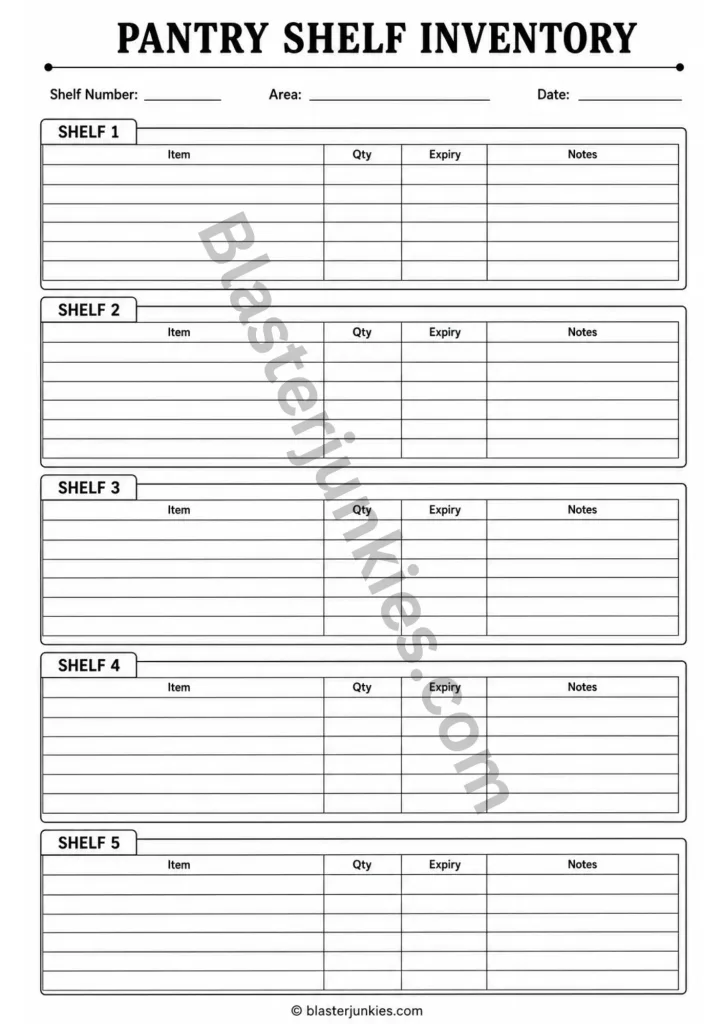
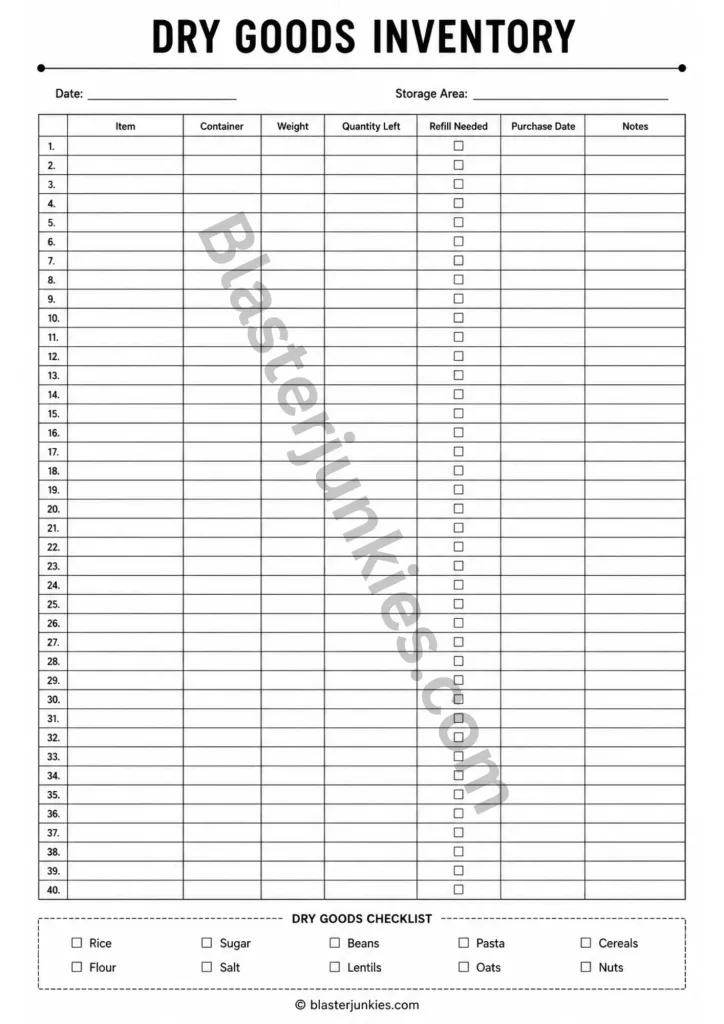
A Pantry Shelf Inventory sheet that breaks storage down shelf by shelf, a Dry Goods Inventory with its own checklist of staples like rice, oats, and lentils,
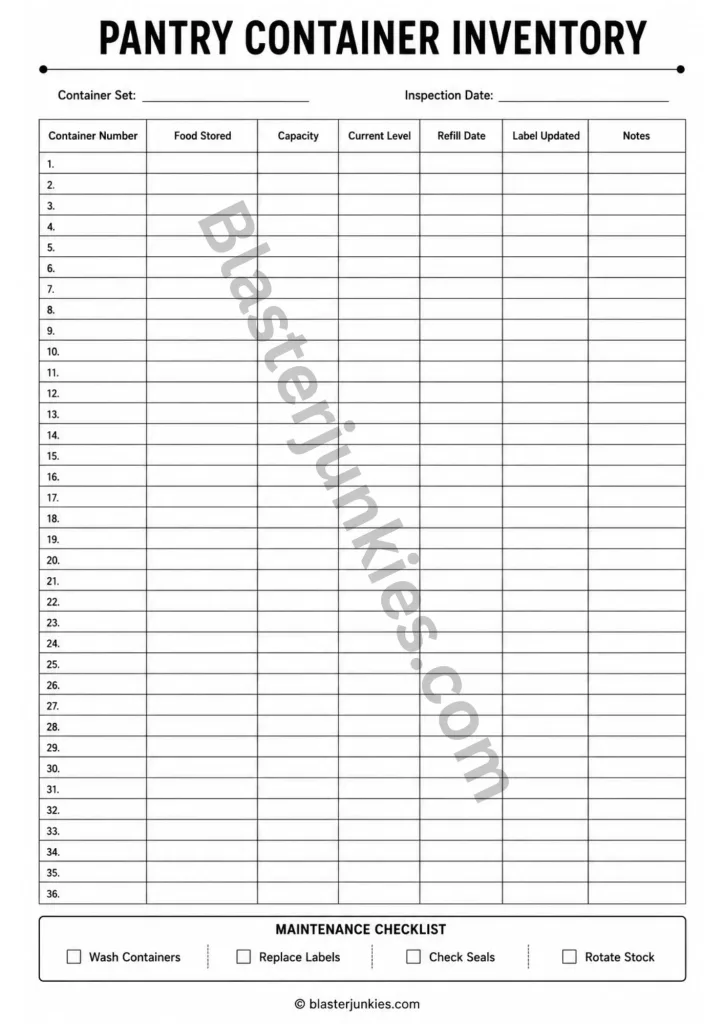
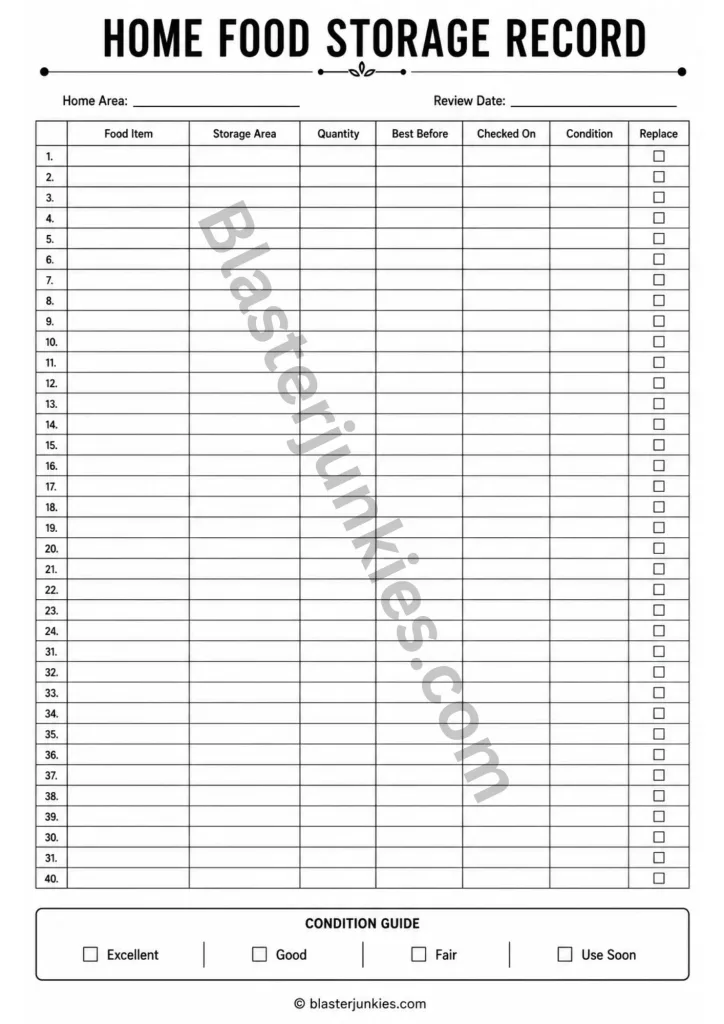
A Pantry Container Inventory for households that decant food into matching jars and bins, a Home Food Storage Record for tracking condition over time,
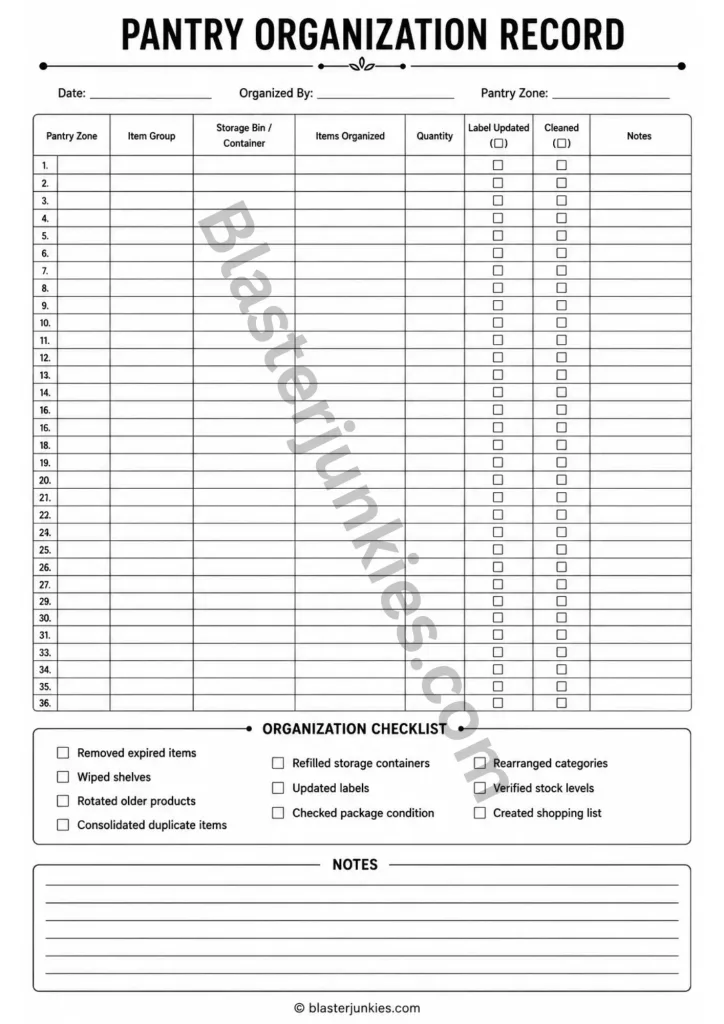
And a Pantry Organization Record with a full checklist for deep cleaning and reorganizing days. Together, these sheets cover everything from a quick weekly glance to a full seasonal pantry overhaul.
Why This Printable Works So Well for Kids
It’s easy to think of pantry management as an adults only chore, but this printable is actually a wonderful, low pressure way to teach children real organizational and life skills and it doesn’t feel like a lecture.
It builds counting and categorizing skills. Younger kids can practice counting items as they go shelf to shelf, while slightly older kids can sort pantry items into categories like grains, snacks, or canned goods, using the reference checklist as a guide.
It’s essentially a hands on math and vocabulary lesson disguised as a kitchen chore.
It teaches responsibility and routine. Handing a child a clipboard and a shelf to inventory gives them ownership over a real task.
Doing this on a regular basis say, every Sunday builds the same kind of consistency you’d nurture with a Summer Habit Tracker for Kids or a Morning Routine Chart for Kids.
It introduces the concept of expiry dates and food safety. The Pantry Expiry Tracker is a great way to explain why we check dates on food,
What “use soon” versus “replace” means, and why rotating stock (oldest to the front) matters. It’s a practical, age appropriate introduction to food safety that most kids find genuinely interesting once they understand the “why.”
It connects naturally to other kitchen projects. If your family cans or preserves food at home, this inventory system pairs perfectly with a Canning Labels Printable kids can help label the jars and then log them into the pantry inventory.
And if you grow any of your own produce, a Garden Harvest Tracker makes a great companion for tracking food from the garden all the way to the shelf.
Ways to Use the Printable With Kids
1. Turn inventory day into a scavenger hunt. Give kids the checklist and a pencil, and send them shelf by shelf to find and count items.
Make it a friendly challenge who can complete their assigned shelf first, or who can find the item closest to its expiry date?
2. Assign “shelf captains.” Using the Pantry Shelf Inventory sheet, let each child “own” one or two shelves.
They’re responsible for keeping their shelf tidy, updating the sheet, and reporting when something is running low.
3. Practice budgeting with the Restocking Planner. Older kids can help estimate costs for the shopping list, giving them an early, practical lesson in budgeting
A nice complement to something like a Vacation Expense Tracker if you’re already teaching money skills at home.
4. Make grocery trips more purposeful. Once the inventory is filled out, take it (or a summary of it) along to the store. Kids love checking items off a real list,
And it’s an easy way to fold in a related activity like the Farmers Market Shopping List on weekends when you’re buying fresh produce instead of pantry staples.
5. Use the Organization Record for a seasonal reset. A few times a year maybe at the start of summer or right before the school year do a full pantry clean out together using the Pantry Organization Record checklist.
It’s a great weekend activity to pair with other home refresh routines, and it teaches kids that organization isn’t a one time task but an ongoing habit.
6. Reward the effort with a fun follow up. After a big pantry organization day, celebrate with something lighthearted, like turning leftover snacks into an at home Ice Cream Party Printables treat station,
Or unwind with Family Conversation Cards over dinner to talk about what everyone learned.
Tips for Getting the Most Out of the Printable
Print several copies of each sheet type so you always have a fresh one ready for the next inventory check.
Keep a clipboard and pencil attached inside the pantry door so kids can jot down notes whenever they notice something running low.
Use the checkboxes on the Stock Log and Rotation Log as a simple way for younger children to participate, even before they can write full sentences.
Revisit the Expiry Tracker monthly rather than letting it sit a quick five minute check prevents a much bigger cleanup later.