Learning to spell a name is an exciting milestone. It is often a child’s first step into reading.
Children are deeply connected to their own names. This personal connection makes spelling practice highly effective.
Traditional tracing sheets can sometimes feel repetitive. Crafting offers a hands on, playful alternative.
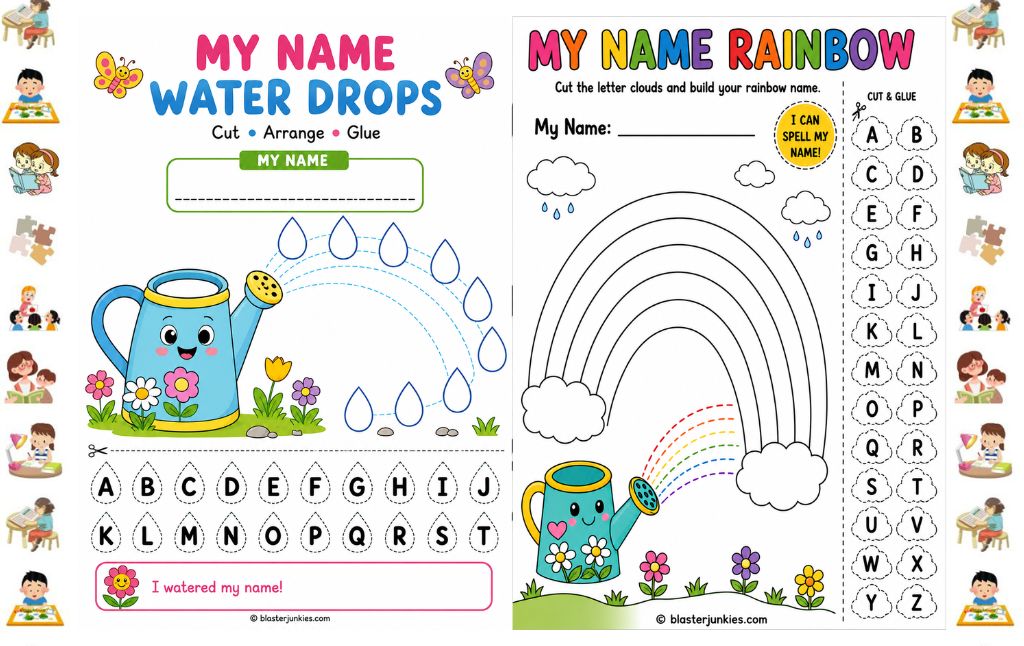
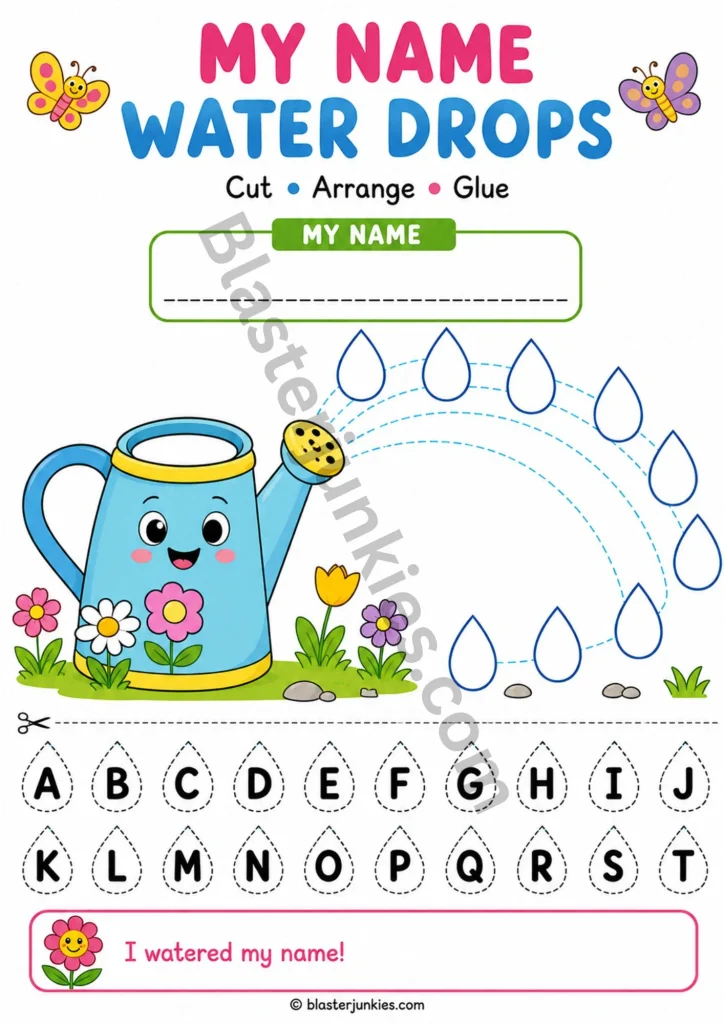
Our Watering Can Name Craft pack combines art with literacy. It provides an interactive way to explore letters. Let’s look at how to use these pages successfully.
The Developmental Power of Hands On Spelling
Multisensory learning is highly beneficial for early development. Children retain information better when they use their hands. Physical movements build strong pathways in the brain.
In this craft pack, kids do more than read. They select specific letters to build their names.
They color the garden elements. They cut along dotted lines. Finally, they glue the pieces into place.
This process teaches children about letter sequencing. They learn that letter order matters. It also builds essential fine motor strength.
Building a Seasonal Science and Art Unit
Integrating craft time into your daily schedule is easy. Structured routines help children stay focused. You can easily coordinate your lessons.
Add daily craft time to your Morning Routine Chart for Kids. This establishes a consistent habit of creative work.
The watering can theme pairs nicely with physical health. Plants need water to grow, and so do children.
Encourage daily hydration habits with our Monthly Water Tracker Printable for Kids. This keeps healthy habits engaging and visual.
You can also introduce basic water science. Teach how water moves in nature. Use our interactive Neighborhood Water Cycle Worksheet Pack. It explains how rain clouds actually form.
Weather observation fits this outdoor theme beautifully. Check the sky daily before you start crafting. Log daily changes with a weather observation worksheet.
You can also use our Weather Worksheets for Kindergarten. This connects daily climate shifts to the natural world.
In autumn, take your lessons outdoors. Study changing plant life with our Leaf Identification Printable.
You can also enjoy an Autumn Scavenger Hunt Printable outside. This brings movement and nature study together.
To keep kids learning during holidays, use a tracker. Our Summer Habit Tracker for Kids helps log daily tasks. It maintains a helpful balance of study and play.
Next week, swap the garden theme for the ocean. Try our Fun Surfboard Name Crafts for more spelling play. Explore sea life with our Fun Crab Name Crafts.
Add sensory art with our Fingerprint Seahorse Crafts for Early Learning. Complete your coastal study with our Fun Ocean Animal Worksheets. This keeps thematic learning fresh and exciting.
Key Features of the Watering Can Craft Pack
This printable pack uses diverse garden layouts to teach. It accommodates children with different name lengths. The worksheets cover several core developmental categories:
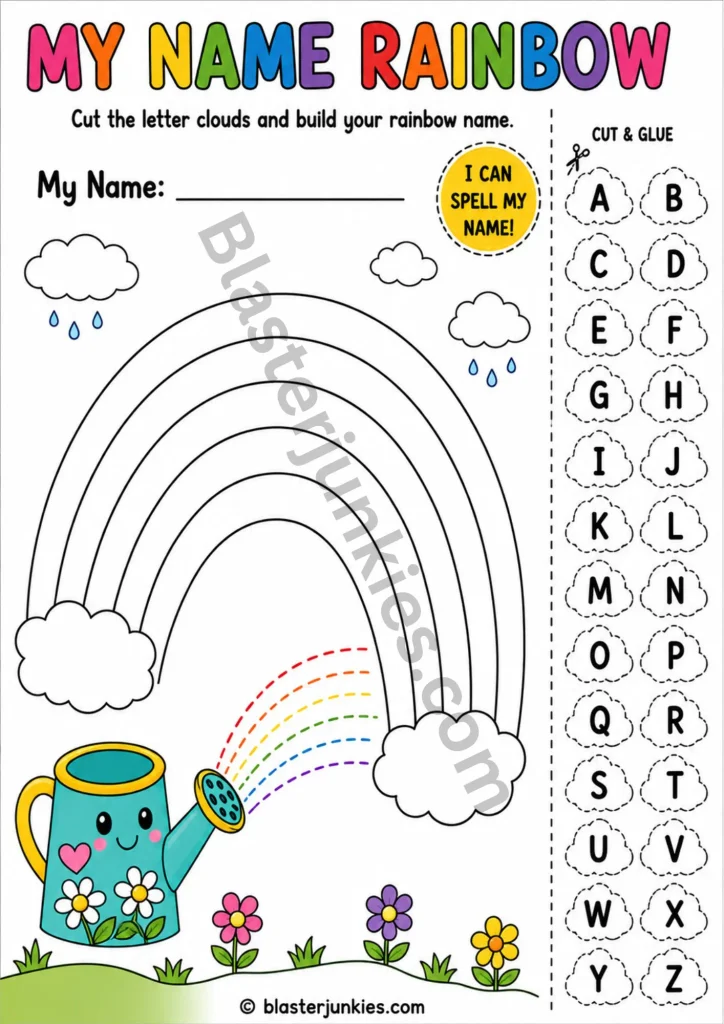
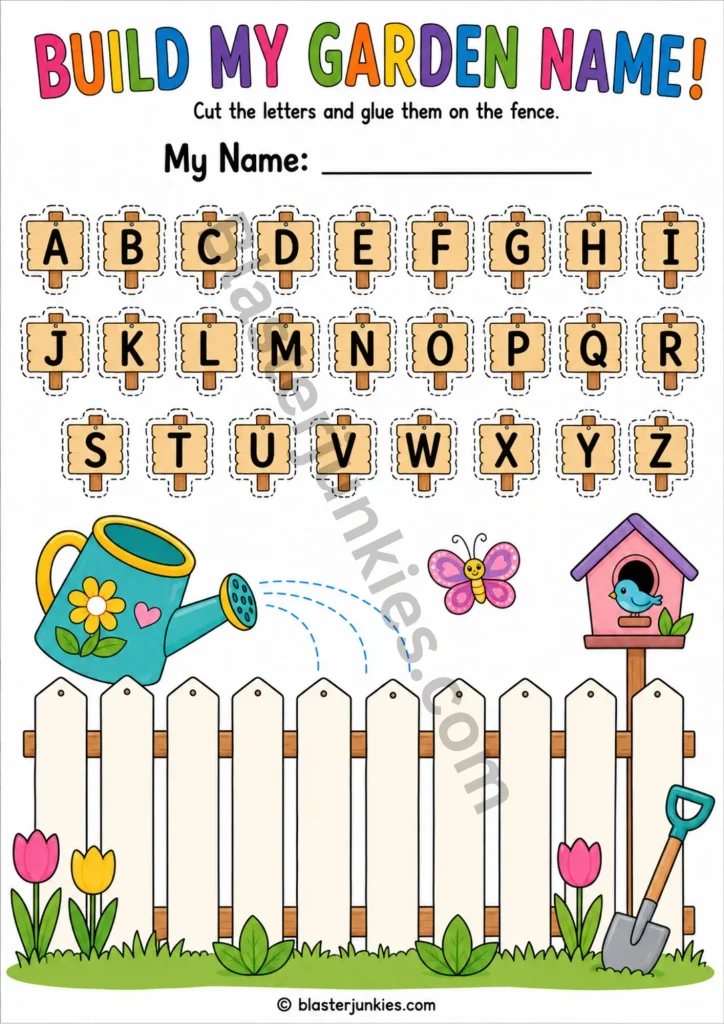
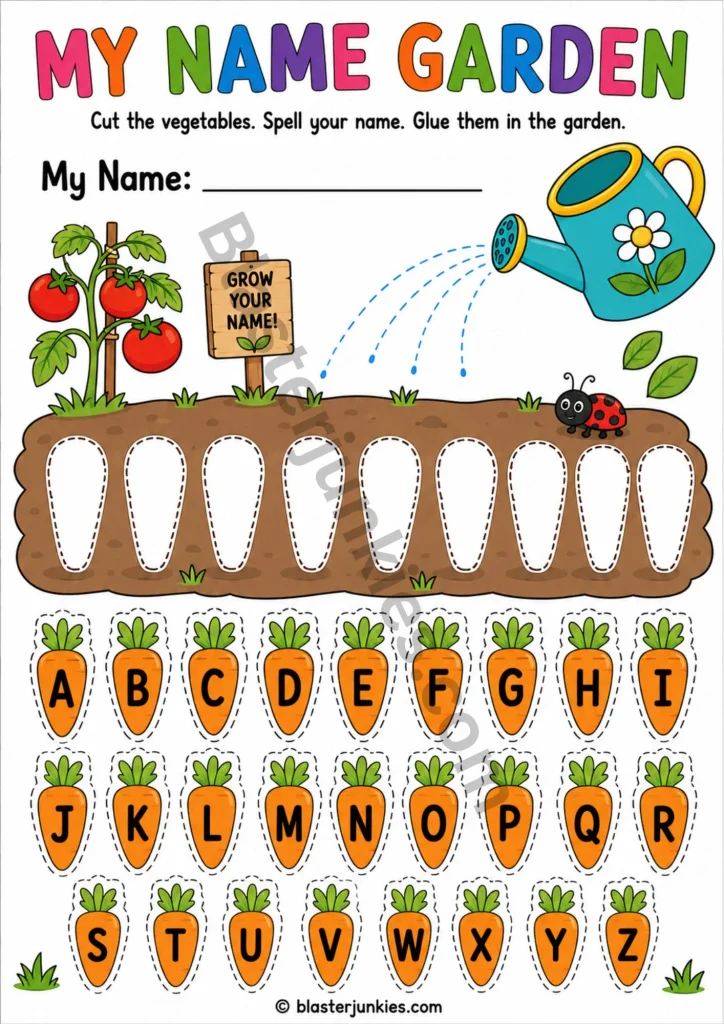
Segmented Spelling: Writing single letters in distinct blocks like water droplets, clouds, fence pickets, carrots, or butterfly wings.
Creative Customization: Coloring garden flowers, cute ladybugs, and watering cans.
Fine Motor Challenges: Cutting along curves, circles, and straight lines.
Spelling Construction: Physically arranging cut out letters to spell names in correct order.
These activities build bilateral coordination. One hand holds the paper steady. The other hand writes, colors, or cuts. This dual hand coordination is essential for physical growth.
Color Exploration and Designing Patterns
Coloring is also a valuable developmental activity. It encourages children to make creative choices. They can choose color patterns for their gardens.
Should they use warm reds and yellows for the flowers? Should they use bright oranges for the carrots?
Discussing these options builds their descriptive vocabulary. They learn to identify different color palettes.
They can also create alternating color patterns on the fence. This connects art with logical sequencing skills. It keeps early learning structured and well rounded.
How to Use These Worksheets
Using these worksheets is straightforward. Here is a practical guide to get started.
First, choose a worksheet that matches your child’s name length. Shorter names fit well on simpler templates. Longer names may need more segments, like water droplets or carrots.
Have your child write their name clearly first. They should write one letter in each circle or block. This teaches them about letter order and spacing.
Next, let them color the pieces. They can use crayons, markers, or colored pencils. Encourage them to stay inside the lines.
Once colored, it is time to cut. Use high quality safety scissors. Ensure they fit your child’s hand comfortably.
Always supervise young children during cutting tasks. This ensures a safe and productive crafting experience.
Finally, assemble the craft. Use a simple glue stick to paste the pieces together. Thick cardstock stands up best to wet school glue.
Supporting Cognitive and Fine Motor Growth
Crafting builds crucial cognitive skills. It encourages children to plan their steps. They must write before they color.
They must color before they cut. This logical sequence teaches them patience. It also helps build a longer attention span. They learn to work quietly and finish tasks.
Completing a project gives children a sense of success. They feel proud to show you their finished gardens.
This simple pride boosts their self esteem. It motivates them to tackle more complex learning tasks.
You can also use these crafts to teach phonics. Ask your child: “What sound does your first letter make?”
This simple prompt turns art into a reading lesson. Phonics training is vital for early reading success.
Fun Classroom and Home Display Ideas
Do not let the learning stop on paper. Display their completed crafts around your home or classroom.
Create a “Growing Our Names” bulletin board. Hang their custom gardens and watering cans together.
You can add green background paper for a lawn look. This collaborative art project keeps spirits high. It helps children feel like part of a community.
They love finding their own name on the wall. This reinforces their reading skills in a fun way.
At home, tape their name gardens to their bedroom doors. This marks their personal space with pride.
Customizing for Different Age Groups
These printable pages are highly adaptable. They suit children of varying developmental levels.
For toddlers (ages 2–3), focus on simple coloring. Write their names in the circles for them. Let them scribble over the garden shapes happily.
For preschoolers (ages 3–4), focus on letter tracing. Write the letters lightly in pencil first. Let them trace over your lines with markers.
For kindergarteners (ages 5–6), encourage independent work. Let them write their names alone. They can practice cutting along the dotted lines themselves.
This flexibility makes the pack great for families. Siblings of different ages can craft together.
Conclusion
Learning to spell is a wonderful journey. These printable garden crafts combine seasonal fun with education.
They help children practice essential childhood skills. Fine motor, math, and literacy are all supported.
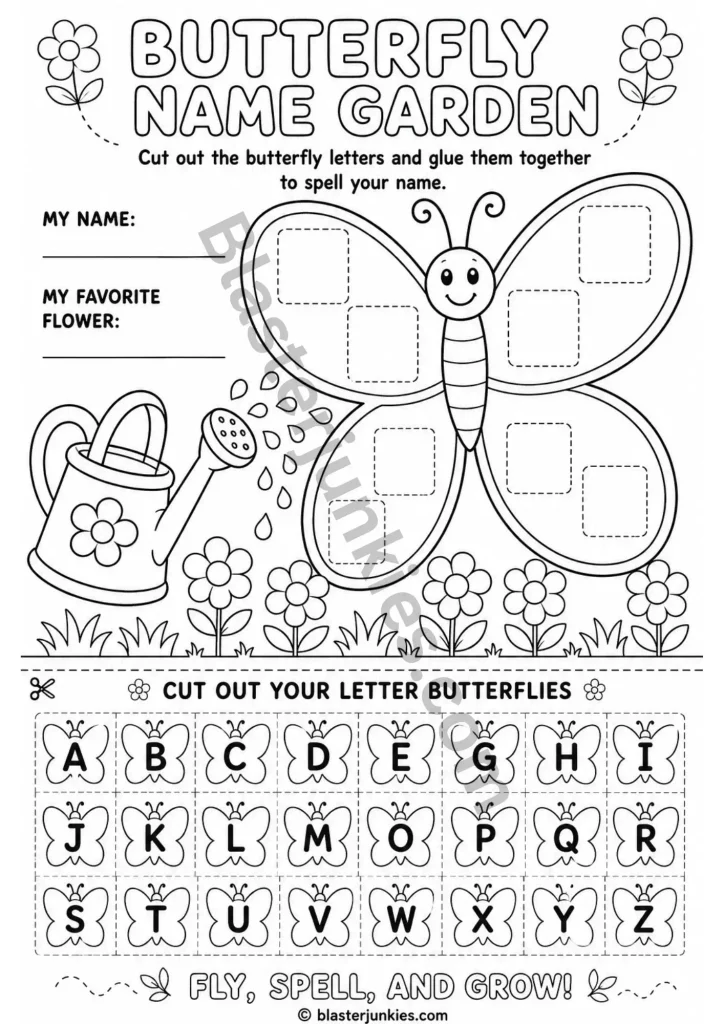
You can easily download the complete pack today. It is ready to print and use immediately.
Enjoy watching your child discover spelling through play. Have fun exploring the garden together today!