Mental health isn’t just an adult topic kids feel stress, big emotions, and overwhelm too, even if they don’t always have the words for it.
A Self Care Checklist for Mental Health gives both grown ups and children a simple, visual way to practice small daily habits that support emotional wellbeing.
It’s not about fixing a problem; it’s about building a gentle, consistent rhythm of care that becomes second nature over time.
This printable set is a full library of self care and wellness tools, ranging from quick daily checklists to weekly and monthly trackers, gratitude journals, and even a digital wellness guide.
Let’s look at what’s included as a whole, why it’s such a valuable tool to introduce to kids in an age appropriate way, and how to bring it into your family’s routine.
What’s Inside the Printable
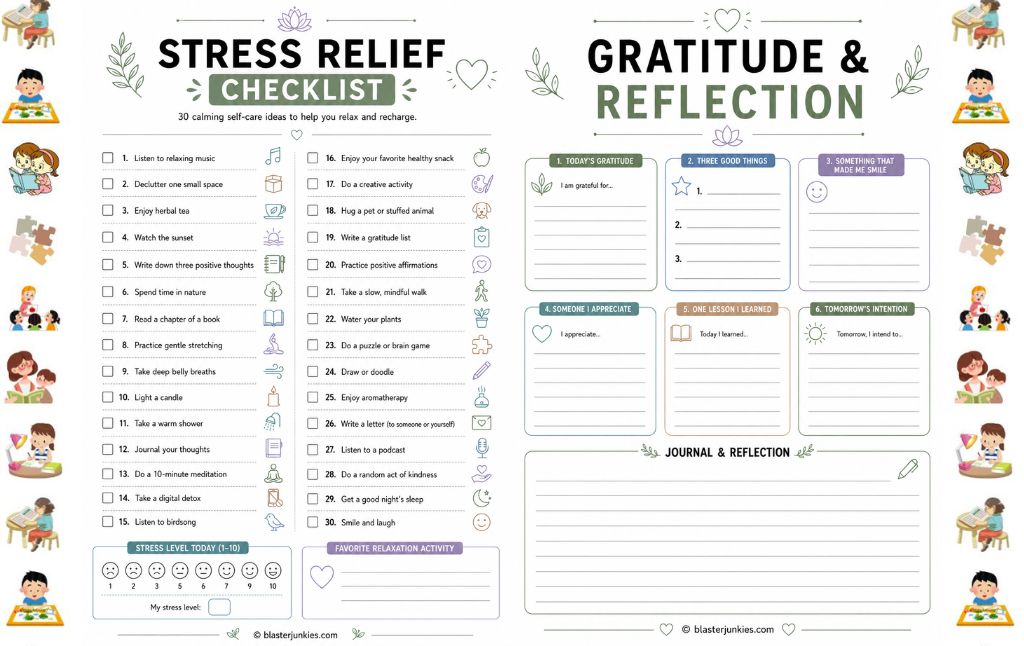
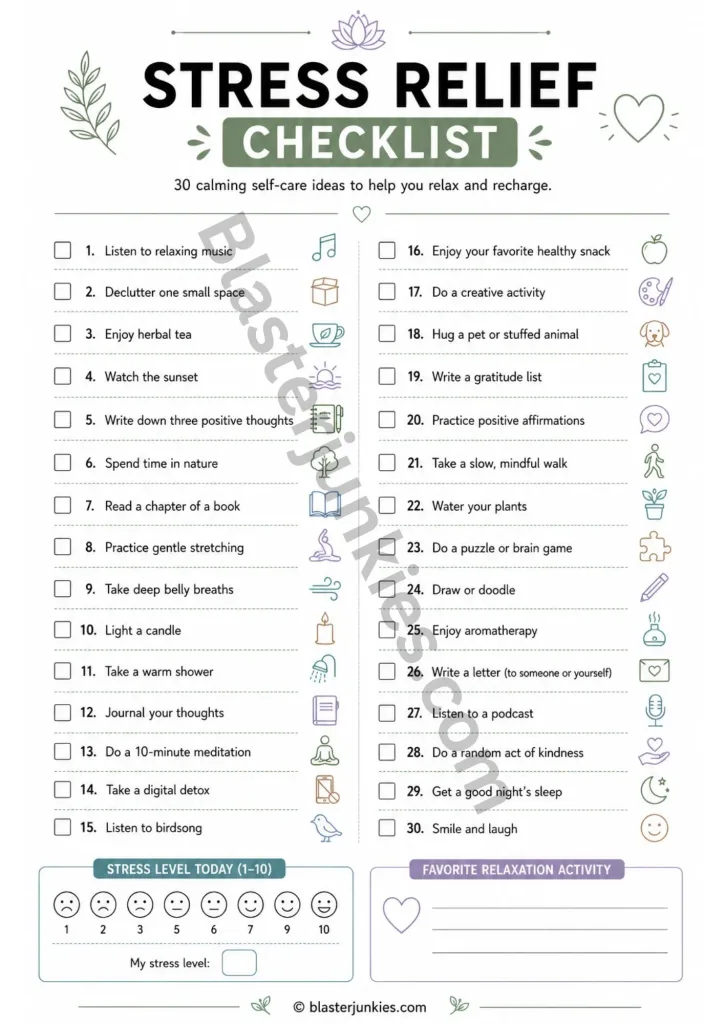
The set opens with a Stress Relief Checklist, offering 30 calming self care ideas from listening to relaxing music and watching the sunset to taking a warm shower and doing a digital detox along with a simple 1- 10 stress scale and space to note a favorite relaxation activity.
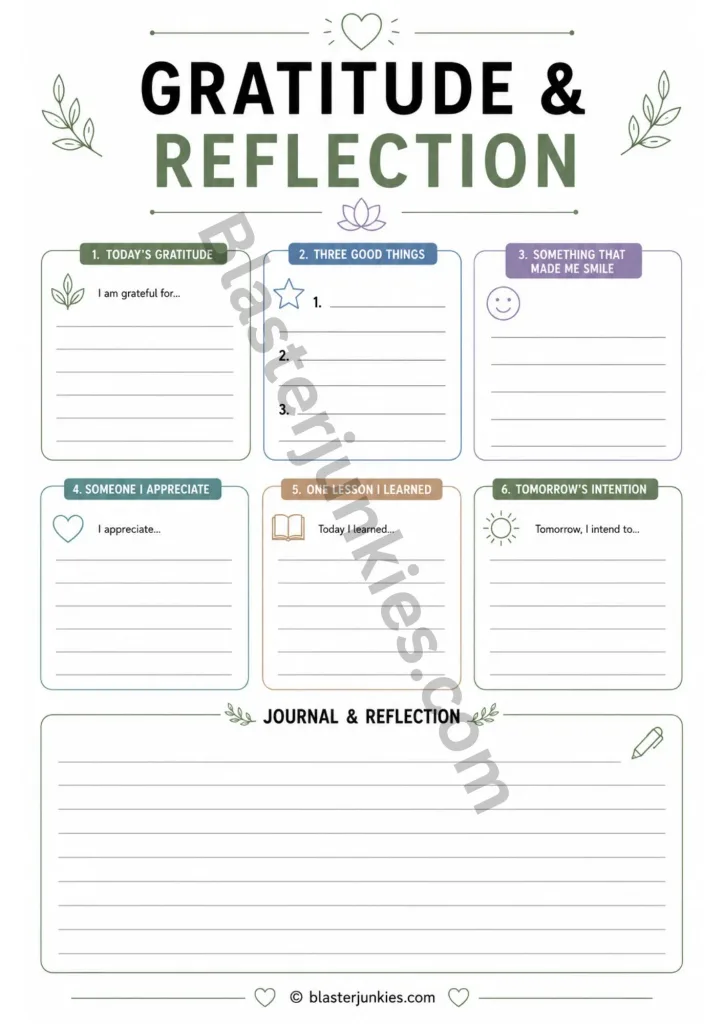
The Gratitude & Reflection sheet gives space for daily prompts like “today’s gratitude,” “three good things,” and “someone I appreciate,” plus an open journaling section for longer reflection.
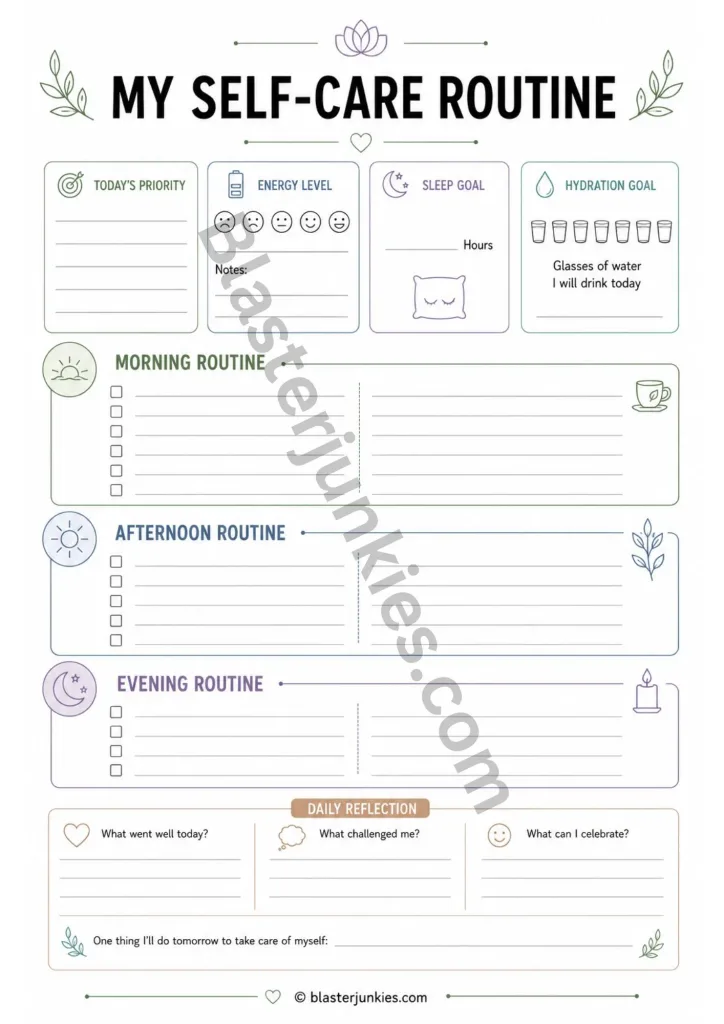
For a fuller daily rhythm, My Self Care Routine breaks the day into morning, afternoon, and evening sections, each with its own checklist, alongside trackers for energy level, sleep goal, and hydration.
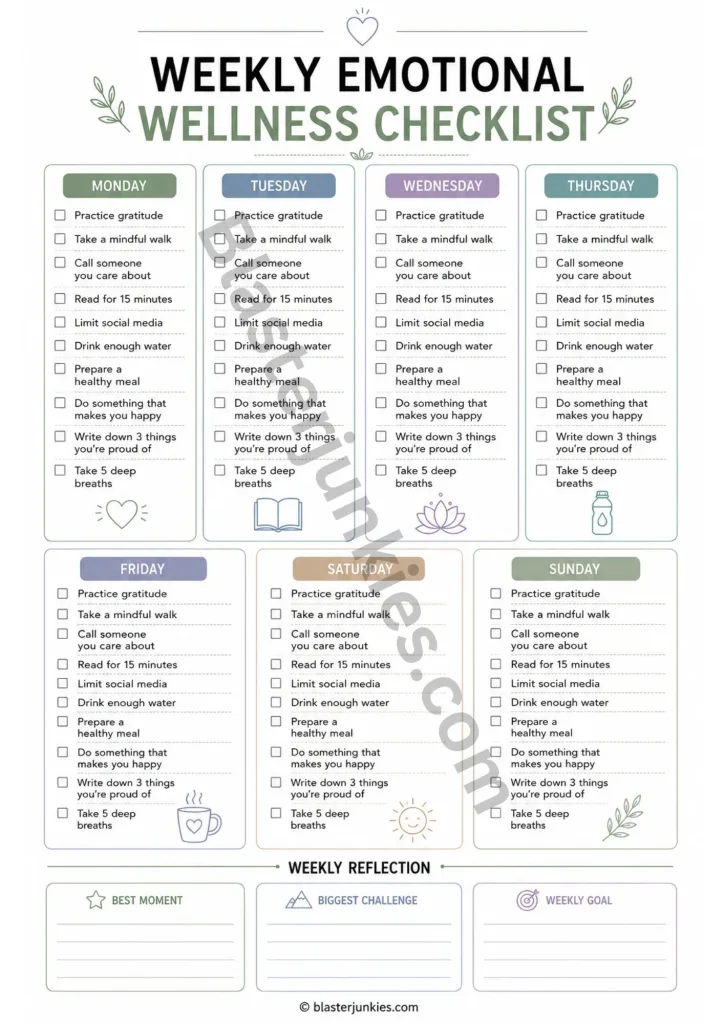
The Weekly Emotional Wellness Checklist repeats a consistent set of habits practicing gratitude, taking a mindful walk, limiting social media, preparing a healthy meal across all seven days, with a weekly reflection section for the best moment, biggest challenge, and next week’s goal.
The Self Care Daily Checklist offers 25 small, doable actions like stretching, journaling, spending time outdoors, and unplugging, with a personal reflection section at the end.
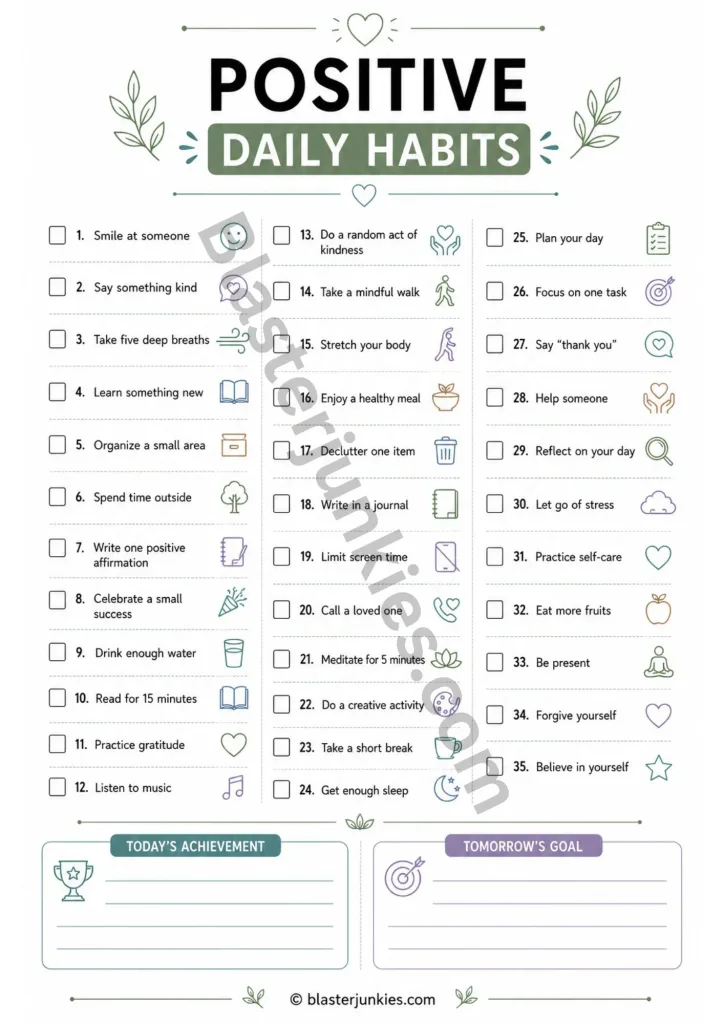
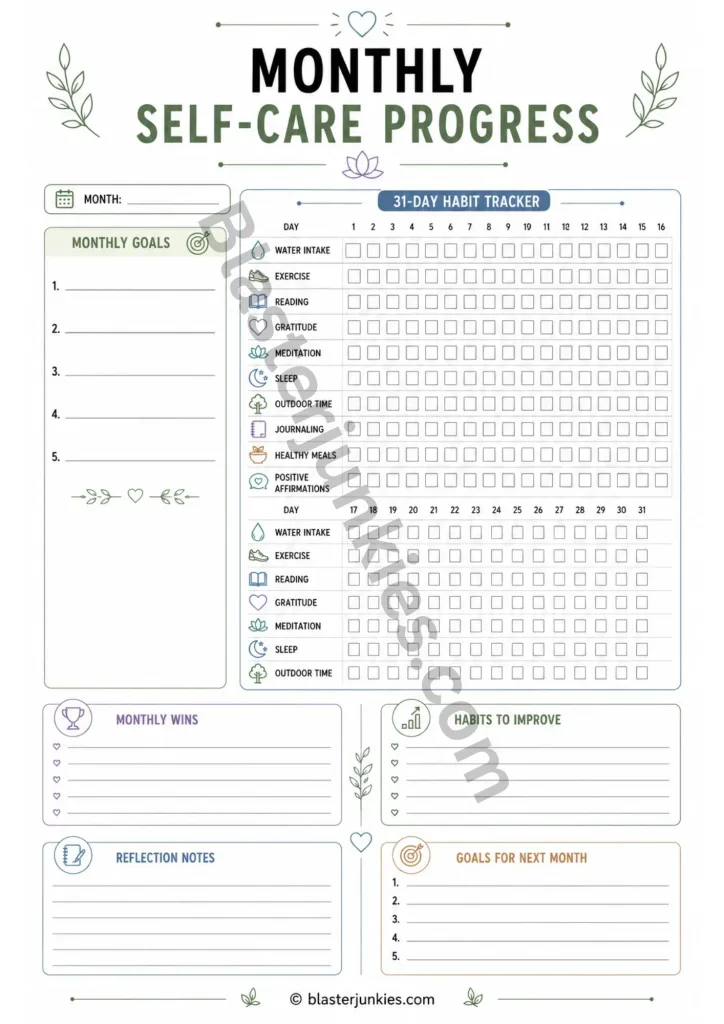
Positive Daily Habits expands that list to 35 items, covering everything from saying something kind to letting go of stress. For longer term tracking, the Monthly Self Care Progress sheet uses a 31 day grid to track habits like water intake, meditation, and journaling across the whole month, with space for monthly wins and goals.
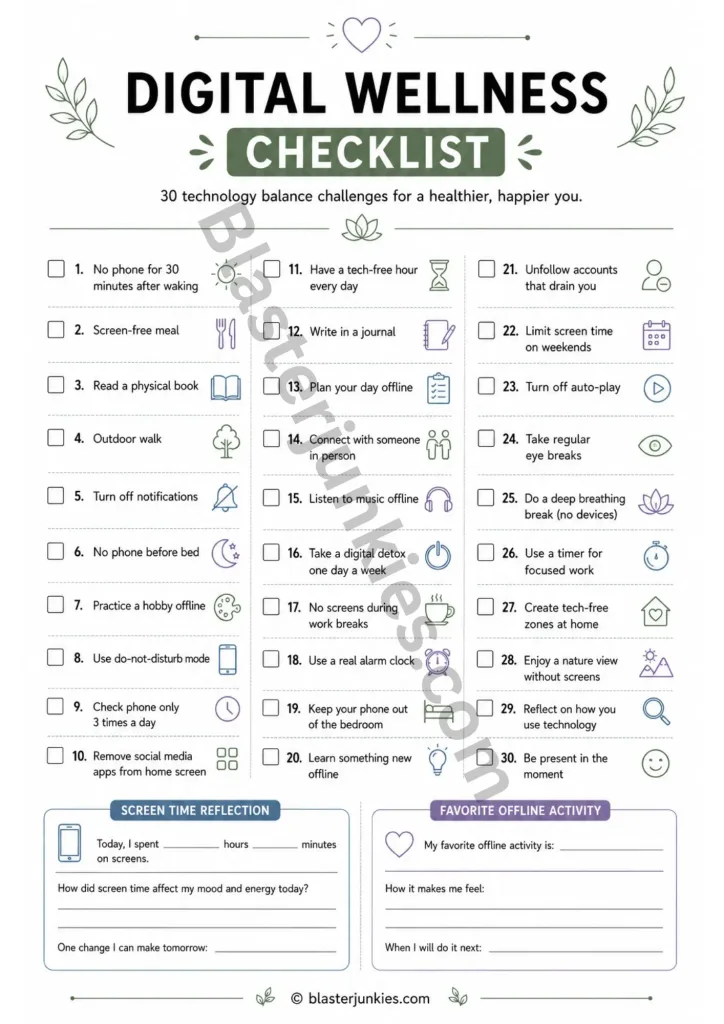
Rounding out the collection are the Digital Wellness Checklist, which focuses specifically on healthy technology habits like screen free meals and tech free zones at home;
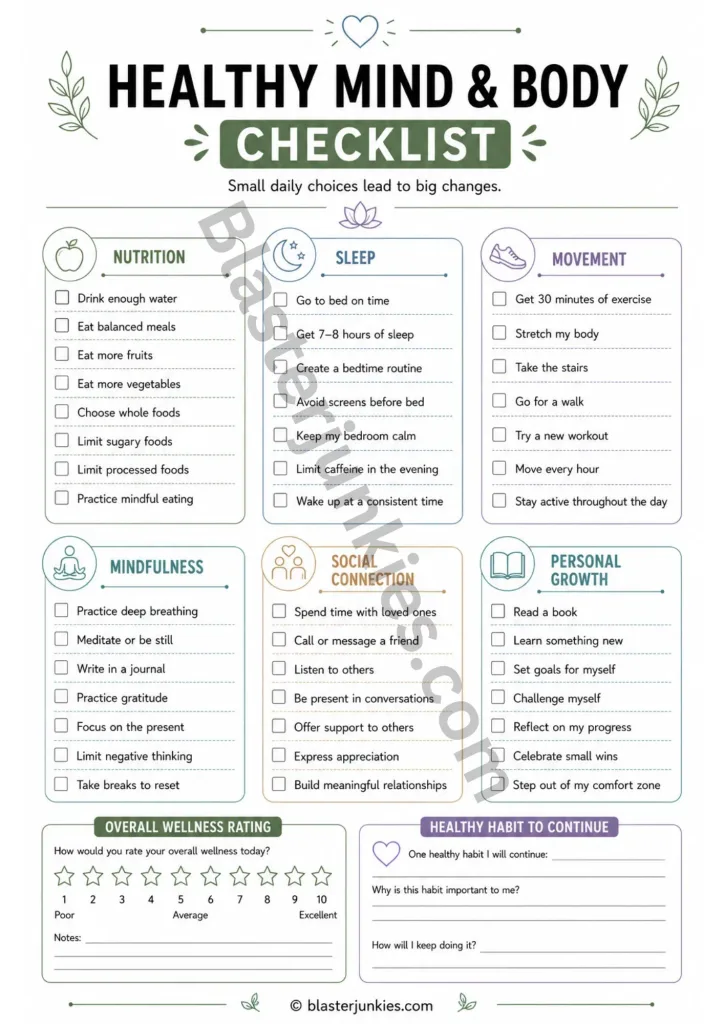
The Healthy Mind & Body Checklist, which organizes wellness into nutrition, sleep, movement, mindfulness, social connection, and personal growth categories;
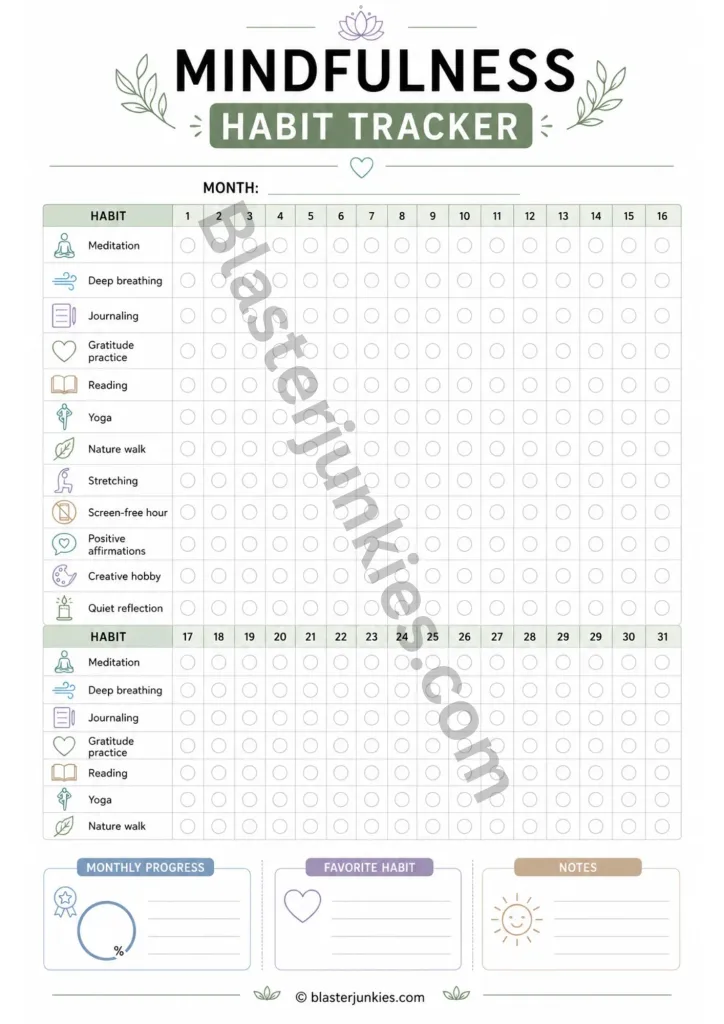
And the Mindfulness Habit Tracker, a simple grid for tracking practices like meditation, deep breathing, and gratitude across a full month.
Why This Printable Can Be a Great Tool for Kids
Self care checklists are often designed with adults in mind, but the underlying ideas noticing your feelings, taking small breaks,
Practicing gratitude, and building healthy routines are exactly the kind of emotional skills that benefit children too, when introduced gently and age appropriately.
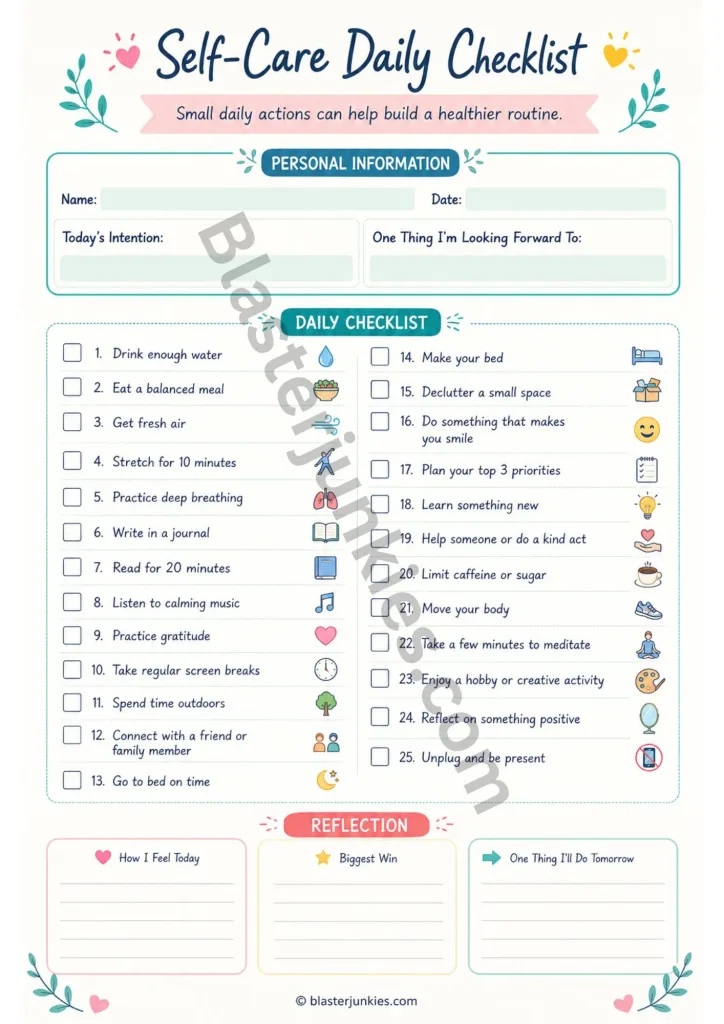
It gives kids a simple vocabulary for feelings and calm. Many children haven’t yet learned words like “gratitude,” “reflection,” or “mindful,” and seeing them paired with friendly icons and short prompts makes these ideas approachable rather than abstract.
It works well alongside the emotional awareness pieces found in Family Conversation Cards, which can open up similar conversations at the dinner table.
It normalizes small, everyday self care. Items like “hug a pet or stuffed animal,” “listen to birdsong,” or “do a creative activity” are naturally kid friendly and help children understand that taking care of their mind doesn’t require anything complicated just small, intentional moments throughout the day.
It builds a routine based sense of security. Structured sections like the morning, afternoon, and evening routine on My Self Care Routine mirror the same comforting predictability found in a Morning Routine Chart for Kids.
Kids often feel calmer when they know what to expect from their day.
It pairs naturally with healthy habit building. Since so much of self care overlaps with physical wellness sleep, water, movement, healthy meals this printable connects well with a Healthy Habit Challenge, letting families track both physical and emotional wellbeing side by side.
Ways to Use the Printable With Kids
1. Pick a handful of kid friendly items, not the whole list. Rather than handing a child the full 30- or 35-item checklist, choose five or six age appropriate actions together drink water, stretch, spend time outside, do something creative, say something kind.
A shorter list feels achievable rather than overwhelming.
2. Turn gratitude into a nightly ritual. Use the Gratitude & Reflection sheet’s “three good things” prompt as a simple bedtime conversation.
Kids often find it easier to talk when they’re not asked to look at you directly try it during a car ride or while tucking them in.
3. Make mindful breaks part of the daily routine. Simple prompts like “take five deep breaths” or “take a mindful walk” from the Weekly Emotional Wellness Checklist can be practiced together as a family pause after school, before homework, or after a disagreement.
4. Use the Digital Wellness Checklist to build healthy tech habits as a family. Ideas like screen free meals, a real alarm clock instead of a phone, or a weekly digital detox hour work best when everyone parents included participates together, rather than feeling like a rule aimed only at kids.
5. Celebrate small wins, not perfection. The “today’s achievement” and “tomorrow’s goal” sections found throughout the set are a great way to end the day on a positive note, similar in spirit to the encouraging, progress over perfection approach used in a Summer Habit Tracker for Kids.
6. Use stickers or drawings instead of checkmarks for younger children. Letting a child draw a small picture or place a sticker next to a completed self-care item can make the process feel more like play and less like a chore.
A Gentle Note
This printable is meant to support everyday emotional wellbeing small, positive habits like rest, gratitude, movement, and connection.
It isn’t a substitute for professional support. If a child seems persistently sad, anxious, or overwhelmed beyond what these small daily habits can address,
It’s always worth talking to a pediatrician, school counselor, or mental health professional who can offer guidance suited to your child specifically.
Tips for Getting the Most Out of the Printable
Start small one or two self care habits at a time are far more sustainable than trying to adopt an entire checklist overnight.
Keep a printed sheet somewhere visible, like a bedroom door or family bulletin board, so self care becomes a visible, normal part of daily life.
Model the habits yourself. Kids are far more likely to embrace journaling, gratitude, or quiet time if they see parents doing it too.
Revisit the weekly and monthly reflection sections together as a low-pressure way to check in on how everyone is really doing.