There is a unique magic found in the click of an old sewing machine and the soft rustle of vintage patterns. For many adults, sewing isn’t just a hobby; it’s a connection to mothers, grandmothers, and a slower, more intentional way of life.
Today, we are exploring a resource that captures this sentiment perfectly: the 50 Shabby Chic Sewing Junk Journal Kit.
If you have ever wanted to preserve your sewing journey or simply love the aesthetic of a Victorian haberdashery this collection is your ultimate creative companion.
The Renaissance of the Sewing Journal
In the fast paced digital age, adult crafting has shifted toward “Mindful Making.” A junk journal serves as a tactile sanctuary where you can escape the screen.
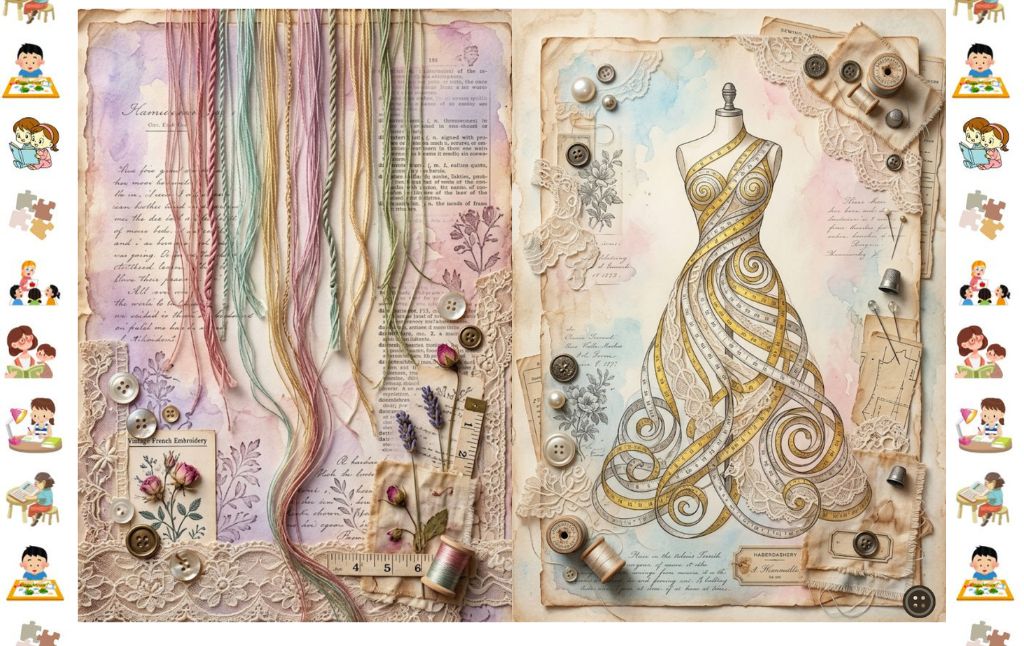
This sewing themed kit specifically taps into “Heritage Crafting.” By using backgrounds that feature antique mannequins and faded thread cards, you aren’t just making a book; you are curated a museum of the needle arts.
For the adult crafter, a journal like this often serves three purposes:
A Project Tracker: Recording fabric swatches, measurements, and patterns for current garments.
A Memory Keeper: Preserving stories of “The dress I wore to my daughter’s wedding” or “My grandmother’s silver thimble.”
Artistic Expression: A pure “shabby chic” playland where lace, tea stains, and florals meet.
Deep Dive: The Five Pillars of the Haberdashery Collection
1. The Dressmaker’s Silhouette: Mannequins and Form
The first section of the kit (Pages 1-10) focuses on the iconic dressform. In the “Shabby Chic” world, the mannequin is a symbol of transformation.
The pages featuring wire frame dressforms draped in watercolor roses provide a romantic, airy feel. These are perfect for “dreaming” pages where you sketch outfits you hope to one day create.
2. Notions and Nostalgia: The Small Details
Buttons, bobbins, and thimbles (Pages 11-20) are the “jewelry” of the sewing world. The kit features stunning flat lays of wooden spools with frayed silk thread.
For a journaler, these pages offer incredible visual “grit.” Writing a gratitude list next to a stack of vintage buttons feels significantly more grounded and cozy than writing on a plain white sheet.
3. The Tools of the Trade: Scissors and Scraps
The inclusion of Stork Scissors and Heavy Cast Irons (Pages 21-30) adds a touch of “Industrial Victorian” to the soft florals.
These pages are perfect for documenting the “hard work” of crafting. They remind us that behind every beautiful garment is a set of sharp tools and a steady hand.
4. Fabric, Lace, and Tulle: The Tactile Backgrounds
The “Shabby Chic” aesthetic relies heavily on texture. The kit includes backgrounds that mimic scalloped lace overlays, burlap, and faded damask wallpaper (Pages 31-40).
These are the workhorses of your journal. They provide enough visual interest to stand alone as art, yet are subtle enough to be layered with photos, ribbons, and pockets.
5. The Ephemera Archive: Handwritten History
Perhaps the most valuable part of the kit for an adult user is the Handwritten Correspondence and Ledger Pages (Pages 41-50).
Using a background that looks like an 1895 dressmaker’s bill or a laundry ledger creates an immediate sense of “Found History.” It gives your personal writing a sense of weight and timelessness.
A Masterclass in Using the Sewing Kit: Expert Tips for Adults
Building a high end junk journal requires more than just glue and paper. To turn these 50 pages into a “Masterpiece,” follow this professional guide.
1. Choosing Your Foundation
The Paper: While standard copy paper works, adults seeking a professional feel should use 28lb or 32lb Premium Matte paper. This weight holds ink beautifully without curling.
The “Crunch” Factor: If you want your journal to “sound” vintage, print a few pages on tracing paper or vellum. The crinkly sound when turning a vellum page printed with lace is a sensory delight.
2. The Art of the “Faux” Edge
Even though the PDF has “tea stained” edges, you can elevate the look by adding physical aging.
Tearing: Never use a paper trimmer. Use a metal ruler to tear the edges of the A4 sheets. This creates a soft, fibrous “deckled” edge.
Inking: Use a sponge dauber and Distress Ink (shades like ‘Vintage Photo’ or ‘Victorian Velvet’) to darken the edges of the paper. This bridges the gap between the printed image and the physical paper.
3. Creating “Living” Pockets
Don’t just glue the pages in. Use the “Haberdashery Shop Signs” or “Pattern Envelopes” from the kit to create Tuck Spots.
Fold the bottom third of a page upward and sew the sides with a real sewing machine (use a long stitch length so you don’t tear the paper).
Inside this pocket, tuck a real vintage pattern tissue or a fabric swatch from a special project.
4. Advanced Layering: Fabric Meets Paper
Since this is a sewing journal, it must have fabric.
Washi Tape Alternatives: Instead of tape, use strips of floral fabric and a glue stick to “tape” photos onto your shabby chic backgrounds.
Safety Pin Accents: Take a rusty safety pin and use it to clip a small “Mother of Pearl” button directly onto a page featuring the “Button Jar” design. This 3D element makes the digital kit come to life.
5. The “Signature” Construction
For a 50 page kit, I recommend creating three “Signatures” (bundles). * Bundle 1: Focus on the Dressforms and Laces (The “Design” phase).
Bundle 2: Focus on Tools and Notions (The “Process” phase).
Bundle 3: Focus on Ledger and Ephemera (The “History” phase). Binding these together with waxed linen thread ensures your journal opens flat and lasts for years.
Journaling Prompts for the Modern Seamstress
To help you move past the “blank page” fear, here are three adult-focused prompts to use with this kit:
The Masterpiece Page: Use the Mannequin with Rose Petals background. Write about a time you made something whether it was a dress, a quilt, or a simple repair that made you feel incredibly proud.
The Lineage Page: Use the Faded Cursive Correspondence background. Write down the name of the person who taught you to sew. List three pieces of advice they gave you (about sewing or about life).
The “Fabric of Life” Page: Use the Scalloped Lace Overlay background. Glue a small scrap of fabric from a piece of clothing you no longer wear but can’t throw away. Write why that fabric is a “shabby chic” treasure to you.
Final Thoughts: A Legacy in Every Stitch
The 50 Shabby Chic Sewing Junk Journal Kit is more than just a collection of A4 printables; it is an invitation to slow down. For the adult crafter, it offers a way to honor a craft that is often overlooked in our “buy and discard” culture.
Every time you glue a piece of lace onto these tea stained mannequins or write a project note on a vintage ledger background, you are weaving your own story into the long history of the needle arts. This journal will not just be a book of paper it will be a heirloom of your creativity.
Are you ready to thread the needle and begin?
[ >> DOWNLOAD THE COMPLETE 50 SHABBY CHIC PAGES FOR YOUR SEWING JUNK JOURNAL HERE <<]
100 Dreamy Backgrounds for Your Next Junk Journal Masterpiece
41 Booklovers Junk Journal Kit The Complete Collection
50 Whimsical Marine Junk Journal Pages & Frames for Every Junk Journaler
The “All In One” Choice: 50 Essential Sticker for Junk Journaling
The Metamorphosis Collection 50 Unique Butterfly & Moth Junk Journal Pages.
30 Must Have Ephemera Printables for Every Junk Journaler
20 Creative Layouts for a Vintage Botanical Junk Journal
A Guide to Using the 20 Creative Memory-Focused Junk Journal Layouts
20 Free Junk Journal Printable: Vintage Overgrown Secret Gate
20 Gothic Junk Journal Ideas to Fueling Your Darkest Journaling Obsession
Free Autumn Junk Journal Kit: 21 Vintage Style Signatures & Elements
The Ultimate Junk Journaling Sticker Kit: 50 Free Vintage Ephemera Designs