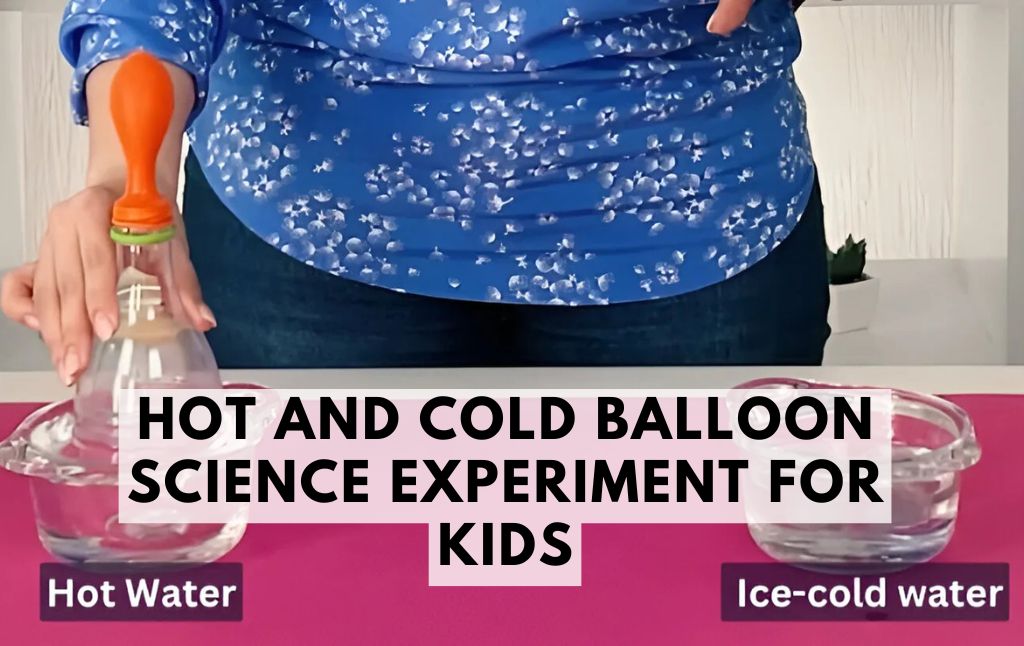
If you’re looking for a fun and easy science experiment to explore the wonders of air and temperature, the Hot and Cold Balloon Science Experiment is perfect!
This simple activity demonstrates how air expands and contracts with changes in temperature, causing a balloon to inflate and deflate without you even blowing into it. Let’s dive in!
Materials You’ll Need:
- 1 empty plastic bottle
- 1 balloon
- 1 large container or bowl of hot water (not boiling, just hot from the tap)
- 1 large container or bowl of ice-cold water
Step-by-Step Instructions:
Step 1: Prepare Your Balloon
Before we begin, take your balloon and stretch it by inflating and deflating it a few times. This will help the balloon expand more easily during the experiment.
Step 2: Attach the Balloon
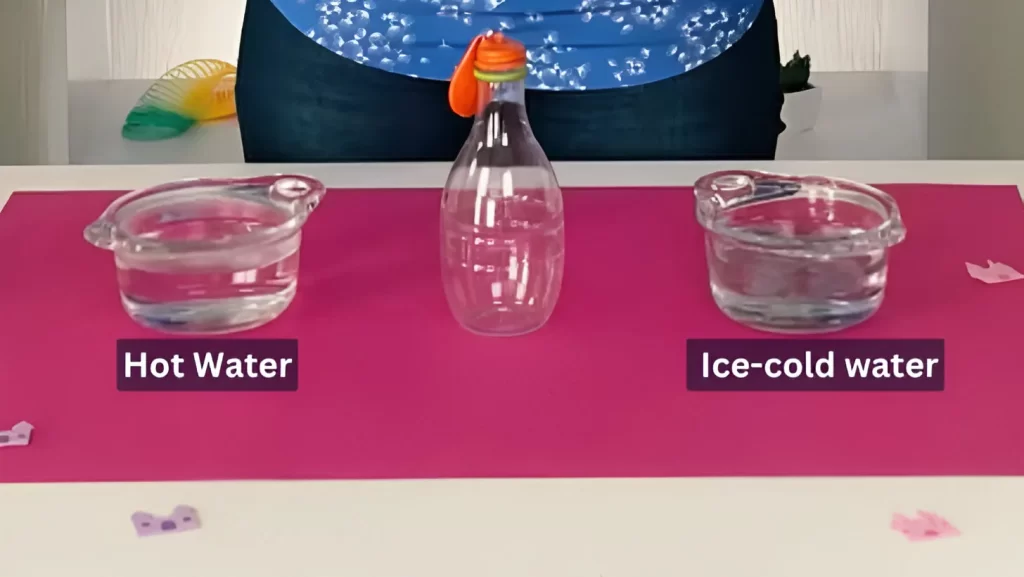
Take your empty plastic bottle and place the opening of the balloon securely over the mouth of the bottle. Ensure it fits snugly to prevent air from escaping.
Step 3: Place the Bottle in Hot Water
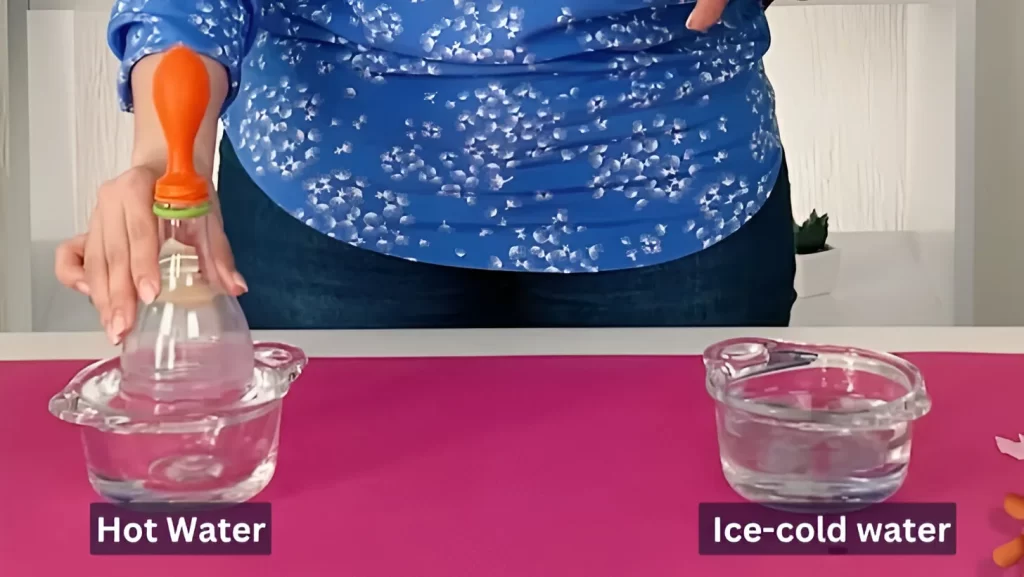
Now, place the bottle in the container of hot water. Watch closely—what happens to the balloon? As the air inside the bottle heats up, it expands, causing the balloon to inflate!
Step 4: Move the Bottle to Cold Water
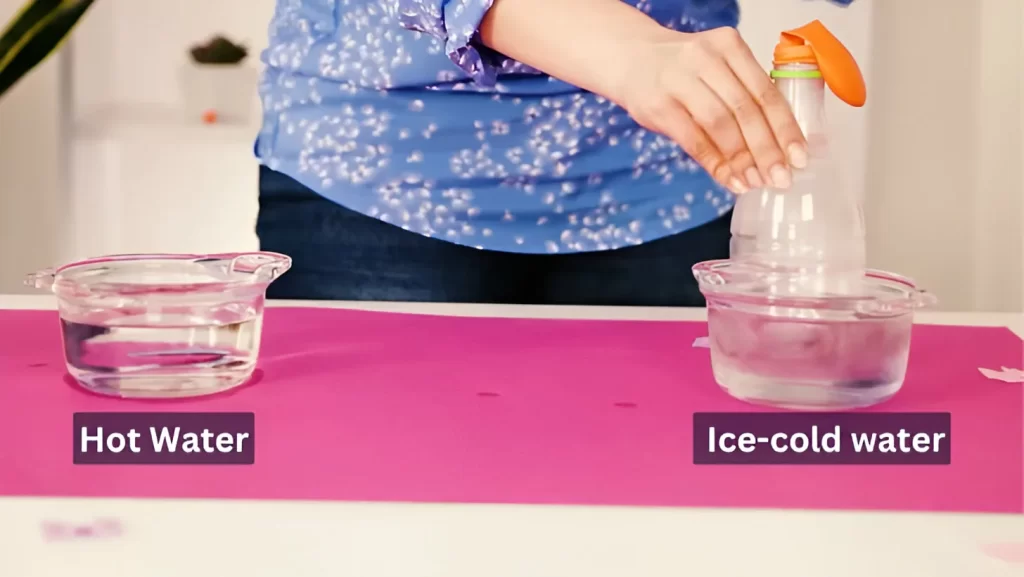
Next, transfer the bottle into the container of ice-cold water. Observe the balloon again—what do you see? The balloon quickly deflates as the air inside the bottle cools down and contracts.
Step 5: Repeat the Process
For extra fun, you can repeat the process by switching the bottle back and forth between hot and cold water to see the balloon inflate and deflate multiple times!
The Science Behind It
This experiment works because of the properties of air:
Warm air expands: When you place the bottle in hot water, the air molecules inside move faster and spread apart, increasing in volume. This pushes air into the balloon, causing it to inflate.
Cold air contracts: When you transfer the bottle to the cold water, the air molecules slow down, come closer together, and take up less space. As a result, the balloon deflates.
This experiment beautifully demonstrates how warm air rises and cold air sinks because of differences in air density.
Fun Experiment Variations:
Try using different water temperatures and observe how quickly the balloon inflates or deflates.
Test with different sizes of bottles to see if it changes the effect.
Use a colored balloon to make the experiment visually more exciting for younger kids.
Final Thoughts
The Hot and Cold Balloon Science Experiment is a fantastic way to introduce kids to temperature, air pressure, and density in an exciting and hands-on way. It’s easy, mess-free, and endlessly fascinating! Give it a try, and have fun watching science in action.
Happy experimenting! 🎈🔥❄️
Kids Activities
Looking for more fun kids activities and other ideas to keep kids engaged, learning, and having fun? Check out these:
Baking Soda and Balloon Experiment – Fun & Easy Science!
How to Make Borax Crystals: A Fun and Easy DIY Science Experiment
Weather Science Fun: Make a Cloud in a Jar!
Balloon and Candle Experiment for Kids
How to Make a DIY Plastic Bag Parachute