If you have ever spent ten minutes searching for an activity that will keep a toddler or preschooler engaged without a screen, you already know the value of a good memory matching game.
This printable pack of 10 memory card games for kids is designed exactly for that moment.
It is an A4 sized, ready to print PDF featuring ten different themed sets of matching cards, each one bursting with bright colors, friendly illustrations, and content that doubles as a learning tool.
Whether you are a parent looking for a rainy day activity, a teacher planning a classroom center,
Or a homeschooler building a curriculum, this pack offers something for nearly every age and interest.
Memory games, sometimes called matching games or pairs, are one of the oldest and most effective tools for early childhood development.
Two players, or even one child playing solo, flip over cards trying to find identical pairs hidden among a grid of face down cards.
It sounds simple, but the cognitive work happening behind the scenes is anything but.
This pack takes that timeless concept and wraps it in ten vibrant, kid friendly themes that keep the activity fresh every single time you play.
Fruit of the Spirit Craft Pack
10 Free Printable 1st Grade Math Worksheets (A4 Size)
What’s Inside the Pack: Ten Themes, Endless Variety
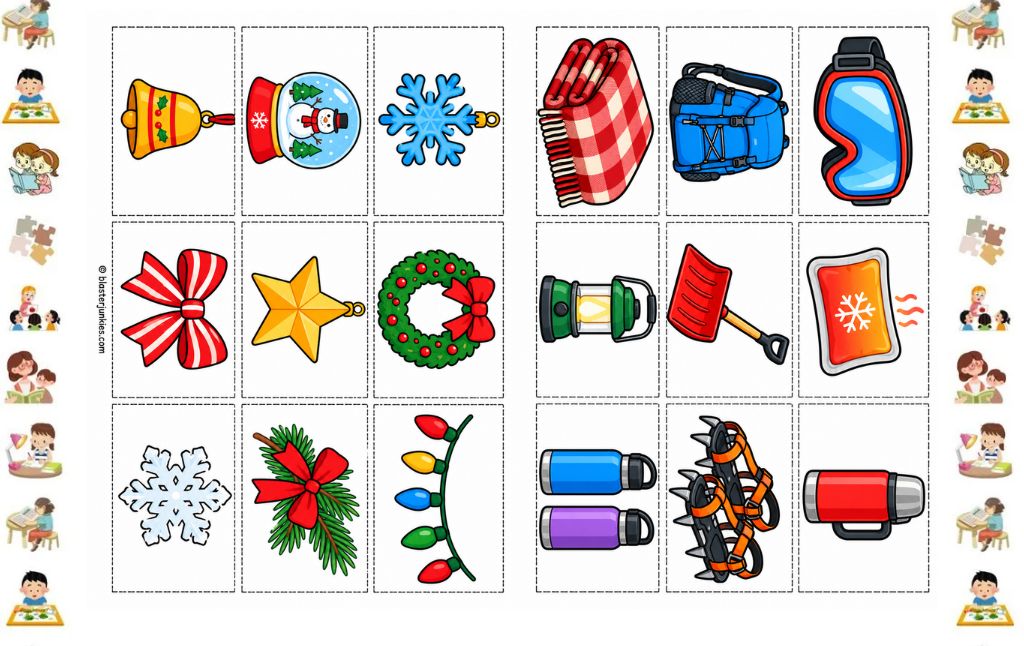
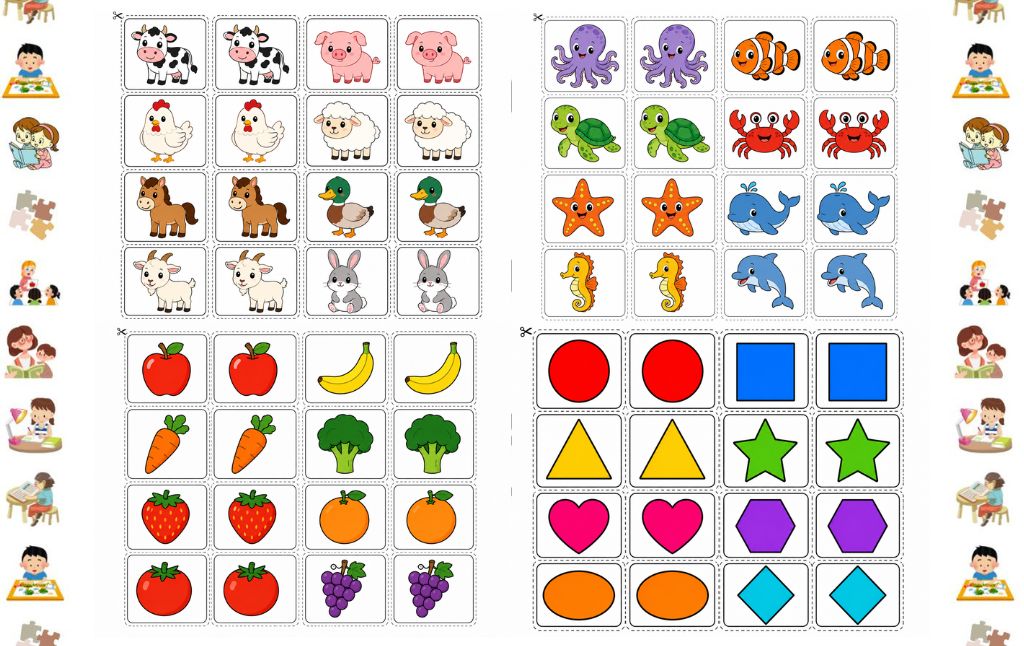
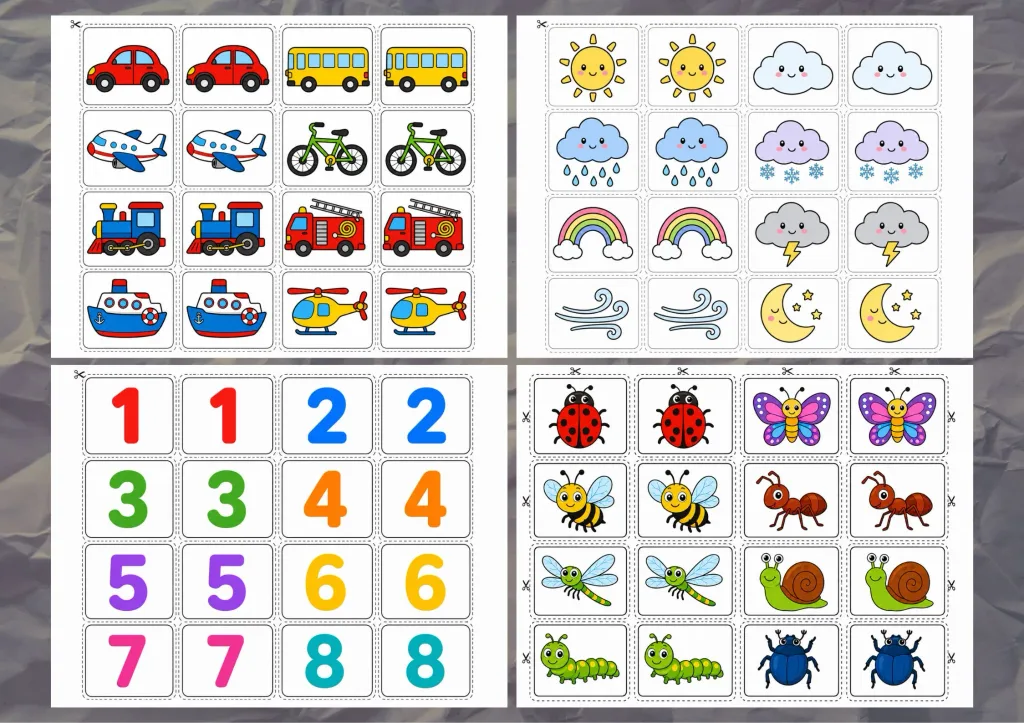
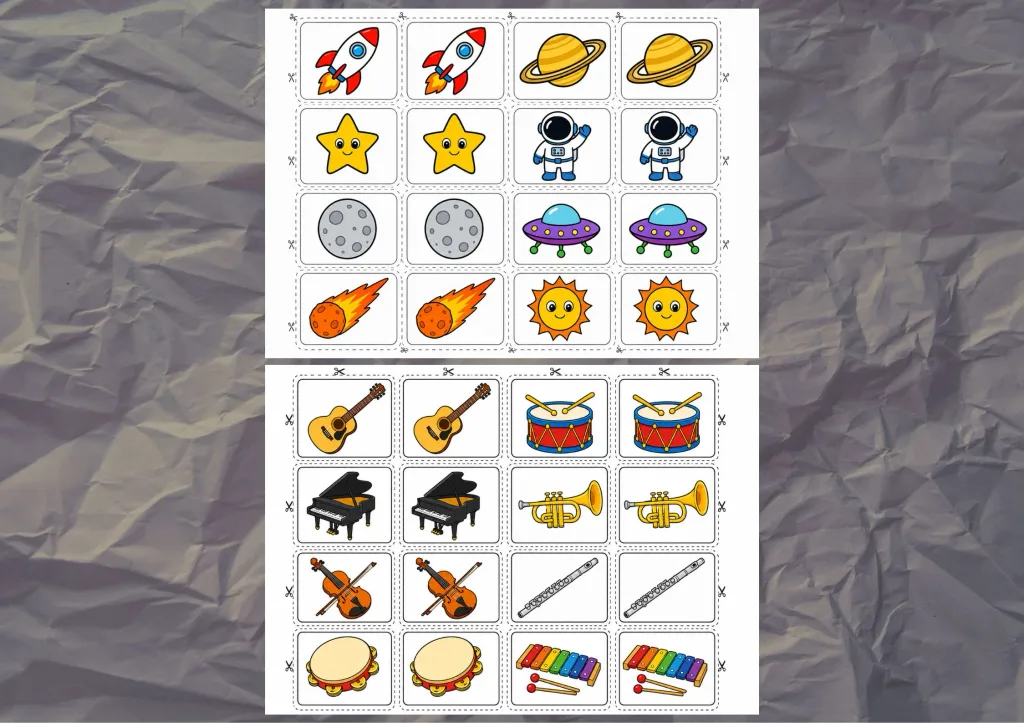
Each page of the pack is its own self contained themed set, printed in a clean 4×4 grid of cards on A4 paper.
Every image appears twice on the page, so each sheet gives you eight matching pairs, or sixteen cards in total, ready to be cut along the dashed guidelines.
The dashed borders and small scissor icons in the corners make trimming quick and mess free, even for older kids who want to help with the cutting themselves.
The ten themes cover a wide spectrum of early learning topics.
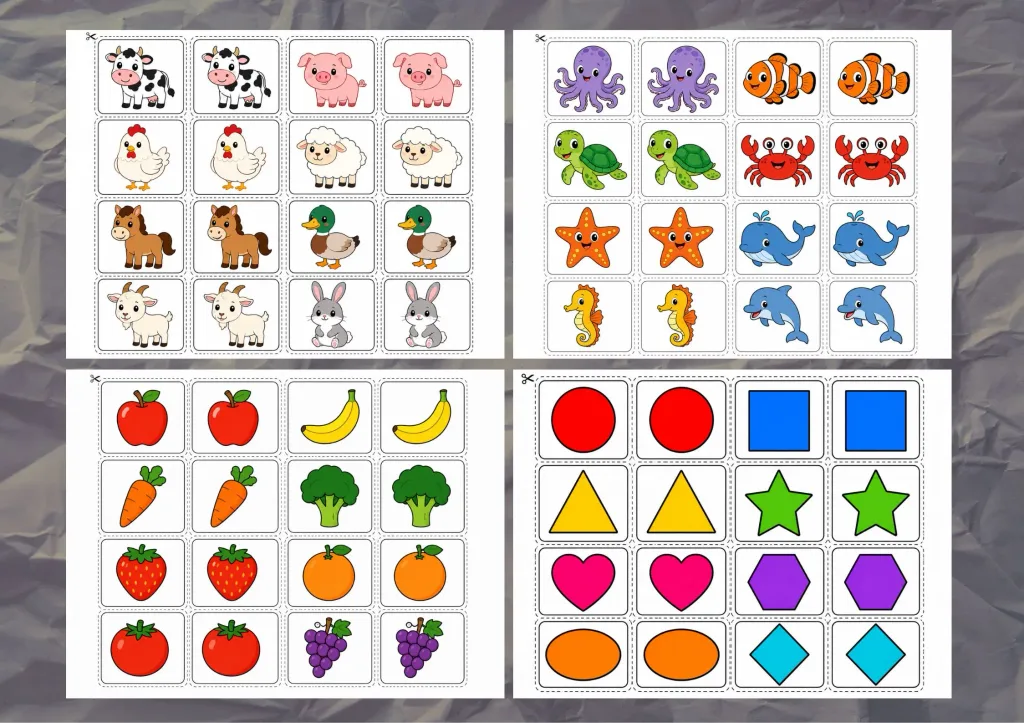
Farm Animals: Cut out the 16 cards, shuffle them, and lay them face down. Flip two cards at a time and make the animal sound when you find a matching pair.
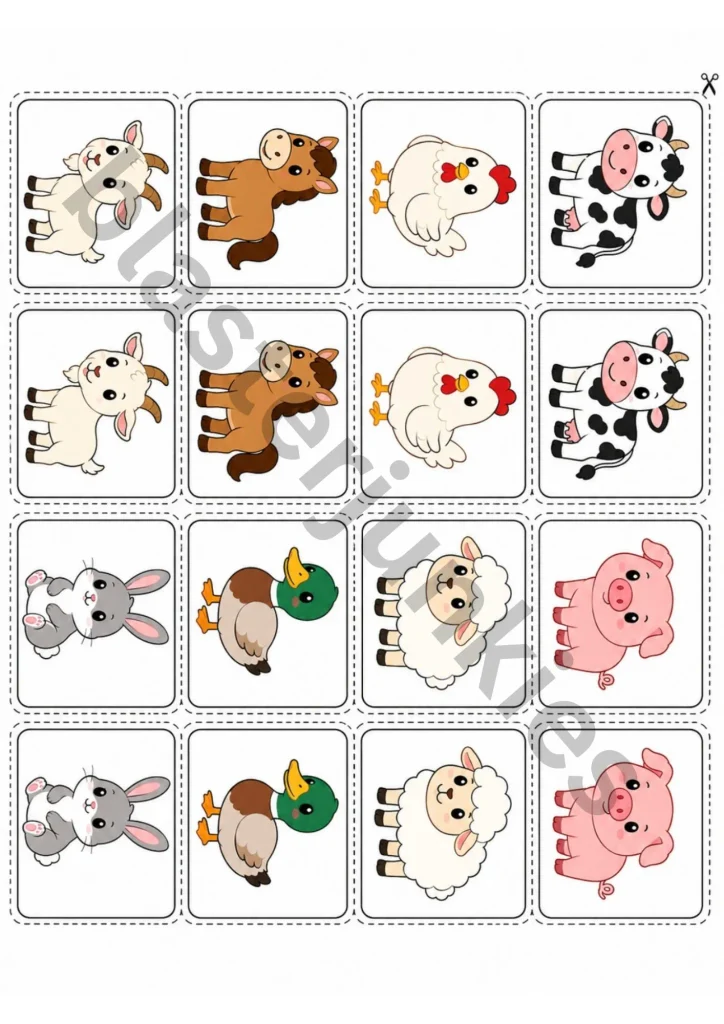
Sea Animals: Cut out the 16 ocean cards and spread them face down. Take turns flipping two cards, and name each sea creature aloud. Keep every matching pair you find.
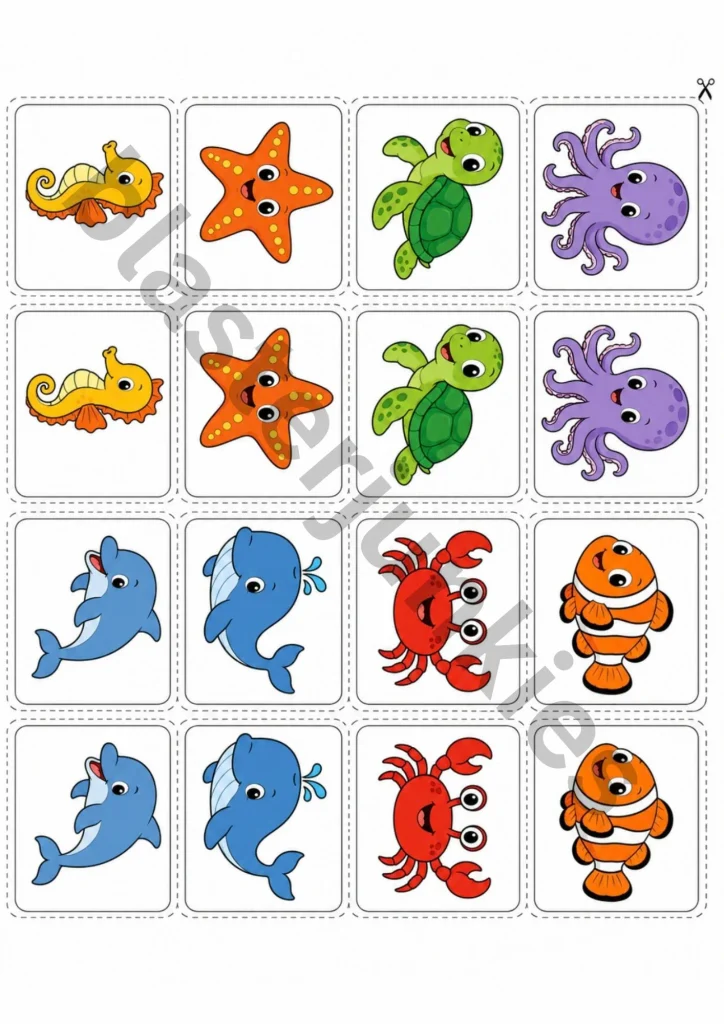
Fruits and Vegetables: Cut the cards apart and shuffle them face down. Flip two cards to find a match. Say whether it is a fruit or a vegetable before keeping the pair.
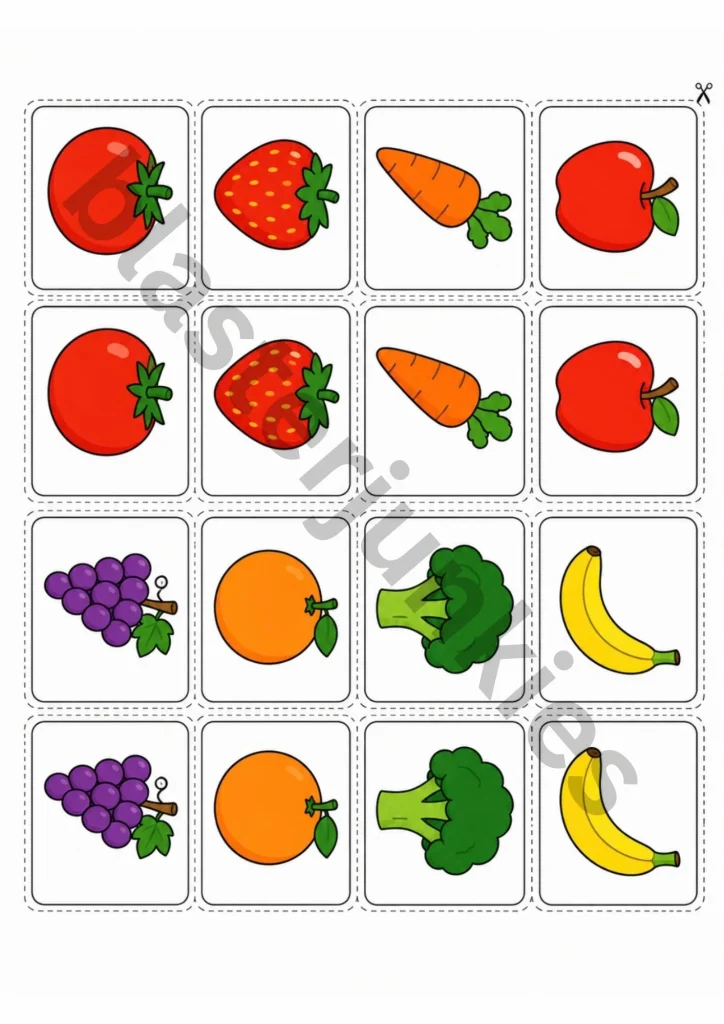
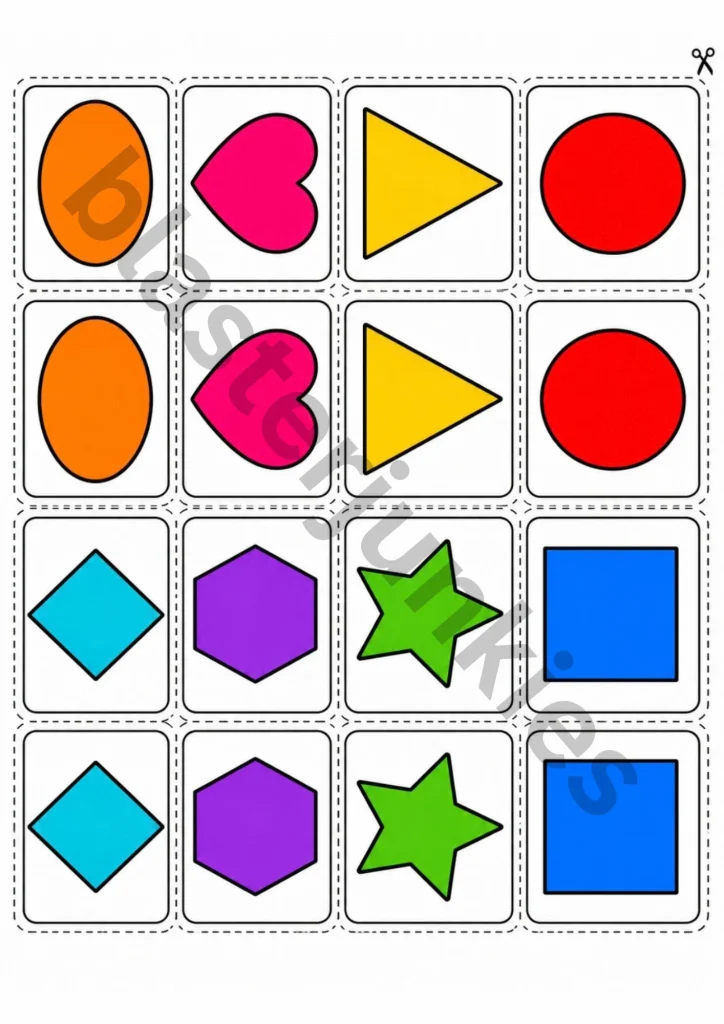
Shapes: Cut out the 16 shape cards and turn them face down. Flip two cards at a time. When they match, name the shape and its colour, then keep the pair.
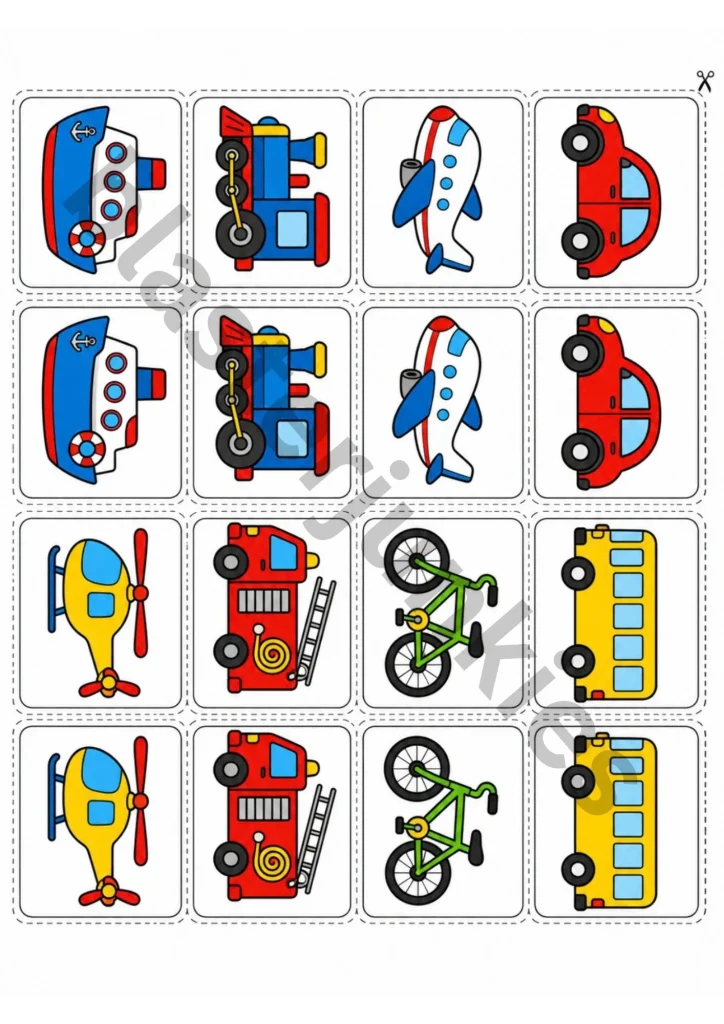
Transport: Cut out the vehicle cards and shuffle them face down. Flip two cards each turn. If they match, say if it travels on land, water, or air.
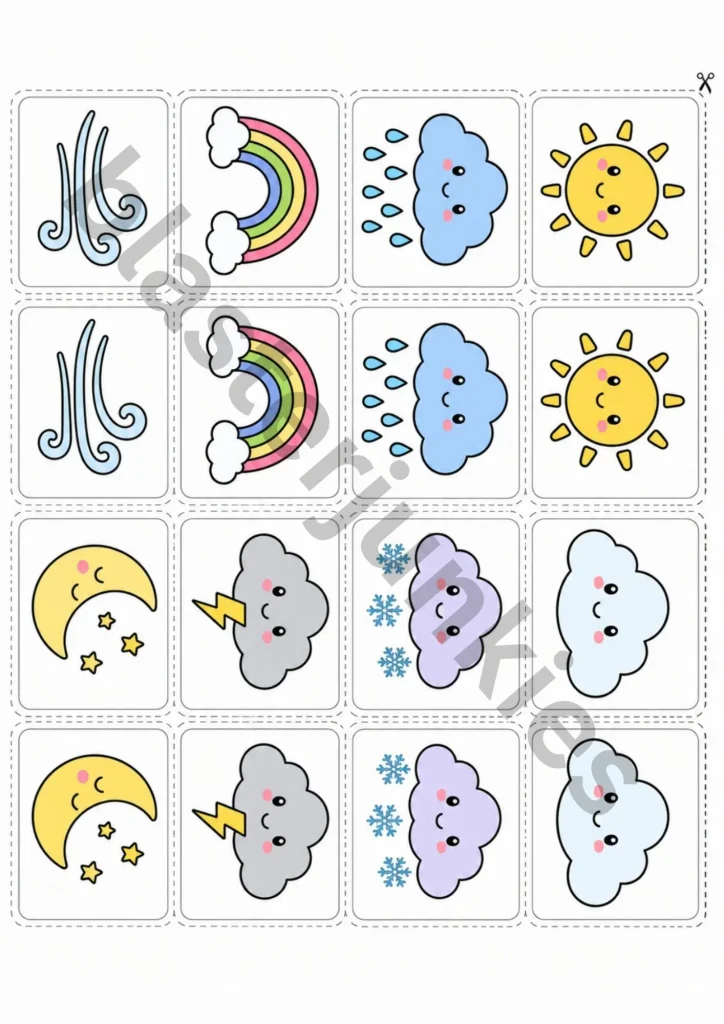
Weather: Cut out the weather cards and place them face down. Flip two cards to find a match. Act out that weather, like shivering for snow or fanning for wind.
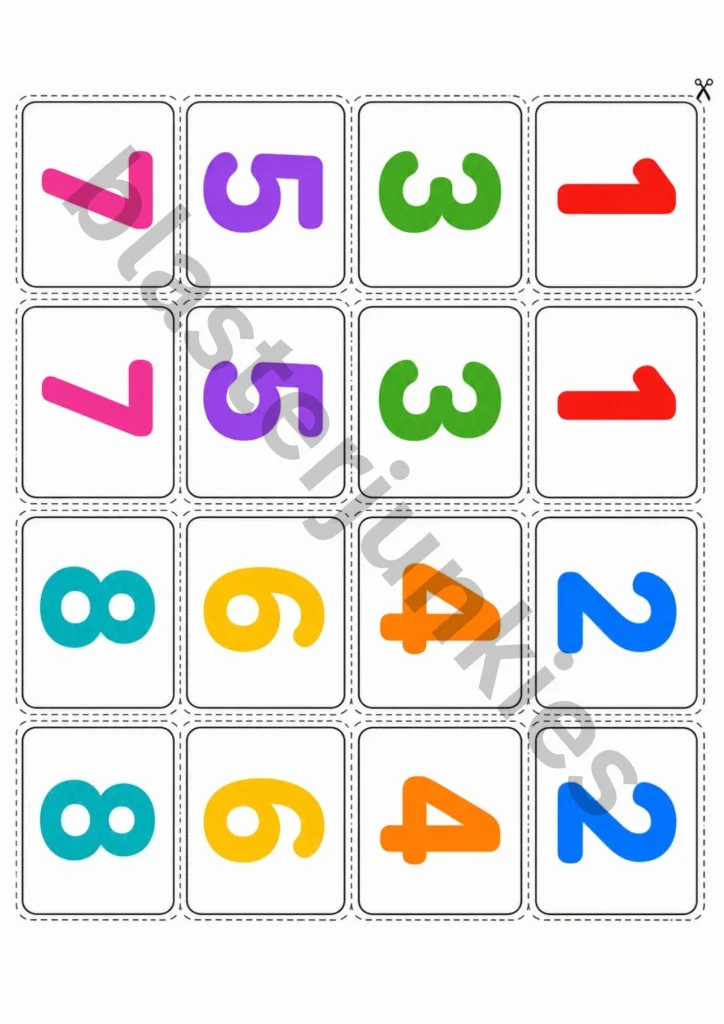
Numbers: Cut out the number cards 1 to 8 and mix them face down. Flip two cards. When the numbers match, say the number and count that many claps.
Bugs: Cut out the 16 bug cards and shuffle them face down. Flip two cards each turn. Name the bug when you match a pair, then keep both cards.
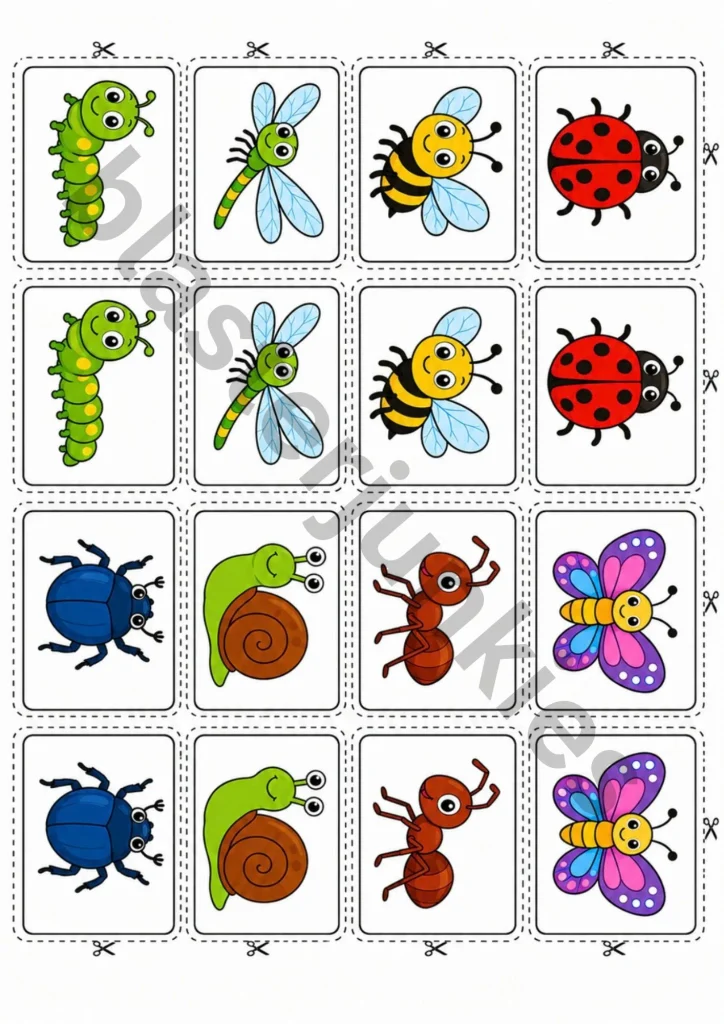
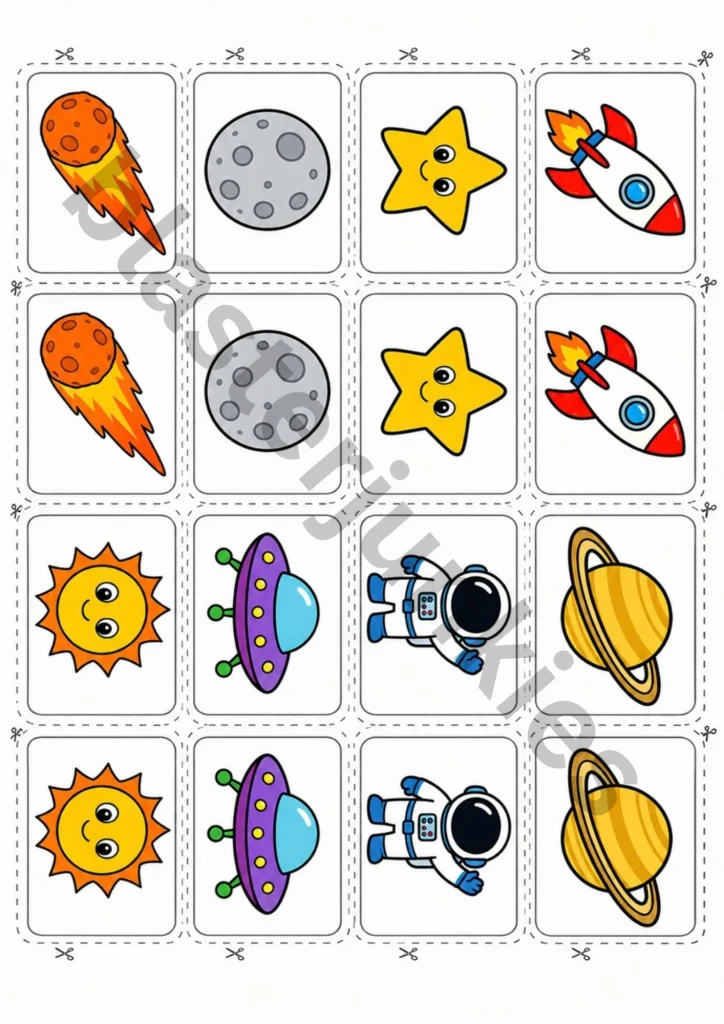
Space: Cut out the space cards and lay them face down. Take turns flipping two cards. Say the space object aloud, and keep the pair if the pictures match.
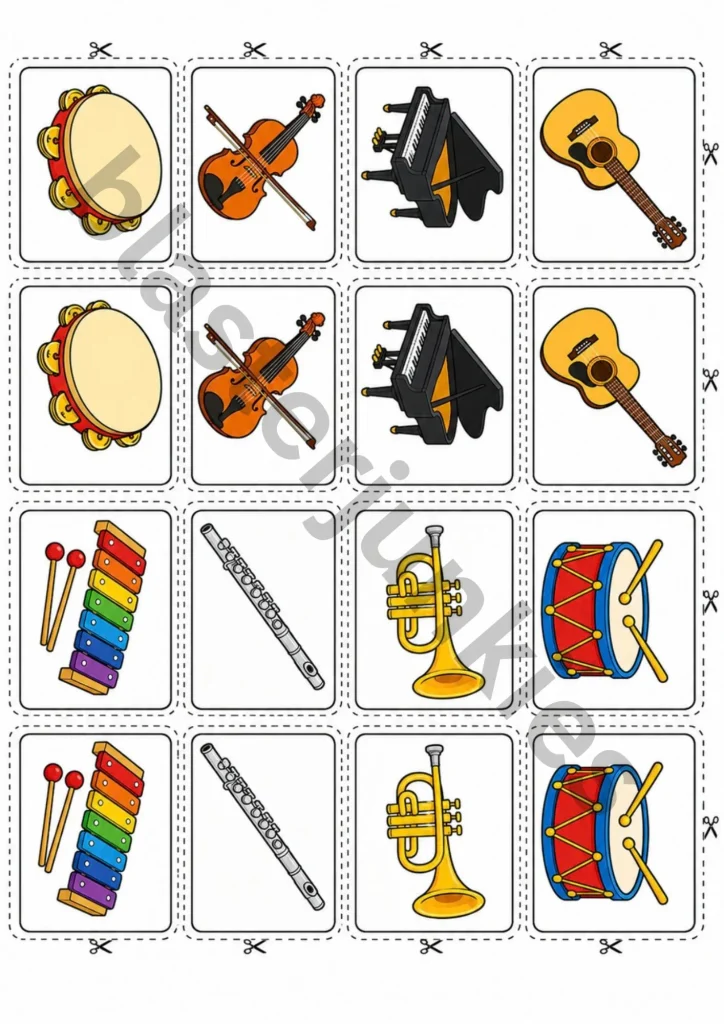
Musical Instruments: Cut out the 16 instrument cards and shuffle them face down. Flip two cards. For each match, name the instrument and pretend to play it before keeping the pair.
The Developmental Benefits Behind the Fun
It is easy to dismiss a matching game as just a way to pass the time, but the research on early childhood development tells a different story.
When a child flips over two cards, tries to remember where the matching image was located, and then attempts to recall that location several turns later,
They are actively exercising their working memory, the mental workspace the brain uses to hold and manipulate information over short periods.
This is the same cognitive muscle that helps children follow multi step instructions, solve math problems, and stay organized as they grow older.
Beyond memory, these games quietly build vocabulary and language skills.
As a child names the animals, shapes, vehicles, or instruments they uncover, they are reinforcing word retrieval and pronunciation in a low pressure, playful context.
Caregivers can layer in additional language by asking questions such as what sound a cow makes, what color the strawberry is,
Or how many legs the ant has, turning a simple matching game into a rich, back and forth conversation.
The act of physically picking up, turning over, and arranging cards also supports fine motor development, particularly for younger children who are still refining their pincer grip and hand eye coordination.
For children playing with a sibling, parent, or classmate, memory games teach important social emotional skills as well,
Including taking turns, waiting patiently, celebrating a friend’s success, and handling the disappointment of an unsuccessful flip with grace.
These small moments of practiced patience and good sportsmanship add up over time.
Finally, because each themed set is built around a category, like animals, shapes, or numbers, the game naturally supports categorization and early academic concepts.
A child sorting through farm animals is implicitly learning that goats, cows, and pigs belong to a group, while a child matching numbers one through eight is getting low stakes repeated exposure to numeral shapes long before formal counting lessons begin.
How to Prepare the Cards for Play
Getting these printable pages ready for little hands takes just a few simple steps:
Print each page on A4 cardstock or thick paper if possible. Cardstock holds up far better to repeated shuffling and small, eager fingers than regular printer paper.
Choose one theme to start with, especially for younger children. Starting with farm animals or shapes and colors is often the easiest entry point.
Cut along the dashed lines using the small scissor icons as a guide. Older children can help with this step as a fine motor activity in itself.
Consider laminating the cards or covering them with clear packing tape. This dramatically extends their lifespan, especially if snacks or sticky fingers are involved.
Store each themed set in its own small envelope, zip top bag, or recipe box divider so sets do not get mixed together and pieces do not go missing.
Ways to Play: From Classic Memory to Creative Variations
The Classic Match Game
Shuffle all sixteen cards from one theme and lay them face down in a grid, ideally a 4×4 arrangement to match the original layout.
Players take turns flipping over two cards at a time.
If the cards match, the player keeps the pair and goes again. If they do not match, both cards are turned back face down and play passes to the next person.
The player with the most pairs at the end wins. For very young children, it is perfectly fine, and encouraged, to play with all cards visible at first, gradually moving to face down
play as their confidence grows.
Simplified Matching for Toddlers
For children around two to three years old, skip the memory element entirely at first.
Lay out four to six pairs face up and simply ask the child to find the two cards that look the same.
This builds visual discrimination and matching skills without the added challenge of recall, and it is a great confidence building first step before introducing the face down version.
Sorting and Categorizing
Combine two or three themed sets together and have the child sort the cards back into their original categories before playing.
This works especially well with sets like farm animals, ocean life, and bugs, where children must look closely at details to decide where each card belongs.
Speed Round and Memory Tower
For older preschoolers and early elementary kids, add a timer and challenge them to find all eight pairs as quickly as possible, then try to beat their own time on a second attempt.
Alternatively, try a ‘memory tower’ where every successful match gets stacked into a tower; if a player flips two non matching cards, the tower gets gently shaken, adding a fun physical challenge to the mental one.
Themed Learning Extensions
Use each theme as a jumping off point for broader learning.
After playing with the numbers set, practice counting from one to eight using objects around the house.
After the shapes and colors set, go on a scavenger hunt to find real objects that match each shape or color.
After the musical instruments set, listen to short audio clips of each instrument and have the child guess which card it belongs to.
After the space set, talk about what astronauts do or look at pictures of the real moon and planets together.
Tips for Different Age Groups
Adjust the experience based on your child’s developmental stage to keep the game challenging but never frustrating:
Ages 2-3: Use just one set, play with cards face up, focus on naming and pointing, and keep sessions short, around five to ten minutes.
Ages 4-5: Introduce face down play with a smaller grid first, such as three pairs, then build up to the full eight pairs as memory skills strengthen.
Ages 6 and up: Combine two themes for a sixteen pair challenge, introduce timed rounds, or use the cards for spelling and writing practice by having the child write the name of each card they find.
Why This Pack Stands Out
What makes this particular set of 10 memory card games for kids so valuable is its breadth and consistency.
Because every theme follows the same clean 4×4 layout with the same card size, sets can be mixed, matched, and combined freely without anything looking out of place.
The illustrations are bright, friendly, and large enough for small children to recognize easily, while still being detailed enough to spark genuine curiosity, like noticing the spots on a ladybug or the rings around Saturn.
Because the pack is a printable PDF, it costs nothing to reprint if a card gets lost or torn, and it can be used again and again across siblings, students, or even multiple classrooms.
It travels well too: a single laminated set fits easily into a diaper bag, car door pocket, or backpack, making it an ideal companion for restaurants, waiting rooms, road trips, and flights.
[ >> DOWNLOAD THE 10 MEMORY CARD GAMES FOR KIDS << ]
The Ultimate Guide to Classroom Behavior Charts
Back to School Printable Signs
Colour, Learn, and Celebrate: How to Use Black History Month Bookmarks with Kids
15 Free Printable Winter Bookmarks to Color
Free Printable Bible Verse Bookmarks to Color
15 Dog Bookmarks to Color Printables
50 States Coloring Pages Free Printables