Walk into any truly great classroom and you’ll notice something immediately the walls are working.
Not just decorated, but actively teaching. Every poster, chart, and display is doing something useful:
Reminding children of a rule, helping them name a feeling, anchoring a concept they’re still learning.
That’s the difference between decor that looks nice and decor that actually supports learning.
The Classroom Decor Printables pack is designed to do exactly that.
It’s a thoughtfully curated collection of A4 sized display posters that cover the essential building blocks of early childhood education literacy, numeracy, emotional wellbeing, and classroom culture all in one cohesive, beautifully illustrated set.
Whether you’re setting up a school classroom, a homeschool space, or a learning corner at home, this pack gives you everything you need to create an environment where children feel safe, inspired, and supported to learn.
What’s in the Pack
The collection contains ten distinct display posters, each covering a different foundational area of early learning.
Together they form a complete learning environment rather than a random assortment of individual prints.
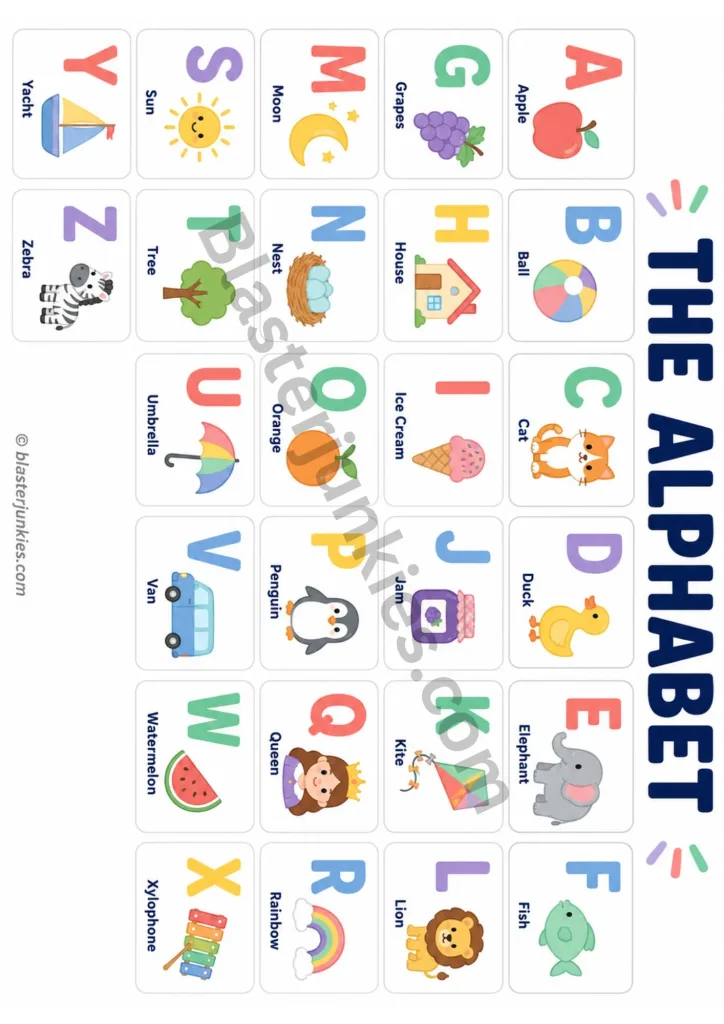
The literacy and language side of the pack is particularly strong.
There’s a full alphabet chart with all 26 letters displayed alongside vibrant illustrated examples A for Apple, B for Ball, all the way through to Z for Zebra giving early readers a constant visual anchor for letter sound connections.
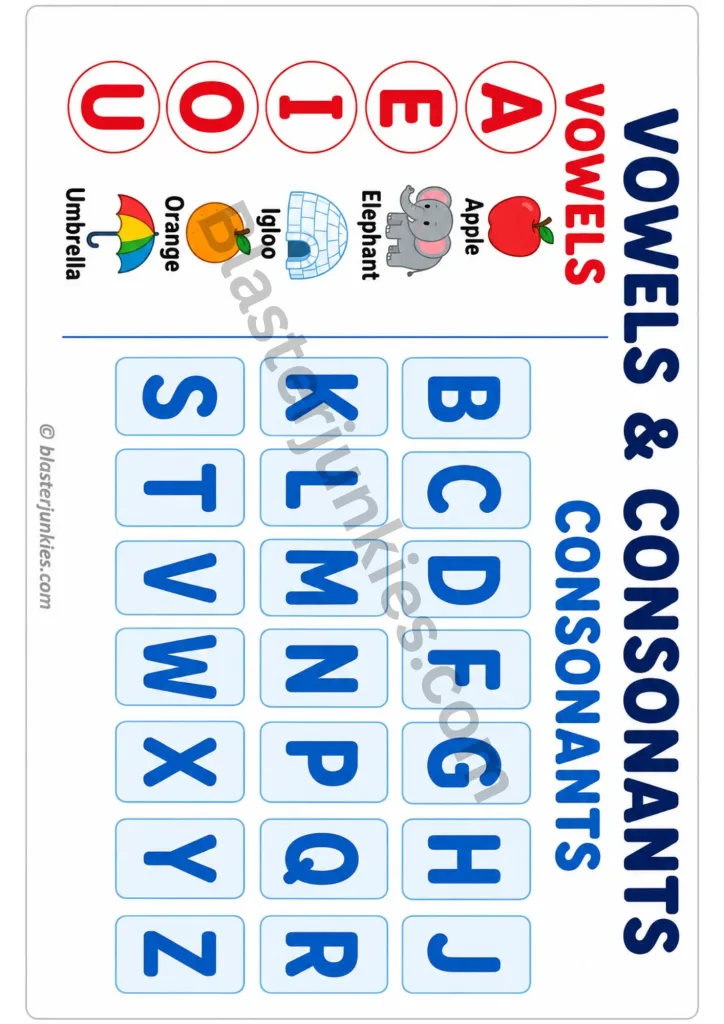
Sitting alongside it is a dedicated Vowels and Consonants poster that separates the five vowels (A, E, I, O, U) with pictorial examples from the consonant letters displayed in bold blue tiles a genuinely useful phonics reference that goes beyond a basic alphabet.
Together, these two posters create a strong literacy wall that children can refer to independently throughout the school day.
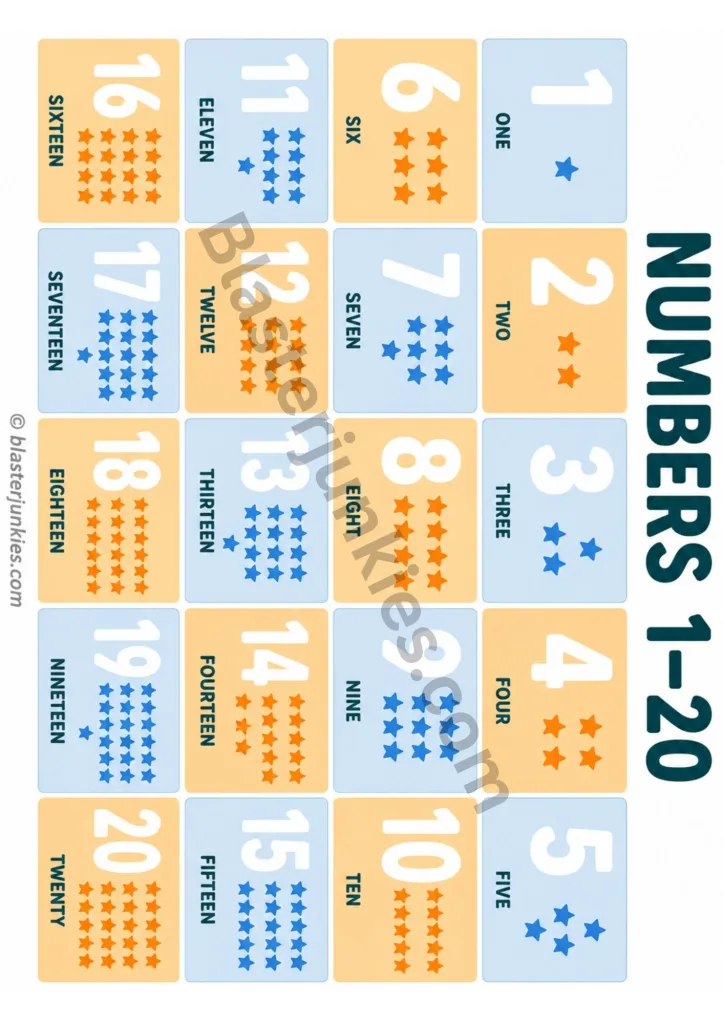
For early numeracy, the Numbers 1–20 poster displays each number in large, bold print alongside its written word form and a matching star count visual giving children three different ways to process and remember each number simultaneously.
This multi representation approach (numeral, word, and quantity) is exactly what early maths education recommends, and having it on the wall means children encounter that reinforcement passively every single day.
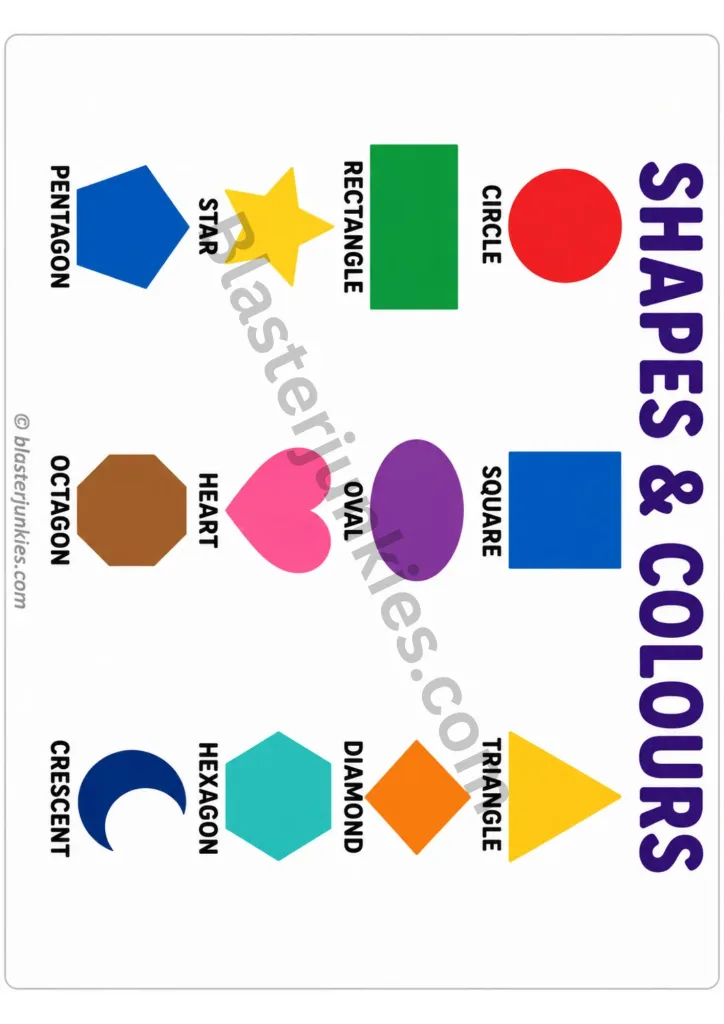
The Shapes and Colours poster covers twelve shapes from the everyday circle, square, and triangle through to pentagon, hexagon, octagon, diamond, crescent, and oval each displayed in a rich, distinct colour, so the poster teaches colour vocabulary and shape names simultaneously.
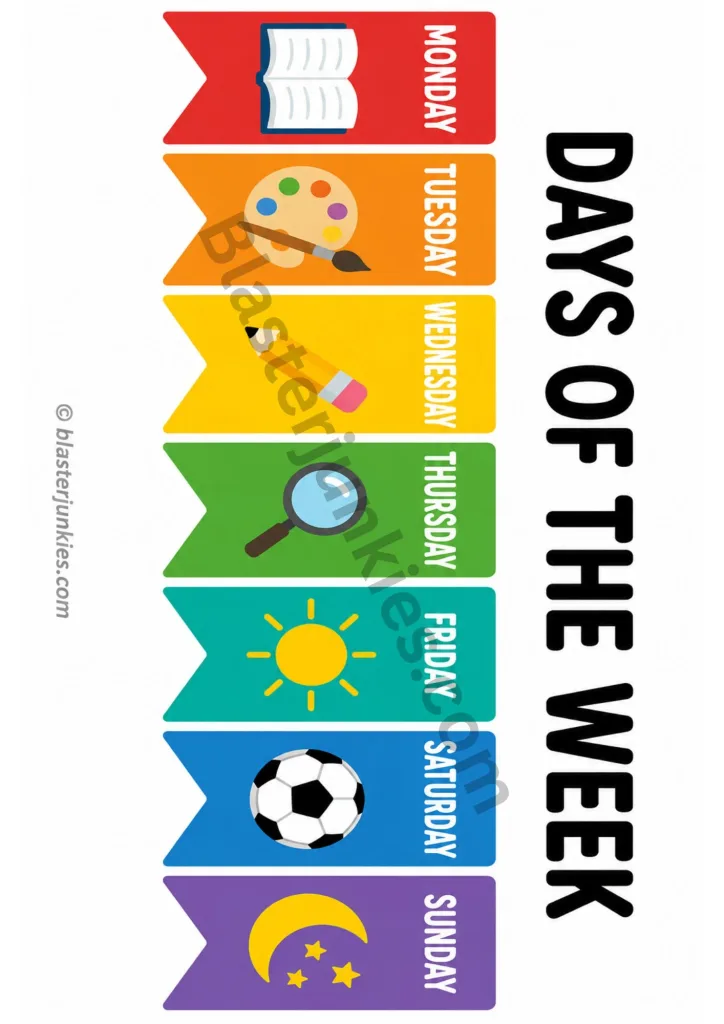
The Days of the Week poster presents all seven days as colourful chevron banners in rainbow order, each paired with a relevant icon
(a book for Monday, a paint palette for Tuesday, and so on), making the abstract concept of the weekly cycle feel concrete and memorable for young children.
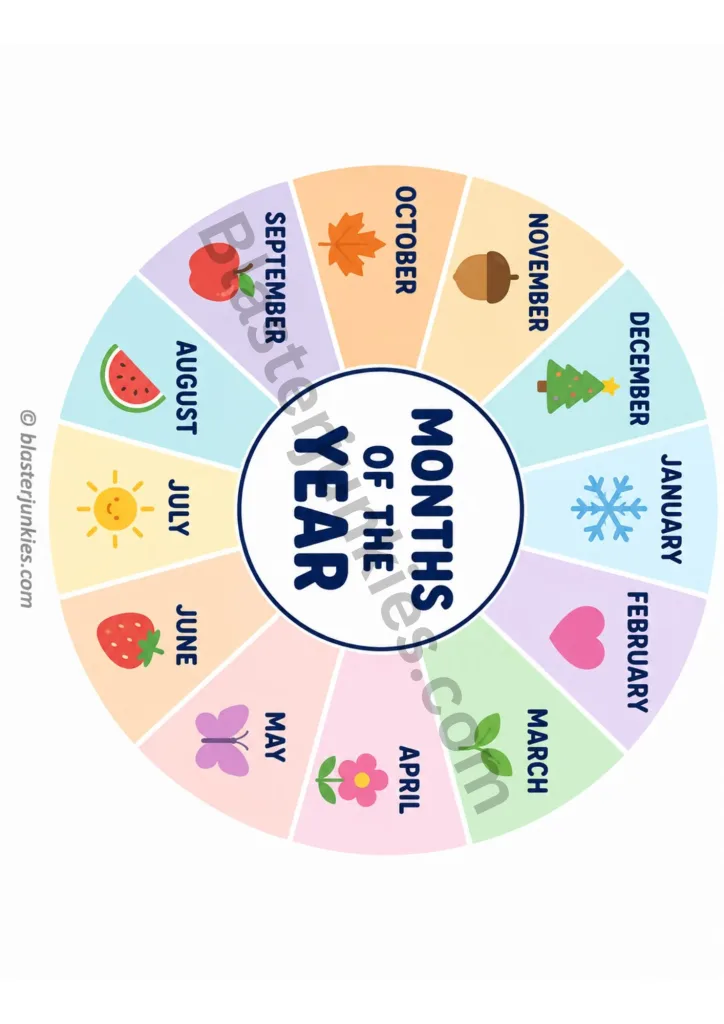
The Months of the Year is displayed as a beautiful circular wheel with all twelve months arranged around a central hub,
Each segment in its own soft colour with a matching seasonal or cultural illustration a maple leaf for October, a Christmas tree for December, a snowflake for January, a strawberry for June.
The circular format is particularly clever because it visually conveys that the year loops around and repeats, which is a concept young children find genuinely difficult to grasp.
Beyond academic content, the pack also covers two areas that are just as important to a healthy learning environment: emotional intelligence and mindset.
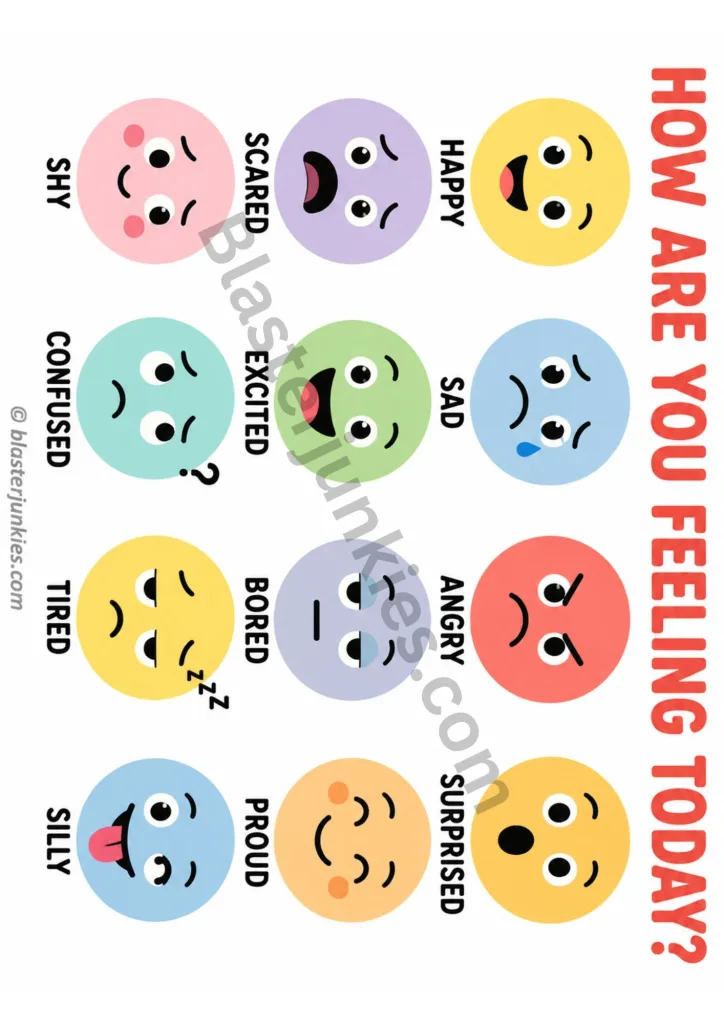
The How Are You Feeling Today? poster displays twelve emotions Happy, Sad, Angry, Scared, Excited, Confused, Tired, Bored, Shy, Silly, Surprised, and Proud each represented by a large, expressive cartoon face in a distinct colour.
This is one of the most impactful posters in the pack.
Children who can name and identify their emotions are significantly better equipped to regulate them, ask for help, and engage with learning.
Having this chart visible gives teachers and parents a simple, non intrusive tool to open daily emotional check ins.
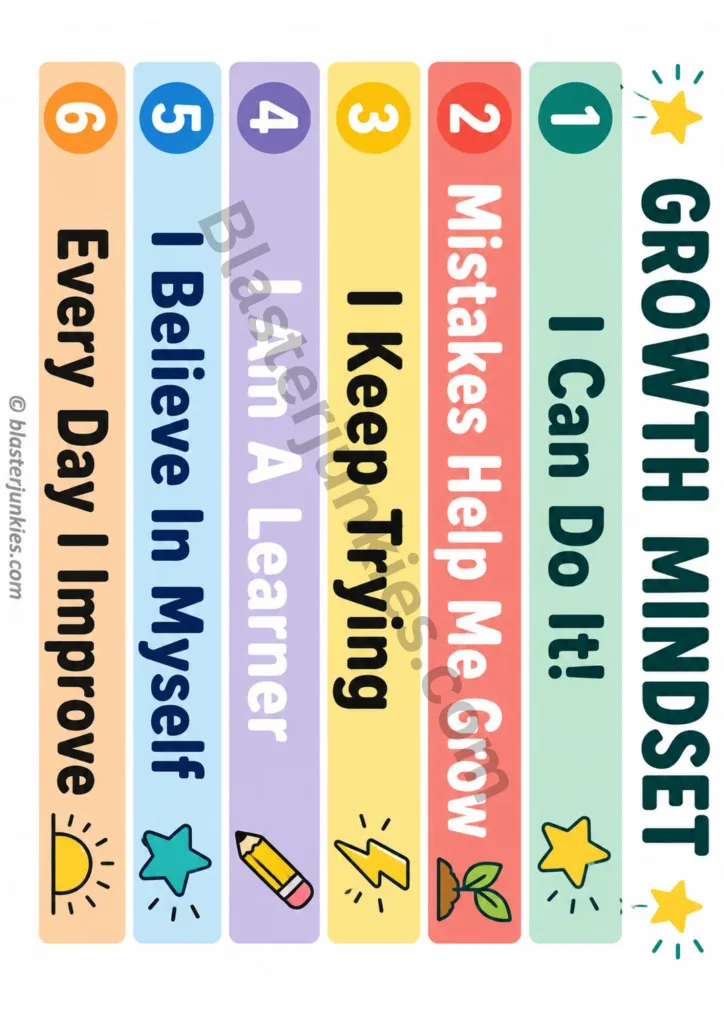
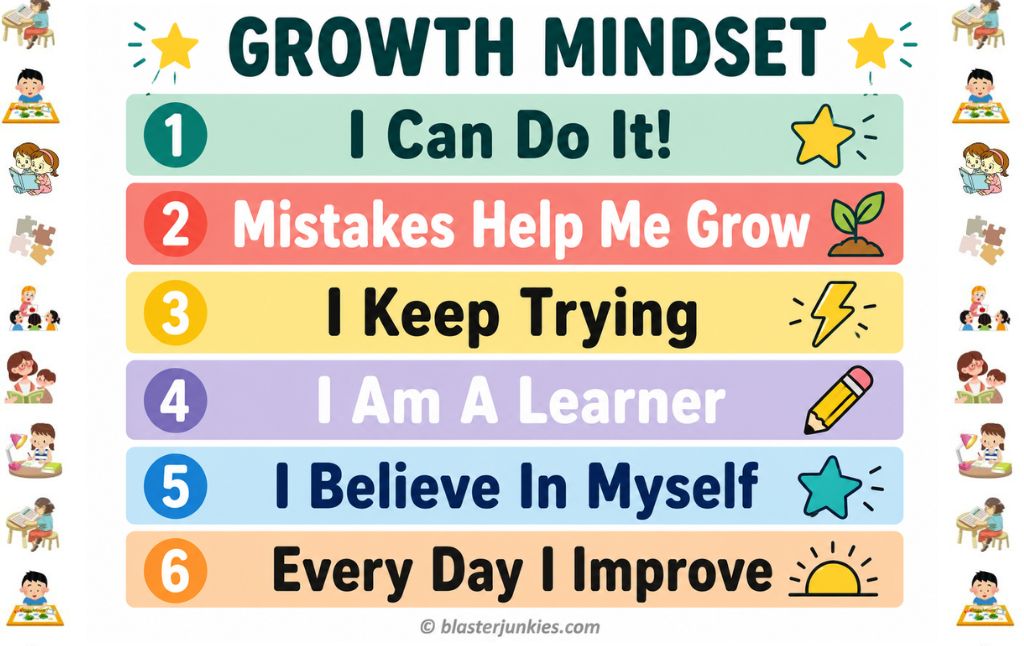
The Growth Mindset poster presents six affirmations in bold vertical banners: “I Can Do It!”, “Mistakes Help Me Grow”, “I Keep Trying”, “I Am A Learner”, “I Believe In Myself”, and “Every Day I Improve.”
These aren’t just motivational phrases they represent the core principles of a growth mindset, and research consistently shows that children who internalise these beliefs outperform peers with fixed mindsets over time.
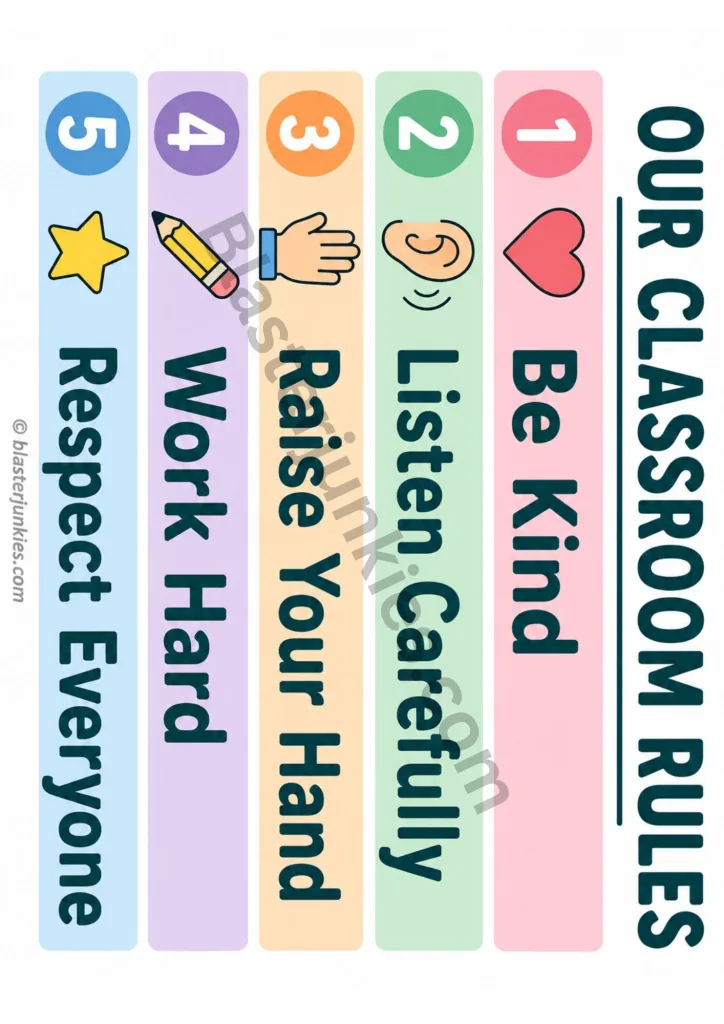
Rounding out the classroom culture side of the pack, the Our Classroom Rules poster displays five fundamental rules in wide, pastel coloured vertical strips with matching icons: Be Kind, Listen Carefully, Raise Your Hand, Work Hard, and Respect Everyone.
Clear, visible classroom rules that children helped understand from day one are one of the most reliable predictors of a calm, productive classroom.
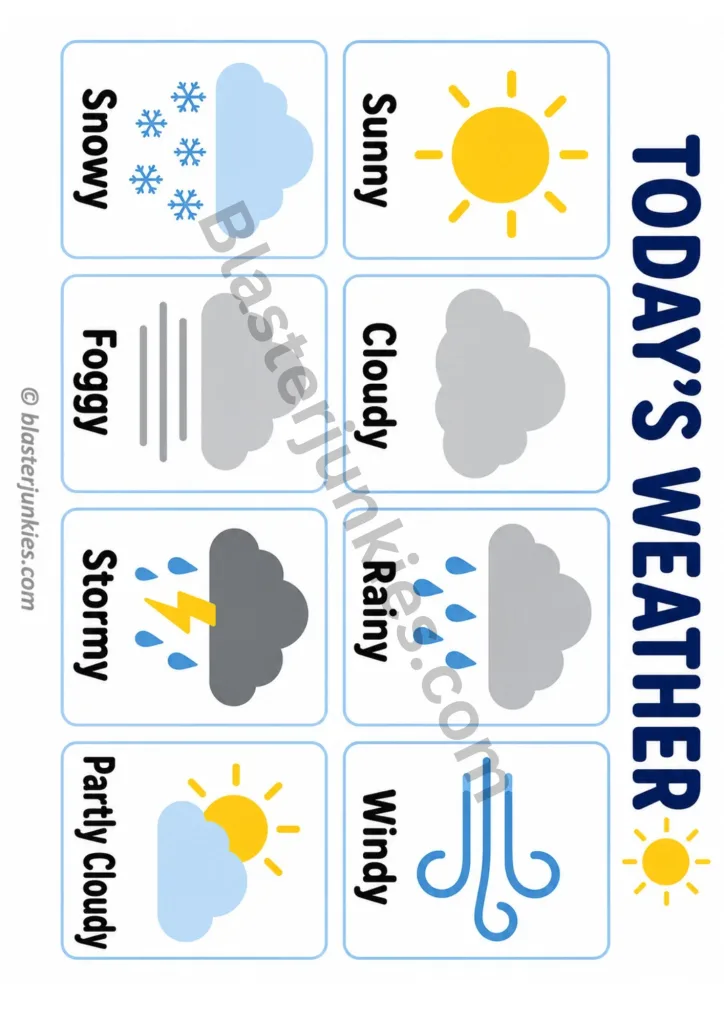
Finally, the Today’s Weather poster presents eight weather types Sunny, Cloudy, Rainy, Stormy, Snowy, Foggy, Windy, and Partly Cloudy each in its own illustrated tile.
This is a classic morning circle tool that helps children observe, describe, and connect language to the real world outside.
How to Use These Printables Effectively with Kids
Placement matters more than most people think. Hang literacy and numeracy posters at children’s eye level not at adult eye level so kids can actually read and reference them independently.
The alphabet chart and numbers poster should go near the reading or writing area, where children are most likely to need them mid task.
The feelings chart works best near the classroom entrance or meeting area, so it’s naturally encountered at the start of the day.
Make the posters interactive, not passive. The most powerful classroom displays are ones children actively engage with, not just look at.
Point to the weather chart as part of a daily morning routine and ask a child to come up and identify today’s weather.
Use the feelings chart as a daily check in by asking every student to silently point to how they’re feeling as they walk in.
Turn the days of the week poster into a song. The more physical and verbal interaction children have with these displays, the deeper the learning sticks.
Use them as conversation starters, not just reference tools. The growth mindset poster, in particular, becomes far more powerful when teachers refer back to it in the moment.
When a child says “I can’t do it,” walking to the poster together and reading number one
“I Can Do It!” turns a moment of frustration into a teachable, memorable experience.
Similarly, when a child is struggling to name what they’re feeling, walking to the feelings chart and identifying “I think I’m feeling frustrated is that similar to angry or confused?” is a much more effective intervention than asking them to describe it from scratch.
Layer these posters with your broader classroom systems. These decor prints work best when they’re part of a fully organised, print rich classroom environment.
Teachers already using The Teacher Survival Kit Printable will find these posters a natural visual extension of the same organisational philosophy a classroom where everything has a place and a purpose.
For families setting up a learning corner at home alongside a structured weekly schedule,
Pairing these posters with Weekly Planner Printables creates a genuinely school-like home learning space that children take seriously.
For the very youngest learners, these posters pair especially well with Kindergarten Readiness Worksheets the alphabet and numbers posters in particular give children a permanent visual reference as they work through readiness activities, Reducing frustration and building confidence.
And if you’re preparing for the start of a new school year, the classroom rules and growth mindset posters
Are some of the best things to put up before the very first day pair them with Editable First Day of School Signs to create a welcoming, intentional environment from the moment children walk in.
Printing and display tips: Print on matte photo paper or cardstock for best results the colours stay vivid and the posters feel substantial rather than flimsy.
Laminate anything you plan to keep up long term; it protects against sunlight fading and makes the posters easy to wipe clean.
Use matching frames or backing card to give the display area a cohesive, polished look, which subtly signals to children that these materials matter and are worth paying attention to.
For home use, a dedicated wall space or the back of a bedroom door can hold six to eight of these posters comfortably.
Parents already managing a Budget Binder Printables system for family finances, a Student Assignment Tracker Template for older children’s homework, and a Printed Emergency Contact Form for the school folder will find that these classroom posters complete the picture
Turning the home into an environment that genuinely supports learning at every level.
And for families still counting down to the new term, the Back to School Countdown Printable makes the build up to that first day feel exciting rather than anxious.
A well decorated learning space doesn’t just look good it thinks.
Print these posters, put them up at eye level, and watch how often your children quietly turn to the wall for the answer they need.
Printable Kids Daily Routine Chart: A Blank Canvas for Building Real Habits
Chores for Tweens and Middle Schoolers: A Printable System That Actually Builds Independence
Chore Ideas for Preschoolers (4-6 Years): A Parent’s Guide to This Printable Chart Pack
Chore Chart Printable for Toddlers (2–3 Years)
10 Free Printable Lunch Box Notes: The Sweetest Way to Connect with Your Kids Every Day