In an age when everything lives on our phones, it’s easy to assume that emergency contact information is always accessible.
But phones run out of battery, get lost, or are in the hands of a panicking adult who can’t remember a PIN.
A babysitter who has never met the family doctor can’t search someone else’s contacts.
A teacher standing in a school car park trying to reach a parent during a medical emergency needs a piece of paper, not a login screen.
Printed emergency contact forms exist for exactly these moments, and using them well is one of the simplest things a family can do to keep children safer.
Fill It In Completely Every Field
The most common mistake with emergency contact forms is leaving fields blank because they feel unnecessary in the moment.
Blood type seems irrelevant until a child is in surgery and a nurse is asking.
Insurance policy numbers seem bureaucratic until you’re at a hospital reception desk in a foreign city without your wallet.
Allergy information seems obvious to a parent until it’s being communicated to a babysitter, a camp counsellor, or a first responder who has never met the child.
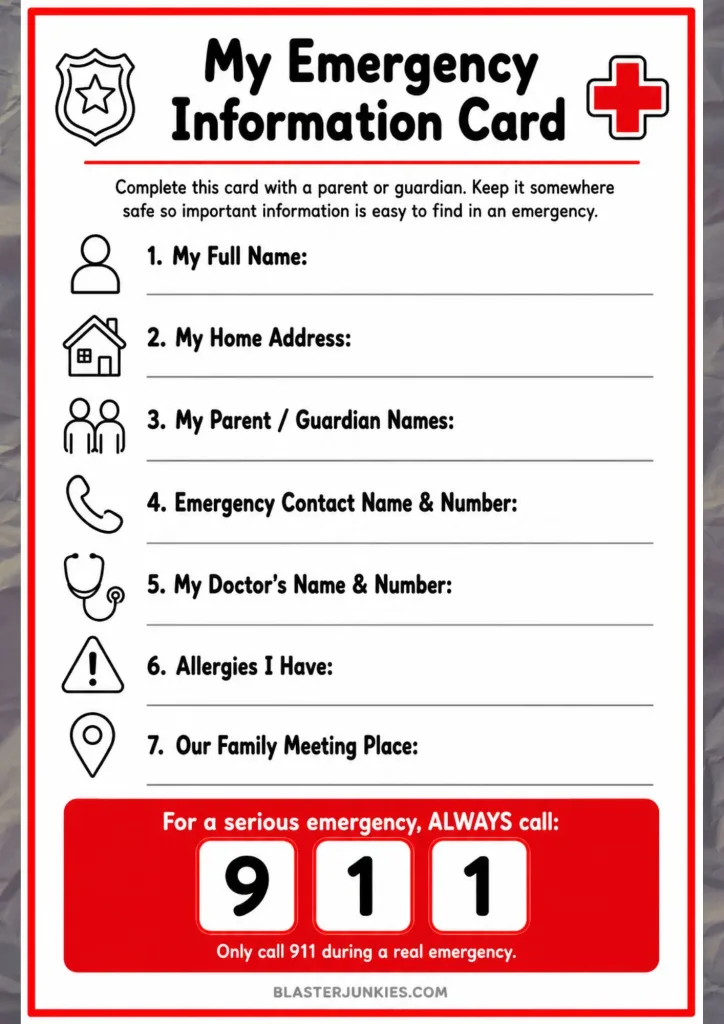
Sit down and fill in every field: child’s full name, date of birth, home address, both parent or guardian names with at least two contact numbers each (not just mobile include a work number),
A secondary emergency contact who isn’t a parent, the child’s GP and any specialist doctors, all known allergies including medication allergies,
Any existing medical conditions and relevant medications, blood type if known, health insurance details, and the child’s school name and grade.
If the form has space for a photo, use it it’s particularly useful for babysitters and carers who are new to the family.
How to Use a Summer Bucket List Printable With Kids
How to Use Kindergarten Readiness Worksheets With Kids
Place Copies Everywhere That Matters
A single form on the fridge at home is a starting point, not a system.
The real safety value of a printable pack that offers multiple designs is that you can place the same information in multiple locations simultaneously without everything looking identical and forgettable.
Put one inside the child’s school bag in a waterproof sleeve.
Give one to your child’s regular babysitter or childminder and ask them to keep it in their own bag, not just at your house.
Leave one with grandparents or any other family member who regularly cares for the child. Pin one inside a sports bag if your child attends regular after school activities.
If your child goes to a camp or holiday club, bring a copy rather than filling in yet another form from scratch.
Keep a digital photo of the completed form in your own phone’s camera roll as a backup.
Teach Older Children What’s On It
From around age five or six, children can begin to learn their own emergency contact information.
Use the form as a teaching tool rather than just a document.
Point to the address and practise saying it aloud together.
Show them the phone numbers and help them memorise at least one parent’s mobile number by heart.
Explain what the form is for in age appropriate terms: “This is a page that tells people who to call if something happens to you and I’m not there.”
This conversation is not meant to frighten children; it’s meant to give them a sense of competence and security.
A child who knows their own address and a parent’s phone number is meaningfully safer than one who doesn’t.
Update It Every Year
Emergency contact forms go stale faster than most people expect.
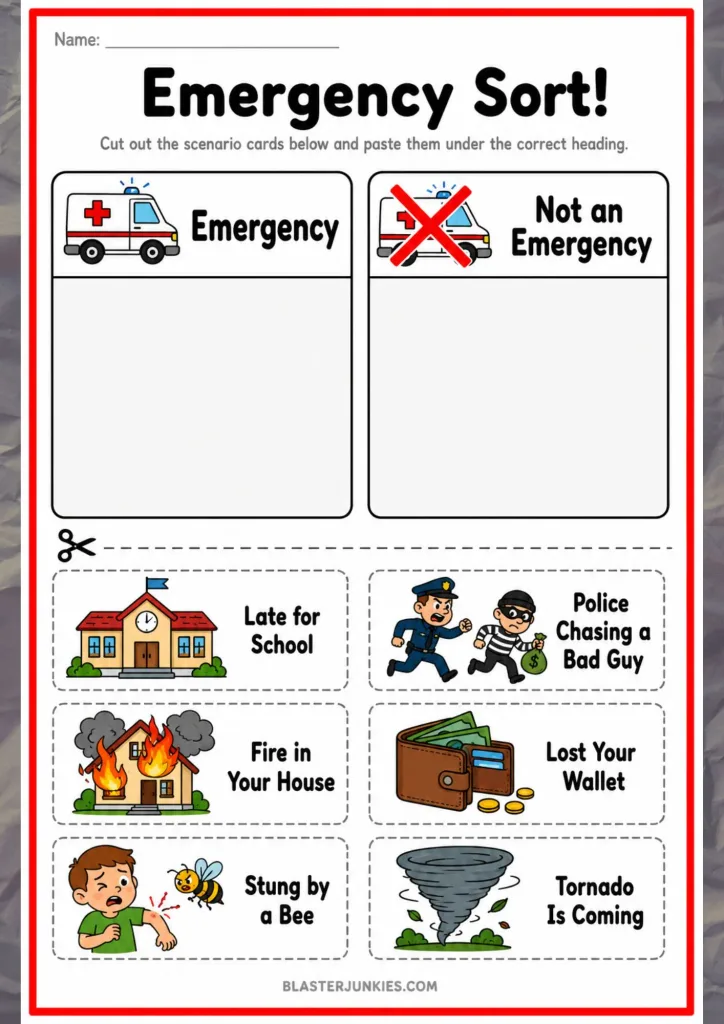
Phone numbers change. Doctors change. Children move schools. Allergies are diagnosed.
Insurance providers change. Build a habit of reprinting and refilling the form once a year, ideally at the start of the school year when you’re already doing paperwork, and replacing all the old copies in the places where you’ve stored them.
Choose the Right Design for Each Setting
When a pack includes multiple visual styles, use the design that fits the context.
A clean minimal form looks right inside a school binder.
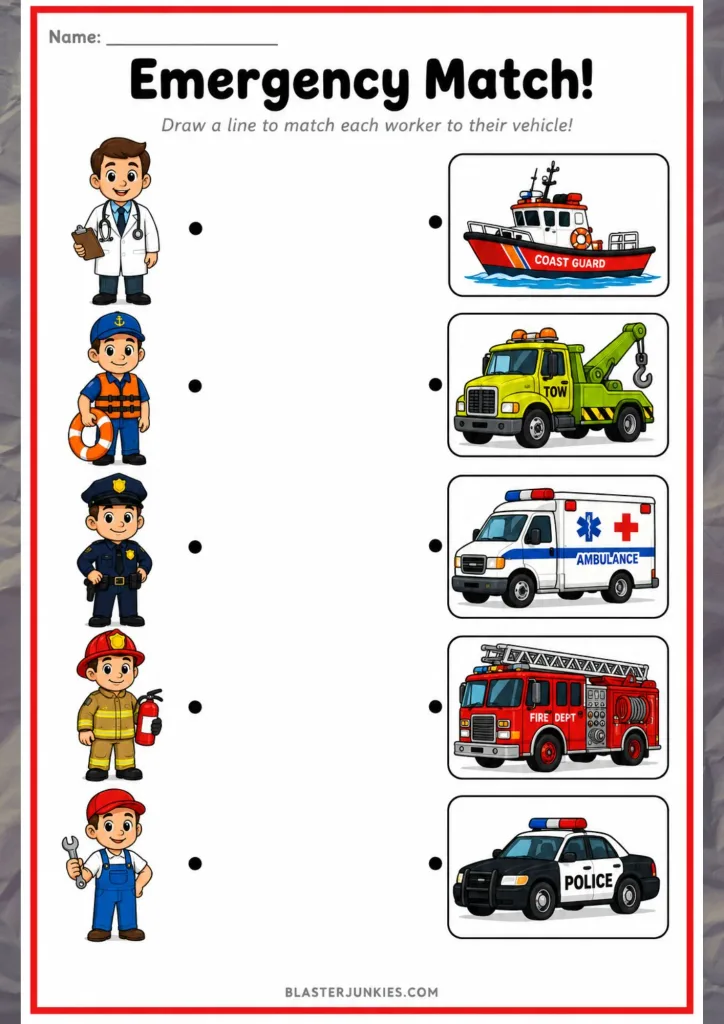
A bold colourful version works better stuck to a babysitter’s fridge.
A more formal professional layout fits inside a first aid kit or a travel wallet.
Matching the design to the setting makes it more likely the form will actually be noticed and used when it matters.
An emergency contact form is not a form you fill in once and forget.
It’s a small, renewable safety net that works quietly in the background of family life until the day it’s needed.
[ >> DOWNLOAD FULL KIT FOR PRINTED EMERGENCY CONTACT FORM << ]
How to Use Homeschool Planner Printables With Kids
Printable Kids Daily Routine Chart: A Blank Canvas for Building Real Habits
Chores for Tweens and Middle Schoolers: A Printable System That Actually Builds Independence
Chore Ideas for Preschoolers (4-6 Years): A Parent’s Guide to This Printable Chart Pack
Chore Chart Printable for Toddlers (2–3 Years)
10 Free Printable Lunch Box Notes: The Sweetest Way to Connect with Your Kids Every Day
Stay Organized with These Family Command Center Printables