Mornings are where most parent child friction lives. Between waking up, getting dressed, eating, and getting out the door on time, a school morning packs more transitions into ninety minutes than almost any other part of the day.
This ten chart printable pack, sized for A4 paper, breaks that chaos into something a child can actually see, follow, and eventually run on their own, without a parent repeating the same five instructions every single day.
What’s Inside the Pack
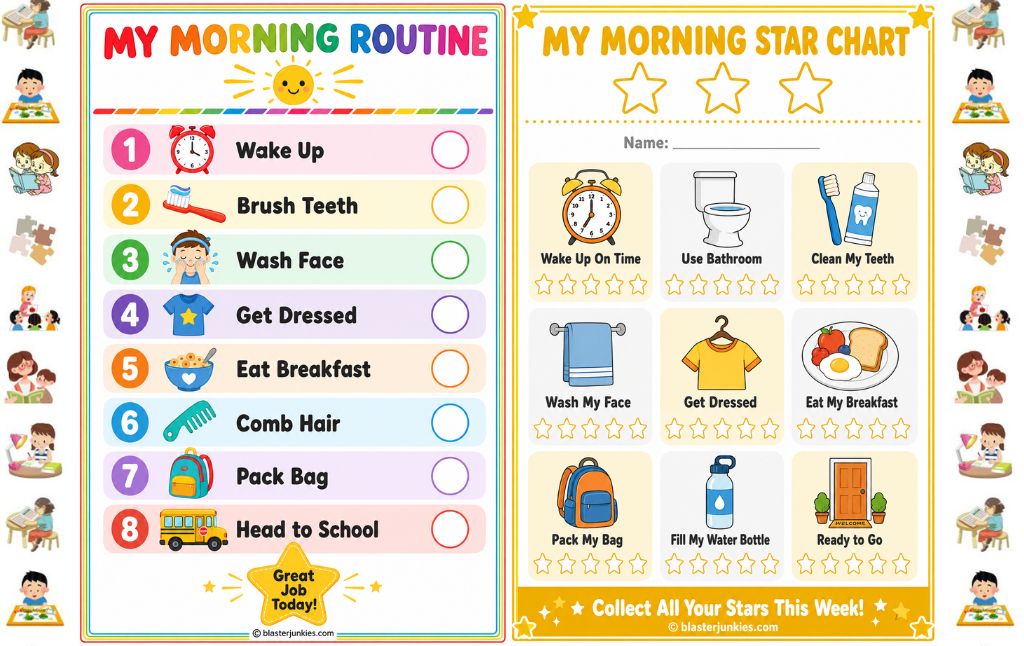
The collection takes the same basic morning sequence, wake up, brush teeth, wash face, get dressed, eat breakfast, pack a bag, head out, and reframes it through ten different lenses so it fits a range of ages and needs.
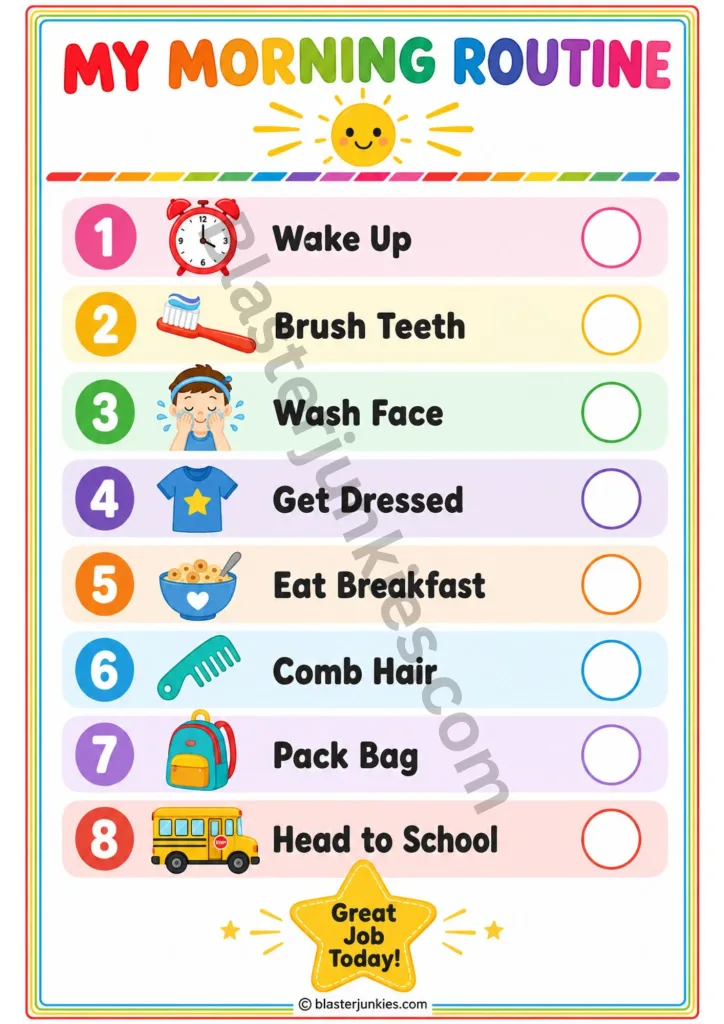
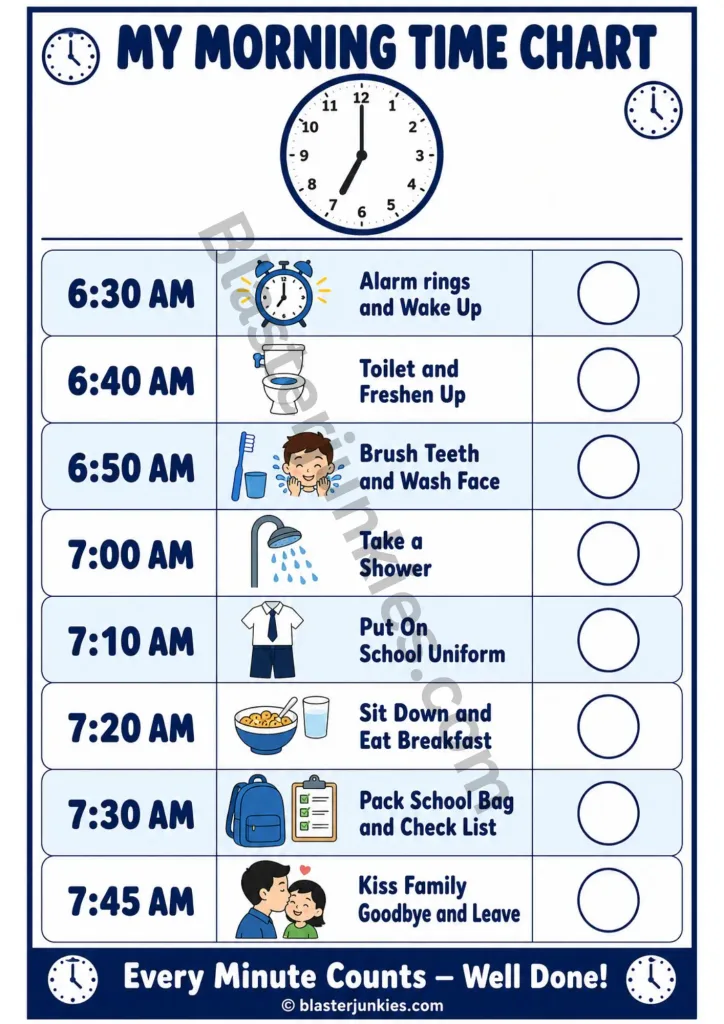
There’s a straightforward numbered routine chart with a circle to check off each step, and a time anchored version that pairs each task with a clock time (6:30 AM alarm, 7:00 AM shower, 7:45 AM out the door) for kids old enough to read a schedule.
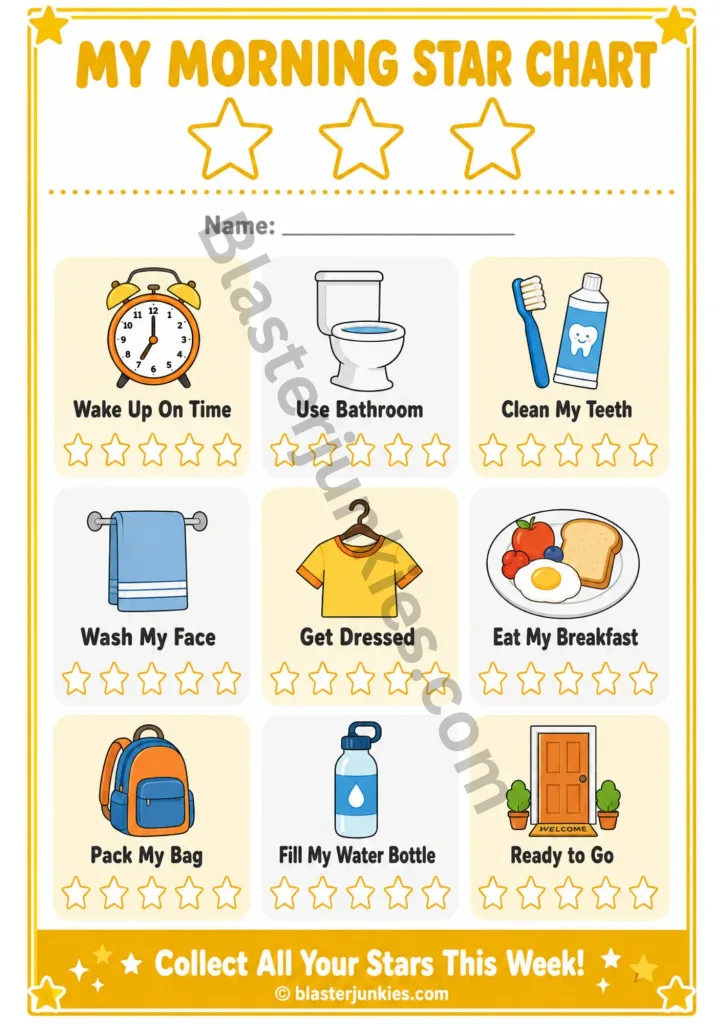
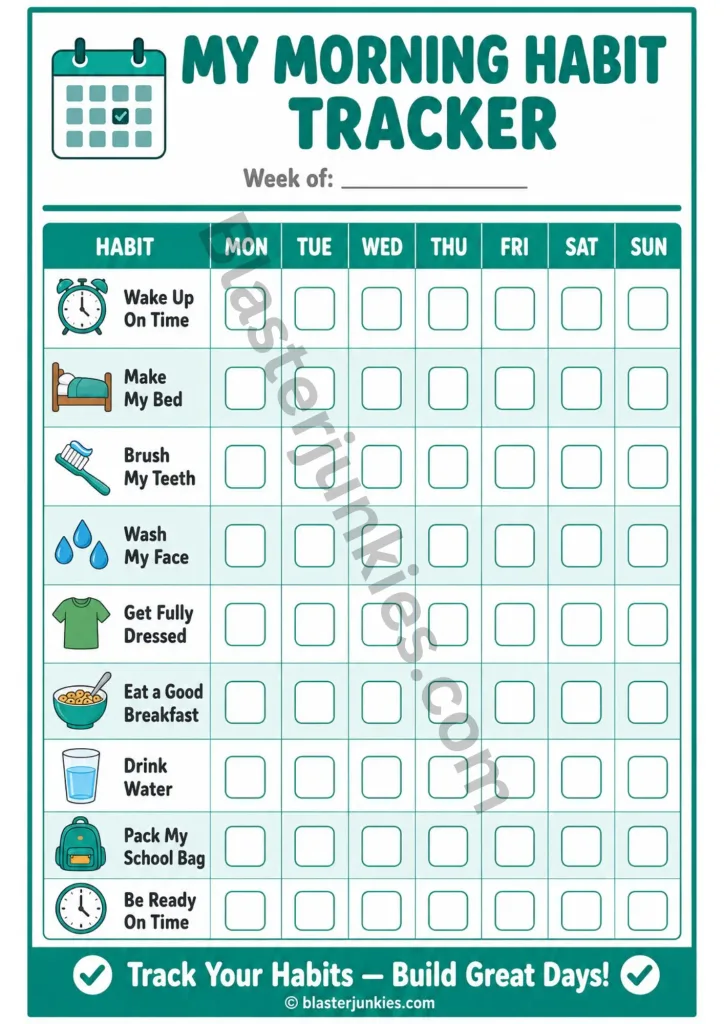
A star based version turns each task into its own five star rating row, while a weekly habit tracker lays nine morning habits across a Monday to Sunday grid for longer term consistency.
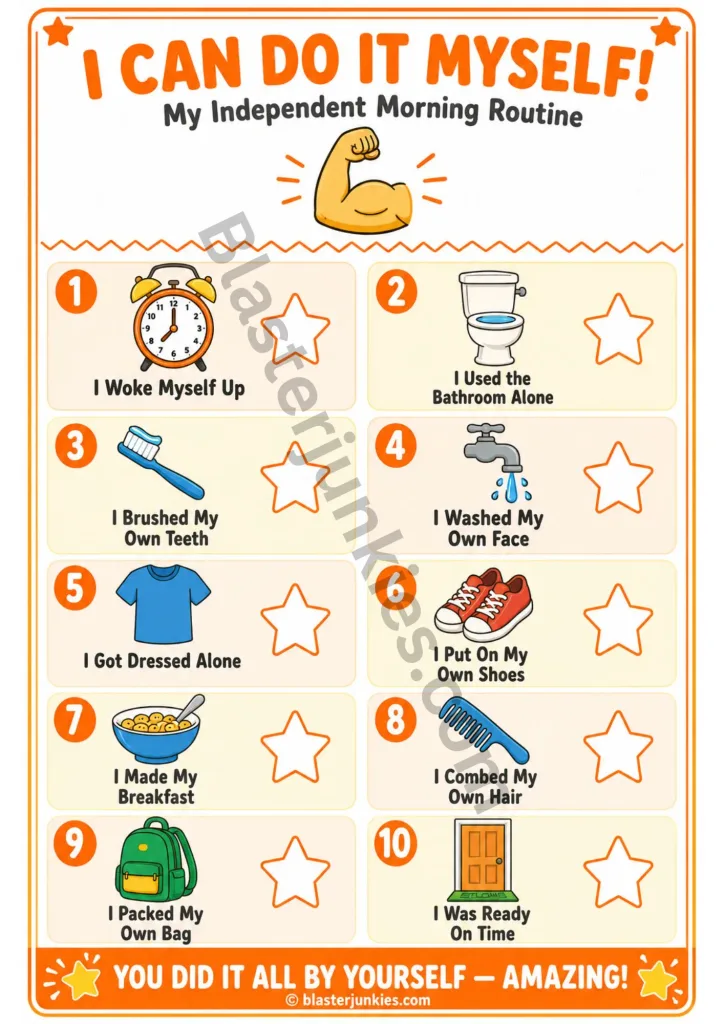
Several charts go beyond the checklist format entirely. An “I Can Do It Myself” sheet rewards independence specifically, each task is phrased as something the child did alone.
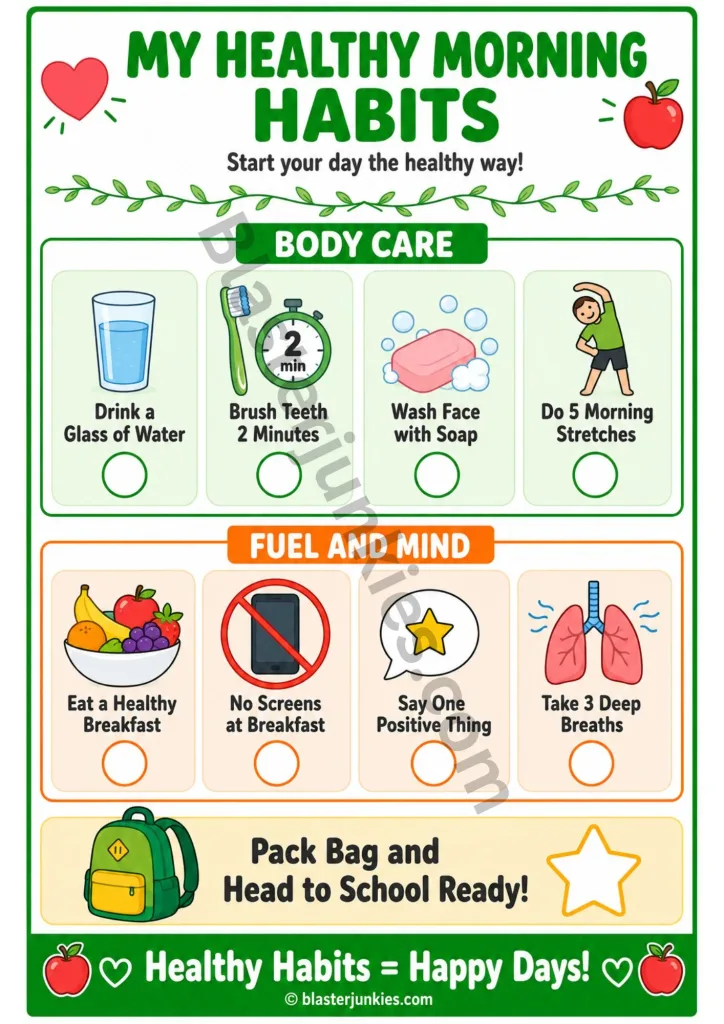
A healthy habits version splits the morning into “body care” and “fuel and mind” sections, working in water, stretching, and a no screens at breakfast rule.
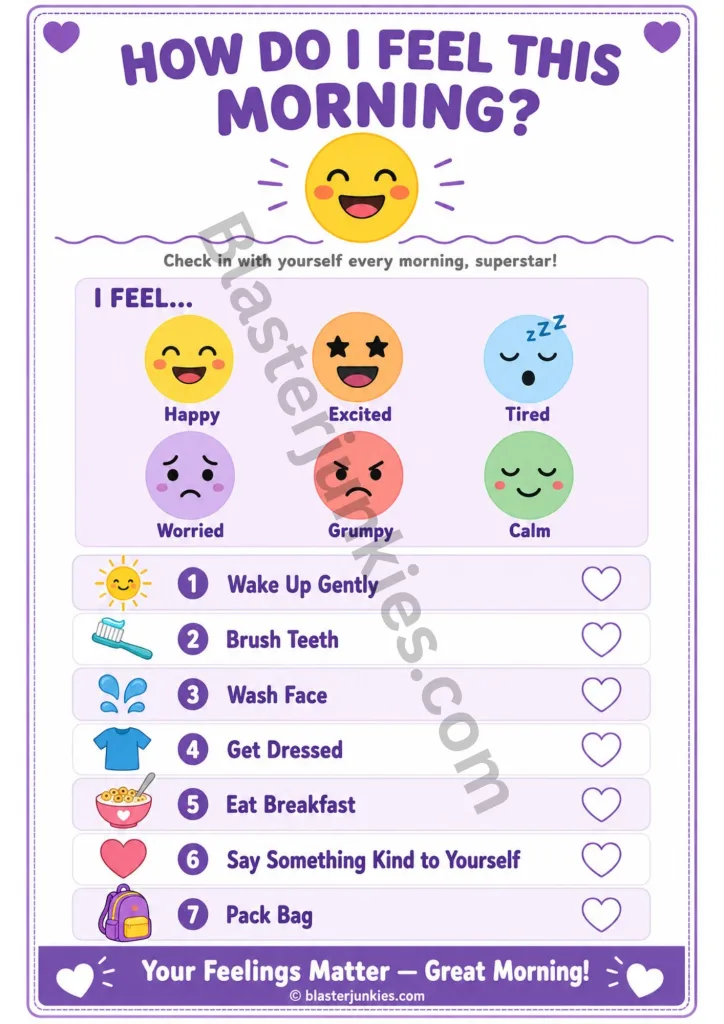
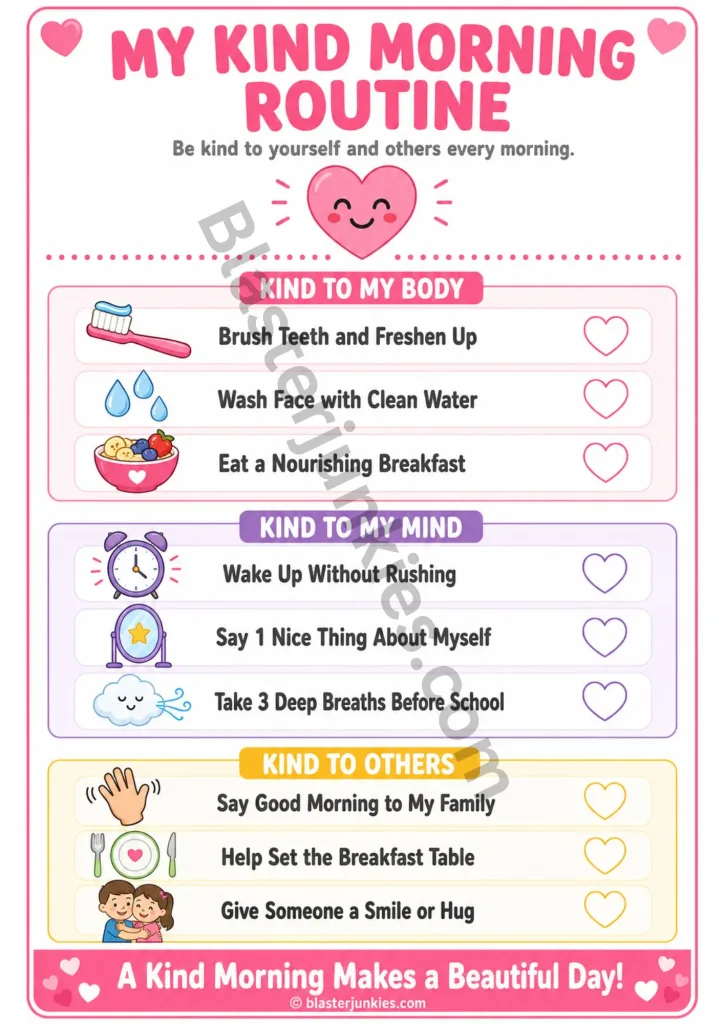
A kindness themed chart links morning tasks to being kind to one’s body, mind, and others. An emotional check in sheet has a child pick a mood (happy, tired, worried, calm) before walking through the routine.
A flexible “choice board” lets a child reorder the same twelve tasks however suits them, with space to set a personal goal for the day.
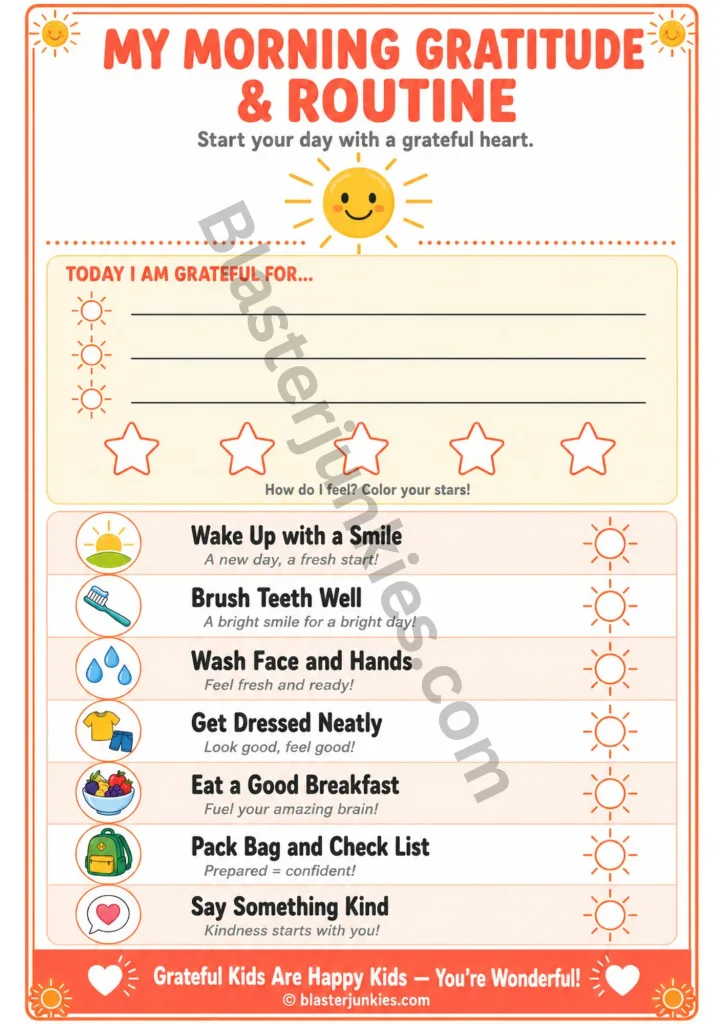
And a gratitude and routine sheet pairs three things a child is thankful for with the standard morning steps.
Why Visual Routines Work So Well at This Age
Young kids struggle with verbal instructions delivered once and expected to stick, but they’re very good at following a sequence they can see.
A visual chart removes the need for a parent to be the routine’s memory; the chart holds that job instead.
Checking off a circle or coloring in a star also gives a child something psychologists call an immediate reward signal, a small, visible payoff for finishing a step, which is far more motivating to a young brain than the abstract promise of “getting to school on time.”
How to Use It With Your Child
Pick one chart rather than trying all ten. If your child is just learning the sequence, start with the basic numbered routine or the star chart.
If mornings already run smoothly but tend to feel rushed or grumpy, the time anchored chart or the choice board can add structure without nagging.
For a child who struggles emotionally before school, the mood check in or kindness chart can open a gentler conversation than “hurry up.”
Print the chosen sheet, slip it into a clear sleeve or laminate it, and hang it at the child’s eye level, on a bedroom door or bathroom mirror works best, somewhere they pass naturally during the routine, not somewhere a parent has to point them toward.
Use a dry erase marker, stickers, or simply have them check the printed circles with a pen each day, then wipe or replace the sheet weekly.
For the first week or two, walk through the chart together each morning, then start stepping back once your child knows the sequence.
Celebrate a finished chart with something small and immediate, a sticker or a compliment, rather than a distant reward.
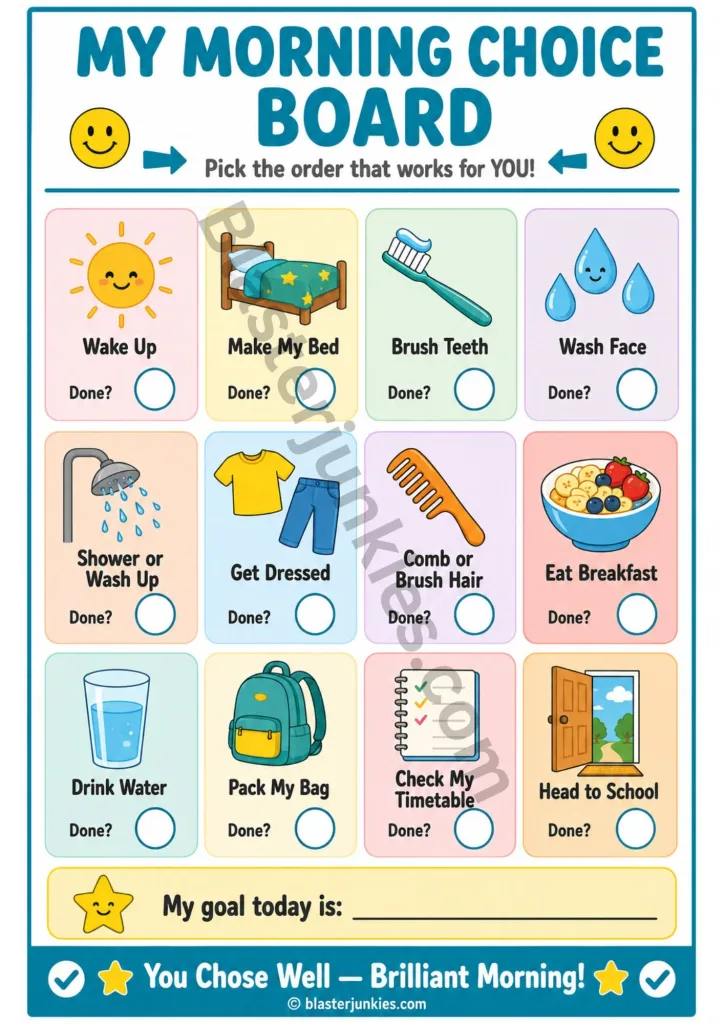
Once the routine feels automatic, usually within a few weeks, retire the chart or swap in a more advanced version, like the choice board for a child ready to self manage the order.
If a calmer morning is your goal, it’s worth thinking about the rest of the week alongside it.
Weekly Planner Printables With Kids extends the same checklist and routine approach beyond breakfast, and pairing it with a household Budget Binder Printables can help keep family logistics, money included, just as visible as the morning routine itself.
Keeping a Printed Emergency Contact Form in the same binder is a small addition that’s easy to forget until you actually need it.
Used this way, the chart isn’t really about ticking boxes. It’s a scaffold that lets a young child own their own morning, one small, visible success at a time, until the day comes when they don’t need the paper at all.
Carrying the Routine Into the School Year
A solid morning routine tends to matter most right when school starts, so it’s worth building it alongside a few other back to school staples.
A Back to School Countdown Printable helps a child get mentally ready for the shift in pace before the first bell even rings, and Editable First Day of School Signs with Your Kids turns that first morning into something worth photographing rather than just surviving.
Once the school year is underway, the same visual, check it off approach that makes mornings easier works just as well for homework and assignments; the Student Assignment Tracker Template is essentially this chart’s afternoon counterpart.
Teachers setting up their own rooms might find similar value in Classroom Decor Printables and the Teacher Survival Kit Printable, both built on the same idea of making a daily routine, classroom or household, visible and manageable for kids learning.
How to Use a Summer Bucket List Printable With Kids
How to Use Kindergarten Readiness Worksheets With Kids
How to Use Homeschool Planner Printables With Kids
Printable Kids Daily Routine Chart: A Blank Canvas for Building Real Habits
Chores for Tweens and Middle Schoolers: A Printable System That Actually Builds Independence