Homeschooling thrives on structure, but structure doesn’t have to mean rigidity.
A good set of planner printables gives a family a shared visual language for the week: what’s coming up, what’s been finished, and what still needs attention.
The trick isn’t owning the printables, it’s building a rhythm around them.
Here’s a practical way to put a layered planner system to work with children of different ages.
Start With the Week, Not the Day
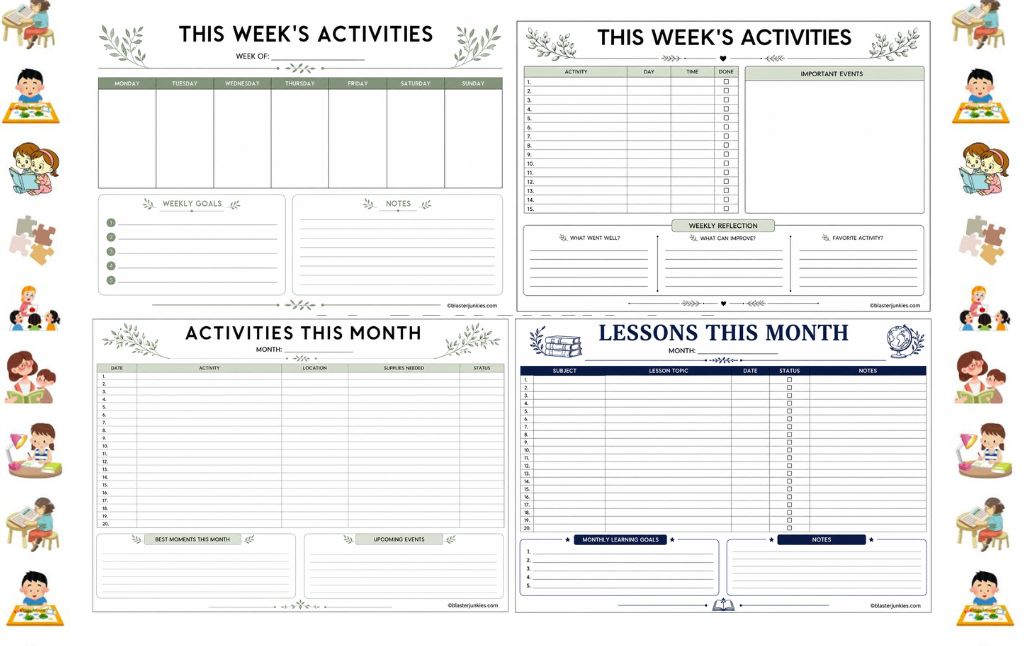
Before diving into daily tasks, sit down with your child on Sunday evening or Monday morning and fill out a weekly overview together.
Write three to five weekly goals in plain language a child can understand, such as “finish the fractions unit” or “read two chapters of our read aloud book.”
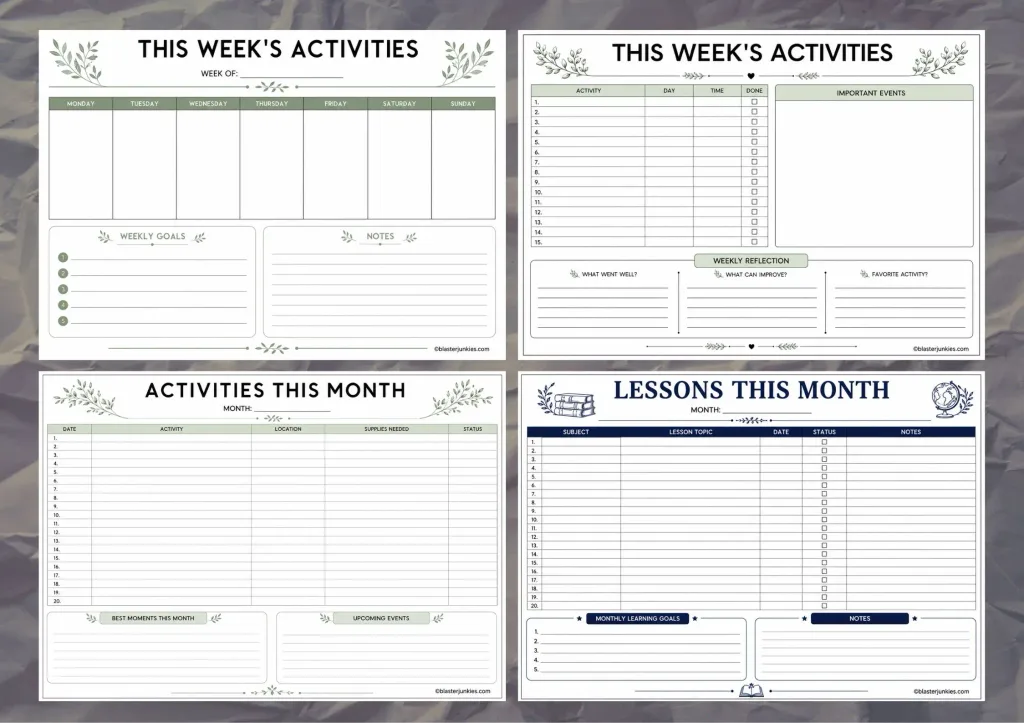
Block out the days at a glance so your child can see the whole week in one view rather than feeling like each day is a surprise.
This single step does more for reducing homeschool anxiety in kids than almost anything else, because it turns an abstract week into something they can actually see and predict.
Printable Kids Daily Routine Chart: A Blank Canvas for Building Real Habits
Chores for Tweens and Middle Schoolers: A Printable System That Actually Builds Independence
Build a Routine Around Subject Pages
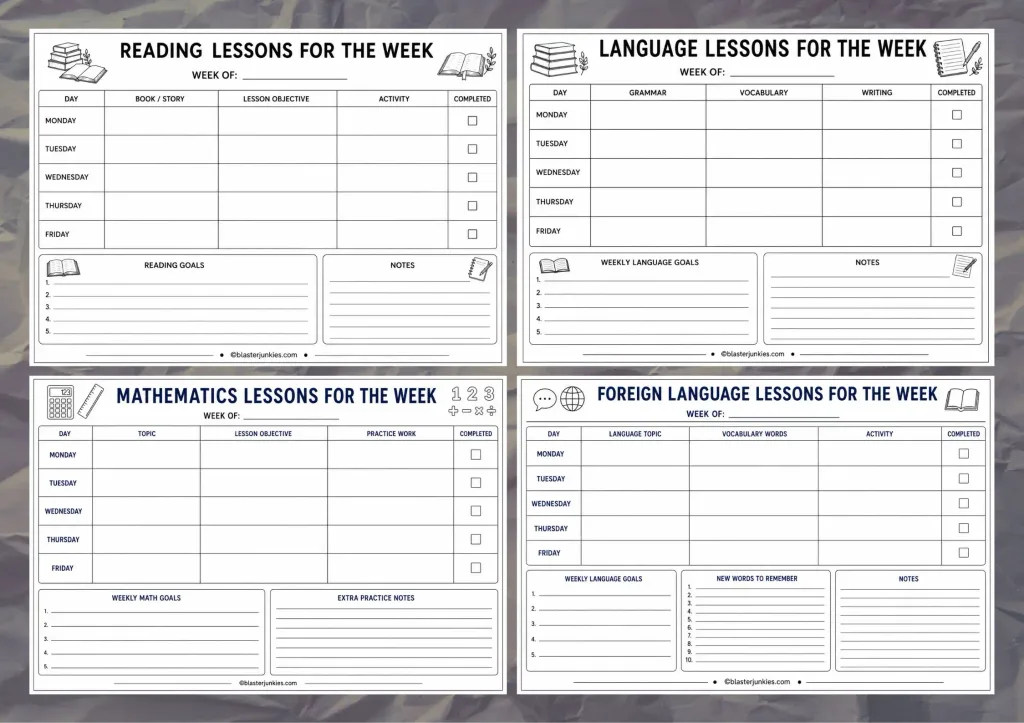
Once the week is mapped, subject specific lesson pages become the daily engine.
Each morning, pull out that day’s row on the relevant subject sheet (math, reading, language arts, and so on) and read the topic and objective aloud together before starting work.
For younger children, this is a great moment to let them draw a tiny picture next to the objective, turning an administrative document into something more personal.
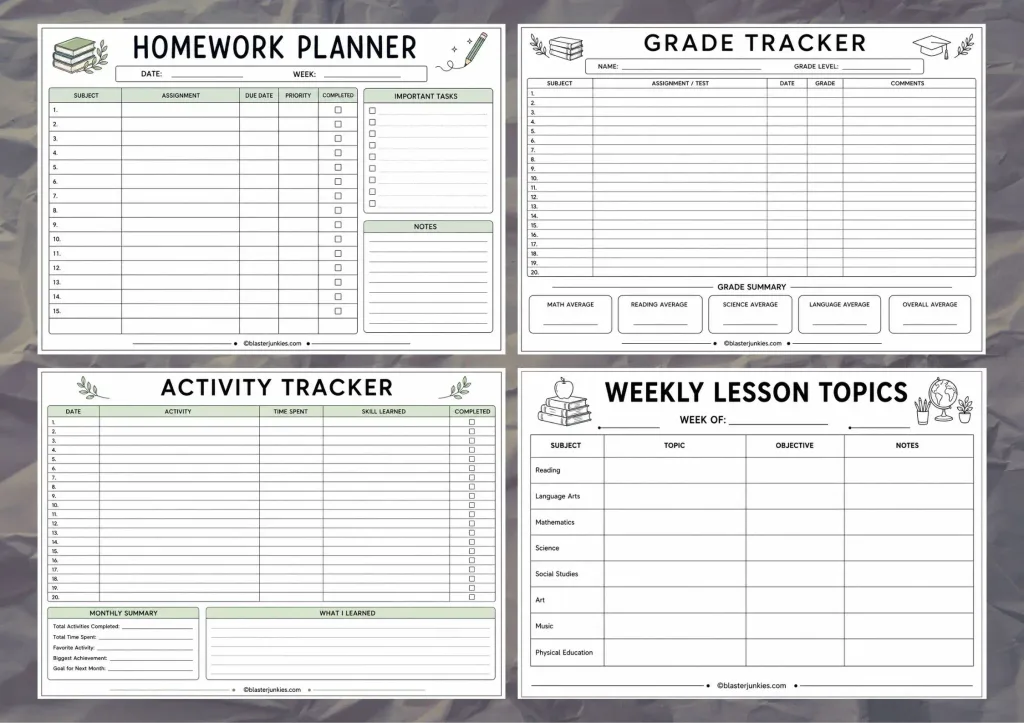
For older kids, encourage them to fill in the objective and activity columns themselves at the start of each session;
The act of writing down what they’re about to do improves focus and gives them ownership over the lesson rather than feeling like school is something happening to them.
Keep the subject pages in their own labeled section of a binder so a child can find “today’s math” or “today’s reading” without help.
Predictability in where things live matters just as much as predictability in what happens.
Make Progress Visible
Checkboxes are not just decoration, they’re a motivational tool.
Let your child physically check off each completed task themselves.
For elementary age kids, this tactile action provides a small dopamine hit that keeps momentum going through a long lesson list.
Pair this with a lightweight tracker, whether that’s a homework log, a reading list with star ratings, or a simple grade tracker, and review it together at the end of the week rather than constantly.
A five minute Friday check-in where you ask “what was your favorite activity this week?”
or “what got hard?” turns a tracking sheet into a genuine conversation about learning, not just a compliance record.
Use Daily Pages for Flexibility, Not Pressure
Daily planner sheets with hourly slots are most useful for the parts of the day that need real scheduling, like co op classes, outside lessons, or chores, rather than for boxing in every minute of independent study.
Resist the urge to fill every line; an overscheduled day sheet can make a child feel behind before the day even starts.
Leave white space intentionally so there’s room for the inevitable rabbit hole, the extra long nature walk, or the science experiment that runs over.
Let Kids Personalize It
Homeschool planning systems work best when children feel some ownership over them.
Let your child choose which color pen tracks “done,” decorate the notes section, or pick their own reading goals for the Reading List page.
A planner that feels co created rather than imposed is one a child will actually want to open each morning.
Keep the Reflection Loop Short
The weekly reflection prompts (what went well, what to improve, favorite activity) are easy to skip when things get busy,
But they’re often the most valuable part of the whole system.
Even two sentences a week builds a habit of self assessment that serves kids well long after the homeschool years are over.
Used this way, a printable planner stops being paperwork and becomes a small, steady scaffold that makes daily learning feel manageable for both parent and child.
[ >> DOWNLOAD THE HOMESCHOOL PLANNER PRINTABLES WITH KIDS<< ]
Chore Ideas for Preschoolers (4-6 Years): A Parent’s Guide to This Printable Chart Pack
Chore Chart Printable for Toddlers (2–3 Years)
10 Free Printable Lunch Box Notes: The Sweetest Way to Connect with Your Kids Every Day
Stay Organized with These Family Command Center Printables
Free Classroom Labels with Pictures for Easy Organization