Few kitchen frustrations are as small yet as constant as digging through a spice cabinet, squinting at faded jar lids, trying to figure out which one is cumin and which one is coriander.
The Printable Spice Jar Labels pack fixes that in one afternoon.
It’s a clean, flexible set of labels designed to bring order to even the most chaotic spice collection and, as a bonus, it turns into a genuinely fun, hands on project when kids get involved.
This printable set is built for anyone who wants a kitchen that actually makes sense at a glance, whether you’re a home cook with a growing spice collection or a parent looking for a simple weekend project to do with your children.
Why Spice Labels Matter More Than You’d Think
A well labeled spice cabinet isn’t just about looks. It saves real time during cooking, prevents mix ups (nobody wants cayenne pepper where they meant paprika), and makes it far easier to notice when something is running low before you’re mid recipe and out of luck.
For anyone who cooks regularly, consistent labeling turns “searching” into “grabbing” a small change that adds up over hundreds of meals.
There’s also a quieter benefit: a labeled spice rack makes cooking approachable for everyone in the household, not just the person who usually does the shopping.
Kids, partners, or guests can find what they need without having to ask. It’s the same idea behind other household organization tools much like an Editable Pantry Labels Printable brings order to pantry shelves, spice labels bring that same clarity to the smaller, easy to overlook corner of the kitchen.
What’s Included in the Pack
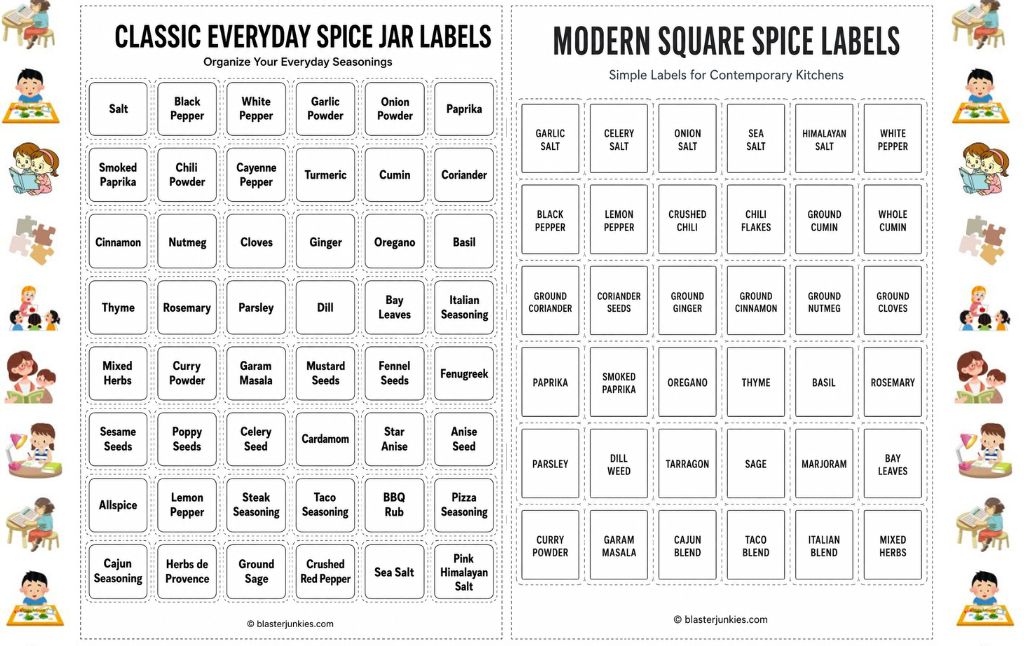
Rather than one single label design, this set includes a wide variety of styles so you can match your kitchen’s look and your spice collection’s size.
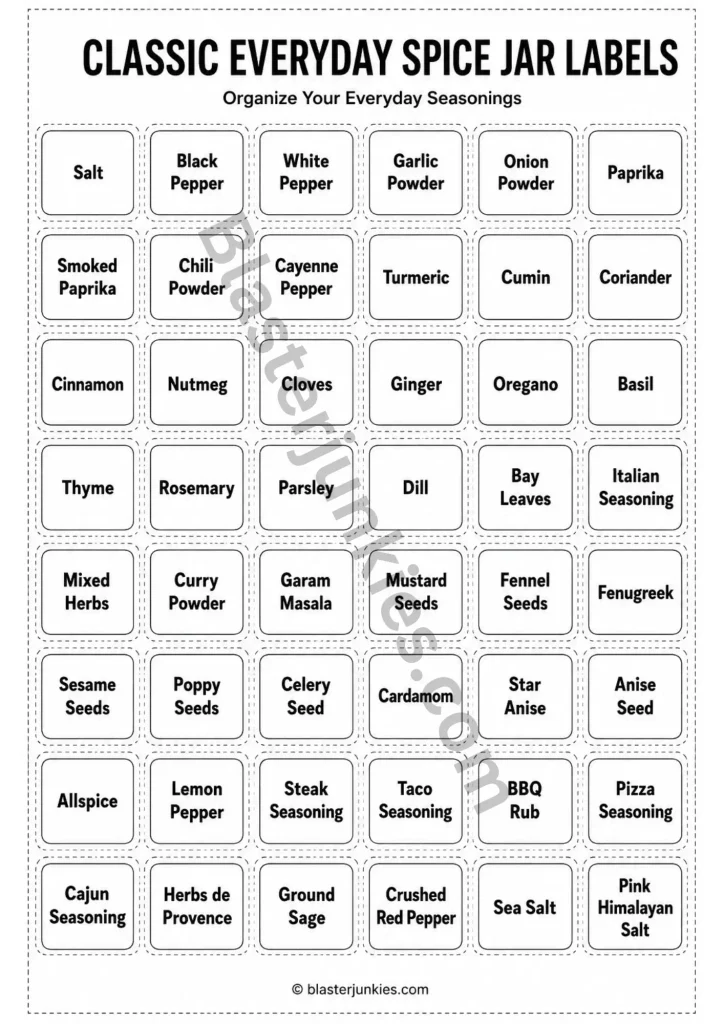
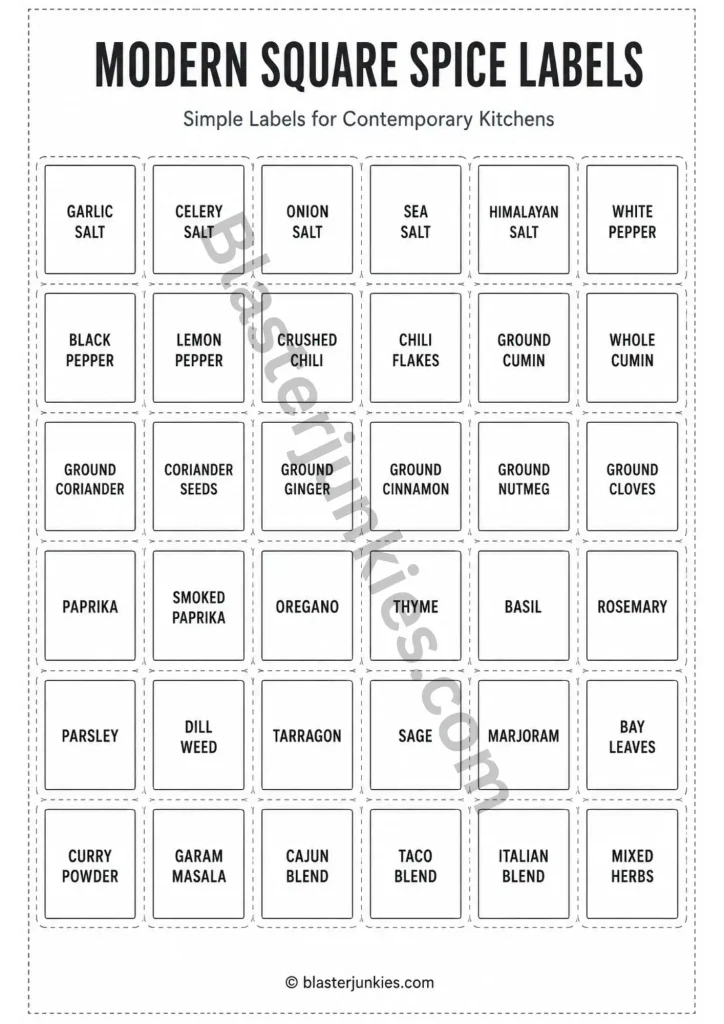
There are classic everyday labels covering common seasonings like salt, pepper, and paprika, alongside a modern square design for a more contemporary kitchen.
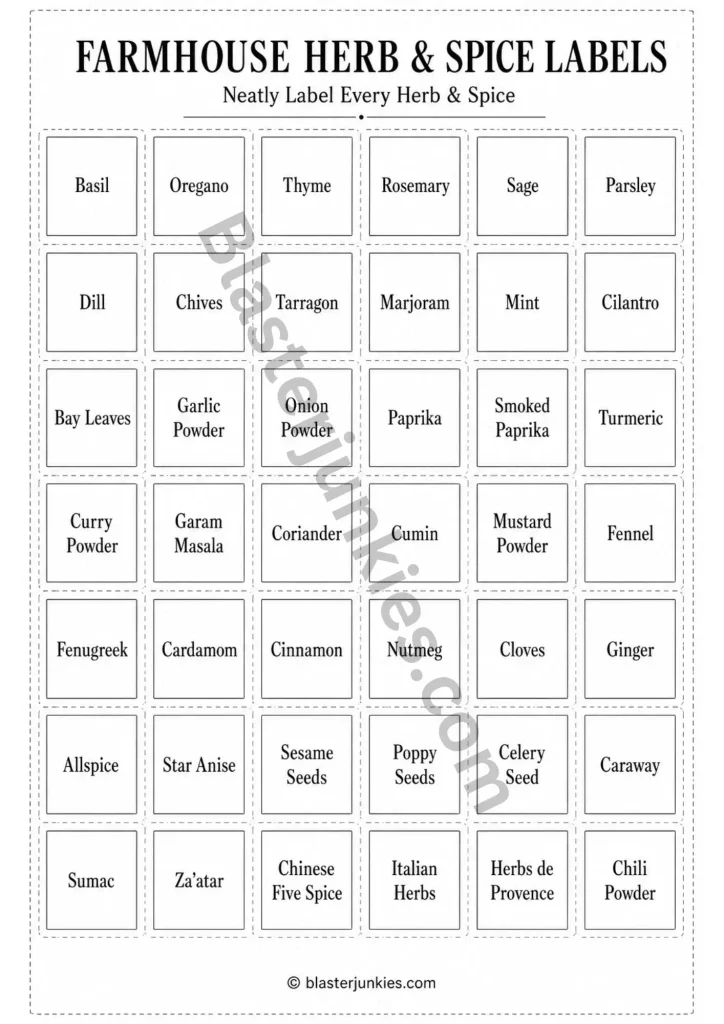
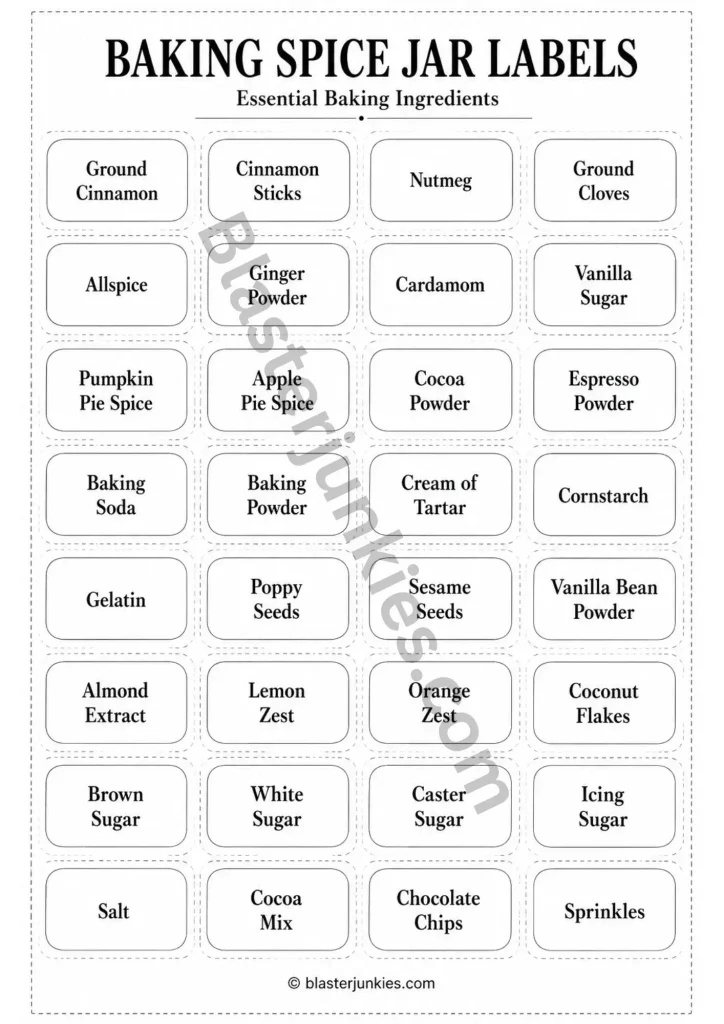
For those who prefer a farmhouse aesthetic, there’s an elegant herb and spice set, and for dedicated bakers, a baking specific collection covering everything from cinnamon sticks to vanilla bean powder.
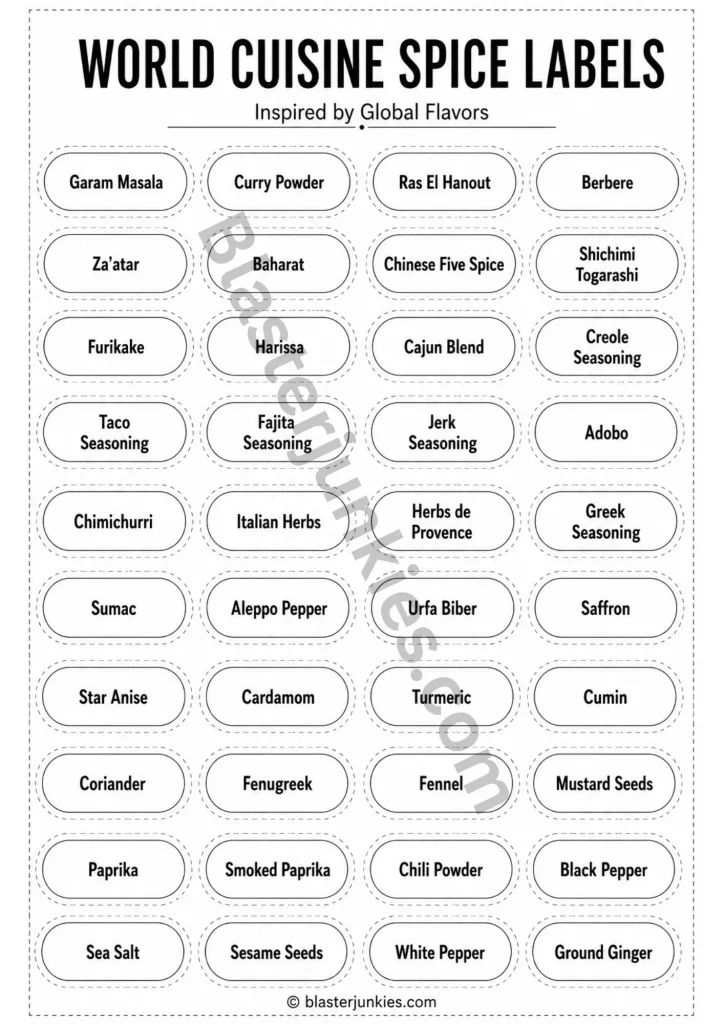
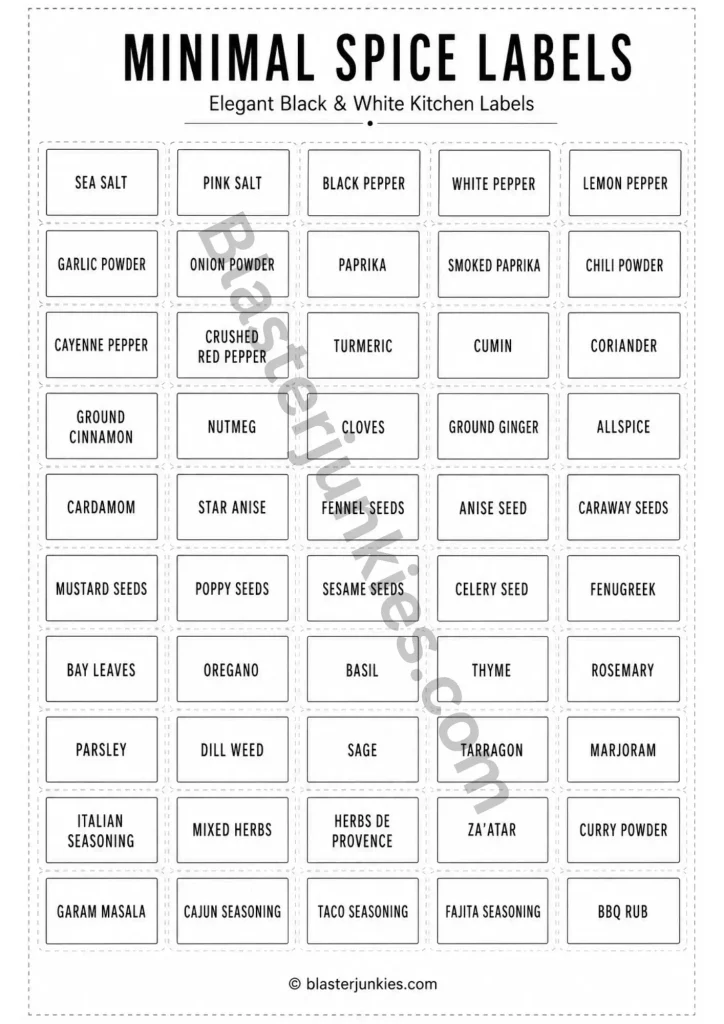
World cuisine lovers can use the global spice labels featuring blends like za’atar, harissa, and garam masala, while minimalists might prefer the clean black and white design.
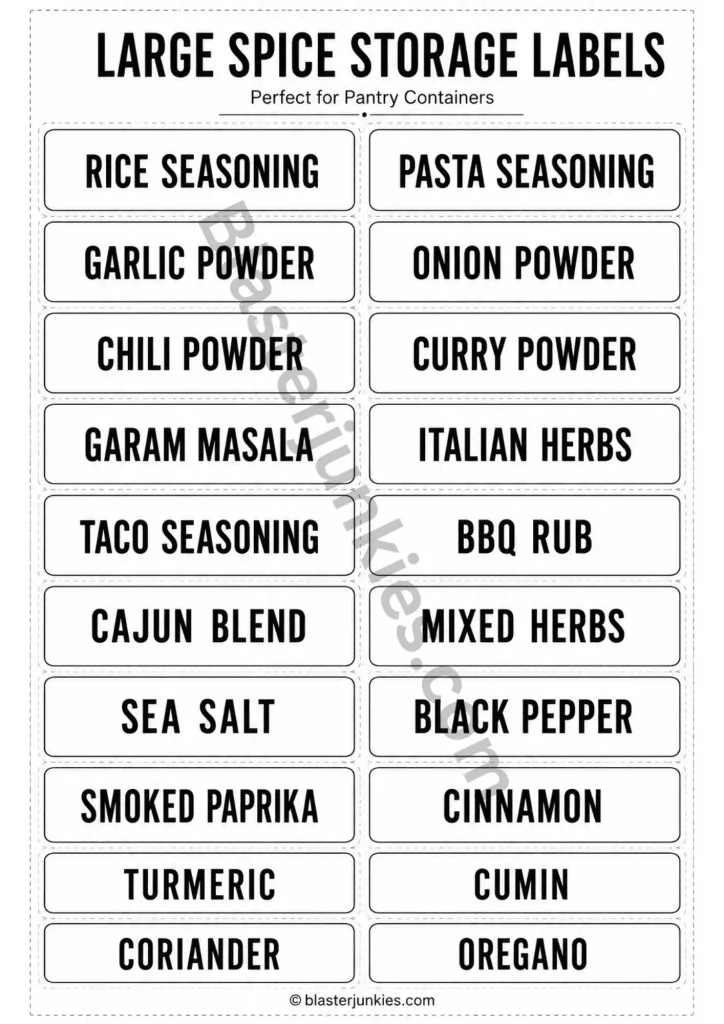
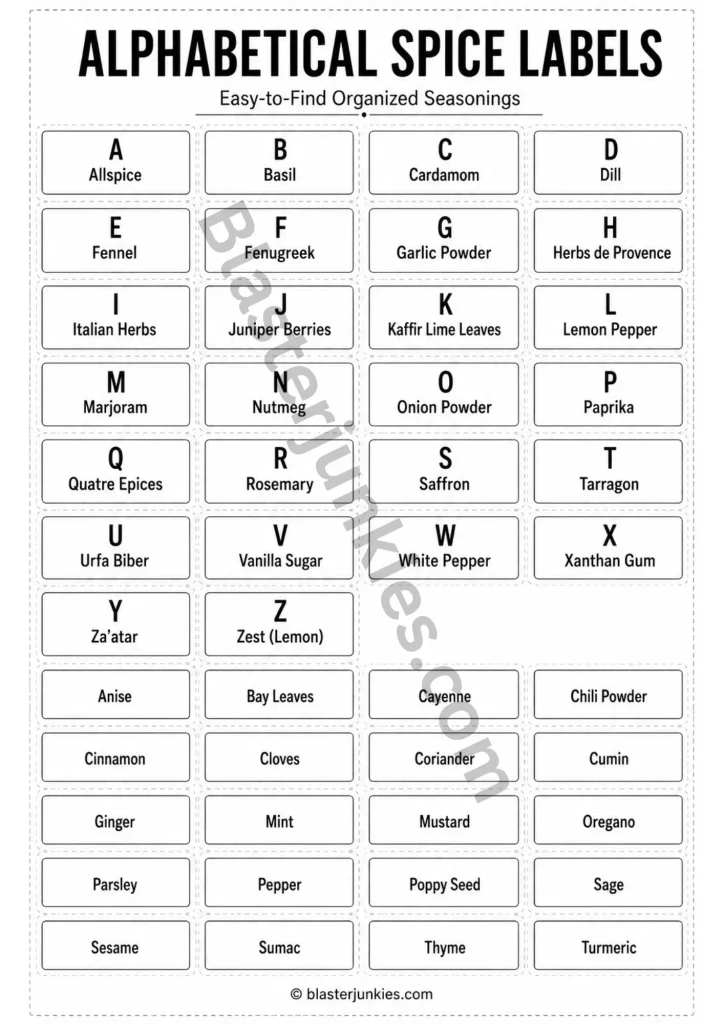
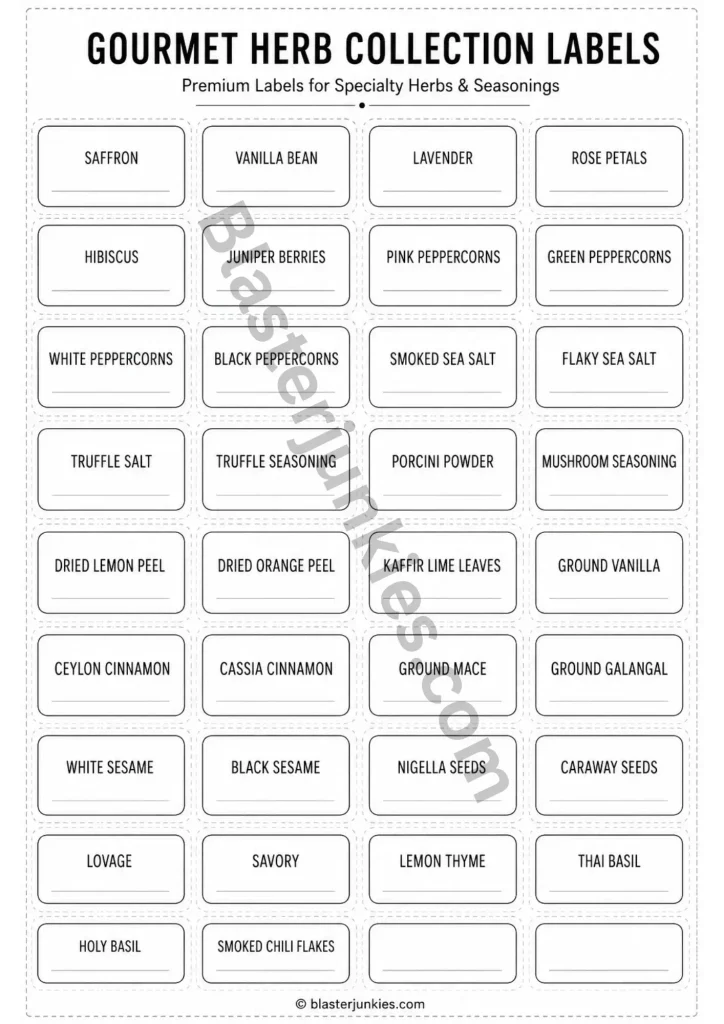
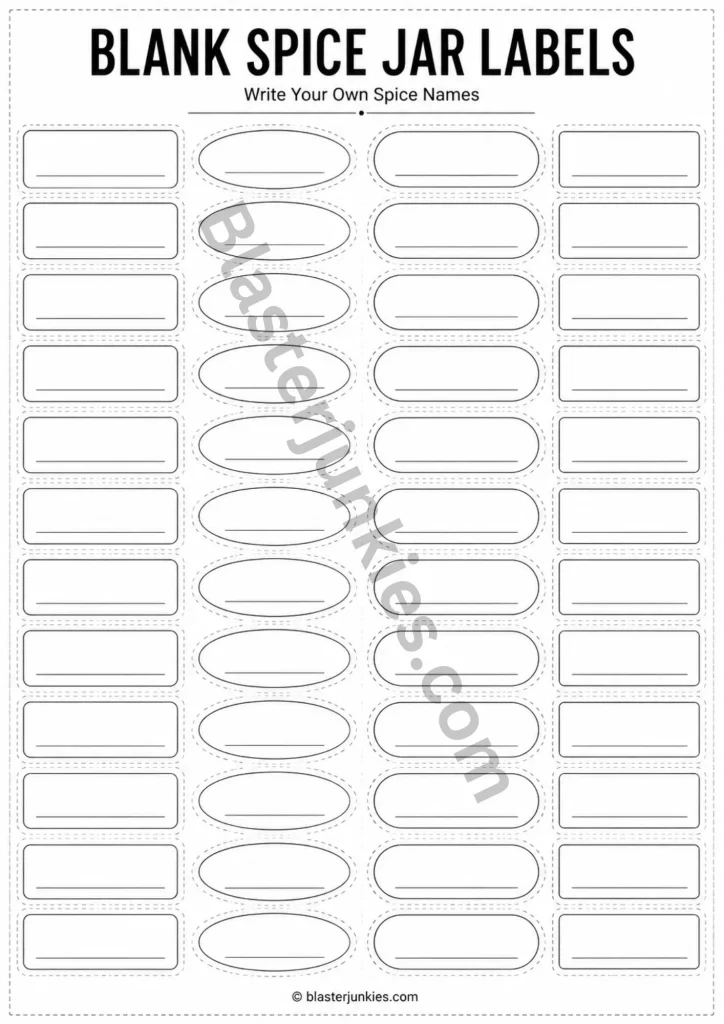
There are also large format labels for bigger pantry containers, an alphabetical set for strict A to Z organization, a gourmet herb collection for specialty ingredients like saffron and truffle salt, and a full page of blank labels for anything not already covered.
This range means the project can scale to fit any spice collection from a small starter rack with a dozen basics to a serious home cook’s shelf packed with global blends and specialty ingredients.
How to Use It With Kids
While this is primarily a kitchen organization project for adults, it makes a wonderfully engaging activity to do together with children, and it teaches a surprising number of skills along the way.
Turn labeling into a spelling and reading game. Many spice names are new vocabulary for kids turmeric, coriander, fenugreek.
Sounding these out together while choosing labels is a playful, low pressure way to build reading skills and introduce kids to ingredients from cuisines around the world.
Let kids sort spices by category. Before printing labels, have your child help group jars baking spices together, everyday seasonings together, specialty blends in their own section.
This builds categorization and organizational thinking, the same kind of skill practiced in a Pantry Inventory Printable or Freezer Inventory Sheet.
Use the blank labels for kid created blends. If your child enjoys helping in the kitchen, let them mix their own simple seasoning blend and name it themselves on a blank label.
It’s a small but meaningful way to make them feel like a real contributor to family cooking.
Connect labels to actual cooking. Once the spice rack is labeled, kids can start following simple recipes more independently, since they can now identify ingredients on their own.
This pairs naturally with the Editable Printable Recipe Cards, letting a child gather their own labeled spices and ingredients while cooking a dish they helped write down themselves.
Introduce global flavors as a geography lesson. The world cuisine spice labels are a great jumping off point for talking about where different spices come from and what dishes they’re used in a simple, tasty way to connect cooking with learning about other cultures.
Make it a full kitchen weekend project. Spice labels pair naturally with a broader kitchen organization day.
Combine them with pantry labeling, a Canning Labels Printable session if your family preserves food, or even a trip to stock up using a Farmers Market Shopping List giving kids a full picture of how a kitchen gets organized from shelf to table.
Bringing It Into the Classroom
Teachers running units on world cultures, plant science, or basic life skills can use these labels in creative ways matching spice names to their country of origin, exploring plant parts (seeds, leaves, bark) that spices come from, or simply using them as a vocabulary building exercise.
It pairs well with other organized classroom resources like Classroom Decor Printables, and for teachers looking to round out their toolkit, the Teacher Survival Kit Printable is worth checking out too.
A Small Habit With a Lasting Payoff
Once a spice rack is properly labeled, it tends to stay that way the system is simple enough to maintain and satisfying enough that nobody wants to go back to guessing.
Beyond convenience, the process of labeling together, especially with kids involved, builds a small but real sense of order and shared responsibility in the kitchen.
Print a set that matches your style, clear off the spice shelf, and turn it into an afternoon project.
The payoff isn’t just a tidier cabinet it’s a kitchen where everyone, from the youngest helper to the primary cook, can find exactly what they need without a second thought.