A cluttered pantry is more than just an eyesore it’s a small daily source of friction.
Nobody can find the oats, the flour gets mixed up with the baking soda, and snack time turns into a five minute search mission.
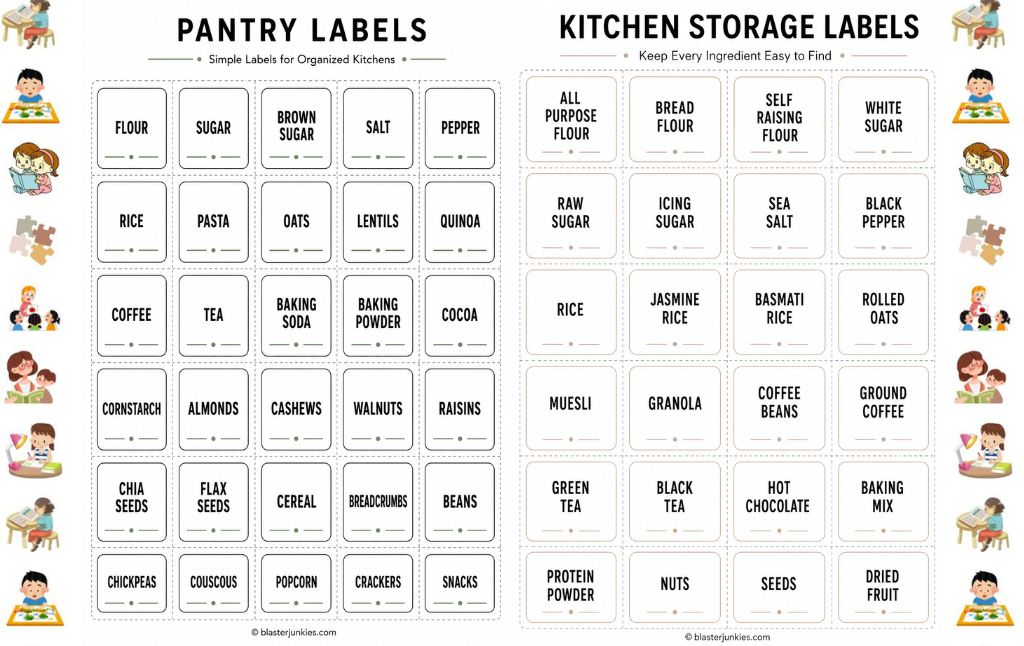
The Editable Pantry Labels Printable fixes that problem in the simplest way possible: clear, consistent labels for every jar, bin, and container in the kitchen.
But beyond just tidying up shelves, this printable pack turns out to be a surprisingly effective, low key learning tool for kids.
This set is designed for families who want an organized kitchen and, almost as a bonus, a fun way to involve children in a real household project one with a visible, lasting result they helped create.
Why Pantry Organization Is a Great Kid Project
Kids thrive on order, even when they don’t always show it.
Knowing exactly where the cereal goes, which jar holds the pasta, and where the snacks live gives them a small sense of independence they can find what they need without asking an adult every time.
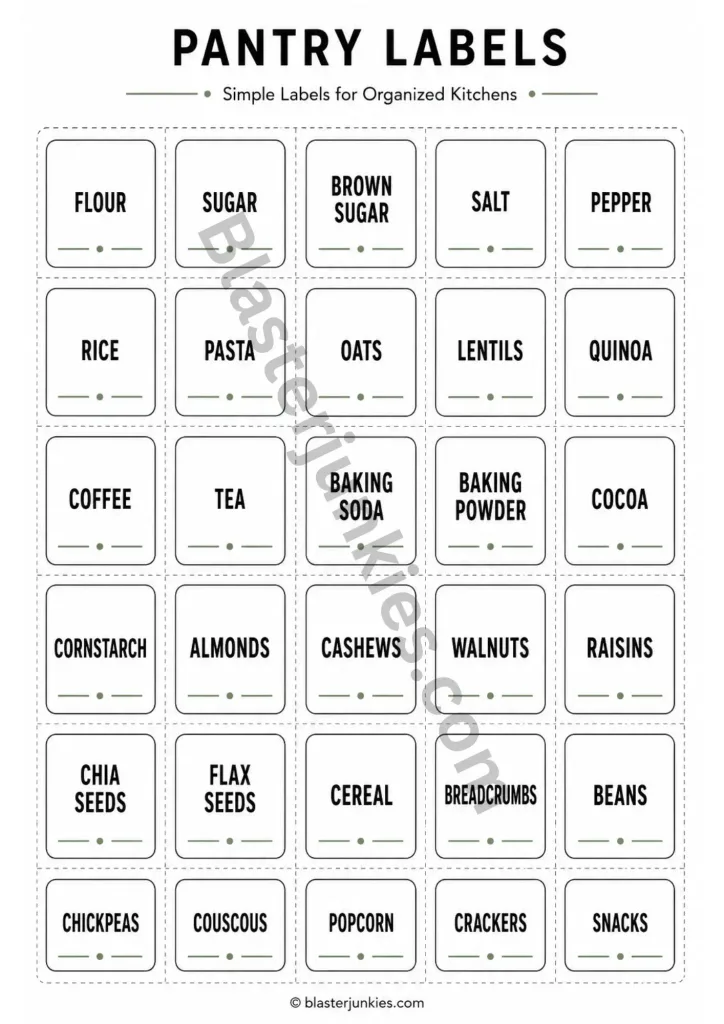
Labeling the pantry together also teaches categorization, spelling, and attention to detail, all wrapped inside a task that feels more like a fun project than a lesson.
It’s the same kind of quiet, practical skill building you get from other everyday routines much like how a Monthly Water Tracker Printable for Kids turns hydration into a visible habit, pantry labels turn kitchen organization into something kids can see, touch, and take ownership of.
What’s Included in the Pack
Rather than a single style of label, this printable set offers a wide range of designs so you can match the look to your kitchen and your family’s needs.
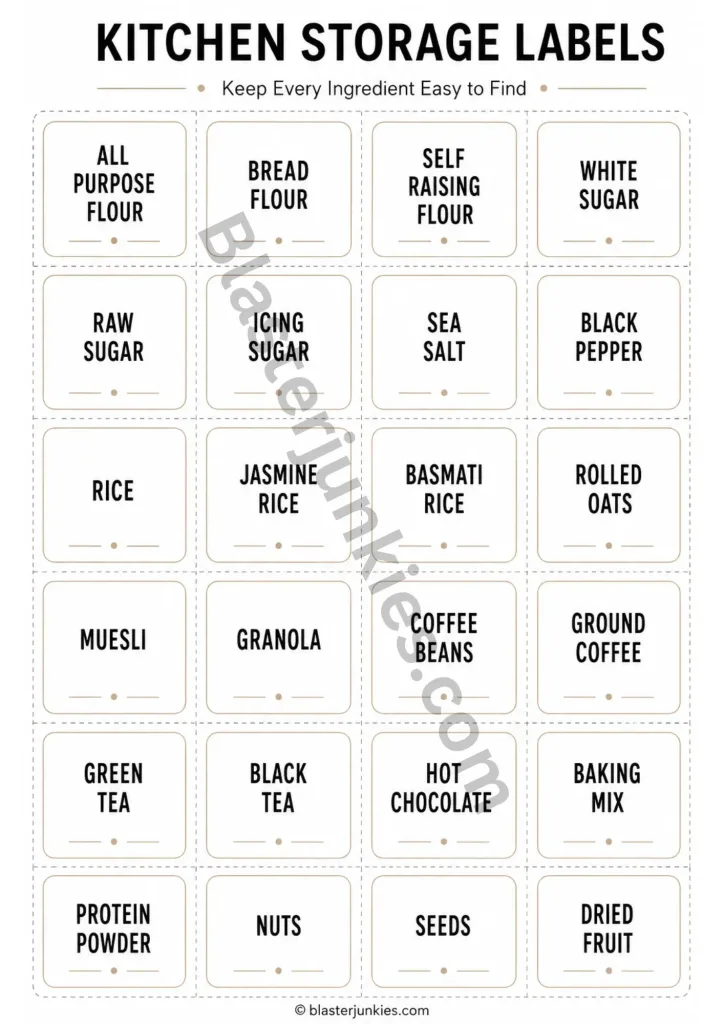
There are simple everyday labels for common staples like flour, sugar, and rice, plus a broader kitchen storage set with more specific options like bread flour, basmati rice, and ground coffee.
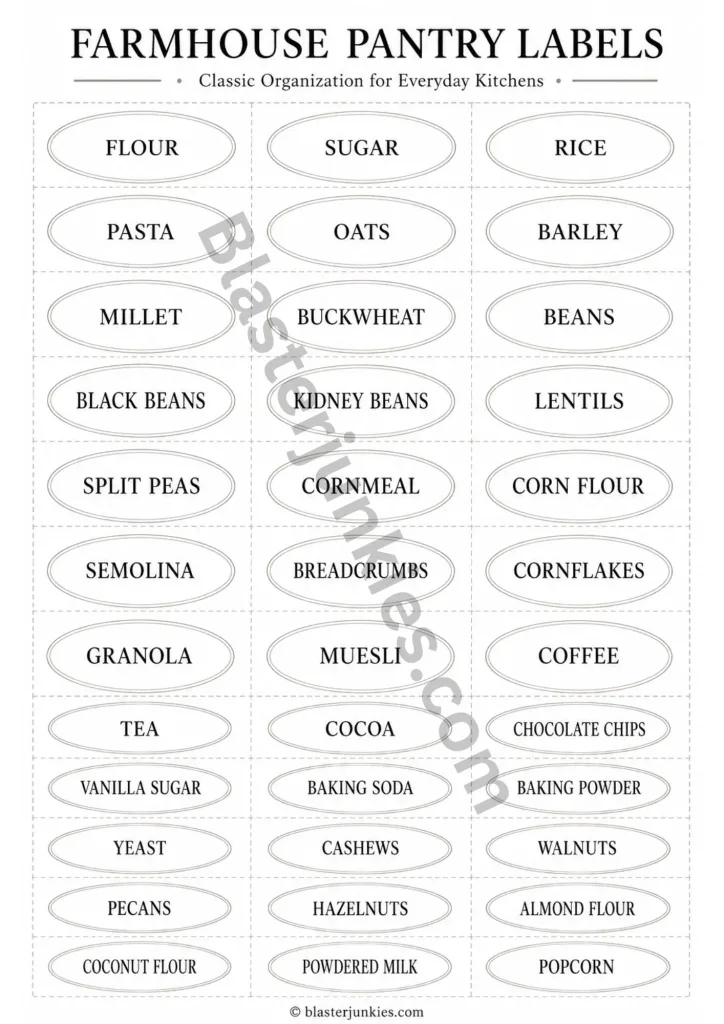
For families who like a classic look, there’s a farmhouse style set with elegant oval labels, and for more modern kitchens, clean square labels in a minimalist style.
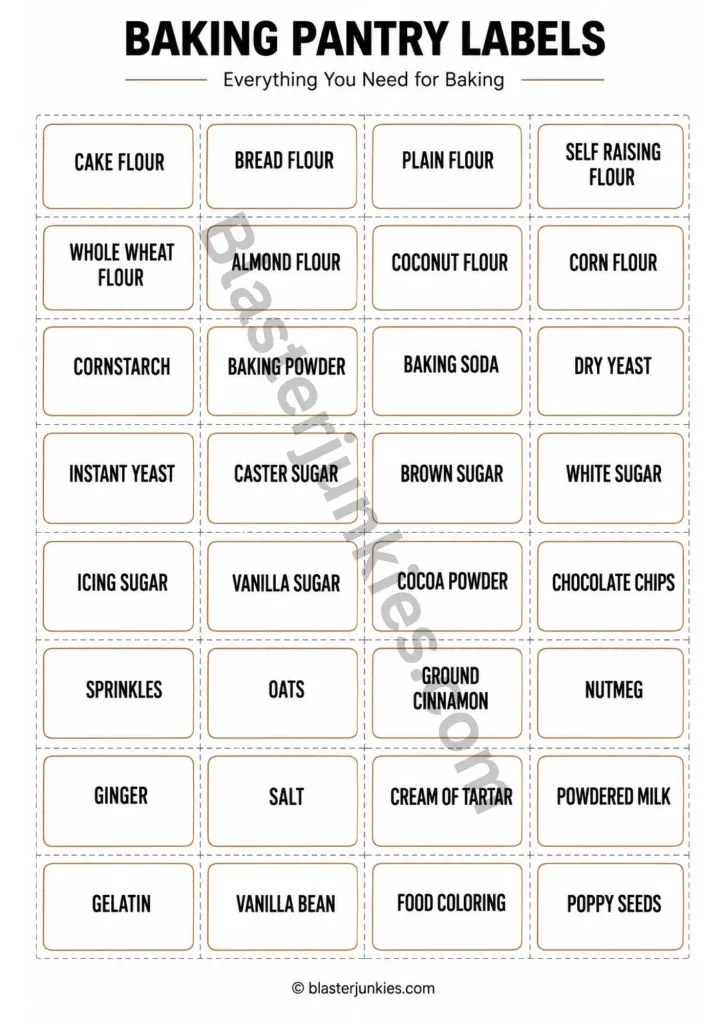
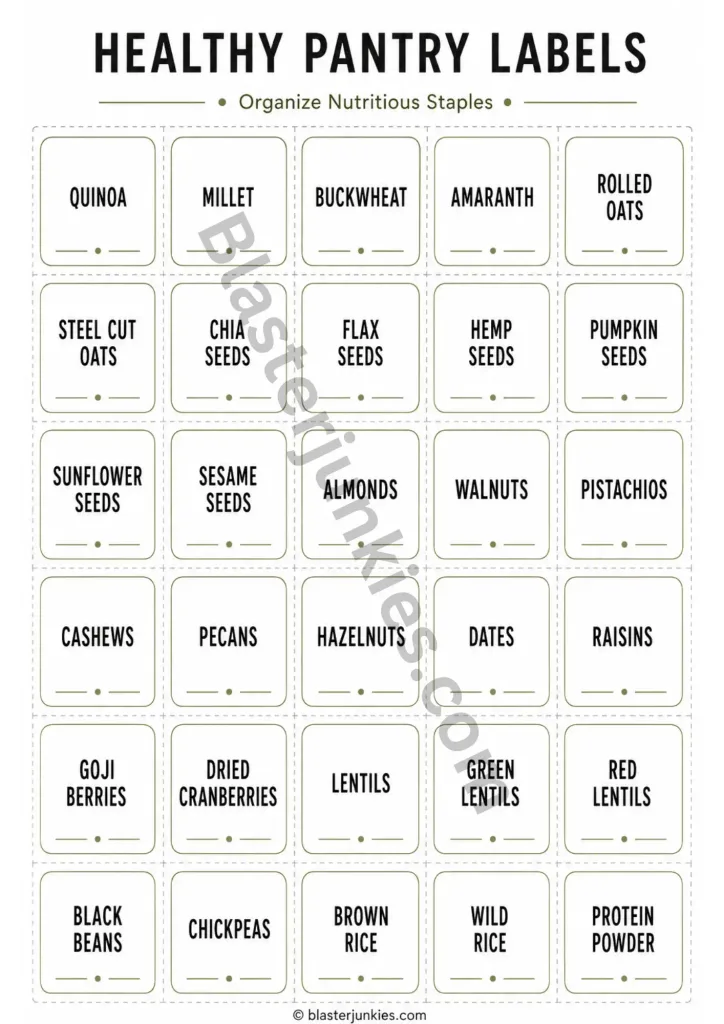
Bakers will appreciate the dedicated baking pantry labels covering everything from cocoa powder to food coloring, while health focused households can use the healthy pantry labels for items like chia seeds, quinoa, and dried fruit.
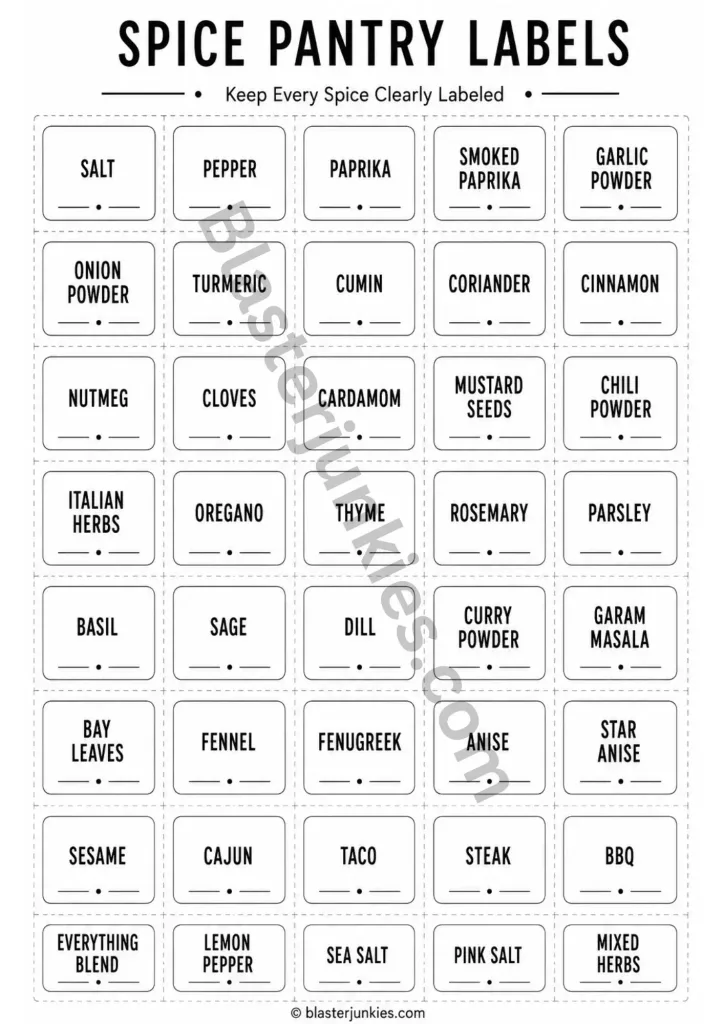
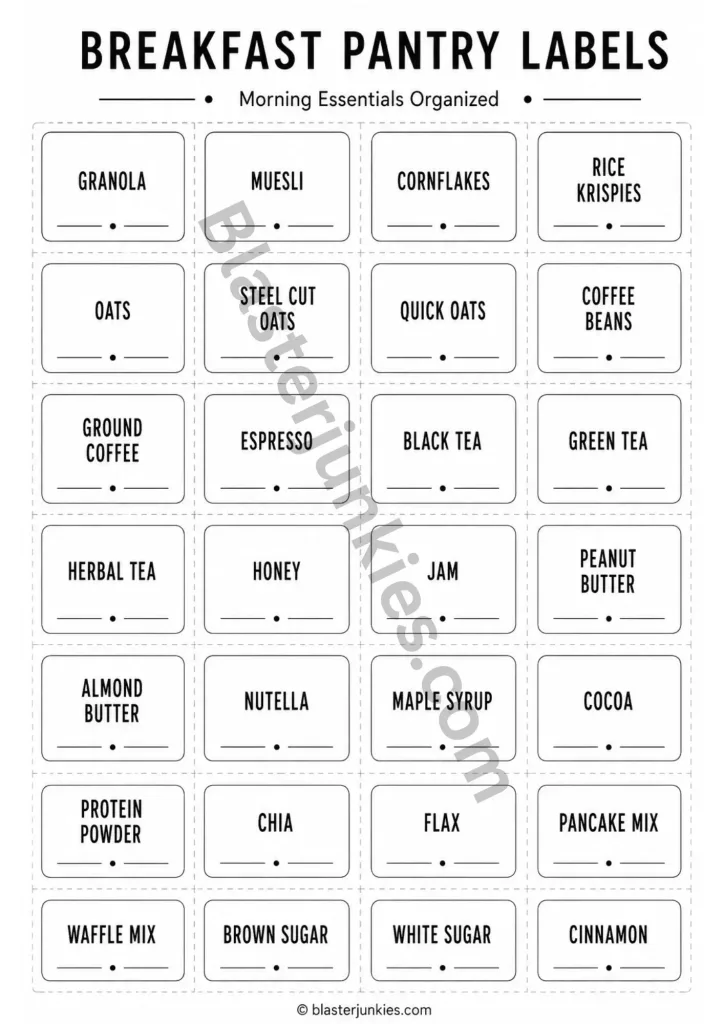
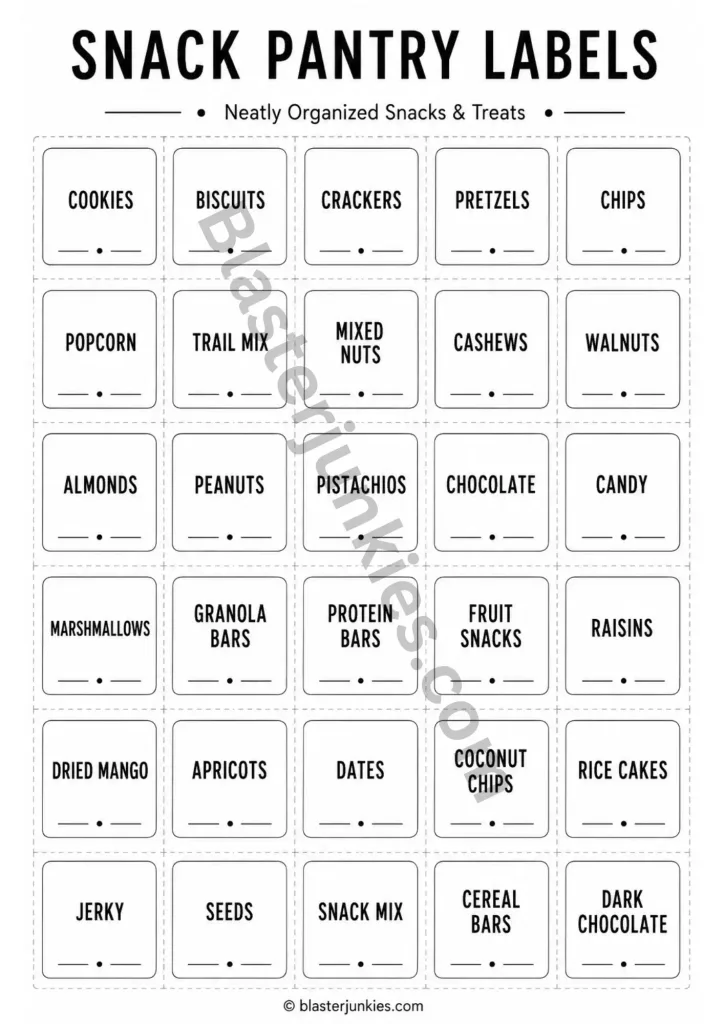
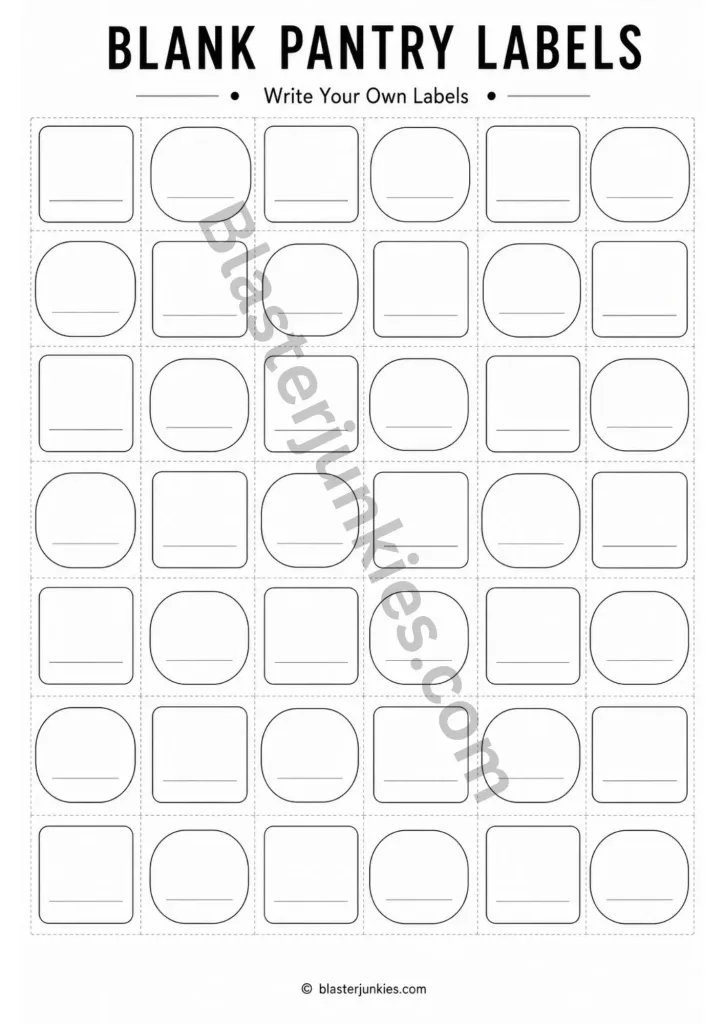
There are also spice specific labels, breakfast focused labels, snack labels for treats and munchies, and importantly a full page of blank labels for anything not already covered.
This variety means the whole family can get involved.
Younger kids might enjoy filling in the blank labels with their own handwriting, while older kids can help decide which label style fits which shelf.
How to Use It With Kids
Turn it into a sorting game before labeling. Before printing anything, empty a shelf or two with your child and sort items into categories grains, snacks, baking, spices.
This is a great hands on lesson in categorization and gives kids a say in how the pantry gets organized, not just where labels go.
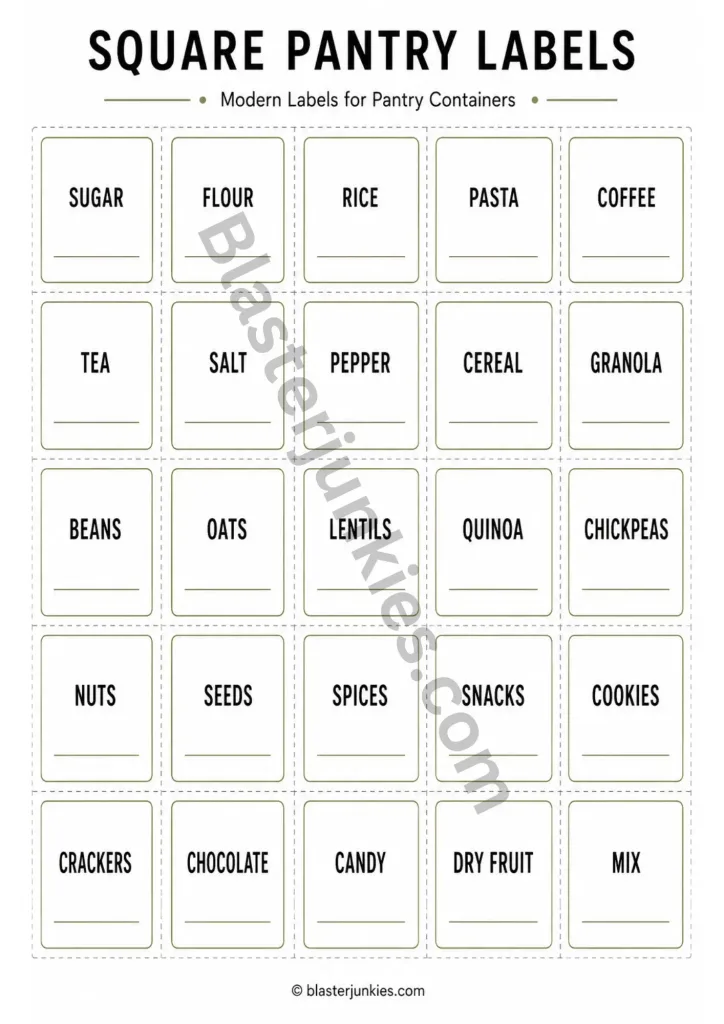
Let kids choose the label style. With so many designs available, let your child pick which set feels right for their favorite shelf maybe the playful square labels for their snack bin, or the elegant farmhouse labels for the baking shelf.
Giving them a choice increases buy in and makes the project feel collaborative rather than assigned.
Use the blank labels for personal items. Kids often have their own designated snacks, cereals, or lunchbox items.
Let them write and decorate their own blank labels for these a simple way to make a shared pantry feel a little bit theirs.
Practice spelling and reading along the way. Sounding out “cornstarch” or “chickpeas” while writing a label is a low pressure way to build vocabulary.
For younger children still learning to read, matching a printed label to the correct container is a great early recognition exercise.
Connect labeling to cooking. Once the pantry is labeled and easy to navigate, cooking with kids becomes much smoother no more hunting for baking soda mid recipe.
Pair this project with the Editable Printable Recipe Cards for a full kitchen upgrade: an organized pantry paired with a recipe card makes it easy for kids to gather their own ingredients and follow along independently.
Track what’s actually in stock. Labels tell you what a container holds, but not how much is left.
A Pantry Inventory Printable works well alongside the labels, giving kids a simple way to check off what’s running low and add it to the next shopping trip a small but meaningful step toward real household responsibility.
Extend the system to the freezer. The same labeling mindset can carry over to other parts of the kitchen.
A Freezer Inventory Sheet helps track what’s stored away, while Canning Labels Printable are perfect if your family preserves seasonal produce or homemade jams together.
Tie it to where food comes from. If your family visits a farmers market or grows produce at home, this is a great moment to talk about fresh versus pantry staples.
A Farmers Market Shopping List or Seasonal Produce Chart can help kids understand which ingredients belong on the shelf long term and which are best used fresh.
Bringing It Into the Classroom
Teachers running units on categorization, life skills, or even simple reading and writing practice can adapt this printable for classroom pantry bins, supply shelves, or class snack stations.
It fits naturally alongside other organizational tools like Classroom Decor Printables for a tidy, welcoming space, or a Home Maintenance Checklist style approach for teaching kids the value of upkeep and routine.
Teachers building a broader resource kit for the year might also find the Teacher Survival Kit Printable helpful.
A Small Project With a Lasting Payoff
The real value of labeling a pantry with your kids isn’t just a tidier kitchen it’s the quiet confidence that comes from knowing exactly where everything belongs, and the pride of having helped build that system from scratch.
Every label they write, cut, and stick becomes a small piece of a bigger lesson: that organization is something you create, not something that just happens.
Print a few sheets, clear off a shelf, and make an afternoon of it.
By the end, you’ll have a pantry that runs more smoothly and a child who understands a little more about what it takes to keep a home running well.