
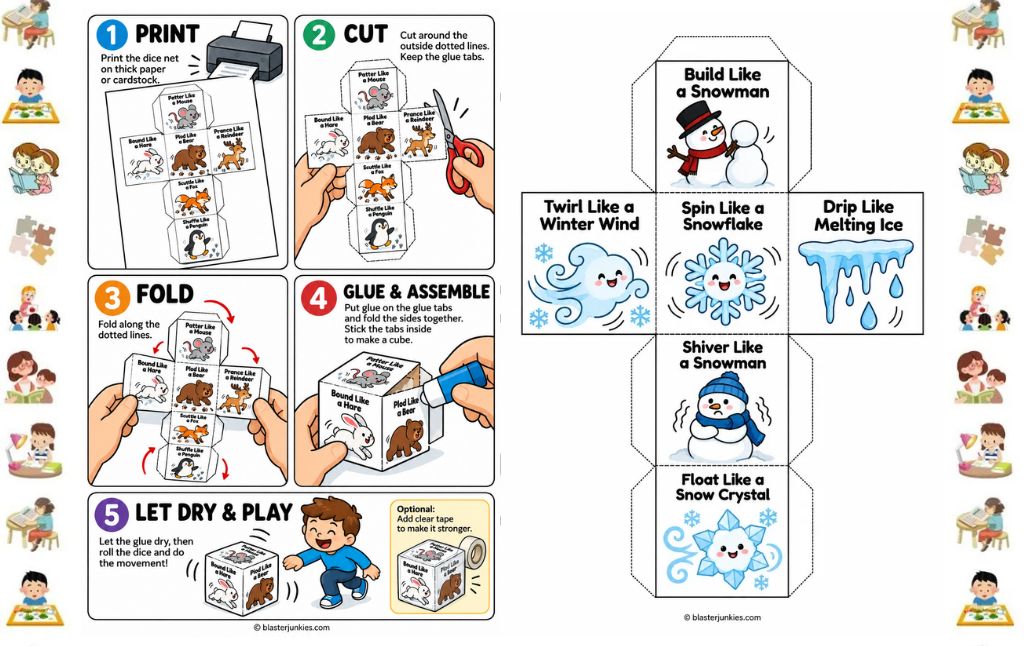
Cold days keep kids indoors. Energy builds up fast, and little bodies need somewhere to put it.
These winter movement dice give children a fun way to wiggle, stretch, and play.
Each die shows six cheerful pictures with a simple action. Kids roll the cube, read the card, and move like the picture.
This pack has ten printable dice templates. Every page folds into a cube you can toss across the floor.
All you need is paper, scissors, and tape or glue.
Why Movement Dice Work So Well
Children learn best when their bodies are moving. A short burst of play wakes up the brain and lifts the mood.
It also helps kids settle down for quiet tasks afterward.
Dice add a fun surprise. Nobody knows what action comes next. That little bit of mystery keeps children eager to roll again.
The actions also build important skills. Hopping builds balance and leg strength. Stretching builds flexibility.
Flapping and swirling build coordination. Acting like animals builds imagination and language too.
Each die uses short action phrases. Younger readers can practice sounding out words like waddle, prance, and shiver. Pictures help them understand each one.
Best of all, the dice need almost no space. A small corner of the living room works well. A classroom aisle works too.
What Is Inside the Pack
The download starts with a cover page and a short terms page. Then come ten die templates.
Each page has a cross shaped pattern with six square faces.
Every face has a bright picture and a short action phrase. The pictures are cute, bold, and easy to see.
Dotted lines show where to cut, and solid lines show where to fold.
The themes cover winter animals, forest friends, the night sky, birds, clothing, trees, sports, Arctic animals, weather, and snow.
This mix keeps the game fresh for many winter days.
The dice are already printed in full colour. You can print them as they are. You may also print in black and white and let children colour each picture.
How to Make the Dice
Print the page on thick paper or card stock. Thicker paper makes a sturdier cube that rolls well.
Cut along the dotted outer lines with scissors. Keep the small side flaps. These flaps hold the cube together.
Fold along every solid line. Press each crease firmly with your fingernail. A ruler makes sharper folds.
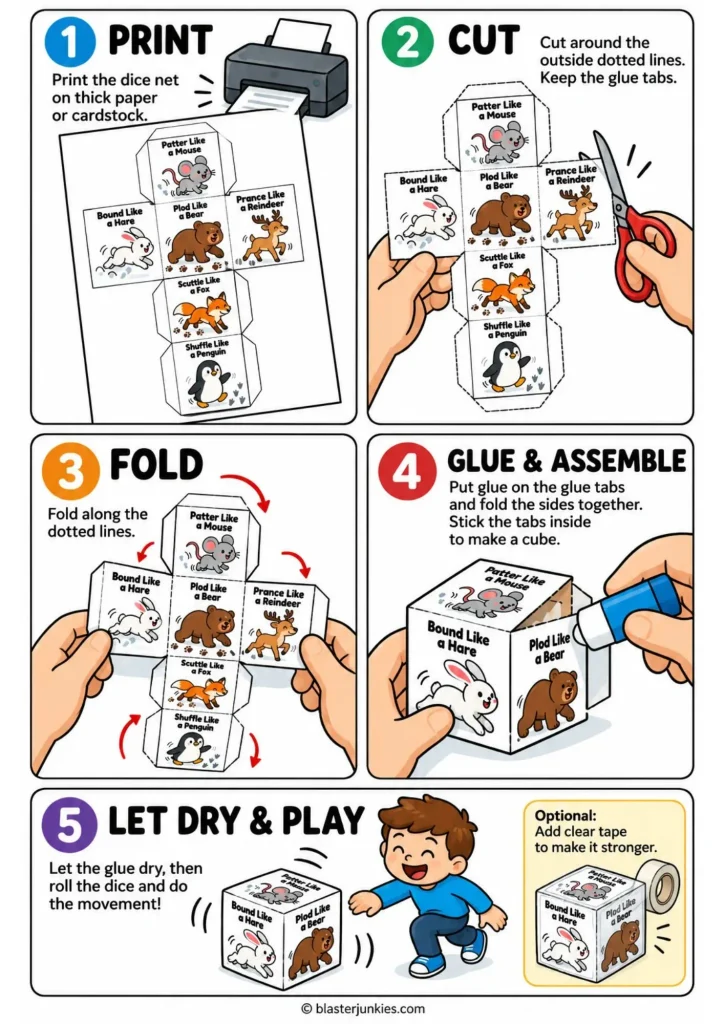
Apply glue or tape to the flaps. Fold the faces into a cube shape and press the flaps inside. Hold each side for a few seconds.
Let the glue dry fully before playing. Younger children may need an adult to cut and fold. Older kids can build the cube alone.
For a longer lasting die, cover the finished cube with clear tape. This protects it from drool, spills, and rough rolling.
How to Play
Gather the children in a clear space. Move chairs and sharp objects out of the way. Give each child room to stretch their arms.
Pick a die and let one child roll it. Read the top phrase together. Then everyone does the action for ten seconds.
Roll again and keep going. Take turns so every child gets a chance to roll. Add a short song or a timer to build excitement.
For a quieter game, choose slow actions only. Floating, swaying, and curling work well.
For a busy game, pick fast actions like scurrying and stomping.
You can also roll two dice at once. Combine two actions for a silly challenge. A child might shiver like a snowman while hopping like a rabbit.
Page by Page Guide
Here is a quick look at each die. The faces are listed with their actions.
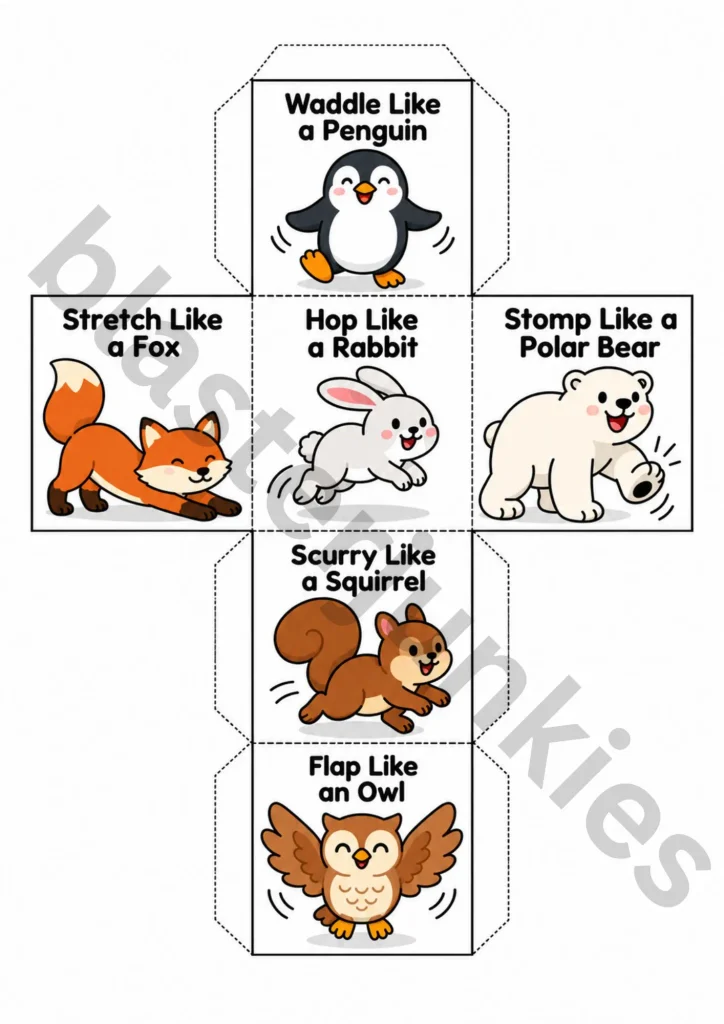
1. Winter Animals Die. Waddle like a penguin, stretch like a fox, hop like a rabbit, stomp like a polar bear, scurry, and flap.
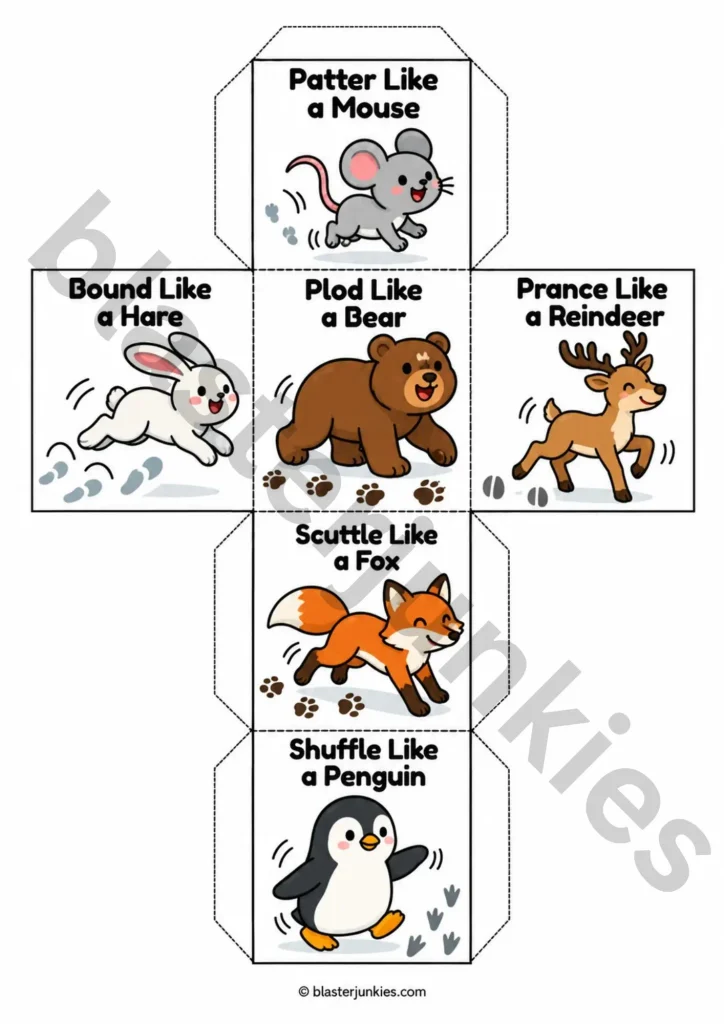
2. Forest Friends Die. Patter like a mouse, bound like a hare, plod like a bear, prance like a reindeer, scuttle, and shuffle.
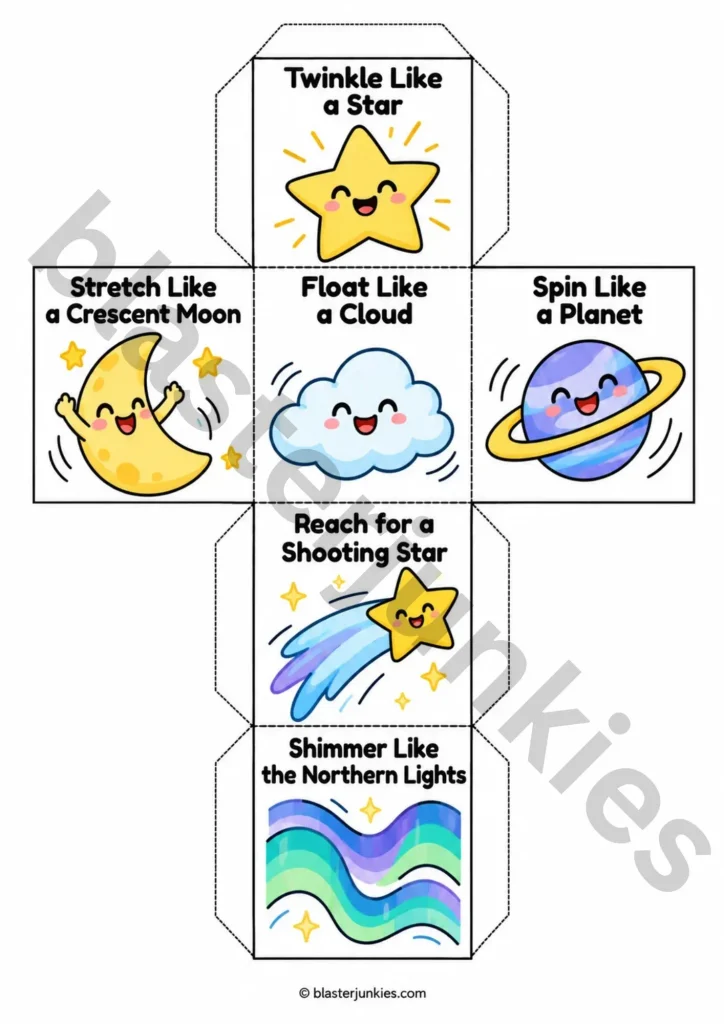
3. Night Sky Die. Twinkle like a star, stretch like a moon, float like a cloud, spin like a planet, and shimmer like northern lights.
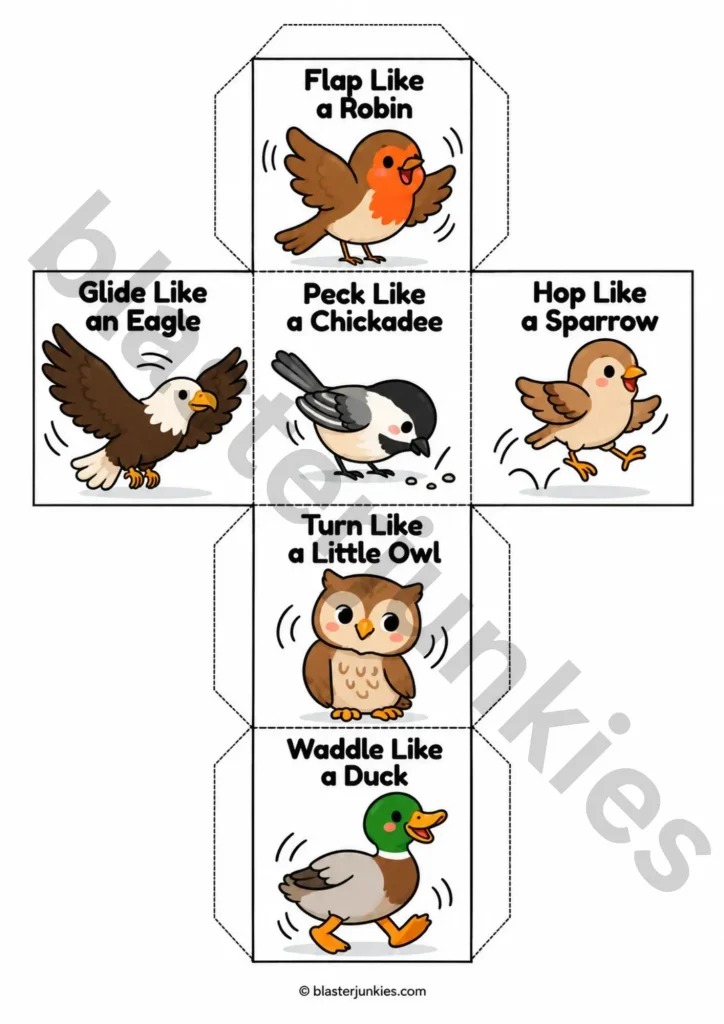
4. Winter Birds Die. Flap like a robin, glide like an eagle, peck like a chickadee, hop like a sparrow, turn, and waddle.
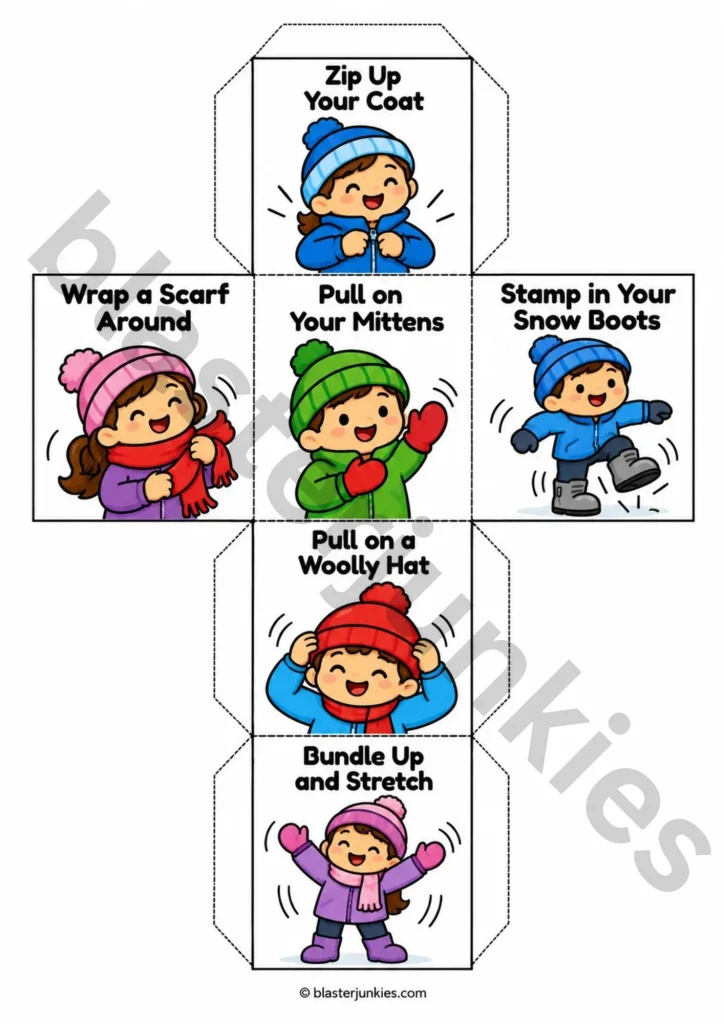
5. Winter Clothes Die. Zip your coat, wrap a scarf, pull on mittens, stamp in snow boots, put on a hat, and stretch.
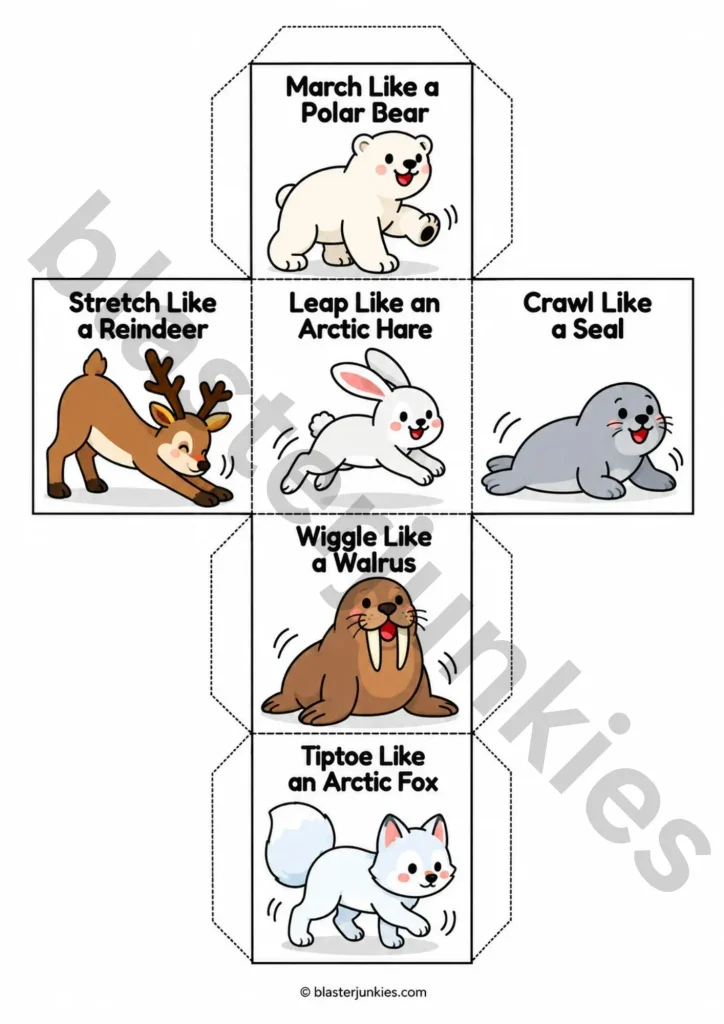
Once your child masters the first few, add some animal learning. These Fun Arctic Animal Activities pair nicely with the polar bear, seal, and walrus faces.
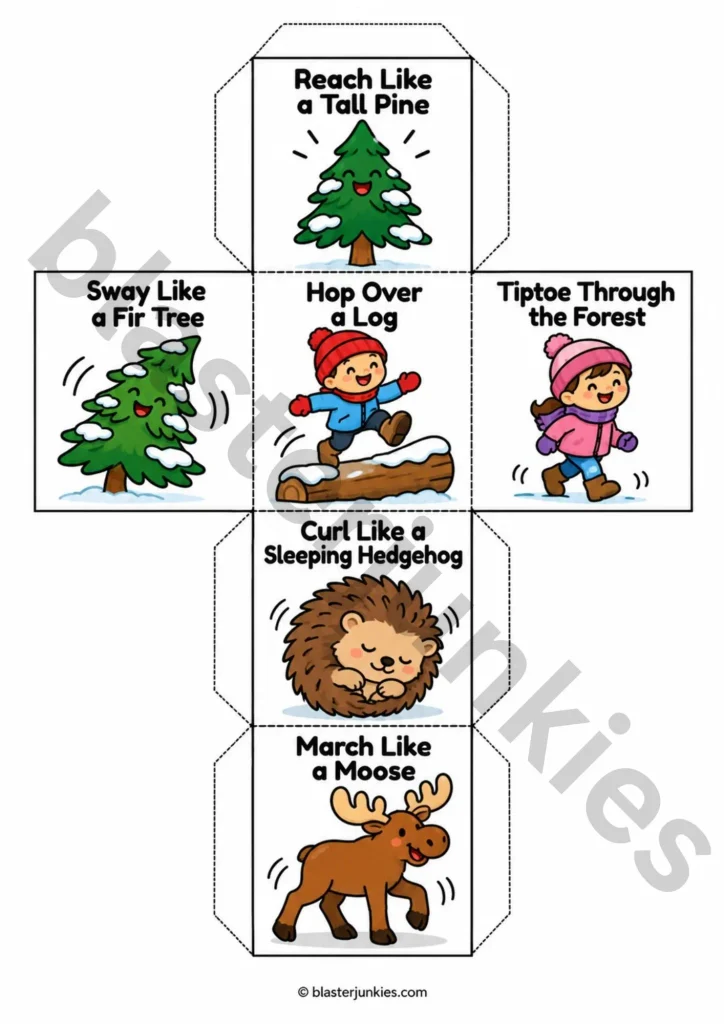
6. Winter Forest Die. Reach like a tall pine, sway like a fir tree, hop over a log, tiptoe, curl like a hedgehog, and march.
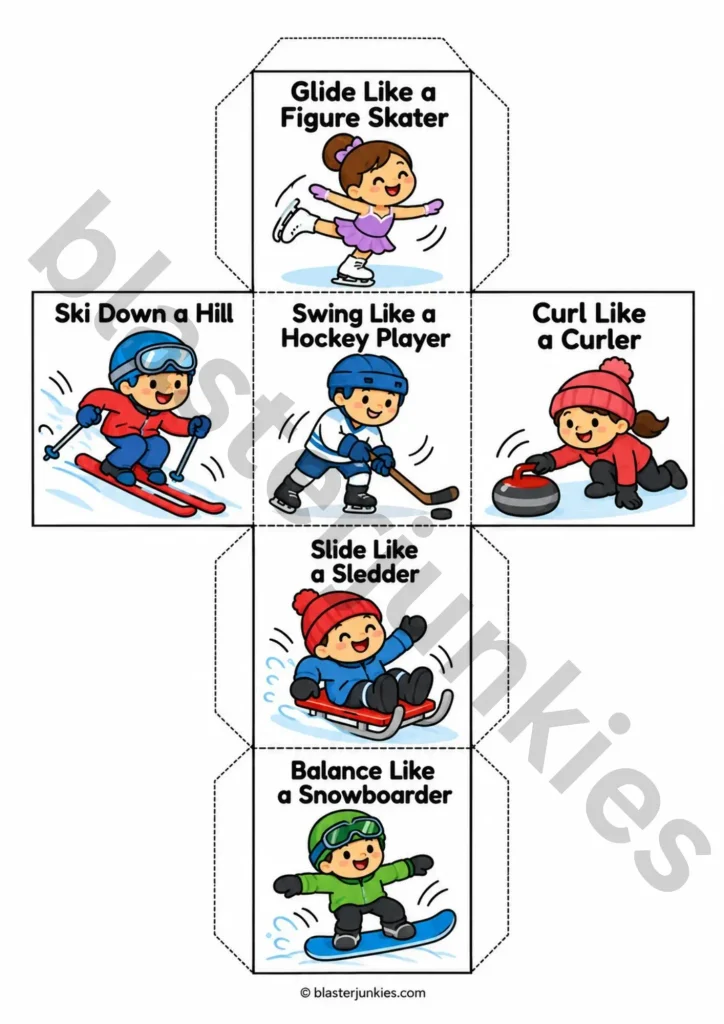
7. Winter Sports Die. Glide like a figure skater, ski down a hill, swing like a hockey player, curl, slide, and snowboard.
8. Arctic Animals Die. March like a polar bear, stretch like a reindeer, leap like a hare, crawl like a seal, wiggle, and tiptoe.
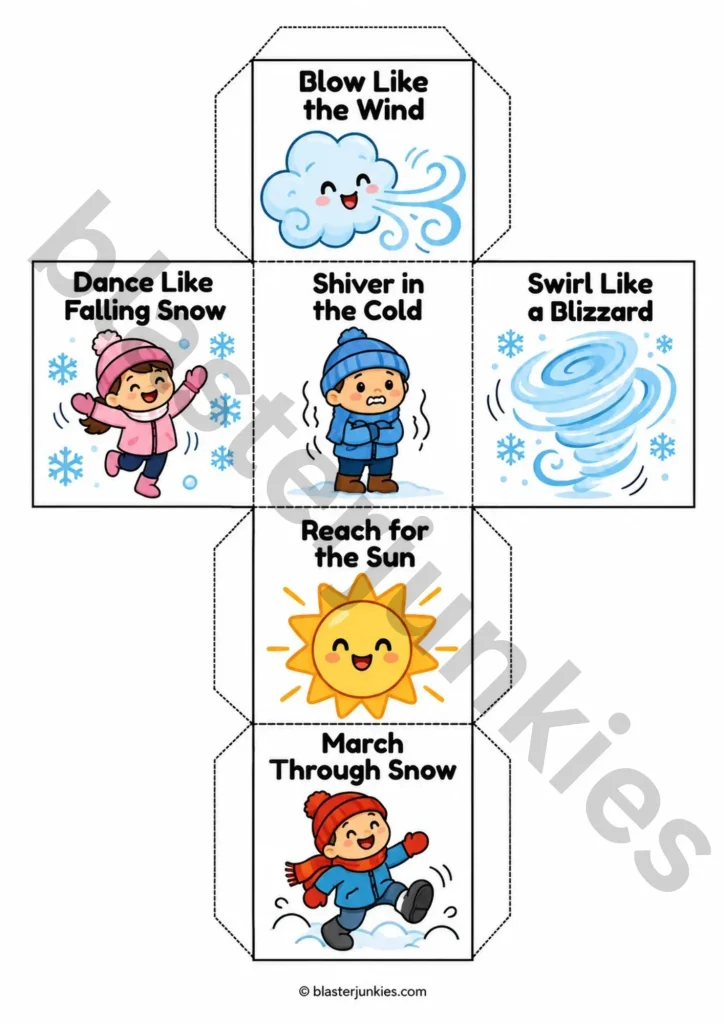
9. Winter Weather Die. Blow like the wind, dance like falling snow, shiver in the cold, swirl like a blizzard, reach for the sun, and march.
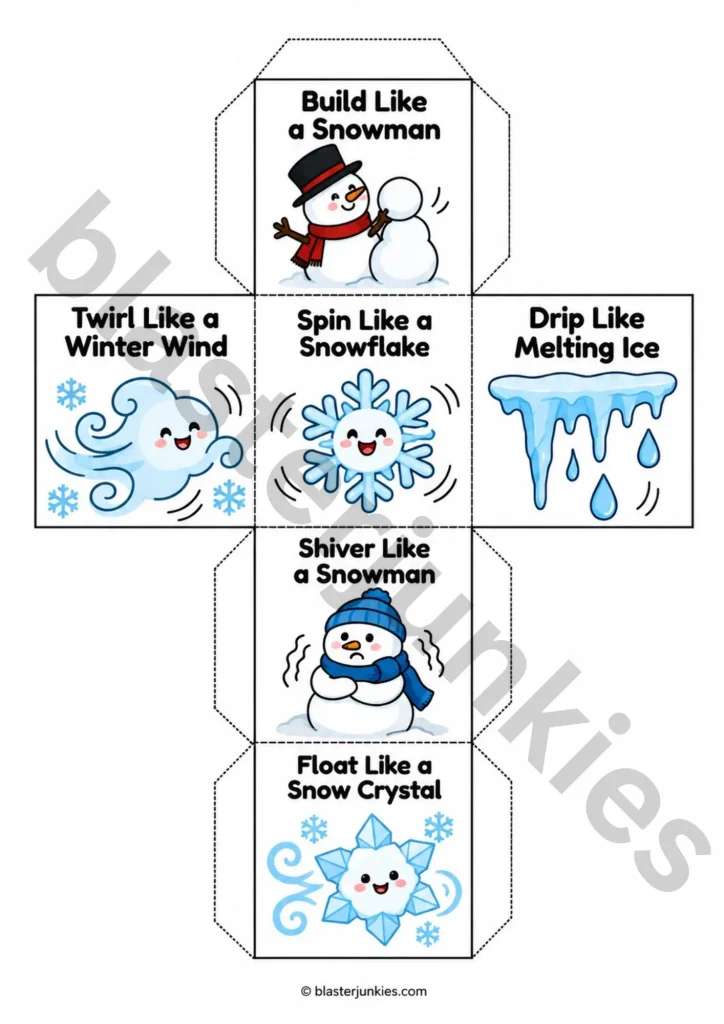
10. Snow and Ice Die. Build like a snowman, twirl like a winter wind, spin like a snowflake, drip like melting ice, shiver, and float.
Dice number nine pairs well with weather lessons. Try these Weather Worksheets for Kindergarten after a few rounds.
Kids can talk about the sun, wind, and snow they just acted out.
Colour and Craft Ideas
The dice come with full colour pictures, but you can still add creative touches. A little extra decoration makes each cube feel personal.
Print a black and white copy for colouring time. Children can choose their own shades for each animal.
A purple fox or a pink polar bear is perfectly fine.
Add glitter glue to the snowflakes, stars, and icicles. It gives the cube a sparkly winter look. Let it dry fully before folding.
Make a snowy craft to go with the game. A Snowflake Suncatcher Craft makes a lovely window display. Children can build it after the dice game ends.
Another idea is to use Easy Suncatcher Crafts as a quiet follow up. Kids calm down while they create something pretty.
Ways to Use the Dice at Home and School
These dice fit many moments in a busy day. Here are a few easy ideas.
Use them as a morning wake up. Roll one die before breakfast. A few quick moves can lift sleepy moods.
Add it to a Morning Routine Chart for Kids so it becomes a habit.
Use them as a brain break. Teachers can roll a die between lessons. One minute of movement helps children focus again.
Use them on rainy or snowy days. When outdoor play is not possible, the dice bring the fun inside.
Use them for a party game. Pass the die around a circle. Each guest does the action, then passes it on.
Build a daily movement habit. Pair the dice with a Daily Walking Challenge Chart for older kids. They can roll a die after each walk.
Try a family fitness game. The Home Workout Challenge Printable works nicely beside the dice. Parents and kids can move together.
Support healthy routines too. A Healthy Habit Challenge rewards small daily steps. A movement die is an easy habit to add.
Wind down at night with a Cozy Night Checklist Printable. Play one slow round, then settle in with blankets and a story.
Tips for Parents and Teachers
Start with one die and learn the actions together. Too many dice at once can feel confusing. Add new ones as children grow confident.
Model each action first. Children copy what they see. A silly penguin waddle from an adult gets everyone laughing.
Keep the mood light. There is no right or wrong way to move like a seal. Praise creativity and effort.
Adapt for different needs. Some children may prefer smaller movements like swaying or wiggling. Others may enjoy big jumps. Let each child choose.
Make safe space. Clear the floor and remove sharp items. Check that children have enough room before each roll.
Add a learning twist. Ask children to name the animal or season on the face. Older kids can spell the action word aloud.
Mix and match. Choose two or three dice for a theme day. Pick the Arctic die and the snow die for a polar adventure.
Printing and Storage Advice
Print each page at full size on letter or A4 paper. Choose the fit to page setting to avoid cropped edges.
Colour printing makes the pictures bright, though black and white also works.
Card stock gives the best results. If you only have plain paper, glue it onto thin cardboard before cutting.
Store finished dice in a small box or a zip bag. Keep them together so the set stays complete. A labelled basket works nicely in a classroom.
You may print as many copies as your family or classroom needs. Please remember the files are for personal use only.
You can share the blog link with friends, but please do not resell or host the files elsewhere.

Leave a Reply