Walking is one of the easiest ways to get kids moving, and yet it’s often overlooked in favor of more “exciting” activities like sports or screen based games.
The truth is, a short daily walk can do wonders for a child’s energy, mood, and focus and it doesn’t require any special skill, equipment, or coordination to get started.
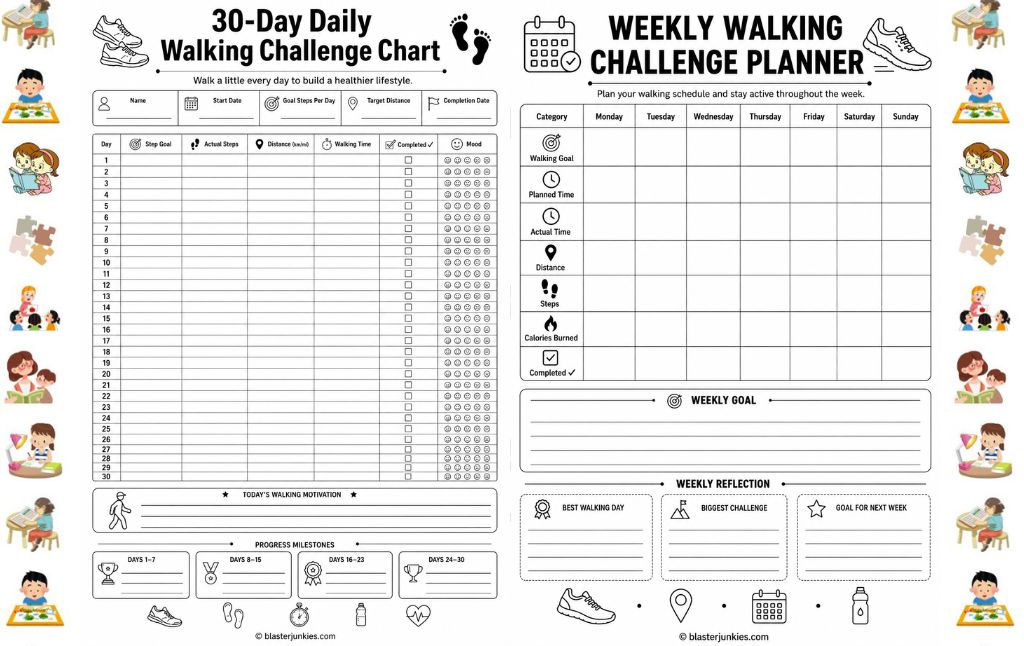
That’s what makes the Daily Walking Challenge Chart such a practical tool for families: it turns something as simple as putting one foot in front of the other into a habit worth tracking, celebrating, and building on.
This printable pack is designed to help kids (and the adults walking beside them) turn walking into a consistent daily routine, with enough structure to stay motivating without ever feeling like a chore.
Why Walking Is a Great Starting Point for Kids
Not every child is drawn to competitive sports, and that’s completely fine.
Walking is one of the few physical activities that almost every kid can do, regardless of age, fitness level, or athletic interest.
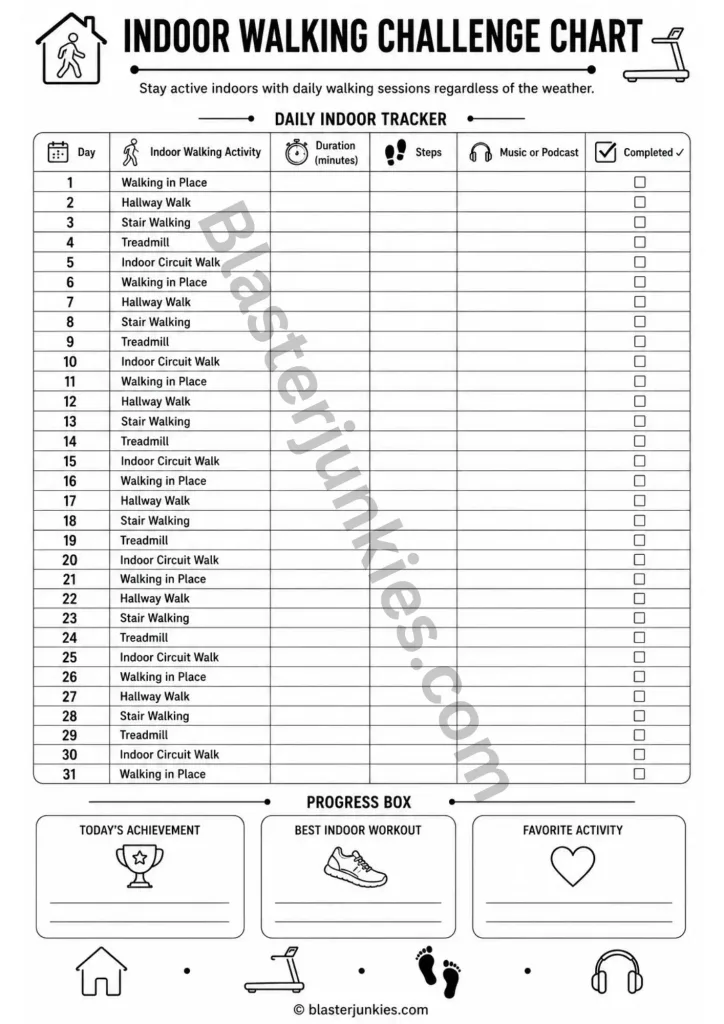
It’s low impact, requires no special training, and can happen almost anywhere around the block, through a park, or even up and down the hallway on a rainy day.
For younger children especially, walking builds foundational habits before more structured fitness comes into play.
It teaches consistency, encourages time outdoors, and gives kids a natural way to burn off energy that might otherwise show up as restlessness at school or trouble winding down at bedtime.
Much like building any other daily habit, walking sticks best when it’s visible and trackable.
That’s the same principle behind tools like a Summer Habit Tracker for Kids or a Monthly Water Tracker Printable for Kids giving kids something to check off turns an abstract goal into a concrete, satisfying routine.
What’s Included in the Pack
Instead of a single generic chart, this printable set offers multiple formats so families can pick what fits their lifestyle.
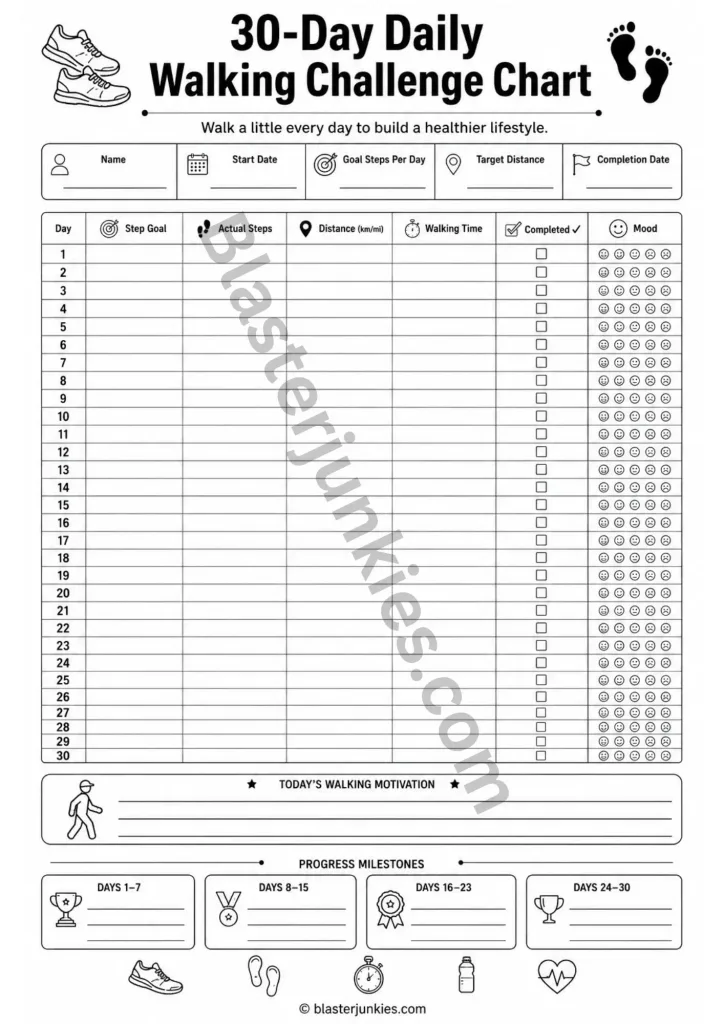
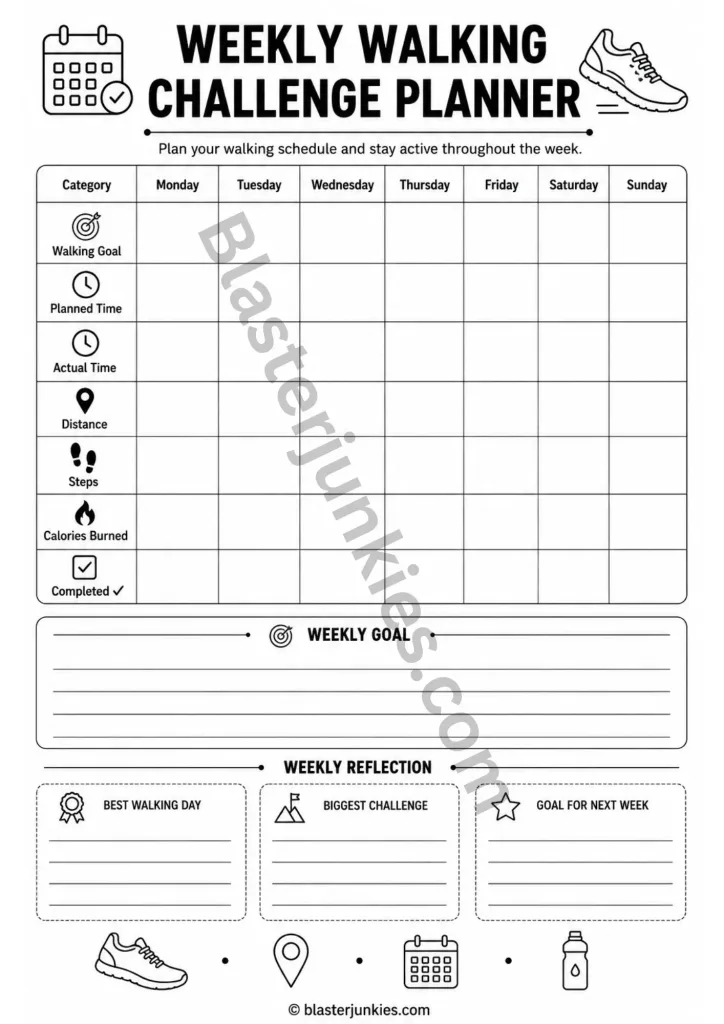
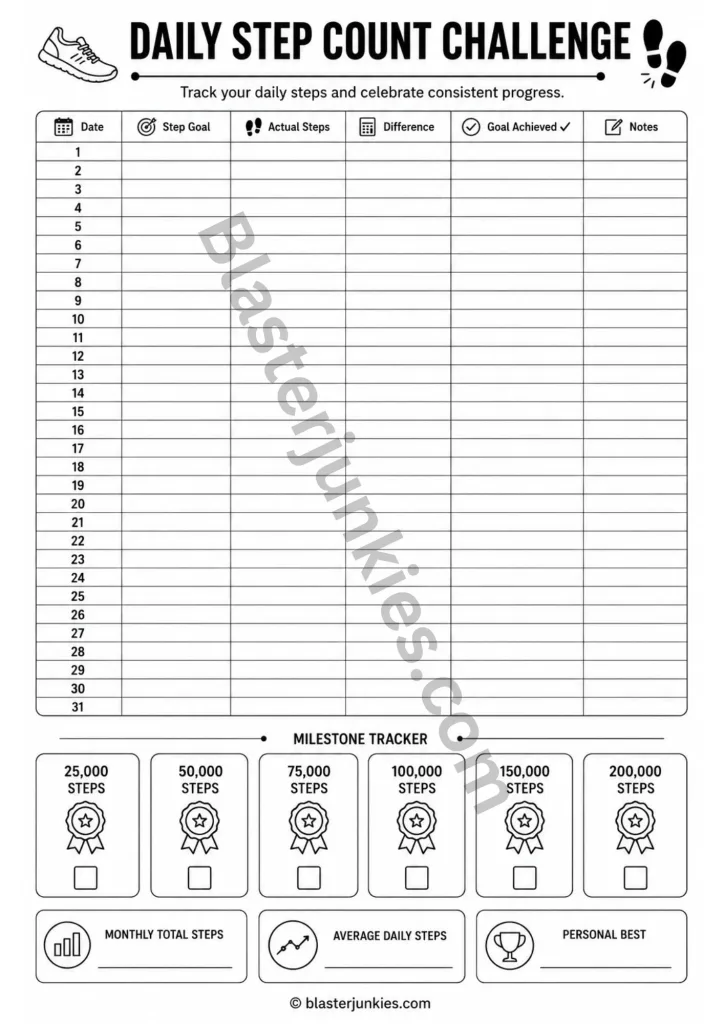
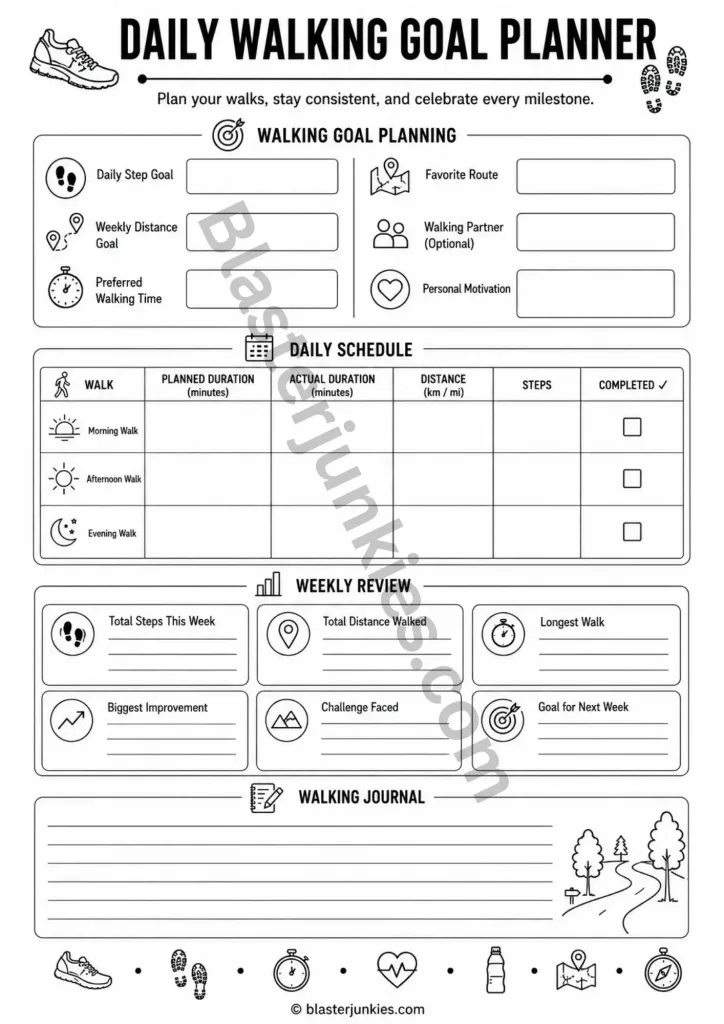
There’s a 30 day challenge chart for building a long term walking streak, a weekly planner for mapping out walks across the week, and a simple step count tracker for families who prefer counting steps over minutes.
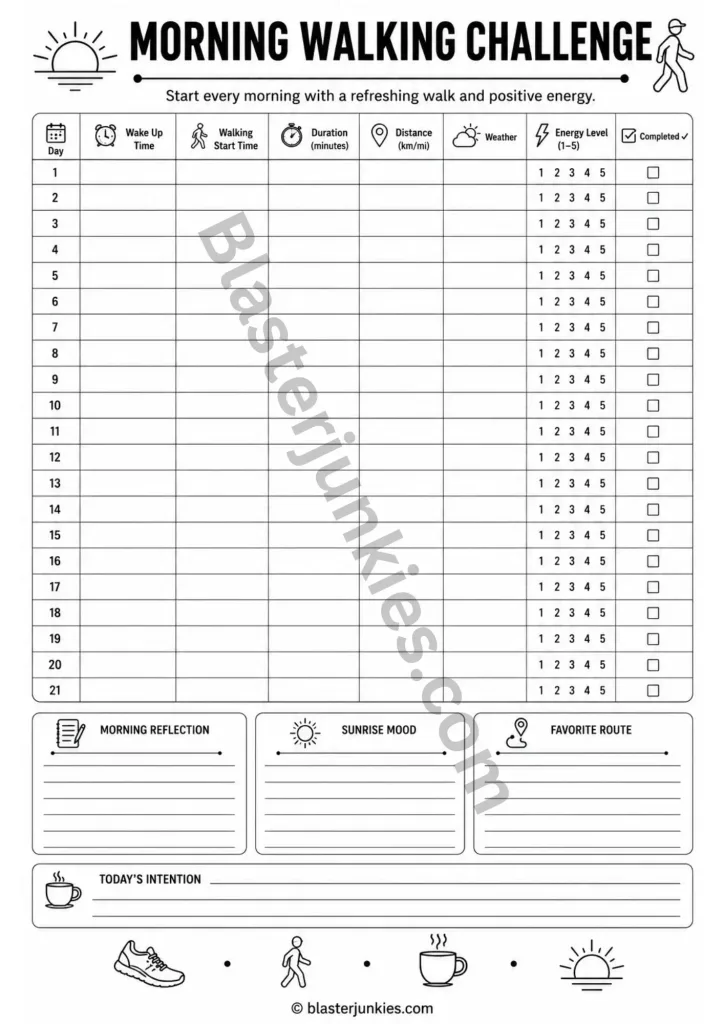
For early risers, there’s a morning focused version that pairs walking with a positive start to the day, and for families who want to push further, a distance based challenge with milestone markers.
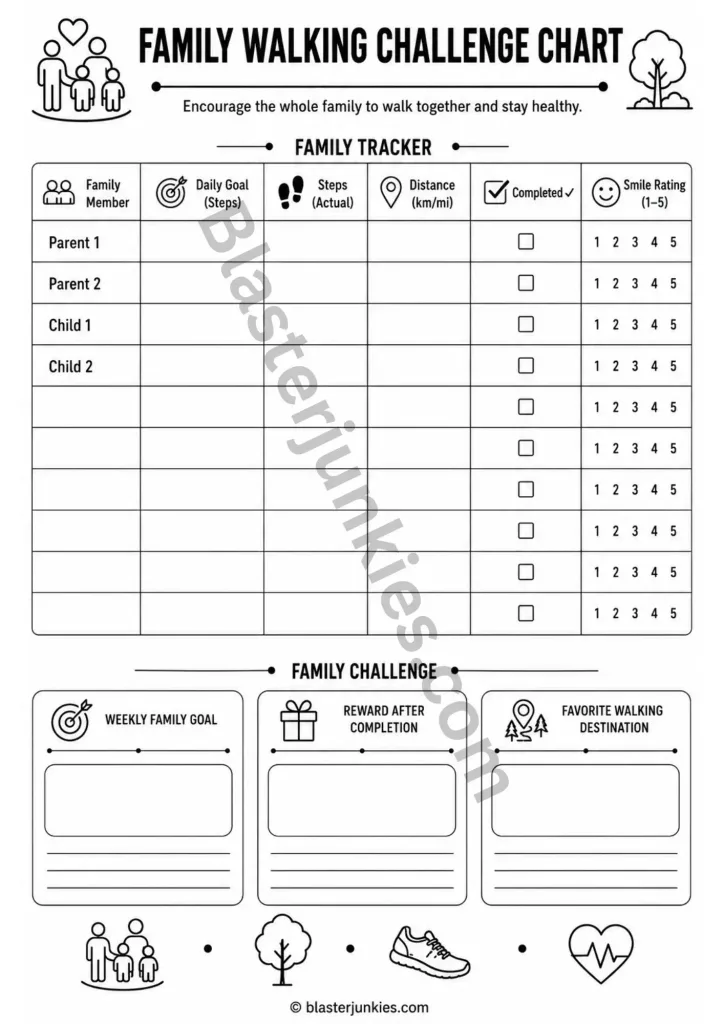
There’s also an indoor option for rainy or extreme-weather days, a habit tracker that ties walking to other daily wellness choices, and a family version that lets everyone log their walks side by side.
This range means the challenge can flex to match real life.
A rainy week doesn’t have to break the streak the indoor version keeps things going.
A child who loves competition might enjoy chasing step count milestones, while a family that prefers togetherness might gravitate toward the shared family tracker instead.
How to Use It With Kids
Set a realistic daily goal together. Instead of picking an arbitrary number, ask your child how far or how long they think they can comfortably walk each day, then write it down as their personal goal.
Giving them a say in the target makes them far more invested in hitting it.
Make the walk part of an existing routine. Attaching a walk to something that already happens daily right after school, before dinner, or as part of getting ready in the morning makes it much easier to stick with.
If mornings work best for your family, this pairs naturally with a Morning Routine Chart for Kids, turning the walk into one predictable step in a routine your child already follows.
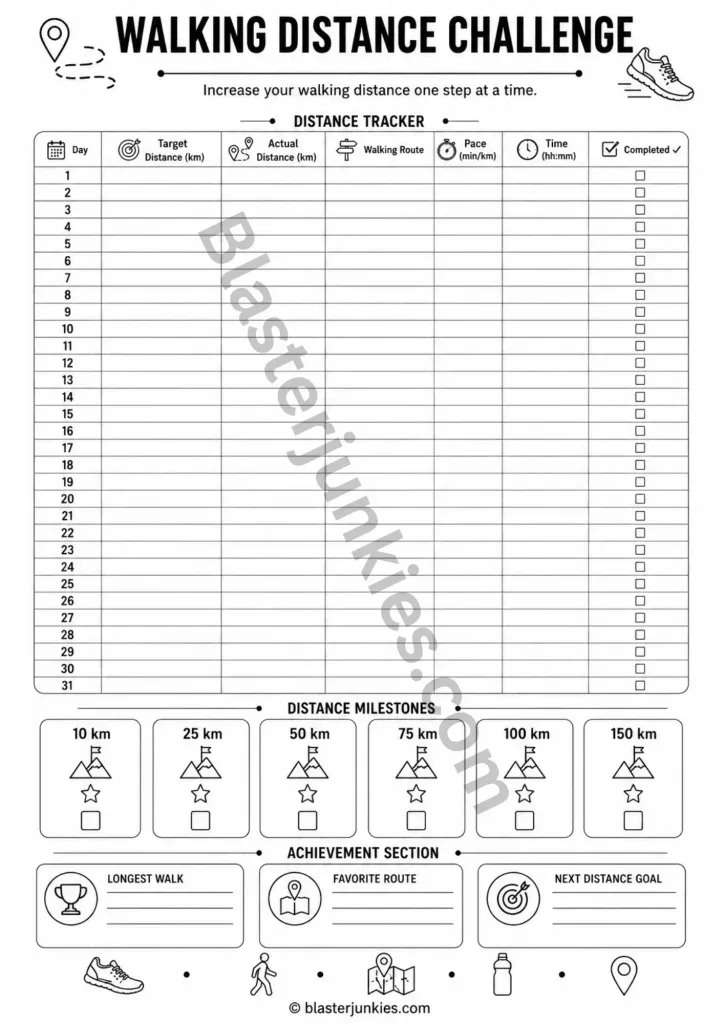
Let them track it themselves. Handing the chart and a pencil to your child, rather than filling it in for them, builds a sense of ownership.
Checking a box after a completed walk gives kids the same small hit of satisfaction as finishing any other task on their own list.
Use the mood column to spark conversation. Several versions of this chart include a simple mood rating alongside the walking log.
This is a great opportunity to talk about how movement affects how we feel a conversation that pairs beautifully with a Mood Tracker Printable if your family already uses one.
Over time, kids start to notice for themselves that a walk outside often leaves them calmer or happier than they were before.
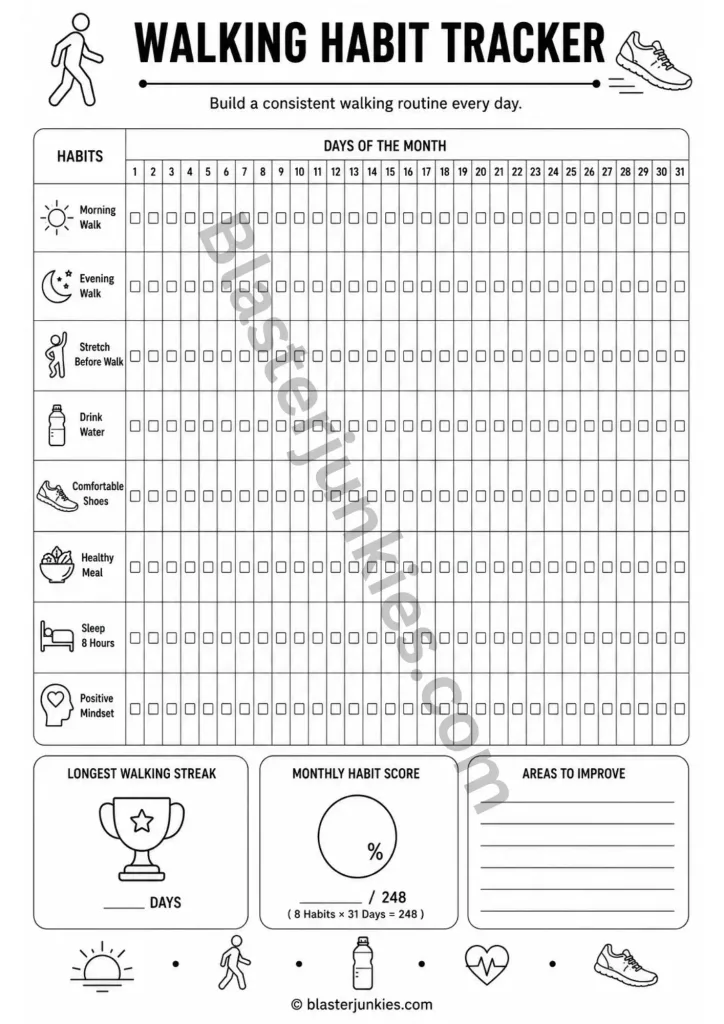
Celebrate milestones, not perfection. Missing a day here and there is normal and shouldn’t derail the whole challenge.
Focus on milestones first week completed, first 25,000 steps, longest walk yet rather than an unbroken streak.
This keeps the challenge encouraging rather than stressful.
Make it social. Walking is more fun with company. Invite siblings, friends, or the whole family to join in using the family tracker, and consider using the walk as a chance to talk using something like Family Conversation Cards a walk around the block is the perfect low pressure setting for a meaningful chat.
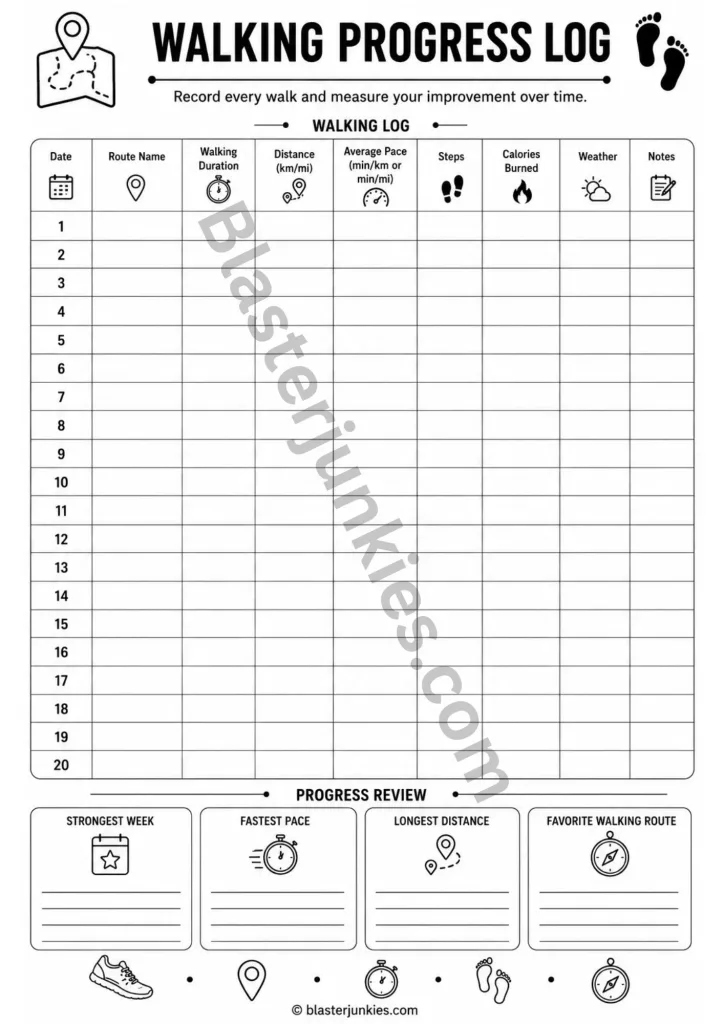
Pair it with broader wellness goals. If your family is building healthier routines beyond just movement, a walking challenge fits nicely alongside a Healthy Habit Challenge or a Self Care Checklist for Mental Health, helping kids see how movement, rest, and emotional wellbeing all connect.
Bringing It Into the Classroom
Teachers can use a simplified version of this chart for class wide walking challenges, recess step counts, or short walking breaks between lessons to help students reset their focus.
It works well alongside other classroom tools like Classroom Decor Printables to build an active, positive classroom culture, or a Student Assignment Tracker Template to help students balance schoolwork with healthy movement breaks.
Teachers building out their classroom resources for the year might also find the Teacher Survival Kit Printable useful.
A Small Habit With a Big Payoff
The beauty of a walking challenge is its simplicity there’s no equipment to buy, no skill to master, and no reason a child can’t start today.
What matters most isn’t hitting a perfect number every single day, but building a rhythm of getting outside, moving the body, and checking in with how it feels afterward.
Print a chart, pick a starting date, and take that first walk together. Over 30 days, you’ll likely see more than just steps add up you’ll see a habit taking root that can carry your child toward a lifetime of staying active.