Getting kids to move more doesn’t require a gym membership, expensive equipment, or a packed sports schedule.
Sometimes all it takes is a printed page, a checklist, and a little friendly competition with themselves.
That’s exactly what the Home Workout Challenge Printable is built for a simple, screen free way to turn everyday movement into a habit kids actually look forward to.
This pack is designed for parents who want an easy way to build activity into daily life, and for kids who do best when a goal is visible, trackable, and rewarding to check off.
No fancy gear needed just floor space, a bit of time, and the willingness to try.
Why Movement Habits Matter Early
Kids are naturally wired to move, but modern routines school, homework, screens can quietly crowd that out.
Building a consistent movement habit early doesn’t just support physical health; it also improves focus, mood, and sleep.
And much like any other habit, exercise sticks best when it’s simple, visual, and rewarding rather than vague and open ended.
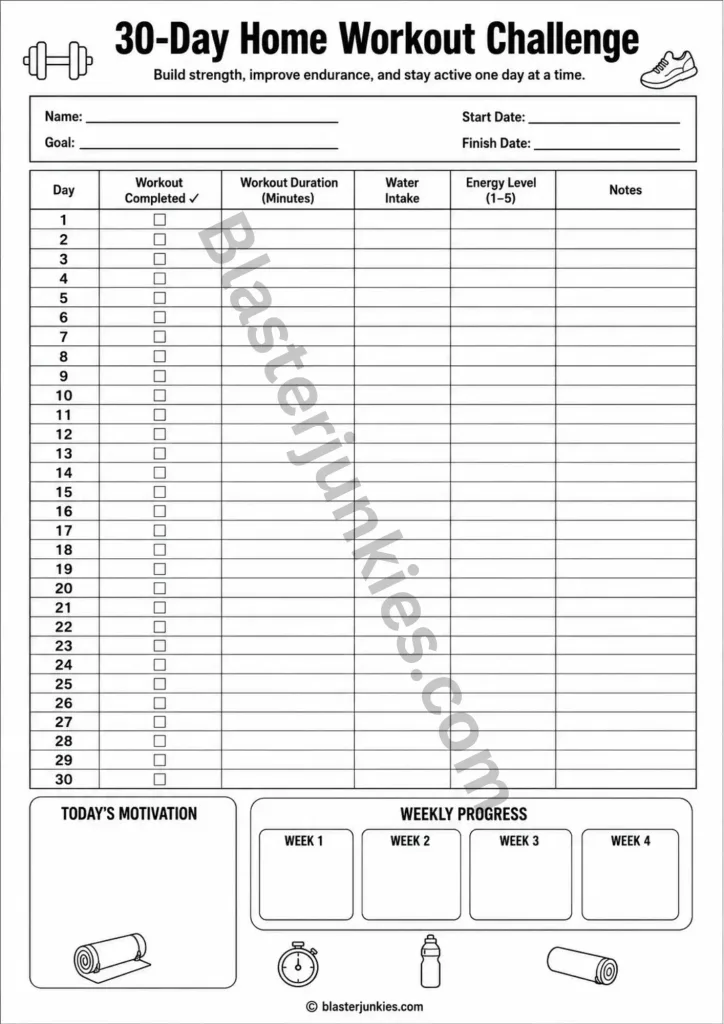
That’s the real value of a printable challenge. Instead of telling a child to “go be active,” you’re handing them a clear day by day plan with boxes to check and progress to see.
The physical act of marking something “done” taps into the same sense of accomplishment kids get from finishing a puzzle or leveling up in a game except this time, the reward is a stronger, healthier body.
This pairs naturally with other consistency building tools you might already be using at home, like a Summer Habit Tracker for Kids or a Monthly Water Tracker Printable for Kids together they help kids see how movement, hydration, and daily routines all connect.
What’s Inside the Pack
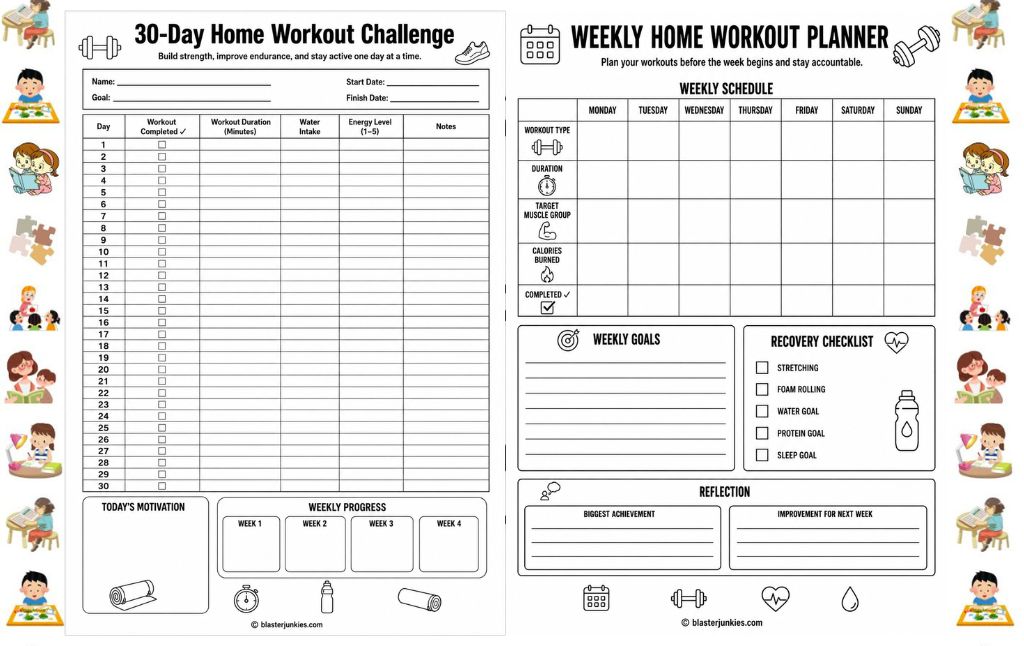
Rather than a single rigid plan, this printable set offers several formats so you can match the challenge to your child’s age, energy level, and fitness experience.
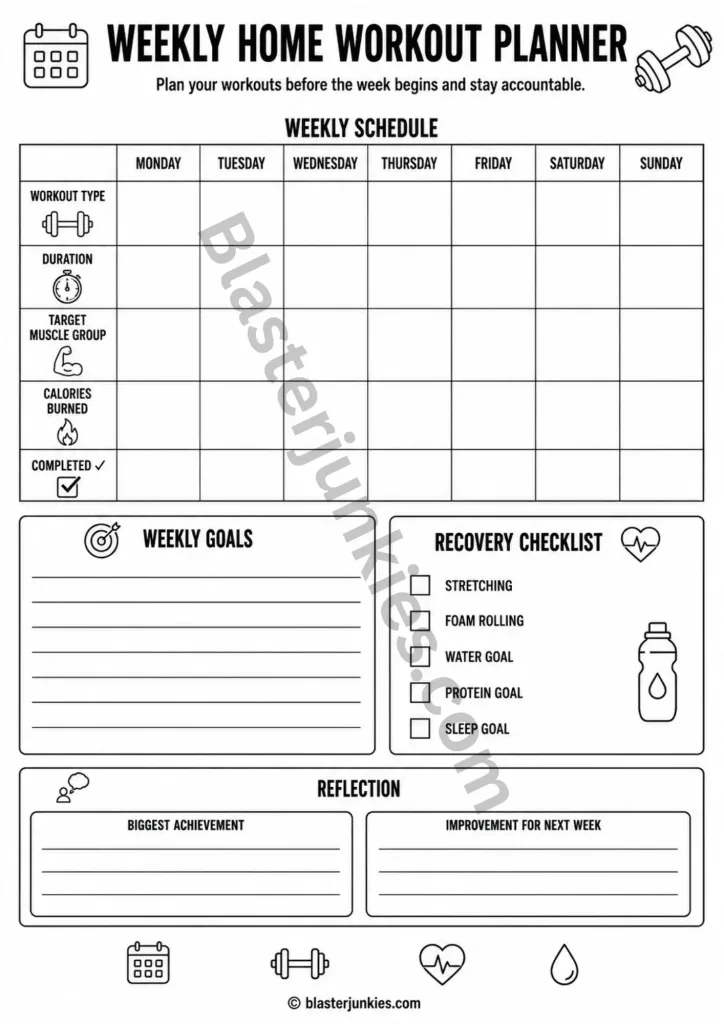
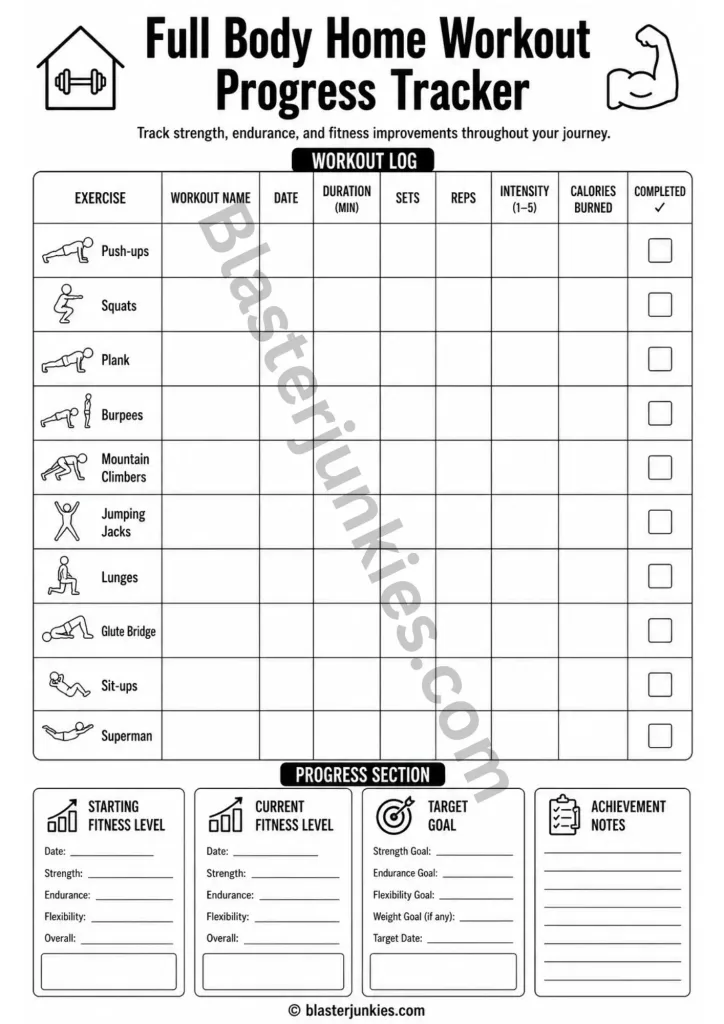
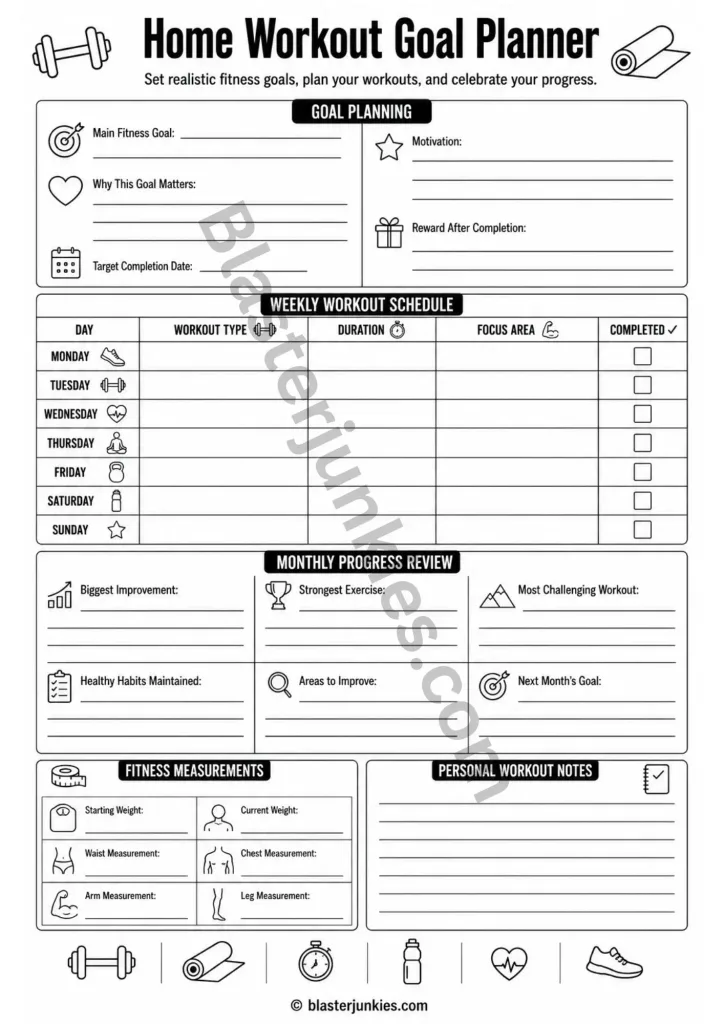
There’s a 30 day tracker for building a long term streak, a weekly planner for mapping out workouts day by day,
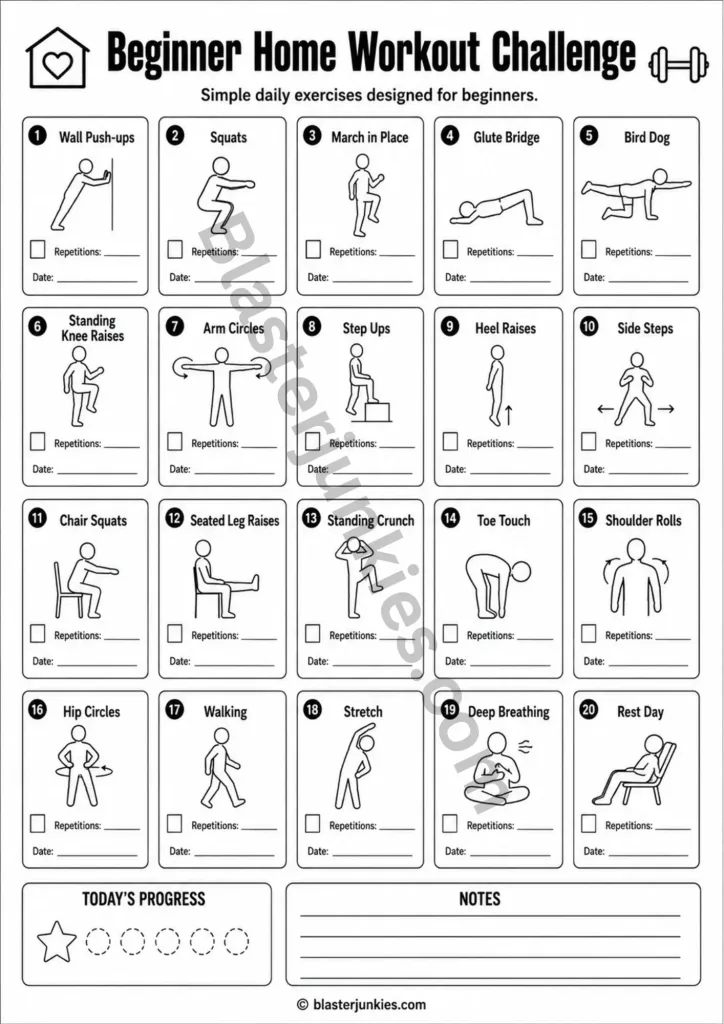
And a beginner friendly version that walks through simple, low impact moves like wall push ups, marching in place, and gentle stretches perfect for younger kids or those just starting out.
For families who want more structure, there are bodyweight, cardio, strength, and flexibility focused challenges, plus a broader habit tracker that ties workouts together with sleep, water, and mood.
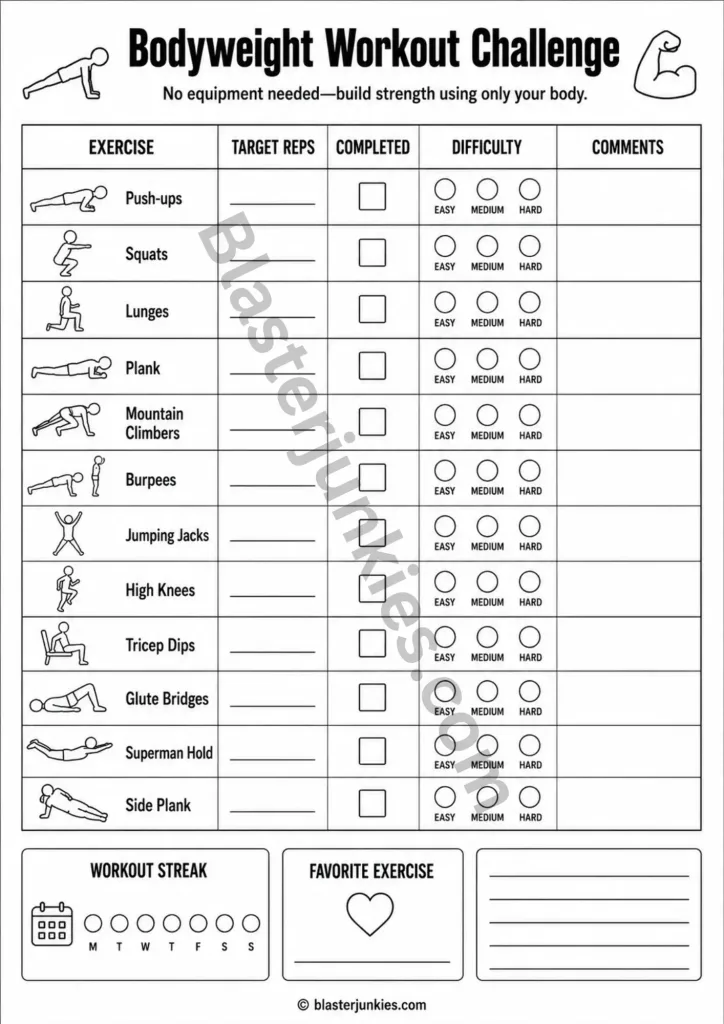
Having this variety means the challenge can grow with your child.
A six year old might thrive with the beginner version and its simple repetitions, while a tween might enjoy the structured strength training layout with sets, reps, and personal records to beat.
How to Use It With Kids
Start with the beginner friendly moves. If your child hasn’t done structured exercise before, skip straight to the simplest exercises things like marching in place, arm circles, and standing knee raises.
These build confidence and coordination without feeling intimidating.
Turn it into a game, not a task. Kids respond well to challenges framed as fun rather than obligation.
Use the checkboxes as a mini reward system: completing a row might earn a sticker, a favorite snack, or extra playtime.
The goal is for your child to associate movement with feeling good, not with pressure.
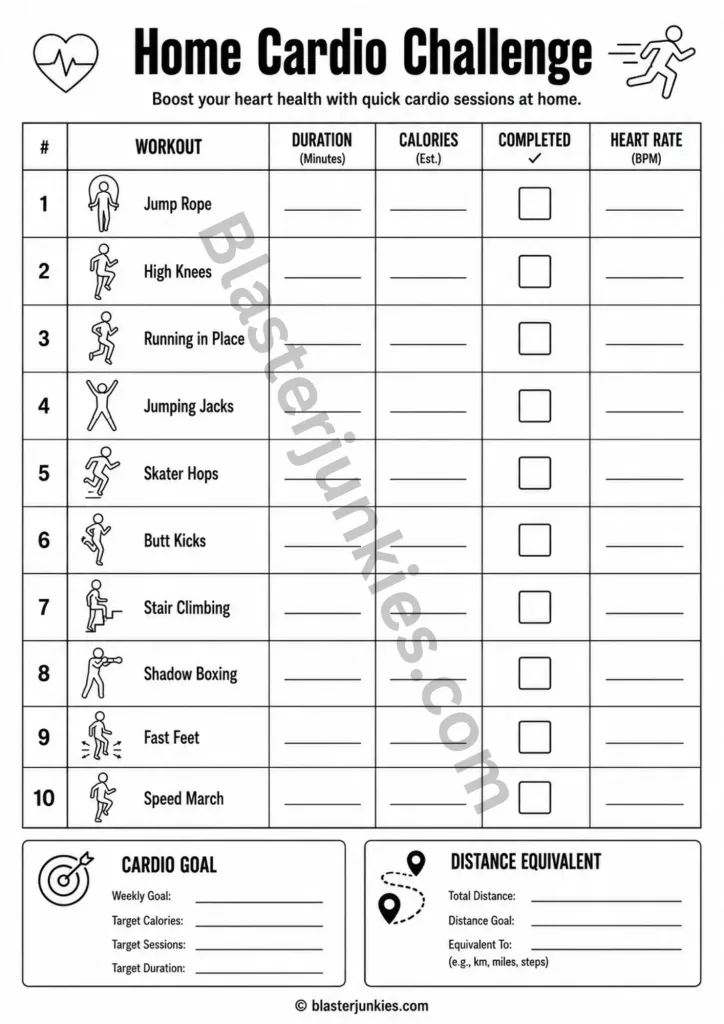
Keep sessions short. Ten to fifteen minutes is plenty for younger children. Long workouts aren’t the point consistency is.
A few minutes of daily movement, tracked over 30 days, builds a habit far more effectively than one exhausting hour long session.
Let them see their own progress. Kids love watching numbers grow.
Whether it’s counting repetitions, tracking a workout streak, or filling in a weekly progress box, seeing their own effort add up over time is deeply motivating much more so than being told “good job” alone.
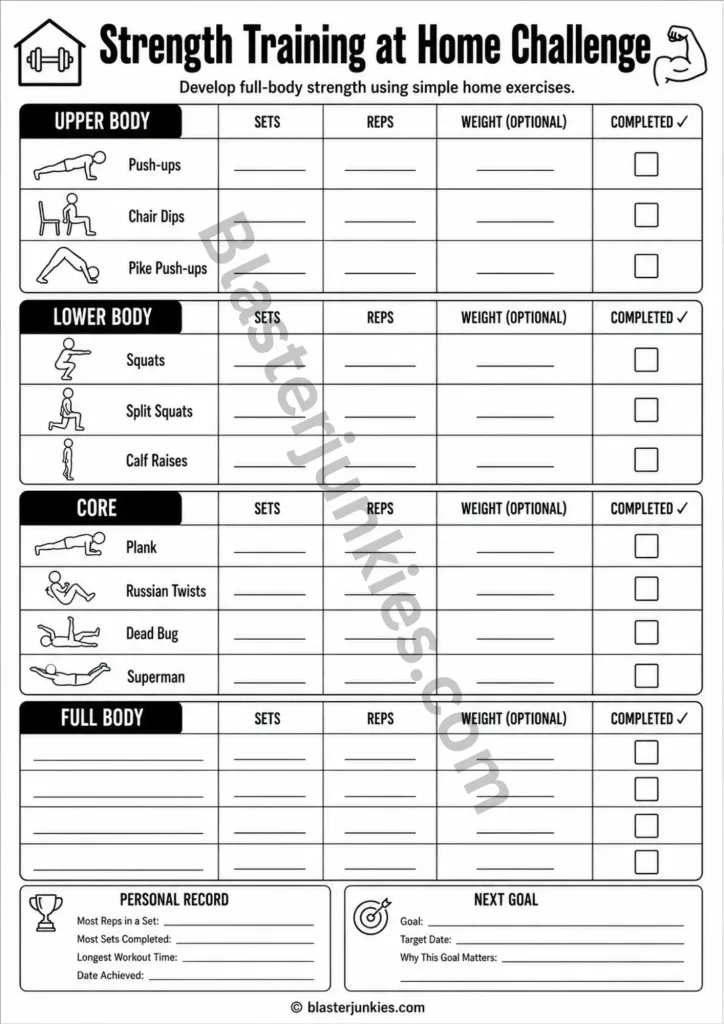
Make it a shared family activity. Doing the workout alongside your child not only makes it more fun, it also models healthy habits naturally.
This kind of shared routine fits well alongside other family first tools, like Family Conversation Cards for connecting after a workout, or a broader Healthy Habit Challenge if you want to expand beyond movement into nutrition and rest as well.
Connect movement to mood. Physical activity has a well documented effect on emotional regulation in kids.
Pairing this printable with something like the Mood Tracker Printable can help children notice, in their own words, how a short workout changes how they feel for the rest of the day.
It’s a simple but powerful lesson about the mind body connection that most adults wish they’d learned sooner.
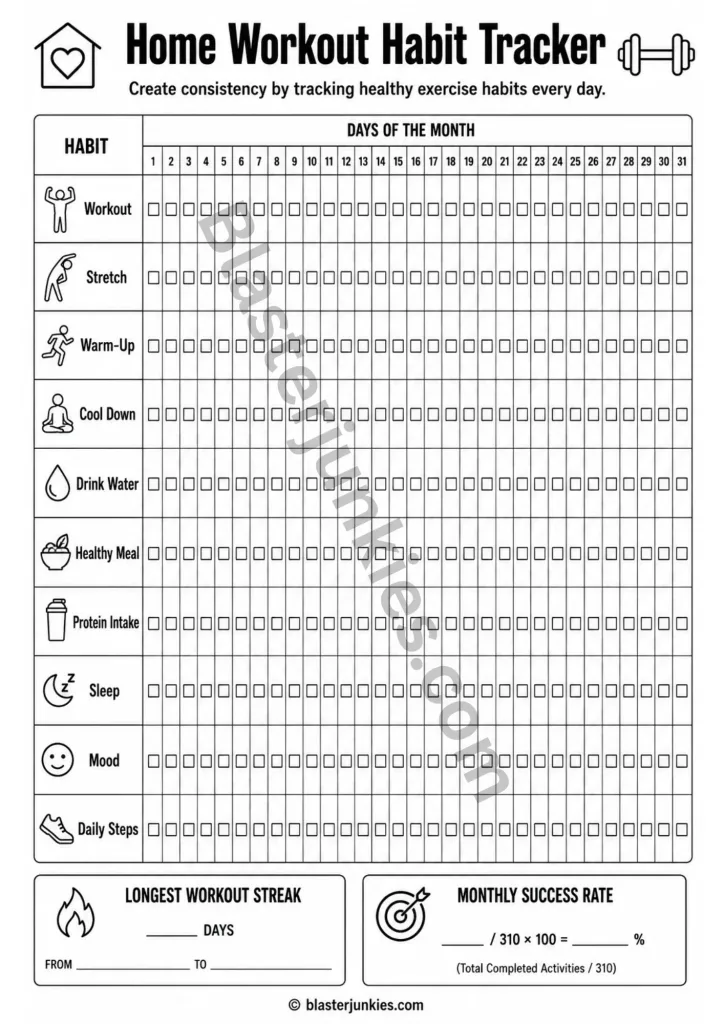
Build it into the morning or after school routine. Movement doesn’t need its own separate slot if you don’t have one to spare it can slide right into an existing structure.
If mornings are already busy, try pairing a few exercises with a Morning Routine Chart for Kids so movement becomes just one more predictable step in the day, rather than something extra to squeeze in.
Bringing It Into the Classroom
Teachers and after school program leaders can use this printable just as effectively as parents.
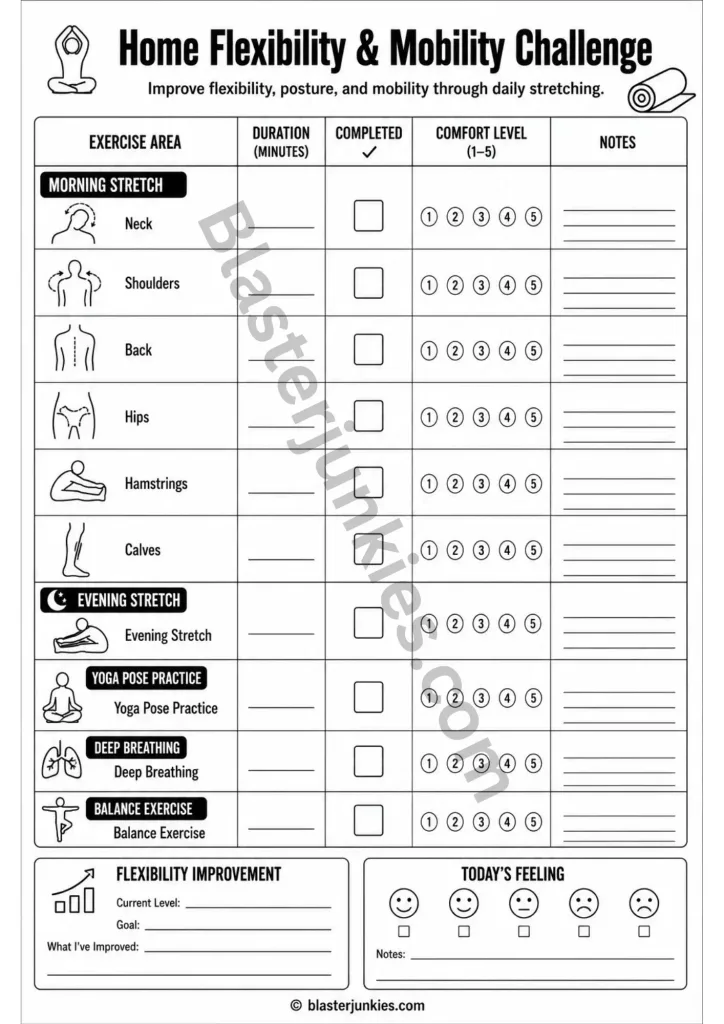
A quick five minute movement break between lessons a few jumping jacks, some stretching, a lap around the room helps reset attention spans and burn off restless energy.
It works well alongside other classroom friendly resources like Classroom Decor Printables for creating an energizing space, or a Student Assignment Tracker Template to help kids balance schoolwork with healthy breaks.
If you’re building out a broader toolkit for the year, the Teacher Survival Kit Printable is worth a look too.
Building a Habit That Lasts
The real win here isn’t finishing 30 days of a challenge it’s what happens after.
Kids who grow up seeing movement as something normal, achievable, and even fun are far more likely to carry that mindset into their teenage and adult years.
A printable checklist won’t do the workouts for them, but it does something just as important: it makes progress visible, turns effort into a habit, and gives kids a reason to show up again tomorrow.
Print a few pages, stick them somewhere visible like the fridge or a bedroom wall, and let your child check off their own progress one day at a time.
Small, consistent movement now builds the foundation for a lifetime of healthier choices.