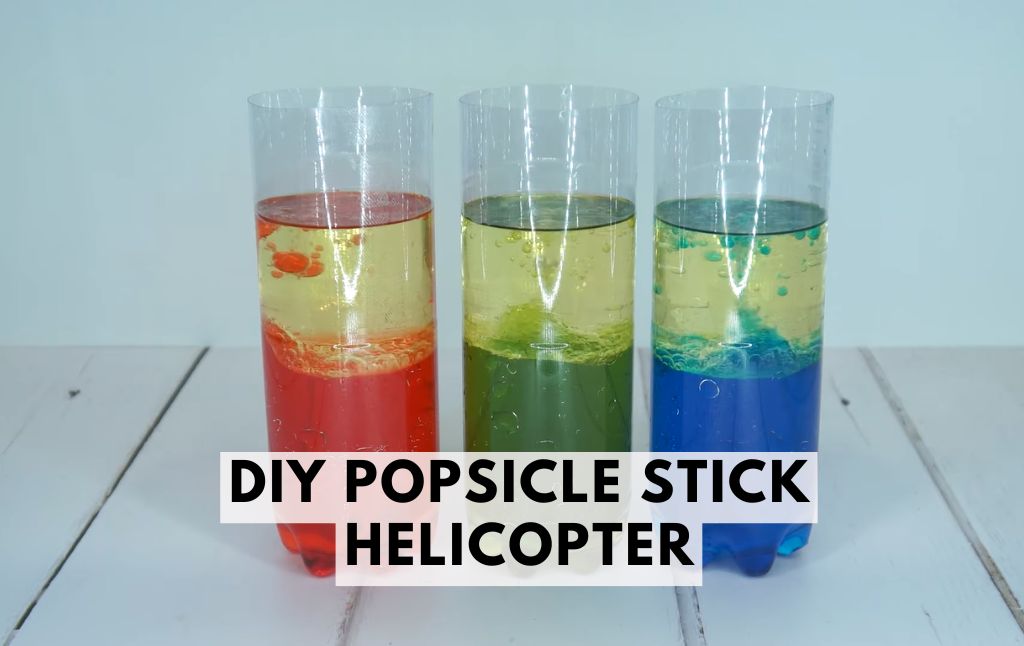
Have you ever wanted to make your own lava lamp at home? With just a few household ingredients, you can create a fascinating and colorful experiment that demonstrates the science of density and chemical reactions.
This fun and easy activity is perfect for kids and adults alike, making it an excellent hands-on learning experience.
Materials Needed:
- A clear glass or plastic bottle
- Water
- Vegetable oil (or any clear cooking oil)
- Food coloring
- Alka-Seltzer tablets (or any effervescent tablets)
- A funnel (optional for easy pouring)
Step-by-Step Instructions:
Step 1: Fill the Bottle with Oil
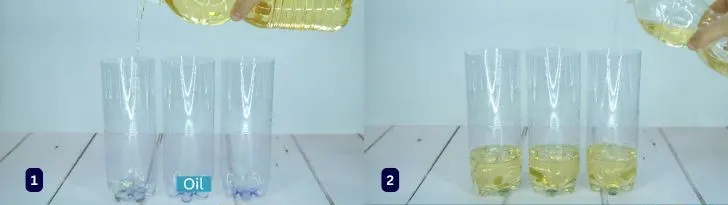
Take a long plastic bottle and cut its top. You can prepare different bottles for Lava Lamps of different colours in this way.
Now pour a little less than half vegetable oil in these bottles.
Step 2: Make color water
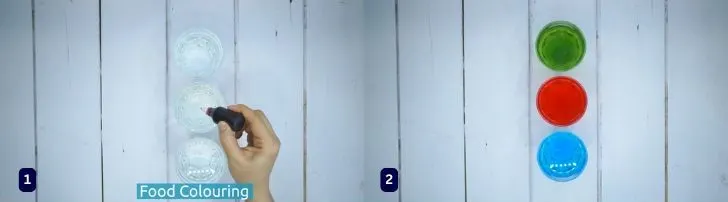
Now prepare watercolor in another container. You can use any color of your choice.
Take water in a container and add a few drops of your favorite color and mix it.
Step 3: Add Food Coloring water to oil water
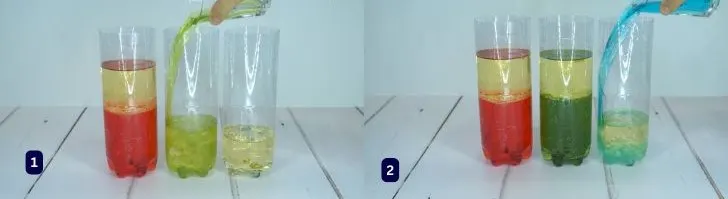
Now pour the colored water you have prepared into the oil container. You will see that the oil and water are not mixing.
This occurs because food coloring is water-based, so it does not mix with the oil but dissolves in the water instead.
Let the liquids settle and observe how the oil floats on top of the water. This happens because oil is less dense than water, meaning it does not mix but instead stays on top.
Step 4: Create the Lava Lamp Effect
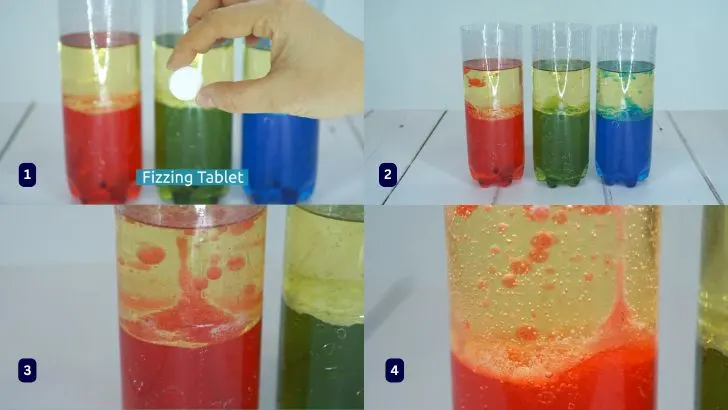
Break an Alka-Seltzer tablet into small pieces and drop one piece into the bottle. Immediately, you will see bubbles rising to the top as the tablet reacts with the water, creating carbon dioxide gas.
These bubbles carry some of the colored water with them, making it look like a real lava lamp!
Step 5: Keep the Fun Going
Once the bubbling slows down, you can add another piece of the tablet to keep the reaction going.
If you want to make your lava lamp glow, try shining a flashlight from underneath the bottle for a cool effect!
The Science Behind It
This experiment is a great way to explore the concepts of density and chemical reactions:
Density: Oil is less dense than water, which is why it stays on top. Food coloring, being water-based, sinks and mixes only with water.
Chemical Reaction: The Alka-Seltzer tablet reacts with water to produce carbon dioxide gas. The gas forms bubbles that rise to the surface, carrying some of the colored water with them. When the bubbles pop, the colored water sinks back down, creating a mesmerizing lava lamp effect.
Experiment Variations
Try using different colors of food coloring for a multicolored effect.
Use a larger or smaller bottle to see how it changes the bubbling action.
Experiment with different amounts of Alka-Seltzer to observe how it affects the reaction speed.
Conclusion
The Lava Lamp Experiment with Oil and Water is a simple yet fascinating way to explore basic science principles. It’s a fun activity for kids and adults to enjoy together, providing both entertainment and education. Give it a try and enjoy your very own homemade lava lamp! ✨
Kids Activities
Looking for more fun kids activities and other ideas to keep kids engaged, learning, and having fun? Check out these:
DIY Popsicle Stick Helicopter: A Fun and Easy Flying Toy
How to Make a Harmonica Out of Popsicle Sticks
How to Make a Popsicle Stick Launcher
How to Make Popsicle Stick Bombs