Autumn is one of the richest seasons for outdoor exploration.
Crunchy leaves underfoot, acorns scattered across the yard, pinecones tucked beneath trees, and the occasional scurrying squirrel all turn an ordinary walk into something worth paying attention to.
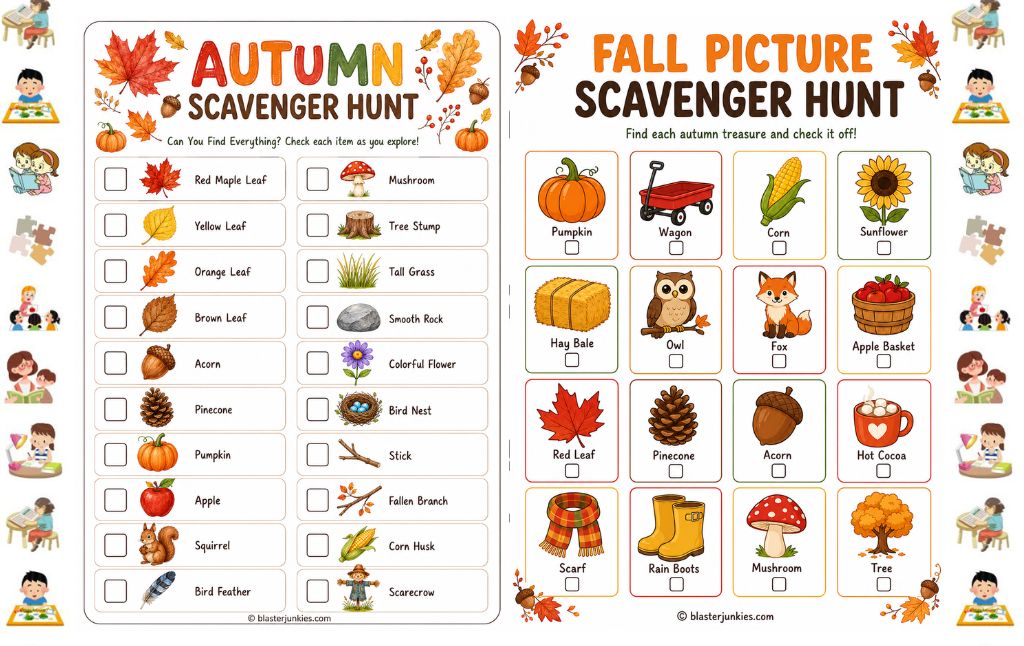
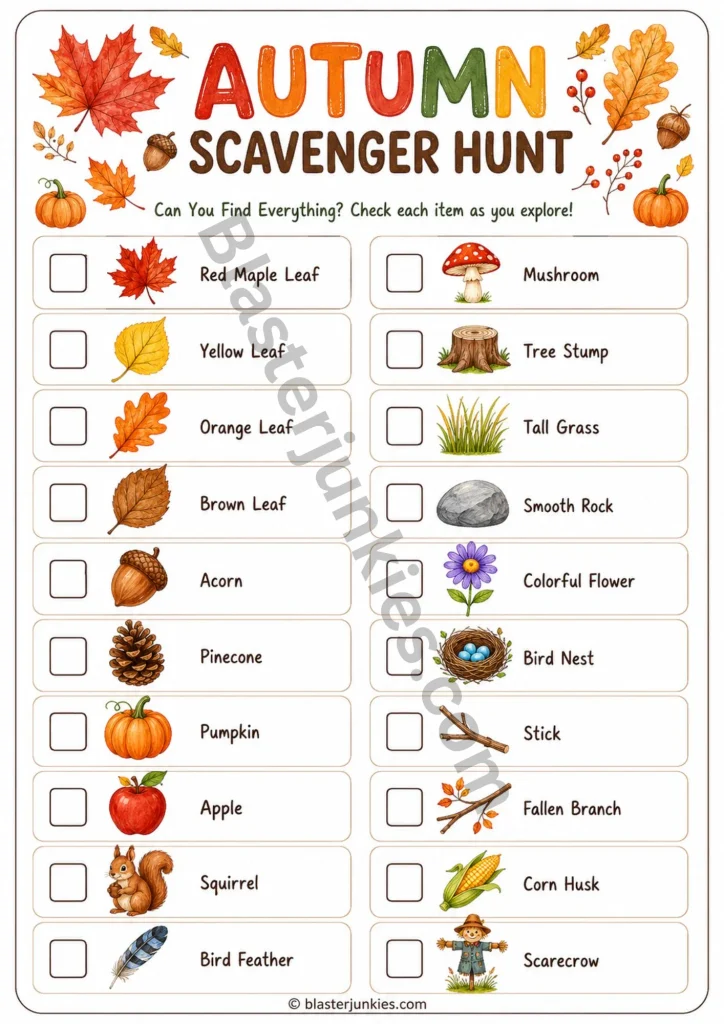
An Autumn Scavenger Hunt Printable takes that natural abundance and turns it into a simple, structured activity one that gets kids outside, engaged, and genuinely excited about noticing the world around them.
In this guide, we’ll look at why scavenger hunts are such an effective tool for parents and educators, how to make the most of one this season, and how to adapt the activity for kids of different ages so everyone gets something meaningful out of it.
Why a Scavenger Hunt Works So Well
Kids don’t need much convincing to go outside, but they often need a reason to actually slow down and look closely at their surroundings.
A scavenger hunt provides exactly that. Instead of walking past a pile of leaves or a patch of moss without a second glance, a checklist gives children a specific mission find something red, spot a bird, locate an acorn that transforms ordinary observation into an engaging little challenge.
This kind of structured exploration also supports real learning, even though it feels like pure fun. Searching for specific colors, shapes, textures, and natural objects builds observational skills, vocabulary, and an early sense of how to categorize the world.
A child who’s hunting for “something fuzzy” or “something round” isn’t just having fun they’re practicing description, comparison, and attention to detail, all while running around outside instead of sitting at a desk.
Choosing the Right Format for Your Outing
Not every autumn scavenger hunt needs to look the same, and part of what makes this activity so flexible is how easily it adapts to different settings.
A general nature based hunt leaves, acorns, pinecones, pumpkins, squirrels works well almost anywhere, from a backyard to a local park.
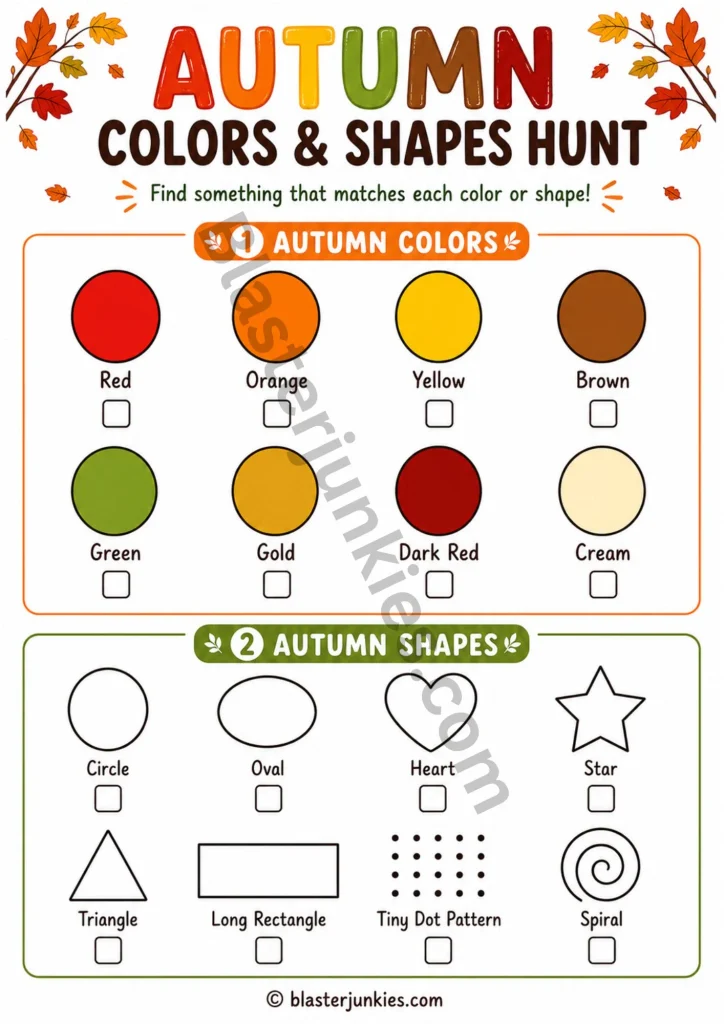
A more specific version focused on colors and shapes is a great option for younger children who are still learning to recognize and name basic concepts, since it turns abstract ideas like “orange” or “triangle” into something tangible they can spot in the real world.
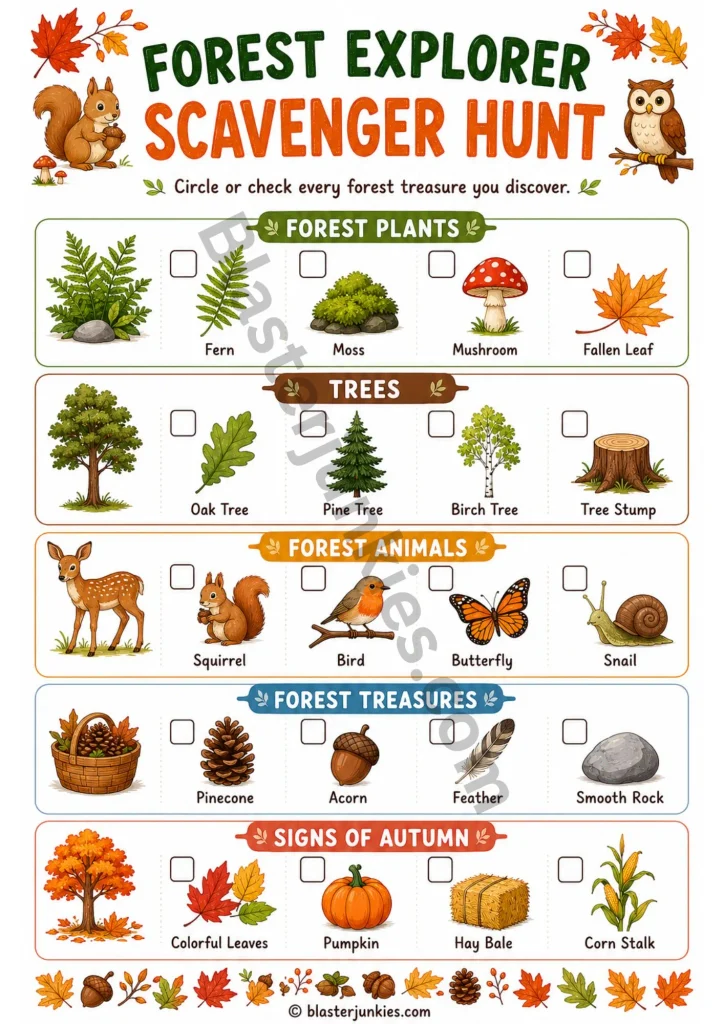
For families who want a slightly bigger adventure, a forest themed hunt that includes categories like trees, forest animals, and signs of autumn works well on a hike or a visit to a wooded trail.
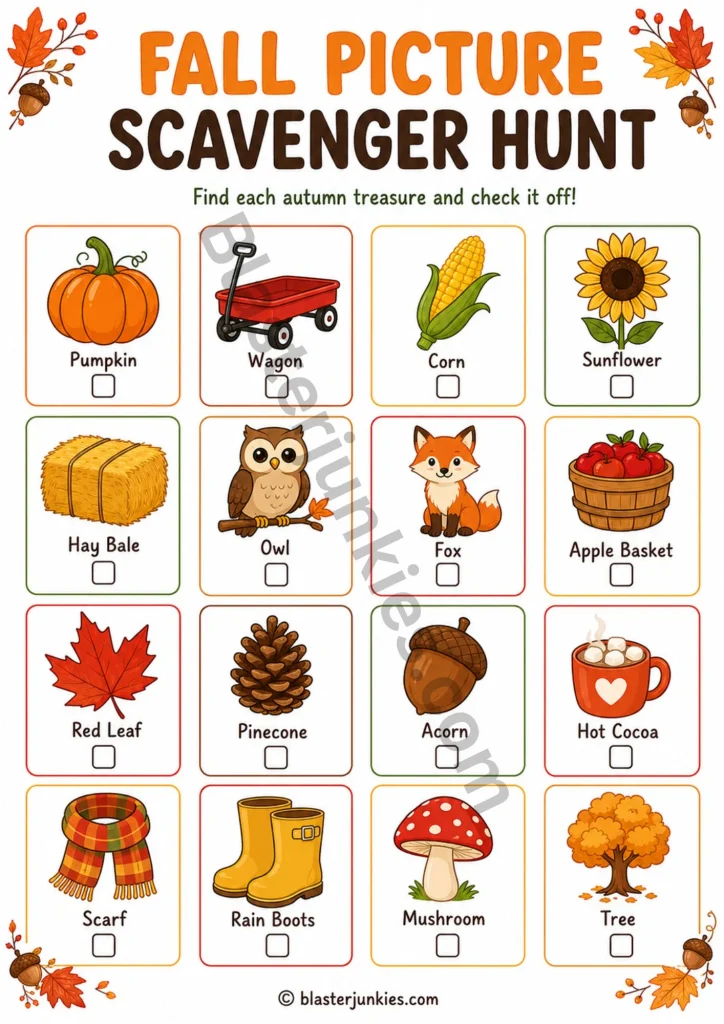
And a picture based hunt with visual icons rather than written words is ideal for pre readers, letting even the youngest kids participate fully without needing an adult to read every item aloud.
Choosing the right version for your outing matters more than people often expect.
A hunt that’s too advanced can frustrate a young child, while one that’s too simple won’t hold an older child’s attention for long.
Matching the format to the age and setting keeps the whole experience enjoyable rather than a source of complaints halfway through.
Turning a Walk Into a Full Autumn Outing
A scavenger hunt rarely has to stand alone. It pairs naturally with other seasonal activities, and building a full day around it can turn a simple walk into a memorable family outing.
Many families like to combine a scavenger hunt with a trip to a pumpkin patch or apple orchard, or follow it up with something cozy at home, like warm cider or a baking project.
If you’re already building out a broader list of seasonal goals, an Autumn Bucket List Printable is a great companion, since a scavenger hunt fits naturally as one of the outdoor items on that list.
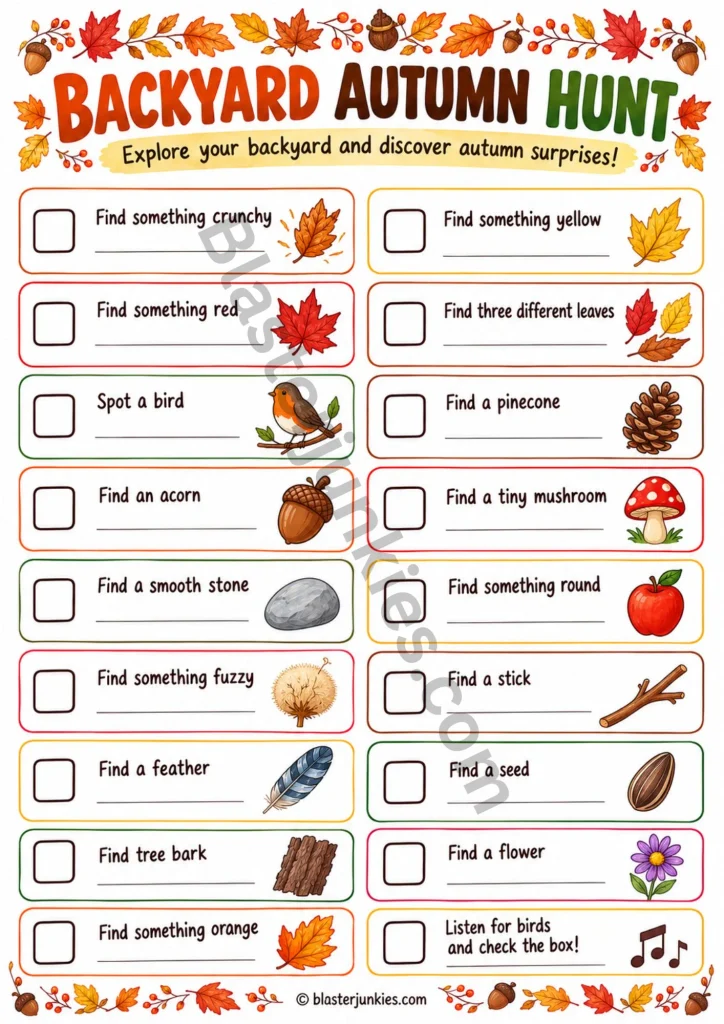
It’s also worth thinking about how this activity connects to a family’s broader rhythm of outdoor time.
Just as a Daily Walking Challenge Chart encourages consistent movement, a scavenger hunt gives kids a reason to want to go for a walk, rather than needing to be convinced.
And for families who already enjoy nature based challenges together, it fits right alongside activities like a Beach Scavenger Hunt For Kids the same format, adapted for a completely different season and setting.
Making It Educational Without Feeling Like a Lesson
One of the quiet strengths of a scavenger hunt is how much learning it sneaks in without ever feeling academic.
Counting how many different leaf colors were found, sorting items by texture, or simply talking through why leaves change color in the fall all turn naturally out of the activity itself.
Parents who want to lean into this can extend the hunt with a quick conversation afterward What was the hardest thing to find? What surprised you?
similar to how Family Conversation Cards spark reflection and connection once everyone’s back inside.
For households already using seasonal learning tools, a scavenger hunt complements things like a Summer Reading Challenges tracker or a Morning Routine Chart for Kids nicely all of these share the same underlying idea of turning everyday moments into small, trackable wins that kids feel proud to complete.
How to Use It With Kids of Different Ages
For toddlers and early preschoolers, keep expectations light.
A picture based hunt with just a handful of easy to spot items works best, and the goal is simply engagement and joy, not completing every box.
Walking alongside them and narrating what you see together “Look, a red leaf, just like on our sheet!” helps connect the printable to the real world in a way that feels natural rather than instructional.
Elementary aged kids can usually handle a full list independently, especially with picture support, and often enjoy racing against a sibling or parent to find items first.
This is a great age to introduce a simple reward for completing the hunt perhaps a special hot cocoa afterward which reinforces the sense of accomplishment.
Older kids can take on more complex versions, like the colors and shapes hunt or the forest explorer categories, and can even help create their own scavenger hunt list for a younger sibling.
Giving them ownership over designing part of the activity adds a creative layer on top of the outdoor exploration, and it mirrors the kind of hands on engagement found in tools like a Summer Habit Tracker for Kids, where checking off progress becomes part of the fun.
Bringing It All Together
An autumn scavenger hunt printable is a small tool with an outsized impact it turns a routine walk into an adventure, builds observation and vocabulary skills without feeling like schoolwork, and gives families an easy, low cost way to spend quality time outdoors together.
Whether you’re heading to a local park, exploring your own backyard, or turning it into a full day trip with a pumpkin patch stop along the way, a scavenger hunt fits naturally into almost any autumn outing.
Pick the format that matches your child’s age and your setting, bring a pencil for checking off items, and let curiosity do the rest.
By the time the list is complete, you’ll likely have more than just a filled in checklist you’ll have a handful of new favorite autumn memories.