Cats have a reputation for being low maintenance pets, but anyone who shares their home with one knows there’s more to their care than simply filling a food bowl.
Between feeding routines, litter box upkeep, grooming, play, medication, and health monitoring, cat care involves a surprising number of small tasks that are easy to forget in the middle of a busy day.
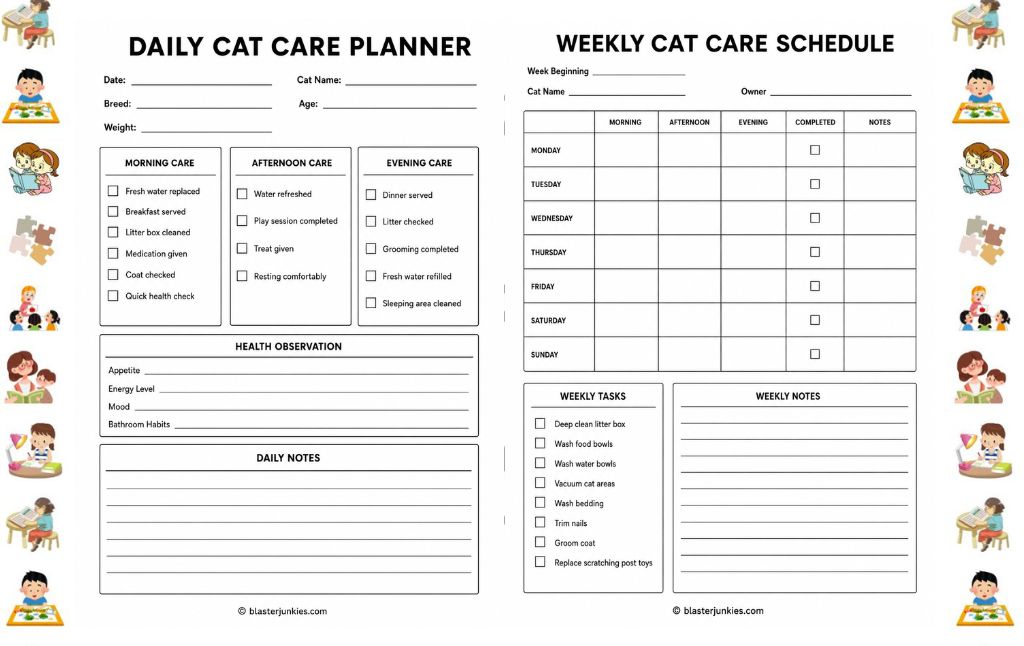
That’s exactly why a Cat Care Planner is such a useful tool it takes all of these scattered responsibilities and organizes them into one simple, consistent system.
In this guide, we’ll explore why a structured cat care routine matters, how adults can use a planner to stay on top of their cat’s daily and weekly needs, and how the same idea can become a fun, hands on way for kids to help care for the family cat.
Why Cats Need a Planned Routine, Not Just Attention
Cats are creatures of habit. They thrive on predictable feeding times, a clean and accessible litter box, and a stable environment.
When care becomes inconsistent meals served at random times, litter cleaned only when someone remembers, play sessions skipped for days cats often respond with stress related behaviors like over grooming, litter box avoidance, or changes in appetite.
A planner solves this by turning care into a predictable rhythm rather than something that happens only when there’s spare time.
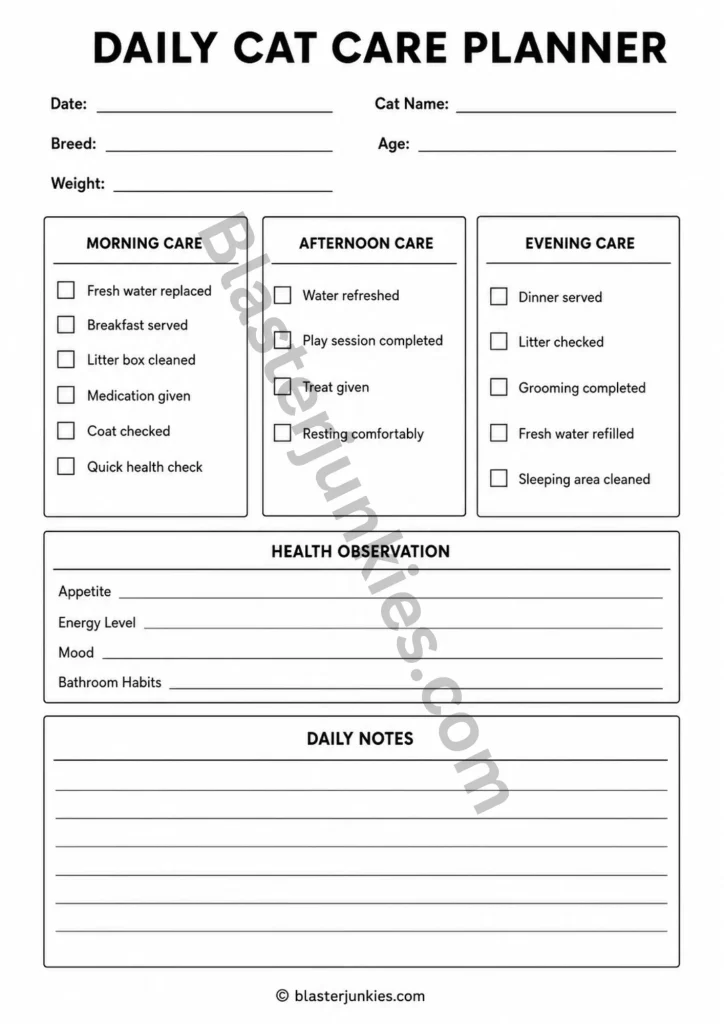
A well structured routine typically breaks the day into segments: morning care, afternoon care, and evening care.
Morning tasks usually cover fresh water, breakfast, litter box cleaning, and a quick visual health check.
Afternoon care is lighter refreshing water, a play session, maybe a treat.
Evening care tends to be the most involved, covering dinner, a final litter check, grooming, and making sure the sleeping area is clean and comfortable.
Organizing the day this way means nothing important gets pushed aside, even during a hectic week.
Tracking Health Alongside Daily Care
One of the most valuable parts of a cat care planner is that it doesn’t just track chores it tracks wellbeing.
Simple daily notes on appetite, energy level, mood, and bathroom habits build a running record that becomes incredibly useful over time.
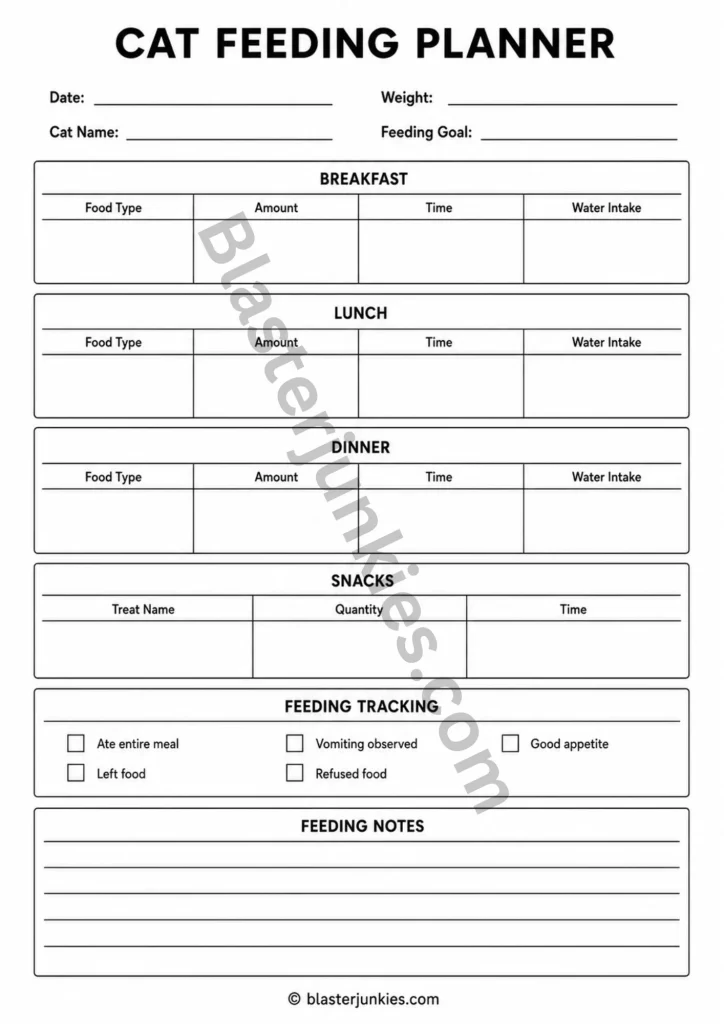
Cats are notorious for hiding discomfort, so subtle shifts eating less than usual, seeming more withdrawn, using the litter box more frequently are often the only early warning signs of a health issue.
This is where a cat care planner pairs naturally with a broader Pet Health Checklist, since many of the same observations overlap.
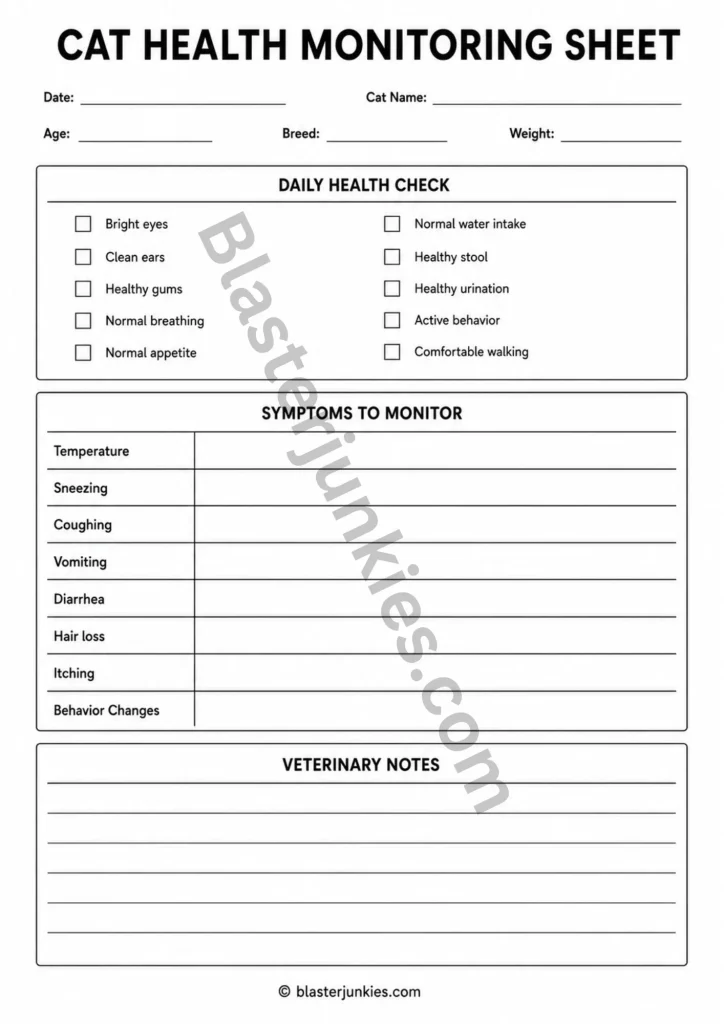
Keeping both in sync gives a fuller picture of your cat’s health across days, weeks, and months, which is especially helpful heading into a vet visit.
Just as parents track their own habits using tools like a Mood Tracker Printable to notice patterns in how they’re feeling, tracking a cat’s mood and appetite over time helps you notice patterns too long before a small issue becomes a bigger one.
Weekly and Seasonal Care Beyond the Daily Basics
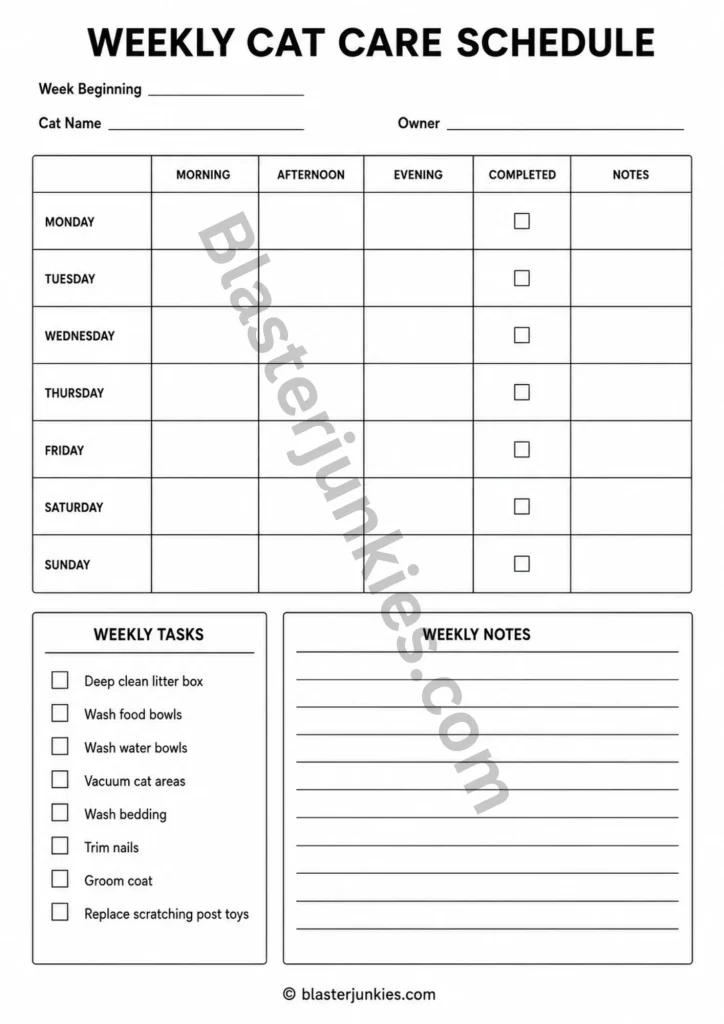
While daily care covers the essentials, cats also need regular attention to things that aren’t part of an everyday routine deep cleaning the litter box, washing food and water bowls, vacuuming pet areas, washing bedding, trimming nails, and refreshing worn out toys or scratching posts.
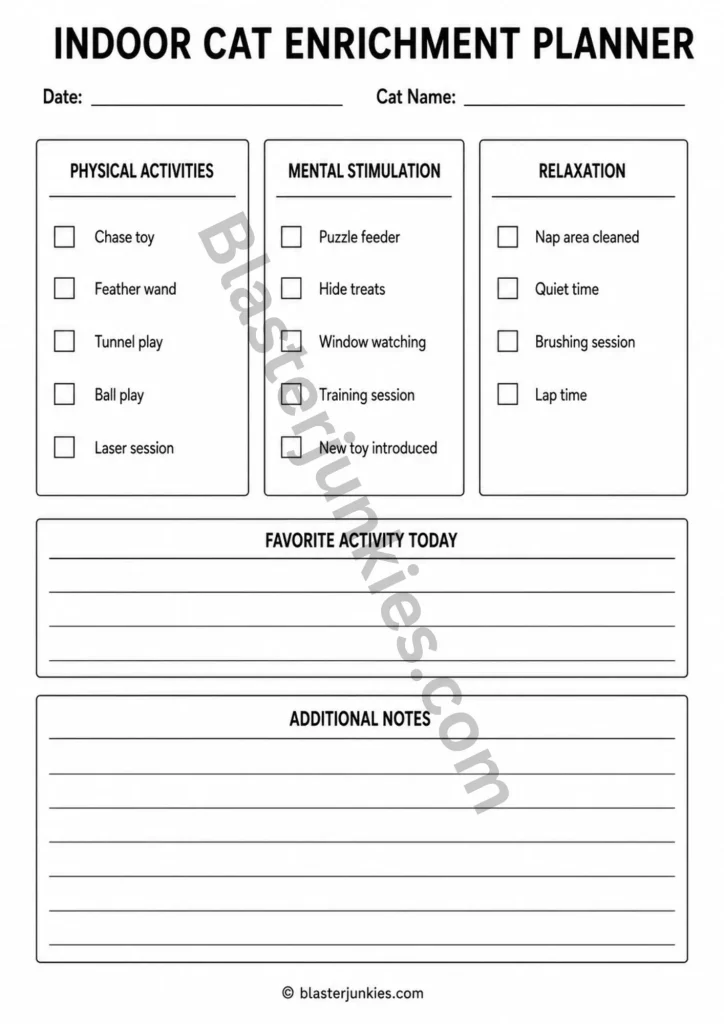
Setting aside a specific day each week for these tasks prevents them from being forgotten indefinitely, the same way a Home Maintenance Checklist helps households stay on top of tasks that aren’t needed daily but still matter for a healthy home.
Enrichment deserves its own attention too, especially for indoor cats.
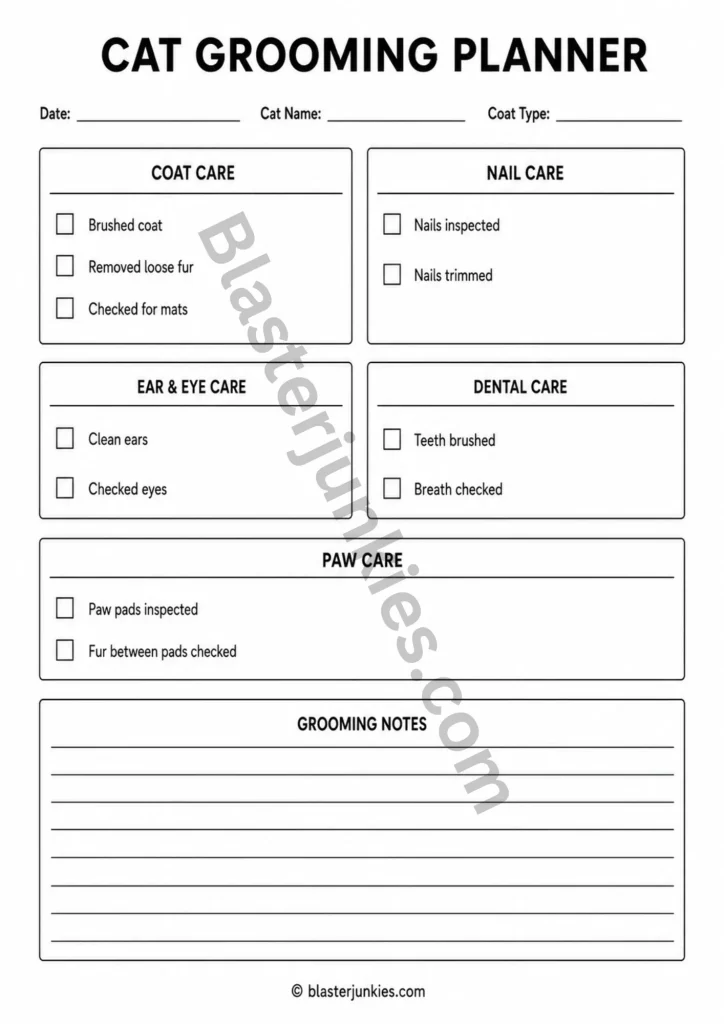
Physical play, mental stimulation like puzzle feeders, and quiet relaxation time all contribute to a cat’s overall happiness and behavior.
Just as a Healthy Habit Challenge helps people build consistency around wellness goals, a simple enrichment checklist helps ensure a cat’s mental and physical needs are being met not just their basic survival needs.
Making Cat Care a Family Routine
One of the easiest ways to keep a cat care planner from becoming just another forgotten piece of paper is to attach it to routines your family already follows.
A Morning Routine Chart for Kids works well for exactly this reason pairing pet care with an established part of the day, like right after breakfast or right before bed, makes it far more likely to stick.
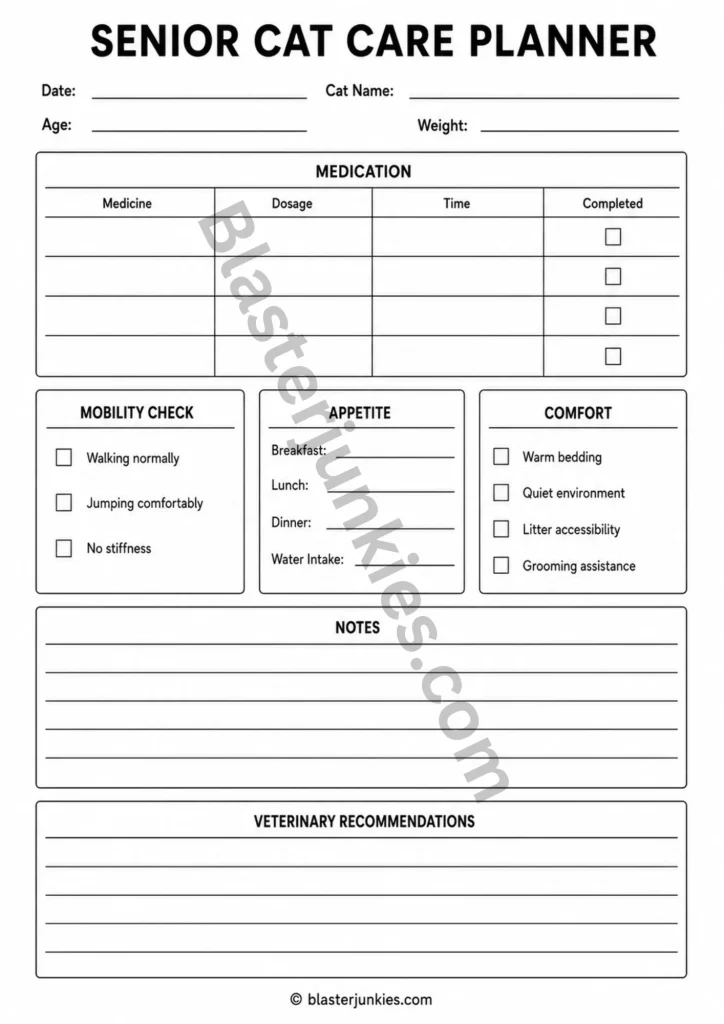
When a cat’s care becomes part of the household’s natural flow instead of an extra task competing for attention, consistency becomes much easier to maintain.
It also helps to treat cat care as a shared responsibility rather than one person’s job.
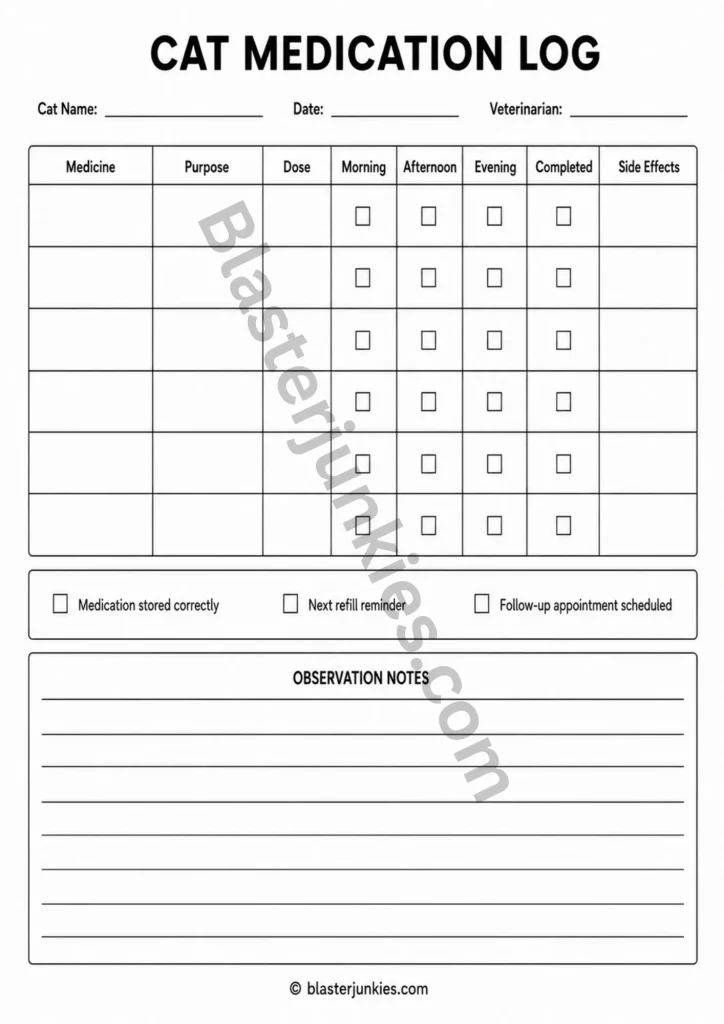
A quick weekly check in, where the whole family reviews how the week went, works surprisingly well not unlike how Family Conversation Cards create space for reflection and connection around the dinner table.
Talking through the week’s notes together was the litter box cleaned enough, did the cat seem happy, is anything different keeps everyone accountable and engaged.
How to Involve Kids Without Overwhelming Them
Children are often eager to help care for a cat, and a planner gives them a clear, age appropriate way to contribute.
Younger kids can take on simple, low risk tasks like refreshing the water bowl, helping with a play session, or checking a box once a task is done.
Older kids can take more responsibility feeding on a schedule, brushing the cat’s coat, or helping fill in the health observation notes after watching the cat’s behavior for the day.
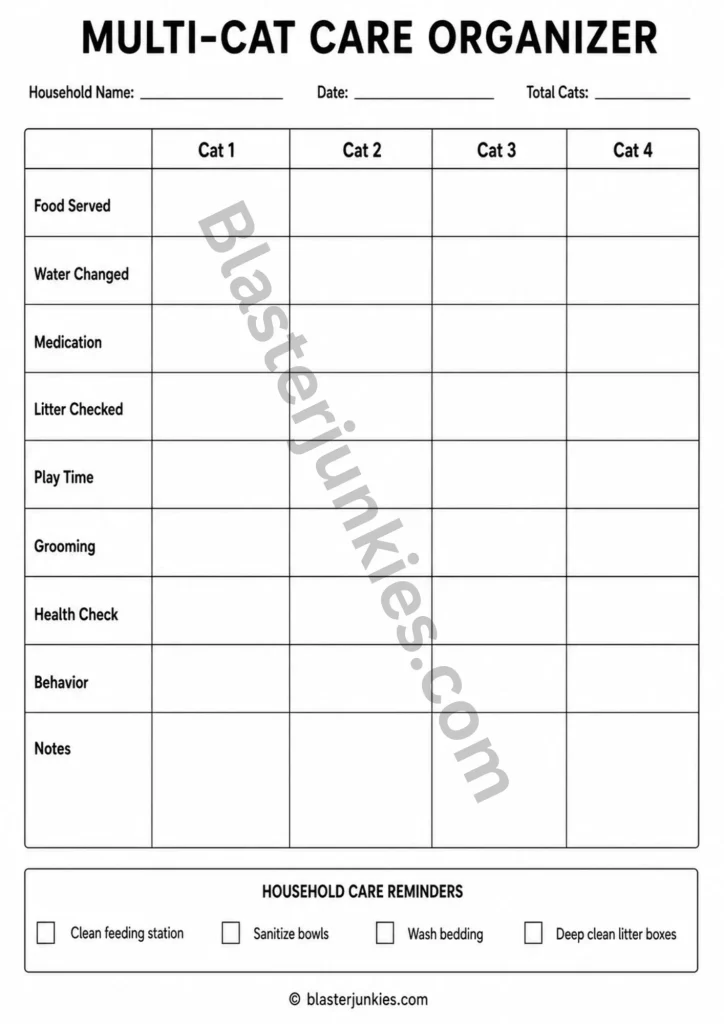
This kind of visual, checkbox based system is naturally appealing to kids, similar to how a Summer Habit Tracker for Kids turns daily goals into something satisfying to complete.
Watching a full week of checked boxes gives children a real sense of accomplishment, while also teaching them that pets depend on consistency, not just affection.
It’s a gentle but effective way to build responsibility, patience, and empathy kids start to understand that a cat’s comfort depends on routines being followed, not just on being petted and played with.
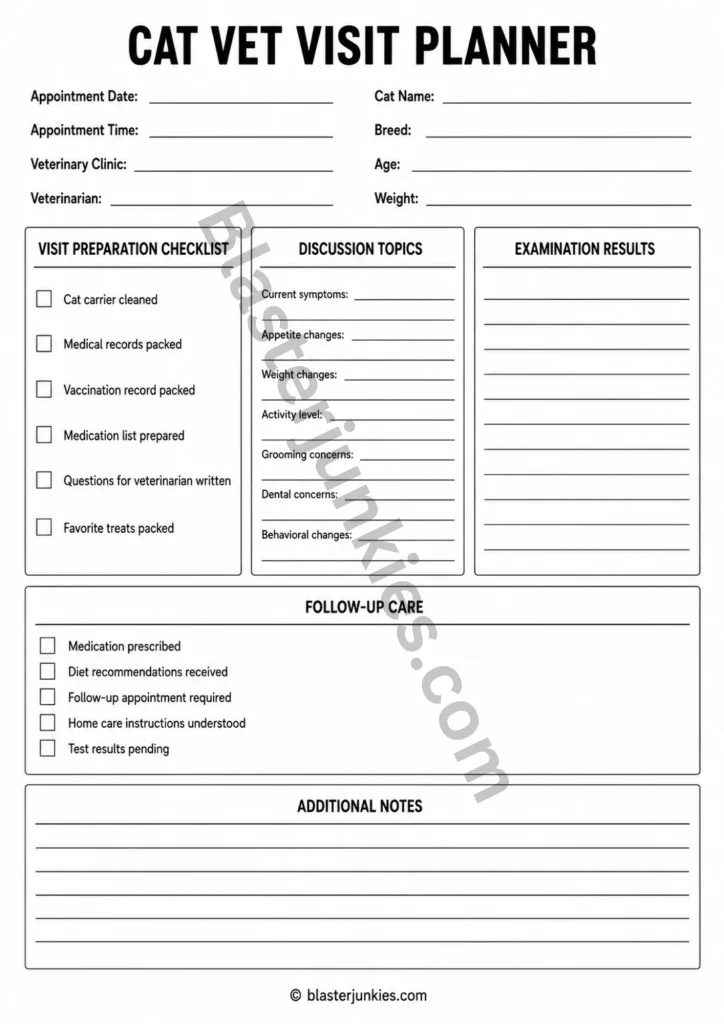
To keep it engaging rather than repetitive, consider rotating small “jobs” between siblings each week, or letting a child be the designated “cat health reporter” who shares observations during a family check in.
Small ownership like this makes kids feel genuinely trusted with an important task, rather than simply being assigned a chore.
Bringing It All Together
A cat care planner does more than keep track of feeding times and litter box duties it creates a consistent, observant routine that protects your cat’s physical and emotional wellbeing, while giving the whole family, including kids, a meaningful way to participate.
Whether you’re caring for a playful kitten, a senior cat with changing needs, or multiple cats in one household, a structured planner turns scattered care into a dependable system everyone can follow.
Start simple: break the day into a few key check ins, add a weekly deep clean and enrichment review, and involve kids in small, consistent ways.
Over time, this simple habit will not only keep your cat healthier and happier it will bring your whole family a little closer through the shared responsibility of caring for a pet you all love.