Kids feel big emotions long before they have the words to explain them.
One minute they’re laughing, the next they’re in tears, and often even they don’t know why.
That’s exactly where a Mood Tracker Printable comes in handy.
It gives children a simple, visual way to check in with themselves every day, notice patterns in how they feel, and start building the kind of emotional awareness that serves them for life.
This printable pack is designed for parents, caregivers, and teachers who want a low pressure, paper based tool to help kids slow down and reflect.
No apps, no screens just a pencil, a page, and a few quiet minutes each day.
Why Mood Tracking Matters for Children
Emotional literacy doesn’t come naturally to most kids. They need practice naming what they feel, connecting it to what caused it, and figuring out what helps them feel better.
Research in child development consistently shows that when children can label an emotion, they’re better able to manage it instead of being overwhelmed by it.
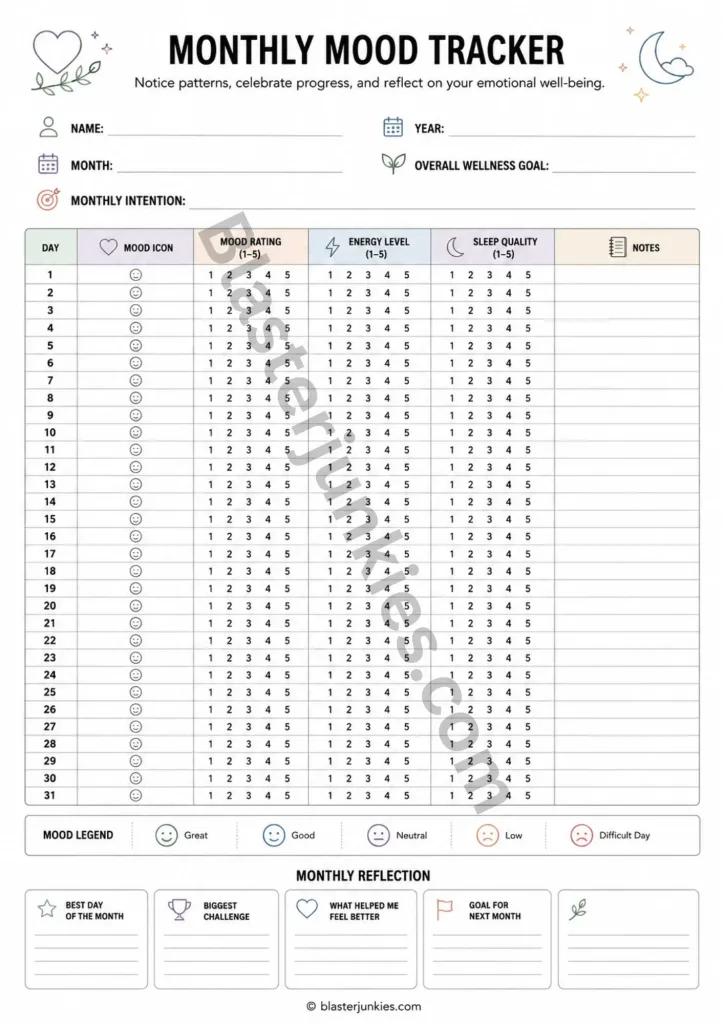
A mood tracker turns this abstract skill into something concrete. Instead of asking “how was your day?” and getting a shrug, you can point to a page and ask a child to circle a face, color a mood, or rate their day on a simple scale.
It becomes a routine something they look forward to rather than a chore.
This kind of daily reflection habit pairs nicely with other routines you might already be building at home, like a Morning Routine Chart for Kids, which helps children start the day with structure and calm before emotions even have a chance to spiral.
What Makes This Printable Different
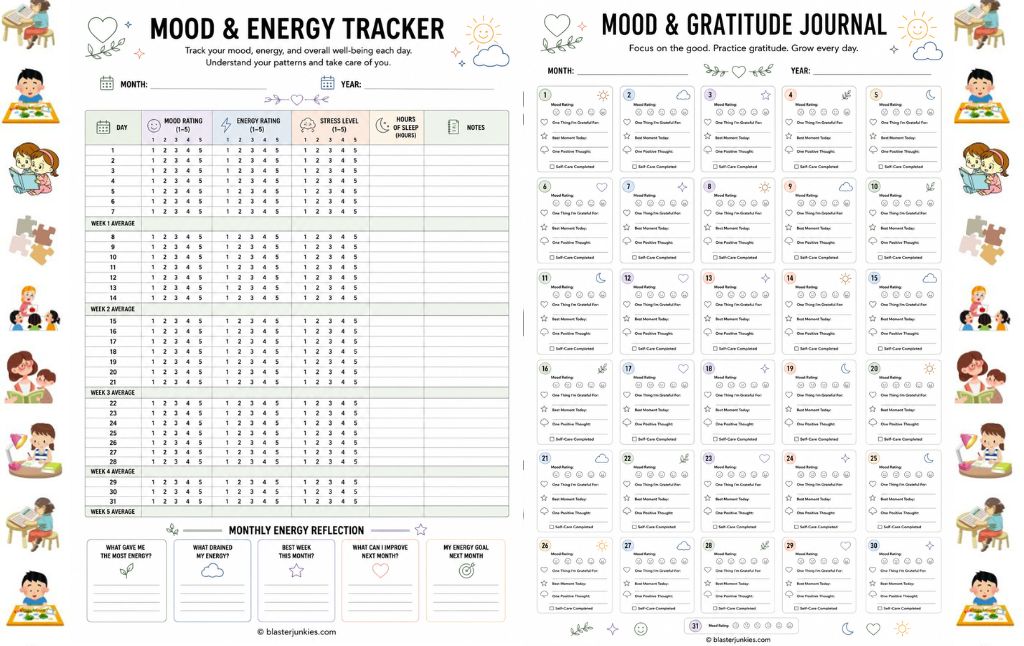
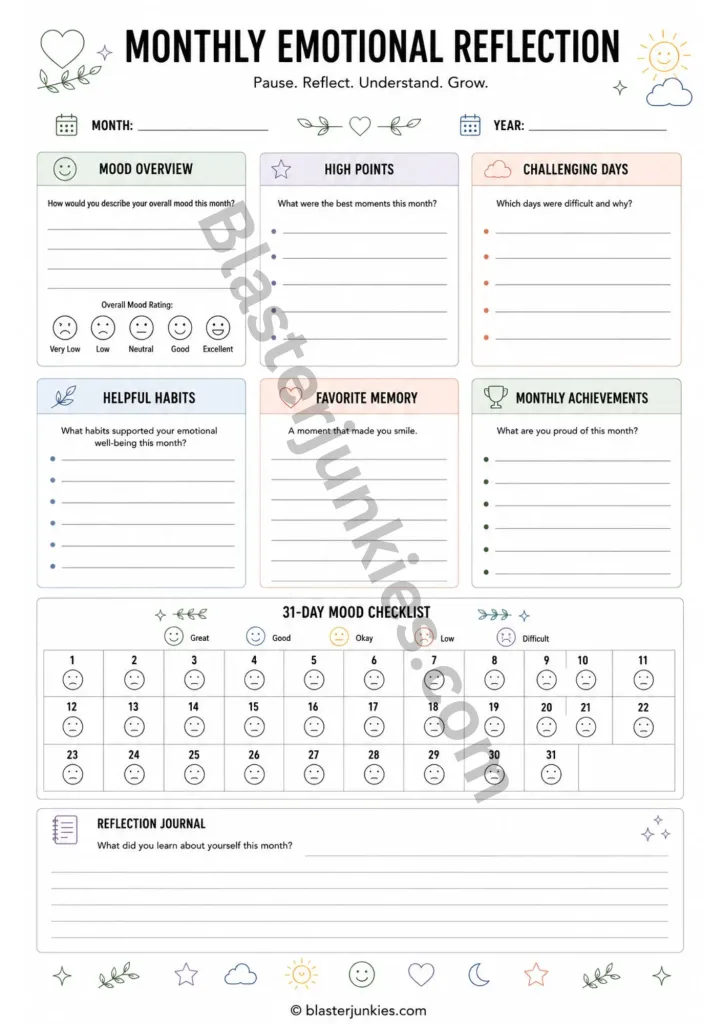
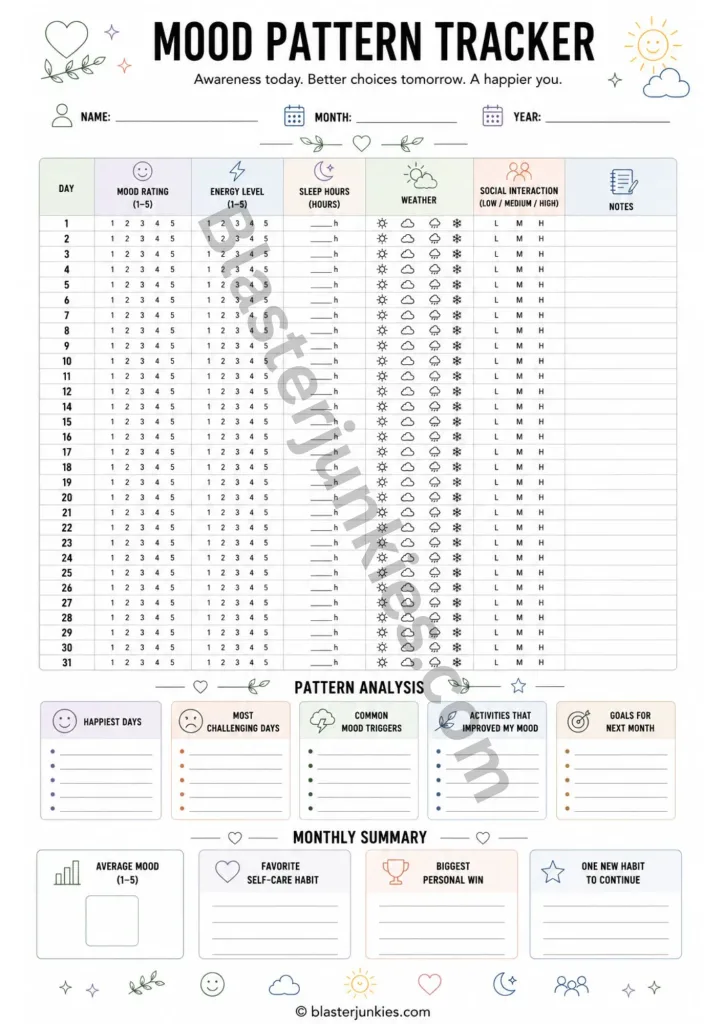
Rather than a single one size fits all chart, this pack includes a variety of formats so you can choose what fits your child’s age and personality.
Some children respond better to simple color coding, while others enjoy filling in numbers or writing short notes.
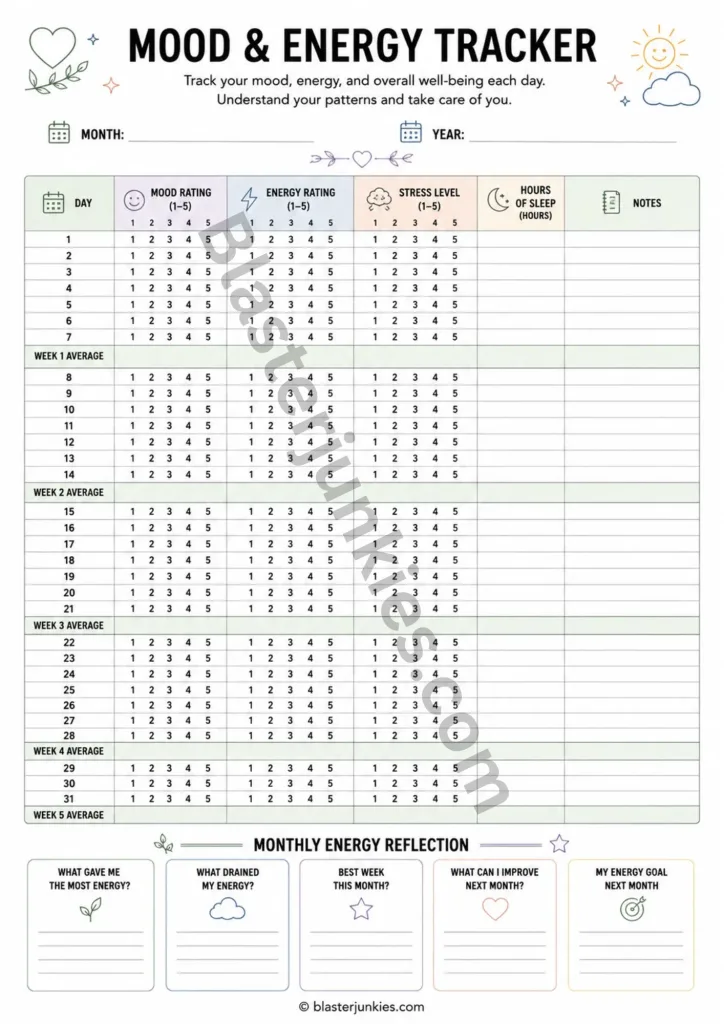
There are trackers built around daily mood ratings alongside energy and sleep, options for coloring in a mood each day,
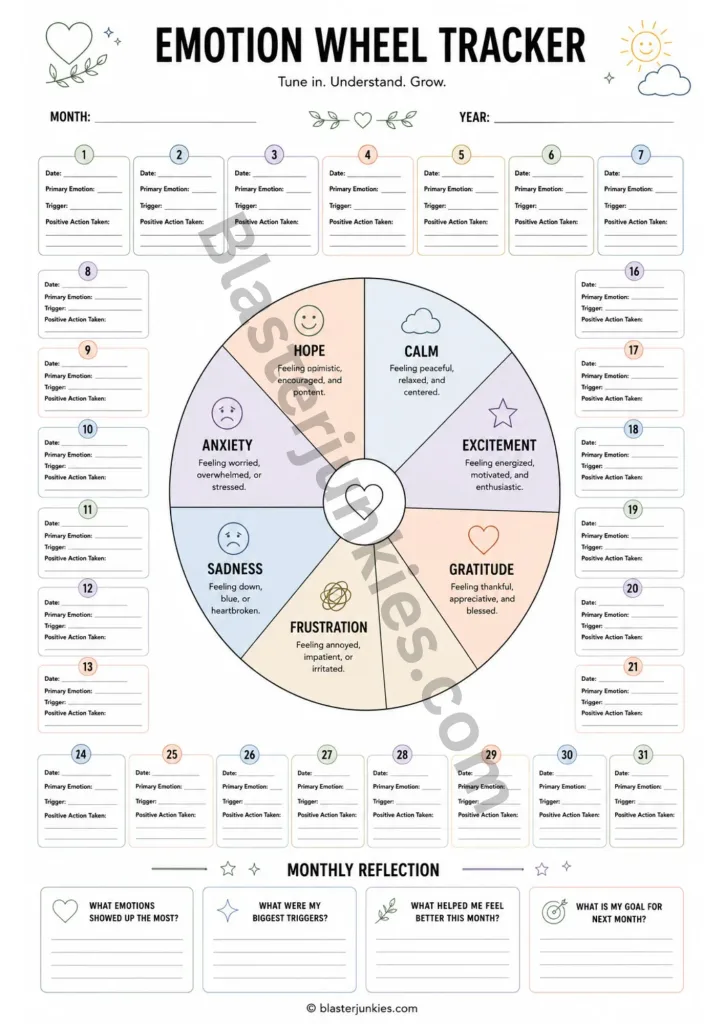
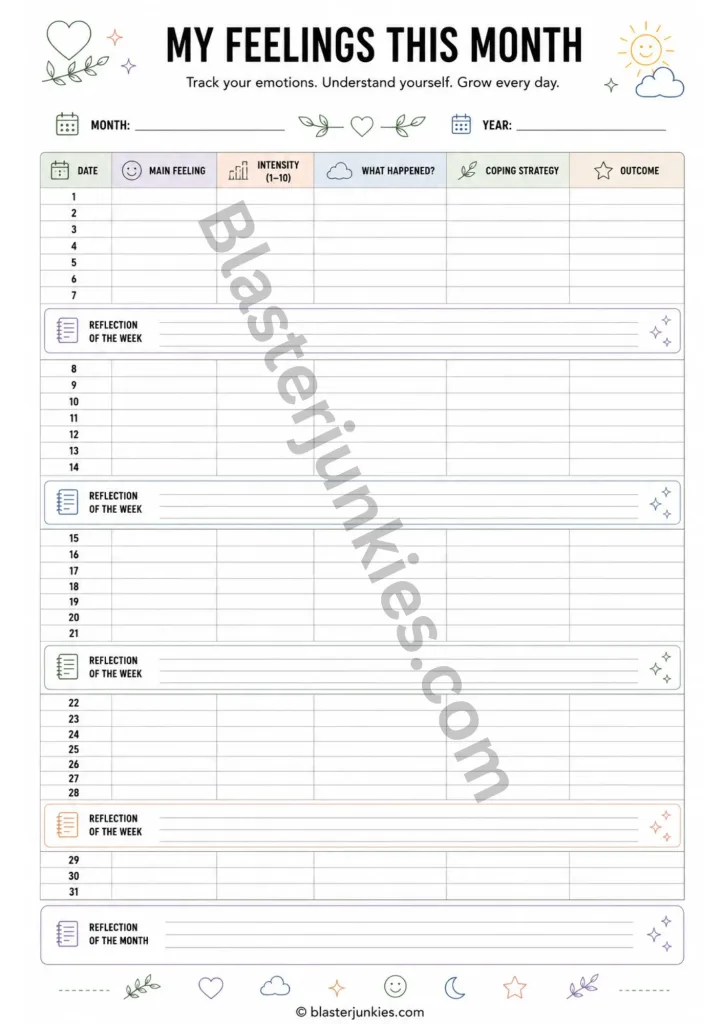
A wheel style layout for naming specific emotions and their triggers, and gratitude focused journal pages that nudge kids toward positive reflection.
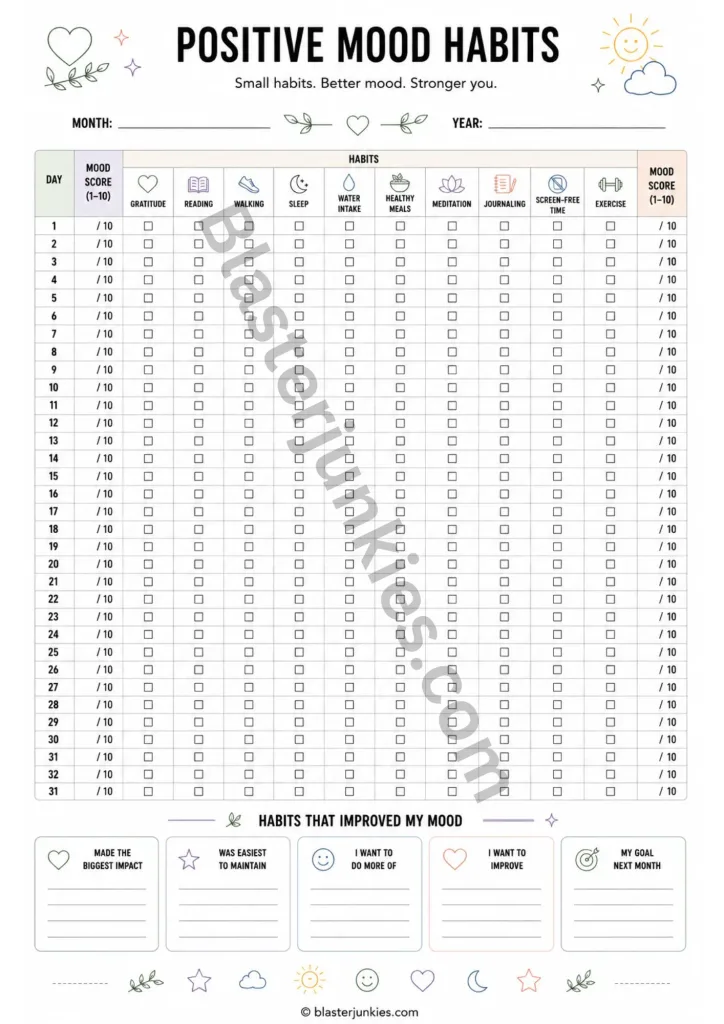
There’s even a habit based version that connects mood to daily choices like water intake, exercise, and screen free time.
Having this range matters because emotional check ins shouldn’t feel repetitive.
Rotating between formats keeps the activity fresh and helps kids engage with their feelings from a few different angles sometimes through color, sometimes through words, sometimes through simple ratings.
How to Use It With Kids
Keep it short and consistent. The goal isn’t a long journaling session it’s a one to two minute daily habit.
Pick a consistent time, like right after school or before bed, so it becomes part of the rhythm of the day rather than something extra to remember.
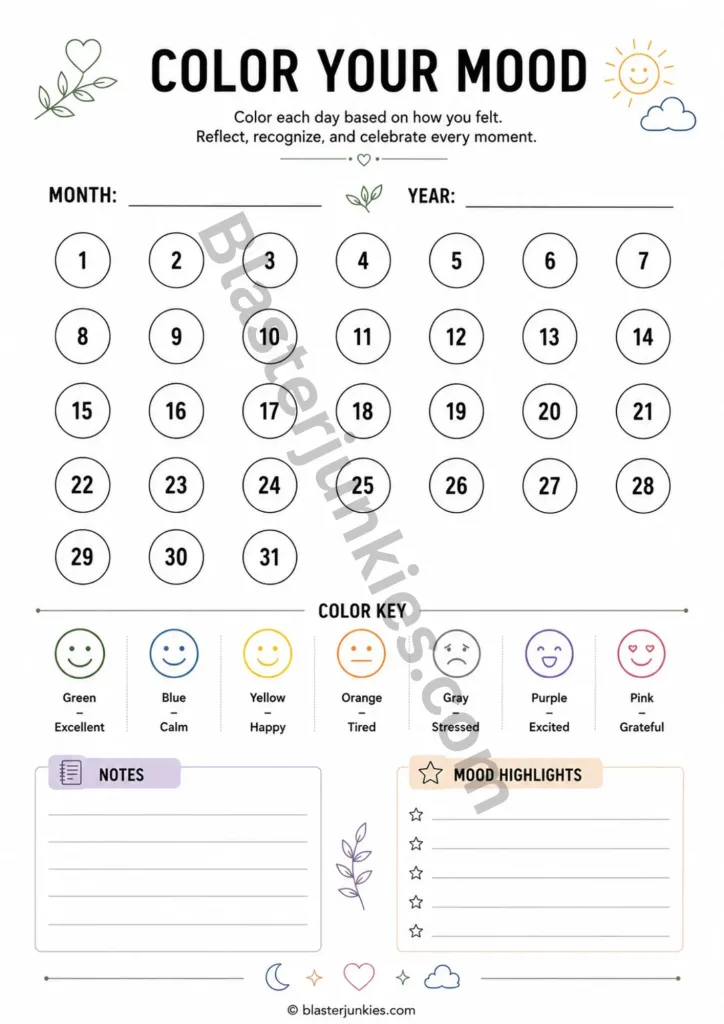
Let younger kids use color and faces. For children who aren’t confident writers yet, the coloring based tracker works best.
A green smiley face or a gray, worried one communicates a lot without needing a single word.
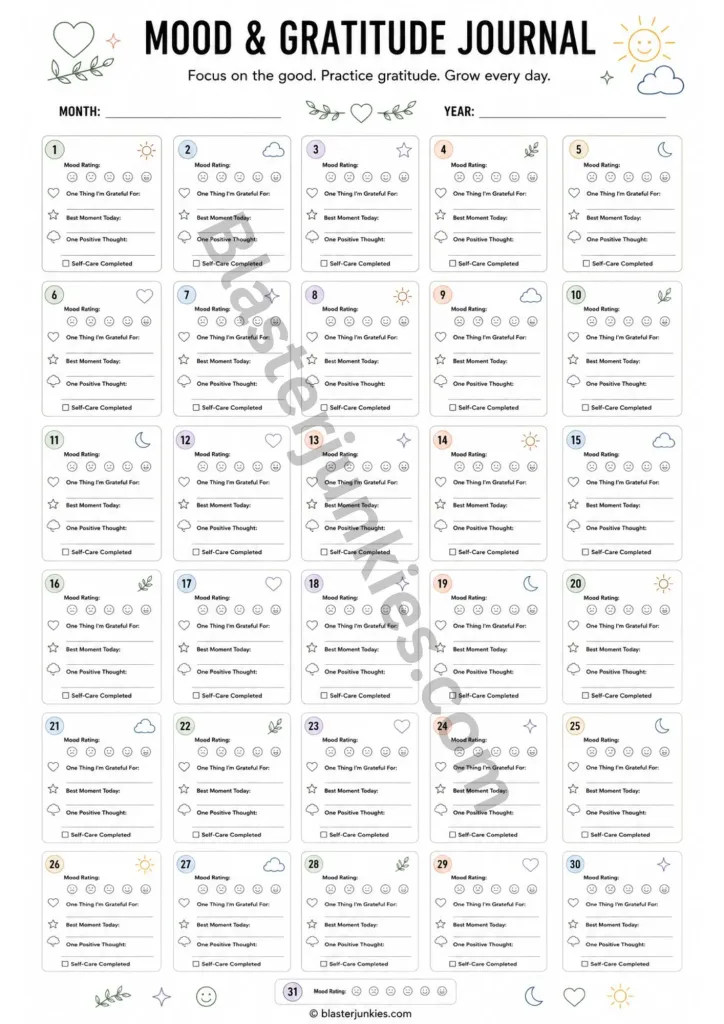
Encourage older kids to name the “why.” For elementary and middle school aged children, use the versions with a notes section or trigger column.
Ask simple, open questions like “what happened right before you felt that way?” This starts building the connection between events and emotions.
Review it together weekly, not just daily. At the end of the week or month, sit down together and look for patterns. Was there a day that stands out as the best?
Was there a recurring trigger for frustration or stress? These conversations, guided by the printable’s built in reflection sections, often reveal more than day to day chats ever could.
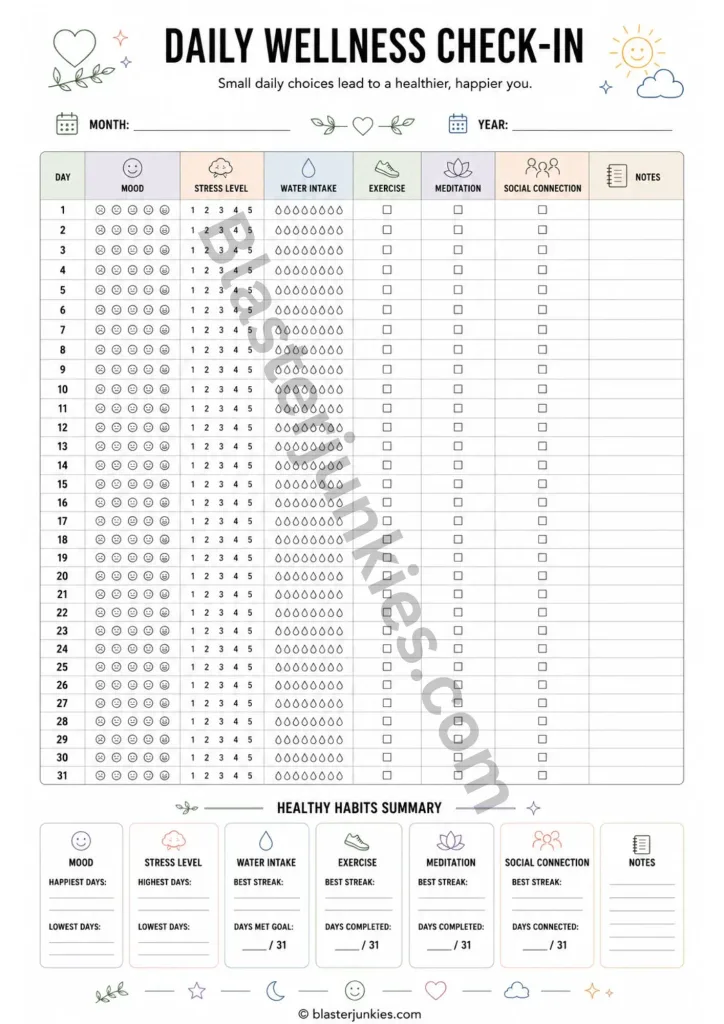
Pair it with self care habits. A mood tracker works even better when it’s part of a bigger picture of wellbeing.
If you’re building healthier routines at home, the Self Care Checklist for Mental Health and the Healthy Habit Challenge are great companions they help kids (and parents) connect mood to sleep, movement, hydration, and downtime.
Use it as a bridge for conversation. Some kids open up more easily on paper than face to face.
If your child circles “difficult day” but doesn’t want to talk right away, that’s okay the tracker itself has done its job by giving them a way to express it.
You can always revisit the conversation later using something like Family Conversation Cards to gently open the door without pressure.
Bringing It Into the Classroom
Teachers can use these trackers just as effectively as parents. A quick mood check in at the start or end of the school day gives educators insight into which students might need extra support, and it teaches the whole class that talking about feelings is normal and encouraged.
It fits naturally alongside other classroom tools like Classroom Decor Printables for creating a calm, welcoming space, or a Student Assignment Tracker Template to help students manage both their workload and their wellbeing side by side.
Teachers looking to build their own toolkit for the school year might also enjoy the Teacher Survival Kit Printable.
Building a Lifelong Habit
The real value of a mood tracker isn’t the paper itself it’s the habit of pausing to check in.
Kids who practice this early grow into teens and adults who are more comfortable naming what they feel and asking for help when they need it.
Much like a Summer Habit Tracker for Kids helps build consistency during break, a mood tracker builds emotional consistency all year round.
Print a few pages, keep them somewhere visible on the fridge, in a homework folder, or by the bed and let checking in become as normal as brushing teeth.
Over time, you’ll likely notice your child becoming more comfortable talking about their emotions, more aware of what helps them feel their best, and more resilient when tough days come along.