Art is one of the most powerful ways for children to express themselves, but the transition from “scribbling” to “drawing” can sometimes feel intimidating.
Tracing serves as a vital bridge in this developmental journey. It provides a “scaffold” a guiding structure that allows children to experience the satisfaction of creating a beautiful image while simultaneously training their hands to master the curves and lines needed for handwriting and independent drawing.
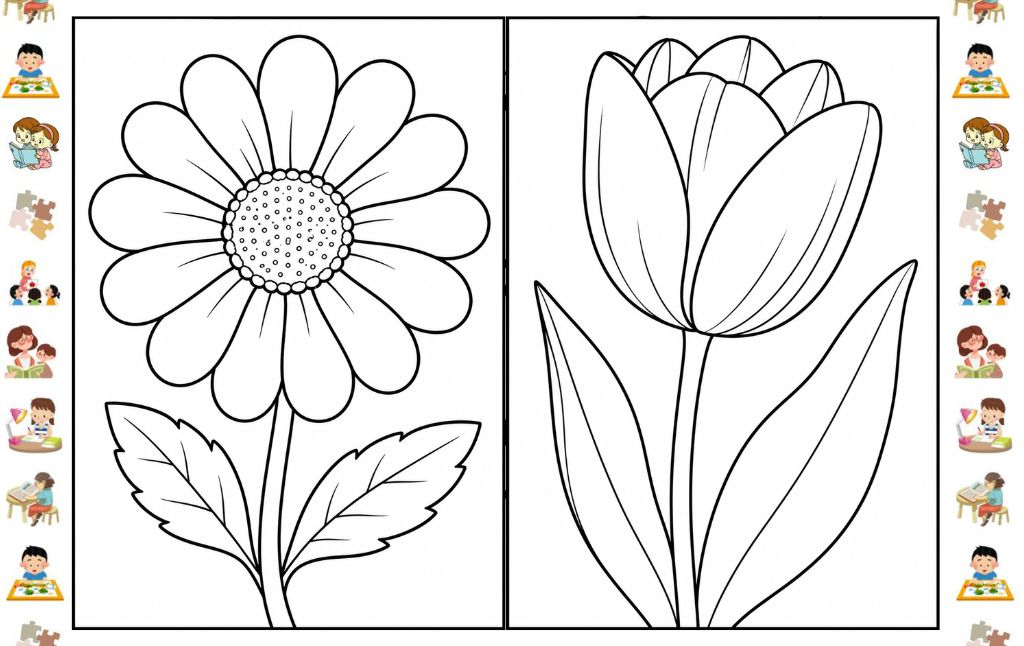
Our 10 Flower Outline Template Pack offers a diverse garden of options. From the simple, iconic shape of a tulip to the highly textured layers of a carnation, these A4 printables are designed to engage a child’s focus and ignite their creativity.
A Guided Tour of Your Printable Garden
Each page in this pack features a unique floral specimen. Here is a look at what’s included and the specific skills each page targets:
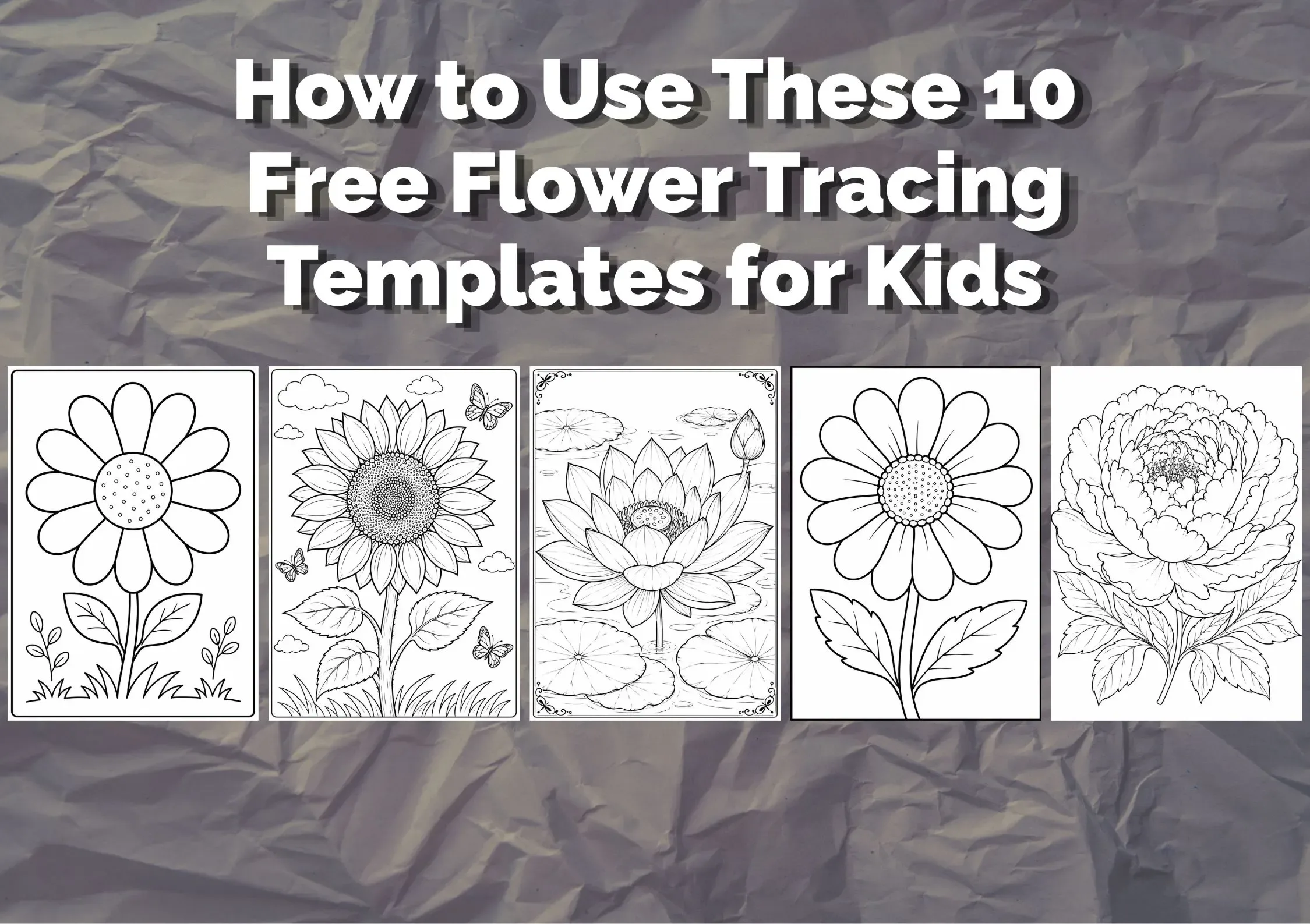
The Simple Garden Daisy (Page 3): Features large, bold petals and a central disk, set in a patch of grass. Best for: Toddlers practicing large circular motions.
The Majestic Sunflower (Page 4): A complex scene featuring clouds and butterflies. Best for: Practicing repetitive small circular patterns in the center and sharp, pointed leaves.
The Serene Lotus (Page 5): A water-lily floating on a pond with a budding companion. Best for: Mastering symmetrical “v-shaped” petal layers.
The Detailed Daisy (Page 6): A large-scale bloom with serrated leaves. Best for: Improving hand eye coordination through the jagged edges of the leaves.
The Lush Peony (Page 7): A high detail illustration with dozens of overlapping ruffles. Best for: Advanced learners working on patience and “short stroke” pencil control.
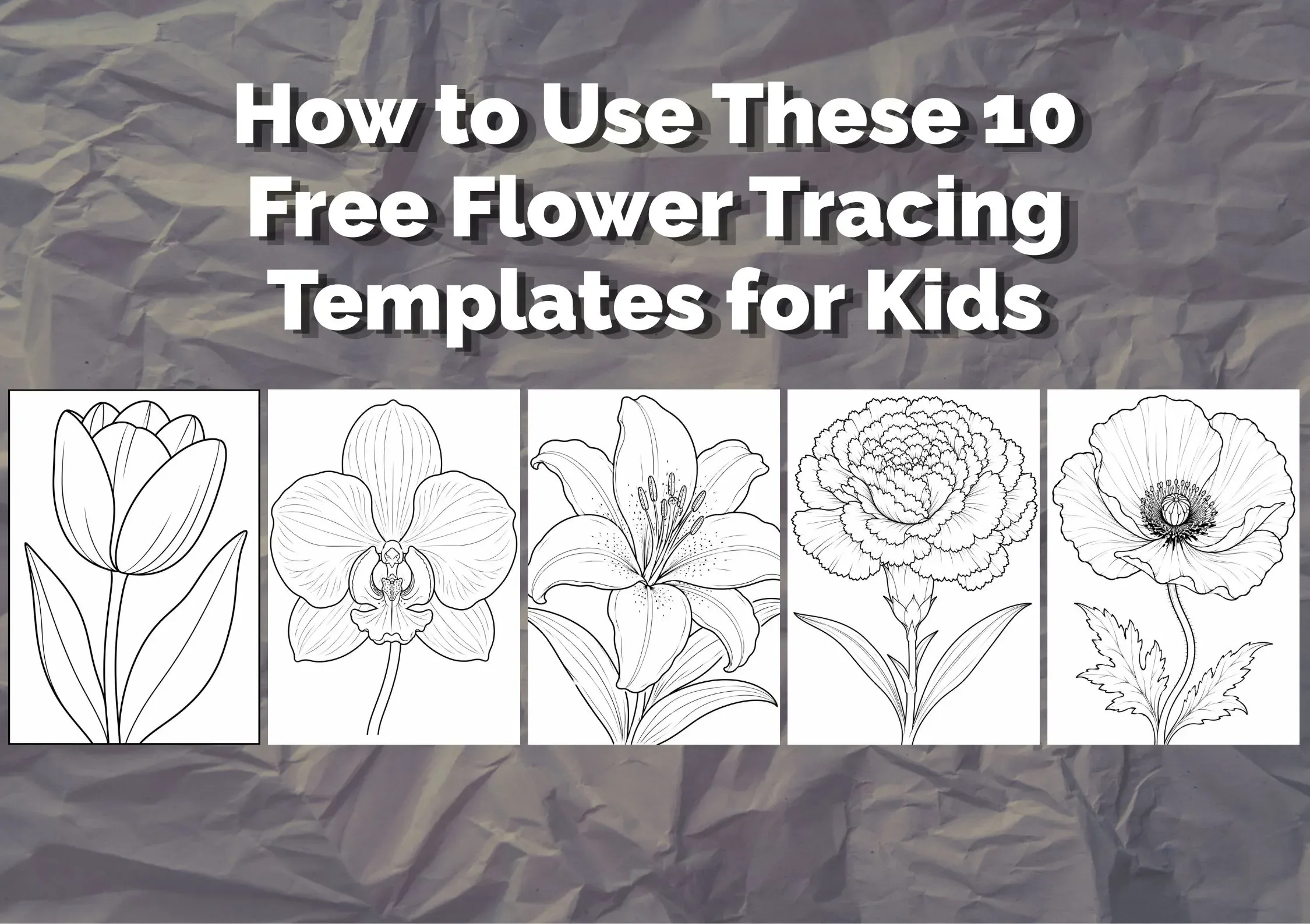
The Classic Tulip (Page 8): Simple, clean lines and large smooth leaves. Best for: Learning how to draw continuous “U” and “S” curves.
The Exotic Orchid (Page 9): Features a unique biological structure. Best for: Teaching children about the diversity of nature and irregular shapes.
The Elegant Lily (Page 10): Focuses on the stamen and long, elegant petals. Best for: Practicing light, flowing strokes.
The Ruffled Carnation (Page 11): A “ball” of tiny, zig zag petals. Best for: Strengthening the small muscles in the fingers through repetitive “up and down” motions.
The Delicate Poppy (Page 12): A large, paper thin bloom with a detailed center. Best for: Mixing long perimeter tracing with high detail center work.
How to Use These Templates for Different Skill Levels
1. The Beginner Level (Ages 3, 4): Rainbow Tracing
At this age, the goal is simple pencil control.
How to do it: Have the child trace the flower with one color (like red). Then, ask them to trace over the same lines again with a second color (like yellow), and a third (like orange).
The Result: By the end, they have a “Rainbow Flower” and have practiced the same shapes three times without getting bored!
2. The Intermediate Level (Ages 5, 7): Window Tracing
Use these templates as a “lightbox” substitute.
How to do it: Tape the printed template to a bright, sunny window. Tape a blank piece of paper over it.
The Result: The light shines through, allowing the child to trace the flower onto the blank sheet. This improves vertical writing skills and arm strength.
3. The Advanced Level (Ages 8+): Watercolor Resist
These outlines are perfect for exploring different art mediums.
How to do it: Have the child trace the lines with a white or yellow wax crayon. Then, have them paint over the whole flower with watercolors.
The Result: The wax will “resist” the paint, leaving the beautiful traced lines visible through the color.
Why Tracing Matters: The Developmental Benefits
While tracing might look like “just copying,” it is actually a complex neurological workout for a child:
Visual Discrimination: The child must visually scan the path of the line, distinguishing where it turns, stops, or overlaps.
Bilateral Coordination: Holding the paper steady with one hand while drawing with the other is a key milestone in brain development.
Fine Motor Precision: Mastering the difference between the broad curves of a tulip leaf and the tight crinkles of a carnation petal builds the finger dexterity required for cursive writing.
Mindfulness: Much like “adult coloring books,” the act of following a line is a grounding activity that helps children regulate their emotions and focus their attention.
Creative Extension Activities
Don’t stop at just tracing! Here are three ways to get more out of these 10 pages:
The “Identify and Label” Game: Use a botany book or the internet to help the child identify each flower. Have them write the name of the flower at the bottom of the page in their best handwriting.
Texture Collage: Instead of coloring, have the child glue “elements” onto the shapes. Use tissue paper for petals, real dried grass for the bottom of Page 3, or glitter for the center of the sunflowers.
Doodle Fill: Challenge older kids to trace the outline but fill the inside of the petals with their own patterns dots, stripes, or tiny hearts.
Printing and Setup Tips
To ensure the best experience with these templates, follow these simple printing rules:
Use High Quality Paper: If you plan to color with markers or paint, print on a heavier cardstock (minimum 160gsm) to prevent “bleeding” through the paper.
Actual Size: When printing the PDF, select “Actual Size” in your printer settings. This ensures the borders remain crisp and the tracing lines are the intended width for small hands.
Laminate for Reusability: If you want to use these in a classroom setting, laminate the pages. Children can use dry erase markers to trace the flowers and wipe them clean for the next student.
Blooming Brilliance: A Guide to the 10 Adorable Flower Activities for Preschoolers
45 Cottagecore Teatime Junk Journal Kit What’s Inside & Why You’ll Love Every Single Page
40 Fresh Floral Prints for Junk Journaling A Beautiful New Collection You’ll Love
37 Honey Dreams Bee Junk Journal Kit What’s Inside This Bee Junk Journal Kit?
30 Pressed Flowers Botanical Papers Junk Journal Filler Pages
40 Botanical Beauty Wildflower Junk Journal Pages The Printable PDF Collection
30 Summer Fairy Junk Journal Pages You Need to Print
24 Whimsical Wildflower Watercolor Junk Journal Spread: A Complete Creative Study
50 Adorable Dog Junk Journal Pages That Will Make Every Scrapbooker Obsessed