Every book club has experienced the same awkward moment: everyone finishes the book, gathers together, and then someone asks “so… what did everyone think?” followed by a long silence.
A great discussion rarely happens by accident. It needs the right questions to open it up.
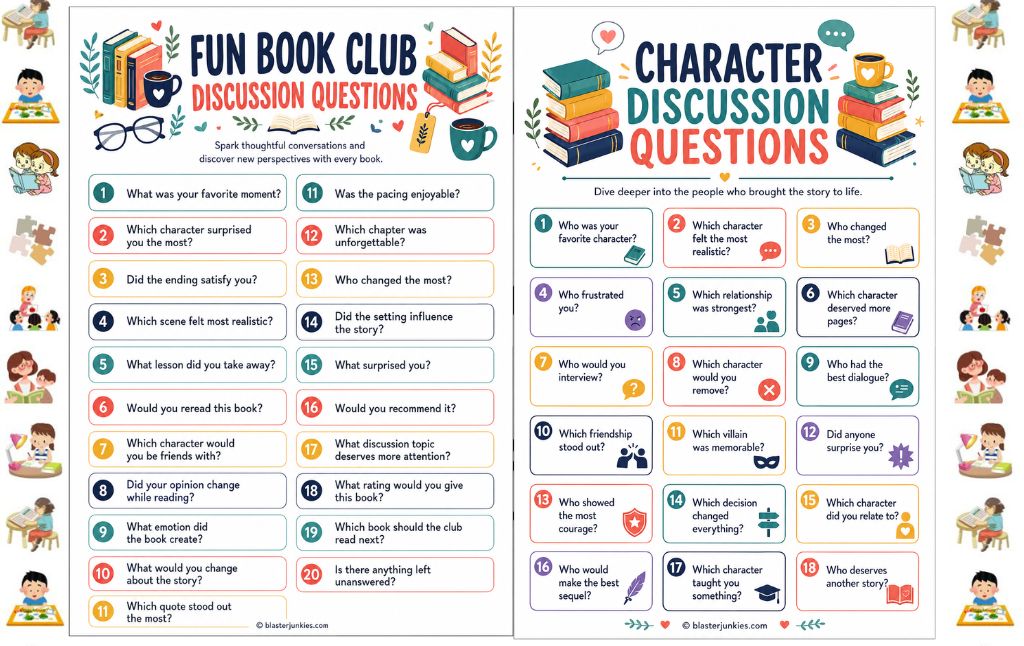
A Fun Book Club Discussion Questions Printable solves exactly that problem, giving readers a ready made set of prompts that turn a quiet room into a genuinely engaging conversation.
In this guide, we’ll look at why good discussion questions matter so much for a book club’s success,
How to choose the right type of question for different books and genres, and how the same core idea can be adapted into a wonderful reading activity for kids and families.
Why the Right Questions Make or Break a Book Club
Reading a book is a solitary experience, but discussing it is what turns that private experience into something shared. The problem is that most people, even avid readers, don’t naturally know how to turn “I liked it” into a substantive conversation.
Vague questions produce vague answers, and a discussion can stall out after just a few minutes if nobody has anything more specific to say.
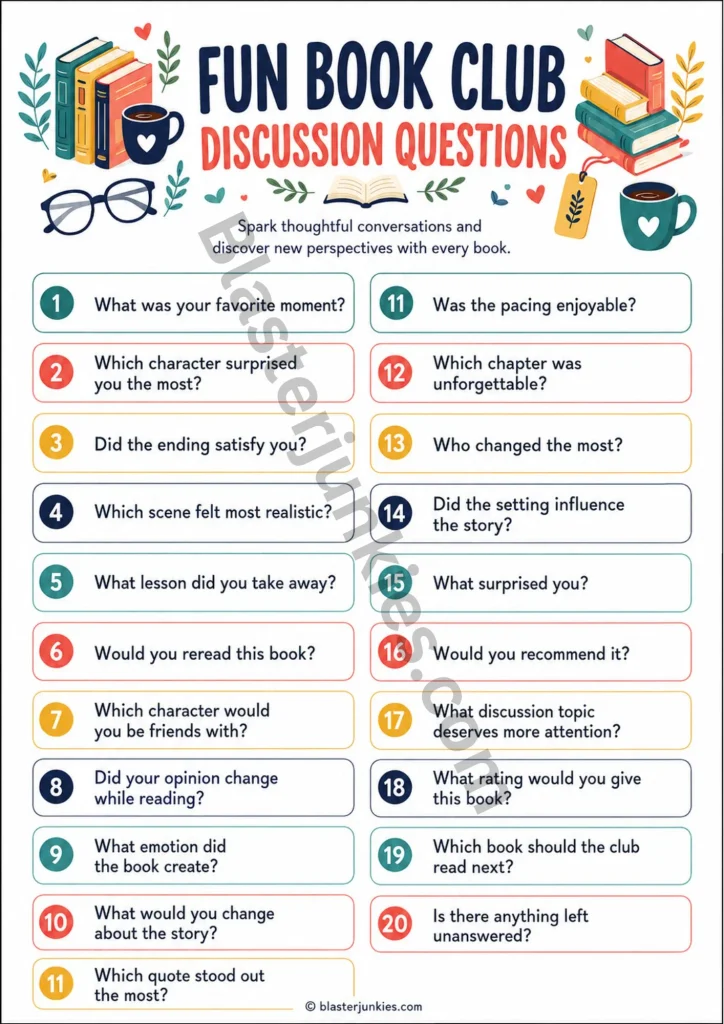
Well crafted discussion questions solve this by giving structure to what might otherwise be a loose, meandering conversation.
Instead of asking “did you like the book,” a good question asks something specific enough to prompt real reflection which character surprised you the most, did your opinion change while reading, what would you have changed about the story.
Specific questions unlock specific answers, and specific answers are what make a discussion feel alive rather than obligatory.
Choosing Questions That Match the Book
Not every book calls for the same kind of discussion, and this is where having a variety of question categories becomes genuinely useful.
General reflection questions favorite moment, most surprising twist, whether the ending felt satisfying work well for almost any book and are a great default starting point.
Character focused questions dig deeper into the people driving the story, asking things like who changed the most, who deserved more page time, or which character you’d want to interview.
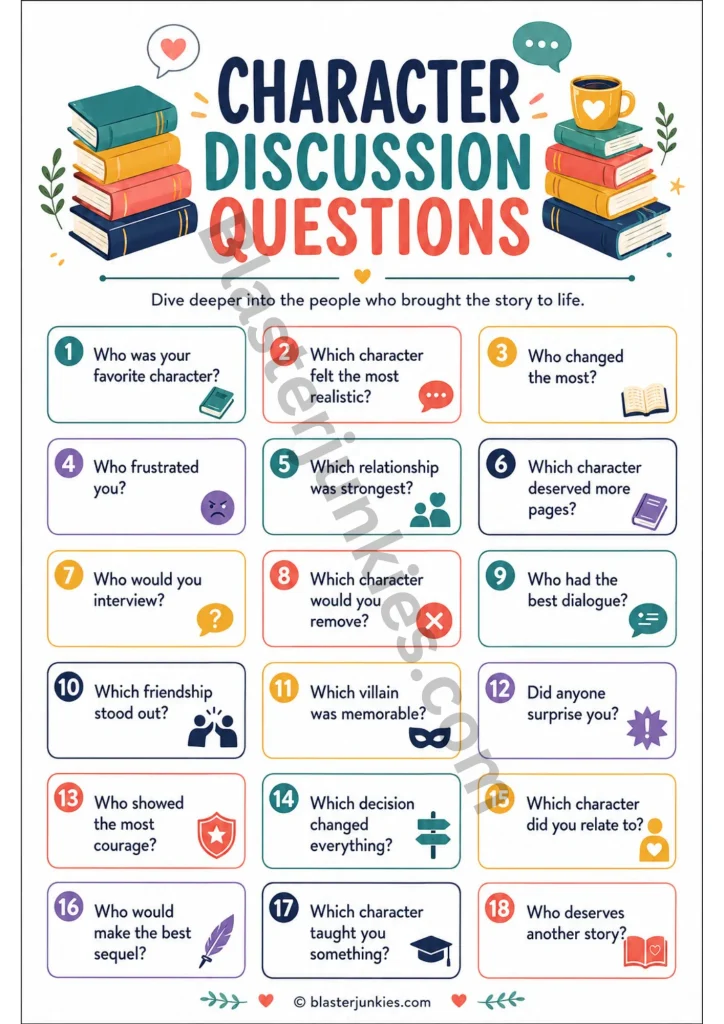
These questions work especially well for character driven novels where the plot takes a back seat to personal growth and relationships.
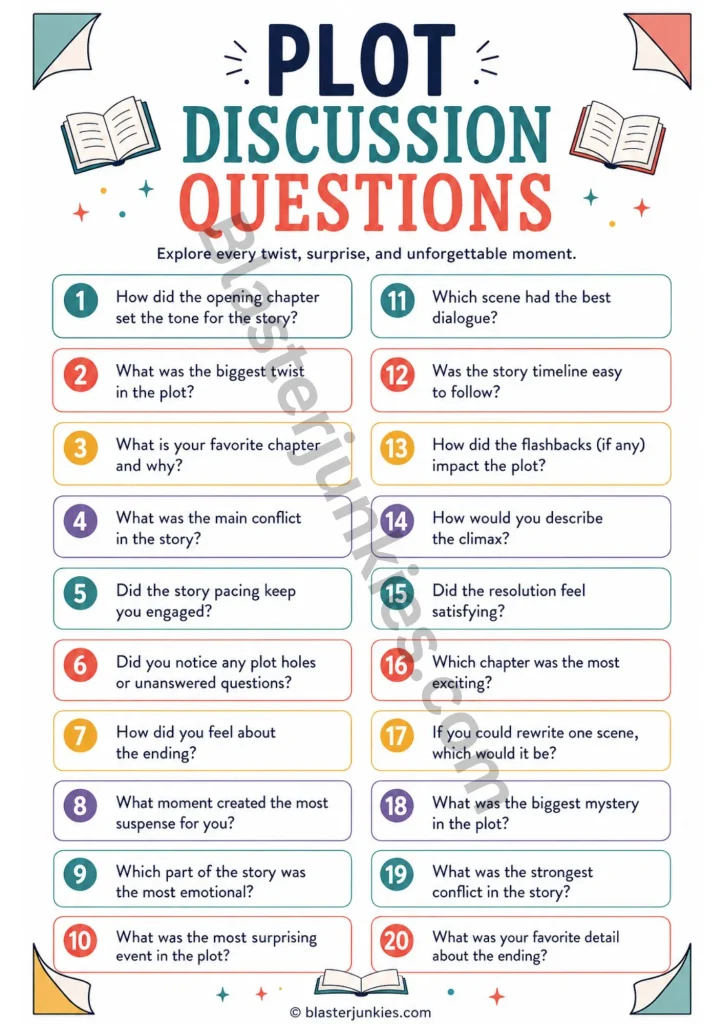
Plot focused questions, on the other hand, are ideal for books built around twists, mysteries, or intricate pacing asking what the biggest twist was, whether the pacing felt right, or how the flashbacks (if any) shaped the story.
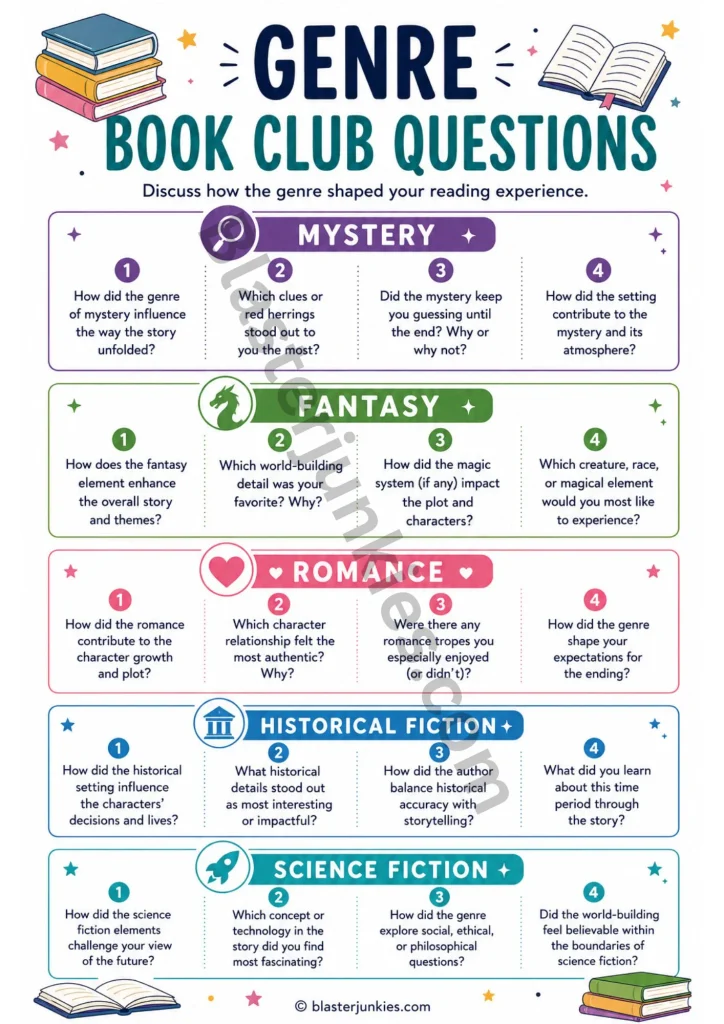
And for readers who enjoy diving into different genres, genre specific questions add another layer of depth: mystery discussions might explore red herrings and pacing,
Fantasy discussions might dig into world building and magic systems, and historical fiction discussions naturally invite questions about accuracy and what the book taught readers about a particular time period.
Going Deeper With Themes and Personal Reflection
Some of the richest book club conversations happen when the discussion moves beyond plot and character and into theme the bigger ideas a story is actually exploring.
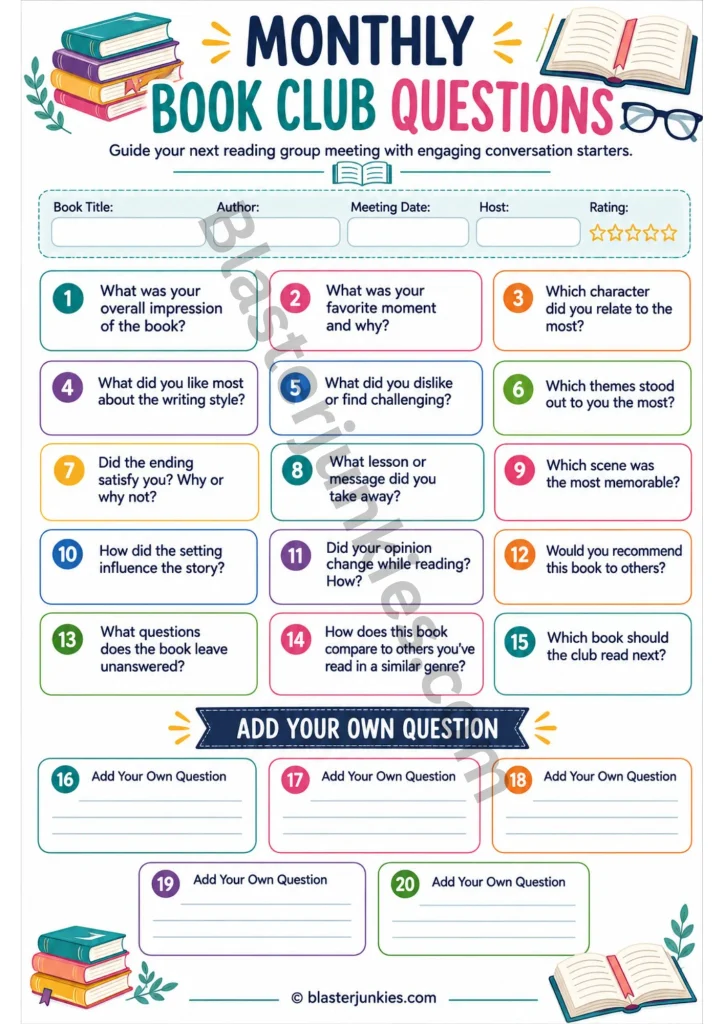
Questions built around themes like friendship, courage, family, hope, or change give readers a chance to connect a book’s specific story to broader, more universal ideas.
This kind of discussion often produces the most memorable conversations, since it invites people to share not just what happened in the book, but what it made them think about in their own lives.
Reader reflection questions take this a step further by turning the spotlight inward what did you learn, which lesson applies to your life, how did this book change your thinking.
These personal, reflective questions work particularly well toward the end of a discussion, once the group has already talked through plot and character and is ready for something a little more meaningful.
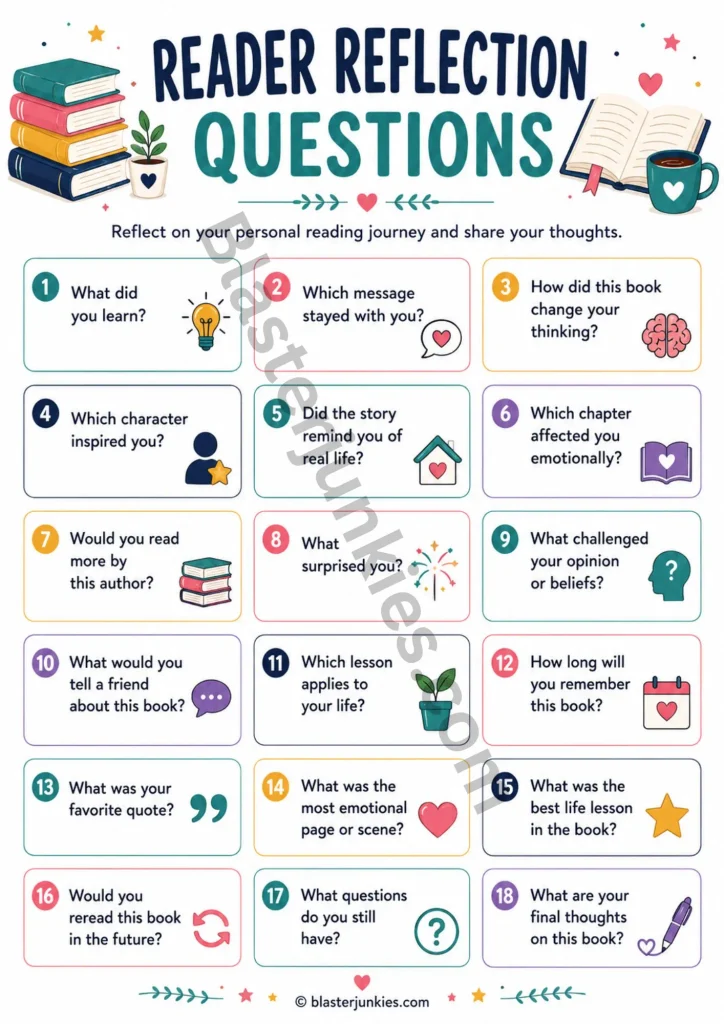
This kind of reflective practice mirrors the value found in tools like a Self Care Checklist for Mental Health or a Mood Tracker Printable, where taking time to genuinely reflect on a book or on yourself often reveals more than a surface level check in ever could.
Building a Consistent Book Club Rhythm
For book clubs that meet regularly, having a reliable set of questions on hand each month removes a huge amount of friction from planning.
Rather than scrambling to come up with discussion prompts the night before a meeting, a printable set of questions with space to record the book title, author, meeting date, and even add custom questions turns book club planning into something quick and repeatable.
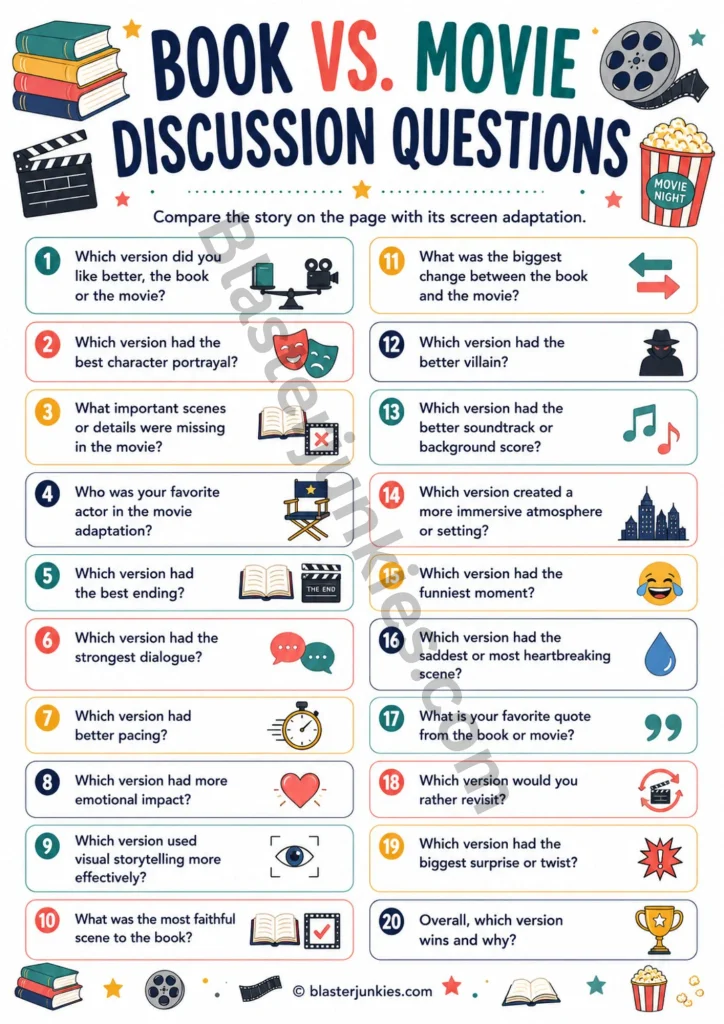
This is similar in spirit to how a Healthy Habit Challenge works best when the structure stays consistent even as the specific goals change week to week.
It’s also worth pairing your book club nights with the right atmosphere. A Cozy Night Checklist Printable works beautifully as a companion to book club evenings, since warm lighting, tea, and a quiet, phone free space all help set the tone for a genuinely engaged discussion rather than a rushed one.
Making It Fun, Not Just Analytical
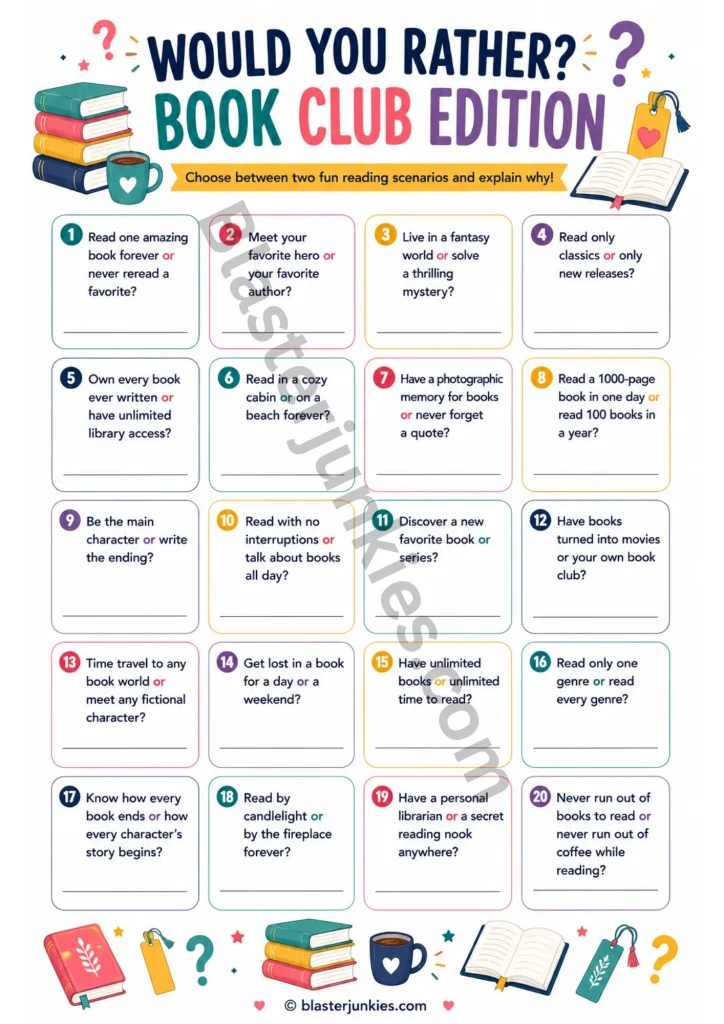
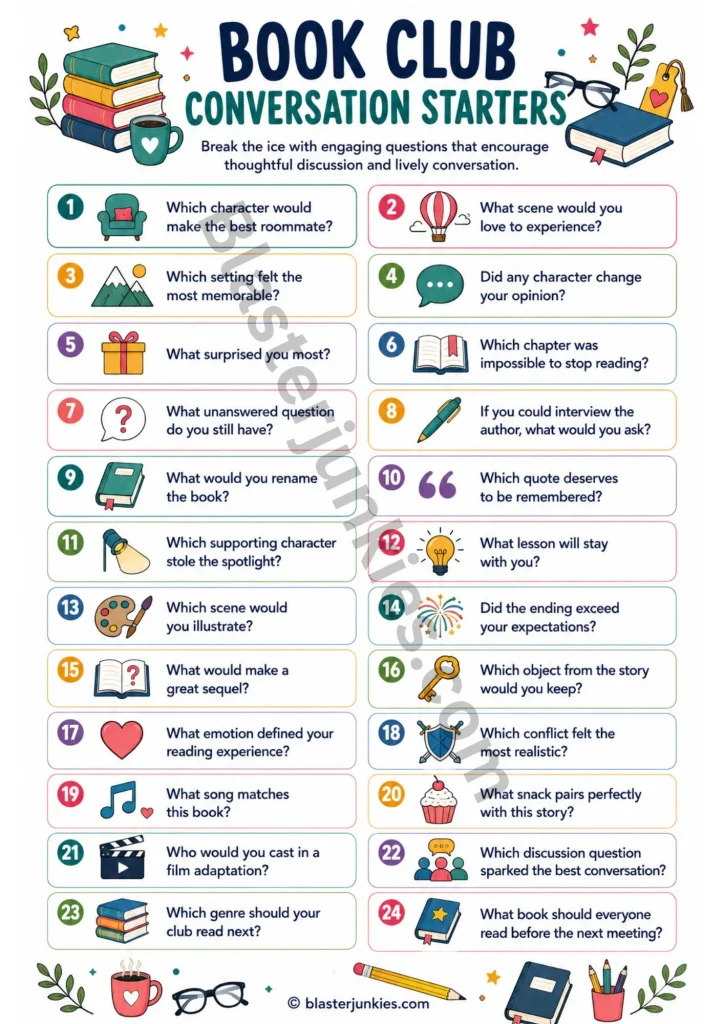
Not every book club question needs to be serious. Playful formats like “would you rather” prompts built around reading scenarios, or fun conversation starters asking which character would make the best roommate or
What snack pairs perfectly with the story help keep the mood light and inviting, especially for newer members who might feel intimidated by more analytical questions.
Mixing a few lighthearted prompts in with deeper ones keeps the conversation balanced and makes sure book club still feels like a fun social gathering, not a classroom assignment.
How to Adapt Discussion Questions for Kids
Book discussions aren’t just for adult book clubs they’re one of the best tools available for building a lifelong love of reading in kids.
The same underlying idea applies: specific questions produce richer answers than “did you like the book?”
For younger readers, keep questions simple and concrete which character was your favorite, what was the funniest part, would you want to be friends with the main character.
These kinds of questions are accessible even to early readers and help build comprehension without feeling like a test.
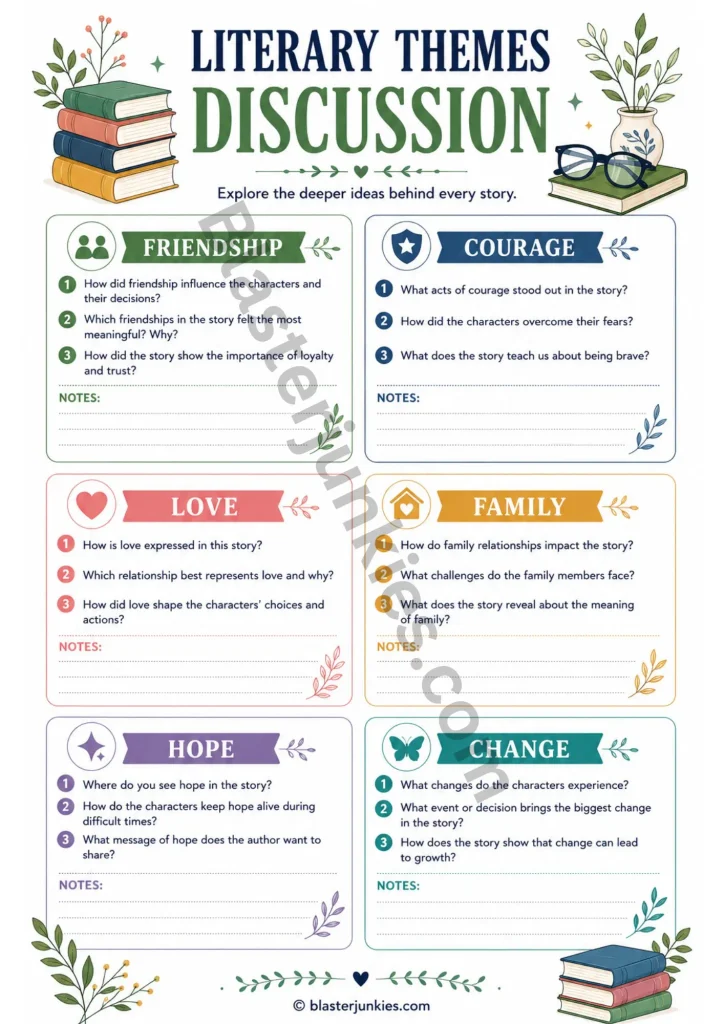
For older kids and pre teens, introducing a few of the more reflective questions what lesson did you take away,
Did your opinion of a character change, what would you have done differently helps build the same critical thinking skills adult readers use, just at an appropriate level.
This kind of structured reflection connects naturally with other reading focused tools families already use, like a Summer Reading Challenges tracker, where the goal isn’t just finishing books but genuinely engaging with them.
A family book club can be a wonderful way to bring this to life.
Choosing one book a month that the whole family reads together, then discussing it over a cozy dinner or during a planned family evening, gives kids a model for what thoughtful reading conversation looks like.
It also pairs naturally with a broader tradition of family connection, not unlike how Family Conversation Cards create space for meaningful dialogue at the table a family book club night simply gives that conversation a shared book to anchor it.
Bringing It All Together
Fun book club discussion questions do more than fill an awkward silence they turn a shared reading experience into a genuinely rich conversation, whether you’re meeting with a group of adult friends or reading together as a family.
Choosing the right mix of general, character, plot, theme, and playful questions keeps discussions balanced, engaging, and different every time.
Start with a handful of go to questions that work for almost any book, then layer in genre specific or theme based prompts depending on what you’re reading.
Whether it’s a monthly adult book club or a family reading night with the kids, the right questions are what turn “I read a book” into a conversation everyone actually looks forward to.