Ask almost any busy parent, fitness enthusiast, or health conscious household what single habit has made the biggest difference to their daily routine, and meal planning comes up again and again.
Not because cooking is complicated, but because the decision of what to cook, repeated three times a day, seven days a week, quietly drains more mental energy than most people realize.
This free printable pack of 10 meal planner sheets is designed to eliminate that daily decision fatigue in one focused planning session per week, leaving families with more headspace, less food waste, lower grocery bills, and genuinely better eating.
What makes this particular collection stand out is its remarkable range.
The ten sheets are not ten versions of the same grid with different colors.
Each one approaches meal planning from a distinct angle, accommodating different family structures, dietary philosophies, budget priorities, and wellness goals.
Whether you are tracking macros for athletic performance, planning slow cooker comfort food for a crisp autumn week, teaching a child to engage with their own food choices, or practicing mindful eating with an emphasis on how food makes you feel, there is a sheet in this pack built precisely for that purpose.
Together, they form a toolkit that covers virtually every meal planning scenario a modern family might face across a year.
What’s Inside the Pack: Ten Planners, Ten Perspectives
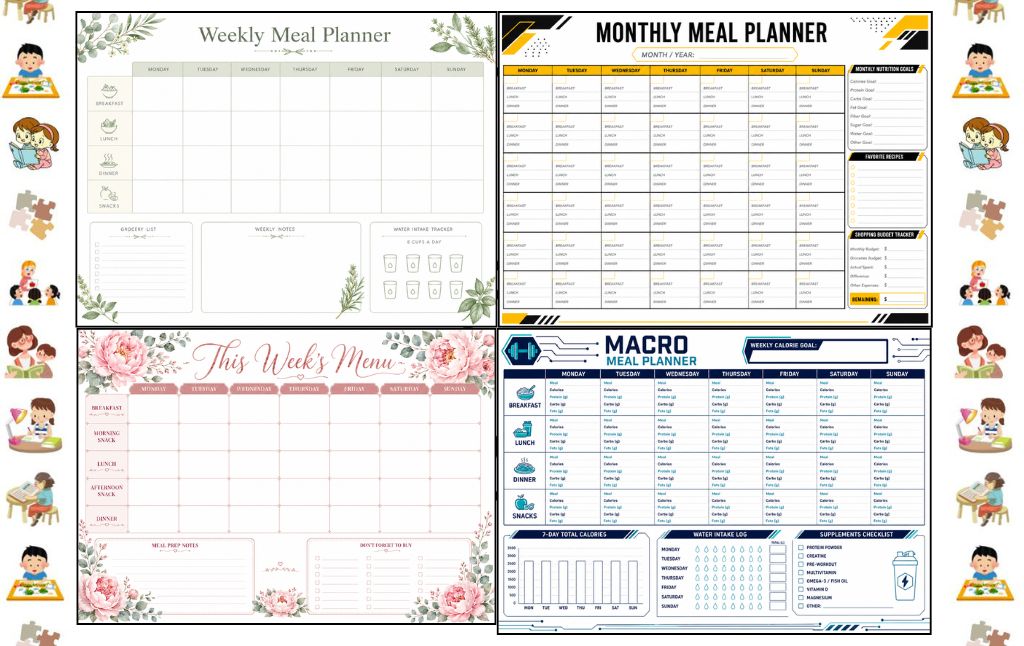
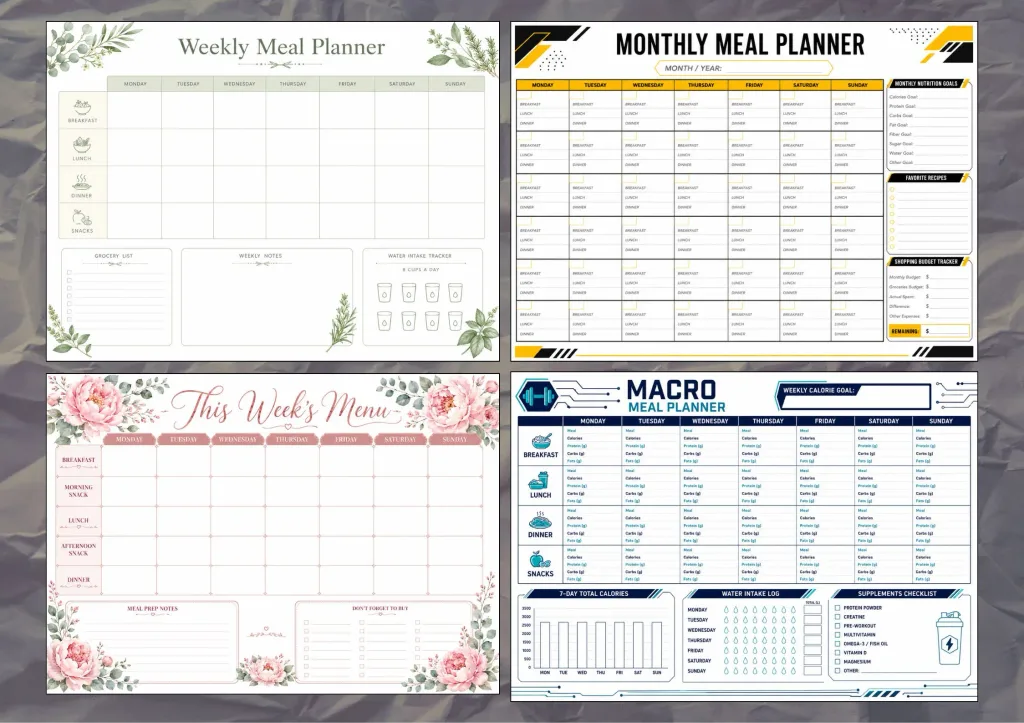
The collection opens with a botanical weekly meal planner dressed in soft watercolor greenery, covering breakfast, lunch, dinner,
And snacks for every day of the week alongside a grocery list with checkboxes, a weekly notes panel for reminders or recipe links, and a water intake tracker with eight illustrated cups to color in as the day progresses.
It is the most versatile sheet in the pack and works equally well for individuals, couples, and small families who want a clean, beautiful planning surface that sits happily on the kitchen counter or refrigerator door.
Student Homework Planner Printables
The Real Benefits of Consistent Meal Planning
The research on meal planning consistently points to the same cluster of benefits.
Families who plan their meals ahead spend significantly less on groceries because they buy only what they need, waste far less food because every ingredient has a purpose, and eat more nutritiously because they are making considered choices in advance rather than reactive ones when they are hungry and tired.
Time savings are equally significant. When the week’s meals are planned and the groceries are bought in one trip, weeknight cooking becomes a matter of execution rather than improvisation.
This is the difference between arriving home after a long day and knowing exactly what to cook versus staring into the refrigerator hoping inspiration strikes before everyone melts down from hunger.
For children specifically, involving them in the planning process builds food literacy, expands their palate, and gives them a meaningful sense of agency over what goes on their plate.
A child who helped plan Tuesday’s dinner is far more likely to eat it, and far more interested in how it is made, than a child who simply has food placed in front of them with no context.
How to Build Your Weekly Planning Ritual
Consistency is the secret ingredient that makes meal planning actually work. Here is a simple routine to establish it:
Choose your planning day and time. Sunday morning or Saturday afternoon works well for most families, giving time to shop before the week begins.
Check the calendar first. Note any evenings with sports, school events, or late meetings, and plan accordingly. Those are nights for slow cooker meals, leftovers, or simple fifteen minute dinners.
Choose your sheet based on this week’s priority.
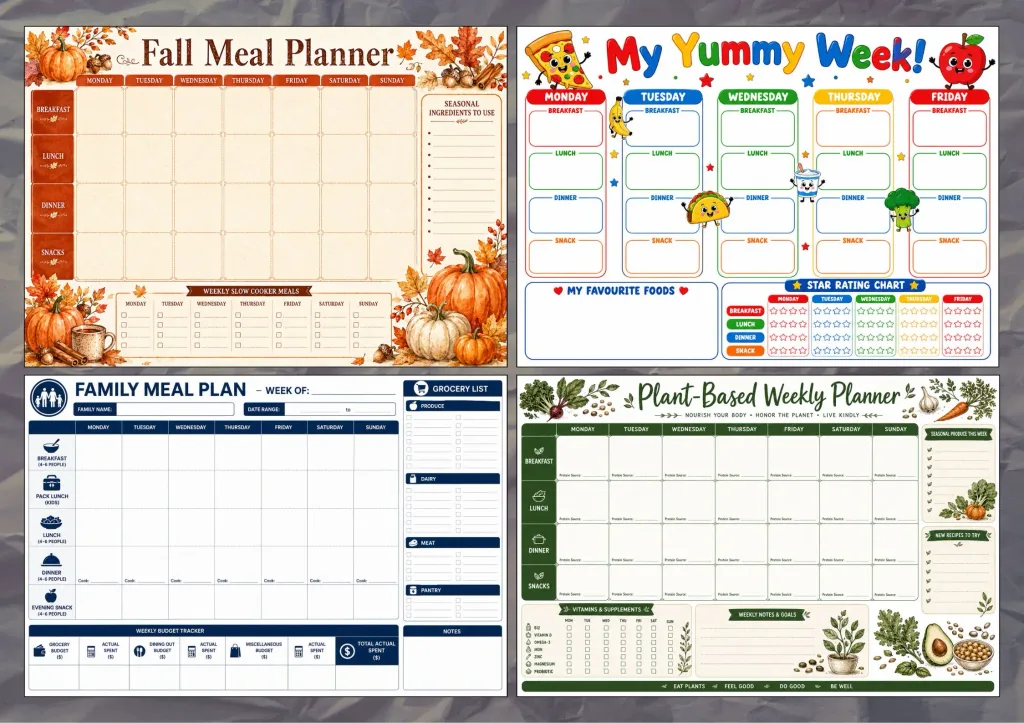
Budget tight week: reach for the family meal plan or monthly planner with budget tracker.
Fitness focus: use the macro planner. Cooking something seasonal: try the fall planner. Involving kids: pull out the My Yummy Week sheet.
Fill in dinners first, then work backwards to lunches and breakfasts. Dinners require the most planning effort; once they are set, lunches often follow naturally as leftovers.
Build the grocery list directly from the meal grid. Use the categorized sections on the family planner or the checklist on the floral weekly menu to keep shopping efficient.
Post the planner somewhere visible. The refrigerator, a kitchen clipboard, or a dedicated family command center all work well.
Involving Children in Meal Planning
Start with the Kids’ Sheet
The My Yummy Week planner is the natural entry point for children.
Sit down together and ask what they would like for breakfast each day, what they enjoy for lunch, and whether they can think of a dinner they love that the family could have this week.
Write their answers in the appropriate slots and watch how their ownership over the plan translates into genuine enthusiasm at mealtimes.
Use the Star Rating Chart
After each meal, let children rate it on the star chart.
Over several weeks, patterns emerge: they consistently love Wednesday pasta nights, they rate Monday salads low but Thursday soup high.
These ratings become useful data for future planning, and the act of rating meals teaches children to articulate their preferences thoughtfully rather than simply saying they do not like something.
Let Them Plan One Meal Per Week
Giving a child responsibility for planning and, where age appropriate, helping to cook one meal per week is one of the most effective ways to expand their relationship with food.
It builds confidence, develops practical life skills, and almost always results in a child who is far more adventurous at the table than one who has never engaged with the cooking process.
Tips for Making the Most of the Pack
Laminate your favourite sheet: Slip the sheet you use most often into a plastic sleeve and use a dry erase marker. One print lasts months.
Rotate between sheets seasonally: The fall planner in autumn, the plant based planner for a January health reset, the macro planner when training ramps up.
Combine sheets: Use the monthly planner for the big picture and the weekly botanical planner for daily detail side by side.
Keep a favorites list: The monthly planner’s favorite recipes section and the plant-based planner’s new recipes to try panel both work as living recipe reference lists that grow more useful every week.
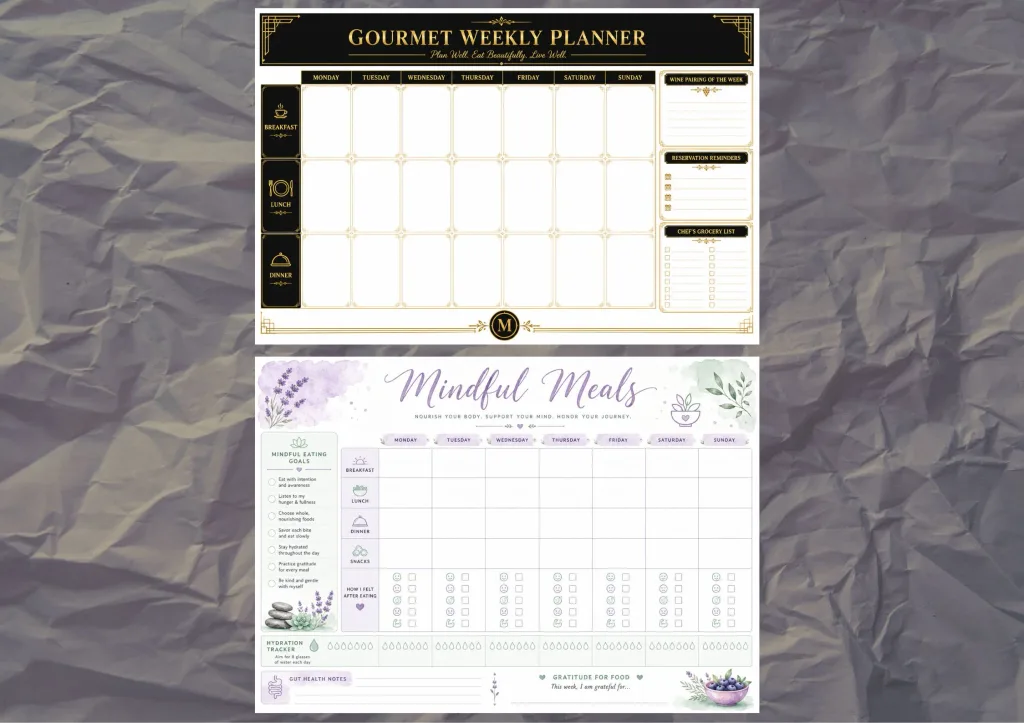
Track hydration consistently: Four of the ten sheets include water tracking in some form. Whichever sheet you use, the water tracker is worth filling in daily; even one week of honest hydration tracking is eye opening for most people.
[ >> DOWNLOAD THE STAY ORGANIZED WITH THIS FREE MEAL PLANNER PRINTABLE << ]
Fruit of the Spirit Craft Pack
10 Free Printable 1st Grade Math Worksheets (A4 Size)
Back to School Printable Signs
Colour, Learn, and Celebrate: How to Use Black History Month Bookmarks with Kids
15 Free Printable Winter Bookmarks to Color
Free Printable Bible Verse Bookmarks to Color