Owning a pet is one of life’s great joys, but it also comes with real responsibility.
Between vet visits, feeding schedules, grooming, and keeping an eye out for warning signs of illness, it’s easy for small details to slip through the cracks.
That’s exactly why a Pet Health Checklist is such a valuable tool for any household with a furry, feathered, or scaled family member.
It turns scattered memory and guesswork into a simple, visual system that keeps your pet’s wellbeing organized and easy to track.
In this guide, we’ll walk through why a pet health checklist matters, how adults can use it to build better routines, and just as importantly how you can turn it into a fun, educational activity for kids who want to help take care of the family pet.
Why Every Pet Owner Needs a Health Checklist
Pets can’t tell us in words when something feels off.
A dog that’s a little more tired than usual, a cat that’s eating slightly less, or a rabbit that’s scratching more than normal these subtle changes are often the earliest clues that something needs attention.
The problem is that subtle changes are also the easiest to miss, especially in a busy household where everyone assumes “someone else noticed.”
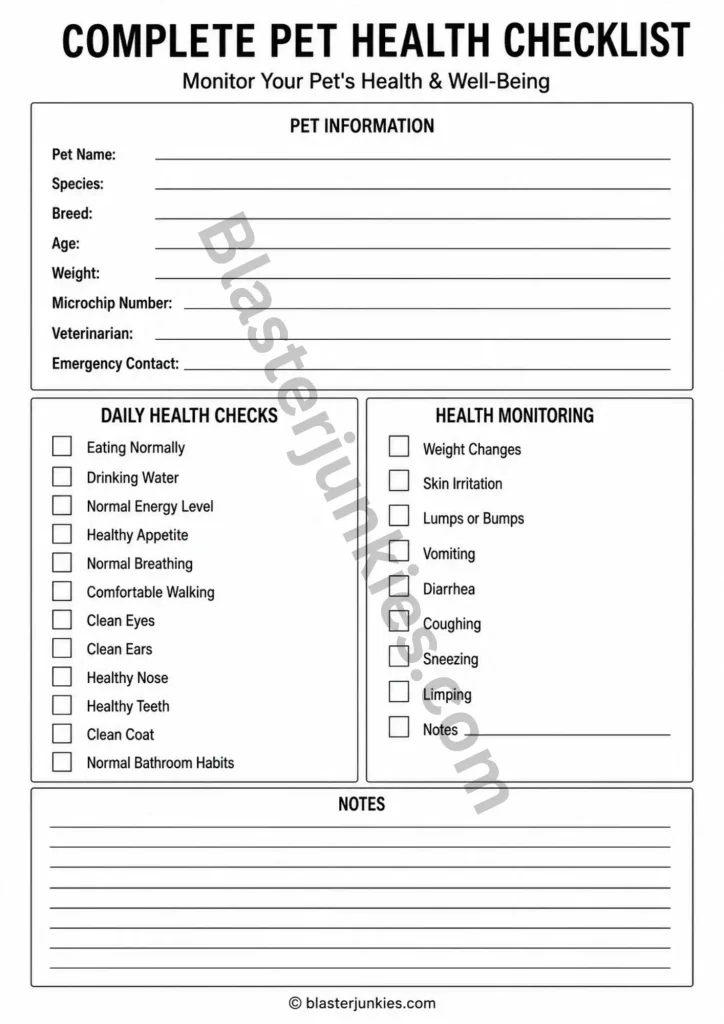
A written checklist solves this problem by turning observation into a habit.
Instead of relying on memory, you have a physical or printed record that prompts you to check the same things, in the same way, on a regular basis.
Over time, this creates a baseline of what “normal” looks like for your specific pet which makes it much easier to spot when something isn’t right.
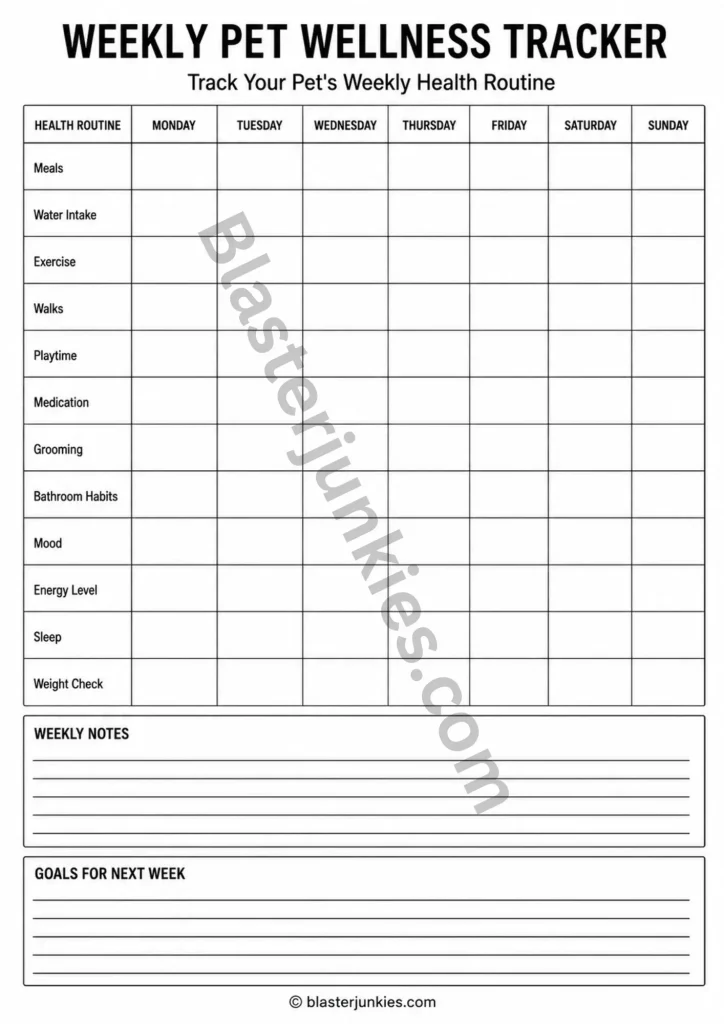
This kind of consistent tracking is also incredibly useful for veterinary visits.
Vets often ask questions like “has their appetite changed in the last month?” or “when did you first notice the limping?”
A pet parent who has been logging daily and weekly observations can answer these questions with confidence instead of guessing, which leads to faster, more accurate diagnoses.
What Should Adults Track Regularly?
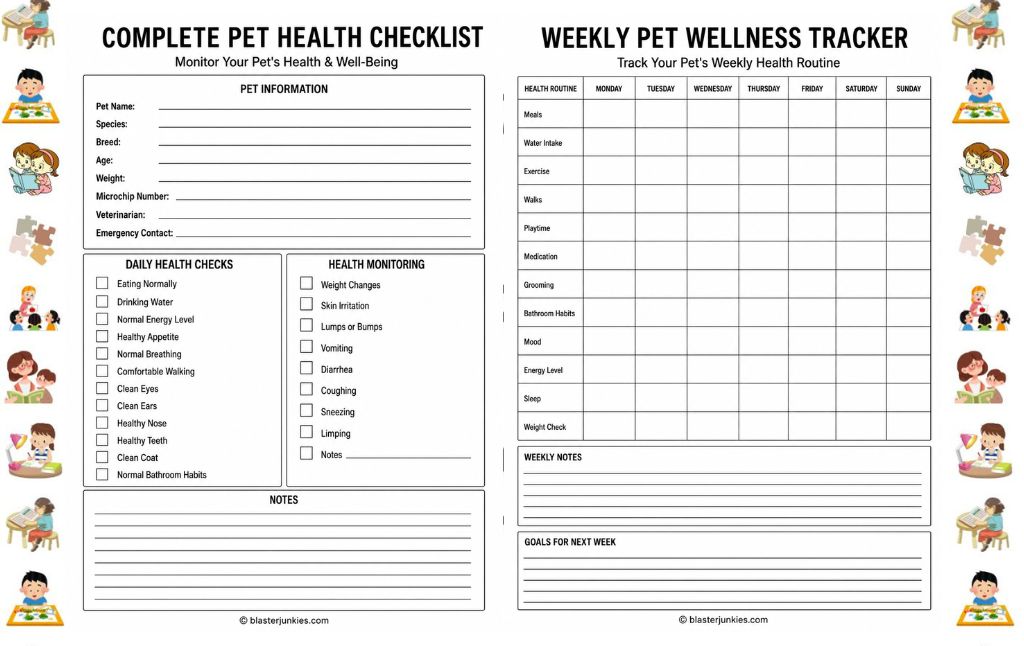
A good pet health routine covers a few key areas: daily wellness signs (appetite, energy, breathing, bathroom habits), physical checks (coat, eyes, ears, teeth, skin), and administrative details (vaccination dates, medication schedules, vet contact information, microchip numbers).
Rather than trying to remember all of this separately, keeping it in one organized place means you’re never scrambling to find information during an emergency or a routine appointment.
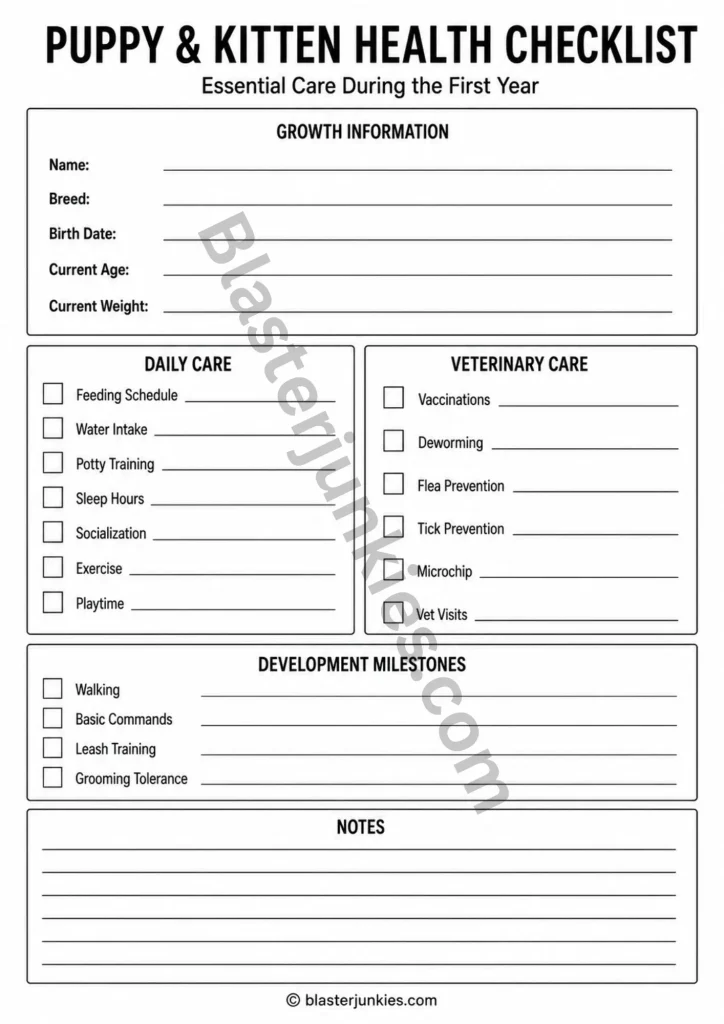
It also helps to separate short term monitoring from long term tracking. Day to day, you’re mostly watching for changes in behavior or appearance.
Over weeks and months, you’re tracking bigger picture trends like weight, mobility, and overall condition which matters even more for senior pets or those with ongoing health concerns.
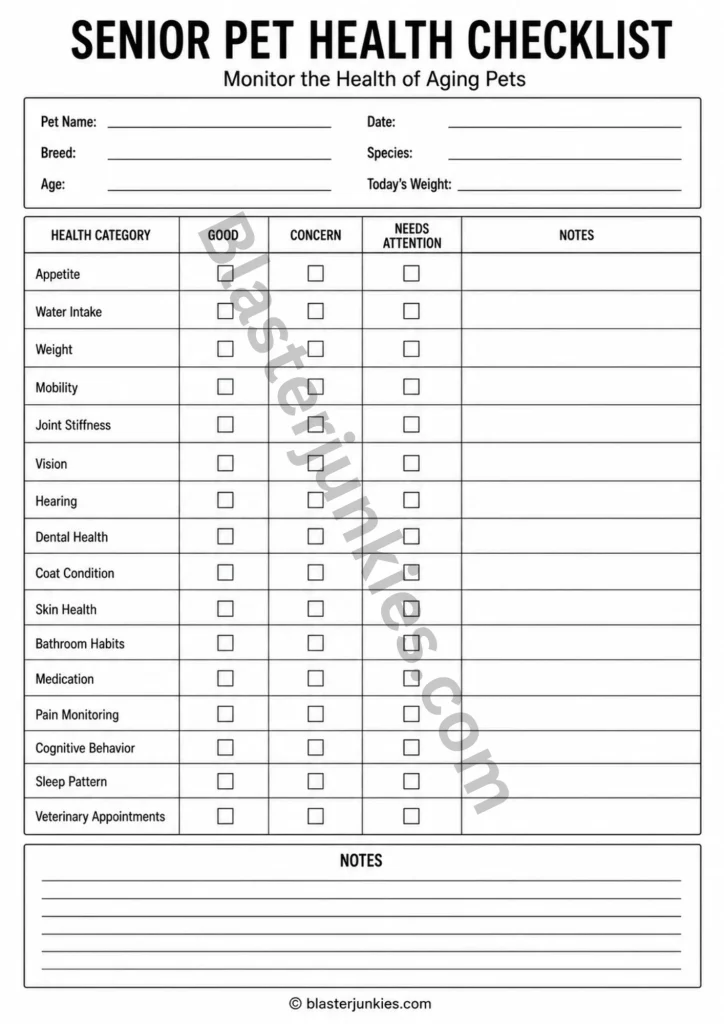
Building this kind of consistency doesn’t have to be complicated; it works a lot like other simple household systems people already use to stay on top of things,
Whether that’s a Home Maintenance Checklist for keeping your house in order or a Healthy Habit Challenge for keeping yourself accountable to daily goals.
Making It a Family Habit, Not Just a Task
One of the best ways to make pet care checklists actually stick is to treat them the same way you’d treat any other family routine.
Just as a Morning Routine Chart for Kids helps children build consistency before school, a pet health checklist works best when it’s tied to a specific time of day feeding time, before bed, or during a weekend “pet check in” session.
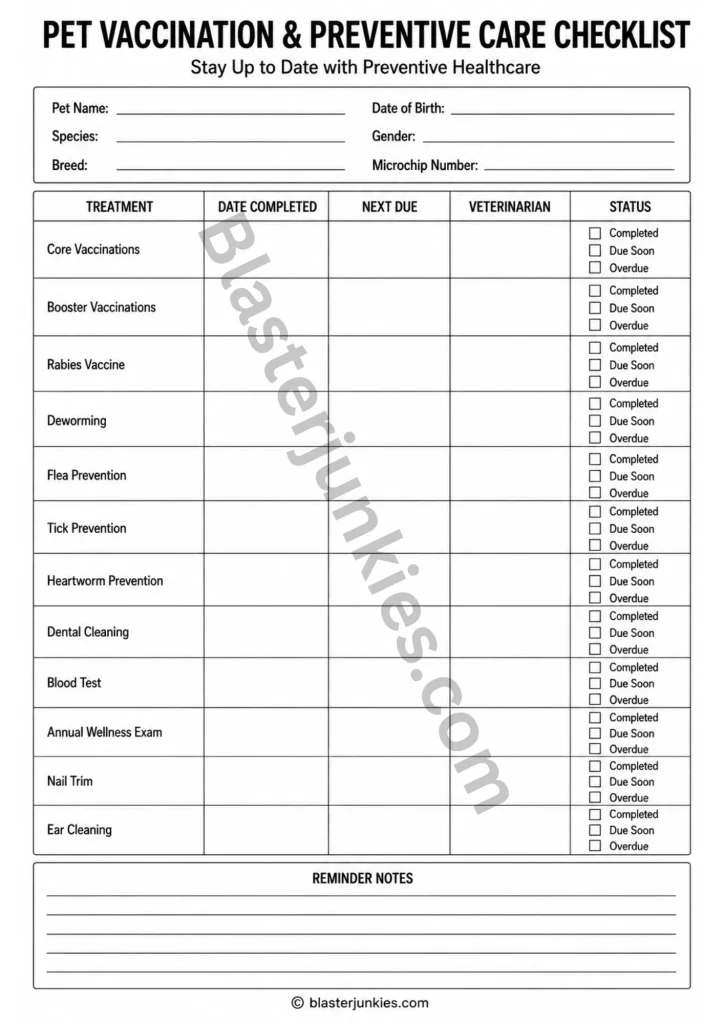
Attaching it to an existing habit makes it far more likely that it actually gets used, rather than forgotten in a drawer.
Pet care also connects surprisingly well to overall family wellness.
Just as a Mood Tracker Printable helps people notice emotional patterns over time, a pet wellness log helps you notice physical and behavioral patterns in your animal.
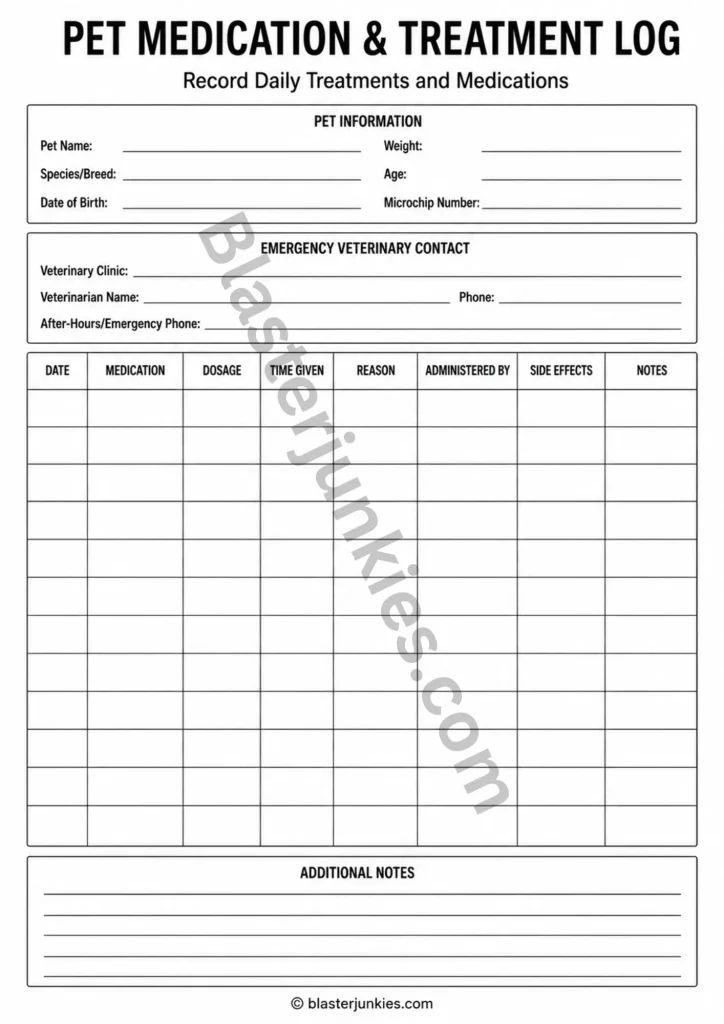
And much like a Self Care Checklist for Mental Health encourages people to check in on themselves regularly, a pet checklist encourages the same kind of regular, gentle attention toward the animals who depend on us.
How to Use It With Kids (Without Overwhelming Them)
Kids are often eager to help care for pets, but they need structure to do it well.
Rather than handing a child the entire checklist and expecting them to understand every medical term, break their involvement into small, age appropriate jobs.
A younger child might be responsible for checking the water bowl or noting whether the pet ate breakfast.
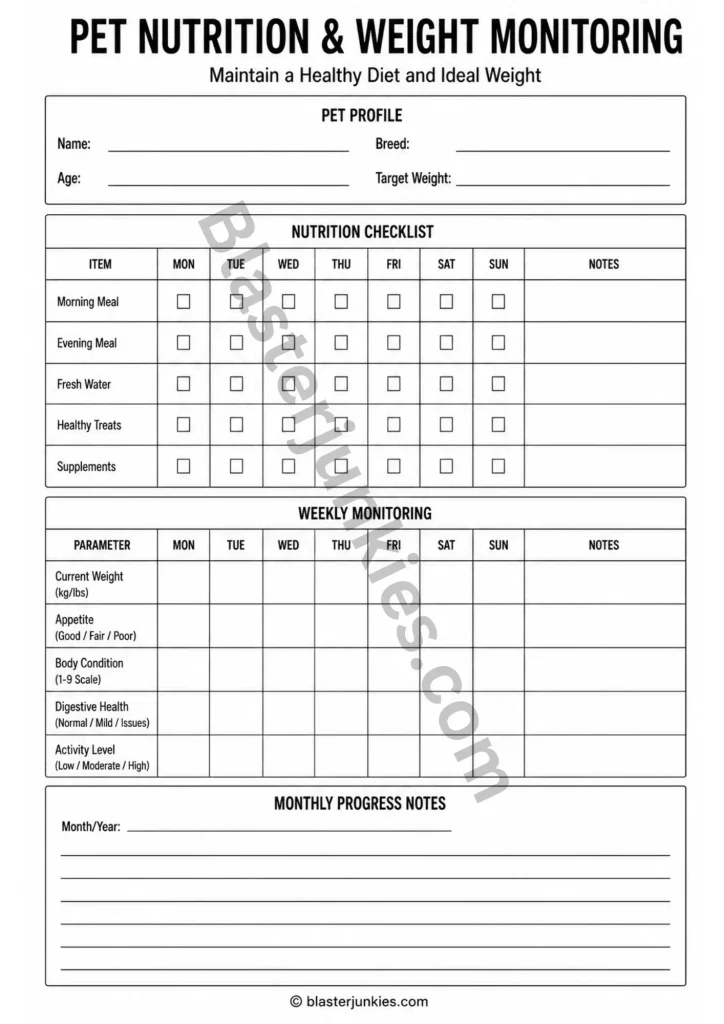
An older child could take on tasks like brushing the coat, checking for tangles, or filling in a simple daily chart with checkmarks.
This approach mirrors how other kid friendly tracking tools work.
A Daily Walking Challenge Chart gives kids a visual, satisfying way to mark progress, and the same idea applies beautifully to pet care kids love checking boxes and seeing a full week of completed tasks.
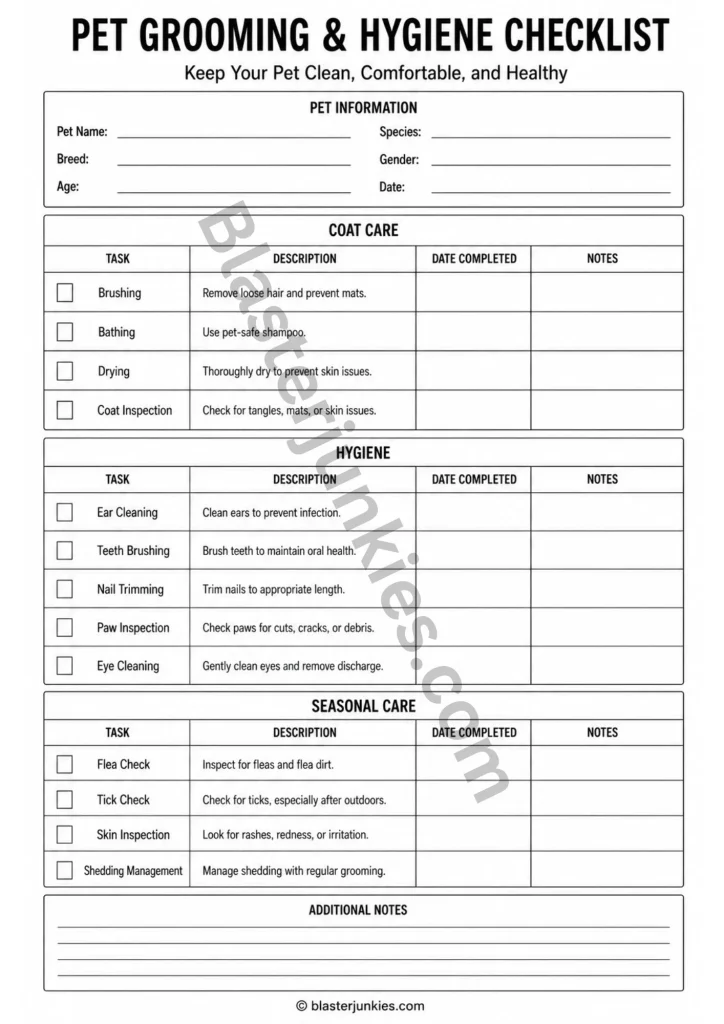
It builds a sense of ownership and responsibility, while also teaching empathy: they start to understand that pets have needs, feelings, and routines just like people do.
To keep things engaging, consider turning pet care into a shared family activity.
Just as a Family Conversation Cards set sparks conversation around the dinner table, a weekly “pet check in” can become a small family ritual everyone gathers for five minutes, looks over the week’s notes together, and talks about anything that stood out.
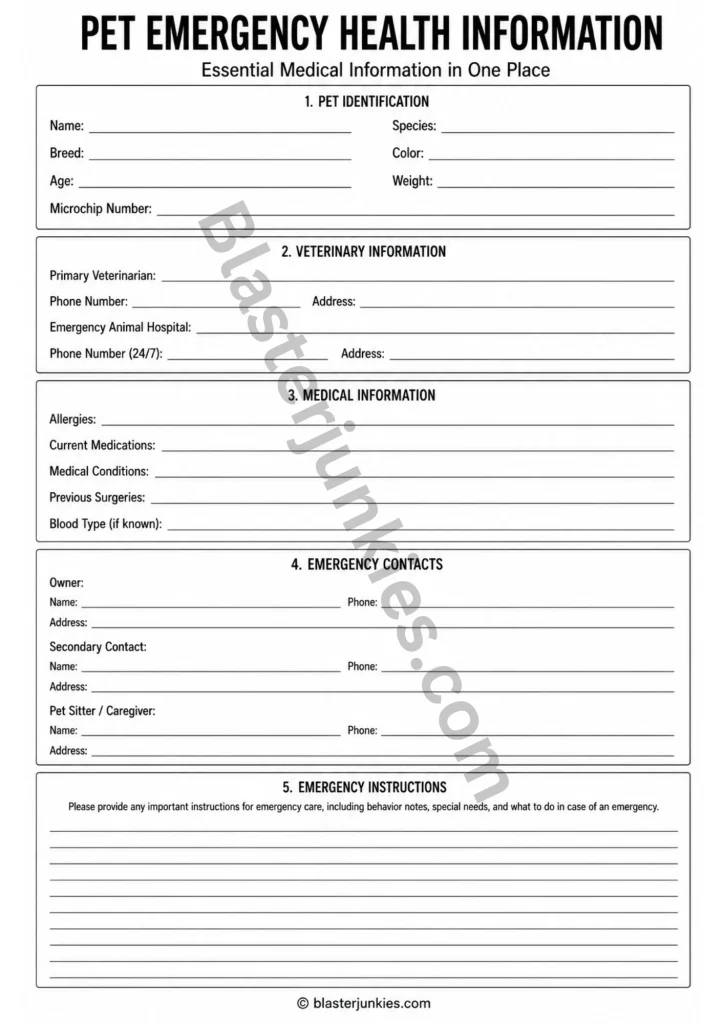
This not only keeps the checklist from feeling like a chore, it teaches kids the value of consistency and observation in a low pressure, positive way.
Bringing It All Together
A pet health checklist isn’t just paperwork it’s a system that protects your pet’s wellbeing, saves you time and stress at vet visits, and gives the whole family, including kids, a meaningful way to participate in caring for an animal they love.
Whether you’re managing a playful puppy, a senior cat, or anything in between, having a consistent, written routine turns pet care from something reactive into something proactive.
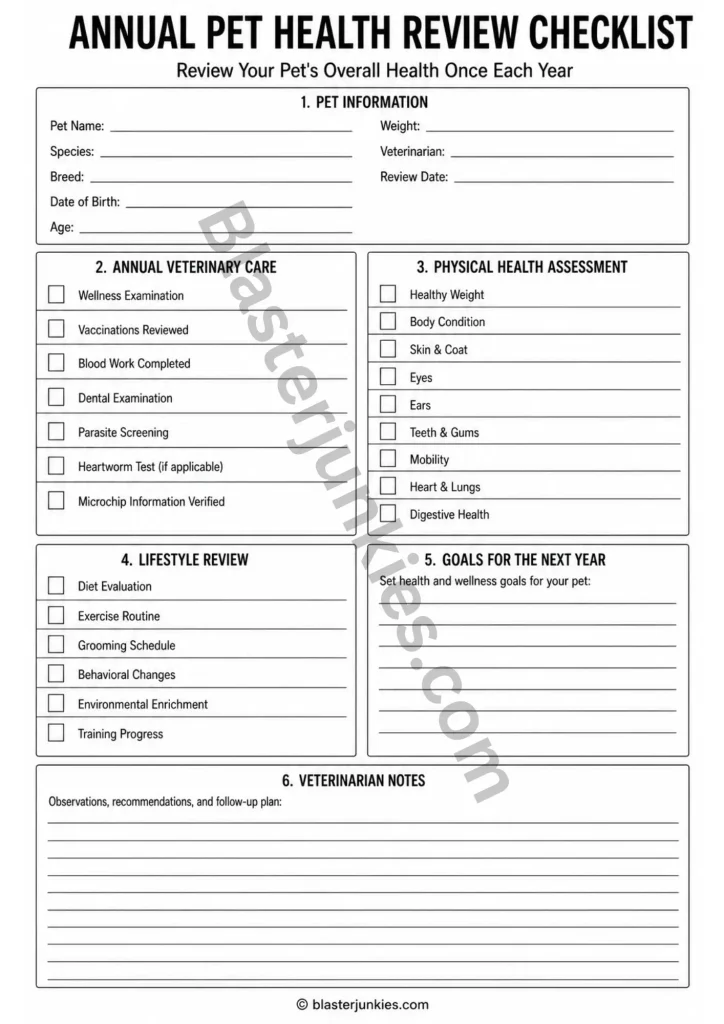
Start simple: pick a few key things to check each day, add a weekly review, and involve the kids where it makes sense.
Over time, you’ll build a habit that benefits your pet’s health and brings your family a little closer in the process.